

Unauthorized immigrant population soared to an all-time high under Biden, new report shows
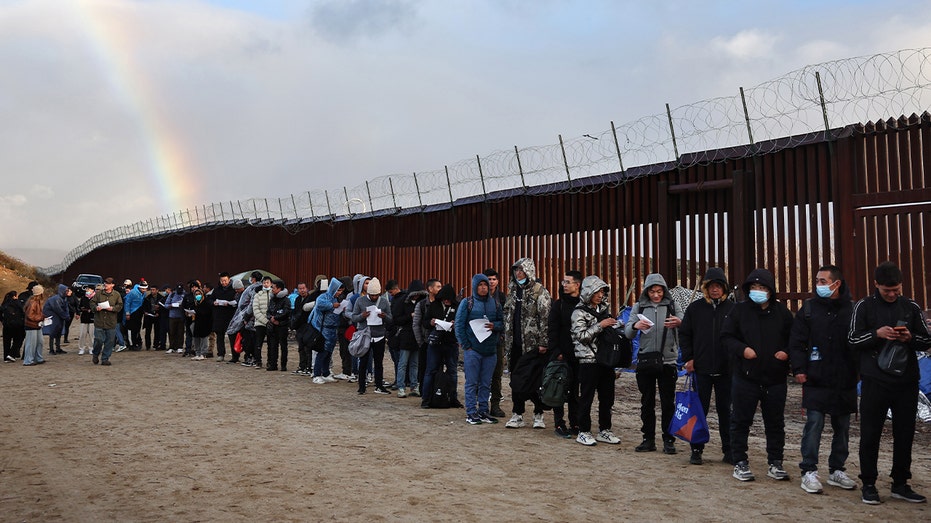
A new report by the Pew Research Center shows that the unauthorized immigrant population in the U.S. soared to an all-time high of 14 million in 2023 in the middle of the Biden administration. Released this week, the study shows that the unauthorized immigrant population reached an “all-time high” of 14 million in 2023 after two consecutive years of record growth in 2021 and 2022. According to Pew, the number of unauthorized immigrants present in the country increased from 10.2 million in 2020 to 10.5 million in 2021 to 11.8 million in 2022. Pew said the increase of 3.5 million unauthorized immigrants in two years is the biggest on record. OVER 55 MILLION VISA HOLDERS SUBJECTED TO CONTINUOUS VETTING AMID TRUMP ADMIN CRACKDOWN The next highest number of unauthorized immigrants recorded in a year was in 2007, with 12.2 million. Further, Pew reported that though 2023 is the most recent year with comprehensive data available, preliminary data indicate continued growth in 2024 and a decrease in 2025, coinciding with the end of former President Joe Biden’s term and the beginning of President Donald Trump’s second term. Pew posits that the decline in unauthorized immigrants could be as much as 1 million, which it attributes in part to increased deportations and reduced protections under the Trump administration. Nonetheless, the center said that the unauthorized immigrant population likely remains above 2023 levels. The study defines an unauthorized immigrant as an immigrant who is not a naturalized citizen, lawful permanent resident, refugee, asylee, temporary legal resident, or former unauthorized immigrants granted legal residence under the 1986 Immigration Reform and Control Act. TRUMP EXPANDS DEPORTATION DEALS AS MORE COUNTRIES AGREE TO TAKE MIGRANTS Of the 14 million total unauthorized immigrants, Pew said 6 million have some type of protection from deportation, while 8 million do not. Pew said those with some protection from deportation are aliens who are asylum applicants, have temporary immigration parole, are victims of crimes, have temporary protective status or are Deferred Action for Childhood Arrival (DACA) recipients or border releases. Simon Hankinson, a senior research fellow in the Border and Immigration Center at the Heritage Foundation, commented on the study, saying it “shows the scope of the illegal immigration disaster President Biden created and which President Trump is now trying to clean up.” “Biden’s massive abuse of immigration parole, release of aliens caught entering illegally at the border, and shackling of enforcement ballooned the number of people living here illegally to record proportions,” he added. Besides, unauthorized immigrants, Hankinson said the percentage of foreign-born residents in the U.S. is currently the highest in the country’s history at nearly 16 percent. He posited that “without assimilation and integration,” these levels of immigration “are socially and fiscally unsustainable.” DHS TO SCREEN IMMIGRATION APPLICANTS FOR ‘ANTI-AMERICAN IDEOLOGIES’ On the other end of the spectrum, Hankinson commented that the report shows “what can be achieved with the right policies.” CLICK HERE TO GET THE FOX NEWS APP “In only six months, they estimate that over a million illegal aliens ‘unauthorized immigrants’ left the U.S. The vast majority of these did so on their own,” he said, adding, “As we see the hysterical press coverage of interior immigration enforcement, let’s remember that – the simplest, easiest, hassle-free way to avoid detention and deportation is to never enter or remain here illegally. The second easiest is to go home.”
China, India watch as Myanmar rebels advance on strategic western frontier
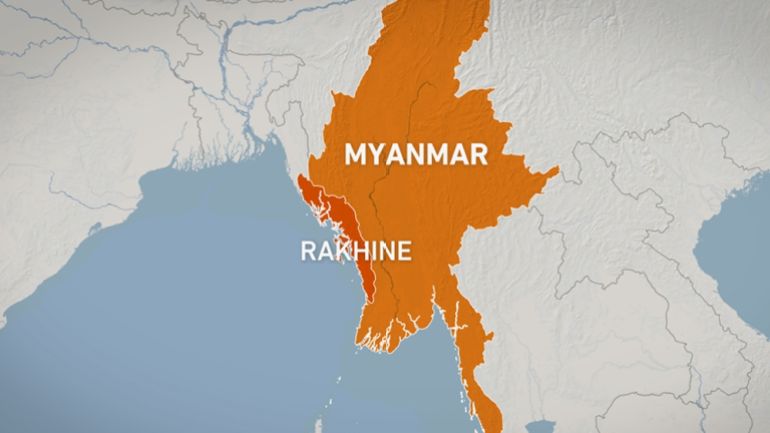
Rakhine State stands at a pivotal moment as the Arakan Army (AA) edges closer to seizing control of Myanmar’s strategic western frontier region, a shift in power that could redefine both the country’s civil war and regional geopolitics. While Myanmar’s military government has clawed back territory elsewhere in the country, the AA now controls 14 of 17 townships in Rakhine, which is situated on the Bay of Bengal in the country’s west and shares a border with Bangladesh. Flush from victories against Myanmar’s military rulers, the rebel group has pledged to capture the remainder of Rakhine State, including the capital Sittwe, as well as a key Indian port project, and Kyaukphyu, home to oil and gas pipelines and a deep-sea port central to China’s Belt and Road Initiative. Analysts say the window is open for a decisive offensive by the rebel group. But the AA’s fight against Myanmar’s military government for self-determination unfolds amid a deepening humanitarian crisis and growing reports of serious abuses by the armed group against Muslim-majority Rohingya in Rakhine. The Myanmar military’s blockade of supplies to Rakhine – historically known as Arakan – has worsened a crisis in which the United Nations estimates more than two million people face the risk of starvation. Earlier this month, the World Food Programme warned that 57 percent of families in central Rakhine cannot meet basic food needs – up from 33 percent in December. Thousands of civilians are hemmed in the encircled Sittwe, which is now accessible only by sea and air. Advertisement Residents describe skyrocketing prices – pork that once cost $2 now exceeds $13. Local media have reported on desperate people taking their own lives, families turning to begging, sex work increasing, and daytime thefts as law and order collapses. One resident who recently left by plane told of the growing danger from crime in Sittwe. “They’re like gangsters breaking into homes in broad daylight. They even take the furniture,” he said. Inside Sittwe, a source who asked for anonymity told Al Jazeera that the Arakan Liberation Army, an armed group linked to the military, monitors conversations among local people while troops raid homes and check residents for tattoos as signs of AA support. “The situation is unpredictable,” the source said. “We can’t guess what will happen next.” A representative of the United League of Arakan (ULA), the AA’s political wing, described Sittwe as “a stark example” of military rule, saying the regime’s leaders have “treated Arakan as occupied territory” for decades. Rising civilian toll As the AA advances across Rakhine State, the military government has turned to air strikes – a tactic used nationwide since the generals seized power in 2021. In Rakhine, the ULA says air raids killed 402 civilians between late 2023 and mid-2025, including 96 children. Another 26 civilians died this year from artillery, landmines or extrajudicial killings, it said. Air strikes on civilians “cannot produce tangible military outcomes”, a ULA representative said, describing such tactics as “terrorism” in a country where more than 80,000 people are estimated to have been killed in fighting since the 2021 coup. Amid the grinding conflict, both the AA and Myanmar’s military have also implemented conscription to bolster their forces. The AA has drafted men aged 18 to 45 and women aged 18 to 25 since May, calling its campaign a “war of national liberation”, while the military has added an estimated 70,000 men to its ranks over its 16-month military draft drive. Rakhine has also been scarred by ethnic violence, most brutally during the military’s 2017 crackdown that drove more than 730,000 Rohingya into Bangladesh – atrocities from that time which are now before the International Court of Justice in a case of suspected genocide. More than a million Rohingya remain in refugee camps along the Myanmar-Bangladesh border, with the UN reporting 150,000 new arrivals over the past 18 months. Reports accuse the AA of abuses against Rohingya civilians that remain in Rakhine, including an alleged massacre of 600 people last year – allegations the AA denies, claiming images of human remains were actually government soldiers killed in battle. Advertisement According to the rebels’ political wing, the ULA, “Muslim residents” in its areas of control in Rakhine “are experiencing better lives compared to any other period in recent history”. The ULA, like the military government, avoids the term “Rohingya” in an attempt to imply the community is not indigenous to Rakhine. To further confuse an already complex situation, the military has armed members of the Rohingya community to fight the AA, a dramatic reversal after decades of persecution of their communities by Myanmar’s armed forces. The International Crisis Group (ICG) think tank also warns that Rohingya armed groups are using religious language to mobilise refugees in the camps in Bangladesh against the AA. But “a Rohingya insurgency against the Arakan Army is unlikely to succeed”, the ICG reports, adding that it could also heighten anti-Rohingya sentiment in Myanmar and damage prospects for the repatriation of refugees from Bangladesh to homes they fled inside Rakhine. Tensions are also simmering with Bangladesh, which wants the AA – in control of the entire border region between Myanmar and Bangladesh – to accept refugees back into areas under its authority. Dhaka is also reportedly backing armed Rohingya groups to pressure Arakan forces, while the AA is wary that Bangladesh could support a breakaway zone in Rakhine, threatening its territorial ambitions for the state. Battle for Chinese-built port South of Sittwe, a decisive fight looms for Kyaukphyu, the coastal hub linking Myanmar to China’s Yunnan province through twin oil and gas pipelines and a deep-sea port that is part of China’s Belt and Road infrastructure project. Anthony Davis, a Bangkok-based analyst with defence publication Janes, predicts the AA could launch a monsoon offensive between September and October, using cloudy skies as cover against aerial assaults by the military’s warplanes and which would boost its chances of capturing Kyaukphyu. Davis said munition stocks seized by the AA in 2024 could dwindle
Can the new India-China bonhomie reshape trade and hurt the US in Asia?
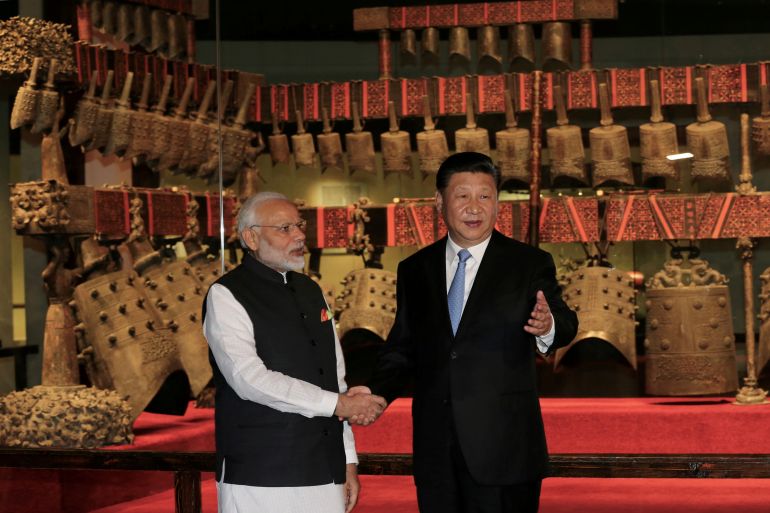
New Delhi, India – Five years ago, United States President Donald Trump was being welcomed in India, and China condemned. In February 2020, Trump addressed a massive rally titled “Namaste Trump!” in Ahmedabad, on his first visit to India as US president, as bilateral ties and trade soared, and the American leader’s personal bonhomie with Prime Minister Narendra Modi was on public display. By June that year, relations with China, on the other hand, came crashing down: 20 Indian soldiers were killed in clashes with Chinese troops in Galwan Valley in the Ladakh region. India banned more than 200 Chinese apps, including TikTok, and Indian and Chinese troops lined up along their disputed border in an eyeball-to-eyeball standoff. New Delhi also expanded defence and strategic cooperation with the US and the Quad grouping, officially the Quadrilateral Security Dialogue, which also includes Japan and Australia. As recently as May this year, India treated China as its primary adversary, after Pakistan used Chinese defence systems during its four-day war with India after a deadly attack in Indian-administered Kashmir. But Trump’s tariff wars, especially against India – which has been slapped with a 50 percent duty on its imports – and rapid geopolitical shifts have led to a thaw in New Delhi’s relations with Beijing. The White House under Trump, meanwhile, political analysts say, is undoing decades of diplomatic and strategic gains foundational to its influence in Asia, home to more than 60 percent of the world’s population. Chinese President Xi Jinping and Indian Prime Minister Narendra Modi shake hands as they visit the Hubei Provincial Museum in Wuhan, Hubei province, China, April 27, 2018 [China Daily via Reuters] “Dragon-Elephant tango” Earlier this week, Prime Minister Modi sat down with China’s top diplomat, Foreign Minister Wang Yi, as he hailed “respect for each other’s interests and sensitiveness” and “steady progress” in bilateral relations. Advertisement On his two-day visit to New Delhi, Wang also met with Indian Foreign Minister S Jaishankar and National Security Adviser Ajit Doval to discuss the countries’ disputed border in the Himalayan mountains. China’s Ministry of Foreign Affairs said the countries have entered a “steady development track” and should “trust and support” each other. In their meetings, both sides announced confidence-building measures: resumption of direct flights, easier visa processes and border trade facilitation. In June, Beijing allowed pilgrims from India to visit holy sites in Tibet. The two countries also agreed to explore an “early harvest” settlement of parts of their long, contested border, which is the biggest source of historical tensions between them, including a war they fought in 1962. Modi also formally accepted an invitation from Chinese President Xi Jinping to attend the Shanghai Cooperation Organisation summit in Tianjin – a regional grouping led by China and Russia that many analysts view as aimed at countering US influence in Asia – scheduled for late this month. It will be Modi’s first visit to China in more than seven years. “The setbacks we experienced in the past few years were not in the interest of the people of our two countries. We are heartened to see the stability that is now restored in the borders,” Wang said Monday, referring to the Galwan clashes, in which four Chinese soldiers were killed as well. Earlier this year, President Xi called for Sino-Indian ties to take the form of a “Dragon-Elephant tango” – a reference to the animals often seen as emblems of the two Asian giants. Sana Hashmi, a fellow at the Taiwan-Asia Exchange Foundation, told Al Jazeera that the efforts to minimise tensions and differences between India and China have been under way for some time. Last October, Modi and Xi broke the ice with a meeting in Kazan, Russia, after avoiding each other for years, even at multilateral forums. “However, Trump’s policies on tariffs and [favourable approach towards New Delhi’s rival] Pakistan have left India with little choice but to reduce the number of adversaries, including China,” she said. The US has twice hosted Pakistan’s army chief, Asim Munir, this year, including for an unprecedented White House meeting with Trump. The US president has also repeatedly claimed that he brokered the ceasefire that ended the fighting between India and Pakistan in May, despite New Delhi denying that Washington played a mediator. “For Beijing, the outreach [towards India] appears largely tactical, while for New Delhi, it stems more from uncertainty and the shifting geopolitical landscape,” Hashmi said. Advertisement While there are no visible signs that Trump is seeking to isolate China, Hashmi said the White House “is certainly trying to isolate a key strategic partner, India.” Trump has imposed an additional 25 percent tariff – on top of another 25 percent – on India’s goods, citing its continued imports of Russian oil. He has not imposed such tariffs against China, the largest buyer of Russian crude. Biswajit Dhar, a trade economist, said that the Trump tariffs are causing a realignment in Asia. “The pace of improvement [in India-China relations] has certainly hastened over the past few months,” he said. “There seems to be a genuine shift in the relations,” he added, “which is here to stay.” Chinese President Xi Jinping, right, and Indian Prime Minister Narendra Modi meet on the sidelines of a BRICS summit in Kazan, Russia, October 23, 2024 [China Daily via Reuters] Asian trade bloc? Political and economic experts also noted that if India-China ties were to get warmer, that could soften the blow of US tariffs for both. With Washington raising barriers on key Indian exports, access to Chinese markets, smoother cross-border trade and collaborative supply chain networks would help New Delhi reduce its reliance on the US market. In 2024-25, India recorded a trade deficit of $99.2bn with China, backed by a surge in imports of electronic goods. Beijing is India’s largest trading partner after the US – yet, India’s trade deficit with China is roughly double that with the US. China is attempting to woo India and has indicated that it will provide greater market access
US general whose report on Iran nuclear sites angered Trump fired
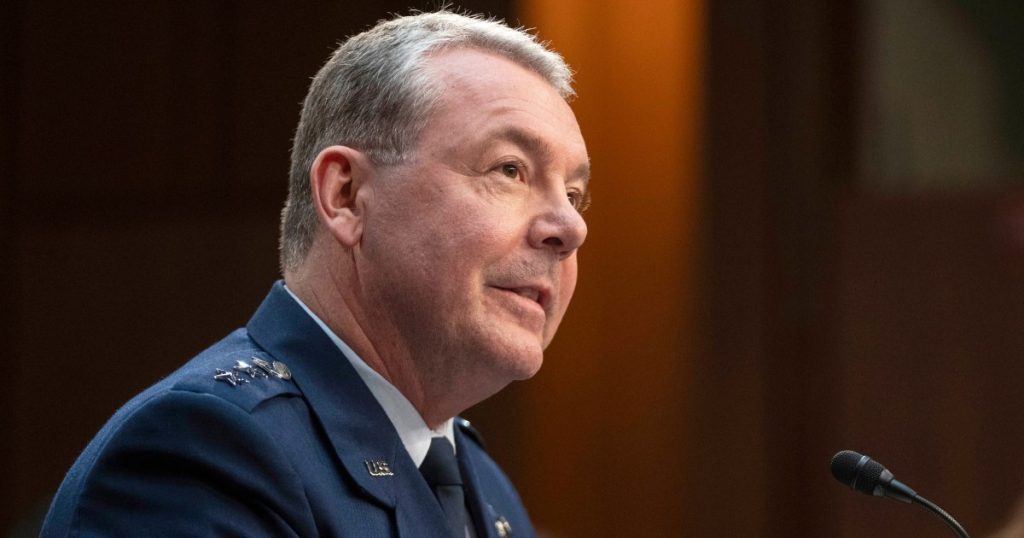
Head of US Defense Intelligence Agency Jeffrey Kruse fired alongside two senior Navy officials in latest purge. United States Defense Secretary Pete Hegseth has fired a general whose agency’s preliminary intelligence assessment angered President Donald Trump for reporting that the US attack on Iranian nuclear sites in June had inflicted limited damage, according to reports. The Pentagon firings on Friday, which, according to US officials who spoke to the Reuters and Associated Press (AP) news agencies, also include two other senior military commanders, are the latest moves by the Trump administration to purge officials at the Department of Defense . It was not immediately known on what grounds Lieutenant General Jeffrey Kruse, who led the Defense Intelligence Agency (DIA) since early 2024, was fired. But President Trump had previously decried the agency’s initial findings on US strikes against Iran. The initial DIA assessment – which was widely reported on by US media – contradicted claims by Trump that the strikes totally destroyed the nuclear sites, drawing the ire of both the president and officials within his administration. Kruse “will no longer serve as DIA director”, a senior defence official said on condition of anonymity on Friday, without providing an explanation for the general’s departure. Prior to becoming director of the DIA, Kruse served as the adviser for military affairs for the director of national intelligence, and also held positions including director of intelligence for the coalition against the ISIL (ISIS) group. Hegseth also fired Vice Admiral Nancy Lacore, who is chief of the Navy Reserve, as well as Rear Admiral Milton Sands, a Navy SEAL officer who oversees Naval Special Warfare Command, according to officials who spoke to both AP and Reuters. Advertisement All three military officials said they did not know why they were fired by the Trump administration, which has demanded loyalty across the government. “The firing of yet another senior national security official underscores the Trump administration’s dangerous habit of treating intelligence as a loyalty test rather than a safeguard for our country,” said US Senator Mark Warner, who is the vice chair of the Senate Select Committee on Intelligence. Since beginning his second term in January, Trump has overseen a purge of top military officers, including the chairman of the Joint Chiefs of Staff, General Charles “CQ” Brown, whom he fired without explanation in February. Other senior officers dismissed this year include the heads of the US Navy and Coast Guard, the general who headed the National Security Agency, the vice chief of staff of the US Air Force, a Navy admiral assigned to NATO, and three top military lawyers. The chief of the US Air Force also made a surprise announcement on Monday that he planned to retire only halfway through his tenure. Hegseth has insisted the president is simply choosing the leaders he wants in top positions, but Democratic lawmakers have raised concerns about the potential politicisation of the traditionally neutral US military. Earlier this year, Hegseth additionally ordered at least a 20 percent reduction in the number of active-duty four-star generals and admirals in the US military, as well as a 10 percent cut in the overall number of general and flag officers. News of Kruse’s firing came two days after Director of National Intelligence Tulsi Gabbard announced that she was revoking – on Trump’s orders – the security clearances of 37 current and former US intelligence professionals. Gabbard has also announced the first major overhaul of her office since its creation, slashing personnel by more than 40 percent by October 1 and saving more than $700m per year. Adblock test (Why?)
IAS Association issues BIG statement on online trolling of CEC Gyanesh Kumar’s family: ‘Such personal attacks…’
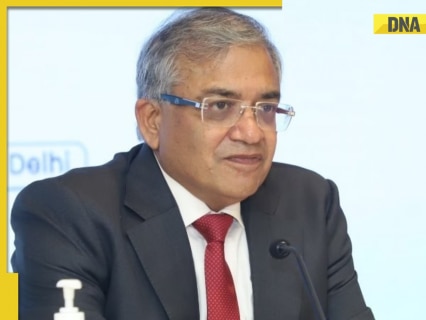
Kumar is under fire over accusations the Election Commission of India colluded with the ruling Bharatiya Janata Party and committed a large-scale voter fraud across national and state elections. The allegations have been leveled by a united Opposition, led by Congress leader Rahul Gandhi.
Online Gaming Bill gets President Droupadi Murmu’s assent, now becomes law

President Droupadi Murmu, on Friday, i.e., August 22, gave her assent to the Promotion and Regulation of Online Gaming Bill, 2025.
TikTok returning to India? Chinese platform’s website goes live after 5 years, check details

The Indian government had banned TikTok and many other Chinese apps citing a threat to national security. The move came after border clashes in Galwan Valley, in which 20 Indian soldiers and an unknown number of Chinese troopers were killed. Read on to know more.
India’s Space Program: The blueprint for a developed nation by 2047

As ISRO Chairman V. Narayanan addressed the inaugural session of the National Meet 2025 on Friday, his words carried the weight of a nation’s transformed ambitions.
PM Modi to visit Japan, China from August 29 to enhance strategic, regional ties
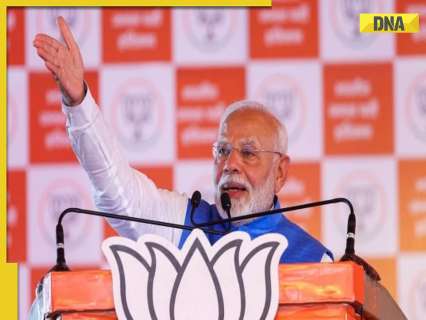
Prime Minister Narendra Modi will visit Japan and China from August 29 to September 1, the Ministry of External Affairs (MEA) said. At the invitation of the Prime Minister of Japan, Shigeru Ishiba, PM Modi will travel to Japan from August 29-30 to participate in the 15th India-Japan Annual Summit.
Want to book confirmed train tickets for Diwali and Chhath Puja 2025? Here are key tips

While the Indian Railways is expected to run special trains during peak festive season, passengers booking in advance will have the advantage of a confirmed seat. This will help avoid last-minute delays and inconvenience. Read on to know more.