

America’s original sanctuary state rebukes Bondi’s warning, denies ‘obstruction’ of ICE
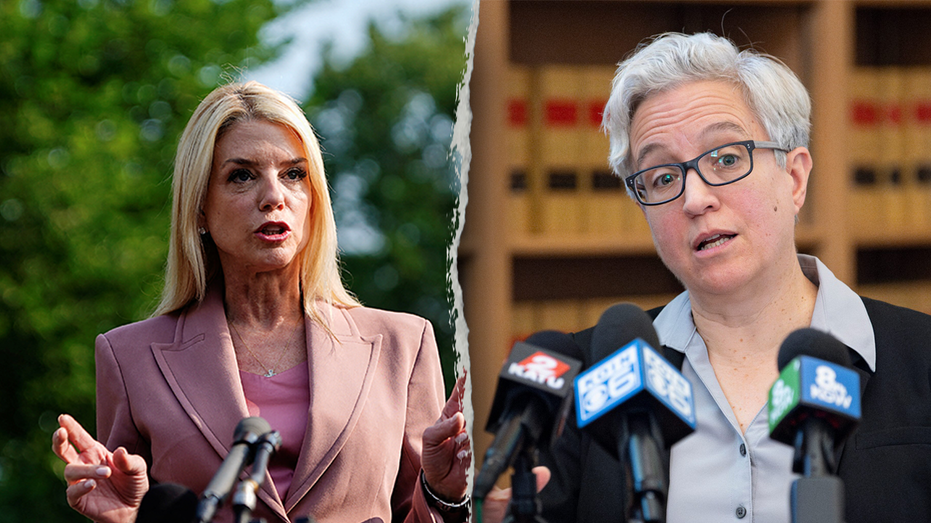
Attorney General Pam Bondi received a response this week from the governor of the first state to pass “sanctuary” legislation, after she had warned it was engaged in “policies and procedures that hinder federal immigration enforcement to the detriment of the interests of the United States.” Oregon Gov. Tina Kotek, a Democrat, confirmed receipt of Bondi’s original letter from the prior week, writing back that she “respectfully disagree[s]” with Bondi’s assertion. “The State of Oregon, its public officials, and its law enforcement officers do not engage in conduct that thwarts federal immigration enforcement,” Kotek said, noting the Beaver State passed America’s first sanctuary state law in 1987. State Rep. Rocky Barilla, D-Eugene, introduced the bill which was then signed by Gov. Neil Goldschmidt amid concerns police were wrongly profiling Latinos about their immigration status. BOSTON’S WU FIRES BACK AT BONDI, CITING REVOLUTION, AS OTHER CITIES SLAM FEDS OVER ‘SANCTUARY’ WARNINGS In her response to Bondi, Kotek said in the nearly 40 years since, Oregon officials and law enforcement have not violated federal immigration law while abiding by the state policy. “A 2018 ballot measure to repeal portions of Oregon’s federal immigration enforcement law failed when 63% of Oregon voters opposed repealing the existing law,” she said, adding that the 1987 law was revisited and “strengthened” by Salem lawmakers in 2021. Kotek cited Oregon Attorney General Ellen Rosenblum’s statement after the 2021 actions: “Oregon stands for the safety, dignity, and human rights of all Oregonians,” the state prosecutor said at the time, as Kotek also echoed the contention the state is acting within the law due to legal precedent from contemporary Tenth Amendment called the Anticommandeering Rule. That rule, borne out of cases like New York v. U.S. in 1992 – which focused on requests for states to dispose of nuclear waste — prescribes that the federal government cannot force them to administer federal programs. TRUMP ADMIN SLAMS ACLU FOR COMPARING ICE CENTER TO JAPANESE INTERNMENT CAMP: DERANGED AND LAZY Kotek said in her letter to Bondi that she is aware of warnings that the Trump administration may pursue civil actions against public officials on grounds they are obstructing federal immigration efforts or facilitating lawbreaking. “The state does not take on the additional expense or burden to perform federal immigration enforcement as it is the job of the federal government,” Kotek went on, citing the Anticommandeering Rule. “The state of Oregon is in compliance with federal law and will continue to follow state law. Therefore, no ‘immediate initiatives’ are necessary to eliminate laws that impede immigration enforcement,” she concluded, noting that her letter was delivered to the Justice Department via Federal Express. The back and forth comes as an Oregon federal judge is poised to decide on a notable immigration case in the state, and rule on whether a twice-deported Guatemalan asylum-seeking farmworker can be released from federal custody despite prior deportations. Identified only as L.J.P.L., the foreign national had been deported during the Obama administration, and litigants argued whether he could be released so long as he makes regular check-ins at a Eugene immigration office. Judge Karin Immergut, a Trump appointee whom Chief Justice John Roberts also named to the FISA Court, will decide whether ICE can move forward and immediately deport “L.J.P.L.,” according to Oregon Public Broadcasting.
Supreme Court verdict on capture and relocation of stray dogs in Delhi-NCR today

In its August 11 order, the top court had instructed the MCD and other civic authorities to round up all stray dogs within eight weeks and keep them in dedicated shelters, with no re-release onto the streets.
PM Modi to inaugurate new Kolkata metro lines today: Know routes, fares

The Prime Minister will inaugurate metro railway projects in Kolkata to facilitate world-class infrastructure and developed urban connectivity in the city, benefiting lakhs of daily commuters.
In response to failures and grieving parents, Texas lawmakers advance flood bills
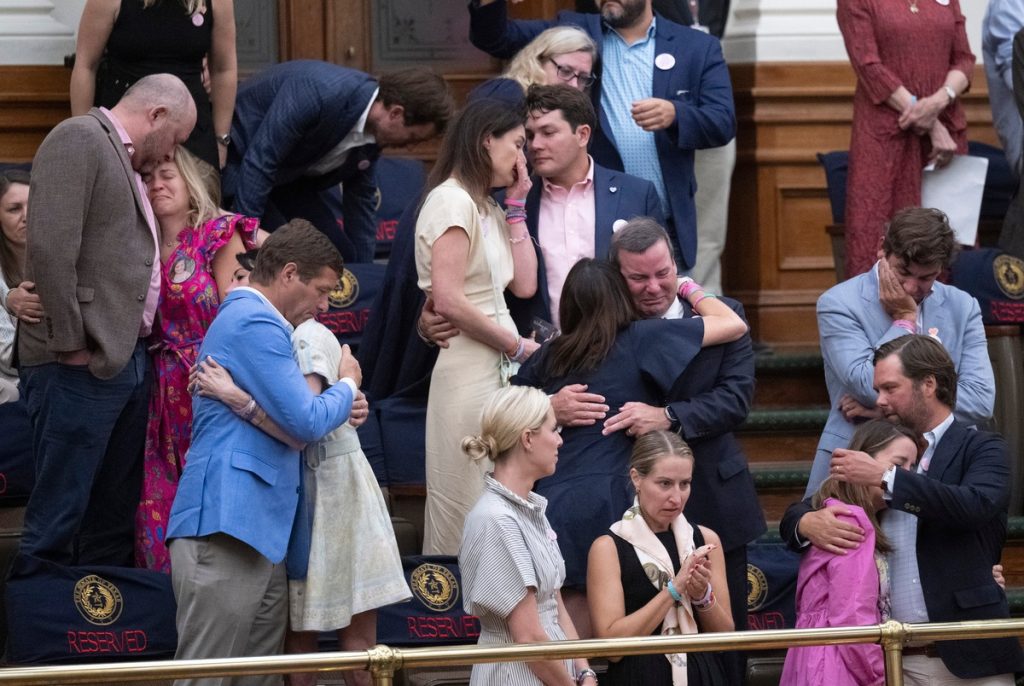
Here’s where the proposed laws to address camp safety, flood warnings and emergency response stand in the Legislature.
Federal judge blocks Florida from further expansion of ‘Alligator Alcatraz’ immigration detention facility
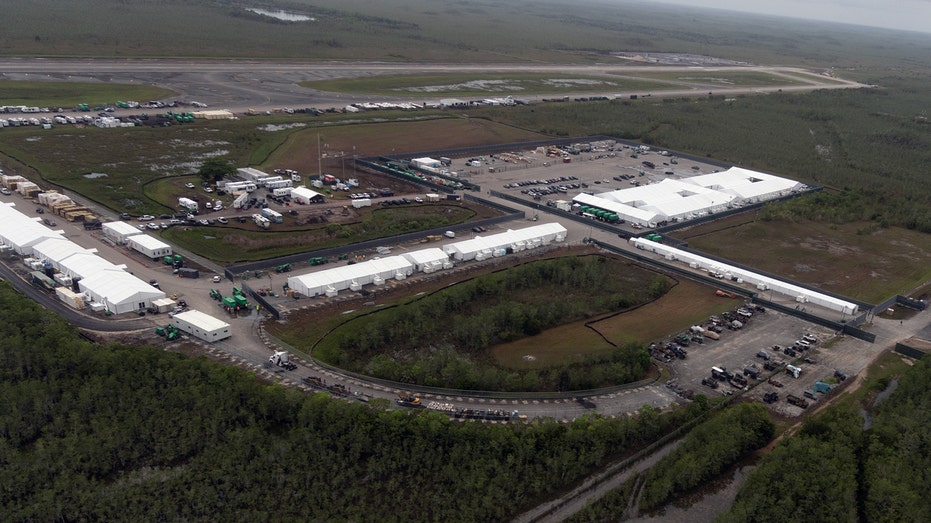
A federal judge issued a preliminary injunction on Thursday blocking Florida from further expanding the “Alligator Alcatraz” immigration detention center built in the middle of the Florida Everglades. U.S. District Judge Kathleen Williams’ injunction formalized the temporary halt she had ordered two weeks ago. Witnesses continued to testify over multiple days in a hearing to determine whether construction of the facility should stop until the case is decided. Advocates have argued that the expansion of the facility violated environmental laws. LAWSUITS THREATEN TO UPEND ALLIGATOR ALCATRAZ OPERATIONS Environmental groups and the Miccosukee Tribe said that further construction and operations at the facility should be stopped until state and federal officials complied with environmental laws. Their lawsuit argued that the detention center threatens environmentally sensitive wetlands that have protected plants and animals and that it would reverse billions of dollars in environmental restoration. Attorneys for the state and federal governments claimed that the construction and operation of the facility was under the state of Florida despite its use for holding federal detainees, meaning the federal environmental law would not apply. The judge found that the detention center was at least a joint partnership between the state and federal government. Williams said she expected the number of detainees in the facility to dip within 60 days through transfers to other facilities, and that fencing, lighting and generators should be removed. She said the state and federal defendants cannot bring anyone other than current detainees at the facility onto the property. The order does not halt modifications or repairs to existing facilities, which the judge said are “solely for the purpose of increasing safety or mitigating environmental or other risks at the site.” FLORIDA TO OPEN ‘DEPORTATION DEPOT’ AT SHUTTERED PRISON WEEKS AFTER LAUNCHING ‘ALLIGATOR ALCATRAZ’ FACILITY The preliminary injunction includes “those who are in active concert or participation with” the state of Florida or federal defendants or their officers, agents or employees, she wrote. State officials failed to sufficiently explain why the facility needed to be in the middle of the Florida Everglades. “What is apparent, however, is that in their haste to construct the detention camp, the State did not consider alternative locations,” Williams said. Florida officials criticized the ruling on Thursday. “Just this week, a judge in the same district as Judge Williams refused to hear a case because the Southern District of Florida was the improper venue for suits about Alligator Alcatraz,” Jeremy Redfern, a spokesperson for the Florida attorney general’s office, said in a statement to Fox News. “Once again, she oversteps her authority, and we will appeal this unlawful decision.” Florida Gov. Ron DeSantis said the “fix was in” and “we knew this judge was not giving us a fair shake.” “We totally expected an adverse ruling,” he told Fox News. “And we also knew we were going to immediately appeal and get that decision stayed. So we will ultimately be successful in this. It’s not going to stop our resolve. We’re going to continue to do what we need to do to help the Trump administration remove illegal aliens from our country. You know, that’s the mandate that they have. So we anticipated this, but I don’t think it’s going to be insurmountable in the end.” President Donald Trump toured the facility last month and suggested it could be used as a model for future facilities across the country to support his efforts to detain and deport migrants. The detention center was quickly built about two months ago at a single-runway training airport in the middle of the Everglades. It now holds nearly 500 detainees but was designed to eventually hold up to 3,000 in temporary tents. The facility’s large white tents feature rows of bunkbeds surrounded by chain-link cages. Detainees complained of worms in the food, toilets not flushing, floors flooded with fecal waste and insects everywhere. The air conditioners also sometimes abruptly shut off in the sweltering heat. Detainees also reportedly go days without showers or receiving their prescription medicine, and they are only permitted to speak to lawyers and loved ones by phone. Fox News’ Danamarie McNicholl-Carter and The Associated Press contributed to this report.
Trump administration wins Supreme Court fight to slash NIH medical research grants tied to DEI, LGBTQ studies
The Trump administration scored a major victory in the Supreme Court Thursday as the justices, in a 5-4 order, cleared his administration to slash more than $783 million in National Institutes of Health (NIH) research grants tied to diversity, equity and inclusion initiatives, LGBTQ issues and other hot-button topics. The unsigned majority order said NIH “may proceed with terminating existing grants” while leaving in place a partial block on issuing new directives. The move delivers a political win for Trump’s broader push to roll back DEI programs across the federal government. TRUMP-APPOINTED JUDGE STRIKES DOWN ANTI-DEI MEASURES FROM EDUCATION DEPARTMENT The decision overturns rulings by lower courts that had blocked the cuts. In June, U.S. District Judge Angel Kelley of Massachusetts called the administration’s actions “arbitrary and capricious” and said NIH had “failed to provide a reasoned explanation” for cutting grants midstream. The 1st Circuit upheld her injunction in July, setting up Trump’s emergency appeal to the Supreme Court. The Justice Department argued in its July 24 filing that leaving the injunction in place “forces NIH to continue funding projects inconsistent with agency priorities” and warned the order “intrudes on NIH’s core discretion to decide how best to allocate limited research funds.” Opponents framed the cuts as ideological. The American Public Health Association warned that “halting these grants would devastate biomedical research across the country, disrupting clinical trials and delaying urgently needed discoveries” and said “the administration has offered no scientific basis for these cancellations — only ideology.” FEDERAL JUDGE SLAPS TEMPORARY RESTRAINING ORDER ON MISSISSIPPI DEI BAN A coalition of Democrat-led states led by Massachusetts argued that “patients should not be collateral damage in a political fight.” News outlets stressed the stakes of Thursday’s decision. The Associated Press described the ruling as the court letting Trump cut $783 million in research funding “in an anti-DEI push.” Reuters reported that “the Supreme Court in a 5–4 order cleared the way for the Trump administration to cut diversity-related NIH grants, though it left in place part of the ruling blocking new restrictions.” Research groups warned of the cuts’ fallout. The Association of American Universities said the cuts “risk chilling scientific inquiry by discouraging researchers from pursuing politically sensitive topics.” CLICK HERE TO GET THE FOX NEWS APP Scientists cautioned the decision could derail progress on diseases such as cancer and Alzheimer’s, even as the broader legal fight continues in the 1st Circuit and may return to the Supreme Court. The Associated Press contributed to this report.
Rubio pauses worker visas for truck drivers after deadly Florida crash involving illegal immigrant kills 3
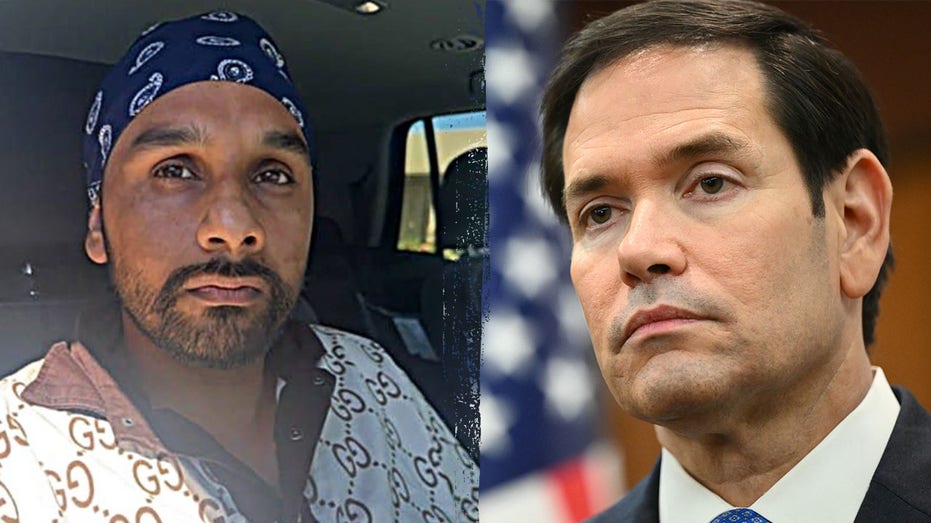
Secretary of State Marco Rubio on Thursday said, “effective immediately,” he would pause the issuance of worker visas for commercial drivers after an illegal immigrant truck driver allegedly caused a crash that killed three people in Florida. In a post on X, Rubio cited public safety for the move. “The increasing number of foreign drivers operating large tractor-trailer trucks on U.S. roads is endangering American lives and undercutting the livelihoods of American truckers,” he wrote. BLUE STATE INVESTIGATES HOW ILLEGAL IMMIGRANT TRUCKER GOT LICENSE BEFORE DEADLY FLORIDA CRASH Concerns about foreign workers driving commercial trucks began after Harjinder Singh, 28, who entered the U.S. illegally, was driving a commercial truck with a trailer on the Florida Turnpike in Fort Pierce when he allegedly attempted a U-turn in an unauthorized area. The turn resulted in the trailer jackknifing and colliding with a minivan, which left all three of the minivan’s passengers dead, authorities said. Further scrutiny of Singh revealed he didn’t pass English and road tests before obtaining a commercial driver’s license. EXPERT REVEALS HOW ILLEGAL IMMIGRANT TRUCKER MAY HAVE GOTTEN COMMERCIAL LICENSE BEFORE FATAL FLORIDA CRASH He was granted a full-term commercial driver’s license in Washington in July 2023 despite not being legally eligible. He was also given a limited-term commercial driver’s license in California in 2024. California Gov. Gavin Newsom and officials with the Department of Homeland Security (DHS) have been in a heated war of words with the Trump administration over Singh. This week, Newsom’s press office said on X that Singh obtained a work permit during President Donald Trump‘s first term. Tricia McLaughlin, the DHS assistant secretary for public affairs, responded, saying Singh was denied in September 2020, under Trump, but was granted one in June 2021, under the Biden administration. Singh has been extradited to Florida from California to face three counts of vehicular homicide.
ICE chief vows to ‘flood’ Boston with agents after Dem mayor pledges to resist
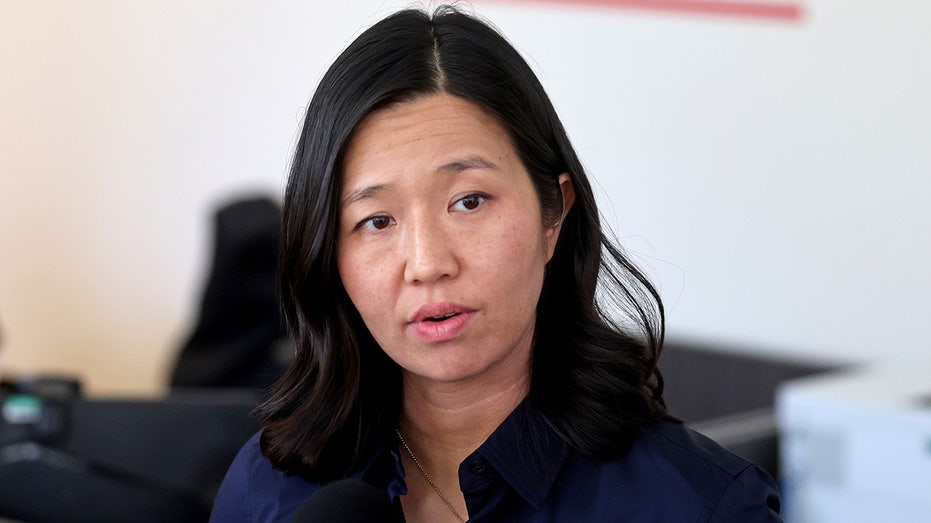
Acting ICE Director Todd Lyons vowed to “flood” Boston with agents after Democratic Mayor Michelle Wu doubled down on her pledge to uphold the city’s sanctuary policies and resist the Trump administration’s crackdown on illegal immigration. Speaking on the local radio program “The Howie Carr Show,” Lyons responded to Wu by saying, “Now you’re going to see more ICE agents come to Boston to make sure that we take these public safety threats out that she wants to let go back into the communities.” He pointed to the Trump administration’s “Operation Patriot,” which sent federal agents into the Boston area in March and yielded over a thousand arrests. “We are going to keep doing it in Boston,” Lyons said. “We’re going to continue to do our mission. We’re going to keep making Boston safe as she’s failing to do with these sanctuary city policies.” LARGEST EVER ICE OPERATION RESULTS IN NEARLY 1,500 ILLEGALS ARRESTED IN BLUE STATE Pressed on whether ICE will surge agents to the Boston area, similar to how agents are in Washington, D.C., Lyons responded, “One hundred percent you will see a larger ICE presence.” “We’re definitely going to, as you’ve heard the saying, flood the zone, especially in sanctuary jurisdictions,” he added. “And, obviously, Boston and Massachusetts decided that they wanted to stay sanctuaries, and sanctuary does not mean safer streets. It means more criminal aliens out and about in neighborhoods.” Lyons pointed out that, during Operation Patriot, ICE pursued “targeted enforcement operations” of criminal aliens released by the City of Boston and Massachusetts. Operation Patriot resulted in the arrest of nearly 1,500 illegal immigrants, including murderers, rapists, drug traffickers and child sex predators. Sources at ICE told Fox News that 790 of those arrested had criminal convictions or charges, and 277 had final removal or deportation orders. The sources said that all the targeted criminals were roaming the streets of Massachusetts cities freely before being apprehended. BIKE-RIDING YOUTHS TERRORIZE DEM-RUN CITY AS MOBS SWARM ROADS, WHILE MAYOR STAYS SILENT ON CHAOS The operation ran throughout May and involved ICE teams from other states in the Northeast, as well as authorities from the FBI, DEA and ATF. Speaking on Wednesday, Lyons said, “There’s so many of these criminal aliens that keep getting released to go out and commit more crimes that local law enforcement have to deal with, and we can take that, you know, violent criminal illegal alien instantly out of the neighborhood.” This follows U.S. Attorney General Pam Bondi setting a deadline of Tuesday for sanctuary jurisdictions to drop their policies that block cooperation with federal authorities. Speaking on Fox Business, Bondi said she sent letters to 32 mayors and seven governors “telling them you better comply or you’re next.” Bondi highlighted a letter she sent to California Gov. Gavin Newsom in which she warned that “individuals operating under the color of law, using their official position to obstruct federal immigration enforcement efforts and facilitating or inducing illegal immigration may be subject to criminal charges.” SANCTUARY CITIES DEFY BONDI’S DEADLINE TO COOPERATE: ‘NO INTENTION OF CHANGING’ The letter, shared on social media, said cooperation between federal, state and local law enforcement agencies, including on immigration enforcement, “is vital to enforce federal law and protect national security.” CLICK HERE TO GET THE FOX NEWS APP Wu publicly rejected Bondi’s demands during a press conference, calling the ultimatum a political stunt. “Stop attacking our cities to hide your administration’s failures. Unlike the Trump administration, Boston follows the law,” Wu said Tuesday. “This is our city. This is our country, and I’m so proud and grateful to show the world who our community is here in Boston and what we’re made of.” In response to Lyons’ comments, Wu’s office shared a statement from the mayor who was answering another reporter’s question. Wu reiterated, “In Boston, we comply and follow all of the laws, city, state and federal. And we will not back down from communities that have made us the safest major city in the country. “This is a beautiful, diverse, incredible city, and I have said it now very directly this administration needs to stop attacking cities to hide their own failures.”
US Supreme Court rules Trump admin can cut nearly $800m in health funding
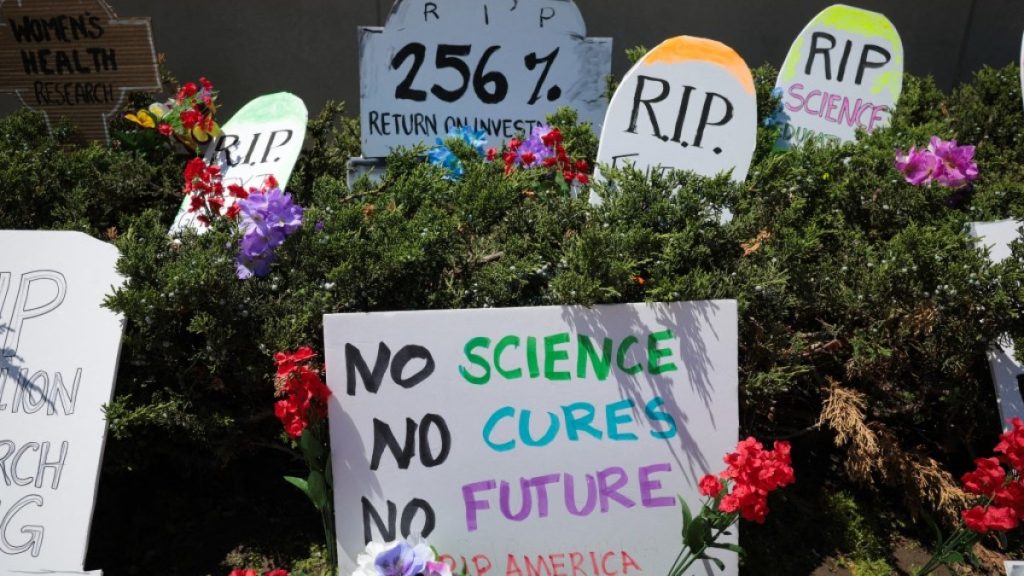
SCOTUS decision impacts DEI programmes that include breast cancer research and HIV prevention. The highest court in the US has ruled that the Trump administration can slash hundreds of millions of dollars’ worth of research funding on breast cancer, HIV prevention and suicide, among other issues, in its push to cut federal diversity, equity and inclusion (DEI) efforts. In a 5-4 decision issued on Thursday, the Supreme Court lifted a judge’s order blocking $783m worth of cuts made by the National Institutes of Health (NIH) to align with Republican President Donald Trump’s priorities. The justices granted the Justice Department’s request to lift Boston-based US District Judge William Young’s decision in June that the grant terminations violated federal law, while a legal challenge brought by researchers and 16 US states plays out in a lower court. The order marks the latest Supreme Court win for Trump and allows the administration to forge ahead with cancelling hundreds of grants while the lawsuit continues to unfold. The plaintiffs, including states and public-health advocacy groups, have argued that the cuts will inflict “incalculable losses in public health and human life”. The NIH is the world’s largest funder of biomedical research. The cuts are part of Trump’s wide-ranging actions to reshape the US government, slash federal spending and end government support for programmes aimed at promoting diversity or “gender ideology” that the administration opposes. The administration said Young’s ruling required the NIH to continue paying $783m in grants that run counter to its priorities. Advertisement The Supreme Court, which has a 6-3 conservative majority, has sided with the administration in almost every case that it has been called upon to review since Trump returned to the presidency in January. After Trump signed executive orders in January targeting DEI and gender ideology, NIH instructed staff to terminate grant funding for “low-value and off-mission” studies deemed related to these concepts, as well as COVID-19 and ways to curb vaccine hesitancy. Young’s ruling came in two lawsuits challenging the cuts. One was filed by the American Public Health Association, individual researchers and other plaintiffs, who called the cuts an “ongoing ideological purge” targeting projects based on “vague, now-forbidden language”. The other was filed by the states, most of them Democratic-led. The plaintiffs said the terminated grants included projects on breast cancer, Alzheimer’s disease, HIV prevention, suicide, depression and other conditions that often disproportionately burden minority communities, as well as grants mandated by Congress to train and support a diverse group of scientists in biomedical research. Young, an appointee of former Republican President Ronald Reagan, invalidated the grant terminations in June. In a written ruling, the judge said they were “breathtakingly arbitrary and capricious”, violating a federal law governing the actions of agencies. During a June hearing in the case, Young rebuked the administration for what he called a “darker aspect” to the case that the cuts represent “racial discrimination and discrimination against America’s LGBTQ community”. “I’ve never seen a record where racial discrimination was so palpable,” the judge said. Young also said the cuts were designed to stop research that bears on the health of the LGBTQ community. “That’s appalling,” the judge said. The administration has argued that the litigation should have been brought in a different judicial body, the Washington-based Court of Federal Claims, which specialises in money damages claims against the US government. That reasoning was also the basis for the Supreme Court’s decision in April that let Trump’s administration proceed with millions of dollars of cuts to teacher training grants, also targeted under the DEI crackdown. Adblock test (Why?)
What’s the Texas redistricting fight about, and how has California reacted?
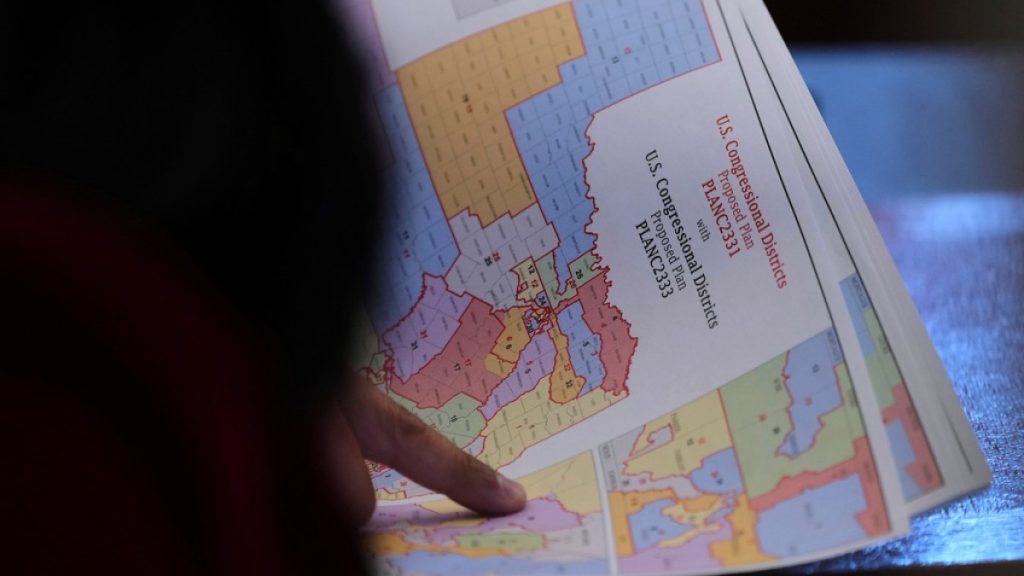
President Donald Trump and his allies have kicked off a redistricting fight in the United States as the country’s two main political parties angle for advantage in the 2026 midterm elections. In an effort to maintain control of Congress, Republican leaders in the right-wing stronghold of Texas have pushed to redraw the state’s congressional districts in a way that would net the party as many as five additional seats in the US House of Representatives. Trump has encouraged the effort, calling it a “big WIN for the Great State of Texas”. The state’s Senate is expected to vote on the new district plans as early as Thursday evening. But that effort has prompted a backlash. The Democratic-leaning state of California responded in kind by passing a plan on Thursday to abandon nonpartisan redistricting and create new congressional maps that could bring the Democrats five more seats, negating the effort in Texas. Party leaders in other states, including Missouri and Florida, have also indicated they may seek to rejigger their districts to pick up more seats. The standoff points to larger questions about how to ensure fair representation in Congress and how Trump has sought to exert wide-reaching control over the country’s political system. With Trump’s approval rating slipping to about 40 percent, Republicans risk losing their narrow, 219-person majority in the 435-seat House of Representatives in the midterm races. So what is redistricting? And what could it mean for upcoming elections? We answer those questions and more in this quick explainer. What is redistricting? Simply put, the practice of redistricting refers to drawing the boundaries of an election district. Advertisement Ideally, districts should be designed as an accurate and proportionate reflection of the area’s population. Maps are generally updated every 10 years, in accordance with the latest population census. But political parties can take steps to shape districts to their benefit, in a process sometimes referred to as gerrymandering. That involves finding creative ways to maximise the number of seats a party can win by carving districts based on demographics and voting trends, to increase the electoral weight of certain groups and minimise the influence of others. “Politicians can look at information about the partisan and demographic breakdown of an area and stack the decks in their favour,” said Thad Kousser, a professor of political science at the University of California at San Diego. This practice has a long and fraught history in the US, especially in states with histories of segregation and discrimination, where maps were often drawn to dilute representation for minority voters. What is happening in Texas? While redistricting is far from new, Texas has been in the spotlight recently for a particularly overt partisan effort. Part of the controversy stems from the involvement of President Trump, who prompted Texas Republicans to redraw maps. In June and July, reports began to emerge that the White House was holding calls with Texas state leaders to tee up a redistricting battle, in preparation for the 2026 midterms. Despite early concerns that the effort could backfire, Republican lawmakers in the state quickly put the plan in motion. Speaking by phone to CNBC on August 5, Trump seemed to suggest that the makeup of the US Congress should reflect his success in the 2024 presidential race. “We should have many more seats in Congress,” Trump said. “I got the highest vote in the history of Texas, as you probably know, and we are entitled to five more seats.” The state’s House of Representatives passed a new election map on Wednesday, and the Texas Senate is expected to do the same in the next few days. The new maps would carve out five additional districts in areas where Trump performed strongly during the last election. How did Texas Democrats respond? Texas Democrats condemned the redistricting as a partisan power grab and tried to prevent a vote on the new congressional map. In early August, they left the state in a bid to deny the Texas legislature the quorum it needed to move the plan forward. But as a minority voting bloc in the firmly Republican state legislature, the Democrats ultimately failed to stop the redistricting scheme. Advertisement While away, Texas Governor Greg Abbott ordered the absent Democrats’ arrest, and the Republicans in the state House echoed that effort with a vote to issue arrest warrants. Abbott also threatened the Democrats with criminal charges, including for bribery, if they solicited funds during their absence. What’s more, the Texas Democrats faced a series of reported bomb threats at their Illinois hotels. Eventually, after two weeks, they returned to their home state, allowing the vote to proceed. Democratic leaders have said that, while they did not stop the redistricting push, they drew attention to the issue and are preparing to challenge the new maps in court. Do both parties gerrymander? Yes, both parties have engaged in gerrymandering, and the practice has been employed throughout US history in varying contexts. In recent years, however, the practice has been more commonly associated with right-leaning states. Princeton University’s Gerrymandering Project found that states with the most severe gerrymandering tend to be Republican-led states in the southern US, where the practice has historically been employed to dilute the influence of Black voters. The project also found that a handful of states, such as Oregon, Illinois and Nevada, have partisan election maps that heavily favour Democrats. Some Democrats previously criticised gerrymandering as anti-democratic and pushed for changes to ensure that redistricting is nonpartisan. “Public servants should earn the votes of the people that they hope to represent. What Republicans are trying to do in Texas is to have politicians choose their voters,” House Democratic Leader Hakeem Jeffries recently told reporters. But as Trump seeks to increase his party’s advantage, some Democratic leaders have urged the party to change its approach and “fight fire with fire” through more explicitly partisan tactics. Is gerrymandering legal? Courts have, on occasion, struck down gerrymandered congressional maps on the basis that they violate the