

US announces more sanctions on ICC officials for targeting Americans, Israelis
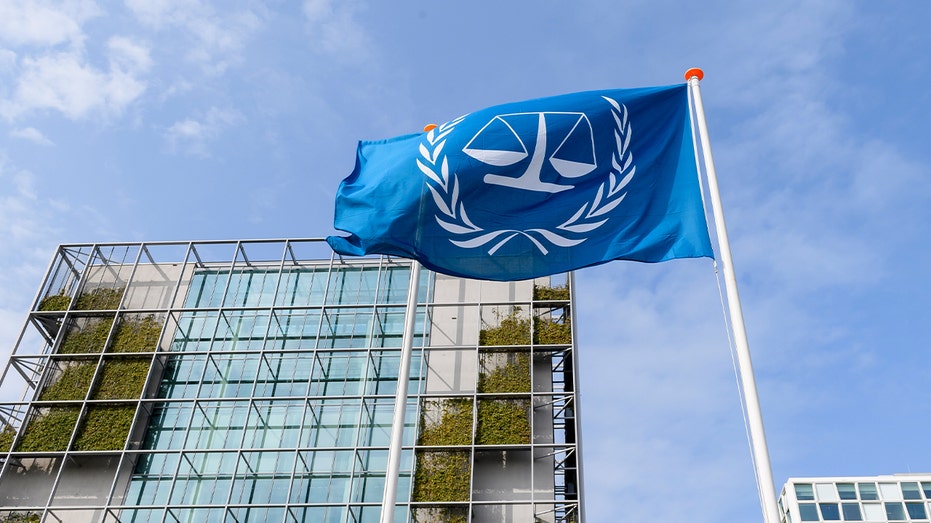
Four additional International Criminal Court (ICC) officials are facing U.S. sanctions over actions targeting Americans and Israelis. The State Department cited President Donald Trump’s executive order titled “Imposing Sanctions on the International Criminal Court,” as its reasoning for issuing the sanctions. Those named are ICC Judge Kimberly Prost (Canada), ICC Judge Nicolas Yann Guillou (France), and ICC Deputy Prosecutors Nazhat Shameem Khan (Fiji) and Mame Mandiaye Niang (Senegal). “These individuals are foreign persons who directly engaged in efforts by the International Criminal Court (ICC) to investigate, arrest, detain, or prosecute nationals of the United States or Israel, without the consent of either nation,” Secretary of State Marco Rubio said in a statement. US SANCTIONS PALESTINIAN AUTHORITY OFFICIALS AFTER REJECTING GLOBAL PUSH TO GIVE IT CONTROL OF GAZA While neither the U.S. nor Israel are members of the ICC, the individuals at the center of the sanctions have taken actions against both nations in their official capacities. According to the State Department, Prost ruled to authorize an investigation of U.S. personnel in Afghanistan, while Guillou ruled to authorize the ICC arrest warrants for Israeli Prime Minister Benjamin Netanyahu and former Minister of Defense Yoav Gallant. Meanwhile, Khan and Niang are subject to the sanctions “continuing to support illegitimate ICC actions against Israel,” including the arrest warrants, since assuming leadership of the ICC’s Office of the Prosecutor in May. “The [ICC] continues to disregard national sovereignty and facilitate lawfare through efforts to investigate, arrest, detain, and prosecute American and Israeli nationals,” Rubio wrote on X announcing the sanctions. “In response, I am sanctioning four additional ICC officials. We will continue to hold accountable those responsible for the ICC’s morally bankrupt and legally baseless actions against Americans and Israelis.” TRUMP ADMIN SANCTIONS BRAZILIAN JUDGE OVERSEEING BOLSONARO COUP-PLOT PROBE In response to a request for comment, the ICC pointed Fox News Digital to a public statement. The ICC said it “deplores the announcement of new designations for sanctions by the U.S. administration.” “These sanctions are a flagrant attack against the independence of an impartial judicial institution which operates under the mandate from 125 States Parties from all regions. They constitute also an affront against the Court’s States Parties, the rules-based international order and, above all, millions of innocent victims across the world,” the ICC’s statement read. WATCHDOG BACKS RUBIO’S SANCTIONS ON UN OFFICIAL OVER ‘SHAMEFUL EFFORTS’ TARGETING US, ISRAEL The State Department said that the sanctions are meant to “impose tangible and significant consequences” against Prost, Guillou, Khan and Niang. Their U.S. assets have been frozen, and U.S. persons and businesses are prohibited from dealing with them. This also applies to companies in which they hold at least 50 percent ownership. Additionally, the sanctions cover workarounds, such as indirect transactions. In February, Trump signed an executive order in which he claimed that the ICC had “engaged in illegitimate and baseless actions targeting America and our close ally Israel.” The order also stated that the U.S. rejects any ICC actions against it or its allies who have “not consented to ICC jurisdiction.” The order lists the types of sanctions that can be imposed, many of which are now being applied to Prost, Guillou, Khan and Niang.
Russians made concessions ‘almost immediately,’ Trump envoy says of Putin summit
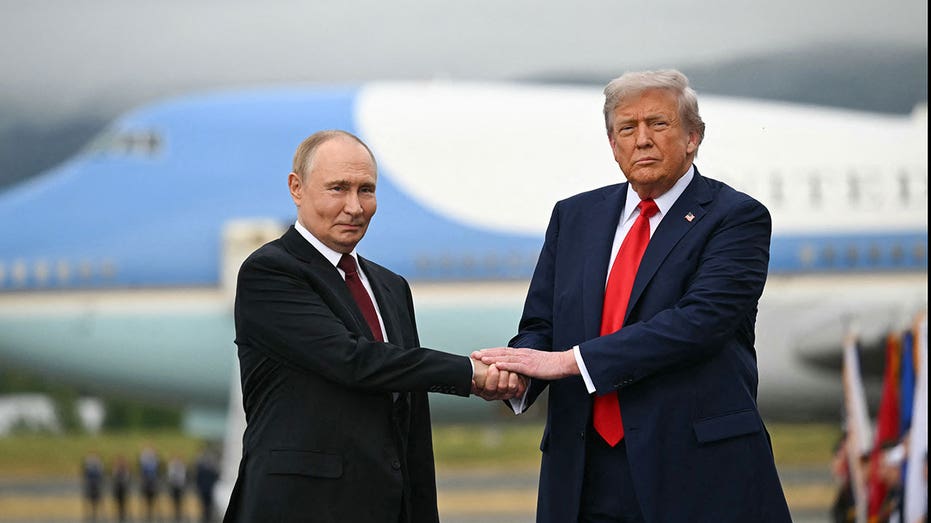
Russia gave in quickly to concessions during President Donald Trump’s meeting with Russian President Vladimir Putin in Anchorage, Alaska, Friday, according to U.S. special envoy Steve Witkoff. The remarks come as the U.S. and European allies are sorting out various security guarantees to accompany a peace deal and after Witkoff said Sunday that Putin was on board with permitting the U.S. and its European allies to provide additional protection for Ukraine, akin to protections included in NATO’s Article 5 mutual defense clause. “I don’t want to delve into the specifics of what was discussed because we’re in a negotiation, mediating, and I think we’re going to be very successful because of the leadership of President Trump,” Witkoff told Fox News Tuesday night. JD VANCE STEPS INTO THE SPOTLIGHT DEFENDING TRUMP’S FOREIGN POLICY IN OVAL OFFICE DUSTUP WITH ZELENSKYY “But there were concessions almost immediately made on the part of the Russians in the first meeting in Alaska,” Witkoff said. “And, you know, part of getting those concessions was learning whether we were going to be able to see the Russians prepared to be more accommodating.” Historically, Russia has made demands that a peace deal include provisions to bar Ukraine from ever joining NATO, along with concessions on some of the borders that previously were Ukraine’s. TRUMP: EUROPE WILL ‘TAKE A LOT OF THE BURDEN’ IN PROVIDING SECURITY GUARANTEES FOR UKRAINE Although Trump said Sunday that Ukraine could end the war by agreeing to certain land concessions to Russia and eliminating the possibility of NATO membership for Ukraine under a potential peace deal, the next step Trump and other European allies are working toward is hashing out security provisions for Ukraine under such a deal. That was a huge focus Monday, when Trump met with Ukrainian President Volodymyr Zelenskyy and other European leaders at the White House to discuss various security measures to prevent Russian aggression against Ukraine in the future. After the meetings, Trump said Tuesday that sending U.S. troops to Ukraine to beef up security in the region was off the table. “The president has definitively stated U.S. boots will not be on the ground in Ukraine, but we can certainly help in the coordination and perhaps provide other means of security guarantees to our European allies,” White House press secretary Karoline Leavitt told reporters Tuesday. “The president understands security guarantees are crucially important to ensure a lasting peace, and he has directed his national security team to coordinate with our friends in Europe and also to continue to cooperate and discuss these matters with Ukraine and Russia as well.” TRUMP CALLS WHITE HOUSE TALKS ‘VERY GOOD, EARLY STEP’ TOWARD RUSSIA-UKRAINE PEACE: HERE’S WHAT’S NEXT Zelenskyy said U.S. backing on security guarantees is critical to delivering stability to Ukraine. “Security in Ukraine depends on the United States and on you and on those leaders who are with us in our hearts,” Zelenskyy said Monday. “We spoke about it, and we will speak more about security guarantees,” Zelenskyy said. “This is very important that the United States gives such strong signal and is ready for security guarantees.”
Iran says moment for ‘effective’ nuclear talks with US not yet reached
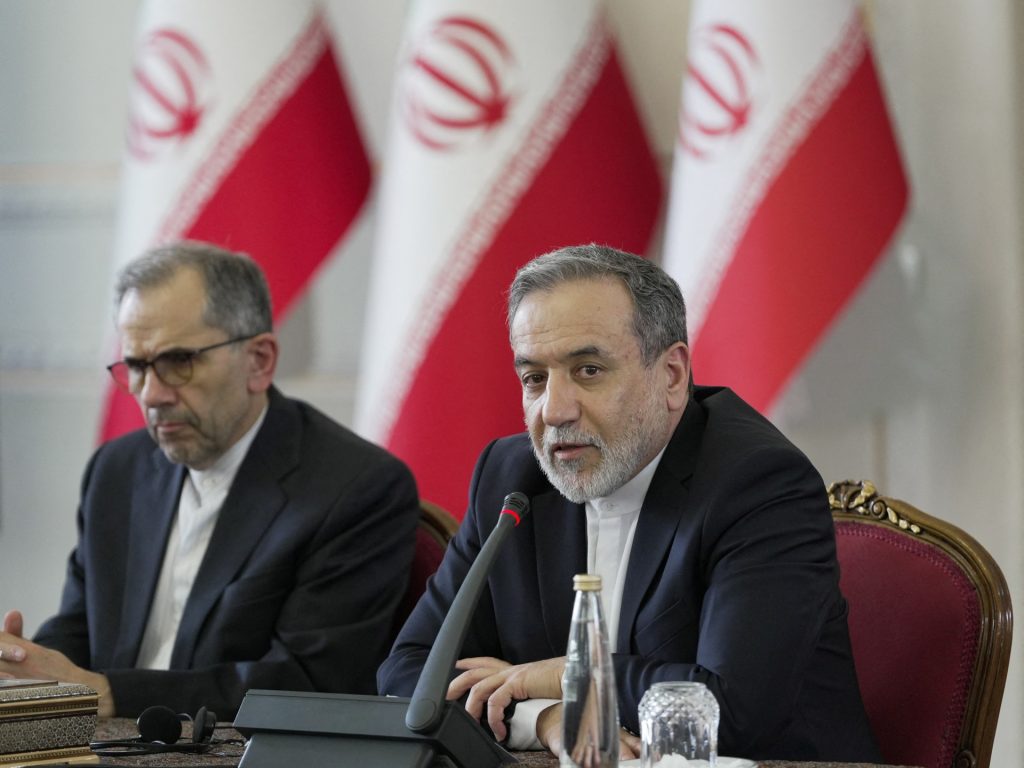
Iran’s FM sceptical about resuming talks with the US, says Iran cannot break ties with UN nuclear watchdog. Iran believes the moment for “effective” nuclear talks with the United States has not yet arrived, its top diplomat has said, adding that Tehran would not completely cut off cooperation with the United Nations nuclear watchdog. “In my opinion, we have not yet reached the point of maturity where effective negotiations with the US can take place,” Foreign Minister Abbas Araghchi said in remarks carried by state media on Wednesday. Tehran suspended negotiations with Washington, which were ostensibly aimed at curbing Iran’s nuclear ambitions, after the US and Israel struck the country with massive bombardments in June during a 12-day conflict. Since then, inspectors from the International Atomic Energy Agency (IAEA) have been unable to access Iran’s nuclear installations, despite its chief Rafael Grossi stating that inspections remain essential. US President Donald Trump and Israeli Prime Minister Benjamin Netanyahu have warned they will not hesitate to attack Iran again if it resumes enrichment of uranium, a possible pathway to developing nuclear weapons. Iran, which denies any intention to develop nuclear weapons and has long insisted its pursuits are for civilian uses, vowed a forceful response to the threats. Neither US intelligence nor the IAEA said they found any evidence earlier this year that Iran was developing atomic weapons. European powers including Britain, France and Germany have threatened to activate UN sanctions on Iran under a “snapback” mechanism if Iran does not return to the negotiation table. Advertisement Araghchi said a meeting with Europeans could take place in the coming days, though “a basis for negotiations” has not been reached. Last month, Iran’s parliament passed legislation suspending cooperation with the IAEA and stipulating that any future inspections will need a green light from Tehran’s Supreme National Security Council. The legislation came after Tehran accused the IAEA of effectively paving the way for the Israel-US attacks with a report on May 31 that led the agency’s Board of Governors to declare Iran in breach of its non-proliferation obligations. Iran’s President Masoud Pezeshkian warned the IAEA in July to abandon its “double standards” if it hopes to restore cooperation over the country’s nuclear programme, amid an acute mistrust following Israel and the US’s attacks on Iranian nuclear sites, and the UN nuclear watchdog’s refusal to condemn the strikes. Araghchi said in his remarks on Wednesday that Tehran was not cutting off all cooperation with the IAEA. “The return of inspectors will be possible based on the parliament’s law, that is, with the approval of the Supreme National Security Council … So, it is not that we say we absolutely cut cooperation with the agency.” Araghchi spoke two days after a Foreign Ministry spokesperson said Iran would continue talks with the IAEA and they would probably have another round of negotiations in the coming days. Adblock test (Why?)
China FM in Afghanistan, offers to deepen cooperation with Taliban rulers
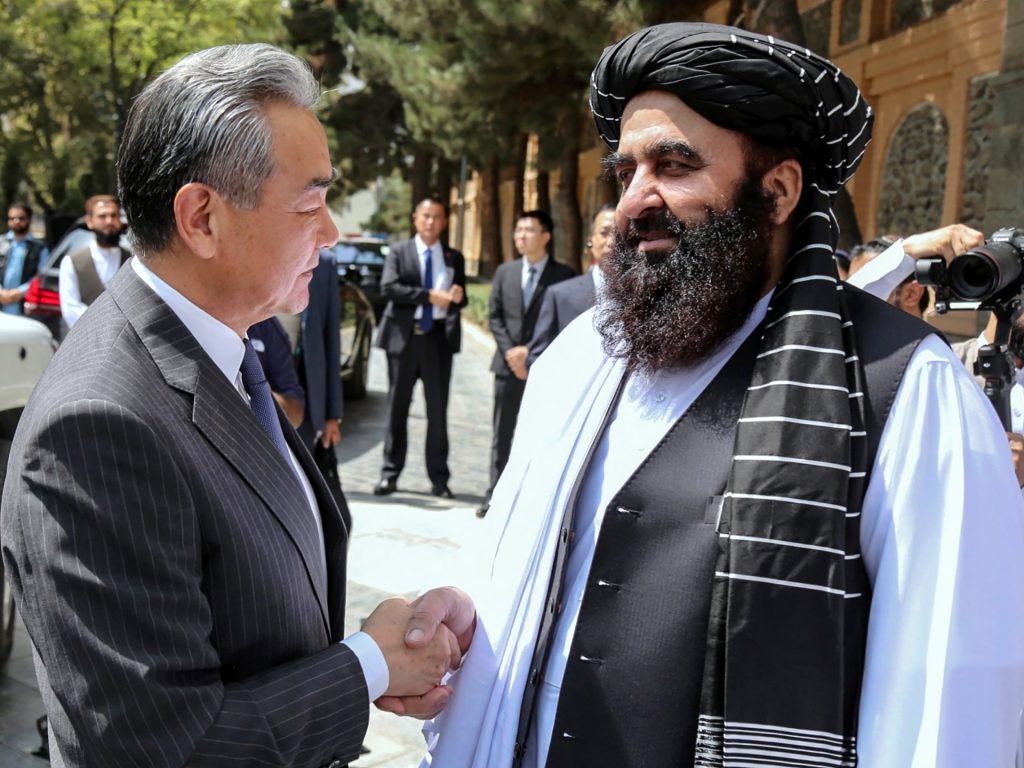
Mining, Belt and Road participation feature in trilateral meetings between China, Afghanistan and Pakistan in Kabul. China wants to explore mining in Afghanistan and have Kabul formally join its Belt and Road Initiative, a massive infrastructure plan, which is a central pillar of President Xi Jinping’s bid to expand his country’s global influence, the Afghan Taliban Ministry of Foreign Affairs has said. Chinese Foreign Minister Wang Yi is visiting Kabul and held talks with Afghanistan’s Foreign Minister Mawlawi Amir Khan Muttaqi, the ministry said in a statement on Wednesday, adding that both countries wanted to deepen ties in a number of areas. Beijing will continue to support the Afghan government to achieve long-term peace and stability, Wang told Muttaqi, according to a readout of the meeting released by China’s Ministry of Foreign Affairs. China is willing to deepen political mutual trust with Afghanistan and step up cooperation in areas including trade and agriculture, Wang said. He called on Afghanistan to combat armed groups, adding that tighter security ties would provide a guarantee to bilateral economic cooperation. “Mr Wang Yi also mentioned that China intends to initiate practical mining activities this year,” the Afghan statement said. Wang also met Afghan Prime Minister Mullah Muhammad Hassan Akhund, according to Hamdullah Fitrat, deputy spokesperson of the administration. “China has cooperated not only with Afghanistan but also with other countries around the world in their development, and it has played a constructive role,” Akhund told Wang, urging Beijing to continue its “efforts and cooperation on the international stage in support of Afghanistan’s legitimate position”. Advertisement Wang told the prime minister that China was a “sincere and steadfast” in its friendship with Afghanistan. “We fully support the Afghan people in their progress,” he said, according to Fitrat. Wang is in Kabul for trilateral meetings between China, Afghanistan and Pakistan. Neither Beijing nor Islamabad formally recognise the interim administration, but both nations have posted their ambassadors in Kabul and have received Afghan envoys in their capitals. China was the first country to appoint an ambassador to Afghanistan under the Taliban and has sought to develop its ties with the hardline group that took control of the war-torn country in 2021. The impoverished country, rich in lithium, copper and iron deposits, could offer a wealth of mineral resources to boost Beijing’s supply chain security, analysts say. Adblock test (Why?)
Confrontation between Tunisia’s General Union, President Saied escalates
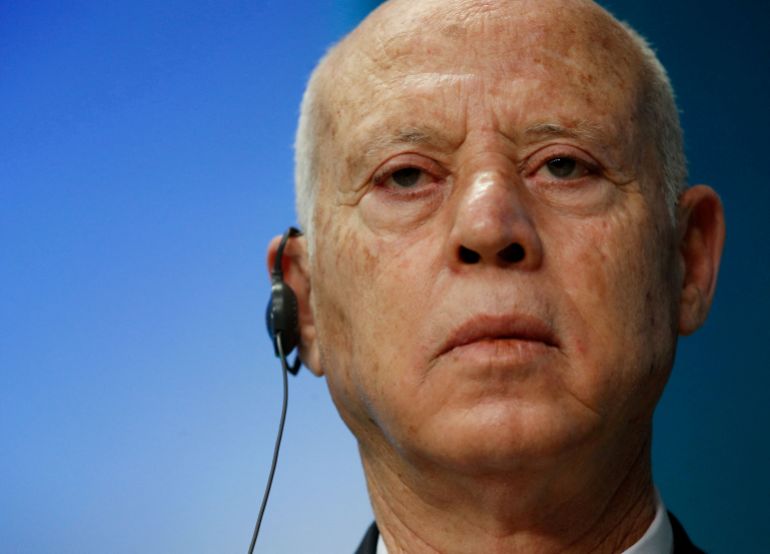
Tunisia’s General Labour Union (UGTT) is poised to take on President Kais Saied in a protest scheduled for August 21. The union called for a protest against what it says are government attempts to undermine workers’ rights, and the use of intimidation to curb strikes, referring to a three-day UGTT transport strike at the end of July. Since he seized power on July 25, 2021, Saied has radically undermined the role of parliament and political parties while granting himself vastly increased powers through a constitution revised according to his edicts. Yet the UGTT’s ability to mobilise its hundreds of thousands of members stands as one of the few remaining counters to Saied, analysts say. “The UGTT has always been more than just a trade union,” Hamza Meddeb of the Carnegie Institute, who has written extensively on the organisation, told Al Jazeera. “It was established even before Tunisian independence, and played a significant role in achieving that,” he said of Tunisia’s liberation from France in 1956. “Since then, it’s played both an economic role … as well as a political role, such as in 2015, when it was the principal force behind establishing the National Dialogue,” Meddeb continued, referring to a political crisis when the UGTT and three other civil society organisations helped prevent the collapse of Tunisia’s post-revolutionary democracy. Tunisia’s President Kais Saied [File: Johanna Geron/Pool via Reuters] Inevitable confrontation Matters reached a head between UGTT and Saied on August 7 when hundreds of Saied’s supporters rallied outside UGTT headquarters, accusing it of “corruption” and “squandering people’s money” after a three-day transport strike in late July paralysed much of the country. Advertisement The following night, Saied defended the anti-union protesters, repeating their calls for union “accountability” and stressing that, contrary to claims from both the UGTT and rights groups, his supporters had not intended violence. “There are files that must be opened because the people are demanding accountability … so that their money can be returned to them,” Saied said in a video posted on the presidency’s official Facebook page. Further confrontations between the president and the union were inevitable, but many analysts point to what they say is a union weakened by internal schisms and the threat to its decades-long monopoly on union power in Tunisia. “For the past two years, the UGTT has been silent, certainly on the political side of things,” a political analyst who remained in Tunisia told Al Jazeera, on condition of anonymity. “Saied even revised the labour code without consulting them,” they said of the May decision to change laws that affected many of UGTT’s members. “Previously, making a decision on that scale without the UGTT would have been inconceivable,” he said. UGTT supporters take to the streets in 2023. Analysts say the union’s ability to draw similar numbers to the streets has declined in the years since [Jihed Abidellaoui/Reuters] A weakened union Much of the UGTT’s relatively low profile lies in an internal rupture, prompted by its decision in 2021 to extend its board’s mandate from two to three terms, which is said to have splintered the union’s membership and undermined it. “There are many in the UGTT who see the 2021 decision as a coup d’etat of the union’s own, which has really weakened the board’s decision to do anything,” Meddeb said. “You also can’t avoid the fact that the financial situation across the country is getting much, much worse, which means that the core membership of the union – the state-dependent middle class – are also suffering, and are blaming a board they already have little faith in for that, too. “So, when Saied calls it a ‘corrupt union’ … that makes sense to much of its membership,” Meddeb said. “It’s also easy, [given its long history and close relationships with all of Tunisia’s past governments] for Saied to paint it as part of the country’s elite that has been holding its people back,” he concluded. A rival union emerges Moves to undermine the UGTT’s base are already under way. On Monday, the government announced it would halt the longstanding practice of allowing union officials to receive their government salaries while on union business, with more such moves expected. UGTT secretary-general, Noureddine Taboubi, called for a protest in response to what the union says are government attacks upon it [File: Fethi Belaid/AFP] Saied is also said to be encouraging the rival Union of Tunisian Workers (UTT), which analysts such as author Hatem Nafti say could try to take advantage of any weakening of the bond between the UGTT and its membership, to boost its standing. Advertisement How successful that would be in light of the UTT leadership’s previous convictions on corruption charges, remained to be seen, he added. That the UTT is ready to step into any breach left by the UGTT was clear last week, when it issued a statement accusing its rivals of what it said was the “defamation” of the president. Nafti said that the government might also seek to halt the practice of deducting UGTT membership fees from state employees’ salaries at source before transferring the funds to the union, which would give UTT more hope of winning members away from UGTT. “That Kais Saied would move against the UGTT was written from day one,” Nafti told Al Jazeera from Paris, where he now lives. “Populism doesn’t allow any mediator between the leader and the people, so firstly, he got rid of rival political parties, then civil society and the media. “Even the television networks that support him don’t show political programmes any more,” he said. “The UGTT was the logical next step.” Adblock test (Why?)
Online Gaming Bill row: Over 200000 jobs, 400 companies at risk, how Rs 200000 crore sector will be impacted?
Online Gaming Bill, 2025, marks a significant legislative step in addressing the rapid growth of India’s online gaming sector. Under the Bill, “e-sport” is defined as an online game played as part of multi-sport events, involving organised competitive competitions between individuals or teams.
FASTag Annual Pass: Service NOT available on 4 major expressways of UP – Read carefully before going on a road trip

The FASTag Annual Pass was introduced countrywide on August 15 and has since been positively received by the general public. This pass was bought and activated by roughly 5 lakh customers in just 4 days.
Delhi CM Rekha Gupta attacked: Accused caught on CCTV surveying residence, taking videos 24 hours before incident
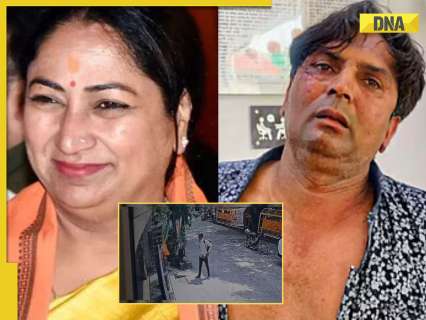
Delhi CM Rekha Gupta was allegedly ‘slapped’ by accused Rajesh Bhai Khimji during Jan sunwai at her residence. The man, identified as Rajesh, was spotted near Rekha Gupta’s Shalimar Bagh residence 24 hours before the attack, in a new CCTV footage. What does the CCTV shows?
Opposition MPs tear controversial PM-CM bills, throw paper bits at Amit Shah during his speech in Lok Sabha, WATCH
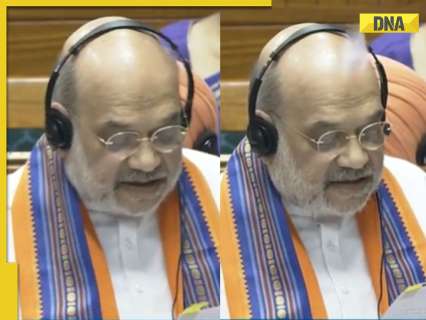
Opposition MPs tore and threw the copies of the three Bills towards Union Home Minister Amit Shah in the Lok Sabha. What did the opposition said about the controversial bills?
Online Gaming Bill: Lok Sabha passes bill to ban online games played with money
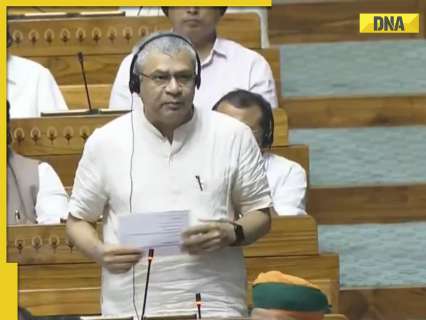
The Bill was passed by a voice vote after brief remarks by IT Minister Ashwini Vaishnaw amid protests in the House by opposition members.