

Who is Manikrao Kokate? Maharashtra Minister faces arrest in 1995 cheating and forgery case
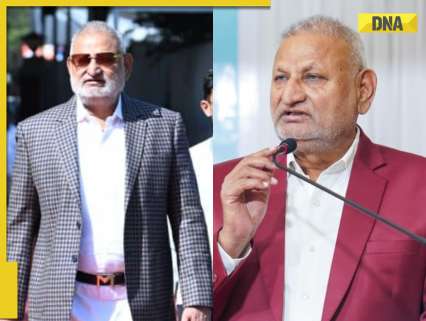
Manikrao Kokate has moved the Bombay High Court, challenging his conviction and the two-year jail term in the case.
Delhi-Dehradun Expressway to open for public soon, Nitin Gadkari reveals new inauguration date
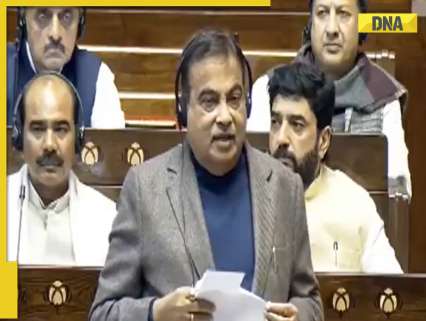
The Delhi-Dehradun expressway will reduce travel time between the two cities to two hours from the existing 6.5 hours.
Texans can use school vouchers for pre-K, but the pool of families who qualify is limited

A limited group of families with 3- and 4-year-olds who already qualify for free public pre-K can receive state funds to attend private preschool.
Texas Democrats fill every state and federal race on 2026 ballot, a first for either party
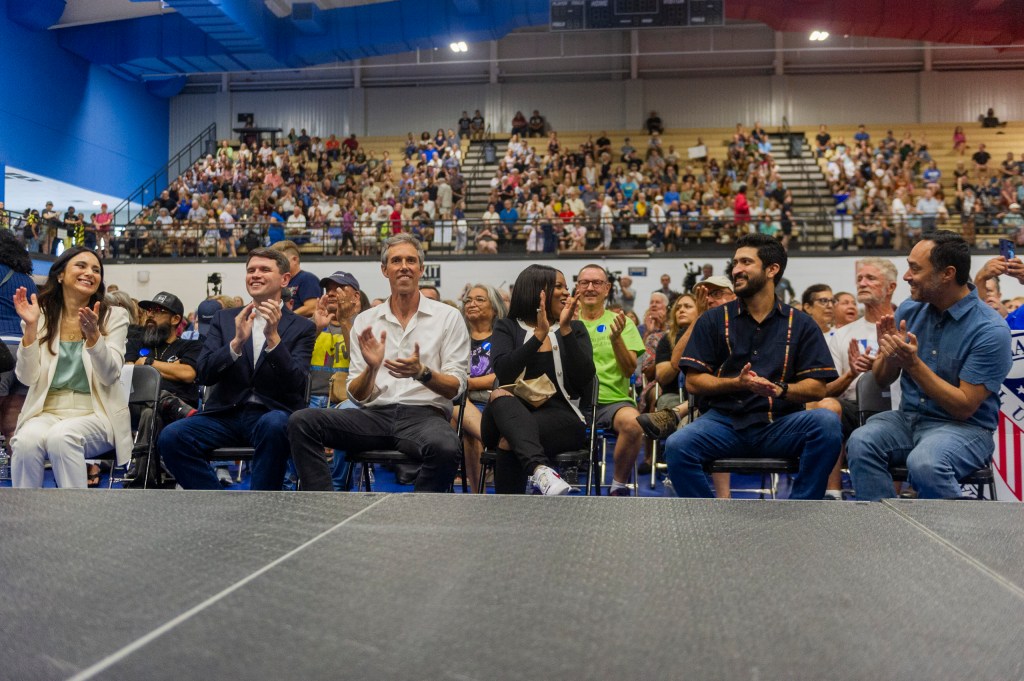
Texas Majority PAC and the Texas Democratic Party recruited 104 candidates to fill uncontested races. Gov. Greg Abbott’s strategist said it amounts to a gimmick “if they don’t back it up with serious resources.”
Blamed for the nation’s historic measles outbreak, West Texas Mennonites have hardened their views on vaccines
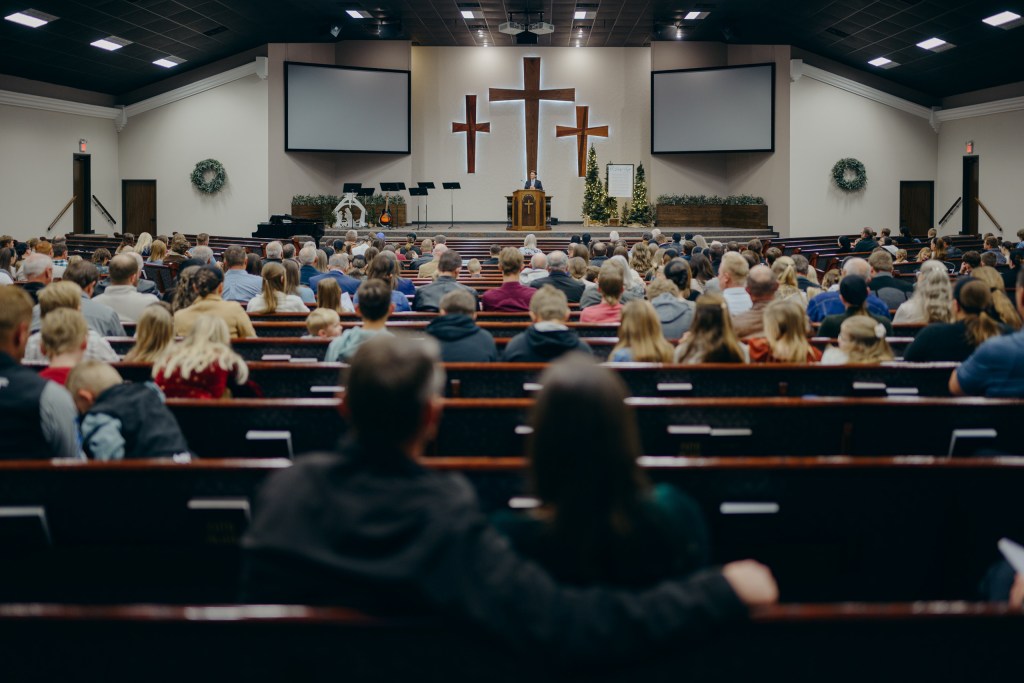
Months after public health officials say they caused the nation’s largest measles surge in 30 years, some West Texas Mennonites have grown more skeptical of the mainstream medical system.
Global wave of terror plots sparks new alarms over the West’s growing vulnerability

A terrorist assault on a Hanukkah celebration in Sydney, combined with Germany’s arrest of five suspected Islamist militants accused of plotting a Christmas-market attack, is renewing fears that Western democracies are entering a more volatile era marked by ideologically driven violence. The incidents, striking symbolic holiday gatherings on opposite sides of the world, have intensified debate across the United States and Europe over whether open societies are prepared for a resurgence of extremist threats. The sense of unease deepened further after an ISIS-affiliated gunman in Syria killed two U.S. service members and wounded an American civilian working alongside American forces. While the attack took place overseas, national security analysts say it reflects a pattern troubling Western governments: individuals able to inflict harm quickly with minimal planning, animated by broader ideological movements rather than directed by terrorist networks. TRUMP ENCOURAGES JEWISH AMERICANS TO ‘CELEBRATE PROUDLY’ DURING HANUKKAH AFTER DEADLY BONDI BEACH SHOOTING In Australia, the Bondi Beach shooting shocked a nation unaccustomed to mass-casualty attacks. Two gunmen opened fire at a public Hanukkah event known as “Chanukah by the Sea,” killing at least 15 people and injuring dozens. Police said the younger of the two attackers had previously drawn scrutiny for potential extremist ties but was not considered a current threat. Authorities recovered improvised explosive devices that failed to detonate, prompting Prime Minister Anthony Albanese to condemn the shooting as “pure evil” and declare it an antisemitic terrorist attack. Hours later, German authorities announced the arrest of five suspected militants accused of planning an attack on a Christmas market in Bavaria — a soft target with deep cultural resonance and a painful history of extremist violence. Investigators said the suspects were inspired by global jihadist movements and had progressed to advanced planning stages. And over the same weekend, federal authorities in the United States said they disrupted a credible terrorist plot of their own. The FBI arrested four alleged members of a radical pro-Palestinian extremist group accused of planning coordinated New Year’s Eve bombings across Los Angeles using improvised explosive devices. A fifth suspect was arrested in New Orleans in what officials described as a separate but ideologically aligned plot. Together with the killing of American troops in Syria, the incidents have revived a central question: Is the West prepared for a new era of diffuse extremist violence capable of erupting in multiple theaters at once — from major cities to remote patrol bases? Political pressure is mounting. Sen. Tommy Tuberville, R-Ala., said the Sydney attack underscored the consequences of permissive migration policies. “The mass migration of Islamic extremists destroyed Europe. Now, we are witnessing it destroy Australia,” he warned. “We CANNOT allow it to destroy America.” President Donald Trump has long argued that unrestricted immigration from countries with values he says conflict with the West poses a homeland security risk. During his first term, he designated chapters of the Muslim Brotherhood a foreign terrorist organization. Secretary of State Marco Rubio framed the threat as ideological rather than geographic, saying last week on Fox News: “Radical Islam has shown that their desire is not simply to occupy one part of the world … they want to expand.” Elon Musk amplified the debate further, writing: “Either the suicidal empathy of Western civilization ends or Western civilization will end.” ISRAELI KNESSET MEMBER SAYS AUSTRALIAN OFFICIALS ‘DID NOTHING’ AMID RISE OF ANTISEMITISM BEFORE SYDNEY ATTACK Extremism researchers note that the recent incidents reflect a familiar model of modern Islamist violence: attackers exploiting soft targets, acting with limited preparation, and drawing inspiration from global ideological movements even when they lack direct operational ties. The shootings in Sydney, the foiled plots in Germany and the U.S., and the gunman in Syria each demonstrated how quickly such violence can surface, even in countries with strong counterterrorism systems. Michael Makovsky, president of the Jewish Institute for National Security of America, said the Sydney, Germany and Syria incidents reflect a broader trend Western leaders have been slow to confront. “Clearly, the threat hasn’t diminished,” Makovsky said, adding that extremist networks appear more energized in the wake of recent Middle Eastern conflicts. He criticized governments that he believes underestimated the risks. “People have been warning the Australian government … there’s a spike in Islamic extremism, and they just didn’t do anything,” he said of the Sydney attack, questioning how such a large public Jewish event lacked stronger security. “I don’t know where the security was in all this and why it took the police so long to respond.” Makovsky praised the Trump administration’s efforts to confront a rise in antisemitism but warned that the U.S. may be overlooking risks inherent in its partnership with Syria’s new leader Ahmed al-Shaara, a former wanted terrorist. “The administration is very invested right now in Shaara, and seems to want to minimize that the killer was from Shaara’s security forces,” he said. “There are a lot of bad people still around Shaara.” As investigators in three countries piece together motives and networks, policymakers are confronting a possibility many had hoped was receding: that extremist violence, driven by global ideological currents rather than coordinated plots, may be entering a new phase — one that challenges assumptions Western nations have relied on to keep their citizens safe.
Jack Smith denies politics played any role in Trump prosecutions during House hearing
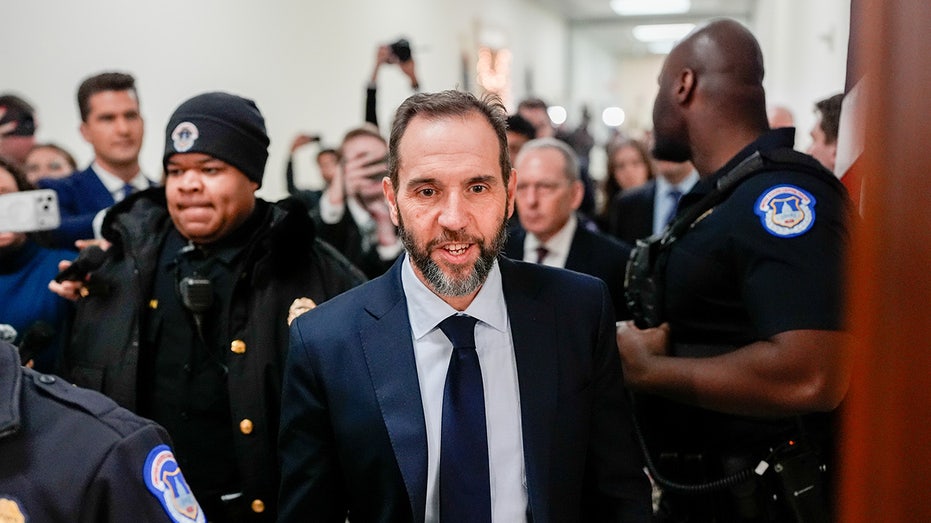
Former special counsel Jack Smith told House lawmakers during a closed-door deposition Wednesday that politics played no role in his investigations and prosecutions of President Donald Trump, directly countering accusations leveled at him by Republicans. Smith, speaking to House Judiciary Committee members on Capitol Hill during the deposition, also took full ownership of the two criminal cases he brought against Trump regarding the 2020 election and alleged retention of classified documents, according to portions of his opening statement obtained by Fox News Digital. “The decision to bring charges against President Trump was mine, but the basis for those charges rests entirely with President Trump and his actions, as alleged in the indictments returned by grand juries in two different districts,” Smith said. JACK SMITH SUBPOENAED FOR DEPOSITION WITH HOUSE JUDICIARY COMMITTEE He added: “If asked whether to prosecute a former President based on the same facts today, I would do so regardless of whether the President was a Republican or Democrat.” Smith’s closed-door confrontation with lawmakers could stretch for hours. He is expected to face heated questions from Republicans about seeking gag orders against Trump during his presidential campaign, attempting to fast-track court proceedings and subpoenaing phone data of some GOP members of Congress. Upon exiting the committee room, Rep. Jared Moskowitz, D-Fl., however, told reporters the deposition was “boring” so far. This is a developing story. Check back for updates. Jessica Sonkin contributed to this report.
House Republican who voted to impeach Trump in 2021 won’t seek re-election
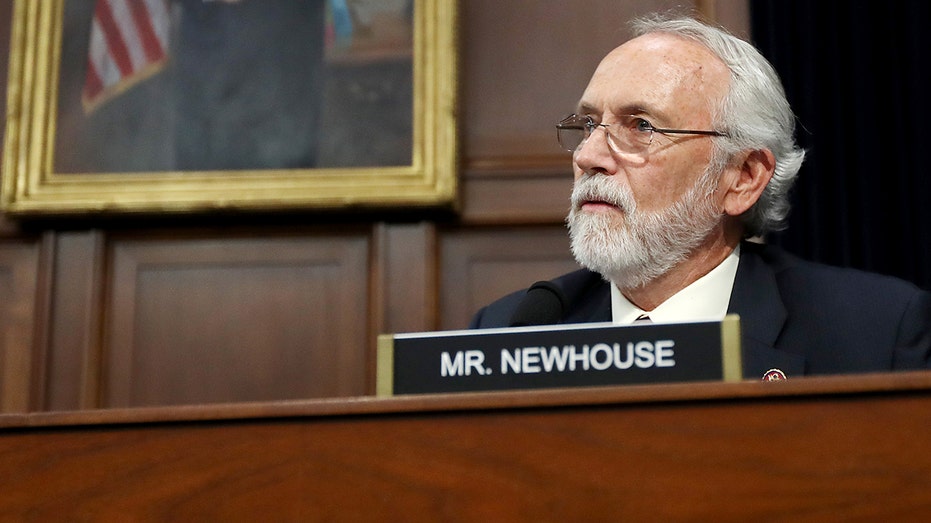
Rep. Dan Newhouse, R-Wash., one of the few Republicans who voted to impeach President Donald Trump in 2021, announced on Wednesday that he will not seek re-election in 2026. “This decision comes with no reservations or remorse, only gratitude for the tremendous opportunity to have represented my home state in Congress,” Newhouse wrote in a statement. “After over 25 years of public service, including more than a decade in the House, I am grateful to the Washingtonians who put their faith in me, as well as the colleagues I have served with on both sides of the aisle,” he added. Newhouse’s upcoming departure means that Rep. David Valadao, R-Calif., could be the only remaining House Republican who voted in favor of Trump’s impeachment in 2021, if Valadao wins re-election. US–VENEZUELA SHOWDOWN THREATENS TO JOLT GAS PRICES — WHAT COULD SPARK A SURGE Newhouse was one of 10 House Republicans who supported the impeachment effort. In addition to Valadao, the others were Reps. Liz Cheney of Wyoming; Anthony Gonzalez of Ohio; Jaime Herrera-Beutler of Washington; John Katko of New York; Adam Kinzinger of Illinois; Peter Meijer of Michigan; Tom Rice of South Carolina, and Fred Upton of Michigan. The latter eight have since left Congress. Newhouse won re-election in 2024 despite Trump making an effort to oust him. “Newhouse has to go! He wished he didn’t do what he did, but it’s too late,” Trump wrote on his Truth Social platform just a week before Election Day. MODERATE REPUBLICAN ERUPTS ON HOUSE GOP LEADERS, SAYS NOT HOLDING OBAMACARE VOTE IS ‘ABSOLUTE BULLS—‘ Trump also emphasized his support for Newhouse’s rival. “Jerrod Sessler is a fantastic Candidate and will be a GREAT Congressman for Washington State’s 4th Congressional District.” “He is running against a Weak and Pathetic RINO named Newhouse, who voted to, for no reason, Impeach me,” Trump wrote at the time. HOUSE GOP TENSIONS ERUPT AS REPUBLICANS TURN ON EACH OTHER HEADING INTO YEAR’S END Sessler, a Navy veteran, unsuccessfully challenged Newhouse for Washington’s 4th Congressional District. In addition to Trump, he was also backed by the ultra-conservative House Freedom Caucus. At the time, Newhouse argued his vote to impeach Trump wouldn’t be a problem. “I worked very closely and successfully with President Trump and his first administration and I feel very confident that I can do that again,” he told the Yakima Herald-Republic. Fox News’ Elizabeth Elkind contributed to this report.
AOC dismisses boat strike briefing as ‘a joke’
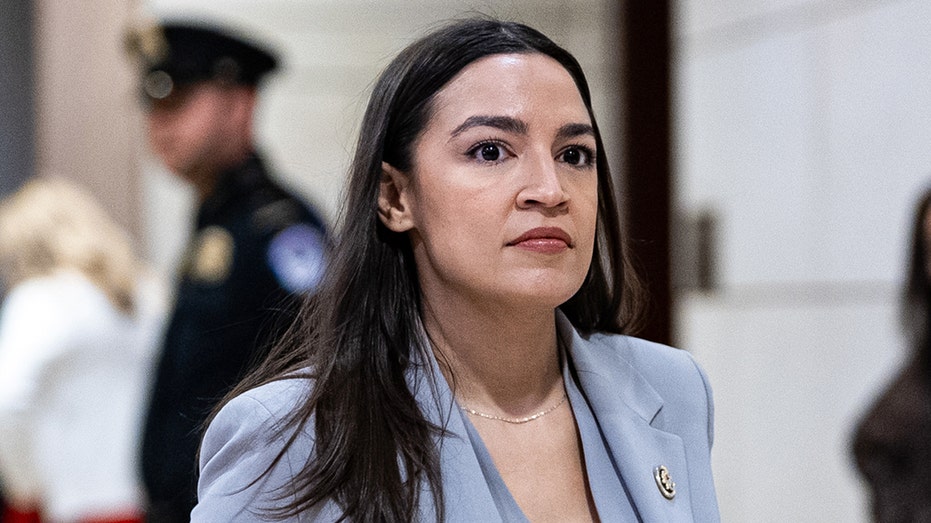
Rep. Alexandria Ocasio-Cortez, D-N.Y., was not satisfied by the classified briefing lawmakers received on Tuesday regarding the Trump administration’s boat strikes. “Oh, hell no. That was a joke,” she told Migrant Insider editor Pablo Manríquez. MeidasTouch Network senior digital editor Acyn Torabi shared video on X showing the congresswoman respond to questions from Manríquez outside the Capitol after leaving the briefing. “There was not a single piece of intelligence that was shared that even rises to the level of any other briefing that we’ve seen on Ukraine, China, anything,” Ocasio-Cortez said, adding that it “was not a serious intelligence briefing. This was a communication of opinion.” PENTAGON WON’T RELEASE ‘TOP SECRET, FULL, UNEDITED’ VIDEO OF SEPTEMBER DRUG BOAT STRIKE, HEGSETH SAYS She said if President Donald Trump’s “administration wants to go to war… they need to go get it from Congress. And if Republicans want to defend this argument that cocaine is a weapon, they can go vote on that. But… this is just conjecture at this point.” Fox News Digital reached out to the White House for comment. TRUMP DECLARES ‘VENEZUELAN REGIME’ A FOREIGN TERRORIST ORGANIZATION, ORDERS OIL TANKER BLOCKADE The administration’s policy of blowing up vessels of alleged narcoterrorists trafficking drugs has been controversial. Secretary of State Marco Rubio and Secretary of War Pete Hegseth were involved in providing briefings to Senate and House members on Tuesday. AOC’S LUXURY SPENDING BINGE IN PUERTO RICO REIGNITES QUESTIONS ABOUT ‘SOCIALIST’ BRAND: ‘PEAK HYPOCRISY’ Sen. John Kennedy, R-La., said during a Tuesday appearance on the Fox News Channel that his takeaways from the briefing included that the strikes “are legal” and “effective,” that they are based on “exquisitely good” intelligence, and that “checks and balances” are in place to ensure “innocent people who just happen to be in a boat are not hurt.”
Maryland to study slavery reparations after lawmakers override Dem governor’s veto
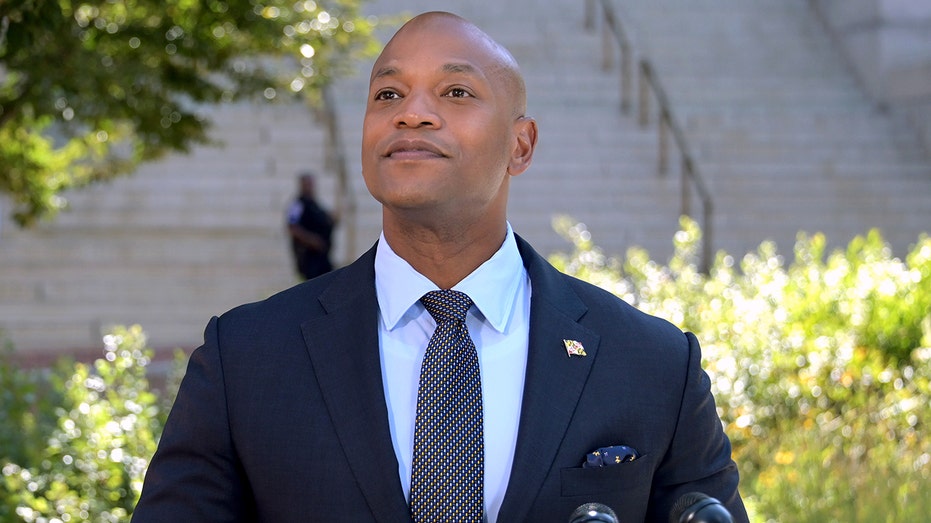
The Maryland General Assembly on Tuesday voted to override Gov. Wes Moore’s veto of a bill creating a reparations commission, clearing the way for the state to begin formally studying how to address the legacy of slavery and racial discrimination. The Senate voted 31-14 to override the veto, while the House approved the override 93–35, exceeding the three-fifths majorities required in both chambers. Moore initially vetoed Senate Bill (SB) 587 in May, arguing that Maryland had already conducted extensive studies on the legacy of slavery and should focus instead on policies that directly narrow racial disparities. In his veto letter to Senate President Bill Ferguson, Moore noted that Maryland has already launched numerous commissions and study groups over the past 25 years, including one examining lynching and the state’s history of slavery. DEMOCRATS SILENT ON ILLEGAL ALIEN REGISTERED TO VOTE IN BLUE STATE Del. Matthew Morgan, R–St. Mary’s County, spoke on the House floor Tuesday ahead of the vote, calling out his Democratic colleagues for talking about affordability while preparing to set up a commission for “race-bait handouts.” “This bill betrays the original intention, the unifying event of the civil rights movement. It’s immoral and it’s fiscally ruinous to this state and it sends a message to the generations out there now in Maryland that if you’re concerned about fairness, dignity, opportunity in this state — to flee Maryland,” said Morgan. HOUSE DEMOCRAT TO INTRODUCE REPARATIONS PUSH, DECLARES ‘MORAL OBLIGATION’ TO SEND TRILLIONS TO BLACK AMERICANS Del. Terri Hill, D–Howard County, urged colleagues to override the veto, calling the creation of the commission a decision “we still feel is the right one.” With the veto override, SB 587 will now establish a commission to weigh possible forms of reparations, including official statements of apology, monetary compensation, property tax rebates, child-care support, debt forgiveness and higher education tuition waivers and reimbursements. A preliminary report is due Jan. 1, 2027, with a final report required Nov. 1, 2027. The commission is set to expire in the summer of 2028. EVANSTON, ILLINOIS FIRST IN US TO PAY REPARATIONS TO BLACK RESIDENTS The Legislative Black Caucus of Maryland hailed the override in a statement posted to social media. “This landmark action establishes a rigorous and comprehensive plan for reparations and marks Maryland’s first-ever step toward reparations,” the statement read in part. “At a time of growing attacks on diversity and equity, today’s action reaffirms our shared commitment to truth-telling, accountability, and meaningful progress for Black Marylanders.”