

Newsom, California Dems move forward with redistricting effort to counter Trump-backed push in Texas
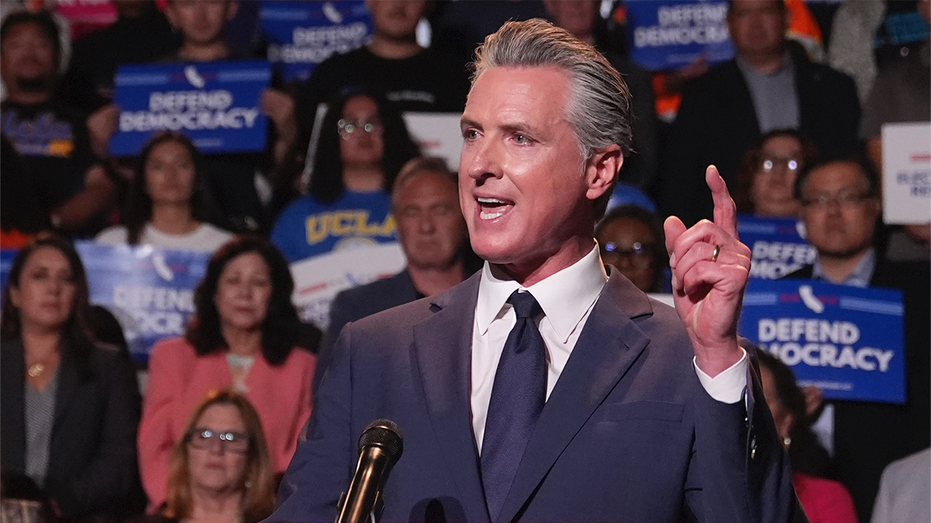
Democratic leaders in the Democrat-dominated California legislature are expected as early as Friday to unveil their new proposed congressional district maps that would create up to five more blue-leaning U.S. House seats in the nation’s most populous state. The revealing of the maps is coming after two-term Democratic Gov. Gavin Newsom teamed up in Los Angeles with congressional Democrats and legislative leaders in the heavily blue state to unveil their redistricting playbook. Newsom and the Democrats are aiming to counter the ongoing effort by President Donald Trump and Republicans to create up to five GOP-friendly congressional districts in red state Texas at the expense of currently Democrat-controlled seats. “Today is liberation day in the state of California,” Newsom said. “Donald Trump, you have poked the bear, and we will punch back.” ABBOTT, TEXAS REPUBLICANS MAKE NEW PUSH FOR TRUMP-BACKED REDISTRICTING AS FLEEING DEMOCRATS TO END WALKOUT Newsom vowed to “meet fire with fire” with his push for a rare—but not unheard of—mid-decade redistricting. Newsom says Trump missed a deadline to stand down on his push to redistrict in Texas. “DONALD ‘TACO’ TRUMP, AS MANY CALL HIM, ‘MISSED’ THE DEADLINE!!! CALIFORNIA WILL NOW DRAW NEW, MORE ‘BEAUTIFUL MAPS,’ THEY WILL BE HISTORIC AS THEY WILL END THE TRUMP PRESIDENCY (DEMS TAKE BACK THE HOUSE!),” Newsom wrote earlier this week in a social media post posted by his press office, which was meant to mock how Trump writes his own social media posts. The Republican push in Texas, which comes at Trump’s urging, is part of a broader effort by the GOP across the country to pad their razor-thin House majority to keep control of the chamber in the 2026 midterms, when the party in power traditionally faces political headwinds and loses seats. NEWSOM DEMANDS TRUMP GIVE UP TEXAS REDISTRICTING PUSH Trump and his political team are aiming to prevent what happened during his first term in the White House, when Democrats stormed back to grab the House majority in the 2018 midterms. But while the Republican push in Texas to upend the current congressional maps doesn’t face constitutional constraints, Newsom’s path in California is much more complicated. The governor is pushing to hold a special election this year, to obtain voter approval to undo the constitutional amendments that created the non-partisan redistricting commission. A two-thirds majority vote in the Democrat-dominated California legislature as early as next week would be needed to hold the referendum. Democratic Party leaders are confident they’ll have the votes to push the constitutional amendment and the new proposed congressional maps through the legislature. “Here we are in open and plain sight before one vote is cast in the 2026 midterm election, and here [Trump] is once again trying to rig the system,” Newsom charged. Newsom said his plan is “not complicated. We’re doing this in reaction to a President of the United States that called a sitting governor in the state of Texas and said, ‘Find me five seats.’ We’re doing it in reaction to that act.” The National Republican Congressional Committee (NRCC) charged that “Newsom’s made it clear: he’ll shred California’s Constitution and trample over democracy – running a cynical, self-serving playbook where Californians are an afterthought, and power is the only priority.” But Newsom defended his actions, saying “we’re working through a very transparent, temporary and public process. We’re putting the maps on the ballot and putting the power to the people.” Thursday’s appearance by Newsom, who is considered a likely contender for the 2028 Democratic presidential nomination, also served as a fundraising kickoff to raise massive amounts of campaign cash needed to sell the redistricting push statewide in California. SCHWARZENEGGER’S NEW STARING ROLE: PUSHING BACK AGAINST NEWSOM’S REDISTRICTING DRIVE The non-partisan redistricting commission, created over 15 years ago, remains popular with most Californians, according to public opinion polling. That’s why Newsom and California Democratic lawmakers are promising not to scrap the commission entirely, but rather replace it temporarily by the legislature for the next three election cycles. “We will affirm our commitment to the state independent redistricting after the 2030 census, but we are asking the voters for their consent to do midterm redistricting,” Newsom said. But their efforts are opposed by a number of coalition of figures supportive of the non-partisan commission. Among the most visible members is likely to be former Gov. Arnold Schwarzenegger, the last Republican elected governor in Democrat-dominated California. “I’m getting ready for the gerrymandering battle,” the former governor wrote in a social media post on Friday. Schwarzenegger, during his tenure as governor, had a starring role in the passage of constitutional amendments in California in 2008 and 2010 that took the power to draw state legislative and congressional districts away from politicians and placed it in the hands of an independent commission. “Most people don’t really think about an independent commission much, one way or another. And that’s both an opportunity and a challenge for Newsom,” Jack Pitney, an American politics professor at California’s Claremont McKenna College, told Fox News. But he added that “it’s going to take a lot of effort and money to energize Democrats and motivate them to show up at the polls” and that Newsom’s effort “is all about motivating people who don’t like Trump.” Fox News’ Lee Ross contributed to this report
Abbott calls second special session as first round ends with Democrats still out of state
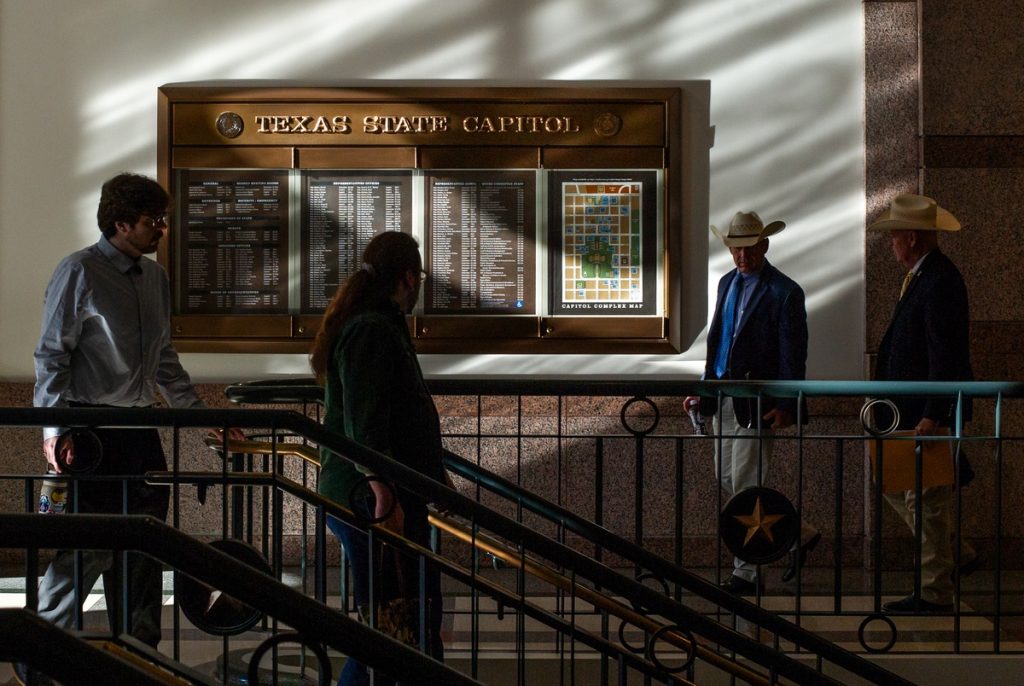
The second session is set to consider the same agenda that stalled in the first, with redistricting and disaster response at the top of the governor’s priorities.
California Republicans accuse Newsom of ‘sinister redistricting scheme’ after Trump mockery
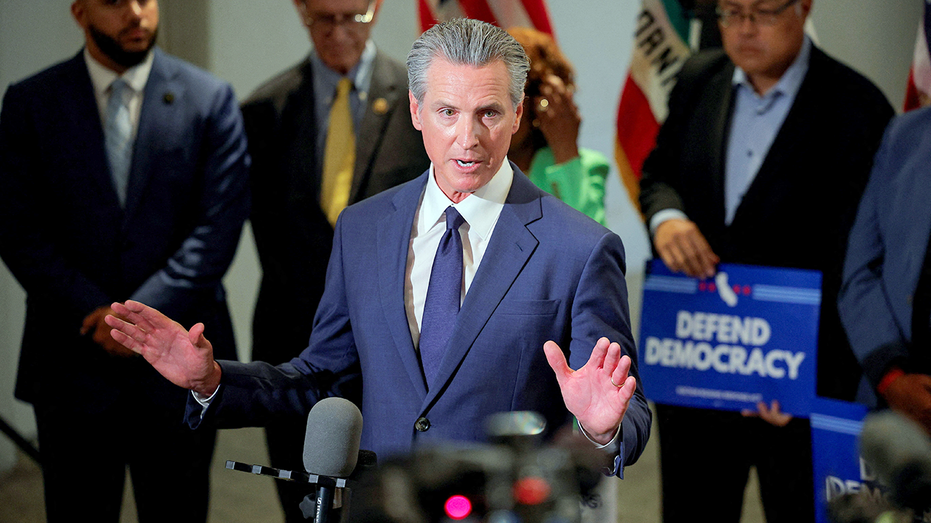
After California Gov. Gavin Newsom announced he would move forward with a state redistricting plan – replete with implied mockery of President Donald Trump – California Republicans responded late Thursday. Newsom had declared “liberation day” – an apparent reference to Trump’s own moniker for the day he introduced a comprehensive tariff regime – and preceded the announcement with “ALL CAPS” social media posts meant to mock the president’s penchant for doing the same on Truth Social. California Republicans were not amused and pushed back on the project that could put an end to their already muted federal representation in America’s most populous state. “Californians demand and deserve transparency from their government. Governor Newsom’s sinister redistricting scheme is the opposite,” the top Republican on the state’s Elections Committee said. CALIFORNIA’S TOP REPUBLICAN RIPS DEMS BLOCKING ‘OIL GOLDMINE’ AFTER NEW TRUMP PROJECT REBUFFS SCHIFF “There is no public input,” lamented state Assemblywoman Alexandra Macedo, R-Tulare, as the state hosts nine Republican federal House lawmakers of the 52 total. The state’s last Republican senator was Sen. John Seymour in 1991 – who had been appointed for a brief stint after Sen. Pete Wilson resigned to take the governor’s office. Macedo suggested Newsom would go to great lengths just to grab national headlines, no matter what the “will of the voters” is in reality. “Governor Newsom is on a mission to take power away from the California Citizens Redistricting Commission,” Macedo said of the panel that typically would help decide decennial mapping. “Governor Newsom’s power-grab erodes public trust in our government. Undermining the commission’s hard work … is shortsighted and insulting to voters,” said Macedo, whose caucus holds 19 of the 60 assembly seats. MAMDANI STUDIES ‘AMERICA’S WORST MAYOR’ BRANDON JOHNSON TO AVOID HIS POLITICAL PITFALLS: REPORT Newsom, however, defended his decision, saying that Trump “poked the bear” – the animal which also appears on the Golden State’s flag – and that California will therefore push back. “DONALD ‘TACO’ TRUMP, AS MANY CALL HIM, ‘MISSED’ THE DEADLINE!!! CALIFORNIA WILL NOW DRAW NEW, MORE ‘BEAUTIFUL MAPS,’ THEY WILL BE HISTORIC AS THEY WILL END THE TRUMP PRESIDENCY (DEMS TAKE BACK THE HOUSE!),” Newsom wrote in his Trump-esque post. Trump has supported a “simple redrawing” of the Texas congressional map to represent the state’s Republican bent, he said. “We have an opportunity in Texas to pick up five seats. We have a really good governor, and we have good people in Texas. And I won Texas, I got the highest vote in the history of Texas as you probably know. And we are entitled to five more seats,” Trump recently said. Sen. Brian Jones, R-San Diego, leader of the upper chamber’s minority in Sacramento, directed Fox News Digital to recent comments prior to the official announcement by Newsom. “Californians didn’t elect Newsom to play gerrymandering games to boost his presidential campaign, they elected him to solve problems here at home,” said Jones, who leads 10 senators compared to the Democrats’ 30. “What he’s doing now undermines the independent redistricting commission that voters created to stop exactly this kind of political manipulation.” He also ripped Democrats after hearing that California Secretary of State Shirley Weber told reporters the legislature would have only a short window to schedule a special election for redistricting to coincide with the November elections. California lawmakers are on summer recess until Monday. The process would have to finish by next Friday; five days. “Once again, Newsom convinced Senate and Assembly Democrats to roll over, ignore voters, rush sham hearings, and violate the California Constitution,” Jones said. “Democracy is dead in California, killed by Newsom’s corrupt pursuit of the presidency.” Fox News Digital’s Paul Steinhauser contributed to this report.
A political shift ahead? What to know about Bolivia’s presidential election
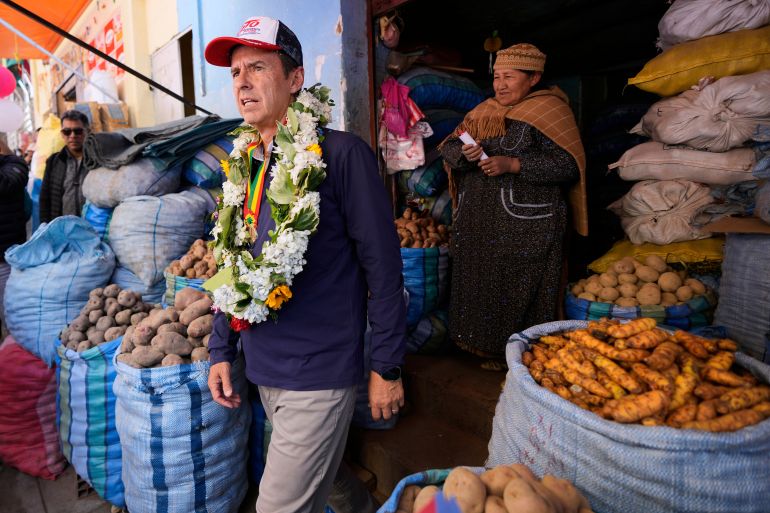
For the first time in nearly two decades, Bolivia is on the precipice of a rightward shift. Voters in the South American nation will go to the polls on August 17 to choose the next president, as well as members of Congress. But schisms within Bolivia’s long-dominant left have opened the door to a possible right-wing victory, with candidates like businessman Samuel Doria Medina and former President Jorge “Tuto” Quiroga leading the race. Bolivia has been unsettled by political and economic turmoil in recent years, including high inflation and dwindling currency reserves. That, in turn, has fuelled public dissatisfaction with the ruling Movement for Socialism (MAS) party, which has been in power almost continuously since 2006. Candidates like Medina and Quiroga are hoping to capitalise on that disillusionment to oust MAS from the presidency. But tensions in the country remain high, and polls show a close race that may not produce a clear winner in the first round of voting. Who are the figures shaping the race, what issues are top of mind for voters, and how could this election shape Bolivia? We answer those questions and more in this explainer. When is the election? The first round of voting will take place on Sunday, August 17. Will there be a second round of voting? Possibly. To avoid a run-off, the top presidential candidate must either earn more than 50 percent of the vote or garner 40 percent of the vote and have a 10-point lead over the second-place contender. But that scenario is unlikely, given the tight race between candidates like Medina and Quiroga. Advertisement The presidential race is expected to proceed to a second round of voting on October 19. Are there other races on the ballot? Yes. In addition to voting for a president and vice president, Bolivians will cast ballots for 36 Senate seats and 130 positions in the Chamber of Deputies. Bolivia has a population of approximately 12 million, of which more than seven million are eligible voters. Bolivian presidential candidate Jorge ‘Tuto’ Quiroga campaigns in La Paz, Bolivia, on August 7 [Juan Karita/AP Photo] Who are the main presidential candidates? A total of 10 presidential candidates registered to race in Sunday’s election, but so far, no single contender has decisively broken into the lead. “This is the first national election in two decades without a dominant party or a clear frontrunner,” said Glaeldys Gonzalez Calanche, an analyst with the International Crisis Group, a research nonprofit. Two closely watched candidates, however, are both conservatives who struggled to make an impression in past elections. They now appear to have a shot at success, a development that underscores the implosion of the once-formidable Bolivian left. One of the candidates is a politician and businessman named Samuel Doria Medina. An entrepreneur who made his fortune in cement, Medina now owns hotels and Burger King restaurant franchises in Bolivia. In the 1990s, he also served as a minister of planning under President Jaime Paz Zamora. The founder of the right-of-centre National Unity Front, Medina previously made three failed attempts to run for president: in 2005, 2009 and 2014. He likely faces his stiffest competition from fellow also-ran, the right-wing Jorge “Tuto” Quiroga. Like Medina, Quiroga has been a presidential candidate three times before: in 2005, 2014 and 2020. But he briefly ascended to the presidency himself after being elected as the country’s youngest vice president in 1997. He shared a ticket at the time with the country’s former military dictator Hugo Banzer, whose government in the 1970s was associated with abuses such as torture and enforced disappearances. As president, Banzer decided to leave office in 2001 after he was diagnosed with lung cancer, and Quiroga served the final year of Banzer’s term. Bolivian Senate President Andronico Rodriguez waves to supporters at a rally in La Paz, Bolivia, on May 10 [Juan Karita/AP Photo] Are there any contenders on the left? Yes, but they have not been polling as strongly as their conservative counterparts. Andronico Rodriguez is the leading left-wing candidate, running as an independent. The president of the Senate, Rodriguez boasts roots in Bolivia’s rural coca-growing regions, which tend to be strongholds for the governing MAS party. Advertisement Rodriguez, however, split from the MAS party this year as Bolivia’s leftist coalition fractured. Outgoing president and MAS member Luis Arce has been blamed for Bolivia’s slumping economy, and MAS founder Evo Morales has been locked in a feud with both Arce and Rodriguez as he seeks to regain the presidency himself. The official MAS candidate in the 2025 election, former minister Eduardo del Castillo, has barely made a ripple in the polls. What do the polls say? A poll aggregator compiled by the Americas Society/Council of the Americas shows conservatives Samuel Doria Medina and Jorge “Tuto” Quiroga vying for the lead. But the polls note that a significant number of voters are either undecided or intent upon casting null votes, adding a wild-card element to Sunday’s race. Three polls taken between early June and late July show Medina in the lead, with between 19.6 and 24.5 percent support. Quiroga, meanwhile, garnered between 16.6 percent and 22.9 percent in the polls. And Andronico Rodriguez, the left-wing candidate, earned between 6 percent and 13.7 percent support among the survey respondents. What issues are top of mind for voters? The country’s economic turbulence and cost of living crisis are among the highest-profile issues for voters this election cycle. “Bolivia is experiencing its worst economic crisis in a generation,” said Gonzalez Calanche, the analyst with the International Crisis Group. She pointed out that the national currency has lost more than half of its value. While Bolivia has vast stores of natural gas and oil, its production has tumbled, leading to an economic shortfall. The country has been forced to import fuel rather than exporting it amid shortages. A survey in May found that voters identified rising prices as their top concern, followed by other economic issues such as fuel shortages, shrinking dollar reserves and unemployment.
Afghans in US mark Taliban Kabul takeover amid Trump immigration crackdown
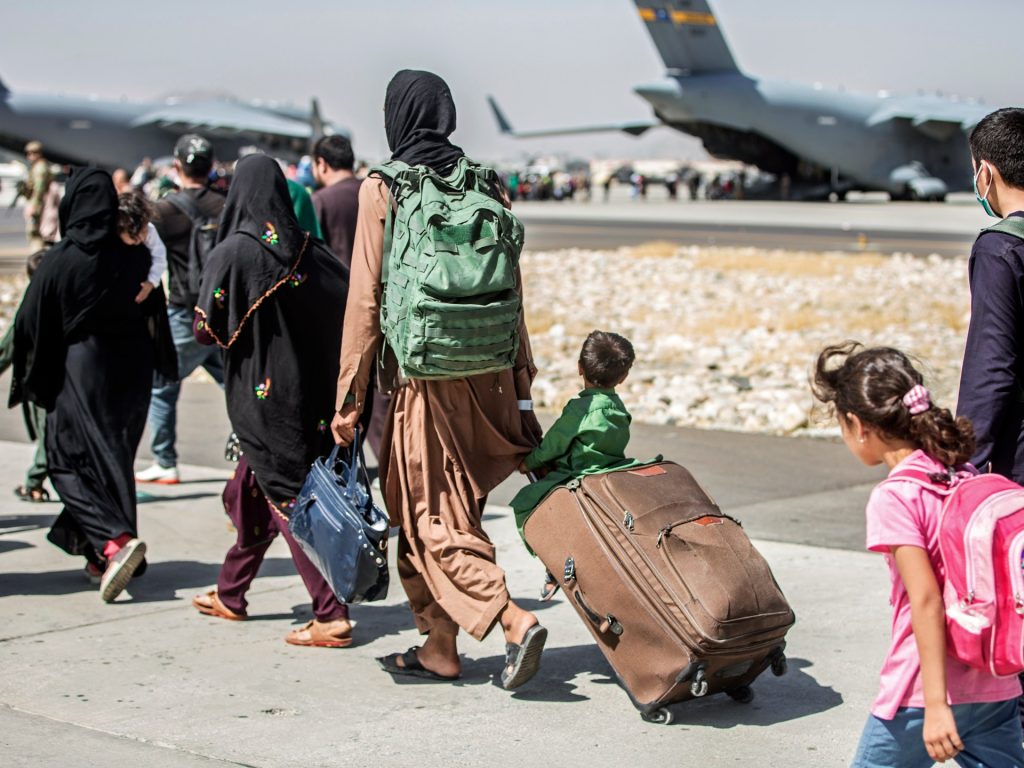
Four years have passed since Hanifa Girowal fled Afghanistan on a US evacuation flight. But every August, her mind returns to the same place. Like many Afghans evacuated amid the August 15 Taliban takeover of Kabul, Girowal, who worked in human rights under the former Afghan government, still remains stuck in “legal limbo” in the United States. She is steadfastly pursuing a more stable status in the US, even as the political landscape surrounding her, and thousands of other Afghans in similar situations, shifts. “I somehow feel like I’m still stuck in August 2021 and all the other Augusts in between, I can’t remember anything about them,” Girowal told Al Jazeera. She often recalls the mad dash amid a crush of bodies at the crowded Kabul International Airport: people shot in front of her, a week of hiding, a flight to Qatar, then Germany and then finally, the US state of Virginia. Followed by the early days of trying to begin a new life from the fragments of the old. “Everything just comes up again to the surface, and it’s like reliving that trauma we went through, and we have been trying to heal from since that day,” she said. The struggle may have become familiar, but her disquiet has been heightened since US President Donald Trump took office on January 20. His hardline immigration policies have touched nearly every immigrant community in the US, underscoring vulnerabilities for anyone on a precarious legal status. There is a feeling that anything could happen, from one day to the next. Advertisement “I have an approved asylum case, which gives a certain level of protection, but we still don’t know the future of certain policies on immigration,” Girowal said. “I am very much fearful that I can be subjected to deportation at any time.” Unheeded warnings Four years after the US withdrawal, much remains unclear about how Trump’s policies will affect Afghans who are already in the US, estimated to total about 180,000. They arrived through a tangle of different avenues, including 75,000 flown in on evacuation flights in the immediate aftermath of the withdrawal, as the administration of US President Joe Biden undertook what it dubbed “Operation Allies Welcome“. Thousands more have since sought asylum by making treacherous journeys across the world to traverse the US southern border. Some have relocated via so-called Special Immigrant Visas (SIVs), reserved for individuals who worked directly with the US military in Afghanistan, under a notoriously backlogged programme. Others have been resettled through a special State Department programme, known as Priority 1 (P1) and Priority 2 (P2), launched by the administration of President Biden, meant for Afghans who face persecution for having worked in various capacities on behalf of the US government or with a US-based organisation in Afghanistan. Adam Bates, a supervisory policy counsel at the International Refugee Assistance Programme, explained that some of those pathways, most notably the SIV and refugee programmes, provide a clear course towards US residency and, eventually, citizenship. But, he clarified, others do not – a fact that advocates have warned leaves members of the population subject to perpetual uncertainty and political whims. “A lot of the advocacy to the Biden administration officials was about finding more permanent legal pathways for Afghans,” Bates told Al Jazeera. “That was with one eye towards the potential of giving the Trump administration this opportunity to really double down and target this community.” Pressure on Afghans in the US During Trump’s new term, his administration has taken several concrete – and at times contradictory – moves that affect Afghans living in the US. It ended “temporary protected status” (TPS) for Afghans already in the country at the time of the Taliban takeover, arguing the country shows “an improved security situation” and “stabilising economy”, a claim contradicted by several human rights reports. At the same time, the Trump administration added Afghanistan to a new travel ban list, restricting visas for Afghans, saying such admissions broadly run counter to US “foreign policy, national security, and counterterrorism”. Advertisement These actions underscore that “the situation in Afghanistan seems to be whatever it needs to be, from the Trump administration’s perspective,” according to Bates. Trump has offered his contradictory messaging, criticising the Biden administration on the campaign trail for its handling of the withdrawal, and as recently as July, pledging to “save” evacuated Afghans subject to deportation from the United Arab Emirates. Meanwhile, the administration terminated a special status for those who entered the US via the CBP One app in April, potentially affecting thousands of Afghans who entered via the southern border. Advocates warn that many more Afghans may soon be facing another legal cliff. After being evacuated in 2021, tens of thousands of Afghans were granted humanitarian parole, a temporary status that allowed them to legally live and work in the US for two years, with an extension granted in 2023. That programme is soon set to end. While many granted the status have since sought other legal avenues, most often applying for asylum or SIVs, an unknown number could be rendered undocumented and subject to deportation when the extension ends. Legislation creating a clearer pathway to citizenship has languished in Congress for years. The US Citizenship and Immigration Services (USCIS) has not publicly released how many evacuated Afghans remain in the US on humanitarian parole, and did not respond to Al Jazeera’s request for the data. Evacuated Afghans’ unease has been compounded by Trump’s aggressive approach to immigration enforcement, which has increasingly seen those without criminal histories targeted for deportations and permanent residents targeted for their political advocacy. “It’s just an escalation across the board and a compounding of fear and instability in this community,” Bates said. “It’s hard to make life decisions if you aren’t sure what’s going to happen tomorrow or next week or in a year”. ‘Pulled the rug out’ Meanwhile, for the thousands of Afghans continuing to seek safety in the US from abroad, pathways have been severely constricted or have become completely
Hurricane Erin threatens Puerto Rico, Virgin Islands with flooding

Heavy rains are forecast to start with the storm expected to become a major Category 3 storm over the weekend. Hurricane Erin has formed in the Atlantic Ocean as it approaches the northeast Caribbean, as forecasters warn of possible flooding and landslides in Puerto Rico and the Virgin Islands. The storm is expected to remain over open waters, although tropical storm watches were issued for Anguilla and Barbuda, St Martin and St Barts, Saba and St Eustatius and St Maarten. Heavy rains were forecast to start late on Friday in Antigua and Barbuda, the US and British Virgin Islands, and southern and eastern Puerto Rico. Up to 10cm (four inches) are expected, with isolated totals of up to 15cm (six inches), according to the National Hurricane Center in Miami. Forecasters also warned of dangerous swells. The storm was located about 835km (520 miles) east of the Northern Leeward Islands. It had maximum sustained winds of 110km/h (70mph) and was moving west-northwest at 28km/h (17mph). Erin is forecast to become a major Category 3 storm late this weekend. The hurricane centre noted that “there is still uncertainty about what impacts Erin may bring to portions of the Bahamas, the east coast of the United States, and Bermuda in the long range.” Fifth named storm Dangerous surf and rip currents are expected to affect the US East Coast next week, with waves reaching up to five metres (16.4 feet) along parts of the North Carolina coast that could cause beach erosion, according to Accuweather. “Erin is forecast to explode into a powerful Category 4 hurricane as it moves across very warm waters in the open Atlantic. Water temperatures at the surface and hundreds of feet deep are several degrees higher than the historical average,” Alex DaSilva, Accuweather’s lead hurricane expert, was quoted by The Associated Press news agency. Advertisement Erin is the fifth named storm of the Atlantic hurricane season, which runs from June 1 to November 30. This year’s season is once again expected to be unusually busy and potentially perilous. The forecast calls for six to 10 hurricanes, with three to five reaching major status with winds of more than 177km/h (110mph). Adblock test (Why?)
FASTag annual pass rollout today: Step-by-step guide to activate Rs 3000 annual pass, check its benefits, validity and more
The new FASTag annual pass will streamline travel on highways with a single prepaid pass. It can be availed by downloading the Rajmarg Yatra application from the Google Play Store or App Store or logging in to the official NHAI website.
After Yellow Line, THIS Bengaluru Metro line to connect IIM-B next, set to open in…

According to the Bangalore Metro Rail Corporation Limited (BMRCL) officials, civil work on the elevated part has been completed, while station construction is ongoing underground.
What is PM Viksit Bharat Rozgar Yojana? Know its benefits and how to apply

Under Pradhan Mantri Viksit Bharat Rozgar Yojana, PM Modi promised that young men and women getting their first job in the private sector will be eligible for Rs 15,000 from the Central government. The scheme will come into effect from August 15, 2025.
Big GST relief: Two-slab tax to replace current 5-28% rates, Finance Ministry says, ‘reduction of taxes on…’

The government has sent its proposal on GST rate rationalisation and reforms to the Group of Ministers (GoM) constituted by the GST Council to examine this issue.