

Independence Day 2025: President Murmu hails Operation Sindoor in I-Day eve address, calls it ‘historic example in…’

She described Operation Sindoor as a landmark event in the global fight against terrorism, noting that India’s armed forces “destroyed terrorist hubs across the border” with “steely resolve”.
Trump vowed to end “wasteful” federal spending. Beloved Texas school programs got caught in the middle.

Sweeping and sudden funding changes this year put two revered after-school programs for low-income Texans and a rural teacher training initiative at risk of closure.
History repeated itself when the Guadalupe River swept away Camp Mystic. Why few lessons were learned after the 1987 flood.

The Fourth of July flood bore a striking similarity to the Hill Country flood that killed 10 summer campers in 1987. In the following years, officials took little action to protect against the next storm.
Casar, Doggett would run for same Austin congressional seat under GOP map, setting up clash of generations
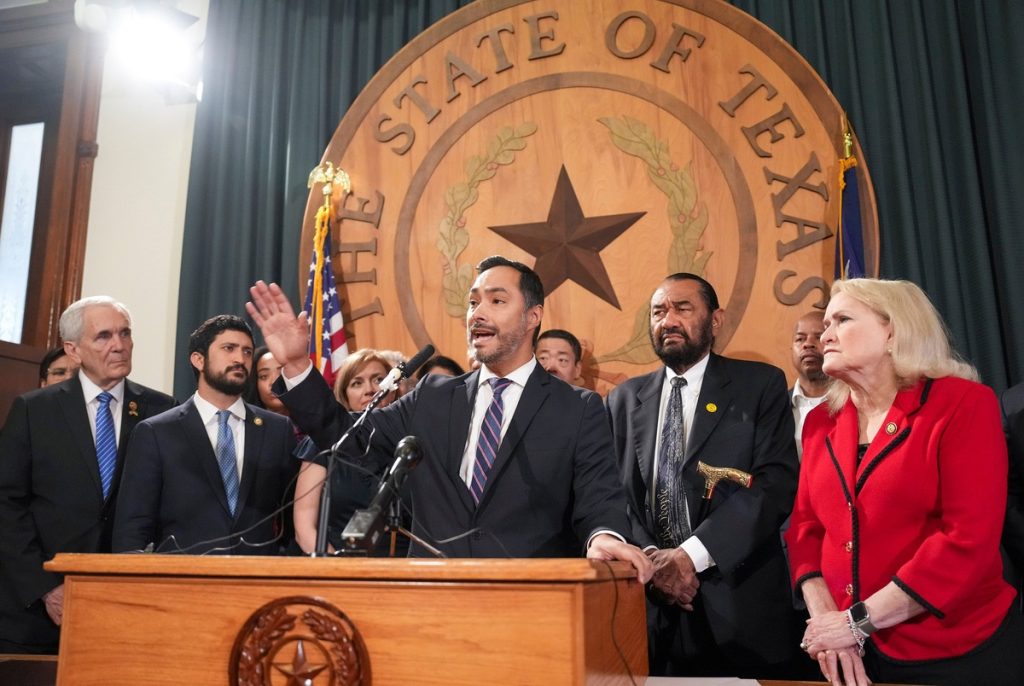
The contest would unearth brewing Democratic tensions over age and experience, forcing Austin politicos to choose between two well-liked progressives.
Justice Department presses Texas for list of registered voters and the officials who check it
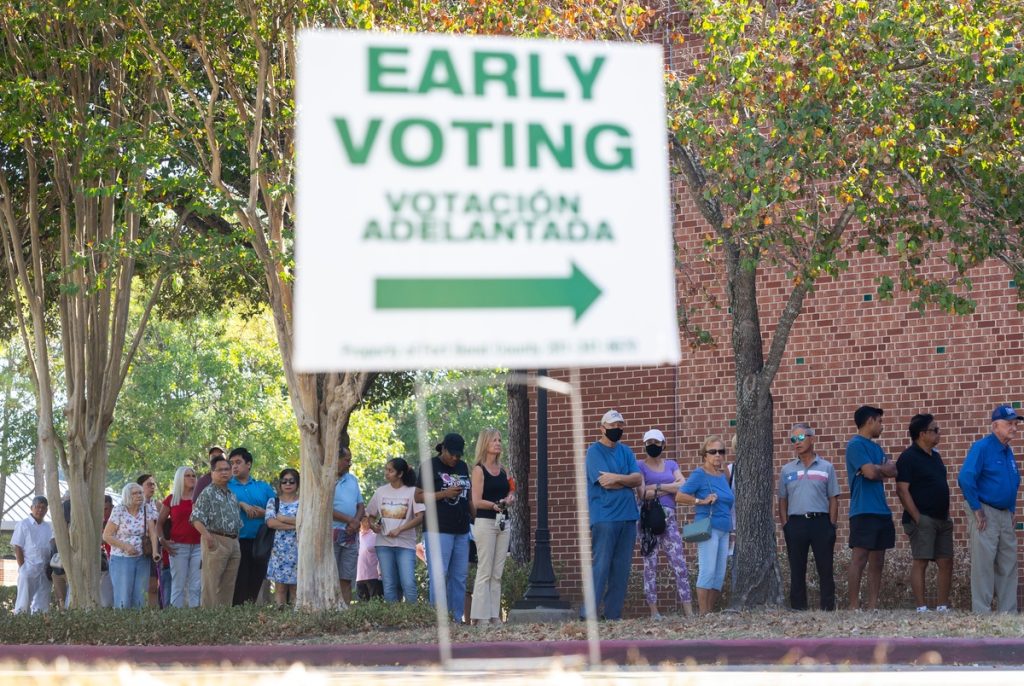
For now, the state is holding off on fulfilling the request while it switches to a new voter registration management system.
Trump reveals his game plan for meeting with Putin in Alaska: ‘It’s like chess’
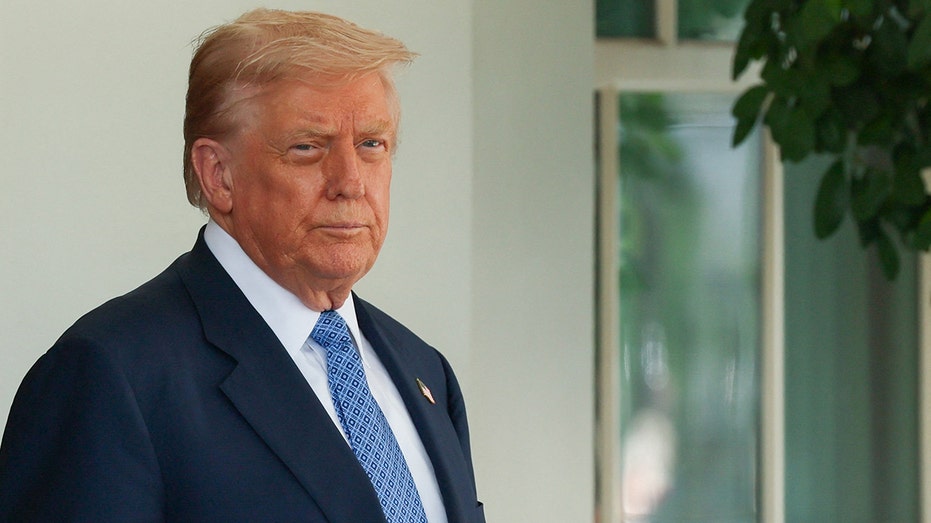
President Donald Trump revealed how he plans to approach his meeting with Russian President Vladimir Putin on Friday. Trump appeared for a radio interview on the “Brian Kilmeade Show” on Thursday, telling host Brian Kilmeade that his negotiations with Putin and Ukrainian President Volodymyr Zelenskyy are “like chess.” Trump estimated that his meeting in Alaska with Putin has a “25% chance of failing outright, but he said the hope is to push for a second meeting between Putin and Zelenskyy. “This meeting sets up the second meeting,” Trump told Kilmeade. He argued the second meeting would be “extremely important,” and hinted that there would likely be negotiations over land swaps, a notion Zelenskyy has opposed. ZELENSKYY, AHEAD OF TRUMP-PUTIN MEETING, SAYS THERE IS ‘NO SIGN’ RUSSIA WANTS TO END THE WAR Trump added that he believes he will know very quickly on Friday whether Putin intends to cooperate. “I believe now he’s convinced that he’s going to make a deal. He’s going to make a deal. I think he’s going to. And we’re going to find out – I’m going to know very quickly,” Trump said. WHAT WE KNOW ABOUT TRUMP’S MEETING WITH VLADIMIR PUTIN IN ALASKA Trump went on to confirm that he will move forward with a suite of sanctions against Russia if Putin doesn’t move forward with peace talks. “There will be consequences,” Trump told reporters Wednesday. “I don’t have to say. There will be very severe consequences.” Putin said Thursday that the U.S. was “making, in my opinion, quite energetic and sincere efforts to stop the hostilities, stop the crisis and reach agreements that are of interest to all parties involved in this conflict”. VLADIMIR PUTIN TO RETURN TO US FOR THE FIRST TIME IN A DECADE Meanwhile, Zelenskyy downplayed hopes around the meeting on Wednesday, saying he sees “no sign” that Russia is preparing to end the war in Ukraine. “At present, there is no sign that the Russians are preparing to end the war. Our coordinated efforts and joint actions – of Ukraine, the United States, Europe, and all countries that seek peace – can definitely compel Russia to make peace,” Zelenskyy said on X. Reuters contributed to this report.
Ivanka Trump re-enters DC ring for upcoming knockout UFC White House fight
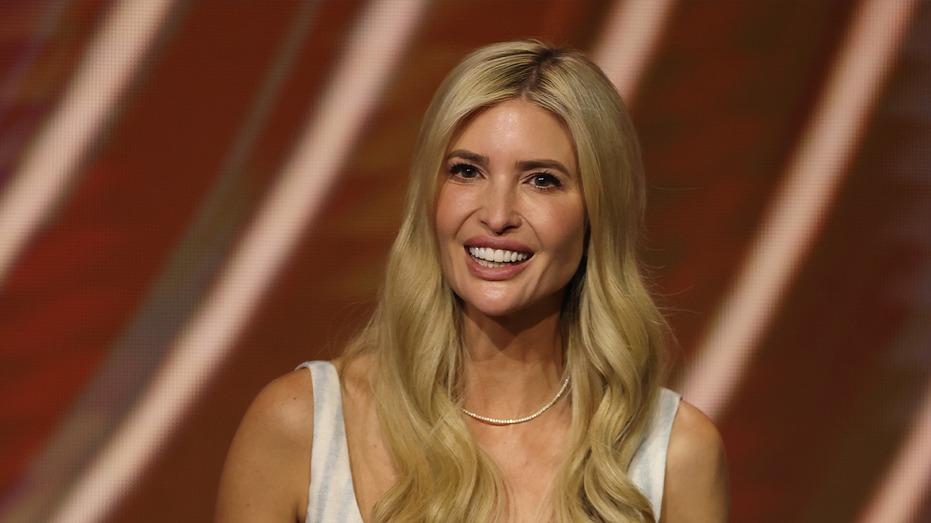
First daughter Ivanka Trump is helping facilitate the highly anticipated White House UFC fight as the Trump administration prepares to roll out patriotic events celebrating the nation’s 250th anniversary of independence in 2026. “Ivanka is a longtime fan of UFC and is honored to help Dana White create an exciting event celebrating a sport beloved by so many Americans, as part of our country’s 250th celebration,” a source close to Ivanka Trump told Fox News Digital this week. The first daughter, who is a student of jiu-jitsu, will not take any official job or role for the event but is instead facilitating its planning, Fox News Digital has learned. President Donald Trump first announced in July a UFC fight would be held at the White House, as the nation prepared to celebrate Independence Day. DANA WHITE REITERATES THAT UFC WHITE HOUSE FIGHTS ARE ‘ABSOLUTELY GOING TO HAPPEN’ “Every one of our national parks, battlefields and historic sites are going to have special events in honor of ‘America250,’ and I even think we’re going to have a UFC fight,” Trump said in a speech at the Iowa State Fairgrounds on the eve of the Fourth of July. “Does anybody watch UFC? The great Dana White?” he continued. “We’re going to have a UFC fight. We’re going to have a UFC fight — think of this — on the grounds of the White House. We have a lot of land there.” Trump ally and UFC CEO Dana White declared in August that the fight at the White House is “absolutely going to happen,” previewing that it would be held in honor of the 250th anniversary of America’s independence, July 4, 2026. UFC’S DANA WHITE HINTS THAT RECENTLY RETIRED JON JONES, CONOR MCGREGOR COULD RETURN FOR WHITE HOUSE FIGHTS “Think about that, the 250th birthday of the United States of America, the UFC will be on the White House South Lawn live on CBS,” White told the Associated Press Wednesday. “This is a one-of-one event,” he added. TRUMP SAYS UFC FIGHT WILL TAKE PLACE ON WHITE HOUSE GROUNDS White promised “the baddest card of all time” during a recent podcast appearance, confirming that Jon Jones, who retired in June and celebrated a recent victory by dancing like Trump, had gone back into the drug-testing pool ahead of the 2026 fight. “Everybody wants to fight on this card. Literally everybody,” White told the “Full Send Podcast” in July. TRUMP’S UFC 316 APPEARANCE DRAWS MASSIVE OVATION IN NEW JERSEY, FIGHTER CELEBRATES WITH HIM AFTER WIN White first previewed Ivanka Trump’s involvement with planning the White House UFC fight, telling CBS in August that the president wanted his daughter involved. “When (Trump) called me and asked me to do it, he said, ‘I want Ivanka in the middle of this,’” White told CBS Mornings Tuesday. “So, Ivanka reached out to me, and her and I started talking about the possibilities, where it would be and, you know, I put together all the renderings.” Ivanka Trump served as a senior advisor to President Trump during his first administration but has kept out of the political spotlight since then. Fox News Digital’s Ryan Morik and Jackson Thompson contributed to this report.
Trump’s federal crime operation brings 100 arrests, 800 National Guard troops to Washington
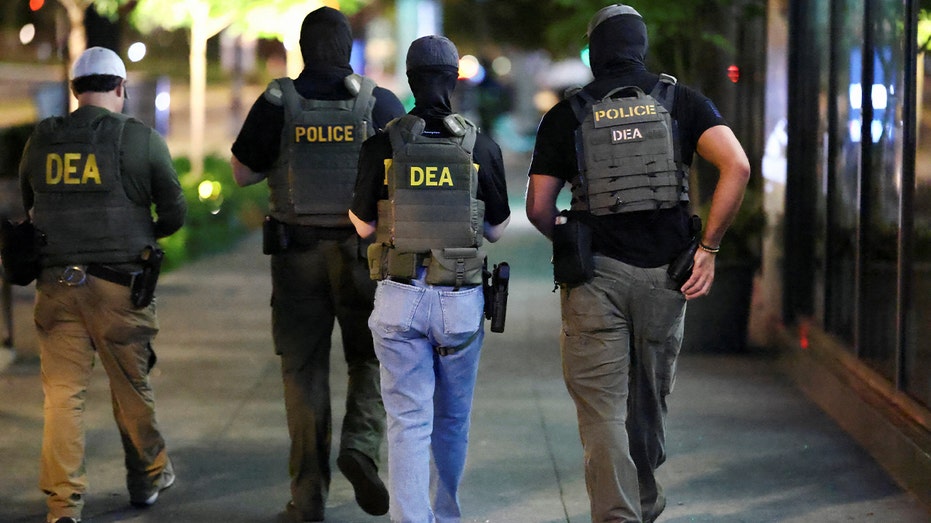
Federal law enforcement agents were spotted patrolling the streets of Washington, D.C., Wednesday night as President Donald Trump’s crime crackdown ramped up. Personnel from the FBI, Bureau of Alcohol, Tobacco and Firearms (ATF), Customs and Border Protection (CBP), Department of Homeland Security (DHS) and Secret Service were spotted, largely in groups, around the city in central downtown locations: Metro Center, 14th Street, Logan Circle and Chinatown. Some even ventured into residential neighborhoods. White House press secretary Karoline Leavitt told “Fox and Friends” that 45 arrests were made overnight, bringing the total to around 100 since the operations formally began on Monday. In addition, 29 illegal immigrants were detained, and three illegal firearms were seized on Wednesday evening. At least 400 National Guardsmen have reported for duty as of Wednesday, and a total of 800 will be at the ready by the end of the week. They will patrol the city in rotations, with about 200 out at a time. An additional 500 federal agents are a part of the White House’s task force to crack down on crime in the district. 400 NATIONAL GUARD MEMBERS DESCEND UPON DC; EXPANDED CRIME CRACKDOWN EXPECTED WEDNESDAY NIGHT While operations began with a focus on nighttime, they are ramping up into a continuous 24/7 cycle. In addition, D.C. police will extend a juvenile curfew zone in the Navy Yard through Aug. 31, police Chief Pamela Smith announced Thursday. The zone was established after police say a juvenile opened fire in the direction of other minors with a stolen gun, though no one was injured. Police say as many as 100 teens have gathered at night and caused trouble in the Navy Yard throughout the summer. Protests have popped up across the city opposing Trump’s takeover of the Metropolitan Police Department (MPD) and the presence of the National Guard. One man was charged with assaulting an officer after he threw a sandwich at a CBP agent and called the officer a “fascist.” “He thought it was funny,” Washington, D.C., U.S. Attorney Jeannine Pirro said of the incident. “Well, he doesn’t think it’s funny today, because we charged with him with a felony.” INSIDE THE WASHINGTON, DC HOMELESS HOT SPOTS TRUMP HAS VOWED TO CLEAN UP A police checkpoint stopping vehicles was set up on 14th Street on Wednesday night, and protesters surrounded the checkpoint and shouted, “Go home fascists!” D.C. crime statistics show that violent crime hit a 30-year low in 2024; down 35% from the previous year. And this year, it’s down 26% from last year at this time. But some insist the statistics are inaccurate, and the reality on the ground tells a different story. “Look at these 45 victims, all 19 and under, all killed by gunfire in the last 18 months in DC and tell me that crime is down and we don’t need an emergency focus on crimes of violence,” Pirro wrote on X, alongside a picture of the under-20 victims of gun violence. The D.C. police union chief, Gregg Pemberton, cast doubt on the statistics showing a massive drop in crime over a two-year period. “There’s potentially a drop from where we were in 2023. I think that there’s a possibility that crime has come down. But the department is reporting that in 2024, crime went down 35% – violent crime – and another 25% through August of this year. That is preposterous to suggest that cumulatively we’ve seen 60-plus percent drops in violent crime from where we were in ’23, because we’re out on the street. We know the calls we’re responding to,” he told NBC News. MPD’s 3rd District commander was suspended after MPD said he was changing crime statistics to minimize serious crimes.
Trump brings peace to Caucasus: Inside the Armenia–Azerbaijan deal 30 years in the making
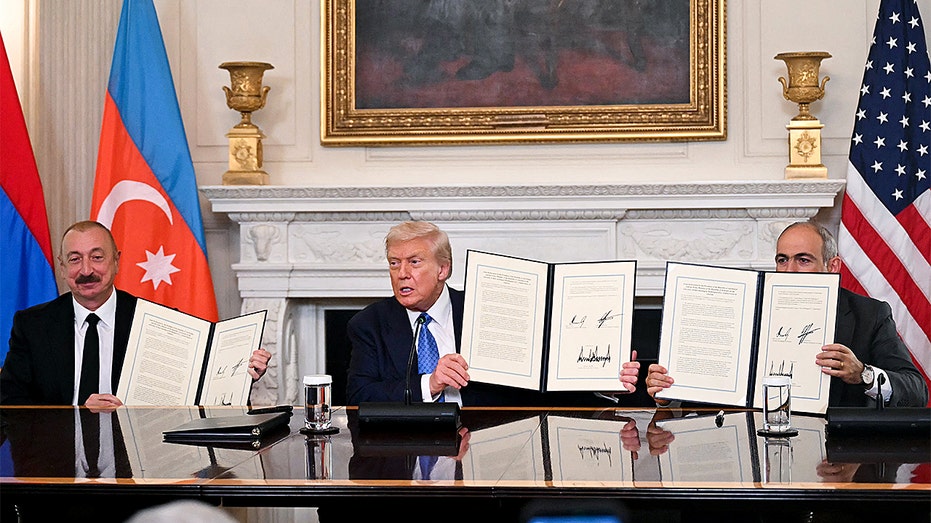
In exclusive interviews with Fox News Digital, Armenian Prime Minister Nikol Pashinyan and Azerbaijani President Ilham Aliyev described a U.S.-brokered peace deal as a “historic” opportunity to end more than three decades of conflict and to launch a new era of cooperation in the South Caucasus. Speaking separately, both leaders credited former President Donald Trump and U.S. Special Envoy Steve Witkoff for guiding months of negotiations that produced the framework agreement. They outlined plans for trade, infrastructure and investment while acknowledging that key political and humanitarian issues may still need to be resolved before the deal is finalized. Aliyev said the agreement cannot be formally signed until Armenia amends its constitution, which he claims still questions Azerbaijani sovereignty. “It’s kind of their homework,” Aliyev said. “As soon as it is done … the final peace agreement will be signed.” Pashinyan rejected that condition, insisting Armenia is already committed to respecting territorial integrity and has “no territorial claims” towards any neighbor. He confirmed that his government is drafting a new constitution but called it an “internal issue” unrelated to the peace terms. One central pillar of the deal is the creation of the “TRIPP corridor,” or Trump Route for International Peace and Prosperity, a transport and trade route designed to connect Armenia and Azerbaijan more directly while integrating the South Caucasus into broader international shipping and energy networks. Aliyev called the project “one of the important parts of international transportation,” saying it would link the Caspian Sea region with markets in Europe, the Middle East and Asia. The corridor is expected to carry goods, energy supplies, and potentially serve as a rail hub for cross-regional trade. Pashinyan described the agreement to open communications “based on principles of territorial integrity, sovereignty, jurisdiction, reciprocity and internationally recognized borders” as a breakthrough. “Now we have de facto peace … it is time to have common investment projects, to have economic cooperation,” he said. “The involvement of the U.S. will make this whole story even more attractive for potential investors.” The status of refugees and detainees from the Nagorno-Karabakh conflict remains unsettled. Tens of thousands of ethnic Armenians fled the region after Azerbaijan regained control in the 2020 war and a 2023 military operation. Many resettled in Armenia, but disputes continue over the right to return, property claims and the fate of those detained during and after the fighting. Azerbaijan maintains that prisoners in its custody are combatants or saboteurs, while Armenia and international human rights groups describe many of them as political prisoners. Pashinyan cautioned that raising “very sensitive issues” too aggressively could risk reigniting tensions. “The issue of refugees is important, but we need to concentrate on signing the peace agreement … to poke continuously some very sensitive issues could revive the conflict, you know, and I think it is very important now for both Armenia and Azerbaijan to concentrate on implementation what already has been agreed.” FROM TALK TO TACTICS: TRUMP PIVOTS ON RUSSIA STRATEGY TO END WAR Aliyev praised Trump’s direct involvement in the peace process and criticized what he called unfair portrayals of Azerbaijan under the Biden administration. He pointed to Azerbaijan’s cooperation with U.S. military efforts in Iraq and Afghanistan and said Trump’s return to active diplomacy made the current breakthrough possible. “It was only President Trump … immediately he jumped in the [peace] process,” Aliyev said, adding that if Trump had remained in office after the 2020 election, “probably what we are experiencing today … [would have happened] earlier.” The interviews came hours after Pashinyan and Aliyev joined Trump at the White House to announce the agreement — a rare moment of public unity in a region long defined by war, blockades and mistrust. While the framework sets the stage for normalized relations, both leaders acknowledged that decades of hostility will not disappear overnight. “It isn’t possible to change everything during a day, a week or even a year,” Pashinyan said. “But this is a very bright expression of what we want — both leaders, President Aliyev and myself — we want to change this whole situation.” For Trump, the event marked a high-profile example of his deal-making credentials on the world stage. For Armenia and Azerbaijan, it was a step toward a future that both say they are ready to build — if the remaining disputes can be resolved.
Armenia and Azerbaijan leaders seek to ease Russian and Iranian concerns after US-brokered peace deal
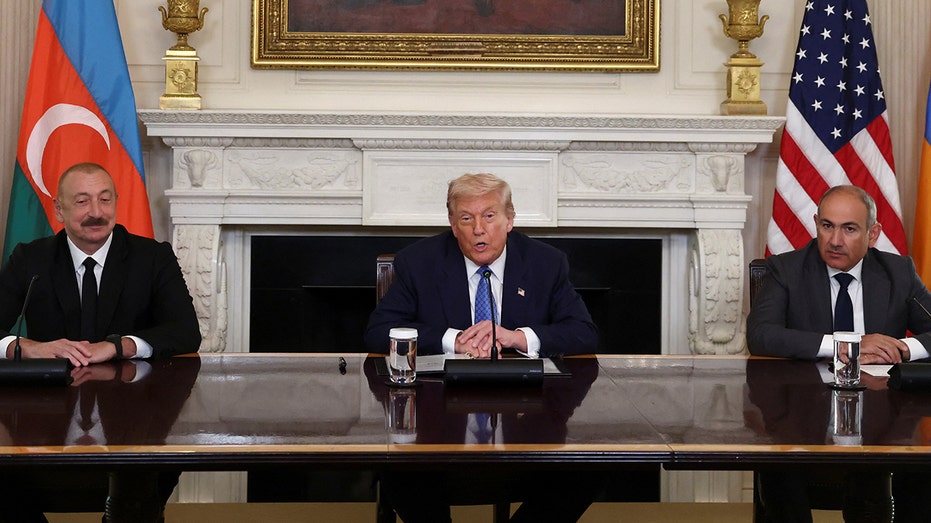
The leaders of Armenia and Azerbaijan brushed off any threat of backlash from neighboring powers Iran and Russia following a U.S.-brokered peace accord – an agreement hailed as the start of a new era, ending more than three decades of war and hostility in the South Caucasus. In exclusive Fox News Digital interviews, Armenian Prime Minister Nikol Pashinyan and Azerbaijani President Ilham Aliyev both praised President Donald Trump and his envoy for their role in brokering the framework agreement. They emphasized that the deal, which promised increased regional economic integration and political cooperation, is not directed at any third party – and may actually provide strategic advantages to Moscow and Tehran. “This is not a zero-sum game,” Pashinyan said. The agreement “contains quite tangible benefits for Iran and for Russia as well.” “Iran would have access through railway from the Persian Gulf to the Black Sea and Russia and Iran will have opportunity to have a railway connection between the two countries.” TRUMP TO HOST ARMENIA, AZERBAIJAN LEADERS AHEAD OF PEACE PLEDGE AS WHITE HOUSE EYES NOBEL PEACE PRIZE Russia – a long-standing ally of Armenia and a presence in the region through its border guards – welcomed peace but sent a warning about U.S. involvement. Its foreign ministry described the accord as “positive,” expressing hope for stability in the Caucasus, but warned that foreign involvement should complement, not complicate, the peace process. The ministry emphasized that regional solutions should include neighbors like Russia, Iran and Turkey, and cautioned against repeating the pitfalls of Western-led interventions in the Middle East. Aliyev echoed Pashinyan’s remarks and declined to see U.S. diplomatic involvement as a provocation toward Moscow. “It will be very difficult for any country – whether far away or in our region – to say something bad about today’s agreement,” he told Fox News Digital. “We’ve taken the final step toward peace.” He added: “It’s not against anyone. It’s a connectivity project which will be one of the most important parts of international transportation.” At the heart of the pact is the planned Trump Route for International Peace and Prosperity (TRIPP) – a roughly 27-mile transit route linking mainland Azerbaijan with its Nakhchivan exclave, passing through Armenian territory. Armenia has granted the U.S. exclusive development rights via a 99‑year lease, allowing for infrastructure projects such as roads, rail lines, pipelines, fiber optics and possibly power transmission, aimed at opening new trade and transit paths in the region. This bold move shifts regional dynamics, offering Washington a powerful strategic foothold while bypassing traditional Russian and Iranian routes. Iran, in contrast, has responded with hostility. Ali Akbar Velayati, a key advisor to Iran’s supreme leader, warned of serious consequences if the “Zangezur Corridor” – as Iran calls the route – is enacted, asserting that it “will not become a passage owned by Trump, but rather a graveyard for Trump’s mercenaries,” according to the semi-official news agency Tasnim. Iran has even signaled readiness to use military means to block the route. ZELENSKYY NOT INVITED TO UPCOMING TRUMP, PUTIN TALKS – WHITE HOUSE SAYS THIS WAS THE REASON Domestically, Pashinyan faces opposition. Armenian nationalists, already fierce critics of any deal with Azerbaijan, view the agreement as a betrayal. The Republican Party of Armenia has declared that Pashinyan lacks the mandate to sign such a treaty, demanding full transparency and an end to concessions made under external pressure. Pashinyan, however, is undeterred. He said the accord could transform Armenia’s investment climate and attract foreign capital. “We expect to have some criticism, and that’s part of democracy,” he told Fox News Digital. “But we are confident we made the right decision.” Once the dominant power in the South Caucasus, Russia is losing its grip. The war in Ukraine, mounting sanctions and resource strains have depleted its regional influence, enabling the U.S., Turkey and the European Union to expand their diplomatic reach. Relations with Azerbaijan particularly soured following the December 2024 downing of Azerbaijan Airlines Flight 8243. Aliyev accused Moscow of accidentally shooting the passenger jet with Russian air defenses during operations against Ukrainian drones, killing 38 people. Aliyev told Fox News Digital he didn’t believe the incident was an intentional attack by Russian leadership, but demanded a formal admission of guilt, punishment for those responsible and full compensation – moves Russia has resisted, apologizing only vaguely for what they called a “tragic incident.” And amid political divisions, Pashinyan finds himself in a conflict with one of the country’s most respected institutions – the Armenian Apostolic Church, where figures like Archbishop Bagrat Galstanyan have led public protests against Pashinyan’s decision to return border villages to Azerbaijan. On June 25, authorities arrested Galstanyan, a leading figure in the church and of the “Sacred Struggle” opposition movement, accusing him of orchestrating a terrorist plot to overthrow the government. Armenia’s Investigative Committee alleged he had recruited more than 1,000 former police and military personnel to stage bombings, disrupt power grids and paralyze transportation networks. Pashinyan assured that the judiciary system acted independently of his government and “in full accordance with the law of Armenia, respecting all the rights of all people.”