

Tejashwi Yadav claims Bihar Deputy Chief Minister has 2 voter IDs; Vijay Kumar Sinha clarifies

Addressing a press conference here, Yadav presented two different EPIC numbers, which he said belonged to Vijay Sinha.
Defence Minister Rajnath Singh’s BIG message to Donald Trump over 50 percent tariff on India, says, ‘Sabke boss toh hum hain…’
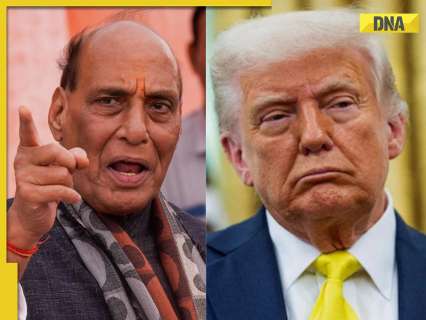
After Prime Minister Narendra Modi, Defence Minister Rajnath Singh has a big message for US President Donald Trump over the recent hike in tariffs on Indian goods entering the States. Here’s what Singh said.
0… 00.. 0000: The following are the house numbers of the 3 lakh voters on the Bihar SIR Roll list! Here’s the SHOCKING report
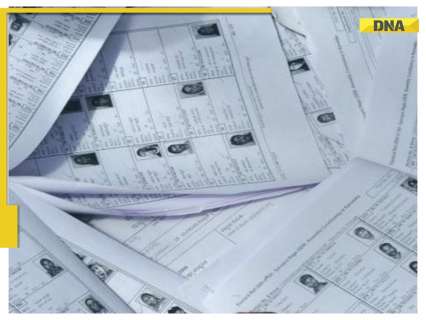
According to a study of Bihar’s draft voter list compiled following the disputed special rigorous revision by the Election Commission of India, up to 2,92,048 electors have home numbers beginning with ‘0’, ’00’, or ‘000’.
PM Modi’s STRONG response to Donald Trump over ‘dead economy’ remark, says, ‘We are rapidly…’

In a veiled response to US President Donald Trump over his ‘dead economy’ claims against India, Prime Minister Narendra Modi on Sunday, i.e., August 10, said that the nation is rapidly progressing toward becoming one of the world’s top three economies.
‘Some Culprits Escaped…’: Mamata Banerjee’s MLA-Legendary Actor makes SIGNIFICANT remark, questions CBI investigation into RG Kar rape case

Kolkata: During his visit to a blood donation camp in Barasat, Chiranjeet Chakraborty spoke candidly about the investigation into the RG Kar case.
Bernie Sanders addresses whether he’ll run in 2028
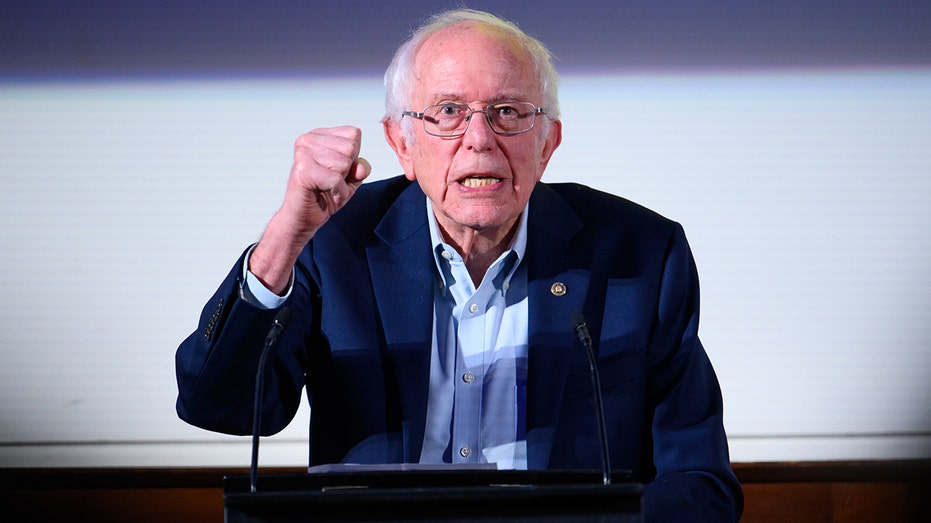
Sen. Bernie Sanders, I-Vt., addressed whether he will run for president again in 2028 during an interview that aired Sunday on CNN’s “State of the Union.” “Let’s not worry about that,” he told host Dana Bash. “I am going to be 84 years of age next month, as a matter of fact. I think that speaks for itself.” Sanders said that “what is more important” is educating, organizing and giving “working-class people an agenda” to understand that “we can, in fact, provide a decent standard of living for all our people.” Bash suggested to Sanders that without leadership, a “very hungry, energized base with an idea of what they want” will not evoke change. SEN BERNIE SANDERS NAMES 2 THINGS TRUMP HAS DONE RIGHT The senator remained steadfast that “strong grassroots movements will bring forth the appropriate leadership.” He did not want to name anyone he supports politically to “take up” what Bash called “the Bernie Sanders mantel.” BERNIE SANDERS GETS UP DURING INTERVIEW AFTER ‘NONSENSE’ QUESTION ABOUT AOC Sanders ran for president during the 2016 and 2020 campaigns. He has been conducting a “Fighting Oligarchy Tour” around the U.S. for much of this year. CLICK HERE TO GET THE FOX NEWS APP On Sunday, Sanders is in Asheville, North Carolina. The venue for the tour stop had to be changed from one that holds 2,400 to one that seats about 7,200, Blue Ridge Public Radio reported.
Abbott vows indefinite special sessions, says fleeing Dems could face arrest ‘for literally years’
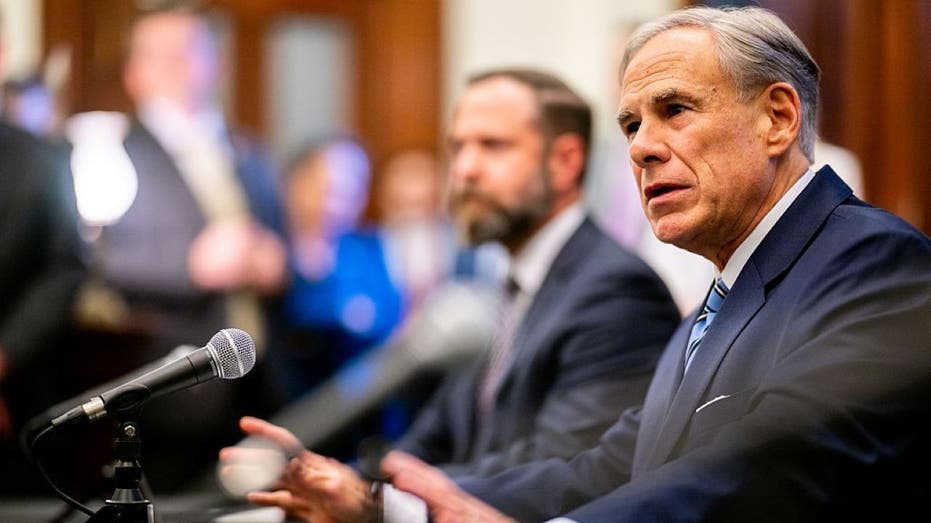
Texas Gov. Greg Abbott warned state Democrats that the threat of arrest upon returning to Texas will last “for literally years” on Sunday. Abbott made the statement during an interview on “Fox News Sunday” with host Shannon Bream. He argued it is within his authority to keep the Texas legislature in a special session indefinitely, extending the penalties for Democrats who fled the state. “I’m authorized to call a special session every 30 days. It lasts 30 days. And as soon as this one is over, I’m gonna call another one, then another one, then another, then another one,” Abbott said. “If they show back up in the state of Texas, they will be arrested and taken to the Capitol. If they want to evade that arrest, they’re gonna have to stay outside of the state of Texas for literally years,” he added. TEXAS DEMOCRATS FLEE STATE TO BLOCK TRUMP-BACKED REDISTRICTING VOTE IN DRAMATIC LEGISLATIVE MOVE The warning comes as Abbott is seeking to remove delinquent Democrats from office, arguing they have abdicated their roles under the state constitution. “We have a situation where lawmakers are violating the law in Article 3 of the Texas Constitution where they are required to act on bills. Because they’re violating that constitutional mandate, that means they are not fulfilling their oath of office, and they can be removed from office in this legal action that I’m taking,” he said. TRUMP, REPUBLICANS RACE TO REDRAW TEXAS CONGRESSIONAL MAP AS DEMOCRATS THREATEN LEGAL WAR At least 100 members of the 150-member Texas House must be present to conduct business, and approximately 50 of the Democrats have left. Abbott says their commitment to voting as elected state officials is a duty and is “not optional.” COLBERT CONFRONTS JB PRITZKER WITH MAP SHOWING ILLINOIS GERRYMANDERING Most of the Democrats have set up in Illinois and New York, where they have received the backing of Democratic governors J.B. Pritzker and Kathy Hochul, respectively. Alongside Abbott’s extended threat of arrest, the Republican governor has also threatened to increase the redistricting margin for his party if lawmakers don’t return to Austin. “What I’m thinking now is that if they don’t start showing up, I may start expanding,” Abbott said during an appearance on the “Ruthless” podcast. “We may make it six or seven or eight new seats we’re going to be adding on the Republican side.” Fox News’ Joseph Wulfsohn contributed to this report
Senate Republicans reveal dramatic dealmaking behind Trump’s $3.3T megabill passage
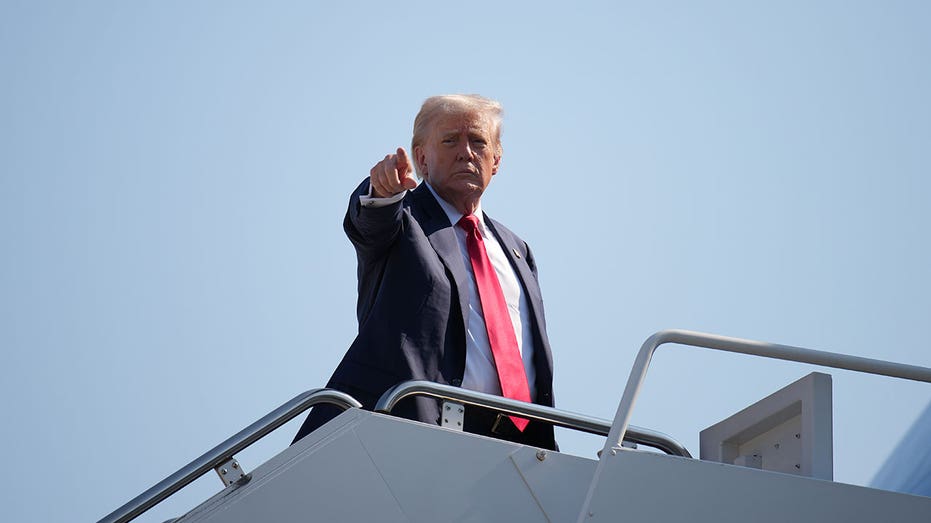
Senate Republicans left Washington this week to sell President Donald Trump’s “big, beautiful bill,” but the road to creating and passing the legislation began just over a year and a half ago. Trump’s $3.3 trillion megabill, crammed with his legislative priorities on border security, defense and energy, was a product months in the making. And it was the marquee policy in the bill, which was to extend or make permanent many of the 2017 Tax Cuts and Jobs Act, that was the driving force behind Republicans’ desire to pass it. But Senate Republicans have had little time to rest on their laurels and celebrate the bill’s passage, spending the month since Trump signed it advancing a $9 billion clawback package and trying to ram through Senate Democrats’ blockade of the president’s nominees. SENATE PASSES TRUMP’S ‘BIG, BEAUTIFUL BILL’ AFTER MARATHON VOTE-A-RAMA The journey to pass the bill began well before Republicans had a trifecta in Washington in early 2024, when then-Senate Republican Conference Chair John Barrasso, R-Wyo., hosted a policy retreat with Senate Republicans to hash out what the GOP’s agenda could look like should the win out in November. And months later, Trump visited with Senate Republicans to discuss the strategy they had been working on behind-the-scenes. “With President Trump in the White House, we discussed how Republicans will get America back on track,” Barrasso said at the time. “That starts with helping families escape the pain of Democrat high prices, unleashing American energy, stopping Democrat tax increases, and securing the Southern Border. Republicans are united.” The real, nitty-gritty work began in January where concepts were taken and fleshed out into legislation. Senate Majority Leader John Thune, R-S.D., opted to leapfrog the House and move forward with the Senate’s own budget framework, which initially divided the “big, beautiful bill” into two chunks. That added pressure on Republicans in the lower chamber to coalesce behind a plan of their own. For much of the earlier part of this year, however, the Senate was waiting on the House to fine-tune and pass their own version of the bill. Still, Thune and his leadership team, including Sen. Markwayne Mullin, R-Okla., worked to get a product from one side of the building to the other that the Senate GOP could work with. TRUMP’S ‘BIG, BEAUTIFUL BILL’ FACES REPUBLICAN FAMILY FEUD AS SENATE REVEALS ITS FINAL TEXT And when the bill made its way to the upper chamber in early June, the pressure was on to deliver a finished product to Trump by July 4, an artificial deadline used to help corral lawmakers into finishing work on the bill. One of the major disagreements in the upper chamber before the bill ever hit the floor was over the nature of cuts to Medicaid, particularly aimed at the provider tax rate. The issue was eventually smoothed over through the creation of a $50 billion rural hospital fund, but lawmakers who sounded the alarm against it vowed to ensure that the changes to the provider would never take effect. “I think it was a huge mistake,” Sen. Josh Hawley, R-Mo., said at the time. “I think this has been an unhappy episode here in Congress, this effort to cut Medicaid.” “And I think, frankly, my party needs to do some soul-searching,” he continued. “If you want to be a working class party, you’ve got to get delivered for working class people. You cannot take away health care from working people.” And when the bill did finally hit the floor for what would evolve into a multi-day affair of passing through procedural hurdles, Senate Minority Leader Chuck Schumer, D-N.Y., forcing the reading of the entire bill and a marathon vote-a-rama, Senate Republicans were still not entirely on board. At first, a cohort of fiscal hawks led by Sen. Ron Johnson, R-Wis., and Sen. Rick Scott, R-Fla., appeared to not support the package — they wanted even deeper cuts to Medicaid by tweaking the percentage that the federal government pays for healthcare in states that opted into Obamacare, which they argued would have saved billions extra. They were offered an amendment that eventually never came to the floor, but was enough for them to back down from tanking the bill. And their resistance began in the first of a handful of huddles inside Thune’s office outside the Senate floor. TAX CUTS, WORK REQUIREMENTS AND ASYLUM FEES: HERE’S WHAT’S INSIDE THE SENATE’S VERSION OF TRUMP’S BILL Sen. Cynthia Lummis, R-Wyo., joined them for the closed-door conversations, and told Fox News Digital that while her vote was not contingent on getting the change added, she wanted to make the case for why it should be. “It saved a lot of money,” she said. “It saved a lot of money, and so I was anxious to see us use the opportunity, since we were able to open up mandatory spending, use the opportunity to really save some money.” And later on, in the wee hours of the night, Republicans were bouncing from Thune’s office to the Senate floor, hashing out deals as they went to get Sen. Lisa Murkowski, R-Alaska, to support the bill, knowing that Sens. Susan Collins, R-Maine, and Thom Tillis, R-N.C., could vote against it. “Sometimes it’s got to be put on a clock, because at some point the argument has to come to an end,” Mullin told Fox News Digital. “And that’s why we had to do some of it on the floor. We had to, we had to force the hand.” And in the end, only three Republicans, Sens. Rand Paul of Kentucky, Collins and Tillis voted against the bill. From there it went to the House, where Republicans in the lower chamber had their own dramatic rally to pass the legislative behemoth. And now, as Republicans scatter to their home states to sell the bill to their constituents, Tillis said that the “foundational” piece of information that lawmakers can share is that they averted a nationwide tax hike. “The shame of the Medicaid provision
Cuomo supporters look to wealthy enclave to take down Mamdani: report
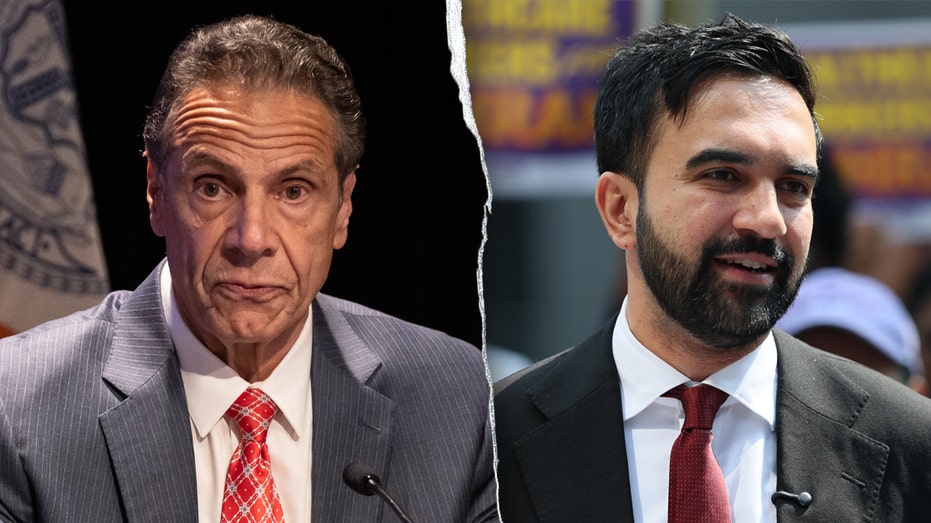
Andrew Cuomo supporters are reportedly urging New Yorkers with second homes in the Hamptons to switch their voter registrations to the Big Apple to cast their ballots against Democratic socialist mayoral candidate Zohran Mamdani in November. The plan is to target moderate Democrats in the wealthy enclave, including business owners and restaurateurs, “who have deep ties in NYC” and “have an interest in what’s going on,” Steven M. Cohen, chairman of pro-Cuomo political action committee Fix the City, told the New York Post. Cohen reportedly said he’s spoken to dozens of people – some of whom are “very high profile” – who relayed that they were “definitely” switching their voter registrations from Long Island’s East End to one of the five boroughs. “I’ve been trying to get this message out since the primary,” Cohen told the Post. “You don’t win elections because you did one thing right, but by doing one hundred things right, a thousand things right. This might be a few thousand votes, but elections have been won and lost on less than a few thousand votes.” CUOMO QUIPS ‘EVEN I WILL MOVE TO FLORIDA’ IF MAMDANI WINS NYC MAYORAL BID In the opposite direction, New York City Democrats with second homes out east in 2024 were encouraged to switch their voter registrations to the Hamptons to vote against then-first term incumbent Rep. Nick LaLota, R-N.Y. LaLota ultimately defeated the Democratic challenger, former CNN anchor John Avlon, by nearly 11 percentage points, earning a second term in New York’s 1st congressional district. This time around, Cohen argued that it is easy to change voter registration as long as interested Hamptonites have a “legitimate, bona fide” second residence in New York City. He acknowledged hearing “initial skepticism” about the tax implications, which he denied would be a concern. He stressed that the state Board of Elections only opposes voting in two locations. ANDREW CUOMO TALKS REMATCH WITH MAMDANI, SAYS SOCIALIST’S POLICIES WILL CAUSE ‘DEATH’ OF NYC “There are no tax implications at all — that’s part of the message,” Cohen said, explaining the strategy is part of a “longer-term play” focused on getting New Yorkers with homes in the Hamptons to “participate in the political process” in New York City. Republican donor and Hamptons metals magnate Andy Sabin opposed the movement. “You open up a can of worms to audits and everything else – you’d be crazy to do it,” he told the Post. Election lawyer, Jerry Goldfeder, said that interested Hamptonites would just have to send a change of address to the Board of Elections using a “new, legitimate registration form.” “I’m trying to switch,” Mitchel Agoos, an 87-year-old resident of East Hampton and New York City, told the Post, deeming Mamdani an “antisemite.” “He’s a disaster – I want to vote in this election. I’d feel great to vote against him,” Agoos, a Curtis Sliwa supporter who has voted in Suffolk County for decades, added. Fox News Digital reached out to Cuomo’s campaign for comment but did not immediately hear back.
China’s rare earth tech obsession ensnares US resident as CCP looks to maintain stranglehold

China’s bid to strangle the world’s supply of heavy rare-earth elements was about to hit a wall. Vietnamese entrepreneur Luu Anh Tuan had lined up U.S. backing for a technology that could break Beijing’s chokehold on the critical minerals behind everything from smartphones to missile-guidance systems. Tuan and his family had fled Vietnam for the U.S. to escape Beijing’s tightening grip over Hanoi, where the Chinese Communist Party exerts a heavy influence on domestic governance. In July 2023, he signed a technology transfer agreement, seen by Fox News Digital, to bring the heavy rare earth separation technology he was using at his Vietnam-based company, Vietnam Rare Earth (VTRE) to VTRU Corporation, a company registered in Nevada. VTRE had also signed a series of memoranda of understanding (MOU) agreements with Western companies. “He had a bad sense of insecurity about being in Vietnam. He was determined to transfer his technology to the US as quickly as possible,” a source familiar with the rare earth industry, granted anonymity to speak without fear of retribution, told Fox News Digital. CHINESE CITIZEN ADMITS STEALING US TRADE SECRETS FOR NEXT-GENERATION NATIONAL SECURITY TECH At the time, the world was entirely dependent on Chinese companies to separate their heavy rare earth metals. “China has been really working for the better part of over 20 years now on building this dominance,” Gracelin Baskaran, director of the Critical Minerals Security Program at the Center for Strategic and International Studies, said in an interview. And while companies like U.S.-based MP Materials and Australia-based Lynas are in the process of developing their own separation technologies, China still controls up to 90% of the rare earths separation and refining capacity and over half of mining output. In October 2023, Tuan, then a U.S. permanent resident and green card holder in the process of becoming a citizen, was back in his Hanoi office when Vietnamese authorities raided the building, seizing all laptops and records. Seventeen employees were arrested, according to Tuan’s American business partner, Richard Dunham, and all but one, Do Hanh Huong, Tuan’s sister-in-law and COO of VTRE, have since been released. The arrest came shortly after President Joe Biden visited Vietnam and signed cooperation agreements on rare earth minerals. CHINA CONTROLS OVER 80% OF BATTERY MATERIALS CRUCIAL TO US DEFENSE EQUIPMENT, UNSETTLING REPORT REVEALS In December, China banned rare earth extraction and separation, in what the industry saw as another effort to maintain its monopoly on the market. “When China put in these restrictions, it really made countries like the U.S. and Australia realize that they didn’t actually even have the technical know-how to do it themselves,” said Baskaran. “The process itself is just very labor-intensive and very toxic,” said Josh Birenbaum, a minerals expert at the Foundation for Defense of Democracies, adding China cornered the market through state subsidies and lax environmental concerns. While the U.S. has one major rare earths mine, MP Materials’ Mountain Pass, until this year, the company was exporting those rare earths to China for separation. The trade war and export controls that followed prompted the U.S. to stockpile its rare earths until separation capacity was up to scale at home. Tuan was accused of forging a value-added tax receipt while trading rare earths with Thai Duong Group, which operates a mine in the northern Vietnamese province of Yen Bai. VTRE had partnered with Australian mining companies Australian Strategic Materials and Blackstone Minerals Ltd. Tuan and Dunham had also met with officials from the state of Nevada and the Department of Energy to discuss plans to bring the separation technology to the U.S. through VTRE. Both were “enthusiastic” about the proposal, which ultimately led to the signing of the transfer agreement, according to Dunham. The arrest also came as Vietnam prepared to auction the Dong Pao mine. VTRE, backed by Western partners, was the only qualified bidder, according to Dunham. This year, Tuan pleaded guilty in exchange for a lighter sentence. He’ll spend 16 years in prison with a fine of $10 million, but his advocates say he was “coerced.” Huong was sentenced to six years in prison. “We believe these charges to be manipulated, charges that were founded by Vietnamese state actors who have realigned themselves with China,” said Dunham. “He was tortured to obtain a guilty plea.” SENATE REPUBLICAN MOVES TO GIVE US AN EDGE ON CHINA IN HARVESTING MINERALS FOR WEAPONS SYSTEMS Fox News Digital could not independently verify this claim. The State Department documents credible reports of arbitrary arrests, torture and inhumane treatment by authorities, affecting both political detainees and others in custody. Medical neglect and forced confessions are frequently reported. Tuan’s advocates say the company he was purchasing ore from, Thai Duong, refused to provide invoices at the actual rate VTRE was paying for ore. It only provided invoices that claimed it was selling ore at a lower rate, reducing its taxable income. According to Dunham, Thai Duong refused to issue invoices reflecting the actual sale price to VTRE, allegedly to avoid environmental, natural resource and corporate income taxes, obligations that fell on Thai Duong, not Tuan. Tuan was faced with a choice: accept the lower-rate invoices and make up the tax discrepancies with his own money or allow his state-funded minerals project, and in turn, his business, to collapse, per Dunham. Though Tuan was convicted on criminal charges, Dunham said the violation of accounting regulations lacks evidence of criminal intent. “Even if he were guilty of an accounting issue, it’s not something that is criminally liable for what they’re trying to do. No place in Vietnam has there ever been an issue with this type of sentencing. It’s totally unheard of. Typically you would pay a fine and that’s it.” “He is the only individual outside of China that has a fully integrated rare earth company that’s from mining to metallization; in other words, from digging it out of the ground to the manufacturing of magnets.” Tuan was also convicted of smuggling rare earth materials, but customs documents show clearance of 63 shipments of heavy