

Bangladesh teeters between hope and deadlock a year after Hasina’s fall
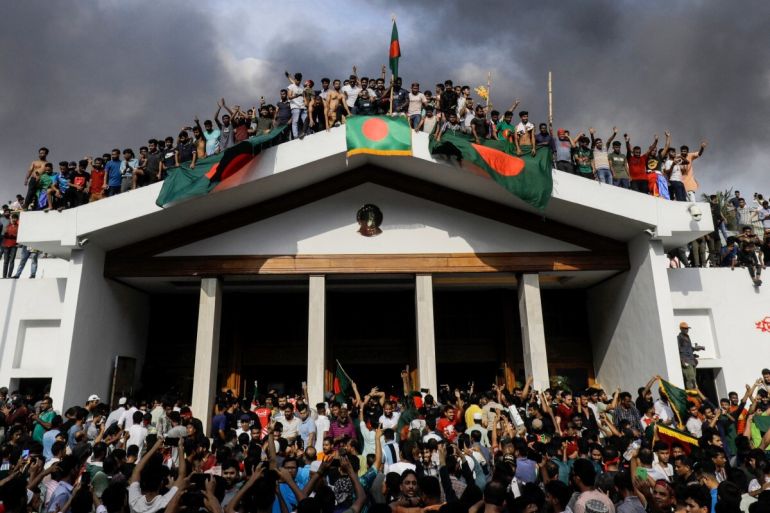
Dhaka, Bangladesh – Sinthia Mehrin Sokal remembers the blow to her head on July 15 last year when she, along with thousands of fellow students, marched during a protest against a controversial quota system in government jobs in Bangladesh’s capital, Dhaka. The attack by an activist belonging to the student wing of the then-Prime Minister Sheikh Hasina’s Awami League party left Sokal – a final-year student of criminology at the University of Dhaka – with 10 stitches and temporary memory loss. A day later, Abu Sayed, another 23-year-old student, was protesting at Begum Rokeya University in the Rangpur district, about 300km (186 miles) north of Dhaka, when he was shot by the police. A video of him, with his arms outstretched and collapsing on the ground moments later, went viral, igniting an unprecedented movement against Hasina, who governed the country with an iron fist for more than 15 years before she was toppled last August. Students from schools, colleges, universities and madrassas took to the streets, defying a brutal crackdown. Soon, the young protesters were joined by their parents, teachers and other citizens. Opposition parties, including the Bangladesh Nationalist Party (BNP) and the Bangladesh Jamaat-e-Islami, lent crucial support, forming an unlikely united front against Hasina’s government. “Even students in remote areas came out in support. It felt like real change was coming,” Sokal told Al Jazeera. On August 5, 2024, as tens of thousands of protesters stormed Hasina’s palatial residence and offices in Dhaka, the 77-year-old leader boarded a military helicopter and fled to neighbouring India, her main ally, where she continues to defy a Bangladesh court’s orders to face trial for crimes against humanity and other charges. Antigovernment protesters storm Hasina’s residence in Dhaka, August 5, 2024 [K M Asad/AFP] By the time Hasina fled, more than 1,400 people had been killed, most when government forces fired on protesters, and thousands of others were wounded, according to the United Nations. Advertisement Three days after Hasina fled, the protesters installed an interim government, on August 8, 2024, led by the country’s only Nobel laureate, Muhammad Yunus. In May this year, the interim government banned the Awami League from any political activity until trials over last year’s killings of the protesters concluded. The party’s student wing, the Chhatra League, was banned under anti-terrorism laws in October 2024. Yet, as Bangladesh marks the first anniversary of the end of Hasina’s government on Tuesday, Sokal said the sense of unity and hope that defined the 2024 uprising has given way to disillusionment and despair. “They’re selling the revolution,” she said, referring to the various political groups now jostling for power ahead of general elections expected next year. “The change we fought for remains out of reach,” said added. “The [interim] government no longer owns the uprising.” Sinthia Mehrin Sokal suffered temporary memory loss after she was hit on the head by a policeman during last year’s antigovernment protests [Courtesy of Sinthia Mehrin Sokal] ‘What was my son’s sacrifice for?’ Yunus, the 85-year-old Nobel Peace Prize winner presiding over Bangladesh’s democratic overhaul, faces mounting political pressure, even as his interim government seeks consensus on drafting a new constitution. Rival factions that marched shoulder to shoulder during anti-Hasina protests are now locked in political battles over the way forward for Bangladesh. On Tuesday, Yunus is expected to unveil a so-called July Proclamation, a document to mark the anniversary of Hasina’s ouster, which will outline the key reforms that his administration argues Bangladesh needs – and a roadmap to achieve that. But not many are hopeful. “Our children took to the streets for a just, democratic and sovereign Bangladesh. But that’s not what we’re getting,” said Sanjida Khan Deepti, whose 17-year-old son Anas was shot dead by the police during a peaceful march near Dhaka’s Chankharpul area on August 5, 2024. Witnesses said Anas was unarmed and running for cover when a police bullet struck him in the back. He died on the spot, still clutching a national flag. “The reforms and justice for the July killings that we had hoped – it’s not duly happening,” the 36-year-old mother told Al Jazeera. “We took to the streets for a better, peaceful and just country. If that doesn’t happen, then what was my son’s sacrifice for?” Others, however, continue to hold firm in their trust in the interim government. Advertisement “No regrets,” said Khokon Chandra Barman, who lost almost his entire face after he was shot by the police in the Narayanganj district. “I am proud that my sacrifice helped bring down a regime built on discrimination,” he told Al Jazeera. Barman feels the country is in better hands now under the Yunus-led interim government. “The old evils won’t disappear overnight. But we are hopeful.” Barman lost almost his entire face after he was shot by the police [Courtesy of Khokon Chandra Barman] Atikul Gazi agreed. “Yunus sir is capable and trying his best,” Gazi told Al Jazeera on Sunday. “If the political parties fully cooperated with him, things would be even better.” The 21-year-old TikToker from Dhaka’s Uttara area survived being shot at point-blank range on August 5, 2024, but lost his left arm. A selfie video of him smiling, despite missing an arm, posted on September 16 last year, went viral, making him a symbol of resilience. “I’m not afraid… I’m back in the field. One hand may be gone, but my life is ready to be offered anew.” Atikul Gazi was shot by police at point-blank range on August 5, 2024 [Courtesy of Atikul Gazi] ‘Instability could increase’ Others are less optimistic. “That was a moment of unprecedented unity,” said Mohammad Golam Rabbani, a professor of history at Jahangirnagar University on the outskirts of Dhaka. Rabbani had recited a poem during a campus protest on July 29, 2024. Speaking at an event last month to commemorate the uprising, he said: “Safeguarding that unity should have been the new government’s first task. But they let it slip.” The coalition of students, professionals and activists,
Australia’s FM warns of ‘risk there will be no Palestine left to recognise’
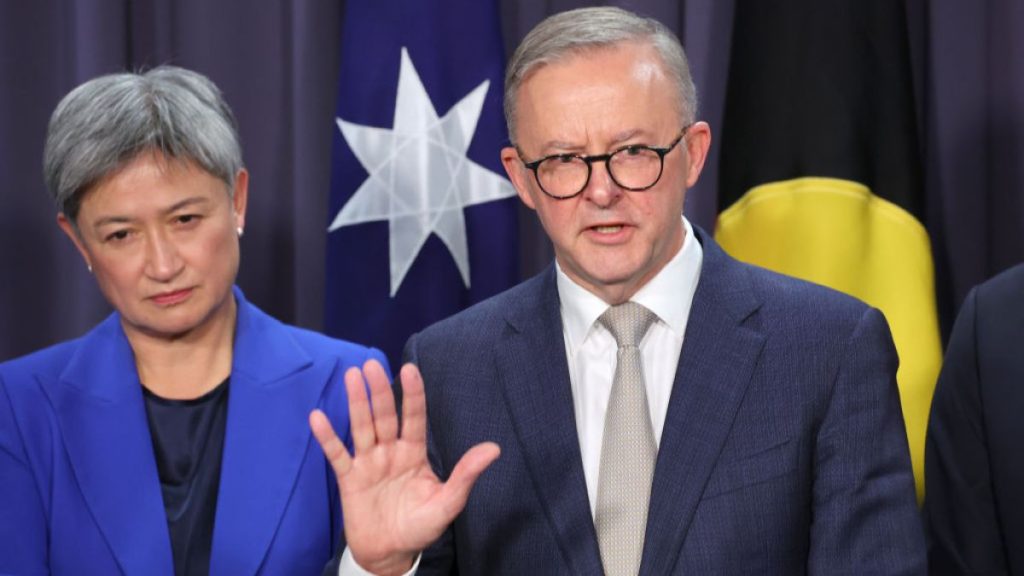
Australia’s Minister for Foreign Affairs Penny Wong has told the country’s media that “there is a risk there will be no Palestine left to recognise”, amid Israel’s devastating war on Gaza and increasing violence against Palestinians in the occupied West Bank. Wong, who did not indicate that Australia plans to change its stance and recognise Palestinian statehood, made her comments in an interview with the Australian Broadcasting Corporation ( ABC) on Tuesday morning, where she responded to questions about a mass protest in Sydney attended by hundreds of thousands of people rallying against Israel’s war on Gaza. Organisers said that between 200,000 and 300,000 people joined the protest across the iconic Sydney Harbour Bridge on Sunday. Police had initially estimated that about 90,000 people took part. Wong said the Australian government shared the protesters “desire for peace and a ceasefire”, and that the huge turnout reflected “the broad Australian community’s horror” and the “distress of Australians, on what we are seeing unfolding in Gaza, the catastrophic humanitarian situation, the deaths of women and children, the withholding of aid”. However, asked if Australia was considering taking any more concrete actions, such as imposing sanctions on Israel, Wong said: “We don’t speculate on sanctions for the obvious reason that they have more effect if they are not flagged.” She noted that Australia had already imposed sanctions on two far-right ministers in Netanyahu’s government, Itamar Ben-Gvir and Bezalel Smotrich, in June this year, as well as “extremist” Israeli settlers. Advertisement On Australia’s position regarding Palestinian statehood, Wong said: “In relation to recognition, I’ve said for over a year now, it’s a matter of when, not if.” Wong’s interview came as Australian Prime Minister Anthony Albanese is reportedly seeking to speak with Israeli Prime Minister Benjamin Netanyahu in the wake of Sunday’s protest. Responding to questions about what he plans to discuss with Netanyahu, Albanese said he would again express his support for a two-state solution. Rawan Arraf, the executive director of the Australian Centre for International Justice, said that the “only business” that Albanese should be discussing with Netanyahu is cancelling the “two-way arms trade between Australia and and Israel, new sanctions measures, and Netanyahu’s one-way trip to the [International Criminal Court] to face war crimes and crimes against humanity charges“. Albanese “must not give legitimacy to an accused war criminal”, Arraf wrote in a post on X. While both Albanese and Wong have continued to emphasise the importance of a two-state solution, Australia has yet to follow other countries, including France and Canada, that have recently announced their plans to recognise Palestinian statehood, and join the vast majority of countries which already do so. Albanese also had a phone call with Palestinian Authority President Mahmoud Abbas on Tuesday, the first publicly recorded call between the pair since November 2023, according to the ABC. Responding to questions about the Sydney protest rally, Albanese said: “It’s not surprising that so many Australians have been affected in order to want to show their concern at people being deprived of food and water and essential services.” But the state government in New South Wales, which is led by Albanese’s Labor Party, had sought to prevent the march from crossing the Sydney Harbour Bridge in the week leading up to the protest. The protest only went ahead after State Supreme Court Justice Belinda Rigg ruled that “the march at this location is motivated by the belief that the horror and urgency of the situation in Gaza demands an urgent and extraordinary response from the people of the world”. “The evidence indicates there is significant support for the march,” Rigg added. A number of state and federal Labor ministers also took part in the march, in an indication of a growing divide within Albanese’s party. Independent journalist Antony Loewenstein told Al Jazeera that Sunday’s march showed that Australians are “frustrated that our government is doing little more than talk at this point”. Advertisement “People are so outraged, not just by what Israel is doing in Gaza, but also the Australian government’s complicity,” said Loewenstein, who spoke at the march on Sunday. Australia “is part of the global supply chain for the F-35 fighter jet, which Israel is using over Gaza every day, and the parts that are amongst those parts in the plane are probably coming from Australia”, he said. Adblock test (Why?)
Israel’s Netanyahu has decided on full occupation of Gaza, reports say
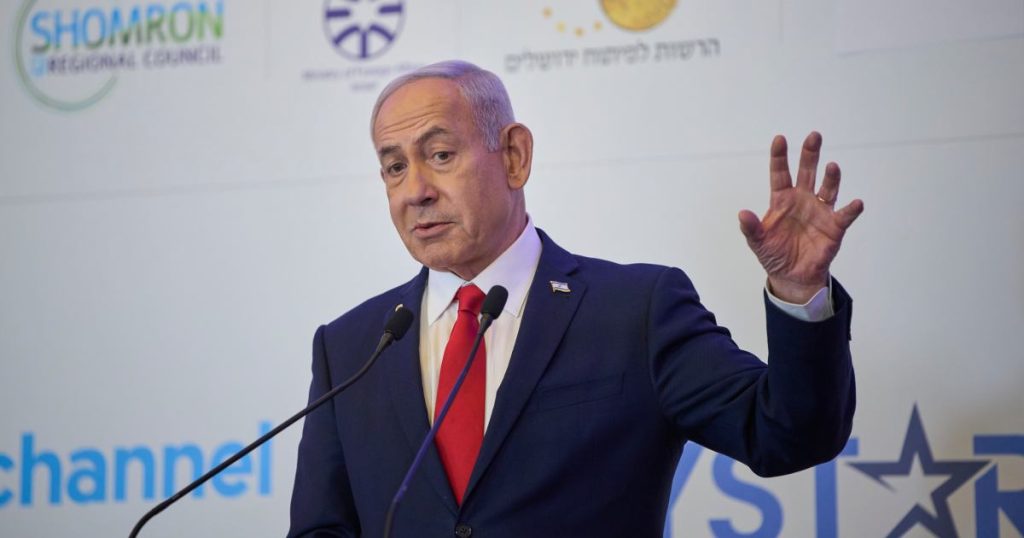
Netanyahu’s war cabinet set to approve military operations across entire enclave, according to Israeli media. Israeli Prime Minister Benjamin Netanyahu is set to announce plans to fully occupy the Gaza Strip, Israeli media have reported. Netanyahu’s decision will see the Israeli military expand its operations across the entire enclave, including areas where Hamas’s captives are being held, i24NEWS, The Jerusalem Post, Channel 12 and Ynet reported on Monday. “The decision has been made,” Amit Sega, chief political analyst with Channel 12, quoted an unnamed senior official in Netanyahu’s office as saying. “Hamas won’t release more hostages without total surrender, and we won’t surrender. If we don’t act now, the hostages will starve to death and Gaza will remain under Hamas’s control.” The Palestinian Ministry of Foreign Affairs condemned the reported plans and called on the international community to “intervene urgently to prevent their implementation, whether they are a form of pressure, trial balloons to gauge international reactions, or genuinely serious”. Netanyahu’s office did not immediately respond to Al Jazeera’s request for comment. The reports come as Netanyahu is set to convene his war cabinet on Tuesday to discuss the next steps for Israel’s military in Gaza as its war in the besieged enclave nears the two-year mark. Netanyahu is facing growing international pressure to allow more humanitarian aid into Gaza and halt the war amid mounting Palestinian deaths due to malnutrition and Israeli attacks. At least 74 Palestinians, including 36 aid seekers, were killed in Israeli attacks on Monday, according to medical sources in Gaza. Advertisement The Israeli leader is also facing mounting domestic pressure to secure the release of Hamas’s remaining captives in Gaza, following the release of footage of detainees Rom Braslavski and Evyatar David appearing emaciated. Netanyahu on Monday doubled down on his war goals, including eliminating Hamas and securing the release of the remaining captives. “We must continue to stand together and fight together to achieve all our war objectives: the defeat of the enemy, the release of our hostages, and the assurance that Gaza will no longer pose a threat to Israel,” Netanyahu said at the start of a regular cabinet meeting on Monday. Senior Hamas official Osama Hamdan on Monday accused the United States and other Western countries of turning a blind eye to Israeli atrocities, and said that Netanyahu’s government bore “full responsibility” for the lives of the captives “due to its stubbornness, arrogance, and evasion of reaching a ceasefire agreement, and the escalation of the war of extermination and starvation against our people”. More than 60,930 Palestinians, including at least 18,430 children, have been killed in Gaza since October 2023, according to Gaza health authorities. Forty-nine captives, including 27 who are believed to be dead, are still being held by Hamas, according to Israeli authorities. Adblock test (Why?)
Ethanol blend in petrol damaging old vehicles? Govt says, ‘These concerns are…’

The government said that ethanol blending is a forward-looking, scientifically supported, and environmentally responsible measure that brings multi-dimensional benefits to the nation.
India responds after Donald Trump threatens higher tariffs: ‘Unjustified and…’
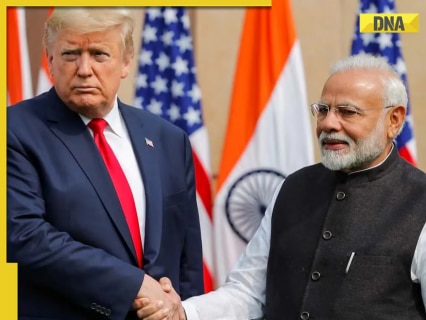
The Indian government has hit back with a strong statement after United States President Donald Trump threatened to raise tariffs on New Delhi. In a statement on X, the Ministry of External Affairs said India had been targeted by the US and the European Union for importing oil from Russia.
UP floods: Heavy rains hit 17 districts, over 350 houses damaged, thousands of families displaced; check details
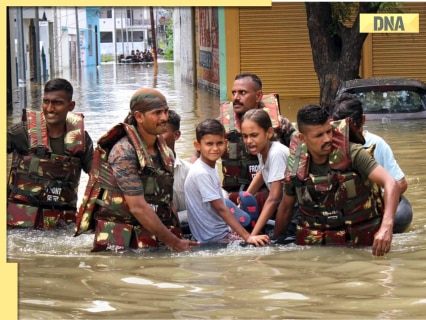
Kanpur Nagar, Kanpur Dehat, Lakhimpur Kheri, Agra, Auraiya, Chitrakoot, Ballia, Banda, Ghazipur, Mirzapur, Varanasi, Chandauli, Jalaun, Hamirpur, Etawah, and Fatehpur are among other affected districts.
PM Modi to address NDA meet ahead of Vice-President’s election nominations: Know key agenda
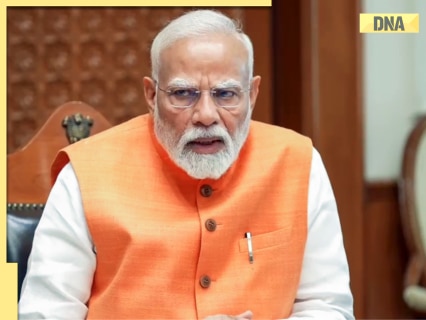
PM Modi will be honoured during the meeting, particularly for the success of Operation Sindoor, a counter-terrorism mission launched in the aftermath of the recent Pahalgam terror attack.
Live updates: Texas Dems’ absence hampers special session, triggers warrants, garners national attention
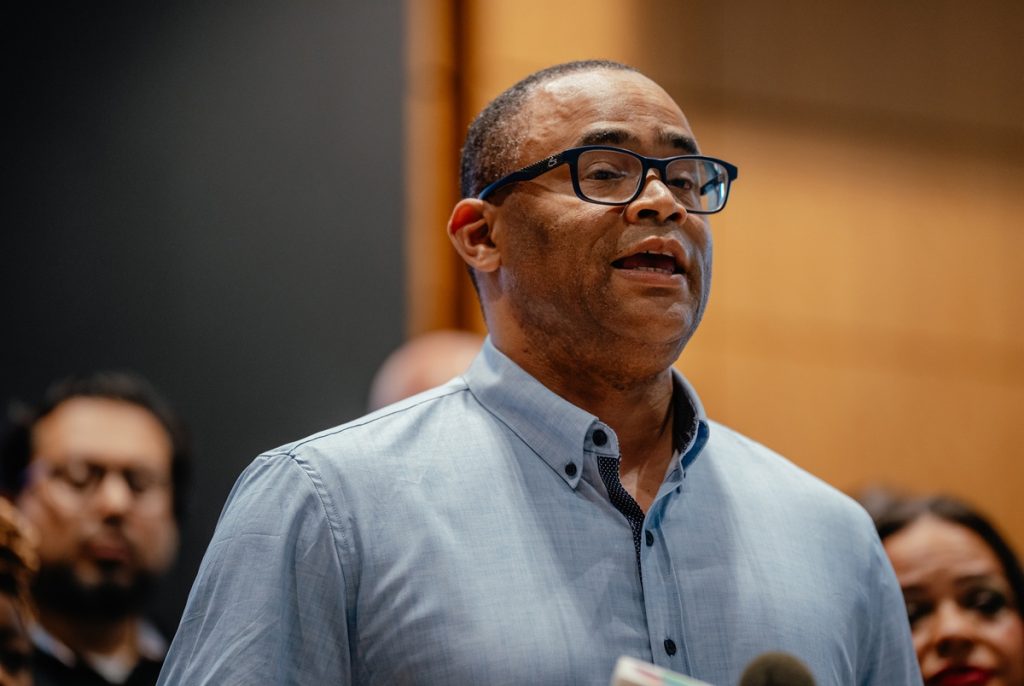
New York Gov. Kathy Hochul says her state may try to add Democratic U.S. House seats as Texas House Democrats face threats that they’ll be removed from office.
Texas House issues arrest warrants for Democrats who left state to block congressional redistricting
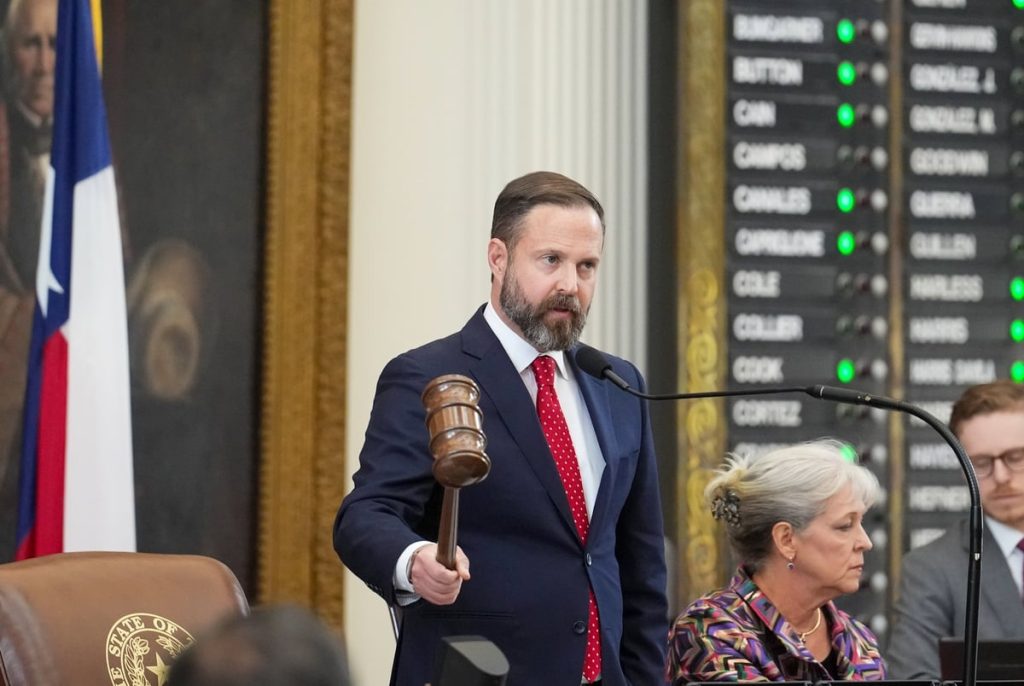
The warrants apply only within state lines, making them largely symbolic as most of the legislators in question decamped to Illinois, New York and Massachusetts.
Flood relief, THC regulation and more in limbo after House Democrats leave Texas
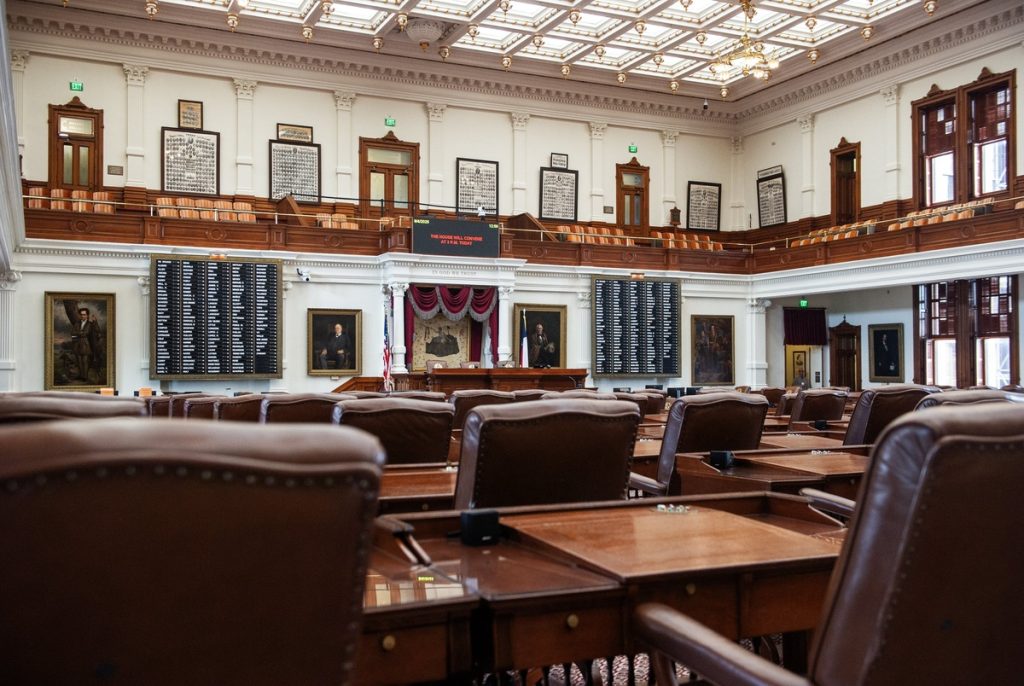
Democrats fled the state to stop Republicans’ attempt to redraw congressional districts, but bills aimed at everything from a THC product ban to bolstering flood response are now in doubt.