

India acknowledges ties with US has ‘weathered several challenges’, expresses commitment to take relationship…
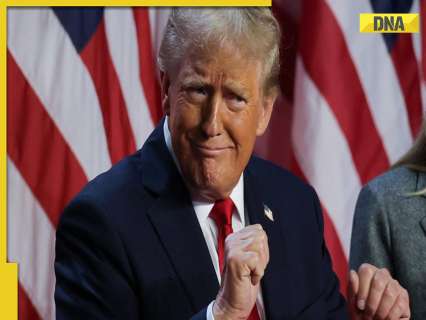
“I don’t care what India does with Russia. They can take their dead economies down together, for all I care. We have done very little business with India, their tariffs are too high, among the highest in the world. Likewise, Russia and the USA do almost no business together. Let’s keep it that way”.
Biden slurs way through latest speech, touts nominating ‘demographically diverse’ judges
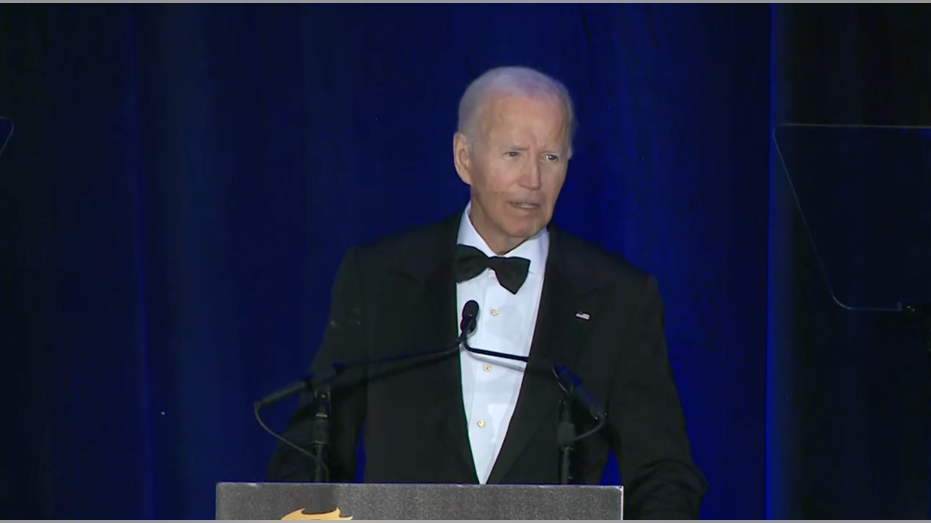
Former President Joe Biden touted appointing Supreme Court Justice Kentanji Brown Jackson, the first Black woman to serve on the Supreme Court, during a slur-filled speech at the National Bar Association’s 100th annual gala at the Hyatt in Chicago Thursday evening — just hours after one of his top aides testified before the Republican House Oversight Committee for their investigation into the former president’s fitness for office. Biden slurred on multiple occasions during the night, including while discussing serving as the vice president to the first Black president, former President Barack Obama, and selecting Kamala Harris as his vice president. Harris was the first woman of Black and South Asian heritage to serve in the role. Likewise, Biden said he also selected demographically diverse judges during his administration. KAMALA HARRIS TO PUBLISH BEHIND-THE-SCENES ACCOUNT OF FAILED 2024 CAMPAIGN “I promised to have an administration that looked like America and appoint a bench that looked like America,” Biden said. “And I kept my promise. I appointed the most demographically diverse … slate of judges ever in the history of the United States of America. The top of that list, one of the greatest lawyers I’ve ever met, Ketanji Brown Jackson, the first Black woman on the United States Supreme Court.” “Justice Jackson, as you witnessed earlier this week, has proven herself to have the wisdom and the character that I saw in her when I nominated her. Appointed 13 Black women to the Courts of Appeals of the United States Federal Court, more than every other president in American history combined,” he said. “For other historic firsts as well, for historic, for Hispanic Americans, Asian Americans, Muslim Americans, by the way, I didn’t just appoint Ivy League judges.” DNC VICE CHAIR COMPARES TRUMP TO NOTORIOUS SEGREGATIONISTS DURING HEATED TOWN HALL EVENT WITH BETO O’ROURKE The National Bar Association originally formed in Iowa before Black attorneys were permitted to join the American Bar Association, and is now made up of 66,000 members working in law who advocate for civil rights and diversity. Those who attended the event included Jackson, as well as Rep. Jasmine Crockett, D-Texas, Minnesota Attorney General Keith Ellison, Nevada Attorney General Aaron Ford, MSNBC pundit Joy-Ann Reid and New York Attorney General Letitia James. Biden and his allies have faced allegations of concealing the truth about Biden’s mental fitness while in office, following his debate performance against President Donald Trump on June 27, 2024 in Atlanta, where Biden struggled to answer seemingly basic questions. LONGTIME BIDEN AIDE TESTIFIES HE STOOD TO EARN UP TO $8M HAD PRESIDENT WON RE-ELECTION Multiple books have been written in 2025 detailing Biden’s final days in office, his deteriorating mental faculties and challenges within the Democratic Party as a result of his decision to withdraw from the election. Additionally, several investigations are ongoing on Capitol Hill concerning Biden’s mental decline. For example, the House Oversight Committee is examining the cover-up of Biden’s cognitive decline and potentially unauthorized executive actions taken during his presidency. Earlier Thursday, longtime Biden aide Michael Donilon appeared before the House Oversight Committee and told lawmakers that he could have raked in a total of $8 million if Biden had won re-election in 2024, Axios first reported. Fox News Digital reached out to Biden’s spokesperson for comment and has not yet received a reply. Fox News’ Charlie Creitz and Alex Schemmel contributed to this report.
China’s growing nuclear arsenal aims to break US alliances and dominate Asia, report warns
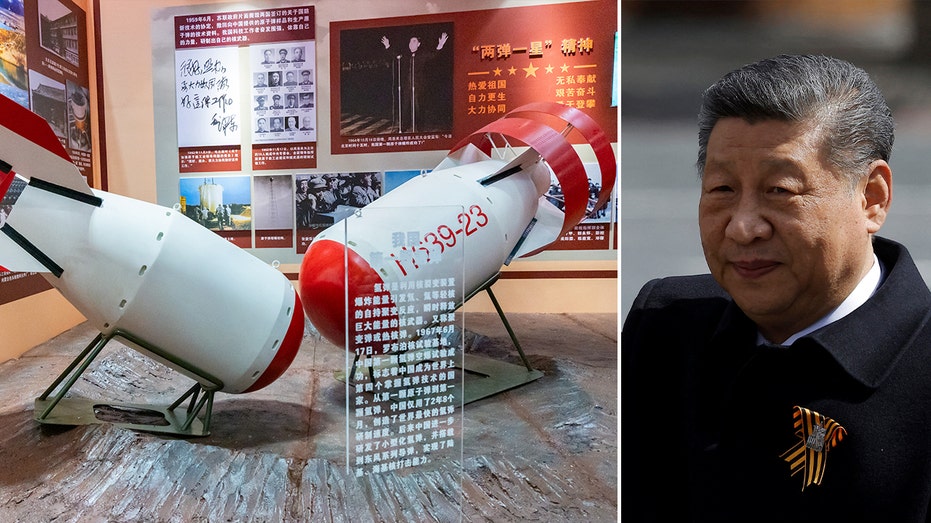
China is no longer building nuclear weapons solely for deterrence — it’s using them to fuel its ambitions as a dominant power in Asia, seeking to intimidate U.S. allies and undermine American influence across the region, according to a new report. The Hudson Institute warns that by the mid-2030s, China is expected to become a nuclear peer of the United States in both quantity and quality, fielding a modern, survivable and diverse arsenal that includes over 1,000 warheads, a fully developed nuclear triad and tactical nuclear capabilities. However, Beijing’s goal isn’t to win a nuclear war, the report argues. It’s to manipulate and degrade trust in America’s nuclear umbrella, particularly among U.S. allies in East and Southeast Asia. By sowing doubt that Washington would defend them in a crisis, China hopes to pressure countries like Japan, the Philippines and South Korea into strategic passivity, giving Beijing more room to act — including a potential move on Taiwan — without triggering a broader allied response. “The purpose of amplifying uncertainty is to manipulate notions of risk to China’s advantage,” the report states. “This is primarily about exacerbating hesitancy among U.S. allies by exploiting persistent fears of abandonment and doubts regarding America’s commitment.” JAPAN CALLS AXIS OF CHINA, RUSSIA, NORTH KOREA THE ‘GRAVEST THREAT’ TO GLOBAL ORDER SINCE WWII China’s military strategy blends rapid nuclear modernization with psychological operations and information warfare. The country is investing in advanced technologies such as hypersonic boost-glide vehicles and fractional orbital bombardment systems — space-based platforms that can deliver nuclear strikes from low-Earth orbit with little warning. Its warheads can now be launched from silos, submarines, road-mobile launchers and aircraft. The report urges the U.S. to “abandon the false hope of arms control” with China and instead embrace a doctrine of strategic ambiguity and instability, one that deters Beijing through strength and unpredictability rather than bilateral disarmament. President Donald Trump has expressed interest in future arms control talks with both China and Russia, but analysts say Beijing has shown little genuine interest in limiting its nuclear forces. The Hudson report devotes case studies to three key allies — the Philippines, Japan and South Korea — and how China uses nuclear intimidation differently in each case. While Manila is more concerned with gray-zone conflicts in the South China Sea, China may increasingly use implied nuclear threats to dissuade it from hosting U.S. missile systems like the Typhon launcher, which can strike deep into Chinese territory. China has already begun deploying messaging via state-linked outlets that hint at targeting Philippine-based assets. Heavily dependent on the U.S. nuclear umbrella but constrained by strong domestic anti-nuclear sentiment, Tokyo faces an information campaign from Beijing designed to shake confidence in U.S. commitments. China applies psychological pressure to prevent Japan from building counterstrike capabilities or assisting in a conflict over Taiwan. PENTAGON PRESSES JAPAN, AUSTRALIA ON ROLE IN POSSIBLE TAIWAN CONFLICT Seoul remains narrowly focused on North Korea’s nuclear threat, not China’s. It has been reluctant to fully align with U.S. efforts to deter Beijing, and it’s unclear whether South Korea would permit U.S. forces to use its bases in the event of a Taiwan contingency. China, the report says, is working to keep Seoul compartmentalized and disengaged from the broader East Asian conflict. The report outlines four core recommendations: “Washington and its allies must show that China’s buildup is backfiring — leading not to fear and passivity, but to renewed resolve and regional rearmament,” the report says. The report lands ahead of the Pentagon’s forthcoming global force posture review, expected later this year. The Department of Defense is widely expected to announce a shift in forces from Europe to the Indo-Pacific, reflecting the Biden administration’s—and potentially Trump’s — emphasis on great power competition with China.
Kavanaugh cites 3 presidents in explaining Supreme Court’s ballooning emergency docket
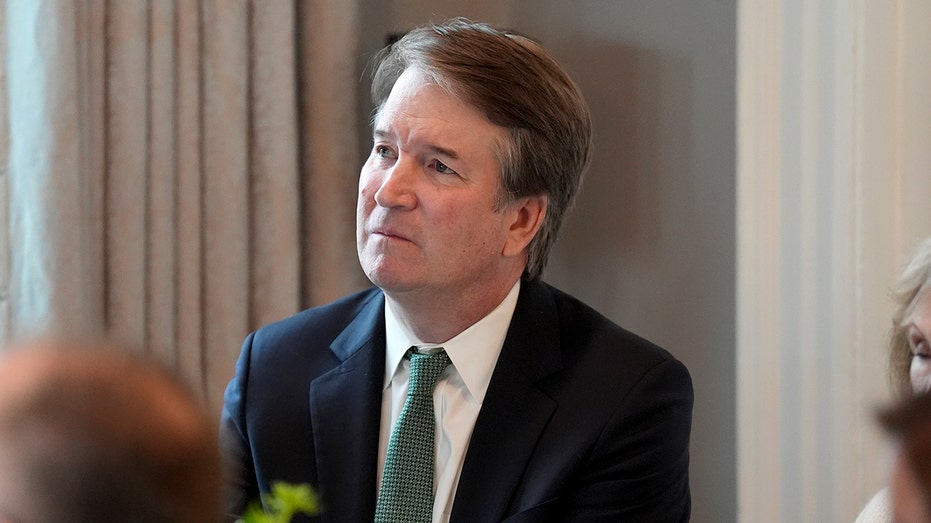
As President Donald Trump has faced an onslaught of legal bids to block his agenda during his second term in office, Trump-nominated Supreme Court Justice Brett Kavanaugh spoke at the U.S. Court of Appeals for the Eighth Circuit judicial conference on Thursday, according to reports. “Executive branches of both parties over the last 20 years have been increasingly trying to issue executive orders and regulations that achieve the policy objectives of the president in power,” Kavanaugh said, according to the New York Times. “And I think presidents, whether it’s President Obama – I think the phrase was ‘pen and phone’ – or President Biden or President Trump, have really done more of that, and those get challenged pretty quickly in court,” he said, according to CNN. FOX NEWS POLL: APPROVAL OF SCOTUS AT 5-YEAR HIGH, REBOUNDING FROM RECORD LOW IN 2024 Unlike regular Supreme Court rulings that fully explain the rationale behind the decision, decisions on the high court’s emergency docket may go unexplained. “We’ve been doing certainly more written opinions on the interim orders docket than we’ve done in the past,” Kavanaugh said, according to CNN. SCOTUS TO DISCUSS GHISLAINE MAXWELL’S CASE PRIVATELY IN SEPTEMBER AT POST-SUMMER CONFERENCE Though he noted that issuing written opinions may pose the “risk” of “lock-in effect” in which that opinion does not “reflect the final view,” reports indicate. Kavanaugh described the court’s “collegiality” as “very strong,” noting that the nine members on the bench “look out for each other” and consider one another “patriots” and “good people,” according to reports. Trump nominated Kavanaugh to the Supreme Court during his first term in office. US JUDGE BLOCKS TRUMP EFFORT TO CUT PLANNED PARENTHOOD FUNDING He also nominated Amy Coney Barrett and Neil Gorsuch, meaning he chose one third of the current justices.
What has triggered deadly clashes at Uganda’s border with South Sudan?
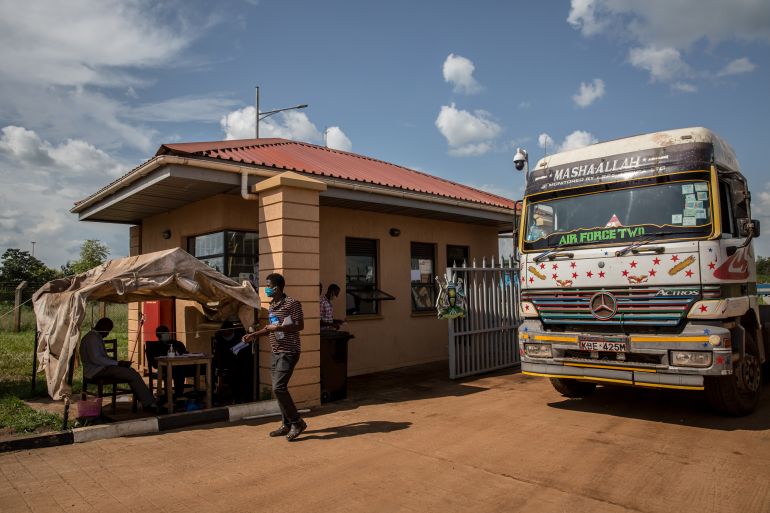
Fighting between the armies of Uganda and neighbouring South Sudan, which are longtime allies, erupted this week over demarcations in disputed border regions, leading to the death of at least four soldiers, according to official reports from both sides. Thousands of civilians have since been displaced in affected areas as people fled to safety amid the rare outbreak of violence. A gunfight began on Monday and comes as South Sudan, one of the world’s youngest countries, is facing renewed violence due to fracturing within the government of President Salva Kiir that has led to fighting between South Sudanese troops and a rebel armed group. Uganda has been pivotal in keeping that issue contained by deploying troops to assist Kiir’s forces. However, the latest conflict between the two countries’ armies is raising questions regarding the state of that alliance. A truck enters a checkpoint at the Elegu border point between Uganda and South Sudan in May 2020 [Sally Hayden/SOPA Images/LightRocket via Getty Images] What has happened? There are conflicting accounts of the events that began at about 4:25pm local time (13:25 GMT) on Monday, making it hard to pinpoint which side struck first. The two agree on where the fighting took place, but each claims the site as being in its own territory. Ugandan military spokesperson Major-General Felix Kulayigye told reporters on Wednesday that the fighting broke out when South Sudanese soldiers crossed into Ugandan territory in the state of West Nile and set up camp there. The South Sudanese soldiers refused to leave after being told to do so, Kulayigye said, resulting in the Ugandan side having “to apply force”. Advertisement A Ugandan soldier was killed in the skirmish that ensued, Kulayigye added, after which the Ugandan side retaliated and opened fire, killing three South Sudanese soldiers. However, South Sudan military spokesperson Major-General Lul Ruai Koang said in a Facebook post earlier on Tuesday that armies of the “two sisterly republics” had exchanged fire on the South Sudanese side, in the Kajo Keji County of Central Equatoria state. Both sides suffered casualties, he said, without giving more details. Wani Jackson Mule, a local leader in Kajo-Keji County, backed up this account in a Facebook post on Wednesday and added that Ugandan forces had launched a “surprise attack” on South Sudanese territory. Mule said local officials had counted the bodies of five South Sudanese officers. Kajo-Keji County army commander Brigadier General Henry Buri, in the same statement as Mule, said the Ugandan forces had been “heavily armed with tanks and artillery”, and that they had targeted a joint security force unit stationed to protect civilians, who are often attacked by criminal groups in the area. The army general identified the deceased men as two South Sudanese soldiers, two police officers and one prison officer. The fighting affected border villages and caused panic as people fled from the area, packing their belongings hurriedly on their backs, according to residents speaking to the media. Children were lost in the chaos. Photos on social media showed crowds gathered as local priests supervised the collection and transport of remains. Map of Uganda and South Sudan [Al Jazeera] What is the border conflict about? Uganda and South Sudan have previously clashed over demarcations along their joint border, although those events have been few and far between. As with the Monday clash, the fighting is often characterised by tension and violence. However, heavy artillery fighting, which occurred on Monday, is rare. Problems at the border date back to the demarcations made during the British colonial era between Sudan, which South Sudan was once a part of, and Uganda. Despite setting up a joint demarcation committee (unknown when), the two countries have failed to agree on border points. In November 2010, just months before an anticipated South Sudanese referendum on independence from Sudan, clashes erupted after the Ugandan government accused the Sudanese army of attacking Dengolo village in the West Nile district of Moyo on the Ugandan side in multiple raids, and of arresting Ugandan villagers who were accused of crossing the border to cut down timber. Advertisement A South Sudanese army spokesperson denied the allegations and suggested that the assailants could have been from the forestry commission. Uganda’s President Yoweri Museveni and South Sudan’s Kiir met a few days later and pledged to finalise the border issue, but that did not happen. Little was reported on the matter for several years after that, but in October 2020, two Ugandan soldiers and two South Sudanese soldiers were killed when the two sides attacked each other in Pogee, Magwi County of South Sudan, which connects to Gulu district of northern Uganda. The area includes disputed territory. Some reports claimed that three South Sudanese were killed. Each side blamed the other for starting the fight. In September 2024, the Ugandan parliament urged the government to expedite the demarcation process, adding that the lack of clear borders was fuelling insecurity in parts of rural Uganda, and Ugandan forces could not effectively pursue criminal cattle rustling groups operating in the border area as a result. Following the latest flare-up of violence this week, the countries have pledged to form a new joint committee to investigate the clashes, South Sudan military spokesperson, General Koang, said in a statement on Tuesday. The committee will also investigate any recurring issues along the border in a bid to resolve them, the statement read. South Sudan’s President Salva Kiir, right, and Vice President Riek Machar, left, attend a mass led by Pope Francis at the John Garang Mausoleum in Juba, South Sudan, on Sunday, February 5, 2023 [Ben Curtis/AP] Why does Uganda provide military support to South Sudan’s President Kiir? Uganda’s Museveni has been a staunch ally of South Sudan’s independence leader, Kiir, and his Sudan People’s Liberation Movement (SPLM) party for many years. Museveni supported South Sudan’s liberation war against Sudan, especially following alleged collusion between the former Sudanese leader Omar al-Bashir and the Lord’s Resistance Army (LRA), a rebel group originally formed in Uganda but
Isak’s Liverpool link grows as Newcastle absence continues

Sweden striker Alexander Isak heavily linked to Liverpool move after reportedly telling Newcastle he wants to leave. Newcastle have rejected Liverpool’s opening bid to sign unsettled Sweden striker Alexander Isak, according to reports. Isak has been training at his old club Real Sociedad this week after reportedly telling Newcastle he wants to leave St James’ Park. The 25-year-old has been linked with Liverpool since the end of last season, and the Premier League champions are now believed to have formalised their interest with an offer of about 110 million pounds ($146m) plus potential add-ons. But Newcastle, who reportedly value Isak at 150 million pounds ($199m), remain eager to hold on to their prize asset and have rebuffed Liverpool’s initial bid. Isak, who joined Newcastle in a 60-million-pound ($80m) move from Real Sociedad in 2022, scored 23 Premier League goals last season to help Newcastle qualify for the Champions League. He has three years left on his Newcastle contract, but did not travel to Asia for the Magpies’ ongoing preseason tour, with the club saying he had a minor thigh injury. On Thursday, Real Sociedad confirmed he was at their Zubieta facility with his own trainers. It was reported on Friday that Newcastle had told Isak he could agree a new deal containing a get-out clause for next year, but he responded by insisting he wants to move now. Liverpool manager Arne Slot has already bolstered his attacking options by signing Eintracht Frankfurt striker Hugo Ekitike and Bayer Leverkusen playmaker Florian Wirtz during the current transfer window. But the Reds are eager to make their forward line even more formidable by adding Isak, as they look to win back-to-back English titles for the first time since the 1980s. Advertisement Newcastle boss Eddie Howe struck a defiant note earlier this week when he said: “He is still our player. He’s contracted to us. “We, to a degree, control what is next for him. I would love to believe all possibilities are still available to us. “My wish is that he stays, but that’s not in my full control.” Liverpool have spent more than 250 million pounds ($332m) so far in the summer window, with Milos Kerkez, Jeremie Frimpong and Giorgi Mamardashvili joining Wirtz and Ekitike at Anfield. Adblock test (Why?)
Switzerland says ‘disappointed’ by Trump tariffs, will try to negotiate
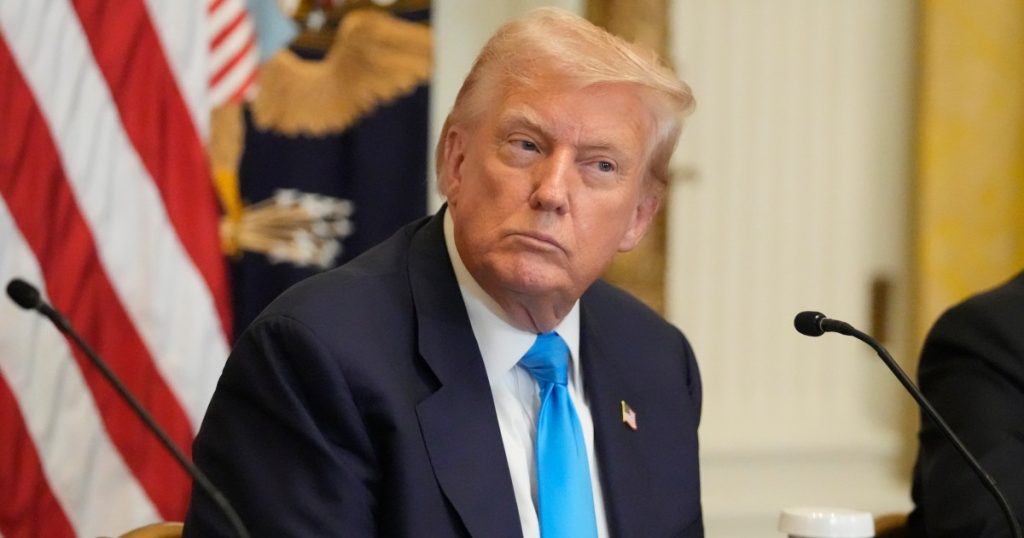
Switzerland says it will try to negotiate its way out of stiff United States tariffs, hours after US President Donald Trump’s administration shocked the European country by announcing plans to impose a 39-percent tariff rate on Swiss goods. The Swiss government said on Friday that it was “disappointed” and would decide how to proceed after Trump unveiled the 39-percent rate, more than double the 15 percent being applied for most European Union imports into the US. The new tariffs, which are set to go into effect on August 7, would prove painful for several key Swiss industries, including manufacturing and watchmaking. The Swiss government said in a statement on social media that it remains in contact with US authorities and “still hopes to find a negotiated solution”. “The Federal Council notes with great regret the intention of the US to unilaterally burden Swiss imports with considerable import duties despite the progress made in bilateral talks and Switzerland’s very constructive position,” it added. The Trump administration unveiled a range of new tariffs on many US trading partners on Thursday, saying the move aimed to address a “continued lack of reciprocity in our bilateral trade relationships”. Nearly 70 countries now face import duties that were due to come into force on Friday. But most will now begin on August 7, giving countries a few days to try to reach an agreement with Washington to stave off or reduce their respective tariff rate. “Everyone had been focused on August 1 … and now there is a new deadline,” Al Jazeera’s Kimberly Halkett reported from the White House on Friday morning. Advertisement “The reason is so that there can be a little bit more time and breathing space to get some more deals done. There were a few that were very close but didn’t quite make the deadline, and so the White House [said] this will allow … for these final agreements to be worked out.” Trump negotiated trade frameworks over the past few weeks with the EU, Japan, South Korea, Indonesia and the Philippines — allowing the US president to claim victories as other nations sought to limit his threat of charging even higher tariff rates. He said on Thursday there were agreements with other countries, but he declined to name them. Asked on Friday if countries were happy with the rates set by Trump, US Trade Representative Jamieson Greer said, “A lot of them are.” The new tariffs also include a 35-percent duty on many goods from Canada, 50 percent for Brazil, and 20 percent for Taiwan. Taiwan said its rate was “temporary” and it expected to reach a lower figure. The Trump administration said it decided to impose 39-percent tariffs on Switzerland because of what it called the European country’s refusal to make “meaningful concessions” by dropping trade barriers. “Switzerland, being one of the wealthiest, highest-income countries on Earth, cannot expect the United States to tolerate a one-sided trade relationship,” a White House official said on Friday. Swissmem, a group representing the mechanical and electrical engineering industries, said it was “really stunned” by the US move. “It’s a massive shock for the export industry and for the whole country,” said Deputy Director Jean-Philippe Kohl. “The tariffs are not based on any rational basis and are totally arbitrary … This tariff will hit Swiss industry very hard, especially as our competitors in the European Union, Britain and Japan have much lower tariffs.” Stock market tumbles But Trump’s new tariffs have created yet more uncertainty, with many details unclear. Global stock markets stumbled on Friday, with Europe’s STOXX 600 down 1.8 percent on the day and 2.5 percent on the week, on track for its biggest weekly drop since Trump announced his first major wave of tariffs on April 2. Wall Street also opened sharply lower on Friday. Reporting from the New York Stock Exchange, Al Jazeera’s Kristen Saloomey explained that US markets were “definitely down” following the tariffs announcement, but the drop was not as bad as what was seen after the first round of tariffs in April. “When the first round of tariffs were enacted, the market did drop substantially, but then clawed back a lot of the losses about a month later as deals were worked out. A lot of economists are saying that this time around, the market has priced in tariffs,” Saloomey said. Advertisement Still, she said, “the concern is still that the underlying fundamentals of the economy are under strain and the full weight of the tariffs” has yet to be seen. Adblock test (Why?)
‘Worst-case scenario would be…’, says government on Trump’s ’25 per cent tariff plus penalty’ on India
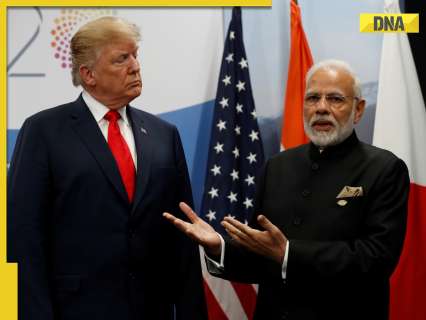
US President Donald Trump, on Wednesday, slapped a 25 per cent tariff on Indian goods entering the States. In addition, he announced a penalty for India for trading with Russia.
LoP Rahul Gandhi claims to have 100% proof of EC doing ‘vote chori’ for BJP, says what we have found is an ‘atom bomb’
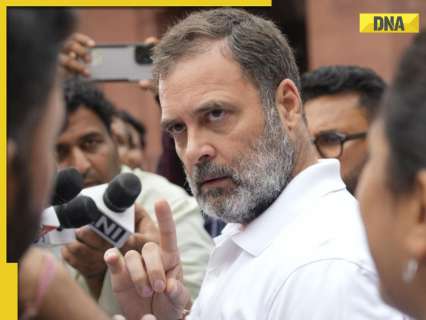
Rahul Gandhi likened the evidence that his party has on alleged poll irregularities to an “atom bomb”, and said that when it explodes, the Election Commission will have no place to hide in the country.
Donald Trump cracks whip: 50 Countries, including Pakistan and Bangladesh, have tariff rates lower than India. Complete list here
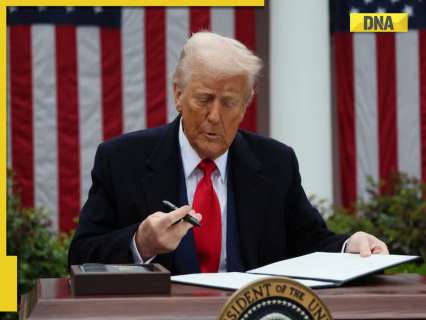
While US President Donald Trump imposed on India 25% tariff plus a “penalty” if New Delhi buys fuel and military hardware from Russia, he imposed lower tariffs on more than 50 countries, including Pakistan and Bangladesh. See the list here.