

Laura Dahlmeier: Recovery of Olympian killed in Pakistan abandoned
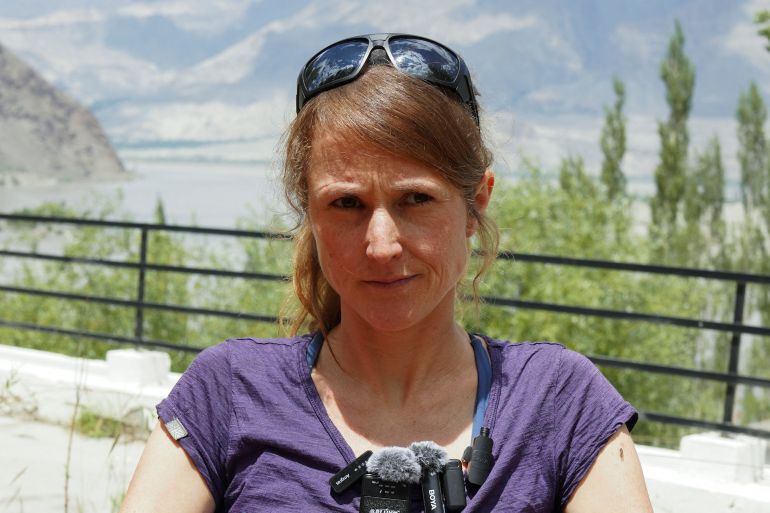
German Olympic biathlete Laura Dahlmeier was struck by falling rocks while scaling Laila Peak in Pakistan on Wednesday. Authorities have abandoned efforts to recover the body of German Olympic biathlete Laura Dahlmeier, who died in a mountaineering accident in Pakistan this week. Dahlmeier was confirmed dead on Wednesday, having been hit by falling rocks while climbing at an altitude of 5,700 metres (18,700 feet) on Laila Peak in the Karakoram range. Attempts to recover her body were abandoned due to “dangerous” conditions at the site, Dahlmeier’s management agency said Thursday. In consultation with the Alpine Club of Pakistan, the agency said her relatives would “continue to monitor the situation … and are keeping the option of arranging a rescue at a later date”. Several of Dahlmeier’s colleagues confirmed the two-time Olympic gold medallist had said she did not want her body recovered if it put any would-be rescuers at risk. German mountaineer Thomas Huber was part of a team that had attempted a rescue, but told reporters on Thursday, “We have decided she should stay, because that was her wish.” Another member of the rescue team, American Jackson Marvell, told AFP it would be “disrespectful” to recover her body contrary to her wishes. Marvell said, “The recovery of Laura’s body will be possible, but it involves incredible risks, both on foot and by helicopter.” Marina Eva Krauss, the climbing partner of the German double Olympic biathlon champion Laura Dahlmeier, who died after a mountaineering accident at an altitude of approximately 5,700m (18,700 feet) at Laila Peak, addresses a press conference in Skardu in the Gilgit-Baltistan region of Pakistan [Qasim Shah/Reuters] Dahlmeier’s climbing partner Marina Krauss, who was with her at the time of the incident, said at a press conference on Thursday that the former Olympian did not move after being caught in a rockfall. Advertisement “I saw Laura being hit by a huge rock and then being thrown against the wall. And from that moment on, she didn’t move again,” Krauss told reporters. Krauss said she was unable to reach Dahlmeier and called for outside support. “It was impossible for me to get there safely,” she said. “It was clear to me the only way to help her was to call a helicopter. She didn’t move, she didn’t show any signs [of movement]. I called out to her, but there was no response. “She only had a chance if help arrived immediately.” Dahlmeier won seven world championship gold medals, and at the 2018 Winter Olympics in Pyeongchang, South Korea, she became the first woman biathlete to win both the sprint and the pursuit at the same Games. Dahlmeier retired from professional competition in 2019 at the age of 25. Adblock test (Why?)
Palestinian man dies in Israeli settler arson attack in occupied West Bank
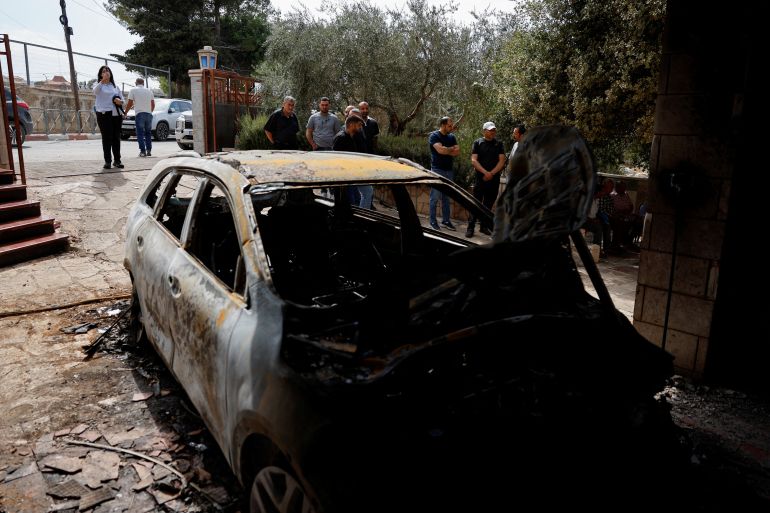
Khamis Ayyad, 40, died of smoke inhalation after settlers set fire to vehicles in town of Silwad, Health Ministry says. A Palestinian man has been killed after Israeli settlers set fire to vehicles and homes in a town in the occupied West Bank, the Palestinian Ministry of Health says. The ministry said on Thursday that Khamis Ayyad, 40, died due to smoke inhalation after settlers attacked Silwad, northeast of Ramallah, around dawn. Ayyad and others had been trying to extinguish the fires, local residents said. Palestinian news agency Wafa reported that the settlers also attacked the nearby villages of Khirbet Abu Falah and Rammun, setting fire to more vehicles. A relative of Ayyad’s, and a resident of Silwad, said they woke up at 2am (23:00 GMT) to see “flames devouring vehicles across the neighbourhood”. “The townspeople panicked and rushed to extinguish the fires engulfing the cars and buildings,” they said, explaining that Ayyad had been trying to put out a fire burning his brother’s car. Ayyad’s death comes amid burgeoning Israeli settler and military violence across the West Bank in tandem with Israel’s war on the Gaza Strip. Settlers have been attacking Palestinians and their property with impunity, backed by the Israeli army. Earlier this week, Awdah Hathaleen, a Palestinian from Masafer Yatta, the community whose resistance to Israeli settler violence was documented in the Oscar-winning film No Other Land, with which he helped, was killed by an Israeli settler. The suspect, identified as Yinon Levi, was placed under house arrest on Tuesday after a Magistrate Court in Jerusalem declined to keep him in custody. People gather next to a burned car after the Israeli settler attack in Silwad [Ammar Awad/Reuters] According to the latest data from the UN’s humanitarian office (OCHA), at least 159 Palestinians have been killed by Israeli troops in the West Bank between January 1 and July 21 of this year. Advertisement Hundreds of Israeli settler attacks against Palestinians have also been reported so far in 2025, including at least 27 incidents that resulted in casualties, property damage, or both, between July 15 and 21, OCHA said. Observers have warned that the uptick in Israeli violence aims to forcibly displace Palestinians and pave the way for Israel to formally annex the territory, as tens of thousands have been forced out of their homes in recent months across the West Bank. Earlier this month, the Israeli parliament – the Knesset – overwhelmingly voted in favour of a symbolic motion calling for Israel to annex the West Bank. On Thursday, Israeli Justice Minister Yariv Levin and Defence Minister Israel Katz said in a joint statement that “there is a moment of opportunity that must not be missed” to exert Israeli sovereignty over the West Bank, according to a Times of Israel report. “Ministers Katz and Levin have been working for many years to implement Israeli sovereignty in Judea and Samaria,” the statement said, using a term used by Israeli settlers and their supporters to refer to the occupied Palestinian territory. Haleema Ayyad holds her son’s photo after he was killed in the attack [Ammar Awad/Reuters] Back in Silwad, Raafat Hussein Hamed, a resident whose house was torched in Thursday’s attack, said that the settlers “burned whatever they could and then ran away”. Hamed told the AFP news agency that the attackers “come from an outpost”, referring to an Israeli settlement that, in addition to violating international law, is also illegal under Israeli law. The Israeli military told AFP that “several suspects … set fire to property and vehicles in the Silwad area”, but forces dispatched to the scene were unable to identify them. It added that Israeli police had launched an investigation. Adblock test (Why?)
‘We are starving’: Bread becomes a distant dream for Palestinians in Gaza
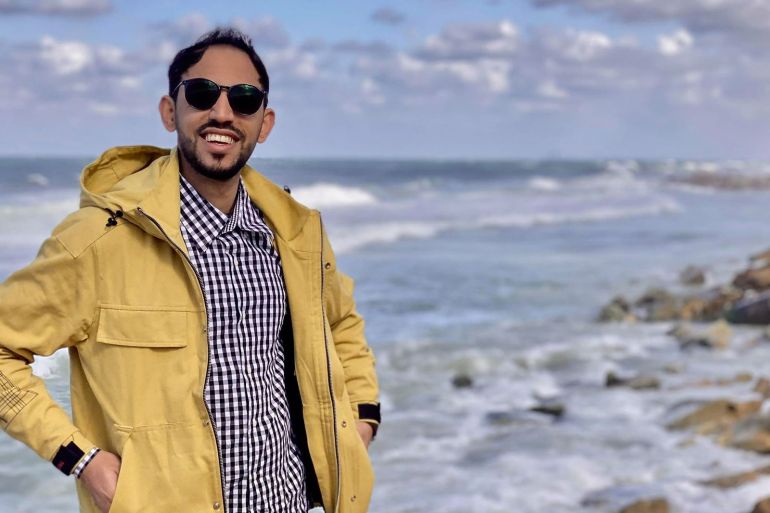
Gaza City, Gaza Strip – Hani Abu Rizq walks through Gaza City’s wrecked streets with two bricks tied against his stomach as the rope cuts into his clothes, which hang loose from the weight he has lost. The 31-year-old searches desperately for food to feed his mother and seven siblings with the bricks pressed against his belly – an ancient technique he never imagined he would need. “We’re starved,” he says, his voice hollow with exhaustion. “Even starvation as a word falls short of what we’re all feeling,” he adds, his eyes following people walking past. He adjusts the rope around his waist, a gesture that has become as routine as breathing. “I went back to what people did in ancient times, tying stones around my belly to try to quiet my hunger. This isn’t just war. It’s an intentional famine.” The fading of Gaza’s heartbeat Before October 7, 2023, and the start of Israel’s war on Gaza, food was the heartbeat of daily life in Gaza. The days in Gaza were built around communal meals – breakfasts of zaatar and glistening olive oil, lunches of layered maqlooba and musakhan that filled homes with warmth, and evenings spent around trays of rice, tender meat and seasonal salads sparkling with herbs from gardens. Abu Rizq remembers those days with the ache of someone mourning the dead. The unmarried man used to love dining and gathering with family and friends. He speaks of comfortable dining rooms where home-cooked feasts were displayed like art and evenings were filled with desserts and spiced drinks that lingered on tongues and in memory. Advertisement “Now, we buy sugar and salt by the gram,” he says, his hands gesturing towards empty market stalls that once overflowed with produce. “A tomato or cucumber is a luxury – a dream. Gaza has become more expensive than world capitals, and we have nothing.” Over nearly 22 months of the war, the amount of food in Gaza has been drastically reduced. The besieged enclave has been under the complete mercy of Israel, which has curtailed access to everything from flour to cooking gas. But since March 2, the humanitarian and essential items allowed in have plummeted to a frightening low. Israel completely blocked all food from March to May and has since permitted only minimal aid deliveries, prompting widespread international condemnation. Hani Abu Rizq on Gaza’s shores before the war [Courtesy of Hani Abu Rizq] Watching children suffer According to Gaza’s Ministry of Health, at least 159 Palestinians – 90 of whom are children and infants – have died of malnutrition and dehydration during the war as of Thursday. The World Food Programme warns of a “full-blown famine” spreading across the enclave while UNICEF reports that one in three children under five in northern Gaza suffers acute malnutrition. Fidaa Hassan, a former nurse and mother of three from Jabalia refugee camp, knows the signs of malnutrition. “I studied them,” she tells Al Jazeera from her displaced family’s shelter in western Gaza. “Now I see them in my own kids.” Her youngest child, two-year-old Hassan, wakes up every morning crying for food, asking for bread that doesn’t exist. “We celebrated each of my children’s birthdays with nice parties [before the war] – except for … Hassan. He turned two several months ago, and I couldn’t even give him a proper meal,” she says. Her 10-year-old, Firas, she adds, shows visible signs of severe malnutrition that she recognises with painful clarity. Before the war, her home buzzed with life around mealtimes. “We used to eat three or four times a day,” she recalls. “Lunch was a time to gather. Winter evenings were filled with the aroma of lentil soup. We spent spring afternoons preparing stuffed vine leaves with such care. “Now we … sleep hungry.” “There’s no flour, no bread, nothing to fill our stomachs,” she says, holding Hassan as his small body trembles. “We haven’t had a bite of bread in over two weeks. A kilo of flour costs 150 shekels [$40], and we can’t afford that.” Hassan was six months old when the bombing began. Now, at two years old, he bears little resemblance to a healthy child his age. Advertisement The United Nations has repeatedly warned that Israel’s siege and restrictions on humanitarian aid are creating man-made famine conditions. According to the UN Office for the Coordination of Humanitarian Affairs, only a fraction of the 600 truckloads of food and supplies required in Gaza daily, under normal circumstances, are coming through. The Integrated Food Security Phase Classification system has placed northern Gaza in Phase 5: catastrophe/famine. Amid a lack of security, the trickle of humanitarian aid allowed to enter Gaza is subject to gangs and looting, preventing people in need from accessing scarce supplies. Furthermore, hundreds of desperate aid seekers have been shot dead by Israeli soldiers while trying to get humanitarian aid provided by the United States- and Israeli-backed GHF since May. Abundance as a distant memory Hala Mohammed, 32, cradles three-year-old Qusai in a relative’s overcrowded shelter in Remal, a neighbourhood of Gaza City, as she describes how she has to watch him cry in hunger every morning, his little voice breaking. “There’s no flour, no sugar, no milk,” she says, her arms wrapped protectively around the child, who has known only war for most of his life. “We bake lentils like dough and cook plain pasta just to fill our stomachs. But hunger is stronger.” This is devastating for someone who grew up in Gaza’s rich culture of hospitality and generosity and had a comfortable life in the Tuffah neighbourhood. Before displacement forced her and her husband to flee west with Qusai, every milestone called for nice meals – New Year’s feasts, Mother’s Day gatherings, birthday parties for her husband, her mother-in-law and Qusai. “Many of our memories were created around shared meals. Now meals [have become the] memory,” she says. “My son asks for food and I just hold him,” she continues, her voice cracking.
From Pragya Thakur and Lt Col Prasad Purohit: Who are the seven accused of Malegaon 2008 blast case?

A special NIA court is likely to deliver its verdict in the 2008 Malegaon case today, July 31. The verdict comes almost 17 years after a blast. There are seven key accused in the 2008 Malegaon blast case.
2008 Malegaon blast case verdict: Ex-BJP MP Pragya Thakur, Lt Col Prasad Purohit and 5 other accused acquitted

All seven accused acquitted in 2008 Malegaon blast case verdict. NIA Special court judge delivered the verdict today, July 31.
What happened at Malegaon 18 years ago that changed narrative on terrorism? Pragya Thakur and Lt Col Purohit were…

People from extremist right-wing Hindu outfits were arrested for being involved in the explosion of the low-intensity bomb fitted to a motorcycle that went off near a busy intersection of Bhikku Chowk. The Maharashtra Anti-Terrorism Squad (ATS) arrested Pragya Thakur and Lt. Col. Purohit.
Meet IPS SBK Singh, appointed new Delhi Police Commissioner with additional charge after Sanjay Arora’s retirement
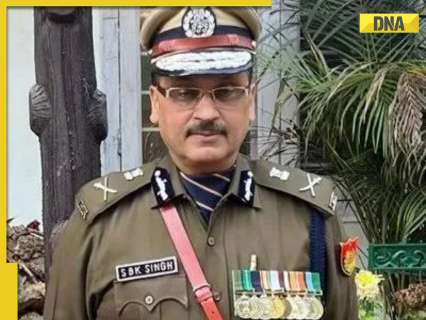
SBK Singh is replacing Sanjay Arora, who retired on July 31, 2025, marking the end of a career spanning nearly 37 years.
LoP Rahul Gandhi agrees with Donald Trump calling Indian economy ‘dead’, says glad US president ‘stated a fact’
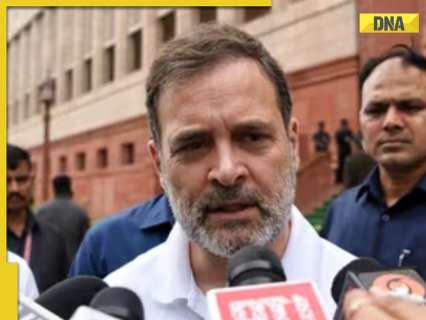
Rahul Gandhi further questioned PM Modi over several of Trump’s statements, such as his claims of mediating a “ceasefire” between India and Pakistan, loss of Indian jets, and the recent announcement of 25 percent tariffs.
Is Donald Trump bullying India with Pakistan oil deal? Will New Delhi surrender, stop buying Russian oil?
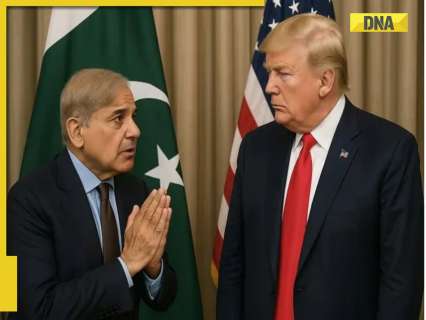
Will the new US tariff on India and increasing bonhomie with India’s main adversary, Pakistan, with an oil deal, change the political dynamics of South Asia? By announcing an oil deal with Pakistan with no proven oil reserve or capacity to refine or store it, Donald Trump has put pressure.
India always supported negotiated two-state solution: MEA weighs in on Israel-Palestine conflict
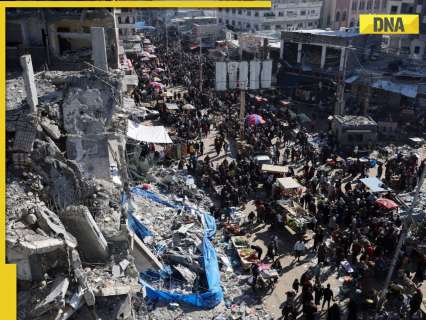
The Ministry of External Affairs (MEA) was asked whether India’s support for the Palestinian cause has been an “integral part of our foreign policy”. External Affairs Kirti Vardhan Singh said in a written response to the query, “India’s policy towards Palestine has been longstanding.”