

Trump urges capture of ‘animal’ gunman in Brown University shooting, says no motive yet

President Donald Trump said no motive has been identified for the suspected gunman who remains at large after opening fire inside a classroom at Brown University in Rhode Island Saturday. Although police originally detained a man in a Rhode Island hotel in connection with the fatal shooting that took the lives of two students, authorities announced Sunday that they had released the man and the hunt for the suspect resumed Monday. “We’re going to see what happens,” Trump told reporters Monday. “Hopefully they’re going to capture this animal.” When asked why the FBI, who is supporting local law enforcement in Rhode Island with their investigation into the matter, had struggled to identify the shooting suspect, Trump said that doing so is always difficult and that the issue lies with the school. BROWN UNIVERSITY WAS ‘SOFT TARGET’ FOR SHOOTER WHO REMAINS AT LARGE, CRIMINAL PROFILER SAYS “This was a school problem. They had their own guards,” Trump said. “They had their own police, had their own everything. But you’d have to ask that question really to the school, not to the FBI. We came in after the fact, and the FBI will do a good job, but they came in after the fact.” Two students died in the shooting, and another nine were injured. One of the victims of the shooting was identified as Ella Cook, a sophomore from Alabama who served as vice president of the Brown University College Republicans, according to authorities. The other victim was identified as Mukhammad Aziz Umurzokov, authorities said. Umurzokov and his family are naturalized citizens from Uzbekistan now living in Virginia, according to The New York Times. Fox News’ Stephen Sorace and Andrea Margolis contributed to this report.
Trump admin will recruit 1,000 technologists for elite ‘Tech Force’ to modernize government
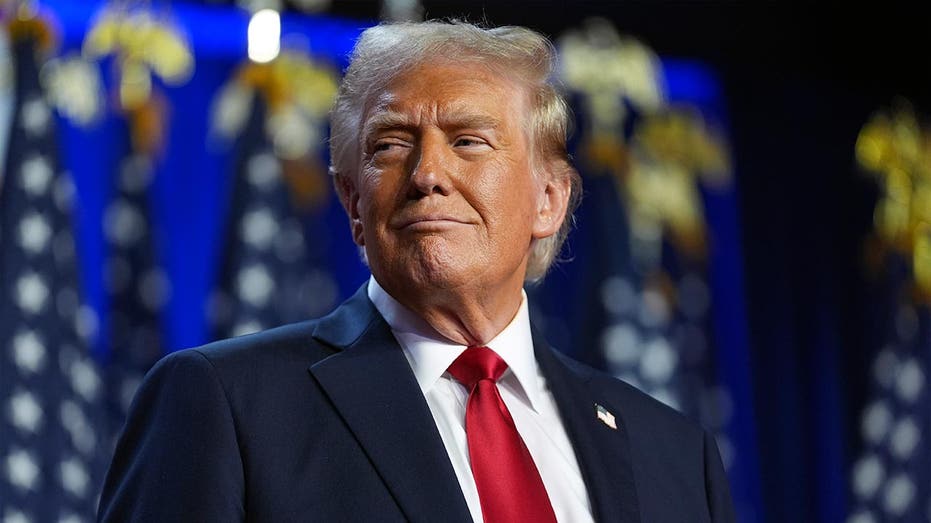
The Trump administration launched a new initiative Monday aimed at recruiting top-tier technical talent to accelerate the adoption of artificial intelligence (AI) at the federal level. The hiring program, known as “Tech Force,” plans to recruit roughly 1,000 early-career technologists for a two-year service term across various federal agencies. “The main objective of this program is there’s a ton of technology modernization work that needs to get done across pretty much every agency in the government,” Scott Kupor, director of the U.S. Office of Personnel Management (OPM), told Fox News Digital on Monday. The initiative was announced four days after President Donald Trump signed an executive order outlining a national policy framework designed to strengthen U.S. leadership in AI. WAR DEPARTMENT REFOCUSES ON AI, HYPERSONICS AND DIRECTED ENERGY IN MAJOR STRATEGY OVERHAUL “President Trump has made clear that securing America’s leadership in AI is the paramount national challenge of this generation,” the OPM said in a press release. “The president’s AI Action Plan focuses on unleashing private sector innovation while also recognizing the federal government must have the technical talent to lead in technology modernization. Recruits can be placed at agencies such as Departments of War, State, Homeland Security or Health and Human Services, where they would work on AI implementation, software development, data modernization and generally move federal operations off aging systems. The new program has partnered with more than 25 leading technology companies to help guide government modernization efforts. Those private-sector partners include Apple, Microsoft, Meta, Amazon Web Services, Google Public Sector, Uber, Zoom, Adobe, NVIDIA, Dell Technologies and Palantir. TRUMP SAYS HE WILL SIGN ‘ONE RULE’ EXECUTIVE ORDER TO FEDERALIZE AI REGULATION Recruits can expect annual salaries ranging from $150,000 to $200,000, Communications Head McLaurine Pinover told Fox News Digital. Participants will also gain substantial career development opportunities spanning both the public and private sectors, Kupor added. “At the end of the program, we’re also going to run a very, very comprehensive job fair with all those private companies coming to meet all these thousand engineers and give them the opportunity if they decide they want to go into the private sector,” Kupor said. “We’re trying to demonstrate that people can come to government, even for a short period of time, even for two years, do great work, and ultimately, that work will present tremendous career opportunities for them.” The initiative is primarily designed to increase the number of early-career professionals, those with five to seven years of work experience or less, in the federal government, Kupor said. He noted that while roughly 22 percent of the private-sector workforce is made up of early-career employees, that figure is closer to 7 percent in government. Once participants complete their two-year term, they can choose to remain in government or pursue career opportunities elsewhere, he said.
Why are Gaza’s war-damaged homes collapsing in winter?
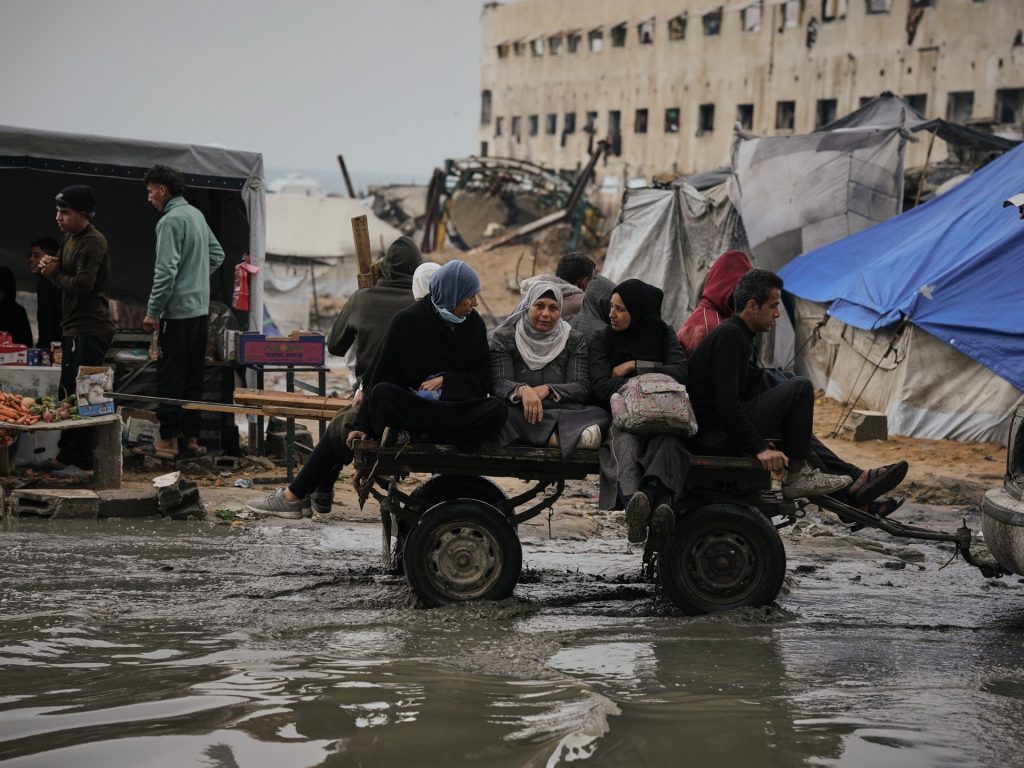
The humanitarian situation in the Gaza Strip deteriorated sharply late last week during Storm Byron, which brought heavy rainfall and strong winds. Widely circulated video on social media showed Palestinian Civil Defence teams scrabbling through the rubble of fallen buildings, trying to rescue people trapped beneath. Recommended Stories list of 3 itemsend of list But why did those homes fall? And what has the impact been on people in Gaza? Here’s what we know: What is happening in Gaza? Many damaged homes in Gaza collapsed during the recent storm, trapping people in their rubble. At times, parts of buildings and walls fell onto nearby tents where displaced Palestinians were living, compounding the risks for civilians already enduring precarious conditions. Thousands of Gaza families are sheltering in structurally compromised buildings, having lost their own homes during the war, with no safe alternatives available. The heavy rainfall of Storm Byron turned these weakened structures into direct threats as floodwaters inundated tens of thousands of tents. Why are these houses falling? It’s not just the rain that caused the collapses, rather it is because two years of intense bombing during Israel’s genocidal war on Gaza have made these structures unstable. In addition, Israel has imposed a siege on Gaza that prevents the entry of any building materials people can use to fix their homes. Thousands of residential buildings were damaged by direct strikes, nearby bombardments and ground incursions, leaving cracks in columns and foundations, separation of load-bearing walls and partial roof collapses. Advertisement People with nowhere to go have little choice other than to shelter wherever they can, including in homes that are only partially standing. Heavy rain exacerbates the damage. Water seeps into cracks, weakening foundations and columns while saturated soil erodes beneath buildings, increasing the risk of sudden collapses. Overcrowding inside damaged homes further stresses weakened structures as multiple families are often forced to live together in a single house or floor. In many cases, displaced residents pitch tents next to or even on top of the ruins of damaged buildings, exposing themselves to falling walls and concrete blocks during storms. Displaced people often cannot leave, even when they know the risks. Often, they have no other option, or they see damaged homes as better shelter than deteriorating tents. In late September, Gaza’s Government Media Office estimated that 93 percent of tents (about 125,000 out of 135,000) were no longer suitable for habitation. How many people have been hurt or killed by these collapsing homes? The recent storm killed 11 Palestinians in less than 24 hours and caused widespread structural damage. According to the Government Media Office, 13 homes collapsed and 27,000 tents were flooded or swept away. Civil Defence and Ministry of Health sources said the 11 victims were found dead under rubble in collapsed homes or in nearby tents. Another six were injured. Fatalities included children, women and elderly people, and officials confirmed a baby girl died from extreme cold. Incidents were reported in Gaza City, northern Gaza, and central and southern areas of the Gaza Strip. Collapses occurred in Gaza City’s Nassr neighbourhood, Shati refugee camp and Tal al-Hawa neighbourhood. One man was killed when a wall collapsed in the Shati camp. During the storm, the Civil Defence received more than 2,500 distress calls from displaced people. Authorities warned that the death toll is likely to rise as further low-pressure systems and rainfall continue to cause homes to collapse. Has there been any help for these impacted people? Because of the conditions imposed by Israel, the emergency response has been limited. Civil Defence teams struggled to evacuate those trapped under rubble because they face a shortage of heavy machinery, rescue equipment and fuel as well as flooded roads. The Civil Defence has urged residents to get out of damaged homes during the storms. Authorities stressed that the continuation of Israel’s blockade increases the likelihood of similar incidents during future storms. Advertisement Authorities have not been able to provide alternative shelters or habitable tents for unhoused families. In some areas, aid has been limited to small distributions of blankets and basic relief items that are insufficient to meet the needs of Palestinians facing falling temperatures and widespread infrastructure damage. Municipalities have been unable to carry out preventive drainage or repair work due to the destroyed infrastructure and a lack of resources, so the people of Gaza remain vulnerable to future storms. Is there anything that people in Gaza can do to stay safe? Unfortunately, options are extremely limited or nonexistent. Thousands of people are unable to relocate due to the absence of safe housing or shelters. There are also restrictions on movement imposed by the “yellow line” demarcating the portion of Gaza under Israeli army control. People in at-risk areas cannot move to safer locations. On top of that, people lack tools for structural reinforcement, waterproofing or heating. People can take only minimal measures, such as moving children to more stable areas, using blankets or raising their belongings off the ground, but these do not prevent collapses or flooding. UNRWA, the United Nations agency for Palestinian refugees, said the suffering could be reduced if humanitarian aid were allowed to enter Gaza without obstacles. It said flooded streets and soaked tents are worsening already dire living conditions and increasing health risks. Despite a ceasefire that began on October 10, conditions for Palestinians in Gaza have not improved due to Israel’s obstruction of aid, which violates the truce. Adblock test (Why?)
England’s resident doctors to strike for five days

Physicians are seeking a return of salaries to their 2008-2009 levels before they were eroded by inflation. Published On 15 Dec 202515 Dec 2025 Click here to share on social media share2 Share Resident doctors in England will go ahead with a five-day strike this week after rejecting the government’s latest offer aimed at ending a long-running dispute over pay and working conditions. Formerly known as junior doctors, the physicians, who make up nearly half of England’s medical workforce, will walk out from 07:00 GMT on Wednesday until 07:00 GMT next Monday. Recommended Stories list of 4 itemsend of list The action follows an online survey by the British Medical Association (BMA) in which members voted to reject the proposal. “Tens of thousands of frontline doctors have come together to say ‘no’ to what is clearly too little, too late,” BMA resident doctors committee chairman Jack Fletcher said in a statement, adding that members had rejected the government’s latest offer on working conditions. Fletcher said the union remained willing to work towards a resolution. Health Secretary Wes Streeting appealed to doctors to call off the strike. “There is no need for these strikes to go ahead this week, and it reveals the BMA’s shocking disregard for patient safety,” he said, describing the action as “self-indulgent, irresponsible and dangerous”. Speaking to Sky News, Streeting said the government was open to the BMA rescheduling the strike to reduce risks to patients during a surge in flu cases. Flu-related hospitalisations in England rose by more than 50 percent in early December, reaching an average of 2,660 patients a day, the highest level for this time of year. Health leaders have warned there is still no clear peak in sight. Advertisement Across Europe, health authorities are grappling with an unusually early and severe flu season, warning of rising cases across the continent. The BMA said 83 percent of resident doctors voted to reject the government’s offer with a turnout of 65 percent among its more than 50,000 members. The offer, made on Wednesday, did not include new pay terms. The BMA has been campaigning for improved pay even before the Labour Party won last year’s general election. Shortly after taking office, Streeting agreed a deal offering doctors a 22 percent pay rise, short of the 29 percent sought by the union. The BMA has also called for improvements beyond the 5.4 percent pay increase announced earlier this year, arguing resident doctors continue to suffer from years of pay erosion. Doctors are seeking “full pay restoration”, meaning a return of salaries to their 2008-2009 levels in real terms before they were eroded by inflation. Adblock test (Why?)
Palestinians in Gaza fear rain as war-damaged buildings collapse

NewsFeed Storms in Gaza have caused war-damaged buildings to collapse, killing civilians and leaving many Palestinians afraid to stay in their homes. With tents offering little protection, residents say rain now brings fear instead of relief. Published On 15 Dec 202515 Dec 2025 Click here to share on social media share2 Share Adblock test (Why?)
What is G RAM G bill? Centre proposes new law to replace MGNREGA; 5 key things to know

The government has said the new legislation will establish a “rural development framework aligned with the national vision of Viksit Bharat @2047, by providing a statutory guarantee of one hundred and twenty-five days of wage employment.” Here are five key changes proposed in the new bill.
Will 4-day work week be the new norm in India? This is what Labour Ministry says; know wage rate, compensation, more

The Labour Ministry has clarified rules under the new Labour Codes. Clarifying the new norms under the Codes, the Ministry said that they have the facility of allowing flexible working hours. According to the Labour Codes, 48-hours per week is allowed which must not exceed.
Mumbai BMC Election date 2026 announced: Civic body polls to be held on January 15, counting of votes on…

Elections will be held for 29 municipal corporations, 32 district councils, and 336 panchayat samitis.
Who is King Abdullah II? Jordon’s monarch hosting PM Modi, whose real estate empire spread over US, UK, has net worth of Rs…

Prime Minister Narendra Modi is on a four-day trip where he was welcomed in Amman, Jordon, by King Abdullah II ibn Al Hussein. He ascended the throne after his father’s death in 1999 making him the longest serving monarch. His wealth includes overseas real estate properties.
Maharashtra CM’s wife Amruta Fadnavis meets Lionel Messi, gets massive backlash online due to…

Amruta Fadnavis can be seen chewing gum and brazenly walking past footballer Luis Suarez to take a selfie with Messi