

Secret Service debuts ‘Golf Force One’ armored vehicle to protect Trump while he plays his favorite sport

Move over, Air Force One — a new armored vehicle outfitted for presidential protection is in town, this one specifically for golf outings. The vehicle specifically designed for ballistic protection, dubbed “Golf Force One,” seemingly made its public debut during a round of golf between President Donald Trump and his son, Eric, at the Trump golf course in Turnberry, Scotland, over the weekend. The White House confirmed “Golf Force One” is “part of the presidential fleet of specialty vehicles,” but did not share any further details. It comes 10 months after an assassination attempt on Trump while he was playing golf at his Florida course. According to the General Services Administration, a Polaris UTV can be outfitted by Chicago company Scaletta Armor with an “add-on armor kit to Polaris XP 1000 Ranger UTV with protection scalable to mission.” The kit costs around $190,000. EVERYTHING TO KNOW ABOUT TURNBERRY, SCOTLAND, HOME OF TRUMP GOLF COURSE Trump was in Scotland for a meeting with United Kingdom Prime Minister Keir Starmer. During the golf outing, Trump was seen cruising around in a regular golf cart, with the armored vehicle following a fleet of carts carrying Secret Service agents. The president is known to enjoy driving his own cart, but the UTV was likely on hand in case of an emergency requiring additional protection in such a wide-open space. During the last Trump assassination attempt — on Sept. 15, 2024 at the Trump International Golf Club in West Palm Beach, Florida — a Secret Service agent conducting a sweep saw a man hiding in the brush along the fence line of the sixth hole. TRUMP SHOWS OFF GOLF SKILLS AT TURNBERRY RESORT DURING SCOTLAND VISIT, CITES GARY PLAYER’S PRIOR PRAISE “The agent observed the barrel of a rifle aimed directly at him,” a Justice Department press release suggested. “As the agent began backing away, he saw the rifle barrel move, and the agent fired at [Ryan Wesley] Routh.” That came after last July when shooter Thomas Matthew Crooks opened fire at the president during a Butler, Pennsylvania, rally, killing an attendee behind Trump. In 2020, Iran posted a digitized video of a drone targeting Trump on a golf course in a “vengeance” strike over the killing of Iranian General Qassem Soleimani. “Golf Force One” joins a fleet of armored vehicles that includes the Beast, the 10-ton mobile fortress equipped with walls eight inches thick and layered, five-inch windows of reinforced glass that can stop high-caliber rounds. It’s capable of distributing tear gas, grenades, and pump-action shotguns.
Trump: ‘Some of those kids, that’s real starvation’
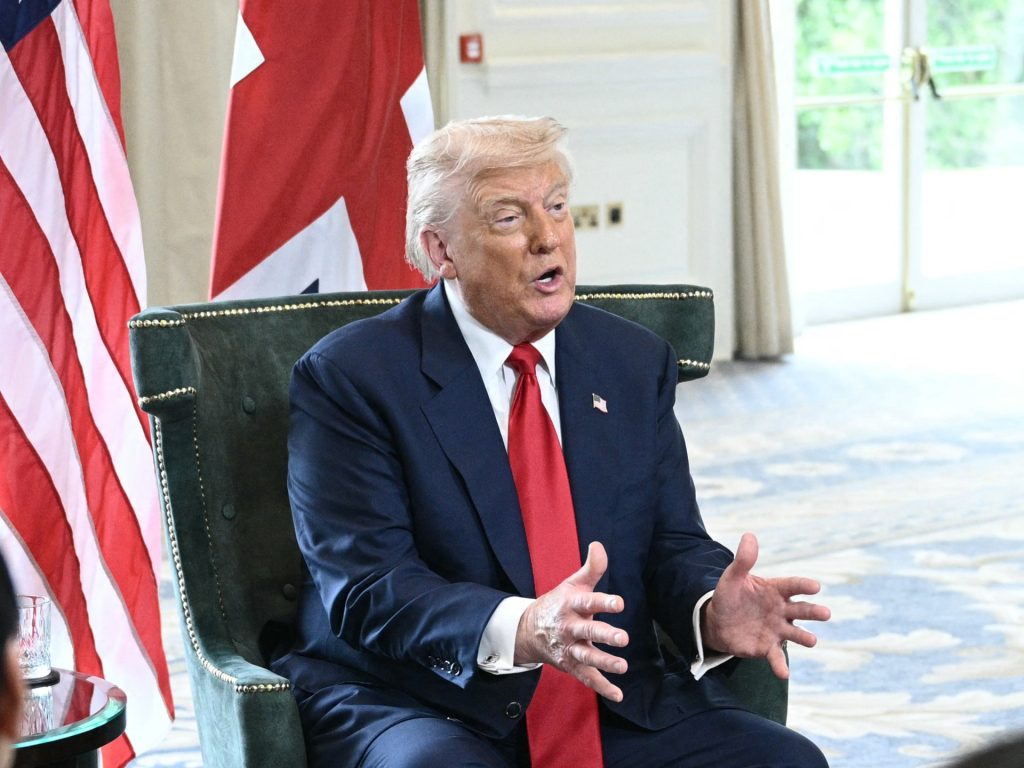
NewsFeed US President Donald Trump appeared to obliquely reject Israeli claims that no starvation is taking place in Gaza, saying images of hungry children show “real starvation” that one can’t “fake”. He also said the US would assist in setting up new food centres. Published On 28 Jul 202528 Jul 2025 Adblock test (Why?)
Baby dies from malnutrition as Trump warns of ‘real starvation’ in Gaza
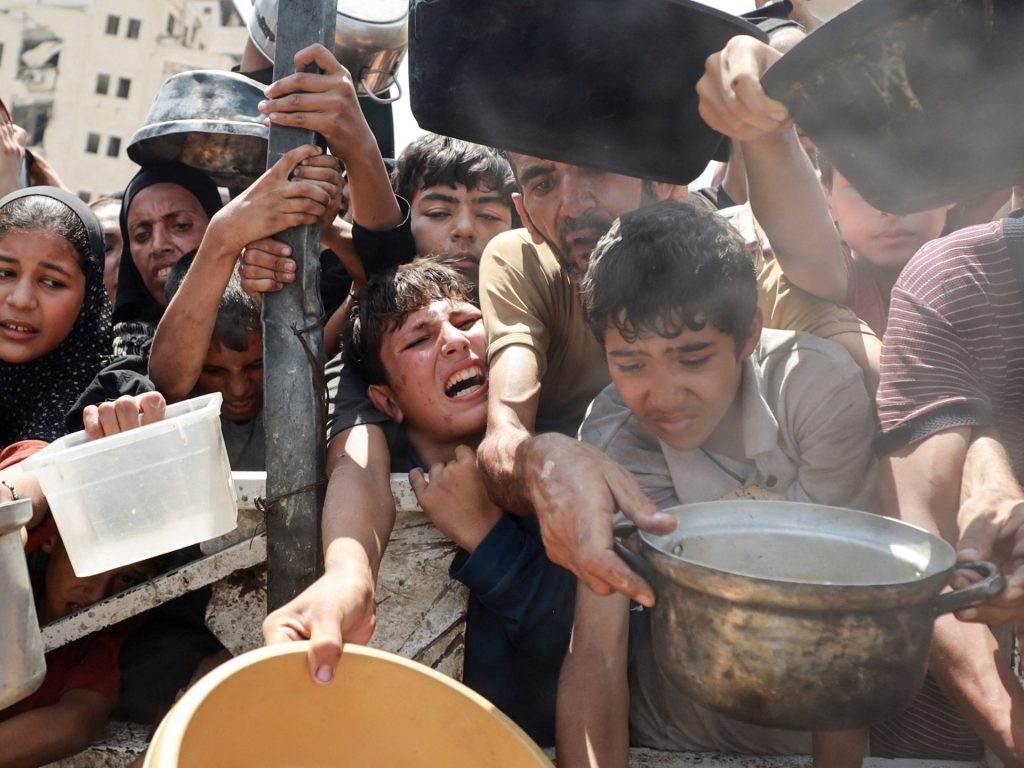
At least 14 Palestinians, including two children, have died from hunger and malnutrition in Gaza in 24 hours, according to health authorities, as United States President Donald Trump says there are signs of “real starvation” in the besieged territory. The deaths pushed the number of those who have died from malnutrition since Israel launched its war on Gaza in October 2023 to 147, including 88 children, the Ministry of Health in Gaza said on Monday. Most of the deaths have occurred in recent weeks as a hunger crisis has gripped the territory due to Israel’s severe restrictions on the entry of humanitarian aid into Gaza. Israel imposed a total blockade on the territory in March, which was partially lifted in May. But only a trickle of aid has been allowed to enter since then despite warnings from the United Nations and aid organisations of mass starvation. Before a meeting with British Prime Minister Keir Starmer in Scotland on Monday, Trump said Israel “has a lot of responsibility” for the situation in Gaza. Israeli Prime Minister Benjamin Netanyahu had denied that on Sunday, saying, “There is no policy of starvation in Gaza, and there is no starvation in Gaza.” Asked by reporters whether he agreed with Netanyahu’s remarks, Trump said, “I don’t know. I mean, based on television, I would say not particularly because those children look very hungry.” Starmer, standing next to Trump, said, “We’ve got to get that ceasefire” in Gaza and called it “a desperate situation”. Trump said among the issues he would discuss with Starmer would be the humanitarian situation in Gaza. Advertisement The comments come after the Israeli military said it would pause attacks in some parts of Gaza and authorised new corridors for humanitarian deliveries to increase the flow of badly needed aid. The decision was welcomed by the UN, but the organisation’s humanitarian chief said the deliveries need to be scaled up. Baby formula shortage The warning was made as a medical source at al-Shifa Hospital in Gaza City told Al Jazeera on Monday that an infant named Muhammad Ibrahim Adas died from malnutrition due to a shortage of baby formula. Gaza’s Government Media Office said an extreme shortage of baby formula could cause tens of thousands of malnourished infants like Muhammad to slowly die. “There are over 40,000 infants under one year old in Gaza currently at risk of slow death due to this brutal and suffocating blockade,” the office said on Monday, accusing Israel of blocking entry of the product for 150 days. “We urgently demand the immediate and unconditional opening of all crossings and the swift entry of baby formula and humanitarian aid,” it continued. ‘A drop in the ocean’ As more aid trucks entered Gaza on Monday through the Karem Abu Salem crossing (Kerem Shalom in Hebrew) and the Zikim road in the north, “devastated Palestinians jumped on these trucks and took whatever they had,” Al Jazeera’s Hind Khoudary said, reporting from Deir el-Balah in central Gaza. “When asked why they jumped on the trucks, the Palestinians said they did not have time to wait for the food. They said their children have been starving for days, and they do not have any other option than jumping on these trucks,” Khoudary said. “This shows how desperate Palestinians are and how they were deprived of their basic necessities. Now we are expecting more trucks to enter today.” Israel’s decision to allow more aid into Gaza has been welcomed by the UN, but officials warned that severe restrictions continued to block lifesaving deliveries. “This is a welcome step in the right direction,” Tom Fletcher, the UN undersecretary-general for humanitarian affairs, told Al Jazeera. “But clearly, we need to get in vast amounts of aid at a much, much greater scale than we’ve been able to do so far.” Fletcher said deliveries overall have been just “a drop in the ocean” of what is needed. “We can’t just simply turn up and drive through. That’s what we should be allowed to do, that’s what international law demands, but we’re not yet at that point,” he said, citing ongoing security risks, closed crossings, visa rejections and customs delays. As the hunger crisis deepens, Israeli forces have continued to launch attacks across Gaza, killing at least 65 people on Monday, including 23 who were seeking aid, medical sources told Al Jazeera. Advertisement More than 1,000 Palestinians seeking aid have been killed by Israeli forces near distribution sites run by the US- and Israeli-backed GHF, which launched operations in late May. The GHF has been heavily criticised by the UN and other humanitarian organisations for failing to provide enough aid and for the dire security situation at and around its aid distribution sites. Reporting from Deir el-Balah, Al Jazeera’s Tareq Abu Azzoum said: “What Israel describes as ‘humanitarian pauses’ are, in fact, limited and seen as unilateral suspensions of military activities that usually last for a few hours and are confined to select areas,” Abu Azzoum said. “These pauses, as we have seen, lack international oversight or any sort of coordination with humanitarian agencies,” he said. Rejecting international calls for a ceasefire, the Israeli army has conducted its offensive on Gaza since October 7, 2023, the day Hamas-led attacks in southern Israel killed 1,139 people and resulted in more than 200 people being taken captive. The war has since killed nearly 60,000 Palestinians, most of them women and children. Israel also faces a genocide case at the International Court of Justice in The Hague for its war on the enclave. Adblock test (Why?)
Kenya’s protests are not a symptom of failed democracy. They are democracy
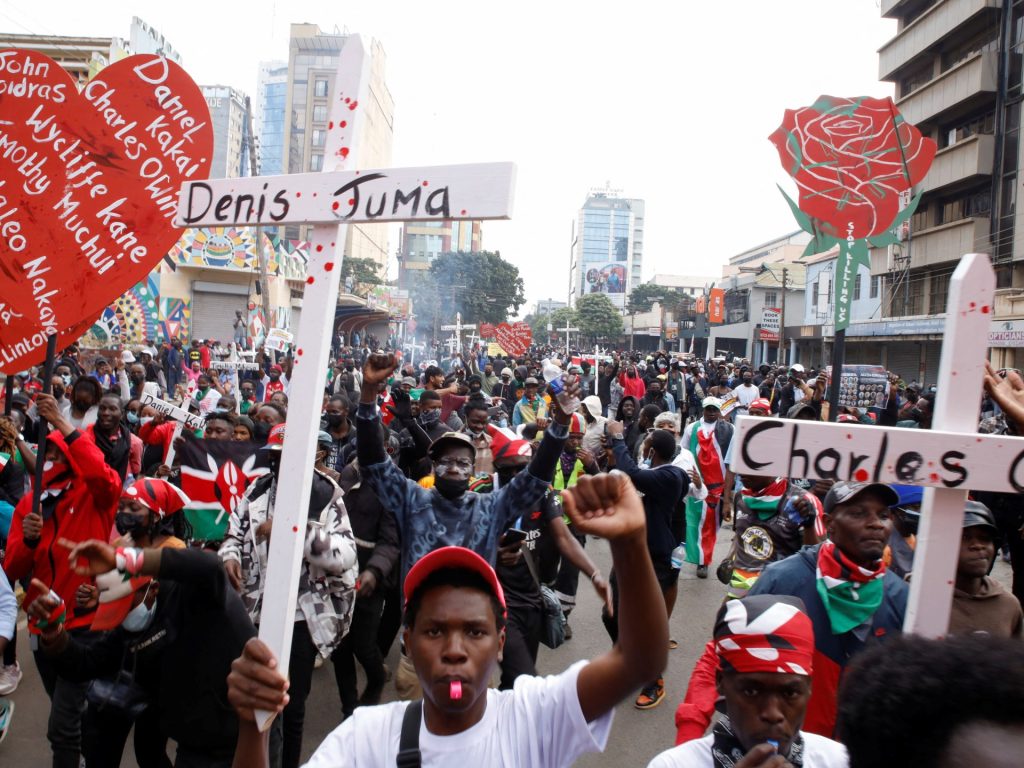
In Kenya, as in many countries across the world, street protests are often framed as the unfortunate result of political failure. As the logic goes, the inability of state institutions to translate popular sentiment into political, legislative and regulatory action to address grievances undermines trust and leaves the streets vulnerable to eruptions of popular discontent. In this telling, protests are viewed as a political problem with grievances expected to be legitimately addressed using the mechanisms – coercive or consensual – of the formal political system. Like its predecessors, the increasingly paranoid regime of Kenyan President William Ruto has also adopted this view. While generally acknowledging the constitutional right of protest, it has sought to paint the largely peaceful and sustained Generation Z demonstrations and agitation of the past 16 months, which have questioned its rule and policies, as a threat to public order and safety and to delegitimise the street as an avenue for addressing public issues. “What is going on in these streets, people think is fashionable,” Ruto declared a month ago. “They take selfies and post on social media. But I want to tell you, if we continue this way, … we will not have a country.” The killing and abductions of protesters as well as the move to charge them with “terrorism” offences, borrowing a leaf from Western governments that have similarly criminalised pro-Palestinian and antigenocide sentiments, are clear examples of the state’s preferred response. At the same time, there have been repeated calls for the protesters to enter into talks with the regime and, more recently, for an “intergenerational national conclave” to address their concerns. Advertisement But framing protests as a dangerous response to political dissatisfaction is flawed. Demonstrations are an expression of democracy, not the result of its failures. The Generation Z movement has shown that transparency, mutual aid and political consciousness can thrive outside formal institutions. Activists have made the streets and online forums sites of grievance, rigorous debate, civic education, and policy engagement. They have raised funds, provided medical and legal aid, and supported bereaved families, all without help from the state or international donors. In doing so, they have reminded the country that citizenship is not just about casting ballots every five years. It is about showing up – together, creatively and courageously – to shape the future. The Generation Z movement is in many respects a reincarnation of the reform movement of the 1990s when Kenyans waged a decadelong street-based struggle against the brutal dictatorship of President Daniel arap Moi. Today’s defiant chants of “Ruto must go” and “Wantam” – the demand that Ruto be denied a second term in the 2027 election – echo the rallying cries from 30 years ago: “Moi must go” and “Yote yawezekana bila Moi (All is possible without Moi).” Centring the struggle on Moi was a potent political strategy. It united a broad coalition, drew international attention and forced critical concessions – from the reintroduction of multiparty politics and term limits to the expansion of civil liberties and, crucially, the rights of assembly and expression. By the time Moi left office at the end of 2002, Kenya was arguably at its freest, its spirit immortalised in the Gidi Gidi Maji Maji hit I Am Unbwogable! (I Am Unshakable and Indomitable!)” But that moment of triumph also masked a deeper danger: the illusion that removing a leader was the same as transforming the system. Moi’s successor, Mwai Kibaki, hailed then as a reformist and gentleman of Kenyan politics, quickly set about reversing hard-won gains. His government blocked (then tried to subvert) constitutional reform, raided newsrooms and eventually presided over a stolen election that brought Kenya to the brink of civil war. One of his closest ministers, the late John Michuki, had in 2003 revealed the true mindset of the political class: Constitutional change to devolve the power of the presidency, he claimed, was necessary only so “one of our own could share power with Moi”. Once Moi was gone, he averred, there was no longer need for it. Due to the obstruction from the political class, it took Kenyans close to a decade after Moi’s departure to finally promulgate a new constitution. Advertisement Generation Z must avoid the trap of the transition of the 2000s. Power, in the Kenyan political imagination, has often been the prize, not the problem. But real change requires more than a reshuffling of names atop the state. It demands a refusal to treat state power as the destination and a commitment to reshaping the terrain on which that power operates. And this is where the youth should beware the machinations of a political class that is more interested in power than in change. Today’s calls for national talks and intergenerational conclaves emanating from this class should be treated with suspicion. Kenyans have seen this play out before. From the 1997 Inter-Parties Parliamentary Group talks and the negotiations brokered by former UN Secretary-General Kofi Annan after the 2007-2008 postelection violence to the infamous “handshake” between President Uhuru Kenyatta and his rival Raila Odinga and the failed Building Bridges Initiative, each of these elite pacts was presented as a way to translate popular anger into meaningful reform. Yet time and again, they only served to defuse movements, sideline dissenters and protect entrenched power. Worse still, Kenya has a long history of elevating reformers – from opposition leaders and journalists to civil society activists – into positions of state power, only for them to abandon their principles once at the top. Radical rhetoric gives way to political compromise. The goal becomes to rule and extract, not transform. Many end up defending the very systems they once opposed. “Ruto must go” is a powerful tactic for mobilisation and pressure. But it should not be seen as the end goal. That was my generation’s mistake. We forgot that we did not achieve the freedoms we enjoy – and that Ruto seeks to roll back – through engaging in the formal system’s rituals of elections and elite agreements but by imposing change on it
Were Pahalgam attackers homegrown terrorists? Massive controversy erupts over Chidambaram’s statement

After former Finance Minister P Chidambaram questioned the Union government over the evidence proving killers origin in Pakistan and said that they might be home-grown terrorists, the BJP has attacked the Congress Party.
Operation Mahadev: Three terrorists killed in intense firefight in J-K
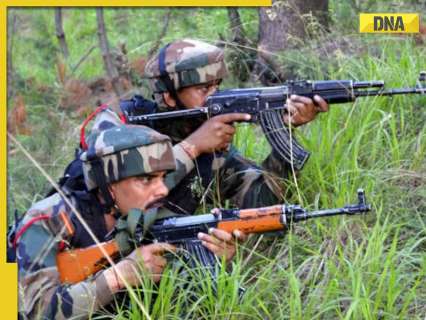
The anti-terror Operation Mahadev took place in the general area of Lidwas, Chinar Corps of Indian Army said.
Justice Yashwant Varma case: Supreme Court’s BIG question to judge in cash row, asks, ‘Why did you…?’
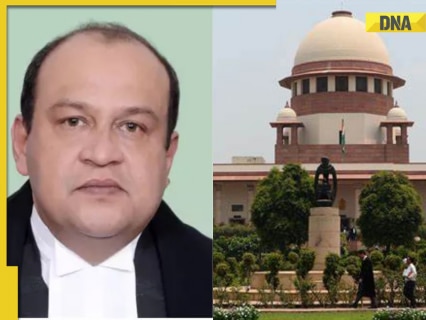
The Supreme Court on Monday questioned Justice Yashwant Varma over his petition to invalidate an in-house inquiry panel report indicting him over the discovery of huge cache of burnt cash from his official residence during his tenure as a Delhi High Court judge. Read on to know more on this.
25-year-old collapses, dies of heart attack while playing badminton in Hyderabad, watch SHOCKING video
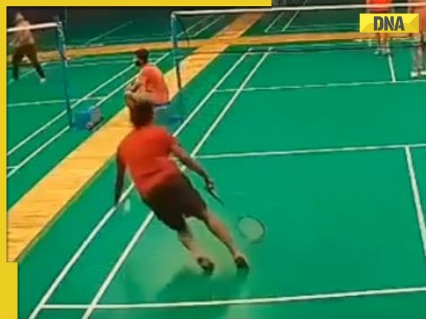
A 25-year-old collapsed and lost his life to a heart attack while playing badminton at a stadium in Hyderabad, Telangana. Gundla Rakesh was employed with a private company in the city, according to media reports. Read on to know more on this.
Rajnath Singh says Operation Sindoor continues: Will India attack Pakistan again?
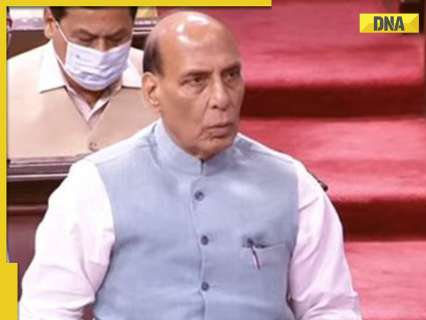
Both the Lok Sabha and Rajya Sabha have agreed to hold a 16-hour debate on Operation Sindoor. From the BJP’s side Defence Minister Rajnath Singh put the ruling party’s stance in the Lok Sabha and Congress MP Gaurav Gogoi raised questions to get clarity on various unanswered instances.
SIR in Bihar: Supreme Court’s BIG announcement, Will ECI accept Aadhar Card now?
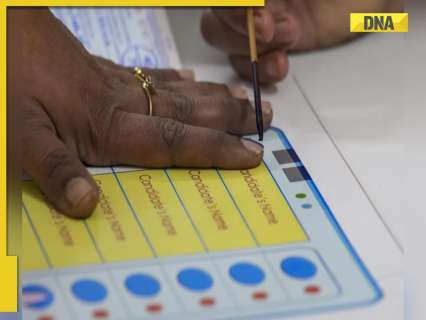
In a short hearing, the Supreme Court emphasised that the ECI should consider Aadhaar cards and Electoral Photo Identity Cards (EPIC) for voter verification. The Election Commission has launched Special Intensive Revision (SIR) of electoral rolls in poll-bound Bihar.