

Delhi-NCR chokes under thick Smog, visibility drops to near zero as AQI hits 493, restrictions remain in place; Check area-wise pollution level here
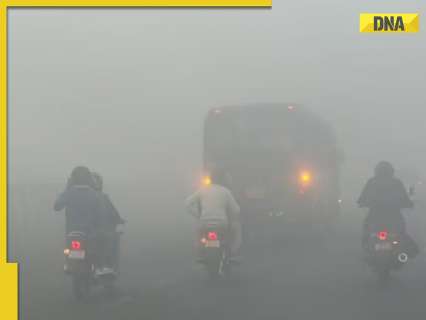
At 5:30 am, visibility at Palam was around 100 metres since 4:30 am but decreased further to 50 metres due to thick fog, with westerly winds blowing at 5-7 kmph. Both Safdarjung and Palam in Delhi reported visibility of 50 metres, while Hindon in west Uttar Pradesh recorded zero visibility.
Small Business Administration unveils new initiative to roll back federal regulations
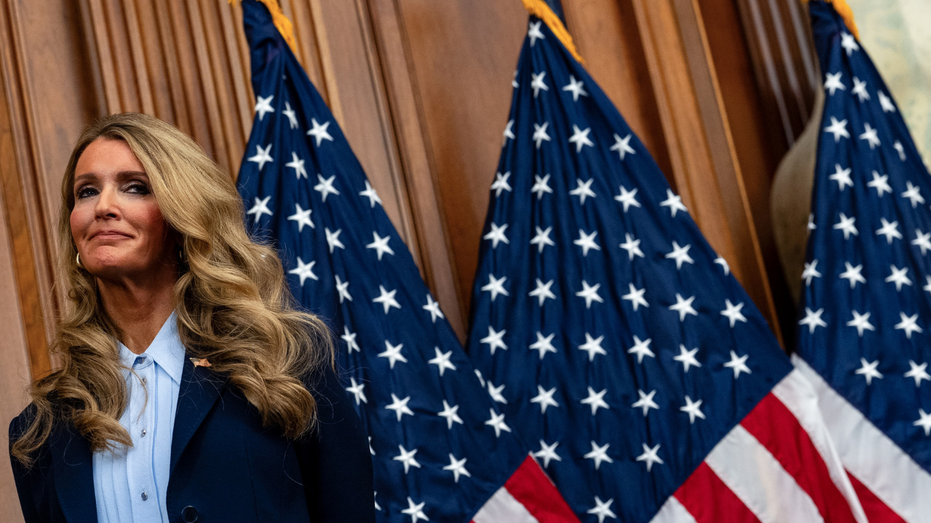
FIRST ON FOX: Seeking to tackle persistent cost pressures on American families and small firms, the Small Business Administration (SBA) is unveiling a new initiative that will review and roll back federal rules the administration says have driven up prices in sectors ranging from housing to food production. The Deregulation Strike Force, led by the SBA’s Office of Advocacy, will coordinate a government-wide review aimed at identifying regulations that hinder economic growth. FROM MORTGAGES TO CAR LOANS: AFFORDABILITY RISES AND FALLS WITH THE FED Trump administration officials say the effort is intended to eliminate what they describe as excessive Biden-era regulations that have imposed an estimated $6 trillion in cumulative compliance costs on American families and small businesses. “Bidenomics brought historic new highs in inflation that crushed working families and small businesses, driven in part by the massive bureaucracy that heaped trillions in new federal regulations onto the backs of hardworking Americans,” SBA Administrator Kelly Loeffler wrote in a statement. TRUMP INSISTS PRICES ARE ‘COMING DOWN,’ BLAMES BIDEN — BUT VOTERS SAY THEY’RE STILL GETTING SQUEEZED “Through our Deregulation Strike Force, SBA is leveraging its unique authority to deregulate across the federal government and cut senseless red tape that drove up costs for small businesses and consumers, especially in industries hit hardest by Bidenflation,” Loeffler said, adding that the initiative will build on President Trump’s push to reduce costs across the country. Citing what it describes as four years of excessive regulatory overreach, the SBA said its strike force will target cuts across key small-business sectors, including housing and construction, healthcare, agriculture and food production, energy and utilities, transportation and other goods and services across the supply chain. They also argue the latest deregulation campaign reinforces President Donald Trump’s economic message heading into the new year, positioning regulatory relief as a central tool for tackling high prices. The SBA said it has already played a key role in eliminating an estimated $98.9 billion in federal regulations since Trump’s return to office. Some of these actions include changes to reporting rules, energy-efficiency standards and diesel exhaust fluid requirements, which the agency says have contributed to nearly $200 billion in total regulatory savings.
China’s missile surge puts every US base in the Pacific at risk — and the window to respond is closing
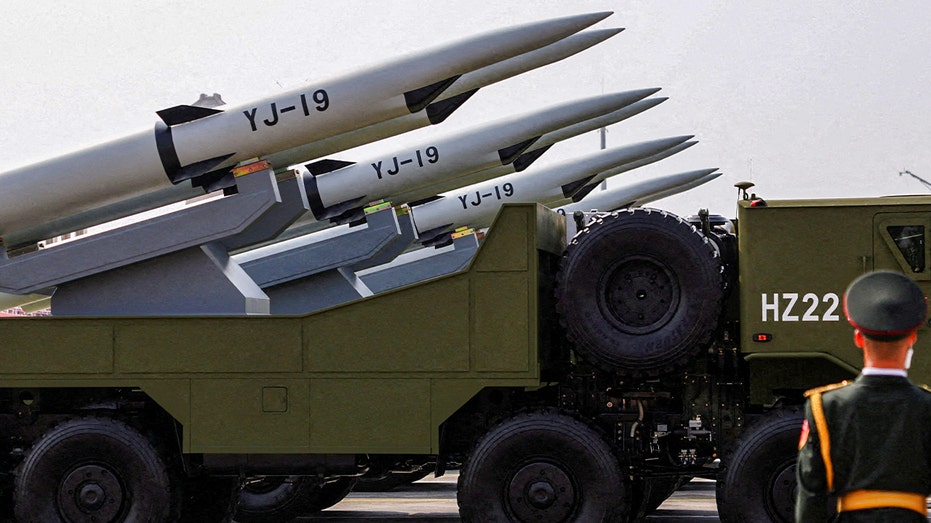
China has spent decades building a land-based missile force designed to keep the United States out of a fight over Taiwan — and U.S. officials say it now threatens every major airfield, port and military installation across the Western Pacific. As Washington races to build its own long-range fires, analysts warn that the land domain has become the most overlooked — and potentially decisive — part of the U.S.–China matchup. Interviews with military experts show a contest defined not by tanks or troop movements, but by missile ranges, base access and whether U.S. forces can survive the opening salvos of a war that may begin long before any aircraft take off. “The People’s Liberation Army Rocket Force … has built an increasing number of short-, medium-, and long-range missiles,” Seth Jones of the Center for Strategic and International Studies told Fox News Digital. “They have the capability to shoot those across the first and increasingly the second island chains.” For years, Chinese officials assumed they could not match the United States in air superiority. The Rocket Force became the workaround: massed, land-based firepower meant to shut down U.S. bases and keep American aircraft and ships outside the fight. HIGH STAKES ON THE HIGH SEAS AS US, CHINA TEST LIMITS OF MILITARY POWER “They didn’t think that they could gain air superiority in a straight-up air-to-air fight,” said Eric Heginbotham, a research scientist at the Massachusetts Institute of Technology. “So you need another way to get missiles out — and that another way is by building a lot of ground launchers.” The result is the world’s largest inventory of theater-range missiles, backed by hardened underground facilities, mobile launchers and rapid shoot-and-scoot tactics designed to overwhelm U.S. defenses. Despite China’s numerical edge, American forces still hold advantages Beijing has not yet matched — particularly in targeting and survivability. U.S. missiles, from Tomahawks to SM-6s to future hypersonic weapons, are tied into a global surveillance network the People’s Liberation Army cannot yet replicate. American targeting relies on satellites, undersea sensors, stealth drones and joint command tools matured over decades of combat experience. “The Chinese have not fought a war since the 1970s,” Jones said. “We see lots of challenges with their ability to conduct joint operations across different services.” The U.S., by contrast, has built multi-domain task forces in the Pacific to integrate cyber, space, electronic warfare and precision fires — a level of coordination analysts say China has yet to demonstrate. Jones said China’s defense industry also faces major hurdles. “Most of (China’s defense firms) are state-owned enterprises,” he said. “We see massive inefficiency, the quality of the systems … we see a lot of maintenance challenges.” Still, the United States faces a near-term problem of its own: missile stockpiles. “We still right now … would run out (of long-range munitions) after roughly a week or so of conflict over, say, Taiwan,” Jones said. SKIES AT STAKE: INSIDE THE US-CHINA RACE FOR AIR DOMINANCE Washington is trying to close that gap by rapidly expanding production of ground-launched weapons. New Army systems — Typhon launchers, high mobility artillery rocket system, batteries, precision strike missiles and long-range hypersonic weapons with a range exceeding 2,500 kilometers — are designed to hold Chinese forces at risk from much farther away. Heginbotham said the shift is finally happening at scale. “We’re buying anti-ship missiles like there’s no tomorrow,” he said. If current plans hold, U.S. forces will field roughly 15,000 long-range anti-ship missiles by 2035, up from about 2,500 today. China’s missile-heavy strategy is built to overwhelm U.S. bases early in a conflict. The United States, meanwhile, relies on layered air defenses: Patriot batteries to protect airfields and logistics hubs, terminal high altitude area defense (THAAD) interceptors to engage ballistic missiles at high altitude, and Aegis-equipped destroyers that can intercept missiles far from shore. Heginbotham warned the U.S. will need to widen that defensive mix. “We really need a lot more and greater variety of missile defenses and preferably cheaper missile defenses,” he said. One of Washington’s biggest advantages is its ability to conduct long-range strikes from beneath the ocean. U.S. submarines can fire cruise missiles from virtually anywhere in the Western Pacific, without relying on allied basing and without exposing launchers to Chinese fire — a degree of stealth China does not yet possess. Command integration is another area where Beijing continues to struggle. American units routinely train in multi-domain operations that knit together air, sea, cyber, space and ground-based fires. Jones and Heginbotham both noted that the People’s Liberation Army has far less experience coordinating forces across services and continues to grapple with doctrinal and organizational problems, including the dual commander–political commissar structure inside its missile brigades. Alliances may be the most consequential difference. Japan, the Philippines, Australia and South Korea provide depth, intelligence sharing, logistics hubs and potential launch points for U.S. forces. China has no comparable network of partners, leaving it to operate from a much narrower geographic footprint. In a missile war, accuracy, integration and survivability often matter more than sheer volume — and in those areas the United States still holds meaningful advantages. At the heart of this competition is geography. Missiles matter less than the places they can be launched from, and China’s ability to project power beyond its coastline remains sharply constrained. “They’ve got big power-projection problems right now,” Jones said. “They don’t have a lot of basing as you get outside of the first island chain.” The United States faces its own version of that challenge. Long-range Army and Marine Corps fires require host-nation permission, turning diplomacy into a form of firepower. “It’s absolutely central,” Heginbotham said. “You do need regional basing.” Recent U.S. agreements with the Philippines, along with expanded cooperation with Japan and Australia, reflect a push to position American launchers close enough to matter without permanently stationing large ground forces there. A U.S.–China land conflict would not involve armored columns maneuvering for territory. The decisive question is whether missile units on both sides can
Trump addresses trio of attacks in Syria, Brown University and Australia at White House Christmas event
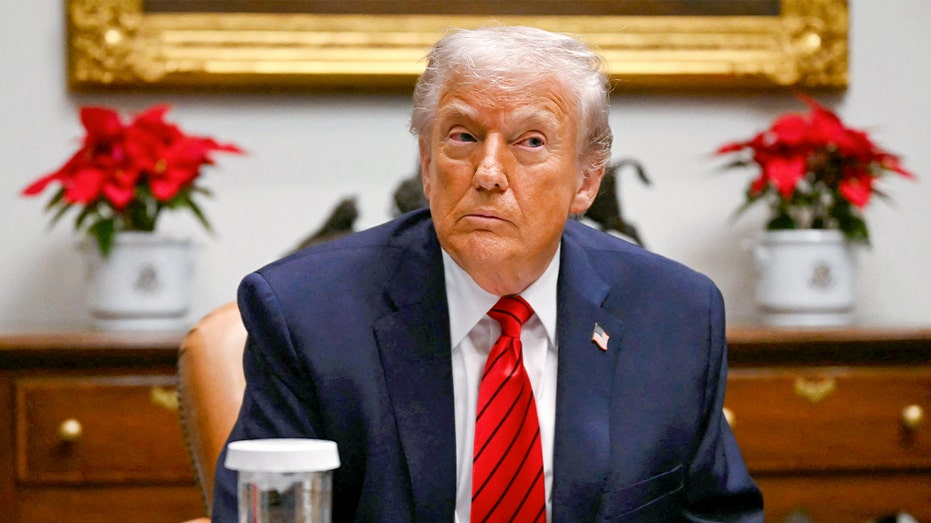
President Donald Trump offered condolences to the victims of attacks across the globe on Sunday, from the mass shooting at Brown University to the Hanukkah terrorist attack in Australia. Trump addressed the tragedies while speaking at a Christmas reception at the White House on Sunday, saying his thoughts and support are with the victims of the shooting at Brown. He also condemned the “pure antisemitism” of the terrorist attack in Sydney, Australia, as well as the killing of three Americans in Syria on Saturday. “I want to just pay my respects to the people – unfortunately, two are no longer with us – at Brown University. Nine injured, and two are looking down on us right now from heaven,” Trump said. “And, likewise, in Australia, as you know, there was a terrible attack. Eleven dead, 29 badly wounded. And that was an antisemitic attack, obviously. And it, I just want to pay my respects to everybody,” he continued. SYRIANS MARK FIRST YEAR SINCE ASSAD’S FALL AS US SIGNALS NEW ERA IN RELATIONS “We’re here for a different reason. We’re here to celebrate Christmas and to celebrate,” Trump told the crowd gathered. “And I think today we can very say loudly that we celebrate Hanukkah because there was such a horrible attack that was a purely antisemitic attack.” ISRAELI OFFICIALS HEAP BLAME ON AUSTRALIAN GOVERNMENT AFTER BONDI BEACH SHOOTING: ‘COUNTLESS WARNING SIGNS’ Trump went on to discuss the killing of two U.S. soldiers and a U.S. civilian interpreter in Syria. He reiterated that the perpetrators of the attack will face serious consequences. “I can tell you in Syria there will be a lot of damage done to the people that did it. They got the person, the individual person. But there will be big damage done,” he said. Three additional soldiers were wounded in the Syria attack, but they are recovering. Chief Pentagon spokesperson Sean Parnell said the attack occurred as the soldiers were conducting a key leader engagement, part of their mission in support of ongoing counter-ISIS/counter-terrorism operations in the region. The gunman was killed by partner forces, according to Secretary of War Pete Hegseth. The Pentagon is withholding the identities of the soldiers until at least 24 hours after their families have been notified. Fox News’ Greg Norman, Ashley Oliver, Jennifer Griffin, Benjamin Weinthal and Ashley Carnahan contributed to this report.
Trump encourages Jewish Americans to ‘celebrate proudly’ during Hanukkah after deadly Bondi Beach shooting
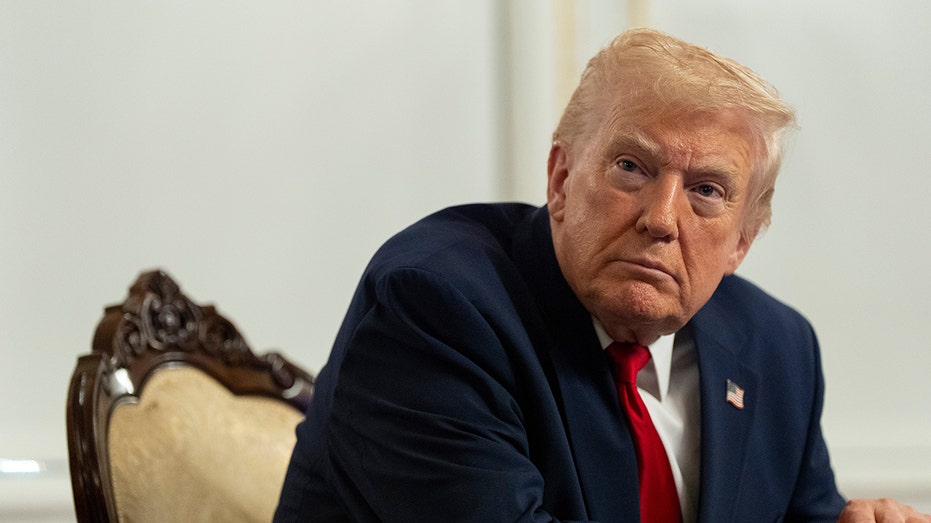
President Donald Trump said American Jews celebrating Hanukkah should not be worried about their safety following the Bondi Beach attack. “Celebrate proudly – be proud of who you are,” Trump said to Fox News on Sunday. The president’s comments come after Australian Prime Minister Anthony Albanese condemned the mass shooting at a “Hanukkah by the Sea” celebration at Bondi Beach as a “targeted attack on Jewish Australians.” “An attack on Jewish Australians is an attack on every Australian and every Australian tonight will be, like me, devastated on this attack on our way of life,” said Albanese at a press conference. “There is no place for this hate, violence and terrorism in our nation. Let me be clear. We will eradicate it.” CHRISTIAN PASTORS, INFLUENCERS JOIN 1,000-STRONG ISRAEL MISSION BACKING JEWISH STATE, FIGHTING ANTISEMITISM Police said at least 11 people were killed and dozens more were injured. AUSTRALIAN BYSTANDER DISARMS MASS SHOOTER IN AUSTRALIA HANUKKAH ATTACK At a government meeting in Dimona, Israel, on Sunday, Prime Minister Benjamin Netanyahu said he had warned Albanese in an August letter that the Australian government’s policies were encouraging antisemitism. Netanyahu accused Albanese of failing to act as antisemitism spread and said inaction had helped foster a climate of rising hostility toward Jews. “We saw an action of a brave man – turns out a Muslim brave man, and I salute him – that stopped one of these terrorists from killing innocent Jews. But it requires the action of your government, which you are not taking,” Netanyahu said at the meeting. “And you have to, because history will not forgive hesitation and weakness. It will honor action and strength.” ANTISEMITIC ATTACKERS VIOLENTLY TARGET SYNAGOGUE, ISRAELI RESTAURANT IN AUSTRALIA Yael Eckstein, president of the International Fellowship of Christians and Jews, said the attack was a wakeup call for Jews. “Terror doesn’t stop in America or in Europe or in Australia. It’s not only targeting the Jews, it’s also targeting the Christians,” Eckstein said on “Fox & Friends Weekend.” “The answer to this darkness is light.” Fox News’ Peter Doocy contributed to this report.
Person of interest held in hunt for gunman who killed 2 at Brown University
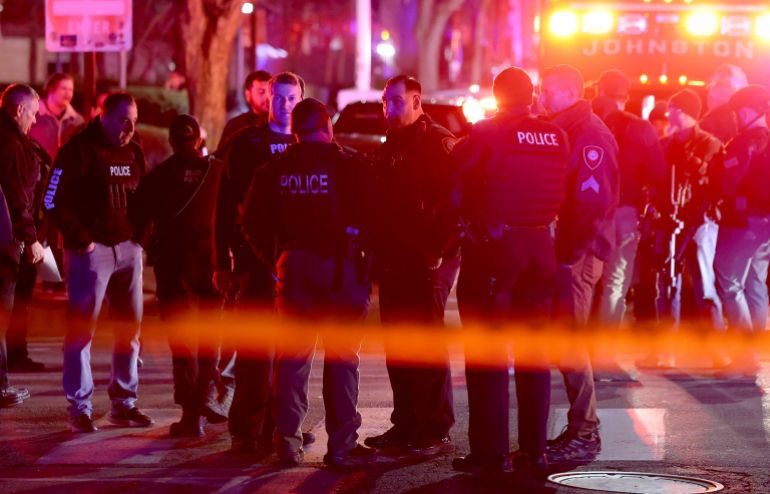
Police are not looking for anyone else over the shooting that wounded nine people at the Ivy League school in the northeastern US. By News Agencies Published On 14 Dec 202514 Dec 2025 Click here to share on social media share2 Share Police in Providence, Rhode Island, have detained a “person of interest” after a manhunt for a gunman who killed two people at Brown University, officials say. At a news conference on Sunday, Police Colonel Oscar Perez said the individual had been detained that morning and officers were not currently looking for anyone else in relation to the shooting at the Ivy League university in the northeastern United States. Recommended Stories list of 4 itemsend of list Officials have not released the identity of the person of interest. Nine people were wounded on Saturday, seven of them critically, when a suspect with a firearm entered a building where students were taking exams and opened fire. The shooting sparked a manhunt involving more than 400 law enforcement personnel, including agents from the Federal Bureau of Investigation and the Bureau of Alcohol, Tobacco, Firearms and Explosives, while the campus was placed under lockdown as the search took place. Students hid under desks for hours after warnings of an active shooter were released. Brown said in an advisory on Sunday that police had lifted a shelter-in-place order for the campus although police remained at the location and still considered it an active crime scene. Access to parts of the campus remained restricted on Sunday as police maintained a security perimeter around Minden Hall and nearby apartment buildings, the university said. Officials had earlier released a video of the suspect, a male, possibly in his 30s, who was dressed in black. Providence Deputy Police Chief Timothy O’Hara said on Saturday that the gunman may have worn a mask and investigators had retrieved shell casings from the scene. Police are deployed in Providence on December 13, 2025, during the hunt for the shooter [Mark Stockwell/AP] Detectives were looking into why the location was targeted, Perez told reporters. The incident was the second deadly gun attack at a US university in recent days after a shooting at Kentucky State University on Tuesday. Advertisement The Gun Violence Archive, which defines mass shootings as any incident in which four or more people are shot, has documented 389 such incidents in the US so far this year, including at least six at schools. Last year, more than 500 mass shootings were recorded in the US. Adblock test (Why?)
‘Hero’ bystander tackles attacker at Australia Jewish festival shooting
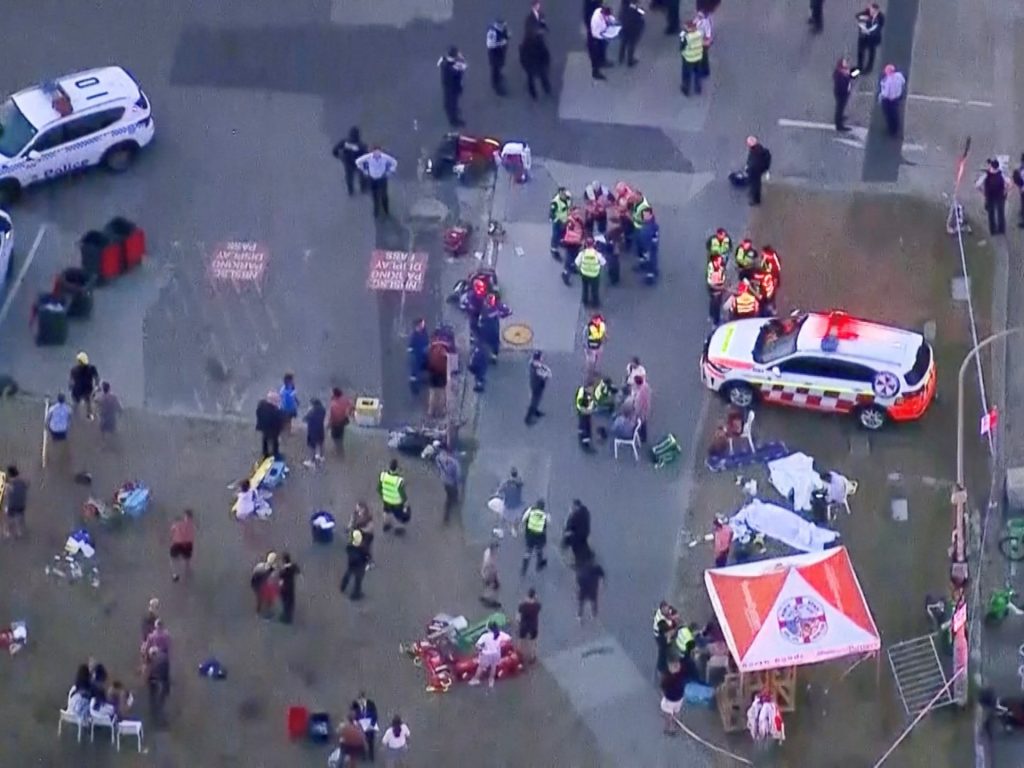
Officials, social media users hail bystander, identified by Australian media as Ahmed al Ahmed, who disarmed gunman. Published On 14 Dec 202514 Dec 2025 Click here to share on social media share2 Share A bystander who has been filmed tackling and disarming an assailant during a shooting in which at least 11 people were killed at a Jewish holiday event in Sydney, Australia, has been praised as a hero whose actions may have saved lives. Footage uploaded to social media on Sunday shows a man in a car park running up to a man holding a rifle. He then tackles the armed man, wrestles the rifle away from him and points the weapon back at him. Recommended Stories list of 3 itemsend of list The video then shows the disarmed man losing his footing and backing away towards a bridge where another shooter was located while the bystander places the gun down on the ground. One suspected attacker was killed and another was in a critical condition after Sunday’s shooting while police said they were investigating whether a third gunman was involved. The footage of the bystander’s intervention was shared widely on social media, and many users praised the man for his bravery, saying his actions may have saved lives. According to Australian media reports, the bystander was identified as Ahmed al Ahmed, a 43-year-old Sydney man. Al Jazeera was unable to immediately confirm his identity. A cousin of al Ahmed was quoted as telling the Australian television news service 7News that he was shot twice during the incident. “He’s in hospital, and we don’t know exactly what’s going on inside,” the man named Mustafa told the outlet. “We do hope he will be fine. He’s a hero 100 per cent.” Al Ahmed was due to undergo surgery on Sunday night, he said. “Australian hero (random civilian) wrestles gun off attacker and disarms him. Some people are brave and then some people are … whatever this is,” one person said in a post on the X platform that shared the video. Advertisement “This Australian man saved countless lives by stripping the gun off one of the terrorists at Bondi beach. HERO,” another said. Chris Minns, the premier of New South Wales state, where Sydney is located, said it was the “most unbelievable scene I’ve ever seen”. “That man is a genuine hero, and I’ve got no doubt that there are many, many people alive tonight as a result of his bravery.” Prime Minister Anthony Albanese praised the actions of Australians who had “run towards danger in order to help others”. “These Australians are heroes and their bravery has saved lives,” he said at a news conference. Adblock test (Why?)
Zelenskyy says willing to drop NATO membership bid ahead of peace talks

The Ukrainian president says Kyiv could drop its long-held ambition of joining NATO in exchange for Western security guarantees. Ukraine has indicated it is prepared to drop its long-held ambition of joining NATO in exchange for Western security guarantees, President Volodymyr Zelenskyy has said ahead of meetings with US envoys and European allies in Berlin. Zelenskyy described the proposal on Sunday as a concession by Kyiv, after years of pressing for NATO membership as the strongest deterrent against future Russian attacks. He said the United States, European partners and other allies could instead provide legally binding security guarantees. Recommended Stories list of 3 itemsend of list “From the very beginning, Ukraine’s desire was to join NATO; these are real security guarantees. Some partners from the US and Europe did not support this direction,” Zelenskyy said in response to questions from reporters in a WhatsApp chat. “Thus, today, bilateral security guarantees between Ukraine and the US, Article 5-like guarantees for us from the US, and security guarantees from European colleagues, as well as other countries – Canada, Japan – are an opportunity to prevent another Russian invasion,” he said. “And it is already a compromise from our part,” Zelenskyy added, stressing that such guarantees must be legally binding. The shift would mark a significant change for Ukraine, which has long sought NATO membership despite Moscow viewing the alliance’s expansion as a threat. While the move aligns with one of Russia’s stated war objectives, Kyiv has continued to reject demands to cede territory. Zelenskyy said he was seeking a “dignified” peace and firm assurances that Russia would not launch another attack, as diplomats gathered to discuss what could become Europe’s deadliest conflict since World War II. He also accused Moscow of prolonging the war through sustained attacks on Ukrainian cities and critical infrastructure. Pressure to reach a settlement The talks come amid pressure from US President Donald Trump to reach a settlement. Trump’s envoy Steve Witkoff and his son-in-law Jared Kushner on Sunday arrived in the German capital city of Berlin for discussions involving Ukrainian and European representatives. Advertisement The decision to send Witkoff, who has previously led negotiations with both Kyiv and Moscow, suggested Washington saw scope for progress. Zelenskyy said Ukraine, Europe and the US were reviewing a 20-point plan that could culminate in a ceasefire, though he reiterated that Kyiv was not holding direct talks with Russia. He said a truce along current front lines could be considered fair, while noting that Russia continues to demand a Ukrainian withdrawal from parts of Donetsk and Luhansk still under Kyiv’s control. Despite diplomatic efforts, Russian attacks have continued, leaving thousands without electricity in recent strikes. Ukrainian officials say Moscow is deliberately targeting the power grid to deprive civilians of heat and water during winter. Fighting has also intensified in the Black Sea. Russian forces recently struck Ukrainian ports, damaging Turkish-owned vessels, including a ship carrying food supplies. An attack on Odesa set grain silos ablaze, according to Deputy Prime Minister Oleksii Kuleba. Zelenskyy said the strikes “had no … military purpose whatsoever”. Turkish President Recep Tayyip Erdogan warned against further escalation, saying the Black Sea should not become an “area of confrontation”. “Everyone needs safe navigation in the Black Sea,” Erdogan said, calling for a “limited ceasefire” covering ports and energy facilities. Turkiye controls the Bosphorus Strait, a vital route for Ukrainian grain and Russian oil exports. Adblock test (Why?)
Lionel Messi India Tour: Mumbai police issue traffic advisory, no parking at Wankhede, Brabourne Stadiums; check roads to avoid

In an advisory, no parking facilities at the Wankhede and Brabourne Stadiums have been provided, and spectators are advised to use public transport services such as local trains, BEST bus and Mumbai Metro.
Yoga guru Ramdev makes BIG claim on Delhi-NCR’s pollution, calls air purifiers…, recommends THIS as alternative option

A dense smog layer covered Delhi-NCR on Sunday morning, significantly decreasing visibility and causing difficulties for commuters. Now, Yoga guru Ramdev has proposed exercises and curtains as methods to combat air pollution in Delhi and other areas of northern India.