

Fox News Politics Newsletter: El Salvador’s Bukele Mocks Hunter Biden Threat
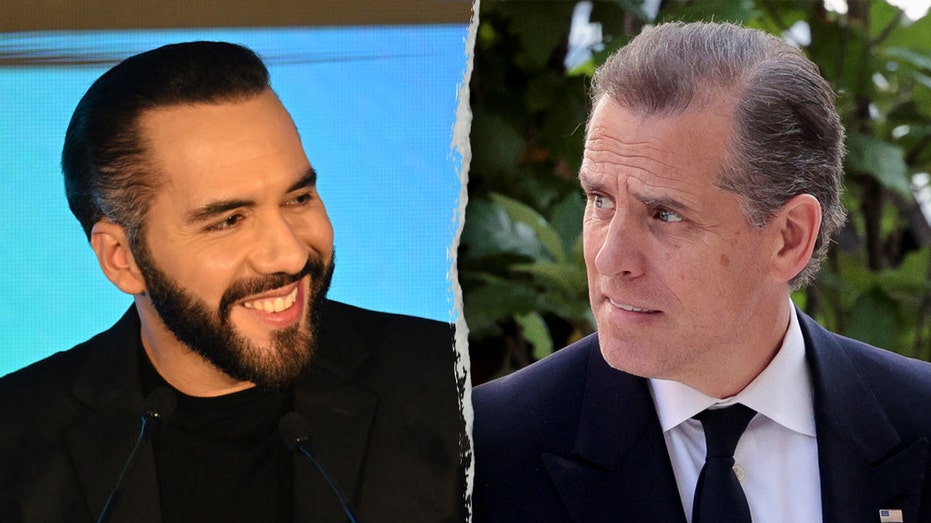
Welcome to the Fox News Politics newsletter, with the latest updates on the Trump administration, Capitol Hill and more Fox News politics content. Here’s what’s happening… – Trump pulls US out of UN agency over its backing of ‘woke’ social causes – ‘Not going away’: Inside the Epstein drama that’s thrown House GOP into chaos – Louisville agrees to halt sanctuary policy after DOJ threatens lawsuit Salvadoran President Nayib Bukele responded late Monday to having his country under the threat of invasion from a future “President Hunter Biden.” Bukele, who has emerged as a top ally of President Donald Trump and a partner in the U.S. leader’s mass deportation operations targeting illegal immigrants, appeared to laugh off the threat. “Is Hunter Biden sniffing powdered milk?” Bukele replied on X, where he shared a snippet of Biden’s interview with podcaster Andrew Callaghan… READ MORE. HOUSTON HORROR: Chilling video allegedly shows illegal migrant dragging screaming sex trafficking victim back to captivity LEFTIST BACKGROUND: Anti-ICE attackers revealed to have extensive history of radical protest activities FORENSIC TWIST: Illinois coroner releases new details about woman found dead on illegal immigrant’s property THREAT COUNTDOWN: EU defense chief warns of ‘most dangerous moment’ — coordinated Russian-Chinese aggression by 2027 FREE ON MASSIVE BOND: Chinese citizen admits stealing US trade secrets for next-generation national security tech DIPLOMATIC DIVIDEND: ‘Trump has changed the game’: NATO enters brave new era under pressure from US, Russia ‘SENSELESS LOSS’: American man from Oklahoma ‘brutally executed’ by Syrian-backed jihadis MATTER OF PRIDE: Iran will not give up enrichment, top official confirms in exclusive Fox News interview RED LINE: China prevents dozens of Americans from leaving under shadow ‘exit ban’ AIRING OF GRIEVANCES: 5 bizarre moments from the former first son’s meltdown DEPORTATION DIVIDE: House Republicans warn anti-ICE rhetoric from Democrats is driving violent attacks on agents BIG, BEAUTIFUL FIGHT: Scoop: Democrats launch billboards outside hospitals to target Trump for ‘Gutting Rural Health Care’ IN THE CROSSHAIRS: Trump blasts Massie as ‘the worst Republican Congressman’ and says he’s seeking a challenger to support DEMS IN DISARRAY: AOC slams progressive critics for ‘lying’ about her Iron Dome stance in defense bill fight BUDGET BATTLE LINES: Dems seek retaliation over GOP cuts as Thune calls for ‘cooperation’ on funding vote FAITH UNDER FIRE: GOP lawmakers advocate for US condemnation of persecution against Christians in Muslim-majority nations CIVIL WAR: ‘Not going away’: Inside the Epstein drama that’s thrown House GOP into chaos FLIP FLOP: Trump endorses GOP senator years after asserting ‘I will never endorse this jerk again’ MAYOR BACKS DOWN: Louisville agrees to halt sanctuary policy after DOJ threatens lawsuit CAMPUS CRACKDOWN: Columbia University disciplines 70 students more than a year after violent library takeover JUDGMENT DAY: Newsom to decide on Menendez brothers’ parole by Labor Day weekend TAKE TWO: Cuomo tones down Trump rhetoric after stunning loss to Mamdani in NYC mayor primary ‘DISGUSTING’: NYC councilwoman warns Mamdani victory will drive away key voting bloc: ‘Afraid to live here’ VOTED OUT: Judges vote against extending Alina Habba’s term as US attorney in New Jersey Get the latest updates on the Trump administration and Congress, exclusive interviews and more on FoxNews.com.
Flashback: Biden challenged to take pre-debate drug test in 2024; his son now makes Ambien claim
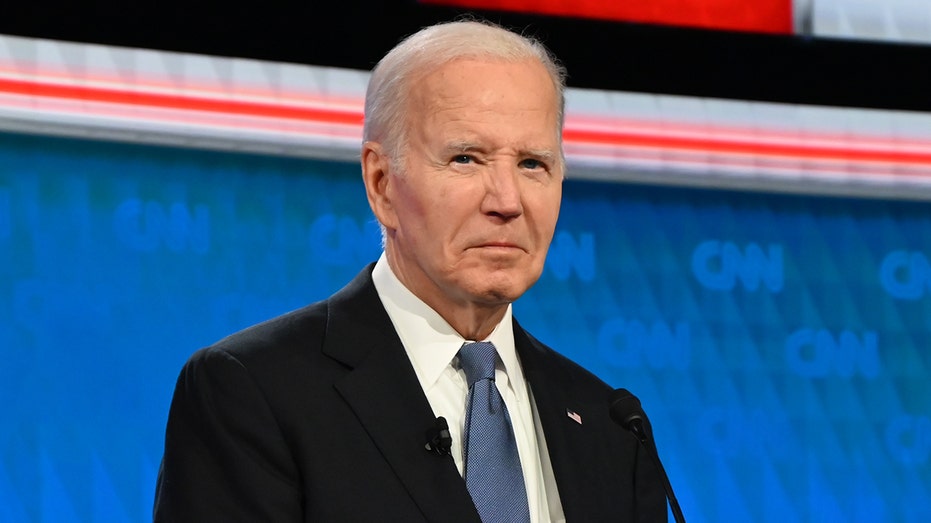
Former President Joe Biden’s campaign dodged answering whether the president planned to take performance-enhancing drugs ahead of his debate against President Donald Trump just over a year ago, instead arguing that Trump and his campaign were spreading “desperate, obviously false lies” about the 46th president potentially taking drugs. About one year after Biden’s ill-fated debate, former first son Hunter Biden claimed in a wild and expansive interview published Monday his dad’s poor debate performance was due to taking Ambien, a sedative-hypnotic typically used to treat insomnia. “I know exactly what happened in that debate,” Hunter Biden said in the interview. “He flew around the world, basically, the mileage that he could have flown around the world, three times. He’s 81 years old. He’s tired as s—. They give him Ambien to be able to sleep. “He gets up on the stage, and he looks like he’s a deer in the headlights,” Hunter added. “And it feeds into every f—ing story that anybody wants to tell.” BIDEN AIDES PUSHED FOR EARLY DEBATE TO SHOW OFF BIDEN’S ‘STRENGTH,’ EXPOSE TRUMP’S ‘WEAKNESS,’ BOOK SAYS On June 26, 2024, the day before the debate, Fox News Digital reached out to the Biden campaign inquiring if Biden had any plans to use performance-enhancing drugs for the debate, but staffers twice avoided a direct answer to the question. At the time, Trump was leading a rising chorus, which included lawmakers, demanding that Biden take a drug test before the showdown. Those advocating a screening suggested Biden may have been motivated by a desire to quell mounting concerns about his mental acuity. “Donald Trump is so scared of being held accountable for his toxic agenda of attacking reproductive freedom and cutting Social Security that he and his allies are resorting to desperate, obviously false lies,” a Biden campaign spokesperson told Fox News Digital the evening ahead of that 2024 debate. When asked in a follow-up email for a “yes” or “no” response, the spokesperson said the original statement answered the question. “The accusation from Trump on drugs is a desperate, obviously false lie,” the response said. Ambien is a sedative that slows brain activity to help a person fall asleep and would not act as a performance-enhancing supplement for a public debate. FLASHBACK: THE DEBATE NIGHT AGAINST TRUMP THAT THREW BIDEN’S REELECTION CAMPAIGN INTO A FREE FALL ONE YEAR LATER: HOW JOE BIDEN’S DISASTROUS DEBATE PERFORMANCE FORCED HIS MEDIA ALLIES TO TURN ON HIM Joe Biden spent days preparing for the debate at Camp David in Maryland with videos of his public gaffes and missteps haunting the campaign in the days leading up to the debate. Trump, meanwhile, led the charge in demanding Biden take a drug test to prove he was not taking performance-enhancing supplements ahead of the highly anticipated event. “DRUG TEST FOR CROOKED JOE BIDEN??? I WOULD, ALSO, IMMEDIATELY AGREE TO ONE!!!” Trump posted to Truth Social in the lead-up to the debate. Fox News Digital also reached out to the White House and Trump campaign asking if Biden or Trump, respectively, planned to take performance-enhancing drugs ahead of the debate. The Biden White House did not respond at the time, while the Trump campaign responded. “Absolutely not,” then-campaign spokeswoman Karoline Leavitt told Fox News Digital at the time. “President Trump has naturally elite stamina and doesn’t need performance-enhancing drugs, unlike Joe Biden, who many are saying will be drugged up for the debate like he was at the State of the Union,” Leavitt said at the time. “President Trump has repeatedly asked Joe Biden to participate in drug testing. What does Team Biden have to hide?” BOOK REVEALS BIDEN ADVISORS DECLINED TO HAVE PRESIDENT TAKE A COGNITIVE TEST IN FEBRUARY 2024: REPORT Hunter Biden’s recent explosive interview on “Channel 5 with Andrew Callaghan,” released on YouTube, fanned the flames of Biden’s presidency and exit from the 2024 federal election amid ongoing accusations that Biden’s mental acuity had cratered during his Oval Office tenure. Biden entered the re-election cycle already racked by claims and concerns that his mental acuity had slipped, and he was not mentally fit to continue serving as president, which was underscored by special counsel Robert Hur’s report in February 2024 that rejected criminal charges against Biden for possessing classified materials, saying he was “a sympathetic, well-meaning, elderly man with a poor memory.” Biden also brushed off accusations he was using any performance-enhancing supplements, including mocking Trump’s challenge that he take a drug test in an X post just before the debate showing him drinking a can of water. “I don’t know what they’ve got in these performance enhancers, but I’m feeling pretty jacked up. Try it yourselves, folks. See you in a bit,” the X post said, accompanied by a photo of Biden drinking a can of water that said “Get real, Jack. It’s just water.” The debate was an abject failure for Biden as he stumbled over his responses and appeared to lose his train of thought and slur words at times, opening the floodgates of criticism from longtime Democratic allies who called on Biden to drop out of the race and pass the torch to a younger generation to take on Trump. A handful of former President Barack Obama’s allies and former advisors publicly helped lead the charge in calling on Biden to drop out of the 2024 race earlier in the summer, including David Axelrod, who said Biden was “not winning this race;” George Clooney, who called on the president to quit in a bombshell op-ed; and Jon Favreau, who served as former director of speech writing for Obama. BIDEN CAMP DODGES ANSWERING IF PRESIDENT PLANS TO USE PERFORMANCE-ENHANCING DRUGS BEFORE DEBATE Hunter Biden unleashed on the Democrats who turned their backs on his dad as he attempted to recover from the debate performance in his expletive-riddled interview Monday. “F‑‑- you. What do you have to do with f‑‑‑ing anything? Why do I have to f‑‑‑ing listen to you? What right do you have to step on a
Beto O’Rourke drops f-bomb as he urges Dems to ‘meet fire with fire’ against GOP redistricting plans in Texas
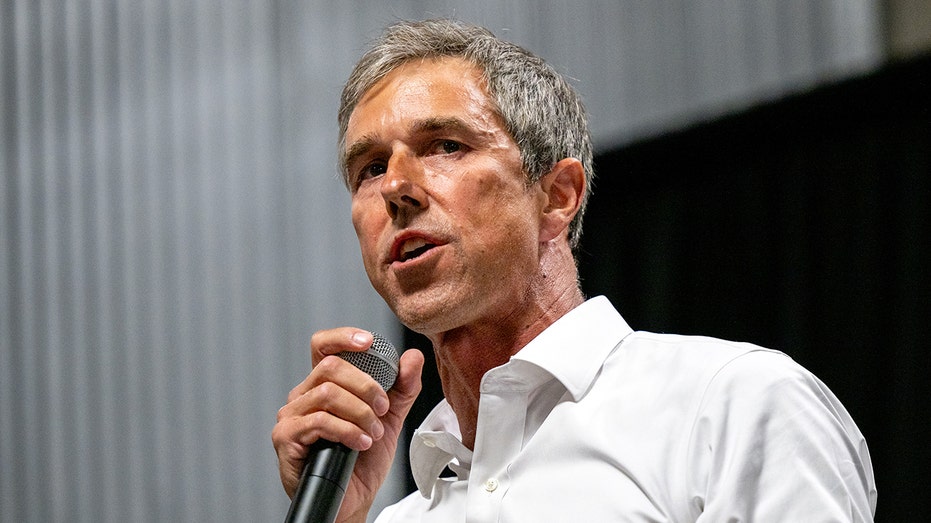
As Texas Republicans attempt to redraw their congressional districts to widen their majority in the U.S. House of Representatives ahead of competitive midterm elections expected in 2026, former Rep. Beto O’Rourke, D-Texas, said Democrats should “meet fire with fire.” The 2020 Democratic presidential candidate told former Biden advisor Neera Tanden at the Center for American Progress (CAP) on Tuesday that he supports California Gov. Gavin Newsom’s own attempt at redistricting the blue state to deepen Democrats’ own congressional control. O’Rourke rationalized California’s redistricting because “we already have an authoritarian president.” And while he acknowledged the irony of his party following suit on something Democrats “don’t like Republicans doing,” O’Rourke said, “This is for the very future and fate of the republic. We lose it, you will never, ever get it back.” “Not only do I think [Newsom] should do this, I don’t think he should wait for Texas,” O’Rourke said. “In other words, why the f–k are we responding and reacting to the other side instead of taking the offense on these things?” COURT SHUTS DOWN REDISTRICTING FIGHT IN KEY SWING STATE — HERE’S WHAT IT MEANS O’Rourke criticized the Democratic Party for caring “more about being right” than about “being in power.” He said Democrats, who are grappling with losing control of the White House and Congress in 2024, “have to be ruthlessly focused on winning power.” DEMOCRAT BETO O’ROURKE SAYS HE’LL RUN FOR SENATE IF TEXANS WANT HIM TO If Democrats don’t fight back, O’Rourke said, “a state that was already something less than democracy is about to descend even further.” The GOP-controlled state legislature in Texas began a special session on Monday, and one of the key items on their agenda is the push by Republicans in the red state to redraw the current congressional maps to reduce the number of districts controlled by already marginalized Democrats. It’s part of a broader effort by the GOP across the country to keep control of the chamber, and cushion losses elsewhere in the country, as the party in power traditionally faces political headwinds and loses seats. And President Donald Trump is aiming to prevent what happened during his first term, when Democrats grabbed a majority in the House in the 2018 midterms. “Texas will be the biggest one,” the president told reporters last week, as he predicted the number of GOP-friendly seats that could be added through redistricting in the Lone Star State. “Just a simple redrawing, we pick up five seats.” Hours earlier, Trump held a call with Texas’ Republican congressional delegation, and sources confirmed to Fox News that the president told the lawmakers that he was aiming to redraw the maps to create five new winnable seats. Democrats control just 12 of the state’s 38 congressional districts, with a blue-leaning seat vacant after the death in March of Rep. Sylvester Turner. The idea is to relocate Democratic voters from competitive seats into nearby GOP-leaning districts, and move Republican voters into neighboring districts the Democrats currently control. Gov. Greg Abbott and Lt. Gov. Dan Patrick, both conservative Republicans and Trump allies, said they needed to redistrict because of constitutional concerns raised by the Justice Department over a handful of minority-dominated districts. “Coincidentally or not, each of those seats is held by a Democrat who is either Black or Mexican-American,” O’Rourke said Tuesday. “That’s what they’re doing. It’s members of Congress choosing their own voters, literally.” Redistricting typically takes place at the start of each decade, based on the latest U.S. Census data. Mid-decade redistricting is uncommon – but not without precedent. Democrats are slamming Trump and Texas Republicans for what they describe as a power grab, and vowing to take legal action to prevent any shift in the current congressional maps, as House Minority Leader Hakeem Jeffries, D-N.Y., said, “Democrats are going to push back aggressively because it’s the right thing to do.” “Two can play this game,” California Gov. Gavin Newsom wrote on social media last week. The next day, after a meeting, Democrats in California’s congressional delegation said they were on board with an ambitious plan to try and gain at least five seats through redistricting. Democrats currently control 43 of the Golden State’s 52 congressional districts. But it won’t be easy to enact the change, because in California, congressional maps are drawn by an independent commission that is not supposed to let partisanship influence their work. Newsom this week suggested that the state’s Democratic-controlled legislature should move forward with a mid-decade redrawing of the maps, arguing that it might not be forbidden by the 17-year-old ballot initiative that created the independent commission. The governor also proposed quickly holding a special election to repeal the commission ahead of the 2026 midterm elections. Both plans are considered long shots, as they would face plenty of legislative, legal and financial hurdles.
The boy who bled to death as an Israeli soldier ‘celebrated his shot’
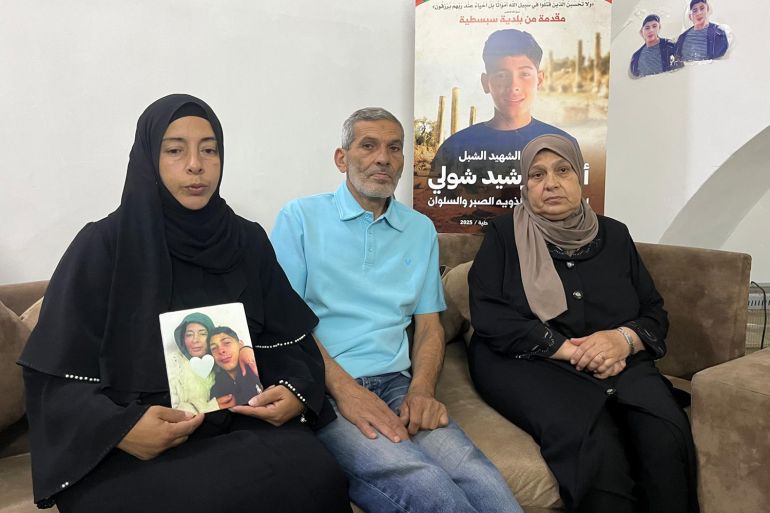
Sebastia, occupied West Bank – When Israeli military vehicles approach, news of the latest incursion begins cascading through Sebastia from one person to another, and the young people run home as fast as possible. They try to get back before invading soldiers reach their street, knowing all too well the potentially grave consequences if they don’t. The warning cries often originate from those walking near the vantage point of Sebastia archaeological park’s scenic summit. From here, people can spot army vehicles on the roads below before they reach the town and its ancient ruins, giving people a chance to hide their young. Soon after, walking prevention warnings are often circulated on social media, and the residents of Sebastia – once a religious pilgrimage site and a tourism hotspot – have the choice of hunkering down at home or facing soldiers who no longer show any restraint. ‘He celebrated killing my son’ In January this year, an Israeli soldier shot dead 14-year-old Ahmed Jazar and then raised his rifle in the air triumphantly after hitting the unarmed boy in the chest, piercing his heart. Witnesses saw the soldier “celebrating” as Ahmed slowly bled to death on the ground, his father, Rashid, aged 57, told Al Jazeera. Ahmed was mature beyond his years, his parents say, and made caring for his poverty-stricken family his vocation. He was also a talented painter and wanted to train as a decorator. He aspired to open a shop so he could make enough money to buy his family a permanent home – something better than the overcrowded rental apartment they lived in. Advertisement “They shot Ahmed and killed all his dreams, right there and then,” his mother, Wafaa, said. “The army treats us like we’re in a state of war – but we’ve done nothing. “Soldiers are here every day, and no one feels their children are safe unless they are at home.” Ahmed woke up in the early afternoon on the Sunday he was killed, Wafaa and Rashid say, having stayed up late playing with his friends in the neighbourhood the night before. He liked to play football in the schoolyard, cycle near the archaeological park, and eat at the town’s once-busy cafes. He came back after seeing his friends and spent some time with his family, unaware that they would be sharing their final moments. Then, as the dinner hour neared, his parents sent Ahmed out to buy bread. “It was always a habit of his to come and go in this way,” Rashid said. “He was very sociable … everyone loved him. “But this time, he left and never came back.” Wafaa holds a photo of her with her murdered son. To her right are her husband Rashid Jazar and Ahmed’s aunt Etizaz Azim [Al Jazeera] The Israeli soldiers’ frequent raids on occupied West Bank towns prompt some children and young people into acts of defiance, like throwing stones towards the heavily armed soldiers or their armoured vehicles, or shining laser pointers at them. According to some neighbours, Ahmed and his friends did shine laser pens on the fatal January day, hiding behind a wall near a nursery as some soldiers walked towards them. His family denies Ahmed’s part in this. Rashid and Wafaa said they were awaiting his return from the shops so they could eat dinner together. “He was just a child,” Rashid said. “The Israeli soldier knew he was a young boy – and that he was no threat to the army in any way. “He was hundreds of metres away from them when they shot him!” The bullet-dented door and facade of the nursery, established by charity Save The Children, still stand as a reminder of what happened when Ahmed was shot dead. Speaking to Israeli newspaper Haaretz in March, a military spokesperson said: “In the wake of the incident, an investigation was launched by the Military Police Criminal Investigation Division. Naturally, we cannot elaborate on an ongoing investigation.” Palestinians, including residents of Sebastia, say they are used to what they call “sham” investigations that usually have no result, and almost certainly no punishment for perpetrators. Rashid was contacted by the military to provide information for the investigation into Ahmed’s killing, but he refused. Advertisement “They killed my son and then call me to talk about justice?” he said. Al Jazeera sent written inquiries to Israeli authorities, asking for comment on the investigation into Ahmed’s shooting but no response had been received by time of publication. The Israeli army often raids cities and towns in the West Bank, but few are targeted like Sebastia, where it has stepped up attacks since Prime Minister Benjamin Netanyahu established his far-right ultranationalist government in late 2022. Since then, the military killed Fawzi Makhalfeh, aged 19, in July 2023, and Ahmed on January 19 this year. There have been at least 25 gunshot injuries in Sebastia since Netanyahu’s coalition government came to power, a handful of which involved children. A 22-year-old man from the nearby town of Attil was shot in the chest while driving through Sebastia earlier this month. Violent settlers also wreak havoc on Palestinian landowners around the town, which is dependent on agriculture and tourism, and yet more settlements, official and unofficial, are set to be built around Sebastia. Soldiers attack anyone who fights back and circulate threatening messages using residents’ mobile phones. One recording, heard by Al Jazeera, by what is ostensibly an Israeli soldier, accuses townspeople of being “involved in terrorism”, and warns they will “pay the price”. The Save The Children nursery sign, riddled with bullets [Al Jazeera] Justice Wafaa and her husband sat on either side of a memorial to their slain son in the humble living room of the rented home they can barely afford. Ahmed left behind four brothers and three sisters aged between seven and 20. Rashid used to work as a painter in Israel, but, like thousands of Palestinians in Gaza and the West Bank, he has been unable to go to
‘Flour, fire and fear as I try to parent in a starving Gaza’
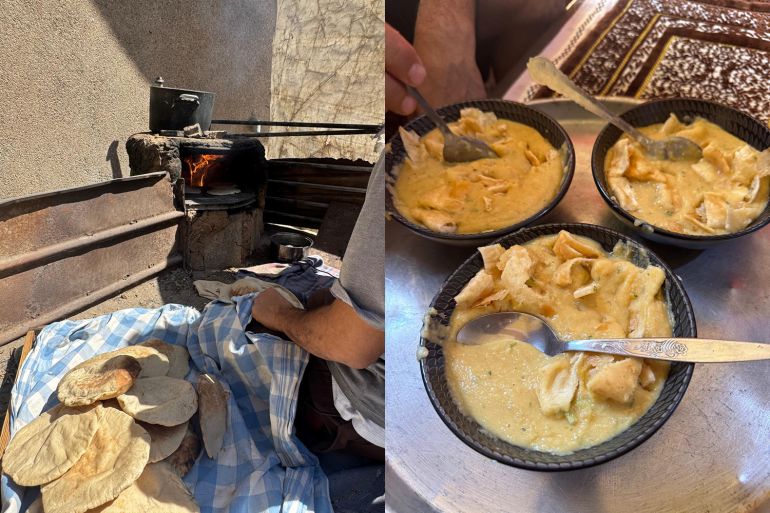
Deir el-Balah, Gaza – “There is no voice louder than hunger,” the Arabic proverb goes. Now it has become a painful truth surrounding us, drawing closer with each passing day. I never imagined that hunger could be more terrifying than the bombs and killing. This weapon caught us off-guard, something we never thought would be more brutal than anything else we’ve faced in this endless war. It’s been four months without a single full meal for my family, nothing that meets even the basic needs on Maslow’s hierarchy. My days revolve around hunger. One sister calls to ask about flour, and the other sends a message saying all they have is lentils. My brother returns empty-handed from his long search for food for his two kids. We woke up one day to the sound of our neighbour screaming in frustration. “I’m going mad. What’s happening? I have money, but there’s nothing to buy,” she said when I came out to calm her down. My phone doesn’t stop ringing. The calls are from crying women I met during fieldwork in displacement camps: “Ms Maram? Can you help with anything? A kilo of flour or something? … We haven’t eaten in days.” This sentence echoes in my ears: “We haven’t eaten in days.” It is no longer shocking. Famine is marching forwards in broad daylight, shamelessly in a world so proud of its “humanity”. A second birthday amid scarcity Iyas has woken up asking for a cup of milk today, his birthday. He has turned two in the middle of a war. I wrote him a piece on his birthday last year, but now I look back and think: “At least there was food!” Advertisement A simple request from a child for some milk spins me into a whirlwind. I’d already held a quiet funeral inside me weeks ago for the last of the milk, then rice, sugar, bulgur, beans – the list goes on. Only four bags of pasta, five of lentils and 10 precious kilos (22lb) of flour remain – enough for two weeks if I ration tightly, and even that makes me luckier than most in Gaza. Flour means bread – white gold people are dying for every single day. Every cup I add to the dough feels heavy. I whisper to myself: “Just two cups”. Then I add a little more, then a bit more, hoping to somehow stretch these little bits into enough bread to last the day. But I know I’m fooling myself. My mind knows this won’t be enough to quell hunger; it keeps warning me how little flour we have left. I don’t know what I’m writing any more. But this is just what I’m living, what I wake up and fall asleep to. With little more than flour and lentils left, the author struggles to make supplies last and feed her family [Maram Humaid/Al Jazeera] What horrors remain? I now think back on the morning bread-making routine I used to resent. As a working mother, I once hated that long process imposed by war, which made me miss being able to buy bread from the bakery. But now, that routine is sacred. Thousands of people across Gaza wish they could knead bread without end. I am one of them. Now I handle flour with reverence, knead gently, cut the loaves carefully, roll them out and send them off to bake in the public clay oven with my husband, who lovingly balances the tray on his head. A full hour under the sun at the oven just to get a warm loaf of bread, and we’re among the “lucky” ones. We are kings, the wealthy. These “miserable” daily routines have become unattainable dreams for hundreds of thousands in Gaza. Everyone is starving. Is it possible that this war still has more horrors in store? We complained about displacement. Then our homes were bombed. We never returned. We complained about the burdens of cooking over a fire, making bread, handwashing clothes and hauling water. Now those “burdens” feel like luxuries. There’s no water. No soap. No supplies. Iyas’s latest challenge Two weeks ago, while being consumed by thoughts of how to stretch out the last handfuls of flour, another challenge appeared: potty training Iyas. We ran out of diapers. My husband searched everywhere, returning empty-handed. “No diapers, no baby formula, nothing at all.” Just like that. My God, how strange and harsh this child’s early years have been. War has imposed so many changes that we could not protect him from. Advertisement His first year was an endless hunt for baby formula, clean water and diapers. Then came famine, and he grew up without eggs, fresh milk, vegetables, fruit or any of the basic nutrients a toddler needs. I fought on, sacrificing what little health I had to continue breastfeeding until now. It was difficult, especially while undernourished myself and trying to keep working, but what else could I do? The thought of raising a child with no nutrients at this critical stage is unbearable. And so my little hero woke up one morning to the challenge of ditching diapers. I pitied him, staring in fear at the toilet seat, which looked to him like a deep tunnel or cave he might fall into. It took us two whole days to find a child’s seat for the toilet. The author’s daughter, Banias, demonstrates how her father carries the bread to be baked at the public oven [Maram Humaid/Al Jazeera] Every day was filled with training accidents, signs he wasn’t ready. The hours I spent sitting by the toilet, encouraging him, were exhausting and frustrating. Potty training is a natural phase that should come when the child is ready. Why am I and so many other mothers here forced to go through it like this, under mental strain, with a child who I haven’t had a chance to prepare? So I fall asleep thinking about how much food we have left and wake up to
Israel is proceeding with annexation, and there is only one way to stop it
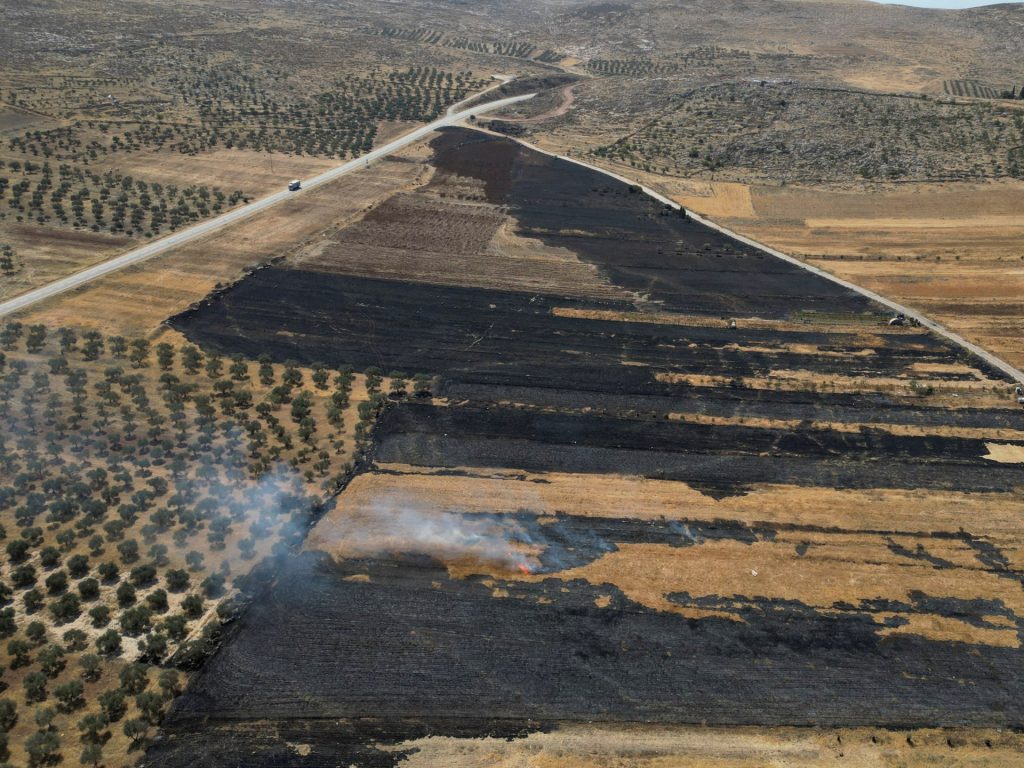
My brother recently sent me a copy of an Israeli military order that was found by farmers on our land and nearby plots in the occupied West Bank. The document, accompanied by a map, states that the land is being seized for military purposes. It does not specify how long the land will be held and offers the landowners and users only seven days from an upcoming field visit – coordinated between the Israelis and the Palestinian Authority (PA) liaison office – to file an objection with the Israeli army’s legal adviser. This field visit typically serves to demarcate the boundaries of the confiscated land. From our family’s past experience, confiscation under the guise of “security reasons” often precedes the establishment of a colonial settlement. This happened in 1973 when our family received a similar military order for land along the Jerusalem-Hebron Road. Within a week, a military post was established. Months later, a civilian settlement, Elazar, was erected in the same location. What’s shocking this time is that this new order has barely made headlines despite the size of the land being slated for confiscation. According to the military order, it amounts to 5,758 dunums, or more than 5.7sq km (2.2sq miles). The confiscation is not arbitrary. At the centre of this particular area is the outpost of Sde Boaz, which was illegally established on private Palestinian land in 2002. The residents – about 50 families – are not fringe extremists. They’re middle-class professionals, including doctors, engineers and accountants. Advertisement This confiscation is one of many that have taken place in the past 21 months. Under the shadow of the genocidal war in Gaza, Israel has accelerated its annexation drive in the West Bank. The objective is to formally annex parts of what the Oslo Peace Accords designated as Area B, which is 21 percent of the West Bank, and the whole of Area C, which constitutes 60 percent of the West Bank and includes the whole of the Jordan Valley and Jerusalem countryside as well as other areas. Most Palestinian farmland and pastures fall within this area as do a large number of Israel’s illegal settlements. My town, al-Khader (St George), owns more than 22,000 dunums (22sq km/8.5sq miles) of land, of which more than 20,500 (20.5sq km/7.9sq miles) are classified as Area C, 500 (half a square kilometre/0.2sq miles) as Area B, and less than 1,000 dunums (1sq km/0.4sq miles) as Area A. Israeli settlers play an active role in advancing this annexation plan. This is not limited to seizing strategic hilltops but also includes systematic violence against Palestinians. The settler attacks on Palestinian property, the torture and killings of Palestinians are all part of an organised campaign intended to uproot Palestinians from Areas B and C to facilitate annexation. This strategy aligns with what Israeli policymakers refer to as “voluntary transfer”, a euphemism for ethnically cleansing Palestinians from their homeland. All of this is illegal, according to international law, and goes against repeated resolutions by the United Nations and a 2024 ruling of the International Court of Justice. So who will stop Israel? The PA, which nominally administers Area A in the occupied West Bank, will certainly not. Since its establishment as part of the Oslo peace process, the PA has not only failed to resist Israeli moves towards annexation, but it has also arguably facilitated them by working with Israel to stem out armed and even peaceful resistance that does not support its political agenda. The international community is also unlikely to take decisive action. For decades, Western governments, in particular, have offered rhetorical condemnations while simultaneously providing security and economic support to Israel. These same actors who have failed to stop the ongoing genocide in Gaza are unlikely to object if Israel formalises its de facto annexation. This was most recently evident during a diplomatic visit to Taybeh, a Palestinian village located northeast of Jerusalem and Ramallah. The visit, which included more than 20 diplomats from around the world, including European and American representatives, came in response to repeated attacks by Jewish settlers, who burned parts of the village’s land, including property belonging to the local church. That was all these countries were willing to do – send representatives to the area for a couple of hours to utter a few words of condemnation. Beyond that, it is business as usual in their relations with Israel. Advertisement What remains then is the resilience and agency of the Palestinian people and their principled political movements. In the current context, the mere presence of Palestinians on their land is an act of resistance. To sustain this presence and strengthen their struggle, Palestinians must continue to mobilise global progressive and freedom-oriented movements to support their cause – not only in solidarity but also as part of a broader global fight against the far-right, racist, anti-justice forces that support Israel and simultaneously threaten civil rights and social justice in their own countries. Solidarity activities at the global level should be strategic and impactful. They should focus on disrupting all components of the supply chain that benefit the Israeli occupation in general and settler colonialism in particular. This means citizens around the world in different sectors of society can contribute to the struggle for Palestine as both producers and consumers by heeding the call to boycott and divest from Israel. Direct actions from the working class are crucial. Workers can integrate the Palestinian cause into their demands for better working conditions. For instance, public strikes in solidarity with Palestine, such as those organised by rail workers in European countries, might pressure governments to reconsider their support for Israel. Similarly, port workers could strike to disrupt shipping linked to Israel, pushing governments to reassess their positions. Employees in high-tech industries can play a critical role in supporting Palestinians by demanding their companies align products, services and partnerships with international law, refusing to support technologies complicit in the Israeli occupation or settler violence. If companies refuse, workers can escalate to
How did Jagdeep Dhankhar become most controversial vice president? About Sonia, Rahul, SC, RSS, he said…
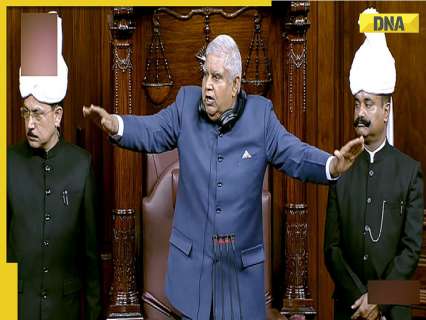
Jagdeep Dhankhar may be remembered as the most controversial Vice President for his unsavoury comments on the opposition members. He has been accused of siding with the ruling party, the BJP, and the government in running the Rajya Sabha and having a bias against the opposition members.
Good news for Olympic winners as Delhi govt hikes cash awards, gold medallist to get Rs…

Gold and Silver medallists will be given Group A jobs while the bronze medallists will be given Group B jobs in the Delhi government.
Will Nitish Kumar replace Jagdeep Dhankhar? BJP may pull him out to beat anti-incumbency in Bihar polls as…

Who will replace outgoing Vice President Jagdeep Dhankhar? Will it be Bihar Chief Minister Nitish Kumar or incumbent Rajya Sabha Deputy Speaker Harivansh? Or will it be someone else? These questions have surfaced after the vice president put in his letters.
Death sentence to Nimisha Priya cancelled? THIS evangelist claims BIG relief for Kerala nurse facing execution in Yemen
Evangelist and Founder of Global Peace Initiative Dr KA Paul in his video message, claimed that the death sentence to Kerala Nurse Nimisha Priya has been cancelled after days and nights of extensive efforts by Yemeni and Indian leaders.