

Cruz says Rep Ilhan Omar could face jail time, deportation if marriage allegation proves true
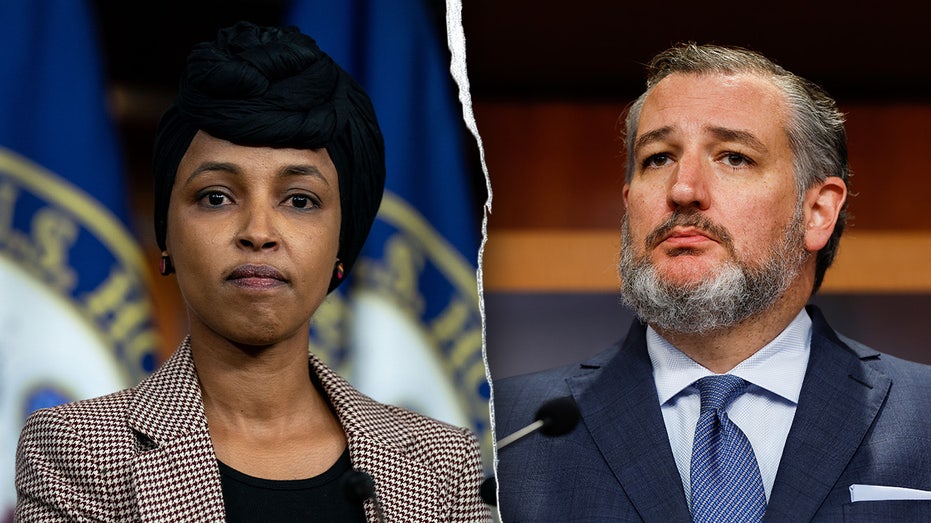
A top Senate Republican argued that if allegations against “Squad” member Rep. Ilhan Omar, D-Minn., that she married her brother to enter the U.S. were true, she’d be breaking several laws. Sen. Ted Cruz, R-Texas, joined the long-standing scrutiny against Omar Friday after President Donald Trump revived the allegations during a rally pushing his affordability agenda in Pennsylvania earlier this week. In a post on X responding to a White House social media account that charged, “Yes, [Omar] married her brother,” Cruz listed a trio of federal and state laws the progressive lawmaker may have violated. ILHAN OMAR’S EX APPEARS ON ‘DIRTY DANDY’ SOCIAL ACCOUNT AS TRUMP REVIVES MARRIED SIBLINGS CLAIM “If this is true, then Omar faces criminal liability under three different statutes,” Cruz said. Cruz argued that Omar could have committed federal marriage fraud, which stipulates that it is a felony to knowingly enter into a marriage to evade immigration laws, and could lead to up to five years in prison, a $250,000 fine and deportation. Omar was born in Somalia and came to the U.S. in 1995 after her family was granted asylum. She became a citizen in 2000. Omar, who is Muslim, has been married legally three times, first in a religious marriage to Ahmed Abdisalan Hirsi in 2002, then to Ahmed Nur Said Elmi in 2009 before later divorcing and legally marrying Hirsi. In 2020, she married political aide Tim Mynett. SCOOP: ILHAN OMAR HIT WITH HOUSE ETHICS COMPLAINT OVER RESPONSE TO CHARLIE KIRK ASSASSINATION Cruz noted that Omar could also be breaking Minnesota’s state incest law, a felony in the state punishable by jail time up to 10 years. He also contended that she could be liable for tax fraud, specifically if joint tax returns were filed while she was not legally married. That violation would levy up to a $100,000 fine and up to three years in prison. MINNESOTA HOUSE HOPEFUL CALLS MARRIAGE, FRAUD CLAIMS ‘LIES’ The Senate Republican’s legal analysis of the situation comes after Trump resurrected the unsubstantiated claims that Omar had married her brother for immigration purposes that have dogged the lawmaker since she entered politics nearly a decade ago. She has denied the allegations. Still, Trump charged, “She married her brother to get in, right?” “If I married my sister to get my citizenship, do you think I’d last for about two hours or something less than that? She married her brother to get in,” he said. “Therefore, she’s here illegally. She should get the hell out.” Fox News Digital did not immediately hear back for comment from Omar’s office.
Minnesota judge’s ‘highly unusual’ decision tossing $7.2 million fraud verdict draws mounting scrutiny

Lawmakers and the legal community are raising questions after a Minnesota judge took the uncommon step of overturning a unanimous jury verdict in a massive $7.2 million Medicaid fraud case, a move experts say is rarely seen in white-collar prosecutions. The ruling, handed down late last month by Hennepin County Judge Sarah West, comes as Minnesota is engulfed in a series of major welfare and human services fraud scandals that have drawn national attention and shaken confidence in the state’s oversight systems. West’s decision has triggered broader doubts about Minnesota’s resolve to prosecute white-collar and welfare fraud at a time when billions in public funds could be vulnerable. JaneAnne Murray, a University of Minnesota law professor who studies criminal procedure, said she was surprised by the decision. COMER TARGETS WALZ IN NEW HOUSE INVESTIGATION, CITING NEARLY $1B IN ALLEGED MINNESOTA FRAUD “It is highly unusual for a judge to reject a jury’s verdict in any case, much less a white-collar one, where issues of intent will almost always be circumstantial,” Murray told Fox News Digital. Minnesota’s circumstantial-evidence standard, she noted, is among the strictest in the country and requires prosecutors to “exclude any reasonable hypothesis of innocence.” Legal experts say Minnesota’s unusually stringent rule gives judges broader authority to vacate convictions if prosecutors cannot rule out every reasonable alternative explanation for the defendant’s conduct. The Minnesota Supreme Court is reviewing the decades-old standard, but Murray said West was applying the law as it stands today. “The judge in the Medicaid fraud case was applying the current law,” Murray said. Until now, West had maintained a low profile on the bench with no prior rulings that attracted substantial controversy. But last month’s decision was derided by Republican Minnesota Sen. Michael Holmstrom, who labeled her a “true extremist.” West, a former public defender appointed to the bench in 2018 by Gov. Mark Dayton, previously handled juvenile and child protection cases in Hennepin County. She also held leadership roles in the Hennepin County Bar Foundation, which funds legal aid and community justice programs. She presided over the prosecution of Abdifatah Yusuf, found guilty by a jury of six counts of aiding and abetting theft after he and his wife were accused of stealing $7.2 million from the state’s Medicaid program while running a home healthcare business, according to the Minnesota Attorney General’s Office. ‘SCHEMES STACKED UPON SCHEMES’: $1B HUMAN-SERVICES FRAUD FUELS SCRUTINY OF MINNESOTA’S SOMALI COMMUNITY Prosecutors said the business lacked a real office, operated “for years out of a mailbox” and that Yusuf allegedly used the money to fund a “lavish lifestyle” that included shopping sprees at luxury retailers such as Coach, Canada Goose, Michael Kors, Nike and Nordstrom. But West tossed the conviction, ruling that the state’s case relied heavily on circumstantial evidence and failed to eliminate other reasonable inferences about Yusuf’s personal involvement in the billing scheme. “There is a reasonable, rational inference that Mr. Yusuf was the owner … but that his brother, Mohamed Yusuf, was committing the fraud … without Mr. Yusuf’s knowledge or involvement,” West wrote in her ruling. She said the scale and nature of the fraud was “of great concern” but ruled the state failed to prove Yusuf knowingly participated in it. Andy McCarthy, a former assistant U.S. attorney and Fox News contributor, said the ruling veered far beyond what trial judges are normally permitted to do, underscoring how exceptional the move was. MINNESOTA FRAUD SCHEME UNEARTHS MILLIONS IN LUXURY PROPERTY, CARS: DOJ “It is highly unusual for a judge to overturn a jury verdict in a criminal case,” McCarthy told Fox News Digital, noting that a judge who believes the evidence is legally insufficient is supposed to stop the case before it ever reaches the jury. McCarthy said the reported rationale for vacating the verdict “seems untenable,” arguing circumstantial evidence is routinely strong enough to sustain convictions. “The fact that a case is circumstantial — meaning there is no central witness who saw the crime — is not a reason to overturn it,” he said. “Very often, circumstantial cases are much stronger than cases that rise or fall on the testimony of witnesses of dubious credibility.” He added that judges are required to instruct jurors to view evidence as a whole rather than in isolation. “The judge is only permitted to vacate a guilty verdict if it is obviously irrational and against the full weight of the evidence,” McCarthy said. Because West waited until after deliberations to overturn the verdict, McCarthy said the state may still have the ability to appeal, a procedural opening that does not exist when a judge tosses a case before the jury deliberates. Ben Walfoort, the jury foreperson, told KARE he was “shocked” by West’s decision and said the jury’s conclusion “was not a difficult decision whatsoever.” Minnesota Attorney General Keith Ellison has filed an appeal. The decision has also triggered a political fight, with Holmstrom sending a formal letter to Judge West demanding she unseal key exhibits — and the entire case record — arguing that the public “must know what is happening in their courts and in their welfare programs.” Holmstrom called the ruling “unprecedented” and said locking away documents produced in open court violates Minnesota’s tradition of transparency. Fox News’ Andrew Mark Miller and Adam Sabes contributed to this report.
Pritzker approves physician-assisted suicide law for terminally ill patients despite Catholic opposition
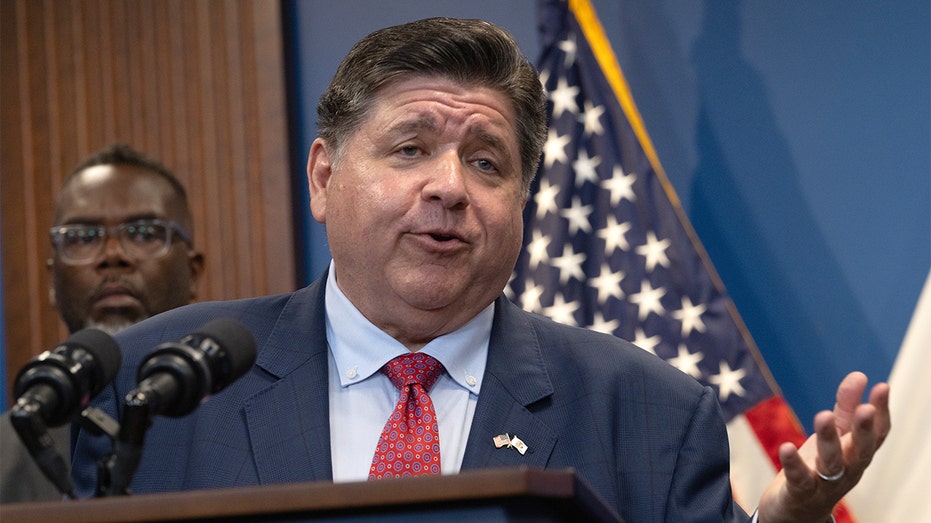
Illinois Gov. JB Pritzker on Friday signed legislation that will allow eligible terminally ill adult patients to obtain life-ending medication in consultation with their doctors, making Illinois the latest state to authorize physician-assisted suicide for people with a prognosis of six months or less. The law, known as the Medical Aid in Dying bill or “Deb’s Law,” will take effect in September 2026 to allow participating healthcare providers and the Illinois Department of Public Health (IDPH) time to implement stringent processes and protections. Deb Robertson, a lifelong Illinois resident with a rare terminal illness who the bill was named after, said in a statement she “know[s] the end for me could be near. But I’m pleased to have been able to play some role in ensuring that terminally ill Illinoisans have access to medical aid in dying.” ‘LOVE YOU FOREVER’ AUTHOR MAY SOON DIE BY ASSISTED SUICIDE, PRO-LIFE GROUPS CALL DECISION ‘HEARTBREAKING’ Pritzker, a Democrat, wrote in a news release the legislation will help terminal patients “avoid unnecessary pain and suffering at the end of their lives,” and will be “thoughtfully implemented so that physicians can consult patients on making deeply personal decisions with authority, autonomy and empathy.” The ACLU of Illinois applauded the new measure, saying terminally ill patients living in Illinois will “no longer have to agonize about spending their remaining days fearful of a painful death.” While Pritzker’s office included a quote from Chicago Episcopalian minister Rev. Judith Doran supporting the law, other groups, including the Catholic Conference of Illinois, released statements opposing any legislation that would legalize assisted suicide. “Proponents argue that this legislation will end suffering at the end-of-life,” the Catholic Bishops of Illinois wrote in a September statement. “Assisted suicide is not the compassionate solution for those who are suffering. Through palliative care, expanded access to mental health care, and stronger family and community support, providers and families are finding better ways to accompany these people compassionately that truly confer the love for, and dignity of, each human life.” ‘UNTOLD DAMAGE’: GLOBAL ASSISTED SUICIDE MOVEMENT TARGETS CHILDREN They added “unintended consequences” of legalized assisted suicide include documented cases of people being denied life-saving medical treatment by insurance companies in lieu of the much cheaper option of life-ending drugs. “The poor and those with disabilities are particularly in jeopardy as they are the most vulnerable to such abuses,” the Catholic Conference of Illinois wrote. “In response, every major national organization that represents people with disabilities is opposed to assisted suicide.” Patients must self-administer the medication, with the legislation making it a felony to coerce anyone to request the medication or forge a request. Patients who qualify and receive medication have the right to withdraw their request at any time or choose not to ingest it, according to the release. The death certificates of those who commit physician-assisted suicide under the bill will list their cause of death as an underlying terminal disease. The Thomas More Society, a national public interest law firm, claimed in a statement Friday that Illinois has “crossed a moral and legal red line.” “This is a dark and sorrowful day for Illinois. When the state signals that some lives are no longer worth living, the most vulnerable pay the price,” Thomas More Society executive vice president Thomas Olp wrote in a statement. “Instead of offering true compassion, support, and care, this law offers a fatal prescription. That is not mercy. It is abandonment.” In addition to its “grave social and moral implications,” the law firm noted the law threatens the conscience rights of physicians opposed to facilitating assisted suicide, as well as the freedom of association of religious medical institutions. While physicians, health care providers and pharmacists are not required to participate, the bill requires physicians who object to assisted suicide on moral or religious grounds to refer patients to providers who will participate in ending their lives. “The State is forcing doctors to become active participants and cooperators in a patient’s suicide—no matter if their faith, ethics, or Hippocratic Oath forbid it,” Olp wote. “This is unconscionable coercion, plain and simple. No doctor should be ordered by the government to participate, directly or indirectly, in a process that deliberately ends a human life.” Beyond the law’s compelled-referral mandate, the law also forces religious hospitals and clinics to retain staff who promote assisted deaths on-site, as long as those staff provide lethal drugs off-site. “This is a Trojan horse designed to violate and undermine the missions of religious healthcare institutions,” Olp wrote. “Gov. Pritzker’s assisted suicide law threatens the integrity of Catholic and Christian medical institutions statewide. . . . State law should never endorse the idea that suffering or sickness makes a life disposable.” If you or someone you know is having thoughts of suicide, contact the Suicide & Crisis Lifeline at 988 or 1-800-273-TALK (8255).
Dem lawmakers cry foul as Hochul guts AI safety bill amid Big Tech pressure
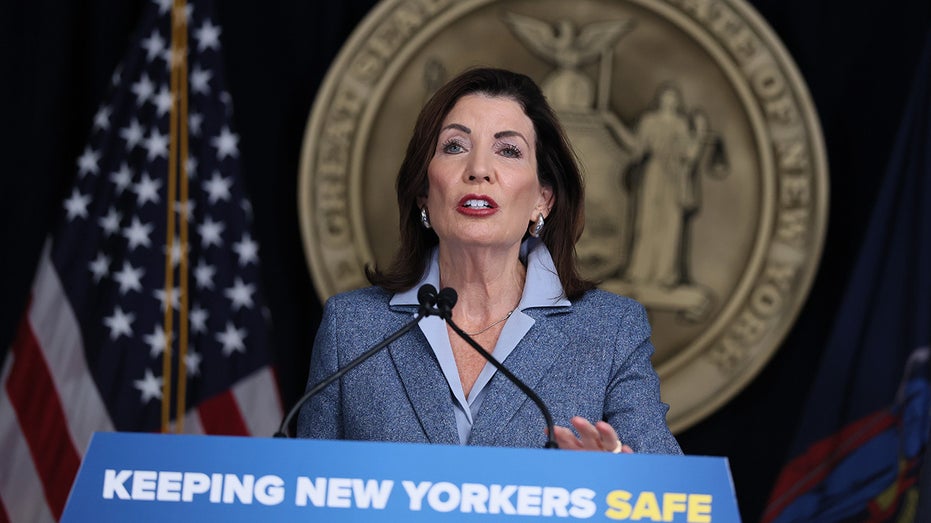
New York State Assemblyman Alex Bores, D-73, who is leading an effort to enact tighter safety regulations in the state for the country’s largest artificial intelligence developers, has attributed pressure from Big Tech to Gov. Kathy Hochul’s decision to rewrite his bill. Just before President Donald Trump signed an executive order aimed at undercutting state-level AI regulations, news broke that Hochul had severely watered down a state-level bill targeting some of the industry’s biggest players, attempting to force them to implement stricter safety measures. Her amendments reportedly mirrored a California measure more favorable to major AI firms. In response to Bores’ work on the bill, the RAISE Act, the progressive state lawmaker who is running for Congress to replace Rep. Jerry Nadler, D-N.Y., says he has been the target of a $100 million ad campaign bankrolled by some of the biggest leaders in the AI industry, such as OpenAI President Greg Brockman and the major AI venture capital firm Andreessen Horowitz. TRUMP SAYS EVERY AI PLANT BEING BUILT IN US WILL BE SELF-SUSTAINING WITH THEIR OWN ELECTRICITY “My reaction was, ‘Oh, this is a message to the governor’ — this is not just about defeating me,” Bores told Rolling Stone after Hochul amended his bill. “They want the governor to be intimidated by the idea they might target her next.” “NY can be a leader on critical AI safety, or we can cave to the pressure of the same Big Tech and VC bullies pushing Trump’s AI safety ban,” New York State Sen. Andrew Gounardes, D-26, the Senate sponsor of the RAISE Act, said on X. “I know which side I’m fighting on.” The RAISE Act, in its original form, sought to compel a select few of the most advanced AI developers to implement specific safety protocols, including requirements to write detailed safety and security protocols that must then be followed, report incidents of serious harm within 72 hours to the New York attorney general and a prohibition on the release of new models that could pose “unreasonable risk.” But Hochul’s rewrite removed the prohibition on new AI models that could pose “unreasonable” risk, extended the reporting threshold to 15 days and weakened penalties against AI companies, among other revisions that scaled back the bill’s restrictions. KYRSTEN SINEMA WARNS US ADVERSARY WILL PROGRAM AI WITH ‘CHINESE VALUES’ IF AMERICA FALLS BEHIND IN TECH RACE “AI oligarchs want to take over our safety, our workforce and our minds for their own personal profit and power,” Bores told Fox News Digital when reached for comment. “They’ve already bought the White House and are trying very aggressively to try to buy statehouses, too. That can’t happen, and I won’t let it.” Some tech experts, including TechNYC’s Julie Samuels, argue that aligning the RAISE Act with California’s standards is actually a wise move because it will “help create a de facto national standard” that does not exist. When reached for comment, Hochul’s office pointed to an “absence of federal leadership on responsible AI” and asserted that New York has been “leading with commonsense laws to protect children, families and consumers.” “Our approach should be a model for the nation,” a Hochul spokesperson said. “Gov. Hochul has been at the forefront of the innovation economy and remains committed to advancing AI responsibly as she reviews the legislation.” On Thursday, not long after news broke of Hochul’s rewrite, Trump signed an executive order aimed at creating a federal regulatory framework that would undercut state regulatory efforts on AI. During the signing ceremony from the White House Thursday evening, Trump said he thinks there will only be “one winner” in the global AI arms race, likely the U.S. or China. Trump said China holds an advantage because of its centralized regulatory structure, while the U.S. “has to get 50 different approvals from 50 different states,” slowing development of new AI centers. “We want to have one central source of approval,” Trump said. According to senior Trump advisor Will Scharf, more than 1,000 bills aimed at regulating artificial intelligence are moving through state legislatures.
Trump-backed military right to repair plan stripped from Congress’ final defense bill

The final legislation governing Pentagon spending dropped a bipartisan provision that would have guaranteed the military the right to repair its own equipment, prompting immediate criticism from its authors, Sens. Elizabeth Warren, D-MA, and Tim Sheehy, R-MT, who accused Congress of siding with defense contractors over service members. Both chambers had passed versions of the reform, and the White House publicly supported the measure, which would have required contractors to provide the Pentagon with the technical data needed to perform repairs in-house — rather than flying out manufacturer technicians at added cost. The final National Defense Authorization Act (NDAA) omits that mandate, a move Warren and Sheehy say will leave troops facing the same barriers to fixing equipment whenever contractors assert proprietary rights. “For decades, the Pentagon has relied on a broken acquisition system that is routinely defended by career bureaucrats and corporate interests. Military right to repair reforms are supported by the Trump White House, the Secretary of War, the Secretary of the Army, the Secretary of the Navy, entrepreneurs, small businesses, and our brave servicemembers,” Warren and Sheehy said after the text of the legislation was released. “The only ones against this common-sense reform are those taking advantage of a broken status quo at the expense of our warfighters and taxpayers.” The Government Accountability Office (GAO) repeatedly has warned that the Pentagon’s lack of access to technical data is one of the biggest drivers of soaring sustainment costs, estimating that broader repair rights could save the department “billions” of dollars over the life cycles of major weapons systems. SEN ROGER WICKER: THE PENTAGON NEEDS MAJOR REFORM. NOW IS OUR CHANCE GAO reviews of aircraft, ships and ground vehicles have found that when contractors retain exclusive control over repair information, the military is forced into long-term vendor support arrangements that are far more expensive than in-house maintenance. In several cases, GAO concluded that obtaining necessary data earlier in the acquisition process would have given the Pentagon more flexibility, reduced downtime, and lowered costs for everything from software fixes to depot-level repairs. Sources familiar with the NDAA negotiations claimed that, behind closed doors, lobbyists had persuaded leaders on the House and Senate Armed Services Committee to drop the more aggressive right to repair language. “This is a textbook case of the swamp prevailing at the expense of our warfighters and government efficiency,” one source said. “Does (War Secretary Pete) Hegseth realize that Boeing just knocked the legs out from our warriors?” A spokesperson for the House Armed Services Committee said: “The Committee is committed to addressing the right to repair issue in a manner that ensures our warfighters have the data they need to effectuate repairs while preserving the intellectual property of private industry.” “The FY26 NDAA requires the Department to audit its contracts to determine where they are missing data rights they need and determine whether any missing data rights is the result of a defective law or a defective contract. If the law is defective, the department needs to make recommendations to Congress on how to fix it.” Watchdogs also questioned the weaker compromise. “The provisions are nowhere near strong enough,” said Greg Williams of the Project on Government Oversight. “They help catalog the problem, but they don’t really do anything to solve it.” Williams added that the original proposals “acknowledged the cost and committed to paying fair, reasonable prices to vendors for that intellectual property,” countering industry arguments that the bill would have seized or devalued contractors’ data. CONGRESS UNVEILS $900B DEFENSE BILL TARGETING CHINA WITH TECH BANS, INVESTMENT CRACKDOWN, US TROOP PAY RAISE Industry groups defended their opposition. “This debate is not about ensuring equipment and technology can be repaired in contested environments; commanders already have broad authority to keep mission-critical systems operational,” said Marta Hernandez, spokesperson for the Aerospace Industries Association. “Our concern with the Senate proposal is its sweeping mandate for government takeover of IP — without regard to necessity or cost. ‘One size fits all’ doesn’t work for our troops or for the industry that equips them.” But military officials and watchdogs say that while commanders can authorize emergency fixes, that authority does not give units the technical data, software access, or parts needed to actually perform repairs. They argue that crews remain dependent on contractors even when they have the skills to fix the equipment themselves. Instead of requiring contractors to provide repair data, the final NDAA directs the Pentagon to create a database cataloging what technical information it currently has and to “request options” from contractors when data is missing. Critics say the language has no enforcement mechanism and leaves manufacturers free to refuse, preserving the contractor-controlled repair model the reform sought to change. The Trump administration had backed the reform, with Statements of Administration Policy supporting both the House and Senate versions earlier in the fall. Service secretaries also endorsed the effort, and War Secretary Pete Hegseth issued new acquisition guidance in November instructing the military to plan for “organic depot-level maintenance and repair” in major systems. US COULD LOSE NEXT MAJOR WAR DUE TO PENTAGON’S ‘BROKEN’ ACQUISITION SYSTEM In May 2025, Army Secretary Daniel Driscoll publicly pledged that the Army would ensure right-to-repair provisions were included in future Army contracts — aligning the service with the broader congressional push for greater access to technical data. But advocates said a service-by-service approach wasn’t enough and pushed to codify and expand right to repair across all branches to prevent contractors from controlling critical maintenance information. The F-35 program offers one of the clearest examples of how restricted repair rights drive up costs. GAO has found that the Pentagon still lacks key technical data needed to perform many F-35 repairs organically, forcing the services to rely on Lockheed Martin and its subcontractors for everything from software maintenance to component overhauls. That dependence has helped push sustainment costs so high that the Pentagon warns it cannot afford to operate the planned fleet without major changes. GAO reported that greater access to repair
N Korea’s Kim hails ‘ever-victorious’ army’s role in war against Ukraine
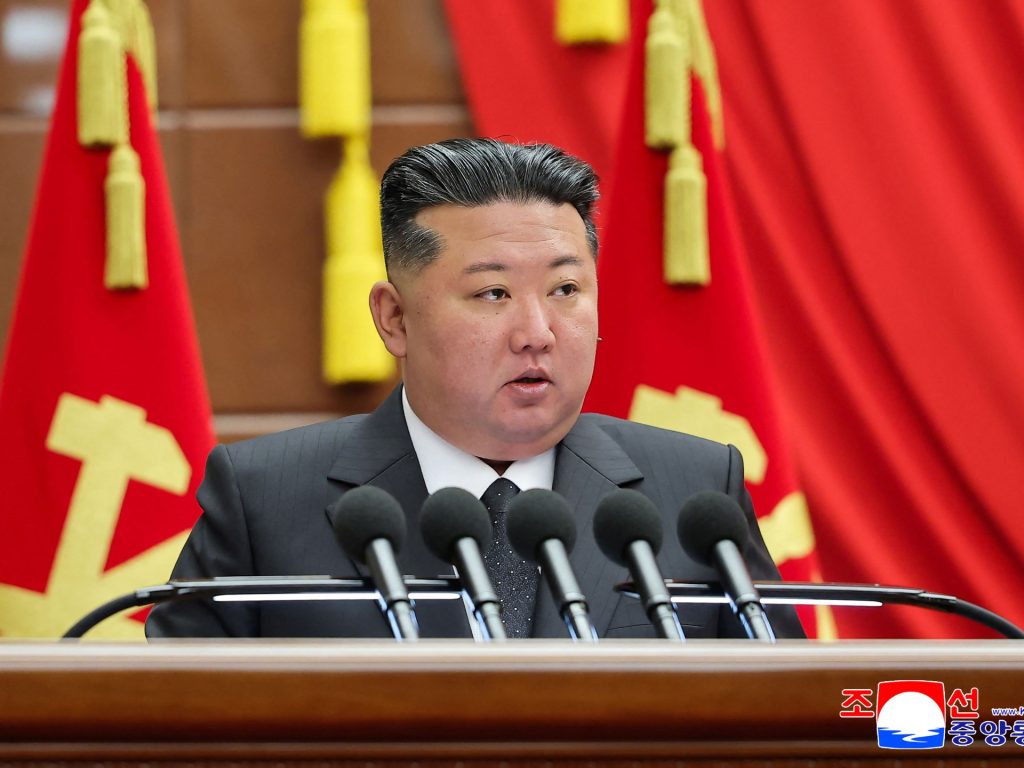
North Korea’s Kim Jong Un tells key party meeting that fighting alongside Russia demonstrates the ‘prestige of our army’. Published On 12 Dec 202512 Dec 2025 Click here to share on social media share2 Share North Korea’s Kim Jong Un praised the deployment of his troops in support of Russia’s war against Ukraine and promised to root out “evil practices” among some officials, state media reports. In remarks concluding a key meeting of his ruling party on Thursday, Kim condemned “the wrong ideological viewpoint and inactive and irresponsible work attitude” of some officials, the state-run Korean Central News Agency (KCNA) said. Recommended Stories list of 4 itemsend of list He also spoke of “shortcomings and evil practices that must be corrected”, KCNA said on Friday. The North Korean news organisation did not offer any specifics regarding the targets of Kim’s comments, though it did say the ruling party had revealed numerous recent “deviations” in discipline – a euphemism often used to refer to corrupt practices. Wrapping up the three-day meeting, Kim reserved praise for the North Korean soldiers fighting against Ukraine alongside Russia, of whom at least 600 have been killed and thousands more injured in the war, according to South Korean estimates. “Over the past year, various soldiers of our military have participated in overseas military operations to demonstrate the reputation of our military,” KCNA said, quoting Kim. The military deployment in support of Russia “demonstrated to the world the prestige of our army and state as the ever-victorious army and genuine protector of international justice”, Kim added. The North Korean leader also hailed efforts this year in “modernising” his country’s defences in the face of great “global geopolitical and technological changes”. Advertisement South Korea’s official Yonhap news agency said Kim had assessed that bolstering military capabilities was an “exact direction to ensure the security and defence of the country”. The meeting of Kim’s ruling Workers’ Party of Korea (WPK) comes in advance of a party congress that is scheduled for early next year. The Ninth Party Congress, which is due to be held in January or February, is expected to see North Korea unveil its policy approach to dealing with the United States and South Korea, as well as policies on the economy and defence, Yonhap reports. The congress will be watched closely, Yonhap said, to determine “whether North Korea will codify Kim’s ‘two hostile states’ stance in the party’s rules as experts forecast Pyongyang to intensify its animosity to Seoul in the new year”. South Korean President Lee Jae Myung has taken several steps to ease tensions with the North since taking office in June, including removing propaganda loudspeakers along the border and banning the dropping of anti-Pyongyang leaflets. Lee also said he was considering an apology to Pyongyang over cross-border provocations allegedly ordered by his predecessor, disgraced ex-President Yoon Suk-yeol. Yoon allegedly ordered drones carrying propaganda leaflets to fly over the North, in a bid, say prosecutors who have indicted the former president, to provoke military tension and boost his political support. Kim has so far rebuffed Lee’s efforts, saying he has no interest in dialogue with the South Korean leader. Adblock test (Why?)
‘Catastrophic flooding’ in North America’s Pacific Northwest as rains ease

Intense downpours were swept into the region this week by an ‘atmospheric river’ storm system from the Pacific Ocean. By News Agencies Published On 12 Dec 202512 Dec 2025 Click here to share on social media share2 Share Intense rains that triggered “catastrophic flooding” in North America’s Pacific Northwest have finally eased, though meteorologists warn the effects of overflowing rivers and floodwaters will continue to be felt for several days. Tens of thousands of people were told to evacuate on Thursday across the US states of Oregon and Washington, up through the Canadian province of British Columbia, after rainstorms battered the region for several days, causing rivers to burst their banks. Recommended Stories list of 3 itemsend of list Western Washington state has borne the greatest brunt of the storm, with roughly 100,000 residents under “Level 3” evacuation orders. State authorities have ordered people living south of the cities of Seattle and Tacoma to leave their homes, with aerial photographs showing farmland already under water, and populated areas perilously close. In the city of Orting, south of Seattle, authorities warned there is a “significant threat to life and or property”. There have been no reports of casualties or missing people due to the flooding, according to Karina Shagren, spokesperson for Washington’s emergency management division. Rescue personnel prepare to evacuate residents from a home in an area flooded by the Snohomish River, as an atmospheric river brings rain and flooding to the Pacific Northwest, in Snohomish, Washington, US, on December 11, 2025 [David Ryder/Reuters] Across the border in British Columbia, swaths of the Canadian city of Abbotsford, east of Vancouver, were swamped as of Thursday night, with hundreds of properties at risk. Advertisement Five of the six highways leading in and out of Vancouver were also closed due to floods, falling rocks and the risk of avalanches, the province’s Ministry of Transport said, describing the situation as “evolving and very dynamic”. The main highway route between Vancouver and Seattle remains open. The intense downpours were swept into the Pacific Northwest region earlier this week by an atmospheric river, a vast airborne current of dense moisture funnelled inland from the Pacific Ocean. The storm system, which dumped more than 250mm (10 inches) of rain in some places, also brought heavy showers and flooding as far away as western Montana and the edge of northern Idaho. Though the downpour began to lessen on Thursday, the after-effects are expected to linger across the region as high volumes of water make their way through swollen river systems. “While drier weather looks to be in store for this area of the country through the upcoming weekend, the major … catastrophic flooding effects are likely to continue for several days across portions of western Washington State and northwestern Oregon,” the US National Weather Service said. The National Water Center has issued an updated Key Messages for the ongoing Catastrophic flooding impacts this week in Washington. More info: https://t.co/UZ3ekqUUkq #flooding #wawx pic.twitter.com/KwdS8a9T5y — National Water Center (@nwsnwc) December 11, 2025 Adblock test (Why?)
Magnitude 6.7 earthquake hits Japan’s northeast, tsunami warning issued
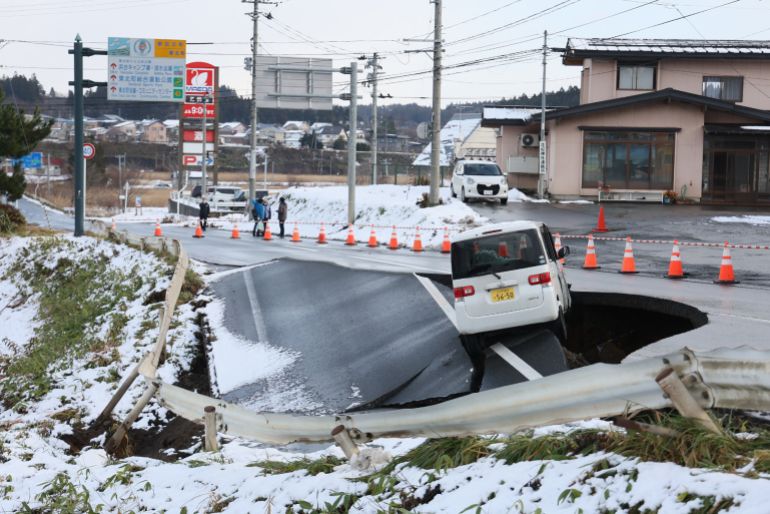
DEVELOPING STORYDEVELOPING STORY, A tsunami warning has been issued following a strong quake off northeast coast of Japan. Published On 12 Dec 202512 Dec 2025 Click here to share on social media share2 Share An earthquake with a preliminary magnitude of 6.7 has hit Japan’s northeastern region, prompting a tsunami advisory from the Japan Meteorological Agency (JMA). The earthquake struck on Friday off the coast of Aomori Prefecture at 11:44am local time (02:44 GMT) at a depth of 20km (12.4 miles), according to the JMA. Recommended Stories list of 4 itemsend of list The United States Geological Survey (USGS) also said that the quake measured 6.7. Japan’s Nuclear Regulation Authority said there were no immediate signs of abnormalities at the region’s nuclear facilities. National broadcaster NHK said that the level of shaking from the quake was less than a bigger magnitude 7.5 earthquake that hit in the same region on Monday and tore apart roads, smashed windows and triggered tsunami waves of up to 70 centimetres (2.3ft). Following Monday’s quake, which injured at least 50 people, the JMA issued a rare special advisory warning to residents across a wide area, from Hokkaido in the north to Chiba, east of Tokyo, to be on alert for an increased possibility of a powerful earthquake hitting again within a week. The northeast region is haunted by the memory of a massive magnitude 9.0 undersea quake in 2011, which triggered a tsunami that left about 18,500 people dead or missing. The JMA issued its first special advisory in 2024 for the southern half of Japan’s Pacific coast, warning of a possible “megaquake” along the Nankai Trough. The government has said that a quake in the Nankai Trough and subsequent tsunami could kill as many as 298,000 people and cause up to $2 trillion in damages. Advertisement Amid fears of a “megaquake”, NHK reported on Thursday that people in the northeast of Japan were stocking up on disaster-related goods such as torches, water storage tanks and support poles to prevent furniture from toppling over due to tremors. One shop in Hokkaido’s Hakodate city reported sales of bottled water and disaster kits tripling following Monday’s quake. “We decided to prepare, so I bought disaster kits for everyone,” a male customer in his 30s told NHK while visiting a shop with his family. Japan sits on top of four major tectonic plates along the western edge of the Pacific “Ring of Fire” and is one of the world’s most seismically active countries. A vehicle rests on the edge of a collapsed road in the town of Tohoku in Aomori Prefecture, on December 9, 2025, following a magnitude 7.5 earthquake off the coast of northern Japan [JIJI Press/AFP] Adblock test (Why?)
Goa nightclub fire: CM Pramod Sawant says, ‘will bring Luthra brothers back’, orders closure of restaurants violating norms
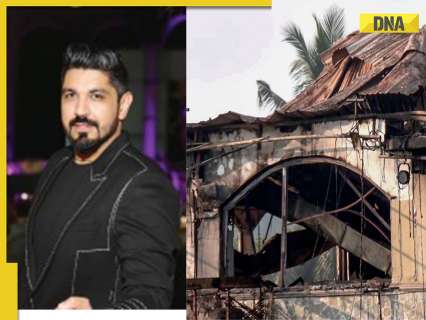
After Luthra brothers – Gaurav Luthra and Saurabh Luthra, wanted in connection with the tragic fire at Goa’s Birch Hotel, were detained in Thailand, Goa Chief Minister Pramod Sawant reaffirmed that strict action will be taken against them.
PM Modi set to visit Jordan, Ethiopia, and Oman next week; check details

PM Modi will visit Ethiopia in the second leg of his visit from December 16 to 17. This will be his first visit to the African country. He will hold wide-ranging discussions with Prime Minister Abiy Ahmed Ali on all aspects of India-Ethiopia bilateral ties.