

Big Beautiful Bill immediately hits the campaign trail in battle for Congress
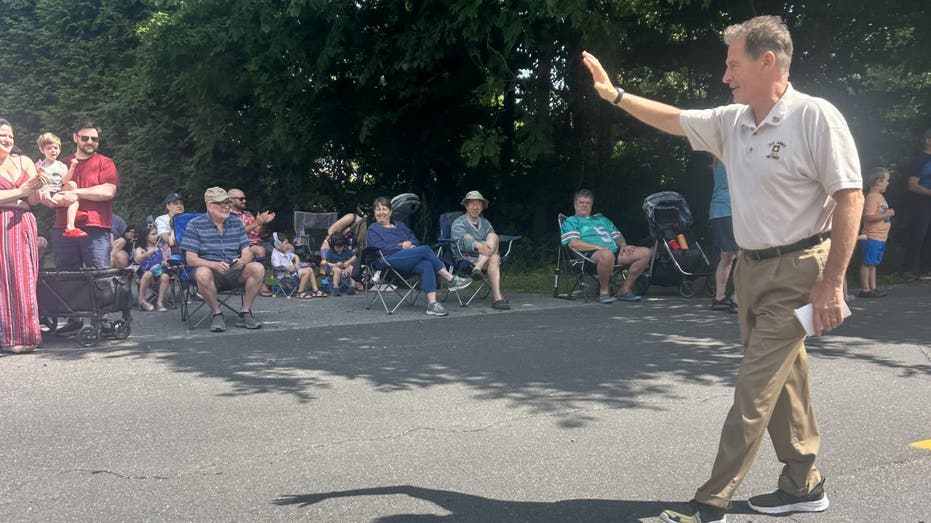
President Donald Trump signs the sweeping Republican-crafted domestic policy package that he and the GOP call the “One Big Beautiful Bill,” into law on Friday at the White House. The massive tax cuts and spending bill passed the House and Senate this week by razor-thin margins along near party lines. But the political battle over the bill is far from over, as it moves from Capitol Hill to the campaign trail. “I’m deeply concerned about this bill and what this will do. We’re going to be talking a lot about it,” Democratic Rep. Chris Pappas of New Hampshire told Fox News Digital on Friday. GAME ON: REPUBLICANS, DEMOCRATS, TRADE FIRE OVER BIG, BEAUTIFUL BILL Pappas, who’s running in the crucial 2026 race to succeed retiring longtime Sen. Jeanne Shaheen for a Democrat-held seat Republicans would love to flip, took aim at the bill. “This was a one-party effort and unfortunately it arrived at a conclusion that I think is not good for our state and for our country,” TRUMP TOUTS ‘BIG BEAUTIFUL BILL’ IS ‘VERY POPULAR’ DESPITE POLLING Former Republican Sen. Scott Brown, who last month announced his candidacy for the Senate, sees things differently, and he praised the president for helping GOP leaders in Congress get the bill to his desk at the White House. “The things he said he was going to do, he’s actually done. For somebody in politics to actually do that I think is very rare,” Brown said of Trump. The bill is stuffed full of Trump’s 2024 campaign trail promises and second-term priorities on tax cuts, immigration, defense, energy and the debt limit. It includes extending his signature 2017 tax cuts and eliminating taxes on tips and overtime pay. By making his first-term tax rates permanent – they were set to expire later this year – the bill will cut taxes by nearly $4.4 trillion over the next decade, according to analysis by the Congressional Budget Office and the Committee for a Responsible Federal Budget. ‘BIG BEAUTIFUL BILL ON WAY TO WHITE HOUSE AFTER NARROWLY PASSING FINAL HURDLE IN CONGRESS The measure also provides billions for border security and codifies the president’s controversial immigration crackdown. And the bill also restructures Medicaid — the nearly 60-year-old federal program that provides health coverage to roughly 71 million low-income Americans. Additionally, Senate Republicans increased cuts to Medicaid over what the House initially passed in late May. The changes to Medicaid, as well as cuts to food stamps, another one of the nation’s major safety net programs, were drafted in part as an offset to pay for extending Trump’s tax cuts. The measure includes a slew of new rules and regulations, including work requirements for many of those seeking Medicaid coverage. And the $3.4 trillion legislative package is also projected to surge the national debt by $4 trillion over the next decade. Democrats for a couple of months have blasted Republicans over the social safety net changes. “We’re going to be talking about this bill because the results are that 46,000 people in New Hampshire will lose their health insurance. We’ll have people that will go hungry, that won’t be able to access assistance,” Pappas warned. “And we know that insurance premiums for all Granite Staters could go up as a result of uncompensated care costs and the burden that this places on our hospitals.” The four-term congressman, who was interviewed by Fox News on Friday as he arrived for the annual July 4th naturalization ceremony in Portsmouth, New Hampshire, noted that “we’ve been hearing from folks and engaging with people all across the state on this issue.” Democrats have spotlighted a slew of national polls conducted last month that indicate the bill’s popularity in negative territory. By a 21-point margin, voters questioned in the most recent Fox News national poll opposed the bill (38% favored vs. 59% opposed). HEAD HERE FOR THE LATEST FOX NEWS POLLING The bill was also underwater in other national surveys conducted last month by the Washington Post (minus 19 points), Pew Research (minus 20 points) and Quinnipiac University (minus 26 points). About half of respondents questioned in the Fox News poll said the bill would hurt their family (49%), while one quarter thought it would help (23%), and another quarter didn’t think it would make a difference (26%). Asked about criticism from Democrats on the Medicaid cuts, Brown said “my mom was on welfare. Those are very important programs and I’ve said already that the people that actually need them the most, the ones who are disabled, the ones who can’t get out and work, they should have them.” “It’s meant for lower and middle-income people and I support them getting those benefits. But I don’t support who are here illegally get them,” Brown said. And he added that he doesn’t support giving the benefits to “people who are able-bodied and can absolutely go out and do some volunteerism, go out and work.” WHAT’S ACTUALLY IN TRUMP’S ‘BIG BEAUTIFUL BILL’ Republicans are also going on offense over the bill, targeting Democrats for voting against the tax cuts. Republicans are shining a spotlight on recent polls conducted by GOP-aligned groups that indicate strong support for the bill due to the tax cut provisions. Brown, who was interviewed by Fox News after he marched in the annual Brentwood, New Hampshire July 4th parade, said “obviously keeping the 2017 tax cuts in place. Certainly for individuals and businesses, it’s really really critical.” And pointing to Pappas, whose family for over a century has owned Manchester’s iconic Puritan Backroom restaurant, Brown said “for someone like Chris Pappas, imagine walking into the restaurant he owns and telling his employees ‘oh by the way I’m not going to support your no tax on tips, your no tax on overtime.’ How do you do that?” Asked about the GOP attacks, Pappas said “I support targeted tax cuts for working people, for our small businesses and to make sure we are targeting that relief to the people that need it,
Adams, Cuomo push probe into Mamdani’s college race claim; Sliwa slams it as distraction
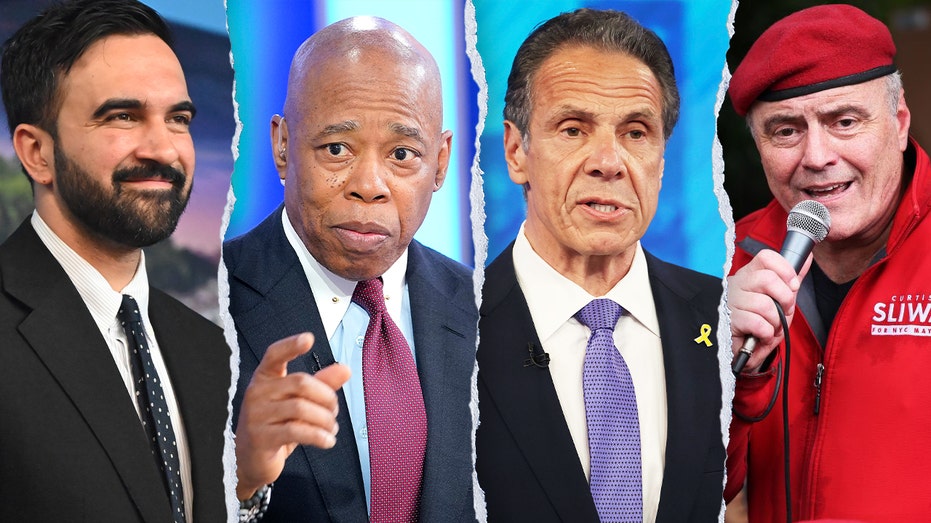
New York City Mayor Eric Adams and former Gov. Andrew Cuomo are calling for a full investigation into allegations that Zohran Mamdani falsely identified himself as African American on his Columbia University application. However, Republican nominee Curtis Sliwa says the controversy is a distraction from Mamdani’s socialist agenda and only turns him into a victim, energizing his supporters and swaying undecided voters. Both Adams and Cuomo warned that Mamdani’s alleged racial misrepresentation could signal deeper deceit — with the Adams campaign calling the move “possibly fraudulent” and Cuomo’s campaign warning it might be “just the tip of the iceberg.” CURTIS SLIWA VOWS TO STAY IN NYC MAYORAL RACE AS DONORS PLOT TO STOP MAMDANI Mamdani, the Democratic nominee for mayor of New York City, identified as “Black or African American” on his 2009 Columbia University application, even though he now says he does not consider himself Black, The New York Times reported Thursday. Mamdani, then a high school senior, also checked “Asian” and reportedly wrote in “Ugandan” in the space for additional background. He was ultimately not accepted to Columbia, even though his father is a professor at the elite school. He was not a U.S. citizen at the time. Mamdani told The Times he identifies as “an American who was born in Africa,” and said checking multiple boxes was an effort to reflect his “complex background” and not to gain an edge in the competitive admissions process. However, Adams condemned Mamdani’s actions as “an insult to every student who got into college the right way.” “The African American identity is not a checkbox of convenience,” Adams said. “It’s a history, a struggle, and a lived experience. For someone to exploit that for personal gain is deeply offensive.” Rich Azzopardi, a spokesperson for the Cuomo campaign, echoed the calls from the Adams camp. “This should come as no surprise as Mamdani — his proposals, his funding, and his background — received absolutely no scrutiny,” Azzopardi said. “This issue must be fully investigated because, if true, it could be fraud and just the tip of the iceberg.” Adams is running as an Independent, having been elected as a Democrat in late 2021, while Cuomo is weighing an independent route to Gracie Mansion, having lost to Mamdani in the Democratic primary. ACKMAN BACKS ADAMS TO STOP SOCIALIST MAMDANI, CALLS ON CUOMO TO DROP OUT Sliwa, on the other hand, is taking the high road and sees the controversy as a political distraction that will only help Mamdani’s cause. “There’s so much we can criticize Zoran for…to me, what are we doing here?” Sliwa told Fox News Digital. “We’re making him a martyr. We’re victimizing Zohran and getting away from the issues of why his election would be a threat to New York City. “He’s being attacked as a Muslim, he’s being mocked for how he eats in a video. Stop that. You’re enraging people who might otherwise disagree with him on the issues. You’re galvanizing his support.” Mamdani’s win has caused a political earthquake in the Big Apple, striking fear into moderates, independents, conservatives — and even parts of the Democrat Party — who believe his socialist policies could have devastating and long-lasting consequences on the financial capital of the world. Mamdani ran on a platform that included economic policies aligned with progressives and socialists in the Democratic Party, such as a $30 minimum wage, tax hikes on businesses and the rich, and other policies, like creating city-owned grocery stores and imposing a rent freeze for stabilized tenants. Sliwa warned critics that critics are handing Mamdani a political gift. “Even people who don’t agree with him on the issues will rally to his defense when they think the attacks are unfair or over the top,” Sliwa added. “Let’s get back to the issues where there are clear differences between how Zohran Mamdani wants to run the city and the way I want to run this city — or Eric Adams or Andrew Cuomo. Stop this, you’re just victimizing him.” The Adams campaign is calling on Columbia University to publicly release Mamdani’s 2009 admissions records, clarify whether his non-citizen status influenced admissions or financial aid decisions, and conduct a formal review to determine whether any university policies were violated. “We need answers,” Adams spokesperson Todd Shapiro said. “Because the people of New York deserve to know whether the man asking for their vote built his career on a possibly fraudulent foundation.” Fox News Digital reached out to the Mamdani campaign about the controversy and his opponents’ takes on it but did not immediately receive a response. Mamdani told The Times that aside from those college forms, he doesn’t recall ever identifying as Black or African American. His parents are both of Indian descent. His father, Columbia professor Mahmood Mamdani, has lived in East Africa for generations, but Mamdani said there had been no intermarriage in the family with native African groups. Mamdani has leaned into his South Asian and Muslim identity on the campaign trail. During a June speech at Al Sharpton’s National Action Network, he also stressed his African roots, saying, “I was born in Kampala, Uganda… I was given my middle name, Kwame, by my father, who named me after the first Prime Minister of Ghana.” Fox News’ Jasmine Baehr contributed to this report.
Piyush Goyal makes BIG statement on India-US trade deal, says, ‘Deal is accepted only when…’
India does not enter into any trade agreement based on deadlines and will accept the proposed trade deal with the US only when it is fully finalised, properly concluded and in the national interest, Union Commerce Minister Piyush Goyal said on Friday. Read on to know more on this.
PM Modi conferred with Trinidad and Tobago’s highest honour: ‘Accept it on behalf of 140 crore Indians’
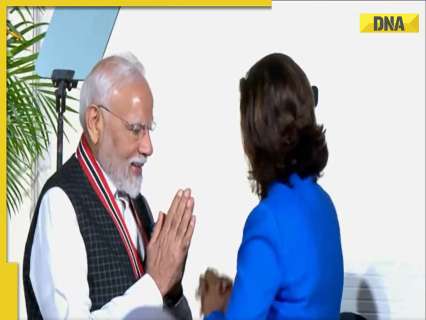
Prime Minister Narendra Modi was conferred with ‘The Order of the Republic of Trinidad and Tobago’ (ORTT) on Friday, the highest honour of the nation, during a ceremonial event at the President’s House in Port of Spain.
One tick and ‘anti-Semitic’ fruit: The curse of being Palestinian
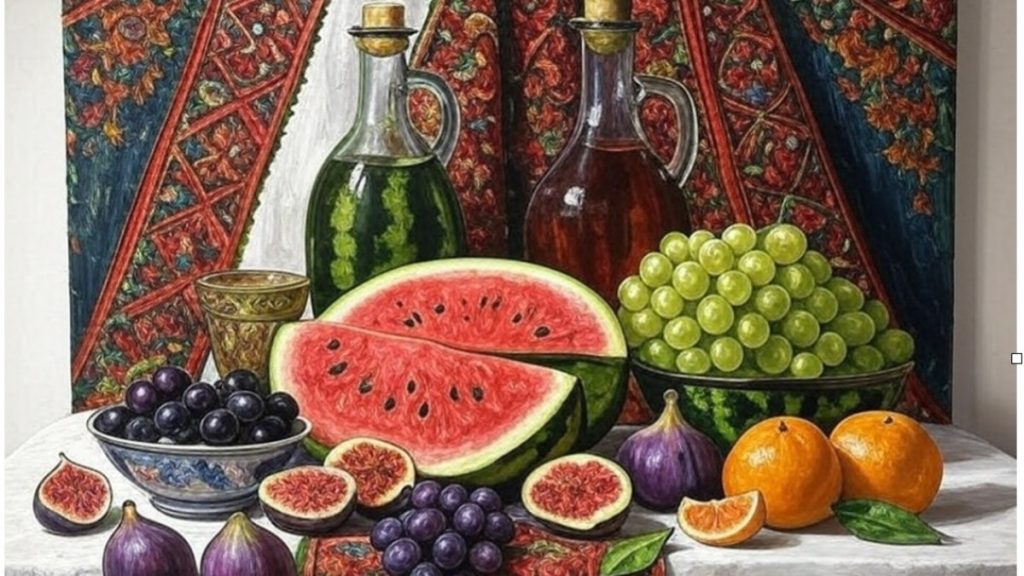
It was a normal Teams meeting at the end of a busy week. Colleagues were discussing the hospital weekend plans. I was there too, nodding, half-present. My mind was elsewhere – on a message I’d sent earlier that morning to a friend in Gaza. I glanced at my phone. One tick. WhatsApp users know the signs: one tick means the message was sent. Two ticks mean it was received. Two blue ticks, it was read. For most people, it’s a minor delay. But when you’re texting a Palestinian friend in Gaza during a war, one tick carries a sense of dread. Maybe his phone’s out of charge – normal in a place where power was cut off 20 months ago. Maybe there’s no service – Israel often cuts communication during attacks. But there’s a third possibility I don’t allow myself to think about, even though it’s the most likely outcome if you are living through a genocide. Still one tick. Back in the meeting. We wrap up. Plans are made and people start to think about their own weekend plans. I glance again. Still one tick. This is the curse of being Palestinian. Carrying the weight of your homeland, its pain, its people – while being expected to function normally, politely, professionally. Then, I was told my Teams background was “potentially anti-Semitic.” It was a still-life image: figs, olives, grapes, oranges, watermelon, and a few glass bottles. A quiet nod to my culture and roots. But in today’s climate, even fruit is political. Any symbol of Palestinian identity can now be interpreted as a threat. Suddenly, I was being questioned, accused, and possibly facing disciplinary action. For a background. For being Palestinian. Advertisement Still one tick. I felt silenced, humiliated, and exposed. How was my love for my culture, for art, for my people being twisted into something hateful? Why is my choice of virtual background more controversial than the devastating violence unfolding in real time? This is not isolated. Many of us – Palestinians, or anyone else who cares about Palestine – are being challenged on our humanity across organisations, all driven by external pressure. And then it happened. Two blue ticks. My friend was alive. He messaged: they fled their home in the early hours of the morning. He carried his children, walked for hours, left everything behind. No food, no shelter. But alive. How could I explain to him what had happened to me that day? That while he ran for his life, I was threatened with disciplinary action about a painting of fruit? That I was accused of racism for an image, while he was witnessing the destruction of entire families? This is what it means to be Palestinian today. To constantly navigate a world that erases your humanity, silences your voice, distorts your identity. To be told your pain is political. Your joy is provocation. Your symbols are offensive. I’ve worked in the NHS for 25 years. It’s more than a job – it’s part of who I am. And now, along with two colleagues, I’m taking legal action. Not for ourselves, but to protect the NHS from external political lobbying. To say, firmly and clearly, that our National Health Service should belong to its patients and its staff – not to those who seek to silence, intimidate or twist it into serving a toxic agenda. What happened to me is not just unjust – it is unlawful. Speaking up against genocide is not only my moral responsibility as a human being, but also my right as a British citizen in a democratic society. I don’t write this to compare my experience with my friend’s suffering. I write it to expose the absurdity, the cruelty, of how Palestinians are treated across the world. Whether under bombs or under suspicion, we are made to justify our existence. It shouldn’t be this way. Being Palestinian is not a crime. But too often, it feels like the world treats it as one. The author is currently pursuing legal action, alongside two NHS colleagues, challenging, among other things, allegations of antisemitism. The views expressed in this article are the author’s own and do not necessarily reflect Al Jazeera’s editorial stance. Adblock test (Why?)
In Sumy, Ukraine, the front line is drawing near – but we refuse to leave
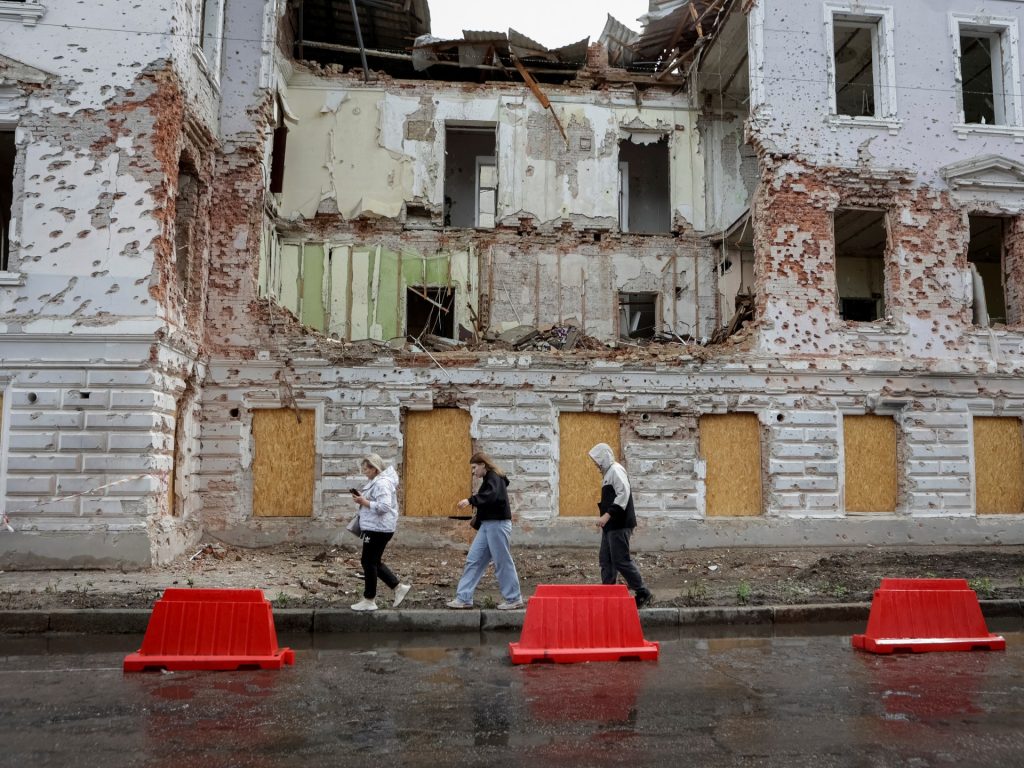
When you live in war for so long, you have to take comfort in whatever little control you have over your decisions. My city in northwest Ukraine is now just 20km (12 miles) from the front line. We all know that the front line has been getting closer in recent months. Every two or three days, there are reports that one village, another village and a third village have been occupied. Cluster munitions have already directly hit the city centre. There are constant sirens, some lasting as long as two whole days. We have got so used to them that we don’t spend the whole time in basements because, over time, people’s minds adapt. We stay outside and continue to live, knowing we are risking our lives, knowing that this coffee might be the last one. For many families in Sumy, like mine, the critical decision is whether to flee to a safer area. When this is your home, your roots, your loved ones, everything you’ve built – especially if family members aren’t planning to leave – it becomes a very complex decision. My daughter and I are staying put, though she has been sleeping in the hallway for the past few months, feeling safer there than in her bed next to the window. But with the school year now over, some families with the option are leaving the city – for a summer camp, a grandparents’ house – before reassessing the situation. Some have packed up and left for good. I feel the children’s absence in the classes I facilitate through the local organisation League of Modern Women, supported by Save the Children. One day, a child is enjoying the lessons. The next day, they’re gone. These classes continue bringing joy to children – giving them some sense of normality, moments of joy and a glimpse of a real childhood. For children who have been limited to online learning for months, even years, it is the only opportunity they have to interact with others in person. And they are supporting one another, building resilience. Advertisement The classes for small children encourage them to draw, express emotions, feelings and dreams through art and painting. They also play team games and sports and learn mindfulness and breathing techniques to keep calm during crises. With teenagers, we ask them to work together to come up with project ideas to improve their community. For example, one girl wants to create a drama club, and a boy wants a library for Japanese manga comics. We teach them how to write a project proposal, create a budget and offer mentorship. It’s refreshing – and essential – for children to escape and expand their imaginations beyond the reality of war. This is a reality that is eroding childhoods. The constant sirens have turned a decent night’s sleep – critical for children’s health and development – into a distant memory. This is a reality that has separated children from their fathers. One girl in my class was in a bad mood for a long time. Finally, she said: “I want to see Dad. He is in military service.” This is a reality that has kept children from socialising – something parents around the world will remember from the days of the COVID-19 pandemic. One boy, whose only interaction with other children for a long time was through a computer screen, started my classes struggling to communicate with others. Gradually, he has come out of his shell. Many children have had to say goodbye to friends on the move, time and again. In one class, a boy and his friend had a ukulele and wanted to sing for everyone. We said, “Of course, go ahead!” These were fourth-graders – nine- and 10-year-olds. They stood up, started playing and singing, and their classmates turned off the lights and lit up their phone flashlights. They transformed our shelter classroom into a concert hall for five minutes. It was such a joy to see them enjoying life, even if just for a few moments in a city under attack. For me, that makes my decision to stay in Sumy worthwhile. We cannot abandon the families and children here. Children need hope – and that is what our classes give. You could leave Sumy, and something could happen somewhere else. It doesn’t matter whether it’s a border city or the capital – moving in Ukraine is like playing the lottery. Safety is not guaranteed. For those of us who have made the decision to stay, every day the significance of that choice becomes clearer. If we all left, there would be no Sumy – and no one left to protect. The views expressed in this article are the author’s own and do not necessarily reflect Al Jazeera’s editorial stance. Adblock test (Why?)
Keep your America, Mr Trump, and we’ll keep our Africa
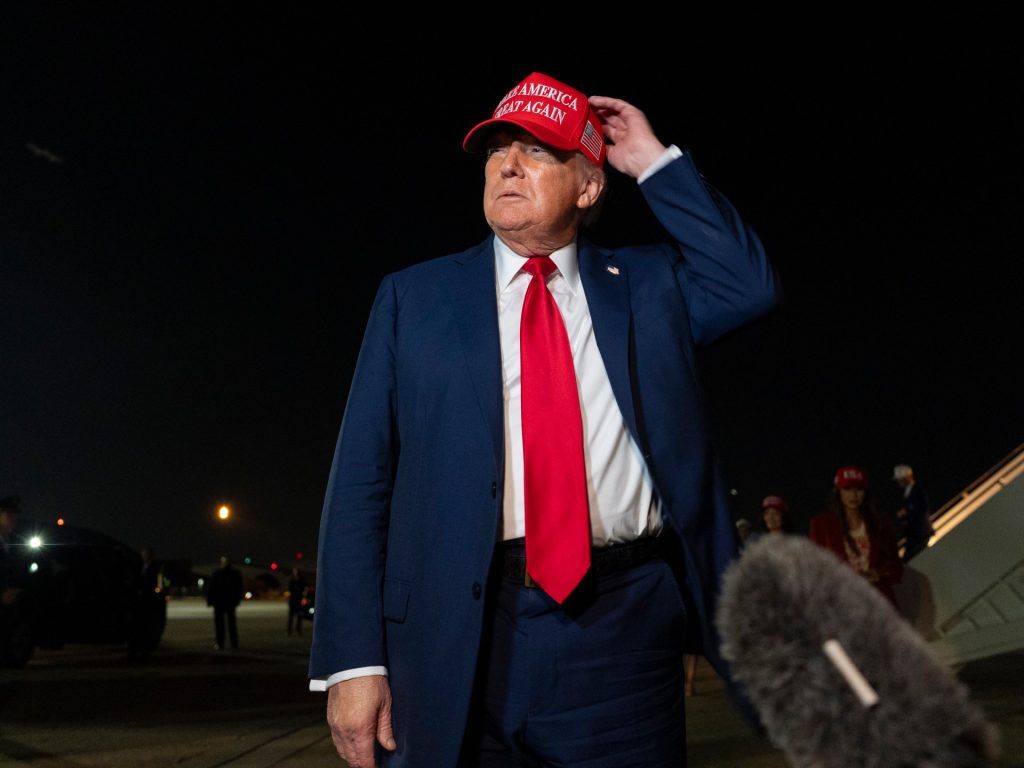
On June 16, The New York Times disclosed that United States President Donald Trump is considering broadening his travel ban list to include as many as 36 additional countries, most of them African – including my country, Zimbabwe. Twelve days earlier, Trump had enacted a proclamation barring citizens from 12 nations from entering the US. Seven of them – Chad, Congo Republic, Equatorial Guinea, Eritrea, Libya, Somalia, and Sudan – are African. He also imposed partial travel restrictions, rather than a complete ban, on individuals from Burundi, Cuba, Laos, Sierra Leone, Togo, Turkmenistan, and Venezuela. Citizens from these nations are barred from permanently relocating to the US or obtaining tourist or student visas. As promised on the campaign trail, Trump is cracking down on immigration. For the first time in my life, I now face the extraordinary prospect of being barred from travelling to the US – a nation that several of my family members and friends call home. My cousin, Dr Anna Mhaka, for example, completed her medical studies and practised exclusively in the US. Spencer Matare, a former classmate, has lived in Indianapolis for more than two decades and is a US citizen. Despite the Trump administration’s political grandstanding and vilification of migrants – both legal and undocumented – Anna and Spencer, like millions of others, are industrious, law-abiding members of US society. I know many in Africa hope to follow in their footsteps, and are deeply alarmed by the growing barriers to migration that Trump has erected. Advertisement Yet, I am not one of them. Since graduating from the University of Cape Town in 1997, I have never felt inclined to travel to America – let alone live there. I recognise that this makes me something of an anomaly. I come from a time and place where the West was idealised – romanticised through the assimilated lens of an Anglicised upbringing. That longing was all around me, not just in my community but across the African continent, shaped by the enduring legacies of French, Portuguese, Spanish and British colonial rule. Yet it was never mine. On International Migrants Day – December 18, 2024 – Afrobarometer released a report based on data from 24 African countries. It found that 49 percent of Africans had considered emigrating, with North America and Europe the top destinations – though a significant number preferred relocation within Africa. Nearly 49 percent cited the search for better work opportunities as their reason for wanting to emigrate; 29 percent pointed to poverty and economic hardship. Many Africans still believe in the “American dream” – or its European equivalent – and I do not begrudge them. Across the US, Africans have found success in business, academia, and sport. The late NBA star Dikembe Mutombo, from the Democratic Republic of the Congo (DRC), is a case in point. During his lifetime, Mutombo donated $15m of his wealth to establish the Biamba Marie Mutombo Hospital in Kinshasa – a $29m medical and research centre built in memory of his mother, who died in 1997 after failing to receive timely care. Her tragic, though common, story reflects the deep-rooted socioeconomic challenges across Africa – the very conditions that continue to drive emigration: Broken healthcare systems, entrenched corruption, unemployment, poverty. In contrast, the US often appears as a refuge. A January 2022 report by the Pew Research Center on Black immigrants in the US showed that African-born Black immigrants are among the most recent arrivals: Three-quarters came in 2000 or later, with 43 percent arriving between 2010 and 2019. Though the Caribbean remains the top source region, Africa has spurred much of the recent growth. Between 2000 and 2019, the number of Black African immigrants rose by 246 percent – from about 600,000 to two million. Today, individuals of African descent account for 42 percent of the US’s foreign-born Black population – up from 23 percent in 2000. When I first heard of Trump’s proposed visa bans, I felt profound disdain. It was impossible not to recall his infamous “shithole countries” comment from January 11, 2018 – another act of racial profiling aimed at African nations. Advertisement But, on reflection, I have come to see his divisive, insular policies in a different light. On January 20, he froze US aid to Africa. Now, he is close to denying many of us visas – from Burkina Faso to Cameroon and Ivory Coast. Unwittingly, Trump is nudging African nations towards greater self-reliance – forcing us to confront the unmet needs of our restless populations. But he is not alone in “anti-African” politicking. Anti-immigration rhetoric has hardened across the US political spectrum. For Africans, even securing a student visa has become harder. In 2023, sub-Saharan African countries had the highest US visa refusal rates – averaging 57 percent. Excluding Southern Africa, where rejection sits at about 19 percent, the rate across other regions rises to 61 percent. These declining approvals do not affect me, as I have no desire to visit or settle in the United States. My reluctance to set foot in the so-called “land of the free” stems from a deep-seated fear: The fear of becoming yet another victim of American police brutality – as the world witnessed with the murder of George Floyd in Minneapolis on May 25, 2020. I know that Black people – African or otherwise – are far too often subjected to racism, violence and discrimination in the US, regardless of their immigration status. But racially charged police brutality is not the only reason I choose to stay away. There are many more reasons for an African never to consider settling there. Many Americans struggle with the same, deep-rooted problems facing Africans across the continent. Roughly 29 million adults in the US struggle to access affordable healthcare, according to the West Health-Gallup healthcare indices – a challenge as familiar in Kinshasa as it is in many parts of America. In 2023, the US Census Bureau reported that 36.8 million Americans were living in poverty. Despite the
After Operation Sindoor success against Pakistan, this country eyes India’s Akash missiles, Garuda guns ahead of PM Modi’s visit, name is…

If the discussions move forward, it could lead to future joint ventures and stronger military ties between the two countries.
Axiom 4 mission: Shubhanshu Shukla completes one week aboard ISS, speaks with family during off-duty day

On Wednesday, the crew enjoyed a well-earned off-duty day, giving them a chance to recharge and connect with family and friends back on Earth. On Thursday, they’ll dive back into a packed schedule of scientific research and technology demonstrations that will continue through the weekend.
Air India forced AI171 crash victim’s families to declare financial dependency for reduced compensation payouts? Airline says…

The controversy surfaced following reports that some of the bereaved families were being compelled to disclose financial ties to their deceased loved ones-allegedly as a prerequisite for receiving compensation. The airlines clarified that the request for such information was a standard process.