

Schumer to force Senate reading of Trump’s entire ‘big, beautiful bill’
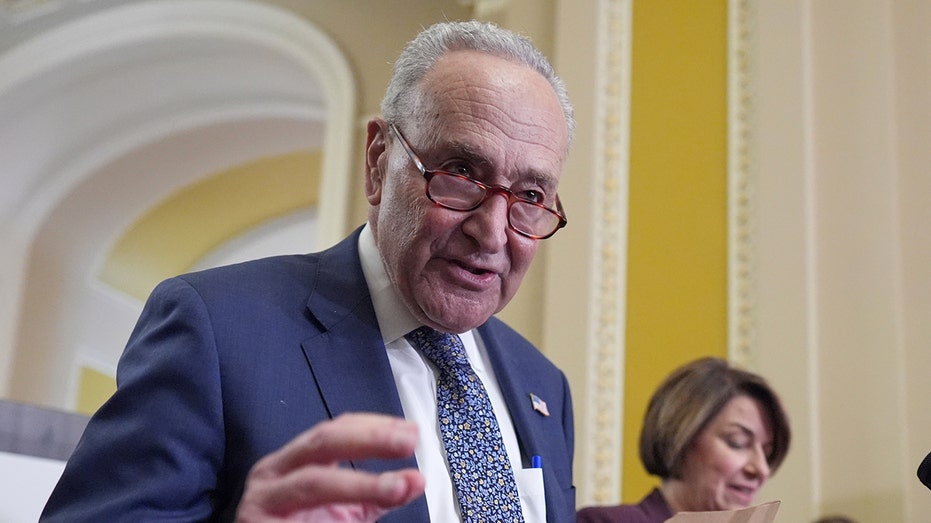
The top Democrat in the Senate plans to inflict maximum pain on Senate Republicans in their march to pass President Donald Trump’s “big, beautiful bill” before lawmakers even get a chance to debate the legislative behemoth. Indeed, Senate Minority Leader Chuck Schumer, D-N.Y., plans to force clerks on the Senate floor to read the entirety of the GOP’s 940-page megabill. His move to drain as much time as possible will come after Republicans vote on a key procedural test to open debate on the legislation. TRUMP’S ‘BIG, BEAUTIFUL BILL’ FACES REPUBLICAN FAMILY FEUD AS SENATE REVEALS ITS FINAL TEXT “I will object to Republicans moving forward on their Big, Ugly Bill without reading it on the Senate floor,” Schumer said on X. “Republicans won’t tell America what’s in the bill “So Democrats are forcing it to be read start to finish on the floor,” he said. “We will be here all night if that’s what it takes to read it.” KEY GOP SENATOR DEFECTS ON CRUCIAL VOTE, IMPERILING TRUMP’S ‘BIG, BEAUTIFUL BILL’ IN NARROW MAJORITY Indeed, staffers were seen carting the bill onto the Senate floor in preparation for the all-night read-a-thon. Schumer’s move is expected to take up to 15 hours and is designed to allow Senate Democrats more time to parse through the myriad provisions within the massive legislative text. Ultimately, it will prove a smokescreen as Senate Republicans will continue to march toward a final vote. Once the bill reading is done, 20 hours of debate evenly divided between Democrats and Republicans will begin, likely early Sunday morning. Democrats are expected to use their entire 10-hour chunk, while Republicans will go far under their allotted time. Then comes the “vote-a-rama” process, where lawmakers can offer an unlimited number of amendments to the bill. ANXIOUS REPUBLICANS TURN TO TRUMP AMID DIVISIONS OVER ‘BIG, BEAUTIFUL BILL’ Democrats will again look to extract as much pain as possible during that process, while Republicans, particularly senators that have lingering issues with key Medicaid and land sale provisions, will continue to try and shape and mold the bill. The last time clerks were forced to read the entirety of a bill during the budget reconciliation process was in 2021, when Senate Democrats held the majority in the upper chamber. At the time, Sen. Ron Johnson, R-Wis., demanded that the entire, over-600-page American Rescue Act be read aloud. Schumer, who was the Senate Majority Leader attempting to ram then-President Joe Biden’s agenda through the upper chamber, objected to the reading.
Rubio condemns Iran’s ‘unacceptable’ threats against IAEA director
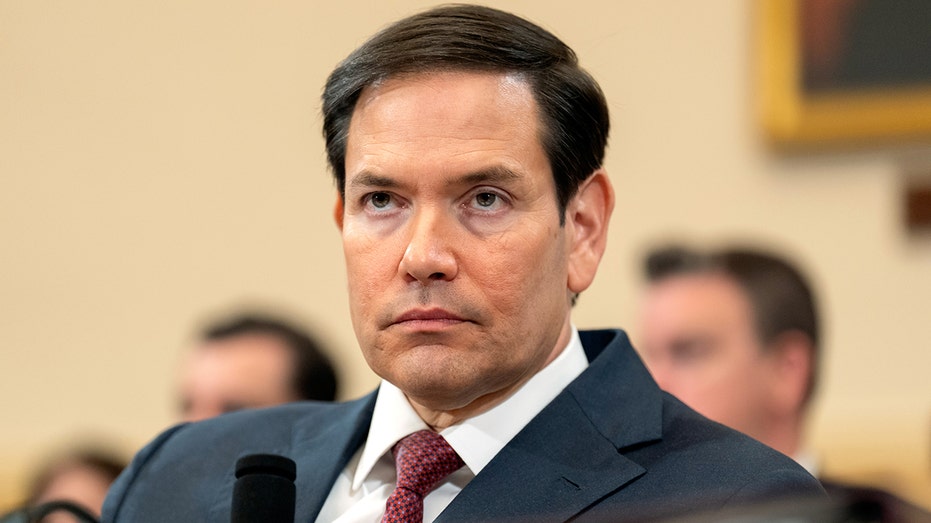
Secretary of State Marco Rubio on Saturday said alleged calls in Iran for the arrest and execution of International Atomic Energy Agency (IAEA) Director General Rafael Mariano Grossi are “unacceptable and should be condemned.” Rubio’s warning came after Iranian parliament vice speaker Hamid Reza Haji Babaei banned Grossi and removed surveillance from its nuclear facilities, accusing Israel of acquiring “sensitive facility data,” according to a report from Mehr news. “We support the lAEA’s critical verification and monitoring efforts in Iran and commend the Director General and the lAEA for their dedication and professionalism,” Rubio wrote in an X post. “We call on Iran to provide for the safety and security of IAEA personnel.” RUBIO SLAMS ‘FALSE’ INTELLIGENCE LEAKS DOWNPLAYING SUCCESS OF TRUMP’S IRAN STRIKES The lAEA this week commented on damage at Iranian nuclear facilities, following U.S. airstrikes on key nuclear sites in Iran, including Fordow, Natanz and Isfahan. While speaking on Fox News’ “The Story with Martha MacCallum,” Grossi said Isfahan and Natanz were damaged, with Natanz showing “very serious damage” in one of the centrifuge halls where enrichment was being performed. IAEA DIRECTOR SAYS IRAN’S ENRICHED URANIUM CAN’T BE LOCATED FOLLOWING US MILITARY STRIKES Though a ceasefire agreement was made between Israel and Iran, Grossi alleged 900 pounds of potentially enriched uranium had been taken to an ancient site near Isfahan. “I have to be very precise, Martha,” Grossi said. “We are the IAEA, so we are not speculating here. We do not have information of the whereabouts of this material.” He claimed Iranian officials had told him they were taking protective measures, which could include moving the material. UN NUCLEAR CHIEF SAYS IRAN HAS MATERIAL TO BUILD BOMBS, BUT NO PLAN TO DO SO “My job is to try to see where is this material, because Iran has an obligation to report and account for all the material that they have, and this is going to continue to be my work,” Grossi said. The State Department Press Office told Fox News Digital “the Secretary’s tweet speaks for itself and we have nothing to add at this time.” President Donald Trump withdrew from the 2015 nuclear deal Tehran signed with the U.S., U.K., European Union, France, Germany and Russia in 2018, prompting Iranian threats to remove cameras and limit access to its facilities. Fox News Digital’s Greg Wehner contributed to this report.
Key blue state Republican says Senate’s local tax write-off offer is a ‘good deal’
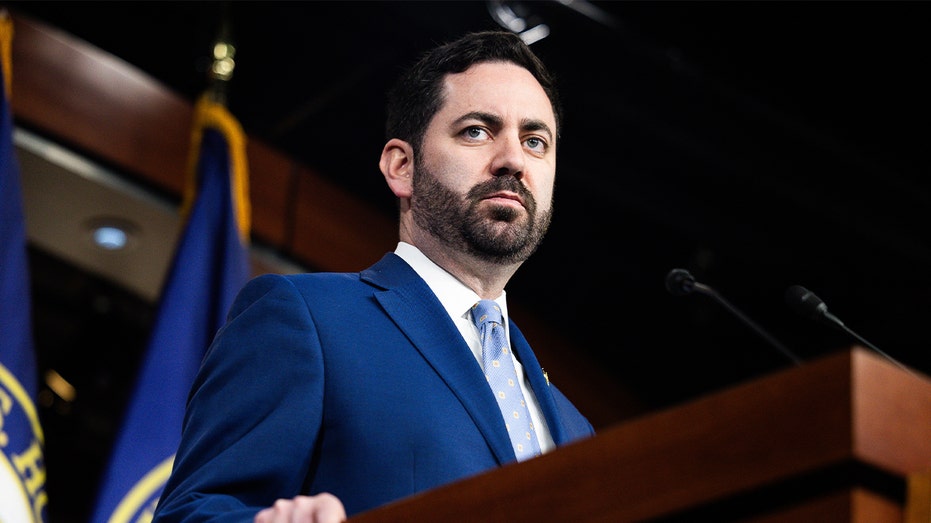
A key New York Republican said he’s pleased with a tax provision in the Senate’s version of President Donald Trump’s “big, beautiful bill” after weeks of tense back-and-forth over the matter. “I think it’s a very good deal. We were able to keep the House language intact,” Rep. Mike Lawler, R-N.Y., told Fox News Digital, adding that he was pleased “we were able to solve” differences on tax deductions for certain pass-through businesses, which are companies smaller than corporations whose taxes are “passed through” the business owner’s personal returns. “I think at the end of the day, it’s a [four-times] increase on [state and local tax (SALT) deduction caps]. And despite the Senate’s best efforts to whittle down the language, we were able to keep it.” Lawler is one of several blue state Republicans who threatened to sink the bill if it did not sufficiently raise SALT deduction caps. HOUSE CONSERVATIVES GO TO WAR WITH SENATE OVER TRUMP’S ‘BIG, BEAUTIFUL BILL’ SALT deductions are aimed at providing relief for people living in high-cost-of-living areas, primarily in big cities and their suburbs. There was no limit on SALT deductions until Trump’s 2017 Tax Cuts and Jobs Act (TCJA), which capped that federal tax benefit at $10,000 for both single filers and married couples. The House’s bill raised that cap to $40,000 for 10 years, with households making up to $500,000 eligible for the full deduction. Senate Republicans, who released their text of the bill just before midnight on Friday night, reduced the benefit window to five years instead of 10. After that, the maximum deduction would revert to $10,000 for the next five years. “Yes, the time was shortened, but at the end of the day, people are going to immediately be able to deduct them to $40,000, which is a massive win,” Lawler told Fox News Digital. “Democrats promised to fix this when they had complete control in ’21 and ’22 and failed to deliver. We’re delivering on it. So you know to me this is a big win for New York. It’s a big win for taxpayers all across the country.” Blue state Republicans, primarily those in New York and California, have pushed hard in favor of lifting that cap. They’ve painted it as an existential political issue in their districts, where Republican victories were critical to the GOP winning and keeping its House majority. They’ve also argued that their states sending more money back to the federal government effectively subsidizes lower-tax states that do not bring in as much revenue. But Republicans in more GOP-leaning states have dismissed SALT deductions as a reward for high-tax Democratic states to continue their own policies. “SALT deductions allow blue states to export their political mistakes (electing high-tax, crazy socialists), Americans shouldn’t subsidize,” Rep. Chip Roy, R-Texas, wrote on X. Lawler would not say if his support for the deal meant he would vote for the final bill – noting there were other provisions he had to read through in the 940-page legislation. TOP TRUMP HEALTH OFFICIAL SLAMS DEMOCRATS FOR ‘MISLEADING’ CLAIMS ABOUT MEDICAID REFORM But he said he believed most of his Republican colleagues in the SALT Caucus would be supportive of the compromise. “I think there’s broad consensus among most of us about how important this is, and what a significant win it is,” Lawler said. Rep. Nicole Malliotakis, R-N.Y., the only member of the SALT Caucus who sits on the tax-writing House Ways & Means Committee, told Fox News Digital of the deal on Friday, “I can live with this but, quite frankly, the $30,000 over 10 years that I negotiated out of Ways & Means would’ve protected my constituents for a longer period of time.” “But alas, this is a group exercise and there are a lot of cooks in the kitchen,” she said. Not everyone is on board, however. Rep. Nick LaLota, R-N.Y., signaled to Fox News Digital that he is rejecting the deal. “While I support the president’s broader agenda, it would be hypocritical for me to back the same unfair $10k SALT cap I’ve spent years criticizing. A permanent $40k deduction cap with income thresholds of $225k for single filers and $450k for joint filers would earn my vote,” he said in a written statement. Rep. Young Kim, R-Calif., did not comment on the SALT deal itself but more broadly said her support for the bill is contingent on how decisions on SALT deduction caps, Medicaid measures, and small business taxes play out. A source familiar with her thinking told Fox News Digital she would vote against the bill back in the House if the Senate’s more severe Medicaid cuts remained in place. The Senate is aiming to begin considering the legislation on the floor late afternoon on Saturday, though the final vote could come in the early hours of Sunday, if not later. The bill could also change between now and then, with various Republican lawmakers still expressing their concern. Fox News Digital reached out to SALT Caucus co-chair Andrew Garbarino, R-N.Y., and Rep. Tom Kean, R-N.J. for comment.
Key GOP senator defects on crucial vote, imperiling Trump’s ‘big, beautiful bill’ in narrow majority
A vulnerable Senate Republican put his foot down against President Donald Trump’s “big, beautiful bill” over concerns of deep Medicaid cuts inside the megabill. Sen. Thom Tillis, R-N.C., told Fox News Digital that he would not support the measure through a procedural hurdle necessary to kick off a marathon of debate and amendment voting that would eventually culminate in the measure’s final passage. TRUMP’S ‘BIG, BEAUTIFUL BILL’ FACES REPUBLICAN FAMILY FEUD AS SENATE REVEALS ITS FINAL TEXT Tillis, who is up for reelection in 2026, said after exiting the Senate GOP’s closed-door lunch that he has a “great relationship” with his colleagues, but that he couldn’t support the colossal bill. “We just have a disagreement,” he said. “And, you know, my colleagues have done the analysis, and they’re comfortable with the impact on their states. I respect their choice. It’s not a good impact in my state, so I’m not going to vote on the motion to proceed.” ANXIOUS REPUBLICANS TURN TO TRUMP AMID DIVISIONS OVER ‘BIG, BEAUTIFUL BILL’ He also won’t support the bill during the final stretch. Tillis is part of a cohort of Senate Republicans who have expressed reservations over the Senate GOP’s changes to the Medicaid provider tax rate. Tillis’ resistance to the bill is a bad sign for Senate Majority Leader John Thune, R-S.D., who can only afford to lose three votes. So far, Sen. Ron Johnson, R-Wis., has vowed to vote against the procedural test, and Sen. Rand Paul, R-Ky., is expected to follow suit. Trump was meeting with Johnson and Sen. Rick Scott, R-Fl., another possible holdout, during the lunch. Lawmakers are expected to vote to advance the bill at 4 p.m. on Saturday. The mounting resistance could force Thune to go back to the drawing board. Further complicating matters is Collins, who is also up for reelection in 2026, who said that while she would support the bill through the first step, she was leaning against voting to pass the bill in the final stretch unless the legislation was “further changed.” SENATE GOP EYES MEDICAID SWEETENER TO SAVE TRUMP’S ‘BIG, BEAUTIFUL BILL’ The latest version of the bill, which dropped near the stroke of midnight, included tweaks to the Senate’s offering that would push back the provider rate crackdown by one year, and also added another $25 billion for a rural hospital stabilization fund. While others in the group, like Sens. Susan Collins, R-Maine, and Josh Hawley, R-Mo., are on board to at least see the legislation move through the first key procedural hurdle, Tillis has argued that his state would be harshly affected by the crackdown. Indeed, during a closed-door lunch earlier this week, the lawmaker reportedly warned that North Carolina could lose as much as $40 billion in Medicaid funding if the changes were codified. For now, Tillis is unlikely to budge, even after conversations with Trump. He is also planning to unveil further analysis on the impact of Medicaid cuts on his state that he said no one in the “administration or in this building” has been able to refute. “The president I have talked, and I just told him that, ‘Look, if this works for the country, that’s great. And if my other colleagues have done extensive research and concluded it’s different in their states, I respect that,’” he said. “We just have a disagreement based on the implementation in our respective states.”
SCOOP: Blue state Republican could oppose Trump tax bill over Medicaid changes
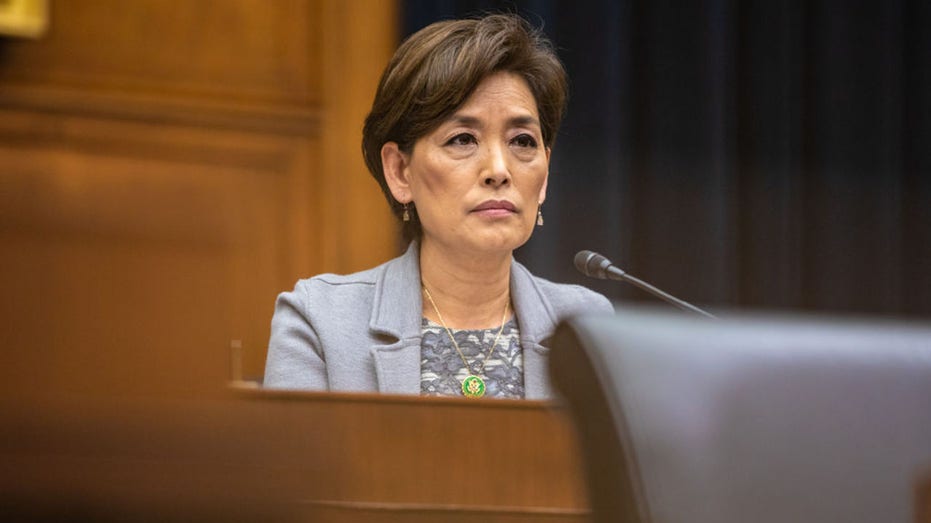
FIRST ON FOX: A House Republican representing part of Southern California will oppose President Donald Trump’s “big, beautiful bill” if it returns to her chamber without the House’s original language on Medicaid, a source familiar with her thinking told Fox News Digital. Rep. Young Kim, R-Calif., is one of several moderates who are uneasy on Saturday after the Senate released updated text of the massive bill advancing Trump’s agenda on tax, immigration, defense, energy, and the national debt. Two other sources told Fox News Digital that as many as 20 to 30 moderate Republicans are reaching out to Speaker Mike Johnson, R-La., with serious concerns about the Senate’s bill. The source familiar with Kim’s thinking said, “As she’s said throughout this process, ‘I will continue to make clear that a budget resolution that does not protect vital Medicaid services for the most vulnerable, provide tax relief for small businesses, and address the cap on state and local tax (SALT) deductions will not receive my vote.’” HOUSE CONSERVATIVES GO TO WAR WITH SENATE OVER TRUMP’S ‘BIG, BEAUTIFUL BILL’ The Senate released the nearly 1,000-page bill minutes before midnight on Friday night. It makes some notable modifications to the House’s version of the bill – which passed that chamber by just one vote in May – particularly on Medicaid and green energy credits. Among their issues is the difference in provider tax rates and state-directed payments, both of which states use to help fund their share of Medicaid costs. Whereas the House bill called for freezing provider taxes at their current rates and blocking new ones from being implemented, the Senate’s bill went a step further – forcing states to gradually phase down their provider tax rates to 3.5%, if they adopted the Affordable Care Act’s (ACA) Medicaid expansion. That would include 40 states and Washington, D.C. The Senate’s most recent bill text shows that phase-down happening between 2028 and 2032. Sixteen House GOP moderates wrote a letter to congressional leaders sounding the alarm on those Medicaid provisions earlier this week. They said it “undermines the balanced approach taken to craft the Medicaid provisions in H.R. 1—particularly regarding provider taxes and state-directed payments.” “The Senate version treats expansion and non-expansion states unfairly, fails to preserve existing state programs, and imposes stricter limits that do not give hospitals sufficient time to adjust to new budgetary constraints or to identify alternative funding sources,” the letter read. To offset Senate Republicans’ concerns about their chamber’s proposed limits on state-directed payments and provider tax rates, the Senate Finance Committee included a $25 billion rural hospital fund in their legislation. It was enough to sway Sen. Josh Hawley, R-Mo., who told reporters on Saturday that he would support the bill after expressing earlier concern about the Medicaid provisions’ impact on rural hospitals. But in the House, sources are signaling to Fox News Digital that moderate Republicans could still need convincing if the bill passes the Senate this weekend. TOP TRUMP HEALTH OFFICIAL SLAMS DEMOCRATS FOR ‘MISLEADING’ CLAIMS ABOUT MEDICAID REFORM It could pose problems for House GOP leaders given their thin three-vote majority, though it’s worth noting that the legislation could still change before it reaches the lower chamber. But one senior House GOP aide told Fox News Digital they believe the moderates will ultimately fall in line, even if the text doesn’t change. “Moderate Republicans can plead and beg with House leadership all they want – the reforms to Medicaid made in the Senate are here to stay,” the senior aide said. “And ultimately, these lawmakers will roll over and vote for the ‘Big, Beautiful Bill’ because the wrath of President Trump is far worse than a lower provider tax.” Fox News Digital reached out to Speaker Mike Johnson’s office for comment. For his part, Johnson, R-La., has publicly urged the Senate on multiple occasions to change the bill as little as possible – given the fragile unity that must be struck in the House to pass it.
Prosecutors tied to Jan. 6 Capitol riot cases fired by Justice Department: reports

The Justice Department, under Attorney General Pam Bondi, has abruptly fired at least three federal prosecutors involved in cases stemming from the Jan. 6, 2021, Capitol riot, according to multiple reports. Among those dismissed were two supervisory attorneys who oversaw Capitol riot prosecutions in the U.S. attorney’s office in Washington, D.C., and a line prosecutor directly involved in trying several related cases, according to the Associated Press, citing sources familiar with the matter. NBC News is also reported to have independently confirmed the firings. BONDI’S DOJ DAY 1 DIRECTIVES: FIGHT WEAPONIZATION OF JUSTICE, ELIMINATE CARTELS, LIFT DEATH PENALTY BAN The prosecutors received termination letters signed by Bondi. According to both outlets, the letters provided no specific reason for the removals, citing only “Article II of the United States Constitution and the laws of the United States.” That phrase is often used in federal employment law to indicate the executive branch’s constitutional authority to appoint or remove personnel. Fox News Digital contacted the Justice Department for confirmation and comment but did not immediately receive a response. President Trump has repeatedly referred to the Jan. 6 defendants as political prisoners. On his first day back in the White House in January 2025, he pardoned or commuted the sentences of approximately 1,500 individuals who had been convicted or were incarcerated in connection with the Capitol attack. JUSTICE DEPARTMENT FIRES MORE THAN A DOZEN KEY OFFICIALS ON FORMER SPECIAL COUNSEL JACK SMITH’S TEAM The latest terminations follow a broader reshuffling of senior DOJ personnel. In January, the department dismissed more than a dozen officials who had worked on Special Counsel Jack Smith’s investigations into Trump. Then–Acting Attorney General James McHenry justified the removals by stating those individuals could not be trusted to “faithfully implement the president’s agenda.” During his time as interim U.S. attorney in Washington, Ed Martin also demoted several prosecutors in the Capitol Siege Section, including two attorneys who had helped secure seditious conspiracy convictions against Oath Keepers leader Stewart Rhodes and Proud Boys chairman Enrique Tarrio. In February, Attorney General Bondi ordered a review of the federal prosecution of Donald Trump and launched a broad internal audit aimed at “realigning the Justice Department’s priorities” in line with the White House agenda. That effort included the creation of a “weaponization working group” tasked with examining perceived “politicized justice” across federal law enforcement. The group is also reportedly reviewing the actions of Manhattan District Attorney Alvin Bragg and New York Attorney General Letitia James, who brought civil and criminal cases against Trump and his family. The Associated Press and Fox News’ Brooke Singman contributed to this report.
Southern Europe roasts as first heatwave of the summer scorches continent

Southern Europe struggles with soaring heat as temperatures hit 40C, sparking fears of wildfires and health risks. Europeans are braced for the first heatwave of the Northern Hemisphere summer, as climate change pushes thermometers on the world’s fastest-warming continent further into the red. With temperatures expected to rise to 37 degrees Celsius (99 degrees Fahrenheit) in the Italian capital, Rome, on Saturday, the Eternal City’s many tourists and Catholic pilgrims to the Vatican alike have been converging around the Italian capital’s 2,500 public fountains for refreshment. In France, with residents of the southern port city of Marseille expected to have to cope with temperatures flirting with 40C (104F), authorities ordered public swimming pools to be made free of charge to help residents beat the Mediterranean heat. Two-thirds of Portugal will be on high alert on Sunday for extreme heat and forest fires with 42C (108F) expected in the capital, Lisbon. Meanwhile, visitors to – and protesters against – Amazon tycoon Jeff Bezos’s Friday wedding in Venice were likewise sweltering under the summer sun. “I try not to think about it, but I drink a lot of water and never stay still, because that’s when you get sunstroke,” Sriane Mina, an Italian student, told AFP news agency on Friday in Venice. Meanwhile, Spain, which has in past years seen a series of deadly summer blazes ravaging the Iberian peninsula, is expecting peak temperatures in excess of 40C (104F) across most of the country from Sunday. Scientists have long warned that humanity’s burning of fossil fuels is heating up the world with disastrous consequences for the environment, with Europe’s ever-hotter and increasingly common blistering summer heatwaves a result of the long-term warming. Advertisement With peaks of 39C (102F) expected in the cities of Naples and Palermo, Sicily has ordered a ban on outdoor work in the hottest hours of the day, as has the Liguria region in northern Italy. The country’s trade unions are campaigning to extend the measure to other parts of the country. In Greece, the first heatwave of the summer arrived on Thursday when a fast-moving wildfire engulfed holiday homes and forest land on a section of the Greek coastline just 40km (25 miles) south of the capital, Athens. More than 100 firefighters, supported by two dozen firefighting aircraft, battled the wildfire that tore across the coastal area of Palaia Fokaia. The flames were whipped up by high winds as temperatures approached 40C (104F). The heatwave comes hot on the heels of a series of tumbling records for extreme heat, including Europe’s hottest March ever, according to the European Union’s Copernicus climate monitor. As a result of the planet’s warming, extreme weather events including hurricanes, droughts, floods and heatwaves like this weekend’s have become more frequent and intense, scientists warn. Adblock test (Why?)
Death toll rises after Pakistan hit by flash floods and heavy rains

Flash floods and roof collapses over past 36 hours have claimed 19 lives, increasing total toll to 32, authorities say. Heavy rain and flash flooding across Pakistan have killed 32 people since the start of the monsoon season earlier this week, according to the disaster management officials. Flash floods and roof collapses over the past 36 hours have claimed the lives of 19 people, eight of them children, the Khyber Pakhtunkhwa provincial disaster management authority said in a statement on Saturday. Of the total deaths, 13 were reported in the Swat Valley. At least 13 people have been killed in the eastern province of Punjab since Wednesday, the area’s disaster management authority said. Eight of the deaths were children, who died when walls and roofs collapsed during heavy rain. Flash flood risk remains Flooding in Khyber Pakhtunkhwa has also damaged 56 houses, six of which were destroyed, the disaster authority said. The national meteorological service warned that the risk of heavy rain and possible flash floods will remain high until at least Tuesday. Last month, at least 32 people were killed in severe storms in the South Asian nation, which experienced several extreme weather events in the spring, including strong hailstorms. Pakistan is one of the world’s most vulnerable countries to the effects of climate change, and its 240 million inhabitants are facing extreme weather events with increasing frequency. Adblock test (Why?)
‘Hey Daddy’: How different world leaders massage Trump’s ego
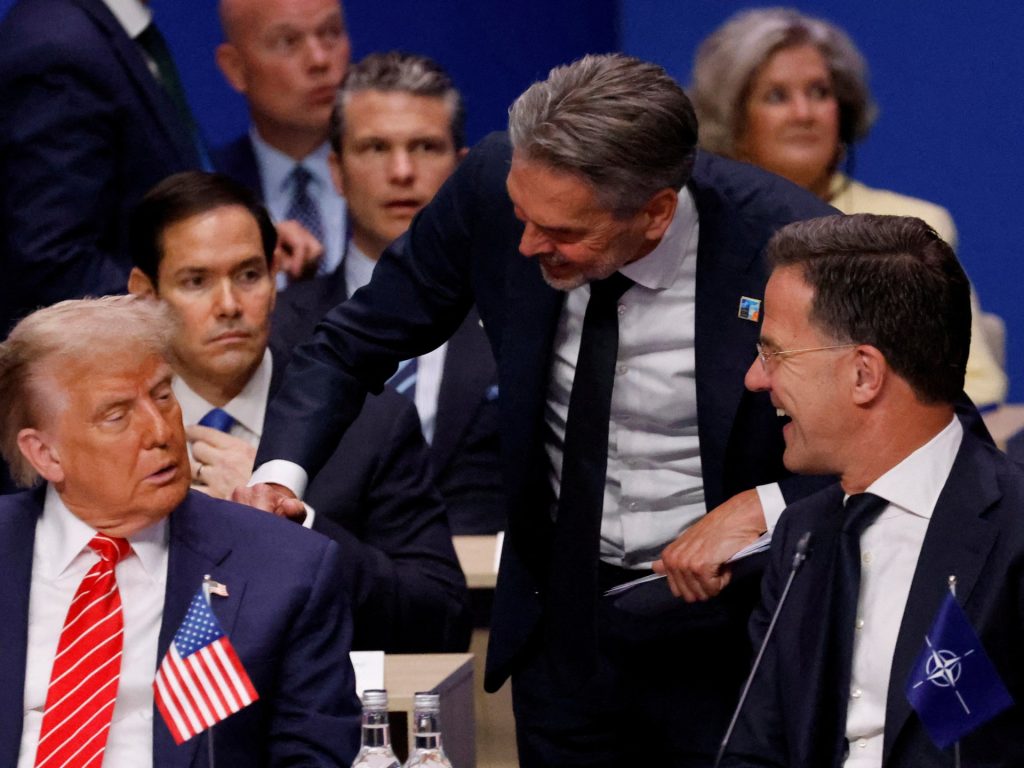
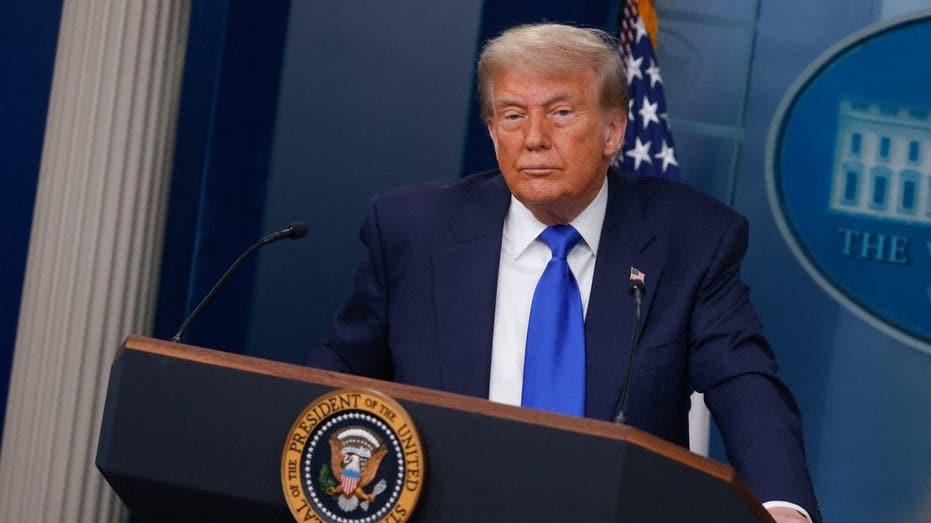
Describing Israel and Iran fighting each other at his NATO pre-summit news conference in The Hague this week, US President Donald Trump drew an analogy with children fighting in a schoolyard, who eventually had to be separated. “Daddy has to sometimes use strong language,” Mark Rutte, NATO secretary-general, chimed in. Asked about the comment after the summit, Trump said: “No, he likes me. I think he likes me. If he doesn’t I’ll let you know. I’ll come back and hit him hard, OK? He did it very affectionately. Hey Daddy. You’re my Daddy.” The White House decided Rutte was flattering the US president, and made a reel of Trump’s visit to the Netherlands, set to the music of Usher’s Hey Daddy. Rutte’s flattery of Trump didn’t stop there. On tackling the Russia-Ukraine war, Rutte told reporters before the NATO summit: “When he came in office, he started the dialogue with President Putin, and I always thought that was crucial. And there’s only one leader who could break the deadlock originally, and it had to be the American president, because he is the most powerful leader in the world.” But how sincere are world leaders’ statements about Donald Trump? Do they genuinely serve to improve bilateral relations and does flattery work? Who has handled Trump well and what have the results been? Neither Rutte, nor any other European leader, engaged in any kind of dialogue with Russian President Vladimir Putin for a long time after the summer of 2022, the year of his invasion of Ukraine, believing it pointless. Advertisement German Chancellor Olaf Scholz was severely criticised as “defeatist” for phoning Putin last November, while Hungary’s Viktor Orban and Slovakia’s Robert Fico, the only European leaders to have visited the Kremlin during the war, have been viewed as openly collaborationist. Yet when Trump started talks with Putin, many Europeans paid him the same compliment as Rutte when they made their inaugural visits to the White House after he took office in January. Keir Starmer, UK “Thank you for changing the conversation to bring about the possibility that now we can have a peace deal, and we will work with you,” said the United Kingdom’s prime minister, Keir Starmer, in the Oval Office in February. Starmer pulled a few rabbits out of hats. Knowing Trump’s fondness for the notion of hereditary power, he drew from his jacket a letter from King Charles III containing an invitation for an unprecedented second state visit to Windsor Castle. Trump was momentarily speechless. “Your country is a fantastic country, and it will be our honour to be there, thank you,” Trump said when he’d gathered himself. Starmer and Trump exchanged a few handshakes while speaking and Starmer repeatedly touched Trump’s shoulder in a sign of affection. But did all this flattery have much effect? Trump announced he was freezing military aid to Ukraine the following month, much to the outrage of the UK, along with Nordic and Baltic countries. Giorgia Meloni, Italy Both Starmer and Italy’s prime minister, Giorgia Meloni, identified Ukraine as a key issue for Trump, who has made it clear he wants to win the Nobel Peace Prize by ending international conflicts. So far, he has claimed credit for ending this month’s “12-Day War” between Israel and Iran, preventing nuclear war following the May 7 air battle between India and Pakistan, and overseeing a peace deal between the Democratic Republic of the Congo (DRC) and Rwanda. Meloni, therefore, tried a similarly flattering approach to Trump. “Together we have been defending the freedom of Ukraine. Together we can build a just and lasting peace. We support your efforts, Donald,” she said during her White House visit in April. Meloni astutely punched all of Trump’s hot-button issues in her opening remarks, saying Italy had policies to combat Fentanyl, an addictive painkiller that Trump has blamed Canada and Mexico for allowing into the country, to invest $10bn in the US economy and to control undocumented immigration. She even adapted Trump’s slogan, Make America Great Again, to Europe. “The goal for me is to Make the West Great Again. I think we can do it together,” Meloni said to a beaming Trump. Advertisement None of this has translated into a state visit by Trump to Rome, a move which would cement Meloni’s position as a major European leader, however. Mark Carney, Canada Meanwhile, newly elected Canadian Prime Minister Mark Carney was both flattering and firm with Trump last month. He complimented Trump on being “a transformational president” who had sided “with the American worker”, but also shut down Trump’s territorial ambition to annex Canada as the 51st US state. “It’s not for sale, won’t be for sale ever,” Mark Carney said. Relations seemed to have taken a turn for the better following Trump’s friction with Carney’s predecessor, Justin Trudeau. Trump called him “very dishonest and weak” at the 2018 G7 summit in Canada before storming off early. But Carney may not have had much effect at all. On Friday, Trump ended trade talks with Canada and threatened to impose additional tariffs on exports over Canada’s new digital services tax. Which meetings have gone less well? Emmanuel Macron, France There was little warmth in Trump’s White House meeting with French President Emmanuel Macron in February. Braced for confrontation with a leader who claims to lead Europe in strategic thought, Trump spoke from lengthy, defensive, scripted remarks which attempted to justify his Ukraine policy. Macron preached that peace in Ukraine must not mean surrender – a sentiment shared by many European leaders, but not expressed to Trump. Trump was cordial with Macron, but not affectionate. Meanwhile, France is holding out on any sort of capitulation to Trump in European Union trade talks. Other members of the EU want to settle for an “asymmetric” trade deal that might benefit the US more than the EU, just to get it done. What’s more, following the G7 meeting in Canada two weeks ago, it was clear no love was lost between
‘Kashi Ki Didi’ Ranjubala Singh wins ‘Warrior Spirit’ award at DNA Women Achievers Awards 2025

Ranjubala Singh, aka ‘Kashi Ki Didi’, from Varanasi, is a social worker. After suffering severe burns that damaged a major part of her body, she chose not to retreat into grief. Instead, she devoted her life to underprivileged children.