

Final day of SCOTUS decisions brings wave of history-making rulings
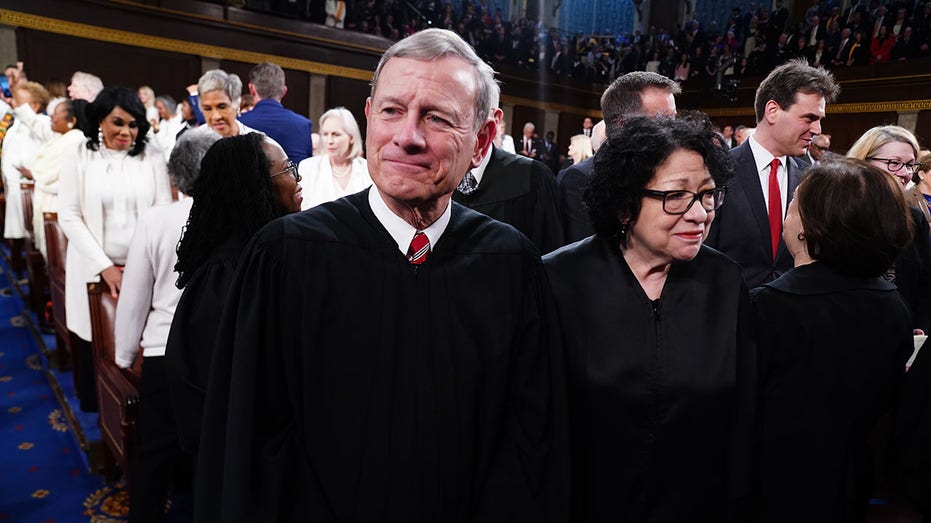
The Supreme Court had a banner day on Friday, the last decision day of the high court’s term, involving the justices reining in judicial power and serving up a victory for parents in the ongoing culture wars. The high court’s more controversial decisions were split along ideological lines. Liberal justices sometimes dissented with bitter rebukes, while the Trump administration celebrated what it viewed as landmark wins. In the most high-profile case of the day, the Supreme Court ended the practice of judges issuing sweeping injunctions that cover the whole country and not just parties involved in a case. SCOTUS RULES ON TRUMP’S BIRTHRIGHT CITIZENSHIP ORDER, TESTING LOWER COURT POWERS The injunctions, often known as “nationwide injunctions,” have been a source of frustration for President Donald Trump as judges side with plaintiffs and block key parts of the president’s agenda. The case arose from several judges issuing injunctions that blocked Trump from carrying out his birthright citizenship plan. Rather than ask the Supreme Court to weigh in on the merits of the plan, which has been uniformly rejected in courts, Trump asked the high court to put a stop to the injunction practice. The Supreme Court’s 6-3 decision left open the possibility that judges and plaintiffs could use other avenues, such as class action lawsuits, to seek broad relief now that the high court has curtailed nationwide injunctions. The Supreme Court decided 6-3 in Mahmoud v. Taylor that parents can opt their children out of a Maryland public school system’s lessons when they contain themes about homosexuality and transgenderism if they feel the content conflicts with their religious beliefs. Justice Samuel Alito, writing for the majority, said the government “burdens the religious exercise of parents when it requires them to submit their children to instruction that poses ‘a very real threat of undermining’ the religious beliefs and practices that the parents wish to instill.” SUPREME COURT DECIDES WHETHER TO SHIELD PARENTS FROM LGBTQ BOOKS The Trump administration celebrated the ruling as a victory for “parental rights,” while Justice Sonia Sotomayor said in a scathing dissent that the high court’s decision would open floodgates for students to opt out of a wider range of lessons. The Supreme Court allowed Texas to require age verification for users of pornographic websites, dealing a win to those aiming to block children from accessing explicit material online. A trade association for the porn industry brought the lawsuit, alleging the age requirement meant the state was unconstitutionally regulating free speech on the internet. “This is a major victory for children, parents, and the ability of states to protect minors from the damaging effects of online pornography,” Texas Attorney General Ken Paxton said in a statement. “Companies have no right to expose children to pornography and must institute reasonable age verification measures.” The Supreme Court punted its case about Louisiana’s congressional maps, indicating it needed a few more questions answered during oral arguments in the fall. The delay means that Louisiana’s map of voting districts, including majority-Black districts, would not see any changes until the 2028 election cycle or later. The Supreme Court is now set to wind down in anticipation of its summer recess, though it is still expected to hand down some straggling decisions before its next term begins in October.
Trump’s NATO Turnaround: From threatening to pull US out to ‘daddy’ of the alliance
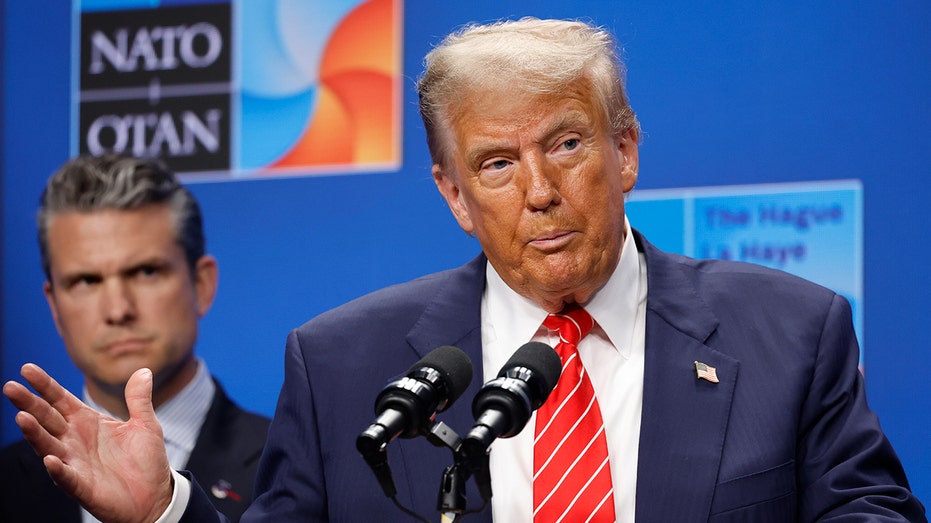
President Donald Trump delivered a resounding endorsement of NATO this week, marking a sharp turnaround in his years-long, often contentious relationship with the alliance. Once known for blasting allies over defense spending and even threatening to pull out of NATO altogether, Trump now appears to have had a change of heart. “I left here differently. I left here saying that these people really love their countries,” Trump said after the 2025 NATO summit in The Hague. The pivot comes as NATO nations more than doubled their collective defense spending target – raising the bar from 2% to 5% of GDP. WORLD LEADERS FLOCK TO MEET WITH TRUMP AT NATO SUMMIT The president’s renewed embrace of the alliance follows years of friction, high-profile clashes with world leaders and controversial comments. Yet at this year’s summit, the tone was strikingly different. Trump was welcomed by Dutch royals, praised by the NATO secretary-general – who even referred to him as “daddy” – and returned home lauding European allies for their patriotism. “It’s not a rip-off, and we’re here to help them,” Trump told reporters. The transformation is as dramatic as it is unexpected. Trump arrived at the NATO summit on a high note, following U.S. strikes that crippled Iran’s nuclear infrastructure. According to American and allied intelligence sources, the operation set back Tehran’s nuclear ambitions by several years. The strike was widely seen as both a show of strength and a strategic warning – not just to Iran but to NATO adversaries like Russia and China. WORLD LEADERS FLOCK TO MEET WITH TRUMP AT NATO SUMMIT “He really came in from this power move,” said Giedrimas Jeglinskas, a former NATO official and current chairman of Lithuania’s national security committee. “Among some, definitely Eastern Europe, Central Europe, Nordic Europe, this attack, the use of those really sophisticated weapons and bombers, was the rebuilding of the deterrence narrative of the West, not just of America.” Trump repeatedly called NATO “obsolete,” questioning its relevance and slamming allies for failing to pay their “fair share.” “It’s costing us too much money… We’re paying disproportionately. It’s too much,” he said in March 2016. He criticized NATO for lacking focus on terrorism, later taking credit when it created a chief intelligence post. Trump softened his tone after becoming president. “We strongly support NATO,” he said after visiting Central Command. “We only ask that all members make their full and proper financial contribution.” He continued to push for members to meet the 2% target by 2024. Trump privately threatened to pull the U.S. from NATO unless allies increased spending. “Now we are in World War III protecting a country that wasn’t paying its bills,” he warned. Despite the posturing, he called NATO a “fine-tuned machine” after extracting new spending commitments. He also accused Germany of being a “captive of Russia” over the Nord Stream 2 pipeline. TRUMP HEADS TO NATO SUMMIT AS EUROPE AGREES TO HEED HIS DEFENSE SPENDING DEMANDS The drama continued, this time with French President Emmanuel Macron calling NATO “brain-dead.” “NATO serves a great purpose. I think that’s very insulting,” Trump responded. He also clashed with Canadian Prime Minister Justin Trudeau – calling him “two-faced” after Trudeau was caught mocking Trump on camera. Trump ordered 12,000 U.S. troops out of Germany, citing Berlin’s defense shortfalls. Trump ignited backlash after suggesting he’d let Russia “do whatever the hell they want” to NATO countries that failed to meet spending obligations. The remark sparked urgent contingency talks among European leaders about the future of the alliance if the U.S. did not step up to its defense. The 2025 summit in The Hague unfolded with surprising calm. Trump’s hosts rolled out the red carpet. “He’s the man of the hour and the most important man in the world,” Jeglinskas said. Jeglinskas credited Trump’s blunt diplomacy – however unorthodox – for helping drive real reform “He’s brought in tectonic change to the alliance’s capabilities by… being himself,” he added. “It’s a gift for the alliance.” Experts agree NATO’s recent revitalization stems from two major catalysts: Russia’s 2022 invasion of Ukraine and Trump’s relentless pressure on allies to boost defense. “President Trump is riding high this week with two major foreign policy victories,” said Matthew Kroenig, vice president at the Atlantic Council’s Scowcroft Center, referencing NATO and the recent U.S. strikes on Iran’s nuclear program. “It’s terrific. I hope he can keep it up.” He added, “Every president since Eisenhower has complained that NATO allies aren’t doing their fair share.” Now, Trump was the one who finally got them to listen, he said.
University of Virginia president resigns amid pressure from Trump admin over DEI initiatives
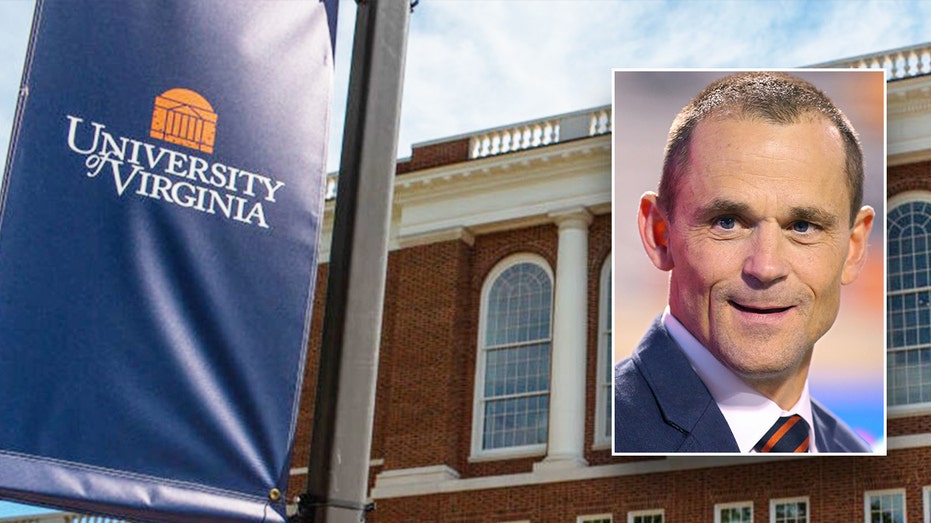
The University of Virginia president stepped down on Friday after facing intense pressure from the Trump administration over the institution’s diversity, equity and inclusion initiatives. James E. Ryan, who had led the school since 2018, said he had already decided that next year would be his last and decided not to “fight the federal government in order to save my own job” until then. To make a long story short, I am inclined to fight for what I believe in, and I believe deeply in this University,” Ryan wrote to the UVA community on Friday. “But I cannot make a unilateral decision to fight the federal government in order to save my own job. To do so would not only be quixotic but appear selfish and self-centered to the hundreds of employees who would lose their jobs, the researchers who would lose their funding, and the hundreds of students who could lose financial aid or have their visas withheld.” “This is especially true because I had decided that next year would be my last, for reasons entirely separate from this episode—including the fact that we concluded our capital campaign and have implemented nearly all of the major initiatives in our strategic plan,” he continued. TRUMP’S DOJ PRESSURING UNIVERSITY OF VIRGINIA TO AXE ITS PRESIDENT OVER DEI PROGRAMS: REPORT Robert D. Hardie, leader of the University of Virginia’s governing board, said in a statement he accepted Ryan’s resignation with “profound sadness,” adding that he had been an “extraordinary president,” led the institution to “unprecedented heights” and that the university “has forever been changed for the better as a result of Jim’s exceptional leadership.” This comes after the Trump administration had privately demanded that the university remove Ryan to help resolve a Justice Department probe into the institution’s DEI practices, according to The New York Times. The Justice Department argued that Ryan had failed to dismantle the school’s DEI programs and misrepresented the steps taken to eliminate them, amid the administration’s efforts to root out DEI in higher education, the newspaper reported. The federal government’s moves targeting higher education include pulling billions of dollars from elite universities such as Harvard, which has been the subject of investigations by various agencies over issues such as DEI initiatives, admissions practices and alleged antisemitism on campus. But this was the first time the administration had pressured a university to remove its president. “That sham virtue signaling of DEI has no place in our country, and the Trump administration is working tirelessly to erase this divisive, backward, and unjust practice from our society,” White House spokesman Harrison Fields told Fox News Digital. “Any university president willingly breaking federal civil rights laws will be met with the full force of the federal government, and it would behoove every school in America to prioritize the civil rights of every student and end DEI once and for all,” he continued. Ryan had focused on increasing diversity at the university, bringing in more first-generation students and encouraging community service. These efforts had ruffled the feathers of conservative alumni and Republican board members who argued he was “too woke” and wanted to impose his beliefs on students. Before his time as the university’s president, Ryan served as the dean of the Harvard Graduate School of Education, where he received recognition for his commitment to DEI programs. In a joint statement, Virginia’s Democratic senators said it was “outrageous” that the administration would demand Ryan’s resignation over “‘culture war’ traps.” “Decisions about UVA’s leadership belong solely to its Board of Visitors, in keeping with Virginia’s well-established and respected system of higher education governance,” Sens. Mark Warner and Tim Kaine said. “This is a mistake that hurts Virginia’s future.” Conservative groups have lambasted Ryan for what they regard as insufficient steps toward compliance with the administration’s plans to eliminate DEI. America First Legal, a nonprofit launched by Trump advisor Stephen Miller, accused the University of Virginia last month of rebranding DEI programs to skirt Trump’s executive orders aimed at ending diversity initiatives. HARVARD KENNEDY SCHOOL ANNOUNCES LAYOFFS AFTER TRUMP CUTS BILLIONS IN FUNDING “Rebranding discrimination does not make it legal, and changing a label doesn’t change the substance,” Megan Redshaw, an attorney at America First Legal, said in a statement at the time. “UVA’s use of sanitized language and recycled job titles is a deliberate attempt to sidestep the law.” The group took direct aim at Ryan, noting that he joined hundreds of other college presidents in signing a public statement condemning the administration’s “overreach and political interference.” On Friday, the group vowed to continue to use every available tool to root out DEI. “This week’s developments make clear: public universities that accept federal funds do not have a license to violate the Constitution,” Redshaw said in a statement to The Associated Press. “They do not get to impose ideological loyalty tests, enforce race and sex-based preferences, or defy lawful executive authority.”
Trump’s ‘big, beautiful bill’ faces Republican family feud as Senate reveals its final text
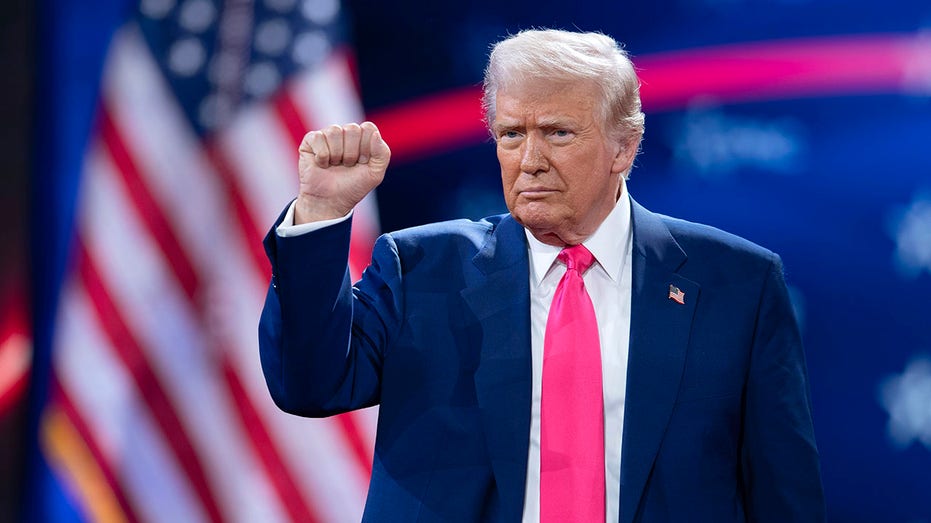
Senate Republicans unveiled their long-awaited version of President Donald Trump’s “big, beautiful bill,” but its survival is not guaranteed. Senate Budget Committee Chair Lindsey Graham, R-S.C., revealed the stitched-together text of the colossal bill late Firday night. The final product from the upper chamber is the culmination of a roughly month-long sprint to take the House GOP’s version of the bill and mold and change it. The colossal package includes separate pieces and parts from 10 Senate committees. With the introduction of the bill, a simple procedural hurdle must be passed in order to begin the countdown to final passage. When that comes remains an open question. Senate Republicans left their daily lunch on Friday under the assumption that a vote could be teed up as early as noon on Saturday. HOUSE CONSERVATIVES GO TO WAR WITH SENATE OVER TRUMP’S ‘BIG, BEAUTIFUL BILL’ Sen. John Kennedy, R-La., told Fox News Digital that he had “strongly encouraged” Senate Majority Leader John Thune, R-S.D., to put the bill on the floor for a vote Saturday afternoon. “If you’re unhappy with that, you’re welcome to fill out a hurt feelings report, and we will review it carefully later,” Kennedy said. “But in the meantime, it’s time to start voting.” But Senate Republicans’ desire to impose their will on the package and make changes to already divisive policy tweaks in the House GOP’s offering could doom the bill and derail Thune’s ambitious timeline to get it on Trump’s desk by the July 4 deadline. However, Thune has remained firm that lawmakers would stay on course and deliver the bill to Trump by Independence Day. When asked if he had the vote to move the package forward, Thune said “we’ll find out tomorrow.” TOP TRUMP HEALTH OFFICIAL SLAMS DEMOCRATS FOR ‘MISLEADING’ CLAIMS ABOUT MEDICAID REFORM But it wasn’t just lawmakers who nearly derailed the bill. The Senate parliamentarian, the true final arbiter of the bill, ruled that numerous GOP-authored provisions did not pass muster with Senate rules. Any item in the “big, beautiful bill” must comport with the Byrd Rule, which governs the budget reconciliation process and allows for a party in power to ram legislation through the Senate while skirting the 60-vote filibuster threshold. That sent lawmakers back to the drawing board on a slew of policy tweaks, including the Senate’s changes to the Medicaid provider tax rate, cost-sharing for food benefits and others. Republican leaders, the White House and disparate factions within the Senate and House GOP have been meeting to find middle ground on other pain points, like tweaking the caps on state and local tax (SALT) deductions. While the controversial Medicaid provider tax rate change remained largely the same, a $25 billion rural hospital stabilization fund was included in the bill to help attract possible holdouts that have raised concerns that the rate change would shutter rural hospitals throughout the country. On the SALT front, there appeared to be a breakthrough on Friday. A source told Fox News that the White House and House were on board with a new plan that would keep the $40,000 cap from the House’s bill and have it reduced back down to $10,000 after five years. But Senate Republicans are the ones that must accept it at this stage. Sen. Markwayne Mullin, R-Okla., has acted as the mediator in those negotiations, and said that he was unsure if any of his colleagues “love it.” “But I think, as I’ve said before, I want to make sure we have enough that people can vote for than to vote against,” he said. Still, a laundry list of other pocket issues and concerns over just how deep spending cuts in the bill go have conservatives and moderates in the House GOP and Senate pounding their chests and vowing to vote against the bill. Republican leaders remain adamant that they will finish the mammoth package and are gambling that some lawmakers standing against the bill will buckle under the pressure from the White House and the desire to leave Washington for a short break. Once a motion to proceed is passed, which only requires a simple majority, then begins 20 hours of debate evenly divided between both sides of the aisle. ‘BABY STEPS’: LEADER THUNE DETAILS HIS WORK TO CORRAL REPUBLICANS BEHIND TRUMP’S LEGISLATIVE VISION Democratic lawmakers are expected to spend the entirety of their 10 allotted hours, while Republicans will likely clock in well below their limit. From there starts the “vote-a-rama” process, when lawmakers can submit a near-endless number of amendments to the bill. Democrats will likely try to extract as much pain as possible with messaging amendments that won’t actually pass but will add more and more time to the process. Once that is complete, lawmakers will move to a final vote. If successful, the “big, beautiful bill” will again make its way back to the House, where House Speaker Mike Johnson, R-La., will again have to corral dissidents to support the legislation. It barely advanced last month, squeaking by on a one-vote margin. Treasury Secretary Scott Bessent hammered on the importance of passing Trump’s bill on time. He met with Senate Republicans during their closed-door lunch and spread the message that advancing the colossal tax package would go a long way to giving businesses more certainty in the wake of the president’s tariffs. “We need certainty,” he said. “With so much uncertainty, and having the bill on the president’s desk by July 4 will give us great tax certainty, and I believe, accelerate the economy in the third quarter of the year.”
Russia-Ukraine war: List of key events, day 1,220

Here are the key events on day 1,220 of Russia’s war on Ukraine. Here is how things stand on Saturday, June 28: Fighting Ukraine’s military has said it struck four Russian Su-34 warplanes at the Marinovka base outside Russia’s city of Volgograd, some 900km (550 miles) from the Ukrainian border. A Russian missile attack has killed at least five people and wounded more than 20 in Samar in Ukraine’s southeast, in the second strike on the industrial city in three days. Russian troops have captured the village of Nova Kruhlyakivka in Ukraine’s eastern Kharkiv region, Russia’s state news agency TASS reported. A Russian attack has damaged an “important power facility” in Ukraine’s southern Kherson region, causing power cuts in some settlements in the region, regional governor Oleksandr Prokudin said. A Ukrainian drone attack on Russia’s Kursk region injured a war correspondent from Chinese news outlet Phoenix TV, Russian authorities said, as they urged the United Nations to respond to the incident. Ukraine’s air force said it downed 359 out of 363 drones and six of eight missiles launched by Russia in an overnight attack. Russia’s drone production jumped by 16.9 percent in May compared with the previous month, data from a think tank close to the government showed, after President Vladimir Putin called for output to be stepped up. Ceasefire deal United States President Donald Trump said he thinks something will happen in Russia’s war in Ukraine that would get it “settled”, citing his recent call with Putin but offering no other details. Putin said relations between Russia and the US were beginning to stabilise, attributing the improvement to efforts by President Trump. Putin reiterated that he had “great respect” for the US leader and was willing to meet him. Putin also said Moscow was ready to hold a new round of peace negotiations with Ukraine, potentially in Istanbul, although the time and venue have yet to be agreed. Advertisement NATO Lithuania has notified the UN that it is leaving the treaty banning antipersonnel landmines. It joins Latvia, Estonia, Finland and Poland – all NATO and European Union members bordering Russia – in withdrawing from the treaty, citing the increased military danger from their Russian neighbour. The Kremlin said Estonia’s stated readiness to host NATO allies’ US-made F-35A stealth jets, capable of carrying nuclear weapons, posed a direct threat to Moscow. Putin said Russia was looking to cut its military expenditure from next year, contrasting that with NATO’s plan to raise its collective spending goal to 5 percent of gross domestic product (GDP) in the next 10 years. Sanctions Senator Ron Wyden, the top Senate Finance Committee Democrat, pressed US Treasury Secretary Scott Bessent to commit to enforcing Ukraine-related sanctions against Russia and to clarify comments about Russia rejoining an international bank payments network. Wyden also sought answers on how the US-Ukraine critical minerals deal and investment agreement would help improve Ukraine’s post-war security and not benefit any entity or country that aided Russia’s war effort. Ukraine plans to ask the EU to sanction Bangladeshi entities it says are importing wheat taken from Ukrainian territories occupied by Russia, after its warnings to Dhaka failed to stop the trade, a top Ukrainian diplomat in South Asia said. Adblock test (Why?)
Teen labourers among 19 killed in horrific road collision in Egypt

A truck collided with a minibus carrying day labourers, two of whom were 14-year-old girls, to their workplace. A truck has collided with a minibus carrying workers on a road in Egypt, killing 19 people, most of them teenage girls, according to local officials. The collision occurred as the workers were heading to work in the early hours of Friday morning on a regional road in the city of Ashmoun in the Nile Delta province of Menoufia, north of the capital Cairo. The truck collided with the minibus as it carried the labourers to their workplace from their home village of Kafr al-Sanabsa, according to the state-owned newspaper, Akhbar al-Youm. Most of the workers were teenagers – two of them just 14 – according to a list of the names and ages published by the state-owned daily, Al-Ahram. Egyptian media has dubbed the crash victims “martyrs for their daily bread”. Some 1.3 million minors are engaged in some form of child labour in Egypt, according to government figures, and accidents often involve underage labourers travelling to work in overcrowded minibuses in rural areas. Only three people survived the crash on Friday, according to a statement from Egypt’s Ministry of Labour, and they were transferred to the General Ashmoun Hospital. Egypt’s Labour Minister Mohamed Gebran has ordered authorities to compensate the families of the deceased with up to 200,000 Egyptian pounds (about $4,000) each. Each injured person will also receive 20,000 Egyptian pounds ($400). Menoufia provincial governor, Ibrahim Abu Leimon, said the cause of the crash would be investigated. Preliminary reports suggest excessive speeding may have been a key factor. Advertisement Abu Leimon also called on the country’s Ministry of Transportation to reassess safety measures on the regional road. In April, five members of a single family died in a two-car collision on the same road. Deadly traffic accidents claim thousands of lives every year across Egypt. In October 2023, 35 people were killed, at least 18 of whom burned to death, in a “horrific collision” involving a bus and several cars on the Cairo-Alexandria desert road, according to Al-Ahram. Adblock test (Why?)
Trump says Gaza ceasefire possible ‘within the next week’, gives no details

US president’s claim greeted with surprise as deaths spiral in Gaza and Israeli forces accused of more ‘war crimes’ for shooting starving people seeking food aid. United States President Donald Trump said he believes a ceasefire in Gaza between Israel and Hamas could be reached within a week. Trump came out with the surprise comment while speaking to reporters on Friday, saying he was hopeful after speaking to some of the people involved in trying to get a truce. “I think it’s close. I just spoke to some of the people involved,” Trump said. “We think within the next week we’re going to get a ceasefire,” the president said, without revealing who he had been in contact with. Al Jazeera’s Nour Odeh, reporting from Amman in Jordan, said Trump’s comment will be “welcome news” to the starved and bombed population of Gaza, but she also cautioned that there are “no negotiations at this moment happening anywhere in the region”. “What we do know is that talk of a ceasefire increased exponentially after the ceasefire between Israel and Iran. Israel does not want to talk about ending the war. In fact, the Israeli prime minister would be risking a lot if he did,” Odeh said. But, she added, there is an understanding, according to many reports, that Netanyahu would have to agree to some sort of ceasefire in exchange for normalisation deals with Arab states, which the Trump administration has promoted. Hamas, on the other hand, requires that Israel stop its war on Gaza and for the Israeli military to withdraw from areas it seized in Gaza after breaking the last ceasefire in March. “Hamas also wants US guarantees that negotiations would continue and that Israel wouldn’t break the ceasefire again if more time was needed for negotiations,” Odeh added. Advertisement Trump’s ceasefire prediction comes at a time of mounting killings by Israeli forces in Gaza and growing international condemnation of Israel’s war amid the latest revelation that soldiers said they were ordered to shoot unarmed Palestinian civilians seeking humanitarian aid in the territory. Authorities in Gaza said the report by the Haaretz media outlet that Israeli commanders ordered the deliberate shooting of starving Palestinians was further proof of Israel’s “war crimes” in the war-torn territory. While Israeli Prime Minister Benjamin Netanyahu and Defence Minister Israel Katz have rejected the report of commanders targeting civilians, Gaza’s Health Ministry has reported that almost 550 Palestinians have been killed near US- and Israel-backed aid distribution points in Gaza since late May. “People are being killed simply trying to feed themselves and their families,” United Nations Secretary-General Antonio Guterres said on Friday. “The search for food must never be a death sentence,” he said. Medical charity Doctors Without Borders (also known by its French acronym MSF) branded the situation in Gaza as “slaughter masquerading as humanitarian aid”. A spokesperson for the office of Trump’s special envoy, Steve Witkoff, said they had no information to share about a possible ceasefire breakthrough in Gaza. Witkoff helped former US President Joe Biden’s aides broker a ceasefire and captive release agreement in Gaza shortly before Trump took office in January. But the truce was broken by Israel in March when it launched a wave of surprise bombing attacks across the territory. Israeli officials said that only military action would result in the return of captives held in Gaza, and imposed a blockade on food, water, medicine and fuel entering the territory that led to widespread starvation among the 2.1 million population. Israeli Minister for Strategic Affairs Ron Dermer is scheduled to visit Washington next week for talks with Trump administration officials on Gaza, Iran and a possible White House visit by Netanyahu, according to a source familiar with the matter. Adblock test (Why?)
DNA TV Show: Months after RG Kar horror, another rape at Kolkata’s Law College puts TMC in docks

The incident took place on the evening of June 25. The prime accused is Monojit Mishra, a former student of the college and student wing leader of the ruling TMC.
India to boost its air defence with Tejas Mk-1A, know their match against F-16, JF-17, Rafale fighter jets

the IAF is expected to induct at least half-a-dozen Tejas Light Combat Aircraft by March 2026. The induction is expected to boost the air defence capabilities of India who is making efforts to modernise its fleet. Its capabilities can prove good against F-16, JF-17, and Rafale fighter jets.
This expressway to get India’s first AI-powered smart traffic system, can catch violators by detecting…, know complete features

India unveiled its first Advanced Traffic Management System (ATMS) project at Delhi’s Dwarka Expressway. The system was developed by IHMCL covers 56.46 kilometres and is being recognised as a national model for AI-based traffic governance and road safety.