

Iran attacks US air base in Qatar: What we know so far
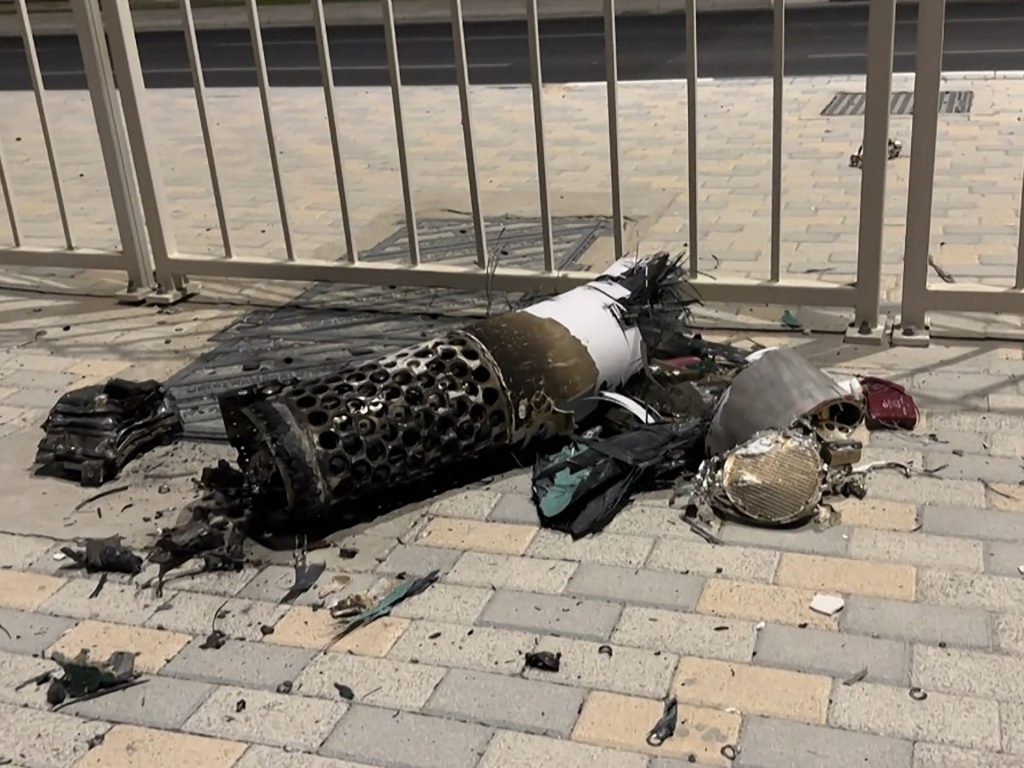
Iran has attacked United States forces stationed at the Al Udeid Air Base in Qatar, saying it was retaliating against the US strikes on Iran’s nuclear sites. The attacks on Monday were confirmed by Iran’s Islamic Revolutionary Guard Corps (IRGC) in a statement addressed to the Iranian people. Consecutive flares, coupled with loud explosions, were seen in Qatar’s capital, Doha, and other parts of the country. Here’s what to know about the Iranian attacks in Qatar. Why did Iran launch an attack in Qatar? The IRGC, in its statement, said it launched a “powerful and devastating missile attack” as part of Operation Annunciation of Victory in response to the “blatant military aggression” by the US on Iran’s nuclear facilities. The IRGC also said its “decisive action” sent a message to the White House and its allies that Iran would, “under no circumstances, leave any aggression against its territorial integrity, sovereignty, or national security unanswered”. “US bases and mobile military assets in the region are not points of strength, but rather major vulnerabilities,” the statement warned. Where did Iran attack and why? Iran said it targeted the Al Udeid Air Base in Qatar because it “serves as the command centre of the US Air Force and is the largest strategic asset of the American terrorist army in West Asia”. Tehran also noted that the missile strike was conducted away from residential areas in Qatar. “This action does not pose any threat to the friendly and brotherly country, Qatar, and its noble people, and the Islamic Republic of Iran remains committed to maintaining and continuing warm and historic relations with Qatar,” Iran’s Supreme National Security Council said in a statement. Advertisement What and where is the Al Udeid Air Base? Al Udeid is the largest US military base in the Middle East, housing approximately 10,000 US troops. The 24-hectare (60-acre) base, located in the desert southwest of Doha, was set up in 1996. It serves as the forward headquarters for US Central Command, which directs US military operations in a huge swath of territory stretching from Egypt in the west to Kazakhstan in the east. The base houses the Qatar Emiri Air Force, the US Air Force, the United Kingdom’s Royal Air Force and other foreign forces. How did Iran attack, and how did Qatar respond? A US defence official, quoted by the Reuters news agency, said that “Al Udeid Air Base was attacked by short-range and medium-range ballistic missiles originating from Iran”. Qatar’s Ministry of Defence, meanwhile, said its air defence systems successfully intercepted the Iranian missiles targeting the base. Qatar said it received information that bases in the region are being targeted, including Al Udeid Air Base. “At 7:30pm (1630 GMT), we received reports that seven missiles were launched from Iran toward Al Udeid Air Base,” Qatari officials said in a briefing later on Monday. They confirmed that Al Udeid Air Base was evacuated before the attack. Its Foreign Ministry decried the attack, saying it is a “violation of Qatar’s sovereignty and airspace and the UN charter”, and that Doha reserves the right to respond. Was there any damage after Iran’s attack? Qatar’s Defence Ministry confirmed that the incident resulted in no deaths or injuries. In a later press briefing, Qatar’s Ministry of Interior confirmed that a total of 19 missiles were fired from Iran. It added that only one of those hit Al Udeid Air Base, but caused no casualties. “We are proud of the response to today’s attack and no damage was reported,” Qatari officials said. What’s happening in Qatar as a result of the Iranian attack? In the hours leading up to the attack, the embassies of the US and the UK in Qatar released statements urging citizens in Qatar to shelter in place until further notice. However, the advisory was lifted a few hours after the attacks had ceased. Several British, American and European schools in the country said they would remain closed on Tuesday. Qatar’s Ministry of Education said all exams set to take place on Tuesday had been rescheduled for Wednesday. During its briefing, Qatar’s Ministry of Interior said the situation in the country was “completely stable” and that all authorities are working in coordination to ensure the safety of the public. Advertisement Jabr al-Naimi from Qatar’s Public Security said the safety of citizens, residents, and residents is of the “utmost priority”. “We will not allow any international or external crisis or conflict to affect our life in Qatar,” he said in a televised press conference. Qatar’s Foreign Ministry also said life is going back to “normal” following the attack, and has reiterated its call for warring parties to negotiate. Why was Qatar’s airspace shut, and when did it reopen? Qatar shut down its airspace temporarily, saying it was “part of the measures taken to ensure the safety of residents and visitors.” It was reopened more than five hours later. Adblock test (Why?)
Trump admin secures pledge from 75% of health insurers in bid to improve patient care

Roughly three-quarters of the nation’s health insurance providers signed a series of commitments this week in an effort to improve patient care by reducing bureaucratic hurdles caused by insurance companies’ prior-authorization requirements. Director of the Centers for Medicare and Medicaid Services, Dr. Mehmet Oz, alongside Health and Human Services Secretary, Robert F. Kennedy Jr., announced the new voluntary pledge from a cadre of insurance providers, who cover roughly 75% of the population, during a press conference Monday. The new commitments are aimed at speeding up and reducing prior-authorization processes used by insurers, a process that has been long-maligned for unnecessarily delaying patient care and other bureaucratic hurdles negatively impacting patients. “The pledge is not a mandate. It’s not a bill, a rule. This is not legislated. This is a opportunity for industry to show itself,” Oz said Monday. “But by the fact that three-quarters of the patients in the country are already covered by participants in this pledge, it’s a good start and the response has been overwhelming.” A NEW LAW IN THIS STATE BANS AUTOMATED INSURANCE CLAIM DENIALS Prior-authorization is a process that requires providers to obtain approval from a patient’s insurance provider before that provider can offer certain treatments or services. Essentially, the process seeks to ensure patients are getting the right solution for a particular problem. However, according to Oz, the process has led to doctors being forced to spend enormous amounts of man-power to satisfy prior-authorization requirements from insurers. He noted during Monday’s press conference that, on average, physicians have to spend 12 hours a week dealing with these requirements, which they see about 40 of per week. “It frustrates doctors. It sometimes results in care that is significantly delayed. It erodes public trust in the healthcare system. It’s something we can’t tolerate,” Oz insisted. DR. OZ SAYS TAXPAYERS FOOTING $14 BILLION BILL FOR MEDICAID FRAUD WHILE ELIGIBLE PATIENTS STRUGGLE FOR CARE The pledge has been adopted by some of the nation’s largest insurance providers, including United Healthcare, Cigna, Humana, Blue Cross & Blue Shield, Aetna and many more. While the industry-led commitments aim to improve care for patients, it could potentially eat into their profits as well if patients start seeking care more often. The commitments from insurers cemented this week include taking active steps to implement a common standardized process for electronic prior-authorization through the development of standardized submission requirements to support faster turnaround time. The goal is for the new framework to be operational by Jan. 1, 2027. Another part of the pledge includes a commitment from individual insurance plans to implement certain reductions in its use of medical prior-authorization by Jan. 1, 2026. On that date, if patients switch insurance providers during the course of treatment, their new plan must honor their existing prior-authorization approvals for 90-days while the patient transitions. DR. OZ UNPACKS POSSIBLE WORK REQUIREMENTS FOR MEDICAID Transparency is also a key part of the new commitments from insurance providers. Health plans enjoined with the commitments will pledge to provide clear and easy-to-understand explanations of prior-authorization determinations, including guidance for appeals. The commitment also states that by 2027, 80% of electronic prior-authorization approvals from companies will be answered in real-time. Oz, during the Monday press conference, compared the industry-led pledge to the Bible, saying, “The meek shall inherit the earth.” “I always grew up thinking ‘meek’ meant weak, but that’s not what meek means. ‘Meek’ means you have a sharp sword, a sword that could do real damage to people around you, but you decide, electively, to sheathe that sword and put it away for a while, so you can do goods, so you can do important things where once in a while we have to get together, even if we’re competitors, and agree,” Oz said Monday. “That’s what these insurance companies and hospital systems have done,” he continued. “They have agreed to sheathe their swords to be meek for a while, to come up with a better solution to a problem that plagues us all.”
Reporter’s Notebook: Who really decides when America goes to war? The answer isn’t so clear
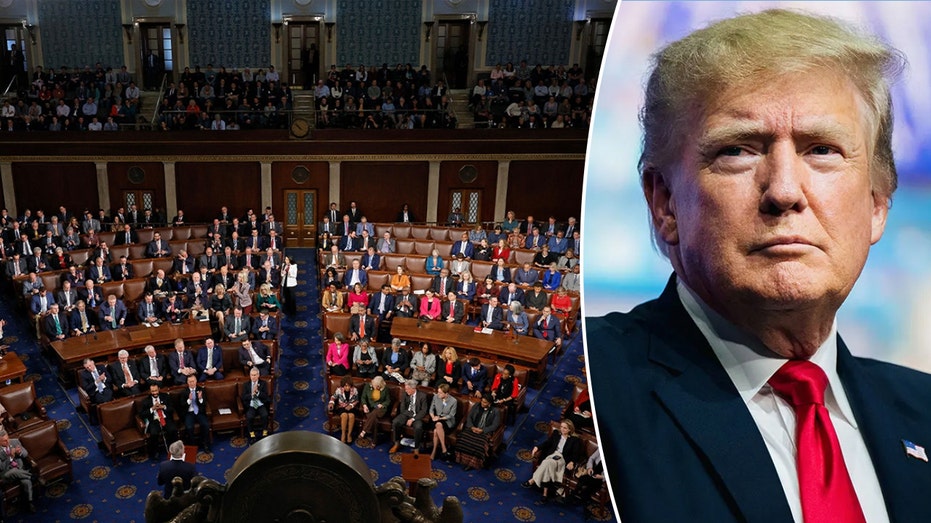
The Founding Fathers were clear about lots of things, but in the era of modern warfare, who calls the shots and has the final say to head into battle was not the Founders’ most crystalline moment. Article I, Section 8 of the Constitution grants Congress the power to “declare War.” But Article II, Section 2 of the Constitution anoints the President “Commander in Chief.” Constitutional scholars argue that Congress must adopt a resolution before sending service personnel into hostilities abroad under the aegis of “war.” But what if you just dispatch B-2 bombers from Whiteman Air Force Base in Missouri to fly halfway around the world and slingshot 14 bunker buster bombs into three of Iran’s nuclear facilities? Or if you greenlight Ohio Class subs to fire 30 Tomahawk missiles into Iran as well? TRUMP RECEIVES MIXED SUPPORT FROM CONGRESS FOR IRAN STRIKES AS WAR POWERS DEBATE RAGES Are you “at war?” Does the president have the authority to do that? What about Congress? Well, if you say the president — or Congress — both can be right. Or wrong. “I’m someone who believes in the Constitution and the War Powers Act,” said Rep. Nancy Mace, R-S.C., on Fox. “(President) Donald Trump did not declare war. He has the right as commander-in-chief to execute a very surgical process.” SENATE GOP AIMS TO APPROVE MAJOR LEGISLATION NEXT WEEK AS TRUMP TOUTS PARTY UNITY Mace noted “there were no troops on the ground.” But then the South Carolina Republican added this: “The 2001 AUMF is still in place. If we didn’t like it, then Congress should get rid of it,” said Mace. OK. Hold on. We know what “troops on the ground” is. We think (think) we understand what “declaring war” is (or do we?). But pray tell, what in the world is an “AUMF?” That’s congressional speak for an “Authorization for Use of Military Force.” It’s kind of like Congress “declaring war.” Both the House and Senate must vote to “declare war.” Transom windows, pie safes and coal chutes in homes all started to become obsolete in the 1940s. So did “declaring war,” apparently. Congress hasn’t “declared war” since 1942. And that was against Romania. In fact, the U.S. has only “declared war” 11 times in history. And Congress doesn’t just “declare war.” Both the House and Senate must vote. And so what the modern Congress does now is approve an “authorization” to send the military into harm’s way overseas. That could be by sea. Troops on the ground. In the air. You name it. Congress authorized the Gulf of Tonkin Resolution in 1964. That was the gateway to years of fighting in Vietnam and Southeast Asia. More recently, Congress blessed an authorization to invade Afghanistan and wage the “war on terror” in 2001 after 9/11. Lawmakers followed that up in the fall of 2002 for authorization to invade Iraq — on suspicion that Saddam Hussein’s regime had an arsenal of weapons of mass destruction. The U.S. and its allies found nothing after the 2003 invasion. To Mace’s point, the 2001 AUMF is so broad that four American presidents have deployed it for various military action around the world. Mace’s argument would be that Iran or its proxies could launch terrorism attacks — or even a nuclear weapon somewhere. So, the 2001 AUMF is justification for American involvement. That said, most foreign policy and military experts argue that the 2001 and 2002 AUMFs are calcified, legislative relics. This is why it’s a political kaleidoscope about how various lawmakers felt about launching attacks on Iran and if Congress must get involved. Democrats who usually oppose President Trump supported airstrikes. ISRAEL-IRAN CONFLICT: LIVE UPDATES “I’ve been saying, ‘Hell yes’ for I think it’s almost six weeks,” said Sen. John Fetterman, D-Pa. Rep. Debbie Wasserman Schultz, D-Fla., is one of the most pro-Israel lawmakers from either party. “This window is open now,” said Wasserman Schultz before the attack. “We can’t take our boot off their neck.” But possible strikes worried lawmakers even before the U.S. launched them. There’s concern the conflagration could devolve into a broader conflict. “The idea that one strike is going to be adequate, that it’s going to be one and done, I think is a misconception,” said Sen. Richard Blumenthal, D-Conn. Before the conflict, bipartisan House members just returned from Saudi Arabia, the United Arab Emirates and Bahrain. “They are worried that this will escalate,” said Rep. Don Bacon, R-Neb. “And it wouldn’t take a whole lot for it to spiral out of control.” This is why Reps. Thomas Massie, R-Ky., and Ro Khanna, D-Calif., wanted the House to vote on their resolution before the U.S. attacked Iran. “I wouldn’t call my side of the MAGA base isolationists. We are exhausted. We are tired from all of these wars. And we’re non-interventionists,” said Massie on CBS. “You’re wasting billions of our dollars because we’re sending more troops to the Middle East. What did you accomplish? And why are you oblivious to the American people who are sick of these wars?” said Khanna, also on CBS. Rep. Marjorie Taylor Greene, R-Ga., didn’t mention Trump by name, but in a screed posted on X, she excoriated the decision to strike Iran. “Only 6 months in and we are back into foreign wars, regime change, and world war 3. It feels like a complete bait and switch to please the neocons, warmongers, military industrial complex contracts, and neocon tv personalities that MAGA hates and who were NEVER TRUMPERS!” wrote Greene. Rep. Warren Davidson, R-Ohio, also questioned the authority of the president to fire on Iran. “While President Trump’s decision may prove just, it’s hard to conceive a rationale that’s Constitutional,” wrote Davidson on social media. But when it came to Republicans criticizing those who went against Trump, most GOPers took on Massie. “I’m not sure what’s going on with Thomas. He votes no against everything,” said Rep. Greg Murphy, R-N.C., on Fox Business. “I’m not sure why he’s even here anymore.” “He
TribCast: A special legislative session is coming
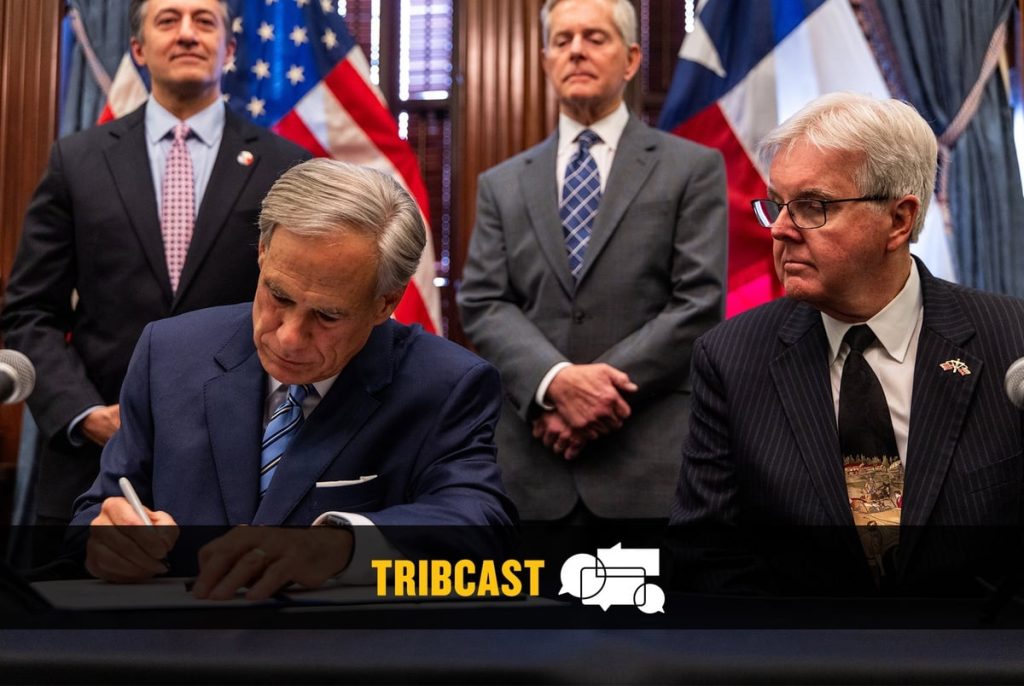
This week, we run an emergency episode to discuss Gov. Greg Abbott vetoing Texas THC ban and calling a special session. Will redistricting end up on the agenda?
Lt. Gov. Patrick rips Gov. Abbott for vetoing THC ban, digs in against calls for regulation
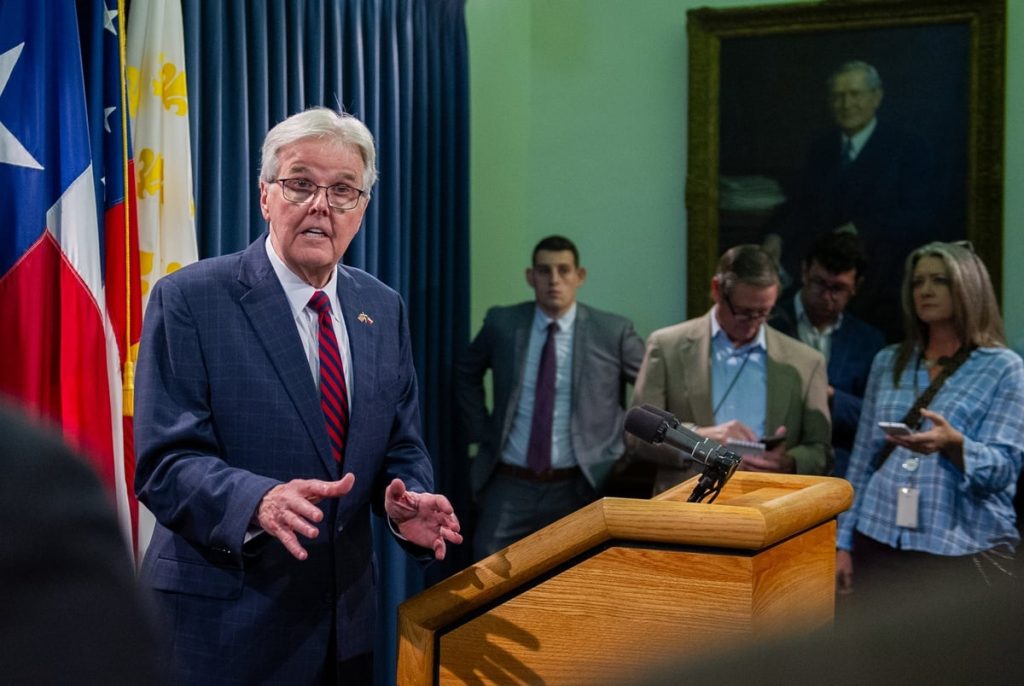
The clash marks a rare break between two of the most powerful Republicans in Texas after a legislative session that ushered in a series of conservative victories.
Sen. Joan Huffman joins GOP field vying to succeed Ken Paxton as Texas attorney general
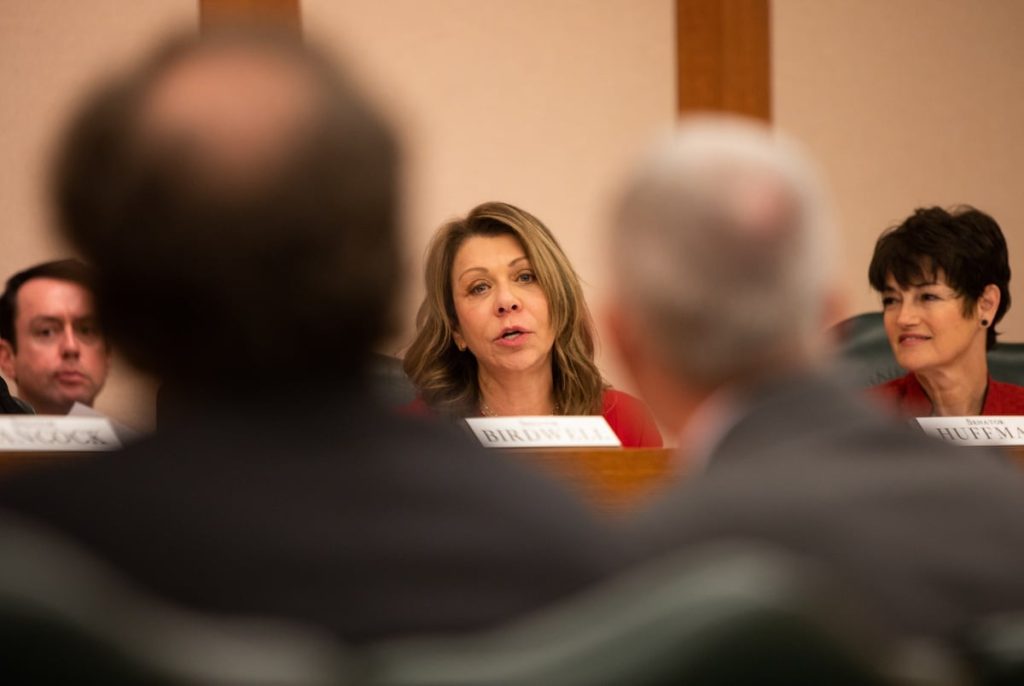
In her announcement, Huffman framed herself as the most experienced candidate, pointing to her time as a prosecutor, judge and chair of key Senate committees.
Supreme Court allows Trump’s third-country deportations, in major test for president
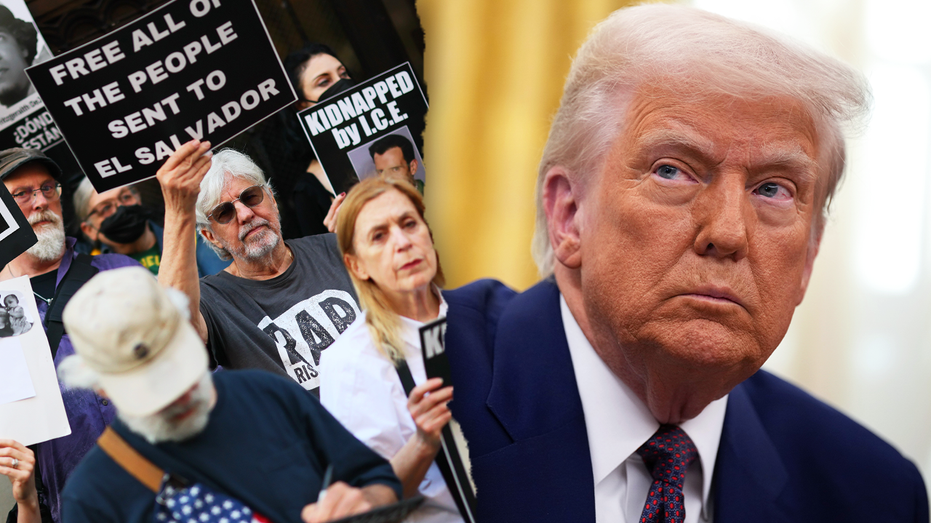
The Supreme Court on Monday granted the Trump administration’s request to stay a lower court injunction blocking them from deporting individuals to third countries without prior notice— a near-term win for the Trump administration as it looks to quickly enforce its immigration crackdown. Justices on the high court ruled 6-3 to stay the lower court injunction, with Justices Sonia Sotomayor, Elena Kagan, and Ketanji Brown Jackson dissenting. “Rather than allowing our lower court colleagues to manage this high-stakes litigation with the care and attention it plainly requires, this Court now intervenes to grant the Government emergency relief from an order it has repeatedly defied,” Justice Sotomayor said. “I cannot join so gross an abuse of the Court’s equitable discretion,” she added. At issue was a group of migrants challenging their removals to third countries, or countries that were not their country of origin. Lawyers for those migrants had urged the Supreme Court earlier this month to leave in place a ruling from U.S. District Judge Brian Murphy, who previously ordered the Trump administration to keep in U.S. custody all migrants slated for deportation to a country not “explicitly” named in their removal orders – known as a third-country deportation. Murphy, a federal judge in Boston, presided over a class-action lawsuit from migrants who are challenging deportations to third countries, including South Sudan, El Salvador and other countries, including Costa Rica, Guatemala and others that the administration has reportedly eyed in its ongoing wave of deportations. SUPREME COURT ALLOWS TRUMP ADMIN TO MOVE ON ENDING LEGAL PROTECTIONS FOR SOME VENEZUELAN MIGRANTS Murphy ruled that migrants must remain in U.S. custody until they can have the opportunity to conduct a “reasonable fear interview,” or the chance to explain to U.S. officials any fear of persecution or torture should they be released into the country. Murphy stressed his order does not bar Trump “from executing removal orders to third countries.” Instead, he emphasized in an earlier order, “it simply requires” the government “to comply with the law when carrying” out such removals under the U.S. Constitution and the Trump administration’s wave of eleventh-hour removals and deportations. In appealing the case to the Supreme Court, U.S. Solicitor General D. John Sauer argued that Judge Murphy’s ruling had blocked them from removing “some of the worst of the worst illegal aliens,” including a class of migrants sent to South Sudan earlier this year without due process or notice. He reiterated in a separate order that the migrants remain in U.S. custody at a military base in Djibouti until each of them could be given a “reasonable fear interview,” or a chance to explain to U.S. officials any fear of persecution or torture, should they be released into South Sudanese custody. US JUDGE ACCUSES TRUMP ADMIN OF ‘MANUFACTURING CHAOS’ IN SOUTH SUDAN DEPORTATIONS, ESCALATING FEUD The Supreme Court update comes after a flurry of lower court challenges aimed at blocking Trump’s immigration crackdown in his second White House term. U.S. judges have repeatedly ruled that the Trump administration has violated due process by failing to notify the migrants of their imminent removals, or afford them any opportunity to challenge their deportations in court – a view reiterated, albeit narrowly, by the Supreme Court four separate times since Trump took office. White House officials, meanwhile, have blasted so-called “activist” judges as attempting to enact a political agenda, and have repeatedly rejected the notion that illegal immigrants are not entitled to due process. As many as a dozen people from several countries, including Vietnam and Myanmar, were allegedly ordered deported to South Sudan— which lawyers for the immigrants previously argued was in “clear violation” of Judge Murphy’s order. This is a breaking news story. Check back for updates.
Moderate House Dem Jared Golden says Trump was ‘right’ to strike Iran
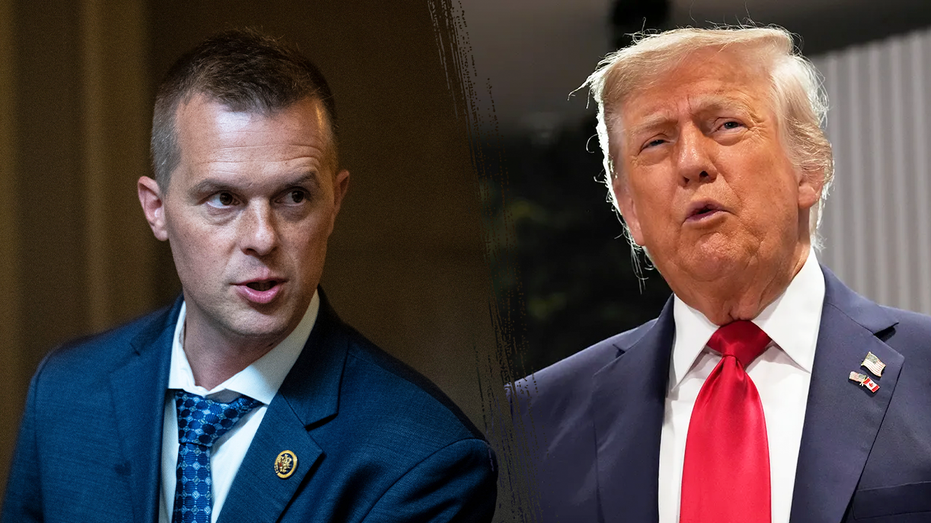
A moderate House Democrat is offering rare praise for President Donald Trump after his precision strikes on Iran over the weekend. “Iran is governed by a regime that is hostile to the United States and allied with others that seek the destruction of America. They sponsor terrorist organizations that have killed American troops and citizens and are a source of chaos and bloodshed in the region,” Rep. Jared Golden, D-Maine, said in a statement Monday. “Based on what I know so far, I believe the president was right to launch limited strikes to deter that outcome.” ISRAEL’S ACTIONS AGAINST IRAN CREATE STRATEGIC OPPORTUNITY FOR US IN NUCLEAR TALKS, EXPERTS SAY He cited the International Atomic Energy Agency (IAEA) assessing that Iran was close to a nuclear weapon. “It is important now that the country learns what information helped inform the president’s decision and the timing of these strikes, and that we learn more about whether we were successful in destroying Iran’s nuclear program,” Golden said. “But what matters most now is what happens next: Just today, Iran launched missiles at American bases in Iraq and Qatar. The top priority for the president and his administration, as well as for Congress, must be to use every tool at our disposal to defend Americans and deter further escalation by Tehran.” Golden said he also looked forward to the House of Representatives’ expected briefing on the situation in Iran. The House-wide briefing is expected to occur at 3 p.m. Tuesday, House Minority Leader Hakeem Jeffries, D-N.Y., said Monday. The Democratic response in Washington to Trump’s strikes has been largely negative, save for a handful of pro-Israel lawmakers, including Sen. John Fetterman, D-Pa. Golden has been known to break from his own party on issues like trade, border security and national security, among other issues. A FULL BREAKDOWN OF OPERATION MIDNIGHT HAMMER, THE ‘LARGEST B-2 OPERATIONAL STRIKE IN US HISTORY’ Golden won his seat in Maine’s 2nd Congressional District by less than 1% in 2024, while Trump carried the district by 10%. When reached for comment on his statement, the White House pointed Fox News Digital to Trump’s recent Truth Social post on Iran’s attack on Al-Udeid Air Base in Qatar, which houses U.S. troops. “Iran has officially responded to our Obliteration of their Nuclear Facilities with a very weak response, which we expected, and have very effectively countered. There have been 14 missiles fired — 13 were knocked down, and 1 was ‘set free,’ because it was headed in a nonthreatening direction. I am pleased to report that NO Americans were harmed, and hardly any damage was done,” Trump said. “Most importantly, they’ve gotten it all out of their ‘system,’ and there will, hopefully, be no further HATE. I want to thank Iran for giving us early notice, which made it possible for no lives to be lost, and nobody to be injured. Perhaps Iran can now proceed to Peace and Harmony in the Region, and I will enthusiastically encourage Israel to do the same.”
Florida AG asks Supreme Court to allow him to continue enforcing controversial immigration law
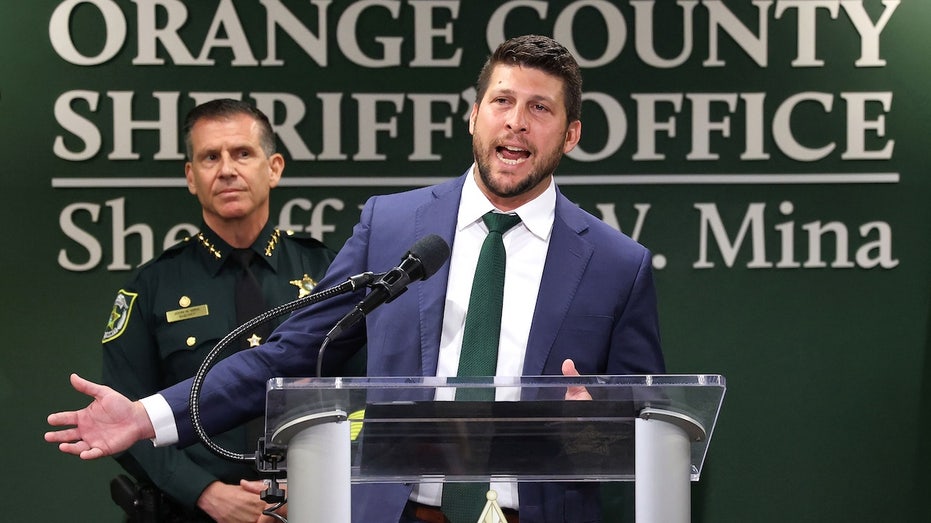
Florida’s attorney general asked the Supreme Court on Monday to allow it to proceed with enforcing a controversial immigration law that seeks to criminalize the arrival or reentry of illegal migrants to the state — teeing up yet another high-stakes, immigration-focused court clash between the Trump administration and immigration advocates. Florida Attorney General James Uthmeier asked justices on the high court to intervene immediately and allow the state to implement Senate Bill 4C, or the Florida law that seeks to criminalize the arrival of undocumented immigrants who had been previously been deported, or who were previously denied entry to the U.S. That law was blocked earlier this year by a federal judge in Miami. The 11th U.S. Circuit Court of Appeals also declined to lift the injunction, paving the way for Uthmeier to seek emergency relief from the Supreme Court. JUDGES V TRUMP: HERE ARE THE KEY COURT BATTLES HALTING THE WHITE HOUSE AGENDA Uthmeier on Monday urged justices to reverse the federal court’s injunction, which he described as detrimental to both state and national interests. “Illegal immigration continues to wreak havoc in the state while [the] law cannot be enforced,” Uthmeier’s office said in the filing Monday. Absent Supreme Court intervention, Uthmeier argued that Florida and its citizens “will remain disabled from combatting the serious harms of illegal immigration for years as this litigation proceeds through the lower courts.” The request comes after U.S. District Judge Kathleen Williams issued an injunction earlier this year blocking Florida from enforcing the law, which she described as likely unconstitutional, and conflicting with existing federal laws. APPEALS COURT BLOCKS TRUMP ADMIN’S DEPORTATION FLIGHTS IN ALIEN ENEMIES ACT IMMIGRATION SUIT This was opposed by Florida’s attorney general, who argued Monday that “nothing in [S.B.C] poses a conflict with federal law.” That failed to convince Judge Williams, however. Williams, an Obama appointee, took the extraordinary step of initiating contempt proceedings against Uthmeier earlier this month for allegedly violating her injunction and allowing police to make arrests under the law. Uthmeier, meanwhile, argued Monday that the Supreme Court should intervene and reverse the lower court rulings, which he described in his appeal as a measure “designed to protect future victims of the violence, drugs, and trafficking fueled by the entry and re-entry into Florida of unauthorized aliens.” “Without this Court’s intervention, Florida and its citizens will remain disabled from combatting the serious harms of illegal immigration for years as this litigation proceeds through the lower courts,” he said. It is unclear if the Supreme Court will take up the case. The emergency appeal from Florida’s attorney general comes at a time when the Supreme Court is already weighing six emergency applications from the Trump administration, including on weighty issues such as birthright citizenship, universal injunctions, and Trump’s executive branch authorities, among other things.
Top GOP senator gets inside look at ICE’s dangerous mission as agents battle surge in assaults
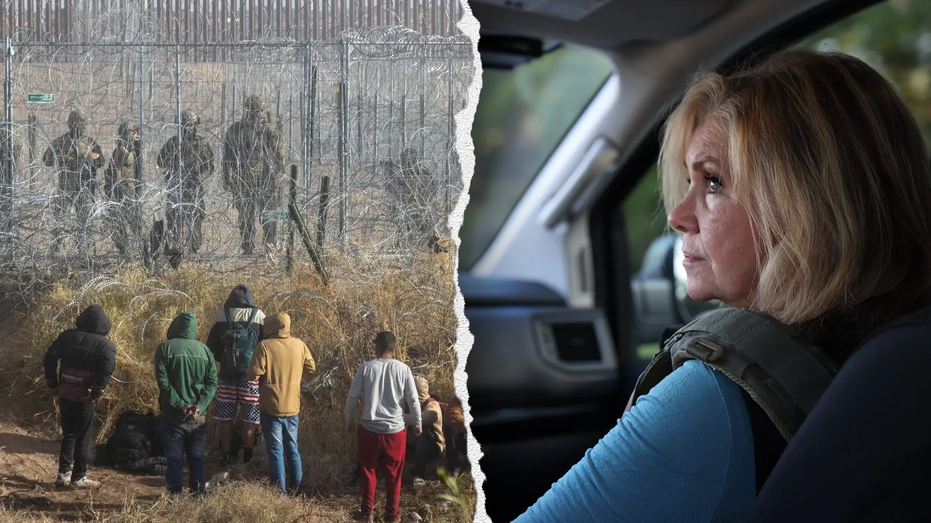
EXCLUSIVE: Tennessee Sen. Marsha Blackburn rode along with Immigration and Customs Enforcement in the Volunteer State on Friday as she touted new legislation to penalize those who dox federal law enforcement. During Blackburn’s ride-along in Rutherford County, a suburban and rural area just outside of Nashville, ICE officers were “targeting” an illegal immigrant convicted of child sexual abuse, according to her office. “You really don’t appreciate the amount of work that goes into apprehensions and deportations until you speak with the men and women who are working so hard behind the scenes every single day and see the risks they take firsthand. As ICE officers face a 500% increase in assaults against them, we owe these agents a debt of gratitude for all that they do to keep us safe,” Blackburn said in a statement. NASHVILLE MAYOR STANDS BEHIND DOXING ICE AGENTS EVEN AFTER OFFICIALS SAID HIS ACTIONS PUT THEM IN DANGER “Lawless, left-wing politicians are fueling the surge in assaults against law enforcement officers who risk their lives to keep our communities safe. In stark contrast, President Trump and his administration are standing up for law-abiding citizens over criminal illegal aliens by empowering ICE agents to do their jobs,” she added. Tennessee, particularly the city of Nashville, has become a flash point in the illegal immigration discussion. Nashville Mayor Freddie O’Connell, a Democrat, has opposed the Trump administration’s immigration policies. He recently faced backlash for the names of federal officers being released in a public report, which resulted in doxxing accusations. SCOOP: TOP CONGRESSIONAL COMMITTEES LAUNCH PROBE INTO NASHVILLE MAYOR ACCUSED OF BLOCKING ICE “I wouldn’t say it was an endangerment process. I would say they may have some concerns — I’m far more concerned about the overall dynamic we have about unmarked, unidentifiable masked people whisking people into vehicles — I think that’s a bigger concern,” O’Connell said last week at a press conference. CLICK HERE FOR MORE IMMIGRATION COVERAGE He is currently under investigation by GOP House lawmakers, including Nashville-area Rep. Andy Ogles, for potentially interfering with federal immigration efforts. “It’s not a process that I would characterize as doxxing. It was an unintentional release of names that were already part of a public record,” O’Connell added at the time. BLUE CITY MAYOR SAYS ICE ARRESTS OF DANGEROUS CRIMINALS ARE NOT ‘FOCUSED ON MAKING US SAFER’ “They were already part of a public record by being in the Department of Emergency Communication’s calls, so I don’t think it puts them at additional risk. But it’s also not an intention of the executive order under which those names are released,” he added. Blackburn introduced the “Protecting Law Enforcement from Doxxing Act” earlier this month to make it illegal to release the name of a federal officer if there was an intention to “obstruct” criminal or immigration proceedings, which was a direct response to the O’Connell controversy and the recent 500% spike in assaults on ICE agents, according to the Department of Homeland Security. Besides the mayor, a recent hit-and-run case allegedly perpetrated by a Venezuelan illegal immigrant in Nashville made national waves, as the suspect is still at large.