

Call with China’s Xi, and Trump-Musk exchange fueled barbs during 20th week in office
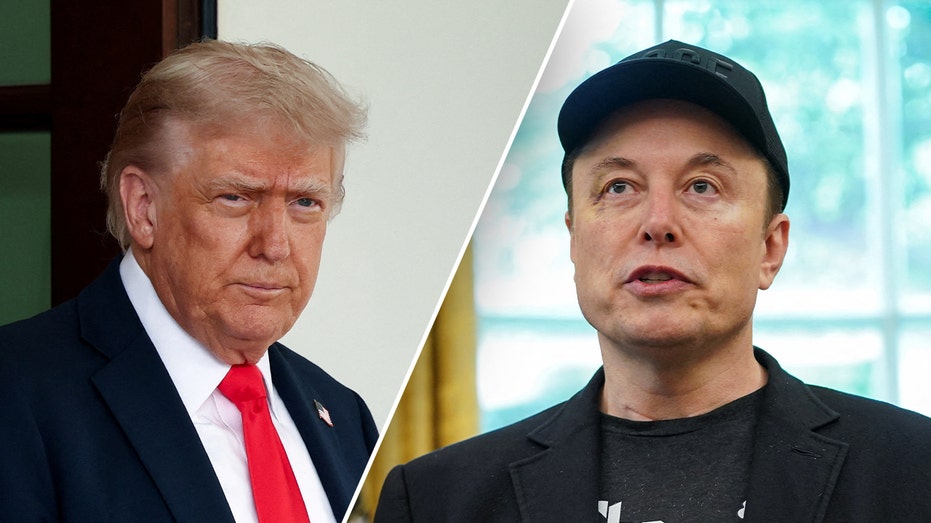
President Donald Trump and SpaceX and Tesla CEO Elon Musk engaged in a public feud Thursday, less than a week after the White House held a farewell press conference for Musk highlighting his contributions spearheading the Department of Government Efficiency (DOGE). Musk departed his tenure as a special government employee with DOGE May 30, but swiftly launched into criticisms of Trump’s massive tax and spending package dubbed the “big, beautiful, bill.” Tuesday, Musk labeled the measure a “disgusting abomination” because of reports it ramps up the federal deficit. On Thursday, Trump told reporters in the Oval Office that Musk opposed the bill because it eliminates an electric vehicle tax credit that benefits companies like Tesla. But Trump said that provision has always been part of the measure. “I’m very disappointed, because Elon knew the inner workings of this bill better than almost anybody sitting here, better than you people,” Trump said in the Oval Office in a meeting with German Chancellor Friedrich Merz. “He knew everything about it. He had no problem with it. All of a sudden he had a problem, and he only developed the problem when he found out that we’re going to have to cut the EV mandate, because that’s billions and billions of dollars, and it really is unfair.” TRUMP NOT INTERESTED IN TALKING TO MUSK: ‘ELON’S TOTALLY LOST IT’ Musk immediately responded on X to Trump’s statements, urging a removal of the “disgusting pork” included in the measure. He also said it was “false” that he was shown the measure “even once.” The two continued to publicly spar against one another, with Musk asserting that Trump wouldn’t have won the 2024 election if it weren’t for his own backing. Meanwhile, Trump accused Musk of going “CRAZY” over cuts to the EV credits, and said that Musk was “wearing thin.” Additionally, Trump told Fox News on Friday that “Elon’s totally lost it” and was not interested in speaking over the phone with Musk, despite media reports suggesting the two would talk. Here’s what also happened this week: Chancellor of Germany Friedrich Merz met with Trump at the White House Thursday, where the two discussed the war in Ukraine. While Merz asserted that the U.S. was in a powerful spot to bring a meaningful end to the conflict between Ukraine and Russia, Trump offered that the world might need to “let them fight for a little while.” “America is again in a very strong position to do something on this war and ending this war,” Merz said. MERZ SAYS US IN A ‘STRONG POSITION’ TO STOP PUTIN Merz said that Germany was willing to help however it could, and wanted to discuss options to partner with the U.S. to bring peace. Likewise, Merz suggested that European allies exert additional pressure on Russia to end the conflict. But Trump said that he told Putin in a recent call that perhaps both countries would need to feel the consequences of fighting more acutely, claiming he told Putin “maybe you’re going to have to keep fighting and suffering a lot.” “Sometimes you see two young children fighting like crazy – they hate each other, and they’re fighting in a park, and you try and pull them apart, they don’t want to be pulled,” Trump said. “Sometimes you’re better off letting them fight for a while and then pulling them apart.” Trump spoke with Chinese President Xi Jinping Thursday to discuss trade negotiations between Washington and Beijing. “I just concluded a very good phone call with President Xi, of China, discussing some of the intricacies of our recently made, and agreed to, Trade Deal,” Trump said Thursday in a Truth Social post. “The call lasted approximately one and a half hours, and resulted in a very positive conclusion for both Countries.” Trump said the conversation focused “almost entirely” on trade, and that Xi invited the U.S. president and first lady Melania Trump to visit China. Likewise, Trump reciprocated and invited Xi and his wife, Peng Liyuan, to visit the U.S. TRUMP TOUTS ‘VERY POSITIVE’ BREAKTHROUGH WITH XI AFTER SLAMMING CHINA FOR TRADE VIOLATION The call comes nearly a week after Trump condemned China May 30 for violating an initial trade agreement that the U.S. and China hashed out in May. And on Wednesday, Trump said Xi was “extremely hard to make a deal with” in a Truth Social post. The negotiations from May prompted both countries to agree that the U.S. would lower its tariffs against Chinese imports from 145% to 30%, and China would reduce its tariffs against U.S. imports from 125% to 10%. Fox News’ Caitlin McFall contributed to this report.
Trump’s conservative allies warn Congress faces critical ‘test’ with $9.4B spending cut proposal
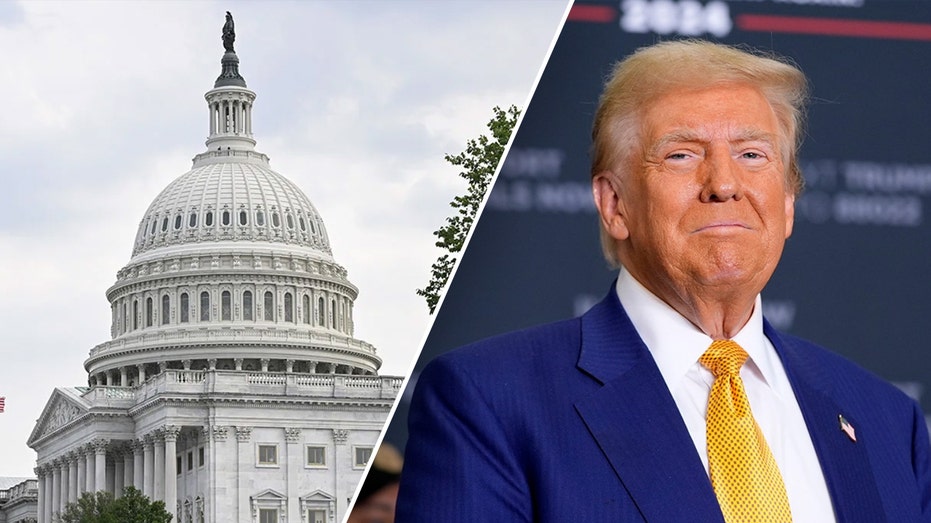
Some of the White House’s conservative House allies say they’re interpreting the upcoming vote on President Donald Trump’s $9.4 billion spending cut proposal as a “test” of what Congress can achieve in terms of rolling back federal funding. Rep. Chip Roy, R-Texas, said he would not speak for members of the Trump administration but added, “I do think it is a test.” “And I think this is going to demonstrate whether Congress has the fortitude to do what they always say they’ll do,” Roy said. “Cut the minimal amount of spending – $9 billion, NPR, PBS, things you complain about for a long time, or are they going to go back into their parochial politics?” House GOP leaders unveiled legislation seeking to codify Trump’s spending cut request, known as a rescissions package, on Friday. It’s expected to get a House-wide vote sometime next week. MEET THE TRUMP-PICKED LAWMAKERS GIVING SPEAKER JOHNSON A FULL HOUSE GOP CONFERENCE “The rescissions request sent to Congress by the Trump Administration takes the federal government in a new direction where we actually cut waste, fraud, and abuse and hold agencies accountable to the American people,” House Majority Leader Steve Scalise, R-La., said in a statement introducing the bill. The legislation would claw back funding that Congress already appropriated to PBS, NPR, and the U.S. Agency for International Development (USAID) – cuts outlined by Elon Musk’s Department of Government Efficiency (DOGE) earlier this year. And while several Republican leaders and officials have already said they expect to see more rescissions requests down the line, some people who spoke with Fox News Digital believe the White House is watching how Congress handles this first package before deciding on next steps. “You’re dead right,” Rep. Ralph Norman, R-S.C., told Fox News Digital when asked if the rescissions package was a test. “I think that it’s a test case – if we can’t get that…then we’re not serious about cutting the budget.” A rescissions package only needs simple majorities in the House and Senate to pass. But Republicans in both chambers have perilously slim majorities that afford them few defections. Republicans are also racing the clock – a rescissions package has 45 days to be considered otherwise it is considered rejected and the funding reinstated. MIKE JOHNSON, DONALD TRUMP GET ‘BIG, ‘BEAUTIFUL’ WIN AS BUDGET PASSES HOUSE Rep. Lance Gooden, R-Texas, did not directly say whether he viewed the spending cuts as a test but dismissed any potential concerns. “This is very low-hanging fruit, and I don’t anticipate any problems,” Gooden told Fox News Digital. “I’ve heard a few comments in the media, but I don’t think they’re serious comments. If someone on the Republican side can make a case for PBS, but they won’t take a tough vote against illegal immigration, then we’ve got a lot of problems.” Paul Winfree, president and CEO of the Economic Policy Innovation Center (EPIC), told Fox News Digital last week, “This first rescissions package from President Trump is a test as to whether Congress has the ability to deliver on his mandate by canceling wasteful spending through a filibuster-proof process.” “If they can’t then it’s a signal for the president to turn up the dial with other tools at his disposal,” Winfree, who served as Director of Budget Policy in the first Trump administration, said. Both Roy and Norman suggested a process known as “pocket rescissions” could be at least one backup plan – and one that Office of Management and Budget Director Russell Vought has floated himself. “Pocket rescissions” essentially would mean the White House introduces its spending cut proposal less than 45 days before the end of the fiscal year on Sept. 30. In theory, it would run out the clock on those funds and allow them to expire whether Congress acted or not. Vought told reporters after meeting with Speaker Mike Johnson, R-La., on Monday that he wanted to “see if it passes” but was “open” to further rescissions packages. “We want to send up general rescissions bills, to use the process if it’s appropriate, to get them through the House and the Senate,” Vought said. “We also have pocket rescissions, which you’ve begun to hear me talk a lot about, to be able to use the end of the fiscal year to send up a similar rescissions, and have the funds expire. So there’s a lot of things that we’re looking at.” Still, some moderate Republicans may chafe at the conservative spending cuts. Rep. Don Bacon, R-Neb., refused to comment on whether he’d support the legislation before seeing the details but alluded to some concerns. “Certainly I’m giving you a non-answer right now until I read the details,” Bacon said. “It does bother me because I have a great rapport with Nebraska Public Radio and TV. I think they’ve been great to work with, and so that would be one I hope they don’t put in.” He also raised concerns about some specific USAID programs, including critical investments to fight Ebola and HIV in Africa. The legislation is expected to come before the House Rules Committee, the final gatekeeper before most legislation sees a House-wide vote, on Tuesday afternoon. It’s separate from Trump’s “one big, beautiful bill,” a broad piece of legislation advancing the president’s tax, energy, and immigration agenda through the budget reconciliation process.
TIMELINE: Inside the evolving relationship between Trump and Musk from first term to this week’s fallout
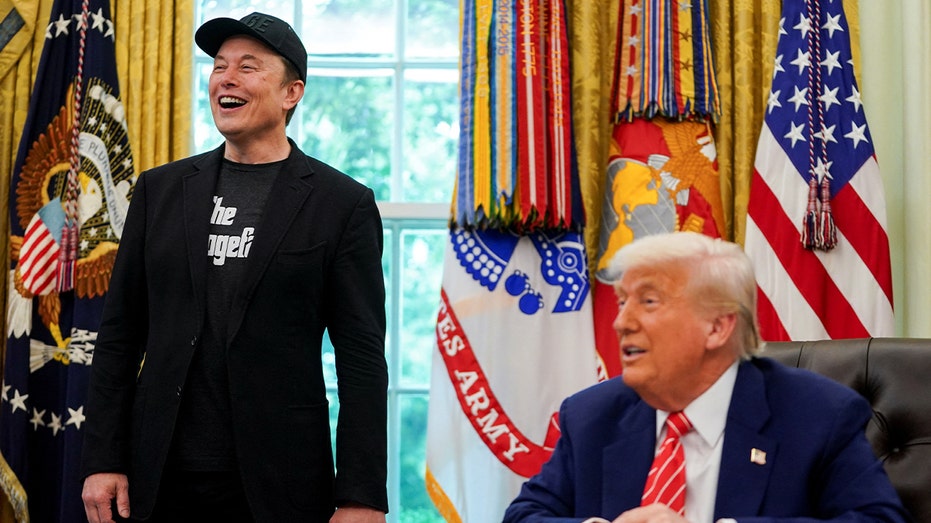
The fallout between Elon Musk and President Donald Trump is an evolving situation marked by a public blowup on Thursday, but their relationship ties back to Trump’s first term and even earlier. A November 2016 CNBC interview with the Tesla CEO, who’s now the richest man in the world, took a critical tone of the now president just days before he was elected president in an upset that signified the strength of the populist movement. “Honestly, I think Hillary’s economic policies and her environmental policies particularly are the right ones, you know, but yeah. Also, I don’t think this is the finest moment in our democracy at all,” Musk said. “Well, I feel a bit stronger that probably he’s not the right guy. He just doesn’t seem to have the sort of character that reflects well on the United States,” he later added in the interview. ‘KILL BILL’: ELON MUSK’S CONSERVATIVE EVOLUTION PUTS HIM AT ODDS WITH TRUMP ON KEY LEGISLATION During Trump’s first term, Musk was part of some of his economic advisory councils, which often includes CEOs, but ultimately left his post because he disagreed with the president’s move to exit the Paris Climate Accords. “Am departing presidential councils. Climate change is real. Leaving Paris is not good for America or the world,” Musk posted at the time. The two continued to have an on-and-off relationship, but there were some positive signs in May 2020. “Elon Musk, congratulations. Congratulations, Elon. Thanks, Elon. For Elon and 8,000 SpaceX employees, today is the fulfillment of a dream almost two decades in the making,” Trump said at the Kennedy Space Center in May 2020. And at the SpaceX Demo-2 launch, Trump said he and Musk communicate regularly. “Well, I won’t get into it. But, yeah — but I speak to him all the time. Great guy. He’s one of our great brains. We like great brains. And Elon has done a fantastic job,” he said. ELON MUSK’S NET WORTH PLUMMETS BY $34B AMID ESCALATING FEUD WITH PRESIDENT TRUMP Fast forward to 2022, when Musk purchased Twitter and renamed it X, and brought back Trump’s account that November, after it was suspended after the events of Jan. 6, 2021. In 2022, Musk also announced that he would vote Republican, but indicated he would back Florida Gov. Ron DeSantis if he opted to seek the nomination. DeSantis launched his campaign on X in a “space,” a virtual public event forum, with Musk, who also reportedly significantly financially backed the Florida governor, according to The Wall Street Journal. However, a major turning point was in July 2024, after the assassination attempt of Trump at a rally in Butler, Penn. “I fully endorse President Trump and hope for his rapid recovery,” Musk posted. Musk then campaigned for the president, including a famous moment when he was jumping on stage at his comeback rally in Butler. WOULD DONALD TRUMP HAVE WON THE 2024 PRESIDENTIAL ELECTION WITHOUT ELON MUSK’S HELP? “I want to say what an honor it is to be here and, you know, the true test of someone’s character is how they behave under fire, right?” Musk said at the rally. “And we had one president who couldn’t climb a flight of stairs and another who was fist pumping after getting shot.” “This is no ordinary election,” the tech CEO continued. “The other side wants to take away your freedom of speech.” “Just be a pest to everyone,” he added. “You know, people on the street everywhere: Vote, vote, vote!” The tech billionaire spent roughly $300 million through America PAC to boost swing state voter efforts, including Pennsylvania. By the time the presidential election rolled around, Trump and Musk appeared to be close friends as the Tesla CEO was with Trump in Mar-a-Lago on election night. Over the next few days, Musk remained in Florida and was reportedly advising Trump on appointments and policy as the transition to a new administration kicked off. A week later, shortly before Musk and the new president appeared at a SpaceX launch together in Texas, Trump announced that Musk and tech entrepreneur Vivek Ramaswamy would be heading up the Department of Government Efficiency in an effort to rid the government of waste, fraud, and abuse. Trump described the pair as “two wonderful Americans’ and although Ramaswamy left that post in January and is now running for governor in Ohio, Musk stayed on and quickly became the face of an agency that made him the main target of attacks from Democrats pushing back on spending cuts that they argued were too drastic. Protests erupted nationwide against Musk and DOGE including violent outbursts at his Tesla dealerships that tanked the company’s stock and were labeled as acts of “domestic terrorism” by the Justice Department. FLASHBACK: TOP FIVE WILDEST MOMENTS FROM ELON MUSK’S DOGE TENURE AS IT COMES TO AN END During the first few months of the year, Musk and Trump were spotted together at several viral events including a UFC fight, an Oval Office meeting where Musk’s son “Little X” stole the show, and a cabinet meeting in late February where Musk was the main focus. In March, Trump hosted Elon at a Tesla showcase in front of the White House amid a dip in Tesla stock where the president told reporters he was purchasing a Tesla while touting the company. As Musk’s time at DOGE began to wind down, his employee classification allowed him to serve for 130 days, the newly formed agency had become the poster child of anti-Trump sentiment from Democrats who consistently attacked the $175 billion in spending cuts that DOGE estimated it delivered. Signs of fracture in the relationship began showing in late May when Musk took a public shot at Trump’s “big beautiful bill” as it made its way through Congress. “I was disappointed to see the massive spending bill, frankly, which increases the budget deficit, not just decreases it, and undermines the work that the DOGE team is doing,” Musk said.
Election Commission rejects Rahul Gandhi’s claims of rigging in 2024 Maharashtra Assembly elections, calls them ‘absolutely absurd’
The Election Commission of India has rejected claims of rigging in the Maharashtra Assembly polls held last year and said defaming it after receiving an unfavourable verdict from the voters is absolutely absurd. The ECI sources were responding to a newspaper article by Congress leader Rahul Gandhi.
Trump admin cracks down antisemitism as DOJ official exposes ‘violent rhetoric’ of radical protesters
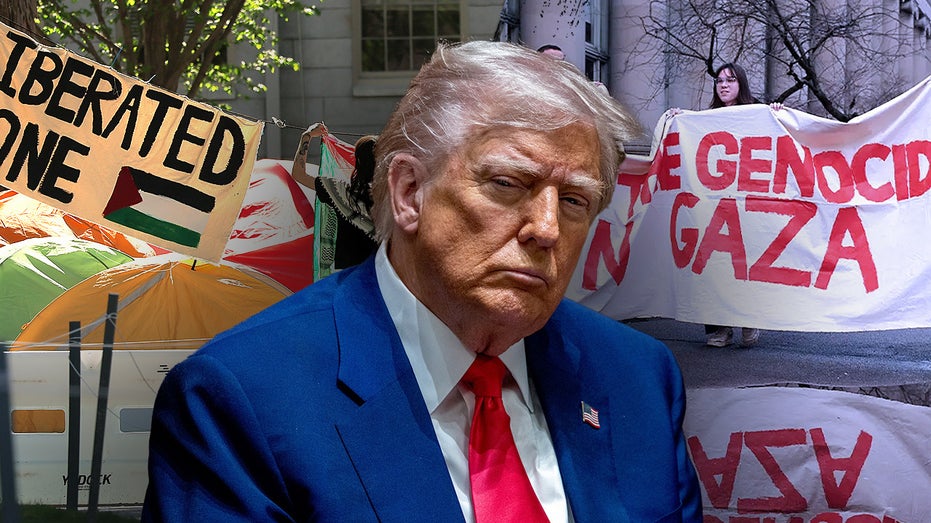
The Trump administration has taken a more aggressive approach than its predecessor toward addressing the nationwide surge in antisemitic incidents, launching investigations, punishing elite universities, and intensifying its immigration enforcement practices. President Donald Trump, through his Department of Justice (DOJ) and other agencies, is using law-and-order tactics that his deputies say are necessary, but that critics say could constitute overreach. Harmeet Dhillon, the DOJ’s assistant attorney general for the Civil Rights Division, told Fox News Digital she has not seen any “close cases” when it comes to weighing antisemitic behavior against First Amendment rights of those who oppose Israel or Judaism. BIDEN EDUCATION DEPT PUT PRIORITY ON PRONOUNS, LEFT BACKLOG OF NEARLY 200 ANTISEMITISM COMPLAINTS: OFFICIAL “Criticizing the government of Israel is not what I’m typically seeing here,” Dhillon said. “I’m seeing an intifada revolution. I’m seeing blocking Jewish students from crossing campuses and destroying property on campus, which is a crime. … Quiet, polite conversation and disagreement with Israeli policy is not really what’s happening here. It’s literally people saying Israel shouldn’t exist — and bringing the revolution to the United States.” Dhillon added that “that type of violent rhetoric has led to violent acts in our country.” After Hamas’s deadly terrorist attack on Israel on Oct. 7, 2023, the FBI’s hate crime statistics showed a sharp spike in anti-Jewish incidents in the U.S. The data runs through December 2023. Anti-Defamation League (ADL) data from 2024 and high-profile incidents this year suggest the trend is continuing. An Egyptian national in the U.S. illegally in Boulder, Colorado, is facing state and federal charges for allegedly injuring 15 people, including elderly victims and a dog last weekend with Molotov cocktails during a peaceful pro-Israel demonstration in support of hostages being held by Hamas terrorists in Gaza. Suspect Mohamed Sabry Soliman, 45, stated to authorities “he wanted to kill all Zionist people and wished they were all dead,” according to an FBI affidavit. During the attack he allegedly yelled “free Palestine,” the agent said. In May, Yaron Lischinsky and Sarah Milgrim, who worked at the Israeli Embassy in Washington, D.C., were gunned down outside the Capitol Jewish Museum in D.C. Suspect Elias Rodriguez of Illinois shouted “free Palestine” as he was detained, and Interim U.S. Attorney for D.C. Jeanine Pirro said her office is investigating the case as a hate crime and act of terrorism. SUSPECT CHARGED WITH MURDERING ISRAELI EMBASSY STAFF COULD FACE DEATH PENALTY In another incident, a man allegedly set fire to Pennsylvania Gov. Josh Shapiro’s residence on the first night of Passover. Emergency call logs released by local authorities revealed that the suspect, Cody Balmer, invoked Palestine after the arson and blamed Shapiro, who is Jewish, for “having my friends killed.” Tarek Bazrouk, who identified himself as a “Jew hater” and said Jewish people were “worthless,” allegedly carried out a series of assaults on Jewish New Yorkers in 2024 and 2025, according to an indictment brought against him in May. Bazrouk wore a green headband that mimicked Hamas garb and a keffiyeh during the attacks, and he celebrated Hamas and Hizballah on his social media, according to federal authorities. Trump warned in an executive order at the start of his presidency that foreign nationals participating in “pro-jihadist protests” would be deported, and he specifically highlighted college campuses as being “infested with radicalism.” Unlike the Biden administration, the Trump administration has since gone to war with elite universities, some of which have been roiled by disruptive pro-Palestinian protests that involve occupying academic buildings and installing encampments. LEO TERRELL SAYS TRUMP ADMIN WILLING TO TAKE HARVARD ANTISEMITISM FIGHT ALL THE WAY TO SUPREME COURT Harvard and Columbia, in particular, are now engaged in litigation after Trump moved to freeze billions of dollars in federal funding for the universities and ban Harvard’s foreign students. The embattled schools have been successful in winning temporary pauses to Trump’s sanctions through the courts, but litigation is pending and legal experts have said they face an uphill battle. The Trump administration has zeroed in on non-citizen students and activists who it has accused of supporting Palestinian causes in ways it deems hostile to U.S. interests. Amid Trump’s pursuit of visa and green card holders, Mahmoud Khalil’s case has become a flashpoint. Khalil was arrested in March and detained after the administration accused him of violating immigration laws by engaging in anti-Israel activism. This week, Khalil said in court papers the administration’s claims against him were “grotesque” and that his activism involved “protesting this Israeli government’s indiscriminate killing of thousands of innocent Palestinians.” Civil rights groups have warned that the government’s hardliner posture risks violating free speech and protest rights. A coalition of 60 groups issued a joint statement this week on antisemitic hate crimes in which it warned the Trump administration not to over-correct because it would “make us all less safe.” “As we condemn these heinous [antisemitic] acts and those who perpetrate hate and violence, we also recommit to ensuring that these events — and the legitimate fear in the Jewish community — are not exploited to justify inhumane immigration policies or to target Arab Americans and those who peacefully and nonviolently exercise their First Amendment rights in support of Palestinian human rights,” the groups said. Dhillon told Fox News Digital: “It’s not my responsibility to balance free speech issues on campus. It’s my responsibility to enforce the federal civil rights laws. And my opinion, there’s really no conflict.” When he took office, Trump vowed in a string of executive orders to direct Attorney General Pam Bondi to “aggressively prosecute terroristic threats, arson, vandalism and violence against American Jews.” Trump appointees at the DOJ then moved quickly to convene an antisemitism task force. Dhillon said there is also frequent communication between the White House, the DOJ, and Jewish leaders about addressing antisemitism. JEWISH STUDENTS WELCOME TRUMP ADMIN’S CRACKDOWN ON ANTISEMITISM, HAMAS SYMPATHIZERS ON CAMPUSES “We have heard from the Jewish community, and I’ve probably met with — I think there’s at least two dozen
Iran condemns ‘racist mentality’ behind US travel ban

An Iranian spokesperson called the move a sign of a ‘supremacist and racist mentality’ dominating US policy. Iran has sharply criticised United States President Donald Trump’s travel ban on its nationals and those of several countries, calling it “racist” and a sign of deep-rooted hostility towards Iranians and Muslims. Trump earlier this week signed an executive order that bars and restricts travellers from 19 countries, including several African and Middle Eastern nations. The policy, set to take effect on Monday, echoes measures introduced during Trump’s previous term in office from 2017-2021. In the executive order, Trump said he “must act to protect the national security” of the US. Alireza Hashemi-Raja, who heads the Iranian Ministry of Foreign Affairs’ department for Iranians abroad, said on Saturday that the decision reveals “the dominance of a supremacist and racist mentality among American policymakers”. “This measure indicates the deep hostility of American decision-makers towards the Iranian and Muslim people,” he said in a statement. The latest restrictions cover nationals from Iran, Afghanistan, Myanmar, Chad, the Republic of the Congo, Equatorial Guinea, Eritrea, Haiti, Libya, Somalia, Sudan, and Yemen. A limited ban has also been applied to travellers from seven other countries. Advertisement Hashemi-Raja argued that the policy breaches international legal norms and denies millions the basic right to travel, based solely on nationality or faith. He said the ban would “entail international responsibility for the US government”, without elaborating. The US and Iran have had no formal diplomatic relations since 1980, following the Islamic Revolution. Despite decades of strained ties, the US remains home to the world’s largest Iranian diaspora, with about 1.5 million Iranians living there as of 2020, according to Tehran’s Foreign Ministry. Adblock test (Why?)
Thailand and Cambodia reinforce troops along disputed border: Thai minister

Defence Minister Phumtham Wechayachai says Thailand reinforces military presence in response to Cambodia move. Thailand has reinforced its military presence along a disputed border with Cambodia following an increase in troops on the other side, the Thai defence minister has said. Tensions between the two Southeast Asian countries have been rising since a Cambodian soldier was killed on May 28 in a brief skirmish in an undemarcated border area. Since the incident, the two governments have been exchanging carefully worded statements committing to dialogue. Thailand’s Defence Minister Phumtham Wechayachai, who also serves as deputy prime minister, said on Saturday that Cambodia had rejected proposals in bilateral talks held on Thursday that could have led to a de-escalation. “Furthermore, there has been a reinforcement of military presence, which has exacerbated tensions along the border,” Phumtham said in a statement. “Consequently, the Royal Thai Government has deemed it necessary to implement additional measures and to reinforce our military posture accordingly.” He did not provide further details on the extent of reinforcements by either side. Advertisement There was no immediate comment from Cambodia. In a separate statement on Saturday, the Thai army said Cambodian civilians had also repeatedly made incursions into Thailand’s territory. “These provocations, and the buildup of military forces, indicate a clear intent to use force,” the Thai army said, adding it would take control of all Thai checkpoints along the Cambodia border. Thailand and Cambodia have for more than a century contested sovereignty at various undemarcated points along their 817km (508-mile) land border. Tension escalated in 2008 over an 11th-century Hindu temple, leading to skirmishes over several years and at least a dozen deaths, including during a weeklong exchange of artillery fire in 2011. On Monday, Cambodia’s Prime Minister Hun Manet said the government would file a complaint with the International Court of Justice (ICJ) over the border dispute. “Cambodia hopes that the Thai side will agree with Cambodia to jointly bring these issues to the International Court of Justice… to prevent armed confrontation again over border uncertainty,” Hun Manet said during a meeting between MPs and senators. Thailand has not recognised the ICJ’s jurisdiction since 1960 and has instead called for bilateral talks. Efforts have been made by Malaysian Prime Minister Anwar Ibrahim, who is the current chair of the Southeast Asian ASEAN bloc, and China to reduce tensions, but the border remains disputed. A meeting of the Cambodia-Thailand Joint Boundary Commission – which addresses border demarcation issues – is scheduled for June 14. Advertisement Adblock test (Why?)
ICE raids in Los Angeles a rush “to deport one million in a year”
[unable to retrieve full-text content] Nayna Gupta of American Immigration Council says US authorities go after non-citizens to rack up their arrest numbers.
‘We practice policy of zero tolerance against terrorism and expect our partners to…’: EAM S Jaishankar to UK Foreign Minister
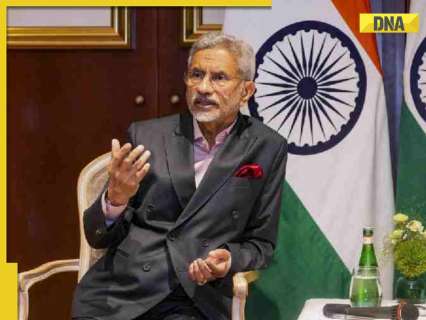
It is learned that the Indian side raised the issue of cross-border terrorism from Pakistan. The UK was among the countries that were in touch with both India and Pakistan in an attempt to de-escalate their tensions during their military conflict last month.
Continued court fights could put Harvard in unwinnable position vs Trump
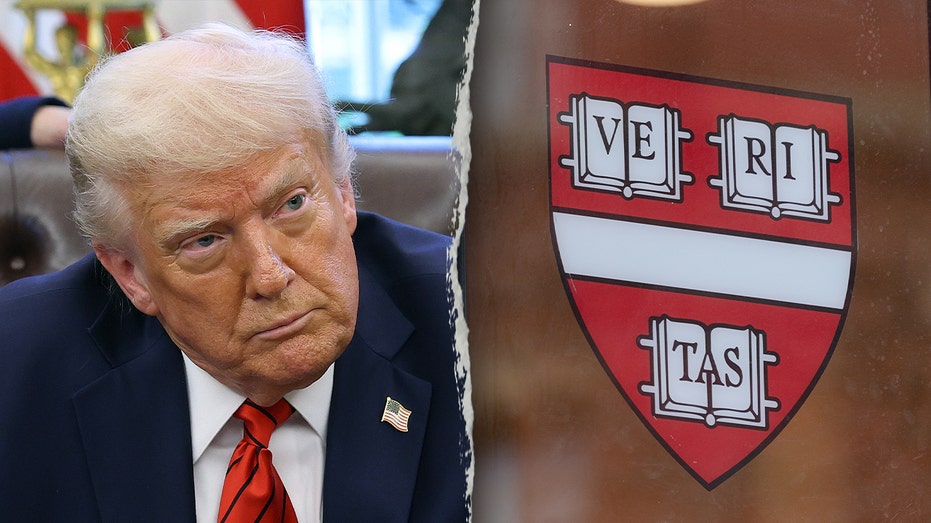
A federal judge in Massachusetts on Thursday granted Harvard University’s emergency request to block, for now, the Trump administration’s effort to ban international students from its campus, siding with Harvard in ruling that the university would likely suffer “immediate and irreparable harm” if enforced. The temporary restraining order from U.S. District Judge Allison D. Burroughs blocks the administration from immediately stripping Harvard of its certification status under the Student and Exchange Visitor Program, or SEVP — a program run by Department of Homeland Security (DHS) that allows universities to sponsor international students for U.S. visas. Burroughs said in her order that Harvard has demonstrated evidence it “will suffer immediate and irreparable injury before there is an opportunity to hear from all parties,” prompting her to temporarily block the SEVP revocation. Still, some see the order as a mere Band-Aid, forestalling a larger court fight between Harvard and the Trump administration — and one that Trump critics say could be unfairly weighted against the nation’s oldest university. STATE DEPARTMENT NOW SCRUTINIZING ALL VISA HOLDERS ASSOCIATED WITH HARVARD “Ultimately, this is about Trump trying to impose his view of the world on everybody else,” Harvard Law professor Noah Feldman said in a radio interview discussing the Trump administration’s actions. Since President Donald Trump took office in January, the administration has frozen more than $2 billion in grants and contracts awarded to the university. It is also targeting the university with investigations led by six separate federal agencies. Combined, these actions have created a wide degree of uncertainty at Harvard. The temporary restraining order handed down on Thursday night is also just that — temporary. Though the decision does block Trump from revoking Harvard’s SEVP status, it’s a near-term fix, designed to allow the merits of the case to be more fully heard. Meanwhile, the administration is almost certain to appeal the case to higher courts, which could be more inclined to side in favor of the administration. And that’s just the procedural angle. JUDGES V TRUMP: HERE ARE THE KEY COURT BATTLES HALTING THE WHITE HOUSE AGENDA Should Harvard lose its status for SEVP certification — a certification it has held for some 70 years — the thousands of international students currently enrolled at Harvard would have a very narrow window to either transfer to another U.S. university, or risk losing their student visas within 180 days, experts told Fox News. Some may opt not to take that chance, and transfer to a different school that’s less likely to be targeted by the administration — even if it means sacrificing, for certainty, a certain level of prestige. Regardless of how the court rules, these actions create “a chilling effect” for international students at Harvard, Aram Gavoor, an associate dean at George Washington University Law School and a former Justice Department attorney, said in an interview. Students “who would otherwise be attending or applying to Harvard University [could be] less inclined to do so, or to make alternative plans for their education In the U.S.,” Gavoor said. Even if the Trump administration loses on the merits of the case, “there’s a point to be argued that it may have won as a function of policy,” Gavoor said. Meanwhile, any financial fallout the school might see as a result is another matter entirely. Though the uncertainty yielded by Trump’s fight against Harvard could prove damaging to the school’s priority of maintaining a diverse international student body, or by offering financial aid to students via the federally operated Pell Grant, these actions alone would unlikely to prove financially devastating in the near-term, experts told Fox News. Harvard could simply opt to fill the slots once taken by international students with any number of eager, well-qualified U.S.-based applicants, David Feldman, a professor at William & Mary who focuses on economic issues and higher education, said in an interview. Harvard is one of just a handful of American universities that has a “need-blind” admissions policy for domestic and international students — that is, they do not take into consideration a student’s financial need or the aid required in weighing a potential applicant. But because international students in the U.S. typically require more aid than domestic students, replacing their slots with domestic students, in the near-term, would likely have little noticeable impact on the revenue it receives for tuition, fees and housing, he said. “This is all about Harvard, choosing the best group of students possible,” Feldman said in an interview. If the administration successfully revokes their SEVP certification, this would effectively just be “constraining them to choose the second-best group,” he said. “Harvard could dump the entire 1,500-person entering class, just dump it completely, and look at the next 1,500 [applicants],” Feldman said. “And by all measurables that you and I would look at, it would look just as good.” Unlike public schools, which are subject to the vagaries of state budgets, private universities like Harvard often have margins built into their budgets in the form of seed money that allows them to allocate more money towards things they’ve identified as goals for the year or years ahead. This allows them to operate with more stability as a result — and inoculates them to a larger degree from the administration’s financial hits. “Uncertainty is bad for them,” Feldman acknowledged. But at the end of the day, he said, “these institutions have the capacity to resist.” “They would rather not — they would rather this whole thing go away,” Feldman said. But the big takeaway, in his view, is that Harvard “is not defenseless.”