

President Droupadi Murmu confers Padma Awards 2025: Check full list of winners here
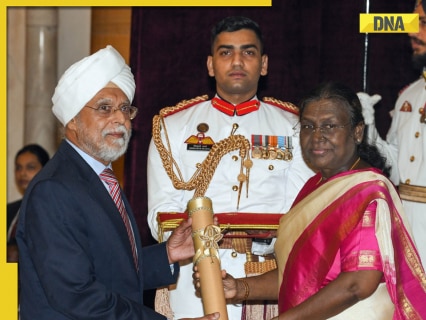
President of India Droupadi Murmu on Tuesday conferred the prestigious Padma Awards to recipients from various walks of life during the second Civil Investiture Ceremony held at Rashtrapati Bhavan in New Delhi. The event was attended by Prime Minister Narendra Modi and several Union Ministers.
Days after Operation Sindoor, India to conduct mock drills in 5 states bordering Pakistan tomorrow
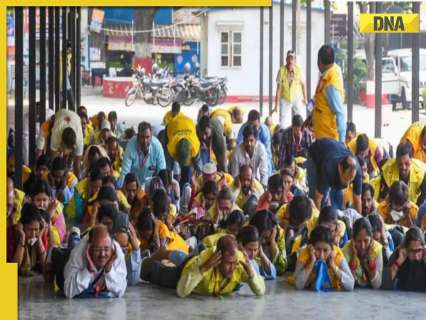
India is all set to conduct mock drills in Gujarat, Rajasthan, Punjab, and Jammu and Kashmir on Thursday. The drills will be held in districts bordering Pakistan.
India takes THIS step to stop spying by China using CCTV cameras…

Indian government’s concern over the Chinese-made CCTV cameras can be gauged by the fact that Israeli operatives allegedly detonated pagers targeting Hezbollah in Lebanon last year.
Beware! Your admission to US university depends on what you do on social media, US to do social media vetting by…
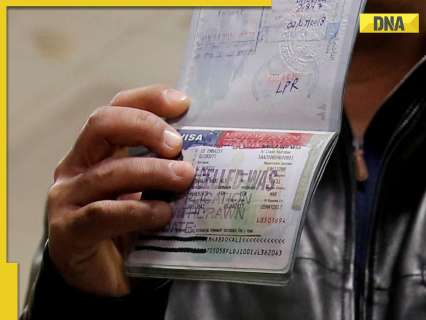
There are professional social media experts to check the credentials and political leaning of an individual by objective assessment of a candidate’s social media profile. It can provide confidence that the applicant is not a risk to the US the university or the company he wants to join.
China hosts Pacific Island nations in bid to bolster diplomatic, trade ties
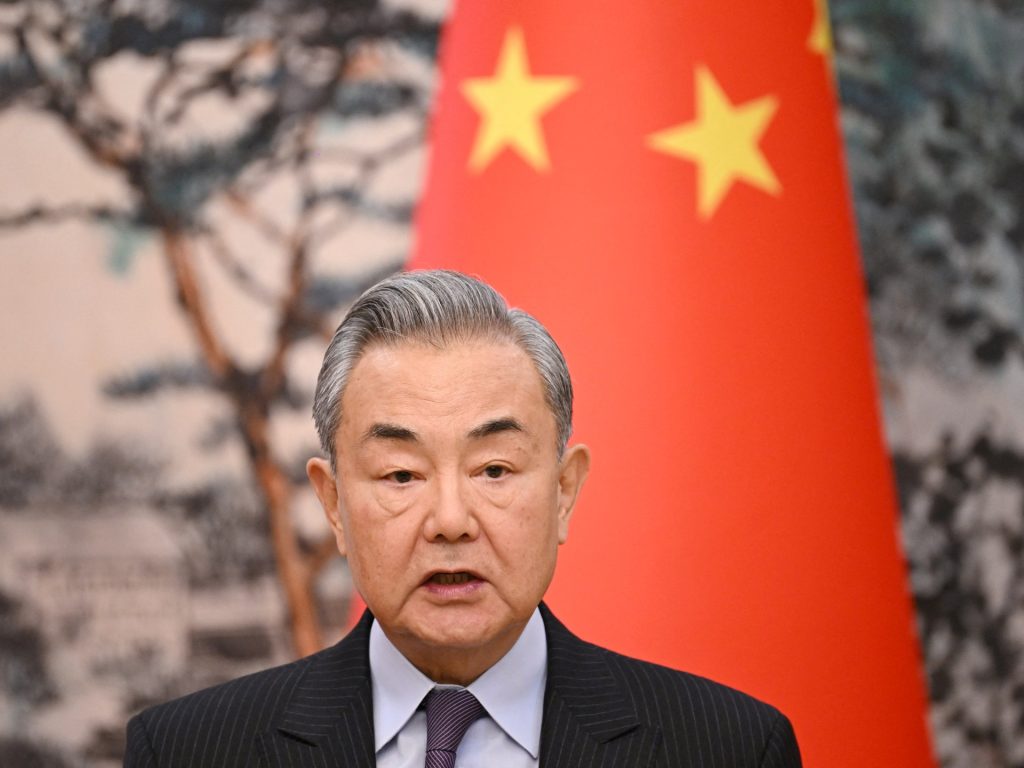
Foreign minister Wang Yi is meeting top diplomats from 11 Pacific nations in the Chinese city of Xiamen. China is hosting a high-level meeting with 11 Pacific Island nations as it seeks to deepen ties and build what it calls a “closer” community with “a shared future” in the strategic region. Chinese Foreign Minister Wang Yi is chairing the meeting in the city of Xiamen on Wednesday. The president of Kiribati, Taneti Maamau, and top diplomats from Niue, Tonga, Nauru, Micronesia, Solomon Islands, Vanuatu, Papua New Guinea, Cook Islands, Fiji and Samoa are attending. The two-day meeting is the third such gathering, but the first to happen in person in China. Al Jazeera’s Katrina Yu, reporting from Beijing, said the diplomats are expected to discuss trade, infrastructure development, poverty alleviation, sustainability and climate change. “For China, this is an opportunity to extend its influence and expand economic ties at a time when the United States is showing very little interest in this region, and we know increasingly that many of those countries are more aligned on China on things like investment, infrastructure, trade and even security assistance,” she said. Advertisement Global uncertainty The meeting comes as United States President Donald Trump’s cuts to foreign aid and the threat of tariffs fuel global uncertainty. Analysts say this has left the door open for China to step in. “This lack of certainty makes the US a very challenging partner to work with,” said Tess Newton at the Griffith Asia Institute. “Whereas other partners including China can offer, well you know we were here yesterday, we’re here today, and we expect to be here tomorrow.” The Chinese foreign ministry, announcing the meeting last week, said the objective of the meeting was to “jointly build an even closer China-Pacific Island countries community with a shared future”. Analysts say that for Beijing, that translates to greater economic aid, diplomatic engagement and the pursuit of a regional security pact. China has already signed a security accord with the Solomon Islands in 2022, a year after deploying police to the ground in the capital, Honiara, following a series of riots there. Beijing has also sent advisers to Vanuatu and Kiribati and wants to lock in a similar pact with other island nations. “What China is trying to do … is to insert itself as a security player and in some cases through the angle of contributing to the individual security needs of Pacific countries such as policing,” said Mihai Sora, director of the Pacific Islands Program at the Lowy Institute in Australia. The meeting in Xiamen is “an opportunity for China” to push its goals “in its own space, on its own turf and on its own terms,” he added. Advertisement Taiwan The topic of Taiwan, the self-ruled island that China claims as its own and lies off the coast of Xiamen, is also expected to be discussed at this meeting. China has been gradually whittling away at the number of countries in the Pacific that retain ties with Taiwan, and in January of last year, Nauru also switched recognition to Beijing. Taiwan now has three remaining allies in the region – Marshall Islands, Palau and Tuvalu. Al Jazeera’s Yu said the region is of strategic, military and diplomatic significance for China. “If you look at the region, these countries are very small, their economies are small and only one of them has a population that exceeds one million. That is Papua New Guinea,” she said. “But the region is strategically extremely important to Beijing because it’s home to crucial shipping lanes, deep sea cables, deep sea ports and potential mineral deposits underwater. Militarily, it could be strategically important, because if there could be any conflict in the future, this area could be important in terms of launching potential forward attacks on US territory, and also US ally Australia is very close by.” Adblock test (Why?)
COVID-19 update: Active cases in India rise above 1000, Kerala, Maharashtra, Delhi worst hit, check latest details here
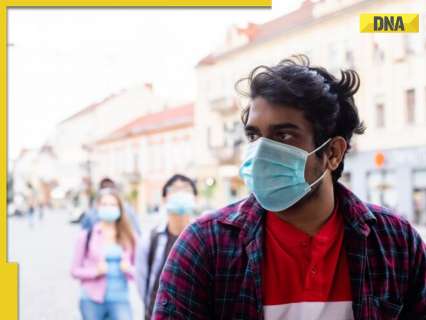
India has reported a significant spike in the COVID 19 cases, the tally has now crossed the thousand mark, with 1,010 current active cases, as of May 27, 2025. Several active cases has been on a rise in the national capital Delhi, and other states including Kerala, Maharashtra, Karnataka, Telangana
No death penalty for son of Mexican drug boss ‘El Chapo’: US prosecutors
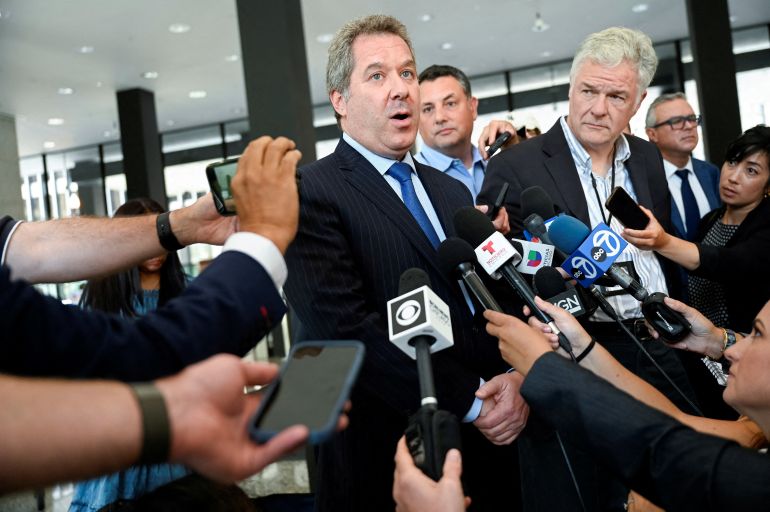
Federal prosecutors in the US will not seek the death sentence for Joaquin Guzman Lopez if he is found guilty at trial, court documents show. Federal prosecutors in the United States said they will not seek the death penalty for the son of Mexican drug lord “El Chapo” if he is found guilty of multiple drug trafficking charges when he goes on trial. According to media reports, federal prosecutors in Chicago filed a one-sentence notice on May 23, saying they would not seek the death penalty for Joaquin Guzman Lopez, the son of Joaquin “El Chapo” Guzman – the former leader of Mexico’s feared Sinaloa Cartel who is serving a life sentence in a US prison. The notice did not offer any explanation for the decision by the federal prosecutors, or further details. Joaquin Guzman Lopez, 38, was indicted in 2023 along with three of his brothers – known as the “Chapitos”, or little Chapos – on US drug trafficking and money laundering charges after assuming leadership of their father’s drug cartel when “El Chapo” was extradited to the US in 2017. Joaquin Guzman Lopez’s lawyer said in an email to The Associated Press news agency on Tuesday that he was pleased with the federal prosecutors’ decision, “as it’s the correct one”. Advertisement “Joaquin and I are looking forward to resolving the charges against him,” Lichtman said. Jeffrey Lichtman, lawyer for El Chapo’s son, Joaquin Guzman Lopez, speaks to the media as his client is set to make his initial US court appearance in Chicago, Illinois, in July 2024 [Vincent Alban/Reuters] Joaquin Guzman Lopez has pleaded not guilty to the five charges of drug trafficking, conspiracy and money laundering against him, one of which carries the maximum sentence of death as it was allegedly carried out on US territory. He was taken into US custody in a dramatic July 2024 arrest alongside alleged Sinaloa Cartel cofounder Ismael “El Mayo” Zambada on a New Mexico airfield. Zambada has also pleaded not guilty. But his lawyer told the Reuters news agency that he would be willing to plead guilty if prosecutors agreed to spare him the death penalty. Another of the brothers, Ovidio Guzman, is expected to plead guilty to drug trafficking charges against him at a court hearing in Chicago on July 9, according to court records. “El Chapo” Guzman is serving a life sentence at a maximum security prison in Colorado. Adblock test (Why?)
Trump says Canada will pay $61bn for Golden Dome, or become 51st state
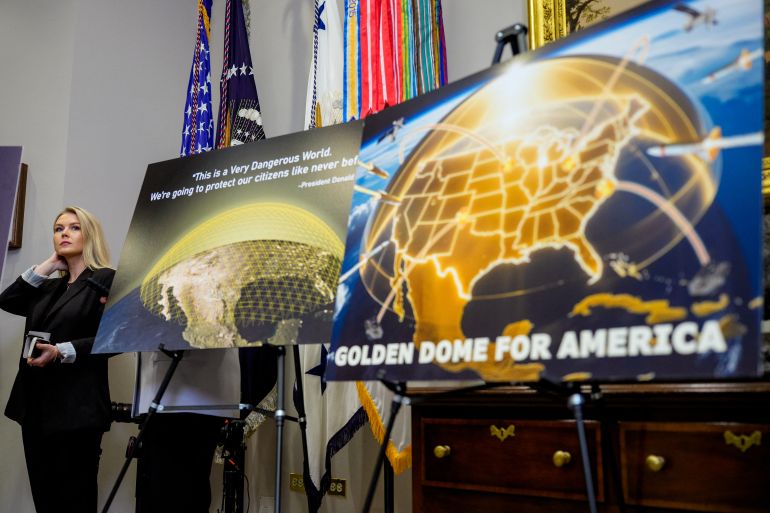
Trump’s latest comments come as China, North Korea, Russia say the Golden Dome missile defence system will create ‘space arms race’. United States President Donald Trump says he has told Canada it will have to pay $61bn to be part of his proposed Gold Dome missile defence system “if they remain a separate, but unequal, Nation”. In a post on TruthSocial, Trump claimed Canada “very much wants to be part of our fabulous Golden Dome System” and would gain free access if it joins with the US. Participating in the proposed defence system would cost Canada “ZERO DOLLARS if they become our cherished 51st State”, Trump said, adding, “They are considering the offer!” Trump’s post came just hours after Canada’s parliament hosted the UK’s King Charles III for a rare royal speech in which the monarch emphasised Canada’s sovereignty in “dangerous and uncertain” times, and amid the US president’s exhortations for the country to become part of the US. Following the king’s speech, Canadian Prime Minister Mark Carney told Canadian Public broadcaster CBC that he hopes Canada will join ReArm Europe by July 1, in an effort to reduce dependence on the US for weapons. Advertisement Canada did not immediately respond to Trump’s latest comment, but Carney has previously confirmed his country has held “high-level” talks on the defence system issue with the US. Funding, timeline uncertain In total, Trump has claimed the Golden Dome system will cost some $175bn and would be completed by the end of his current term in 2029, although defence industry experts have questioned the feasibility of this timeline and budget. Trump is hoping to secure an initial $25bn funding for the system through the sweeping “Big, Beautiful Bill” which is next to go up for a vote in the Senate after narrowly passing the Republican-controlled US House of Representatives last week. The bill boosts spending on the military and border enforcement while cutting funding for social programmes, including Medicaid and food assistance that helped tens of millions of low-income Americans. White House Press Secretary Karoline Leavitt looks on from behind posters depicting a ‘Golden Dome for America’ missile defence system [Andrew Harnik /Getty Images via AFP] The Golden Dome is modelled after Israel’s Iron Dome, which also receives significant funding from the US, including $500m per year for its upkeep. It is unclear how Trump would scale up the Iron Dome to cover the entire US, since Israel is only about the size of New Jersey, one of the smaller states in the US. The Iron Dome is also designed to target short-range missiles, with a range of 1,000km (about 620 miles), while the main threat to the US would likely come from long-range ballistic and hypersonic missiles. Golden Dome will create ‘space arms race’ China, North Korea and Russia have all criticised Trump’s plan to put weapons in space, which the US president described in detail for the first time last week. Advertisement China’s Ministry of Foreign Affairs swiftly responded, with spokeswoman Mao Ning saying the plan “heightens the risk of space becoming a battlefield, fuels an arms race, and undermines international security”. “The United States puts its own interests first and is obsessed with seeking its own absolute security, which violates the principle that no country’s security should come at the expense of others,” Mao Ning said. North Korea’s Ministry of Foreign Affairs also responded, saying the US is “hell-bent on the moves to militarise outer space”. Russian Foreign Ministry spokeswoman Maria Zakharova said on Tuesday that the Golden Dome project undermines the foundations of “strategic stability” as it involves the creation of a global missile defence system. According to Russia’s state news agency TASS, Zakharova said developing the Golden Dome would also lead to development of the “means of pre-launch missile destruction and infrastructure that ensures their use”. “This is already a literal manifestation of the US’s highly dangerous doctrinal course toward delivering so-called preventive, but essentially first strikes,” she said, warning it would turn space into a “weaponised environment” and an “arena of armed confrontation”. Adblock test (Why?)
‘She’s the queen’: Sri Lanka bids farewell to film legend Malini Fonseka
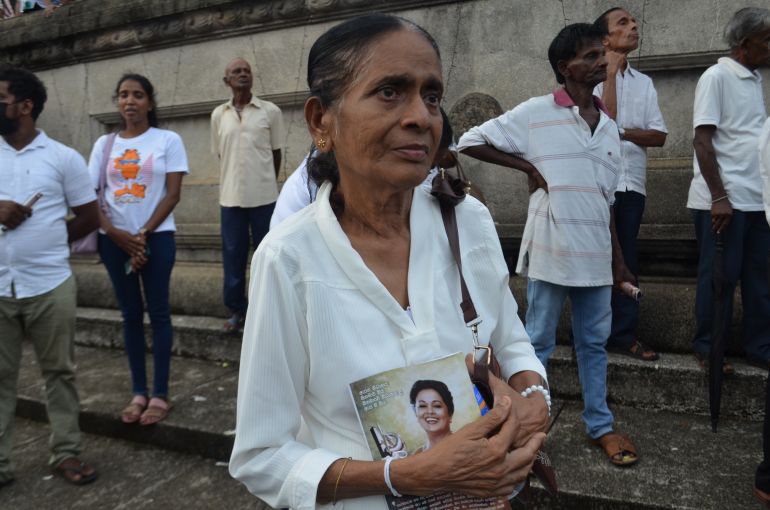
Colombo, Sri Lanka — As a girl, when Srimathi Mallika Kaluarachchi would go to the cinema with her family, and a man on the screen would hit the character played by superstar Malini Fonseka, Kaluarachchi would cry. Then she would turn to her father in desperation. “We used to scream at the screen, telling our father to save her,” Kaluarachchi, now 68, recalled. “That was how much we loved her.” On Monday, Kaluarachchi joined thousands of fans in bidding a final goodbye to Fonseka, who died on May 24 at the age of 78 while receiving treatment in hospital. Neither Fonseka’s family nor the hospital has publicly revealed the nature of her illness. One of the country’s most popular actresses, Fonseka was widely regarded as the queen of Sri Lankan cinema. She was cremated with full state honours, as fans dressed in the mourning colour of white flocked to Colombo’s Independence Square to catch a glimpse of her coffin before she was cremated. Songs from Fonseka’s films were played while a projector drone flew above the crowd, displaying a montage of scenes from across her career. Advertisement Describing Fonseka as “a true icon of Sri Lankan cinema whose grace and talent inspired generations”, Sri Lankan President Anura Kumara Dissanayake said that “her legacy will forever shine in our hearts and on our screens”. Srimathi Mallika Kaluarachchi holds an image of Malini Fonseka at the filmstar’s cremation ceremony, attended by thousands of Sri Lankans in Colombo on Monday, May 25 [Jeevan Ravindran/Al Jazeera] A trailblazer Fonseka, who starred in more than 140 films, had a career in Sinhala cinema spanning more than five decades. “Whenever we saw her, we’d forget all the pain we had in our hearts,” said Kaluarachchi, wiping away tears. “Now, we know films aren’t real, but when we were children, we didn’t realise.” Fonseka was special, Kaluarachchi said, because of the way she represented how everyday people experienced love and, often, the violence that comes with it for women in patriarchal societies. Fonseka started her career as a stage actress before making her film debut with the 1968 film Punchi Baba. Her popularity peaked in the 1970s and 1980s, as she collaborated with renowned directors, including Lester James Peries and Dharmasena Pathiraja. Many of her most famous roles shared a common theme: the struggles of women in a male-dominated society. She played a wife murdered by her husband in the film Nidhanaya (1972), a college student in a complicated relationship in Thushara (1973), a village girl hounded by male attention in Eya Dan Loku Lamayek (1975), and a girl from a rural fishing village enticed by the big city lifestyle, in Bambaru Avith (1978). Advertisement This success continued into the 1980s, when she also expanded into directorial ventures, including in the films Sasara Chethana (1984) and Ahimsa (1987). Thousands of Sri Lankans gathered at Fonseka’s cremation on Monday, May 25, 2025 [Jeevan Ravindran/Al Jazeera] ‘A bridge’ across generations She also starred in the first Indian-Sri Lankan co-production Pilot Premnath in 1978, opposite legendary Indian Tamil actor Sivaji Ganesan. “She never limited herself to one category. She was in commercial cinema and arthouse cinema,” said 27-year-old teacher Prabuddhika Kannagara. “She played a village girl, a young girl, a married woman, a mother, and even a grandmother. She represented women across all generations.” Kannagara was one of the last mourners at the funeral, sitting and watching as sparks emanated from the white cloth tower in the square, specially erected for Fonseka’s cremation, according to Buddhist rituals. She told Al Jazeera that Fonseka had acted as a “bridge” across various eras of cinema, from black-and-white to digital, and had remained a star not only for her mother’s generation, but also for her own. Fonseka was a five-time Best Actress winner at Sri Lanka’s Presidential Film Awards. Her most recent win was in 2006 for her role in Ammawarune, a film she also directed. She also won international accolades at the Moscow International Film Festival and the New Delhi Film Festival. She became Sri Lanka’s first female television drama director in the 1980s, a time when women’s participation behind the camera was unusual. Fonseka also had a short-lived foray into politics, serving as a member of Sri Lanka’s parliament from 2010 to 2015 under former President Mahinda Rajapaksa. Advertisement Film critic and journalist Anuradha Kodagoda told Al Jazeera that Fonseka was “rare and unique in Sri Lankan cinema” for the range of characters she played. Petite and fair, with an oval face and soft features, Fonseka was a “pioneer” in representing working-class women onscreen, and “represented the beauty idol for Sri Lankan women”, said Kodagoda. “She portrayed her characters very organically and authentically. That is the magic of it, I think,” Kodagoda said. People carrying Fonseka’s coffin to a specially erected cremation tower at Colombo’s Independence Square on Monday, May 25, 2025 [Jeevan Ravindran/Al Jazeera] ‘There will be no other queens’ Many mourners, some of whom travelled long distances to attend the funeral, recalled moments when they had met or spoken with Fonseka. “She was a role model for us. We saw her as an example when we went to the cinema,” said 56-year-old jam factory worker Pushpa Hemalatha. “She wasn’t arrogant. We loved her when we were young.” Fonseka’s final acting performance was in the 2024 music video Eya Wasanathaya Nowe, playing an elderly woman remembering her deceased husband. Ivanka Peiris, an actress and musician who acted with her in the TV drama Hithuwakkara, told Al Jazeera that Fonseka was “very empowering” as a role model for women, and “everything” for younger actresses in the industry. And, she said, Fonseka would never be replaced. “She’s the queen. That’s it,” Peiris said. “There will be no other queens in Sri Lanka. She will be the first and the last.” Advertisement Adblock test (Why?)
Texas GOP’s bill requiring voters to prove citizenship stalls in House
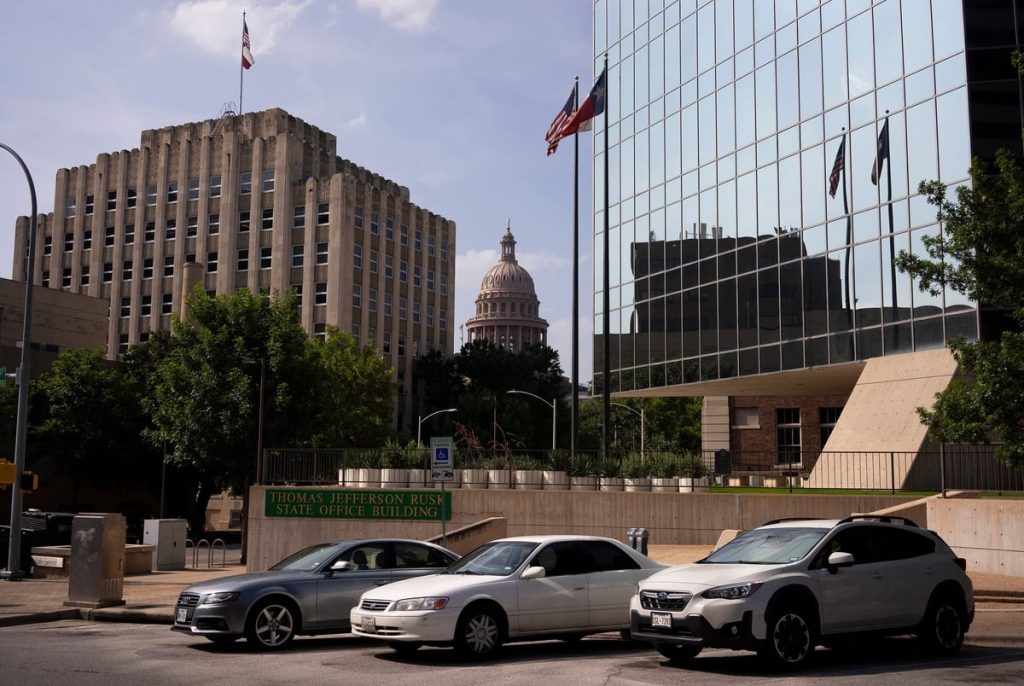
Senate Bill 16 is imperiled after missing a deadline in the House. It was among the most sweeping proof-of-citizenship proposals in the U.S. and would have applied retroactively to all voters.