

MEA asks China to assure Indian travellers won’t be targeted, advises nationals to exercise…

Recently, Chinese immigration officials allegedly declared an Indian woman’s passport ‘invalid’ because it listed Arunachal Pradesh as her place of birth.
Metro Line 8 to connect Mumabai’s Chhatrapati Shivaji, Navi Mumbai Airports with 11 stations, run through these major stations, check details

Mumbai’s Metro line 8 will soon connect the city’s two major airport, the Chhatrapati Shivaji Maharaj International Airport and the upcoming Navi Mumbai International Airport, as an internal and continuous metro network crossing major Mumbai suburbs.
‘I was shocked…’: Kazakh dancer recounts horrific incident, reveals how she survived Goa nightclub fire

A professional Kazakh belly dancer, Kristina was performing in front of the revelers when the incident occurred. While finding a safe way to escape, a crew member’s warning saved her life whom she likened to an Indian God.
IndiGo issues BIG statement amid mass cancellations: ‘We’re all set to connect all…’

In its statement, IndiGo said it has facilitated stranded customers and arranged over 9,500 hotel rooms and nearly 10,000 cabs or buses between December 1 and December 7. The airline further claimed to have optimised its operations.
Bhopal Metro BIG update: CM Mohan Yadav says metro services to start from…; check details

The 6.22-km-long first phase of the Bhopal Metro to be inaugurated will cover eight stations. Check details below.
Women, minority small business owners confused, worried after Texas kicks them off HUB program
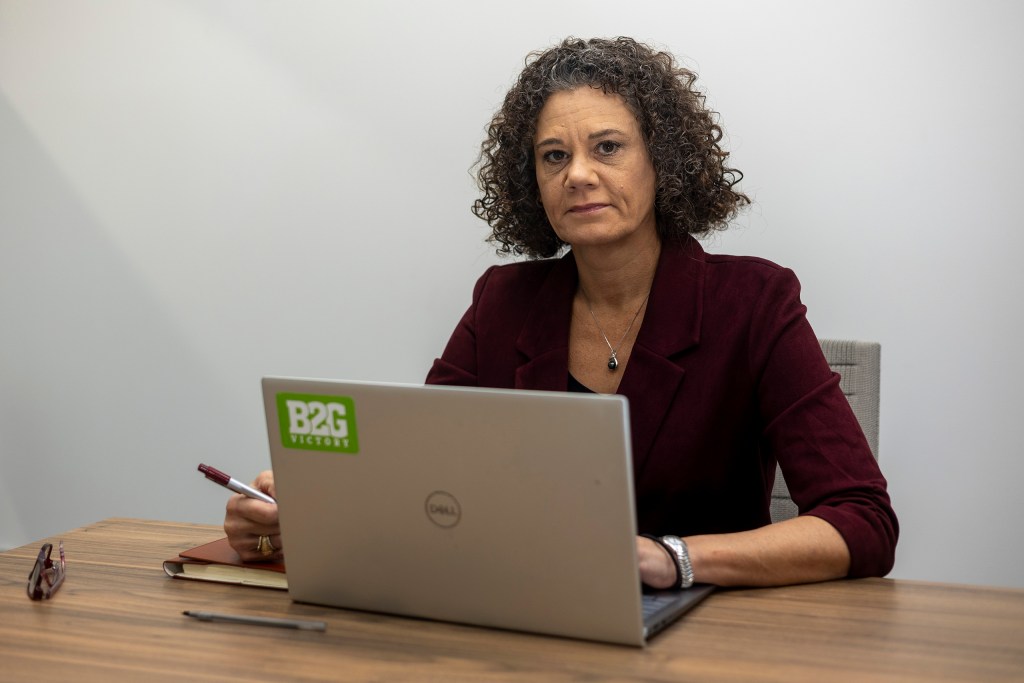
The decision to limit certification to companies owned by disabled veterans will shrink the Historically Underutilized Business program from more than 15,000 to 485 participants — all men.
Texas launches cryptocurrency reserve with $5 million investment
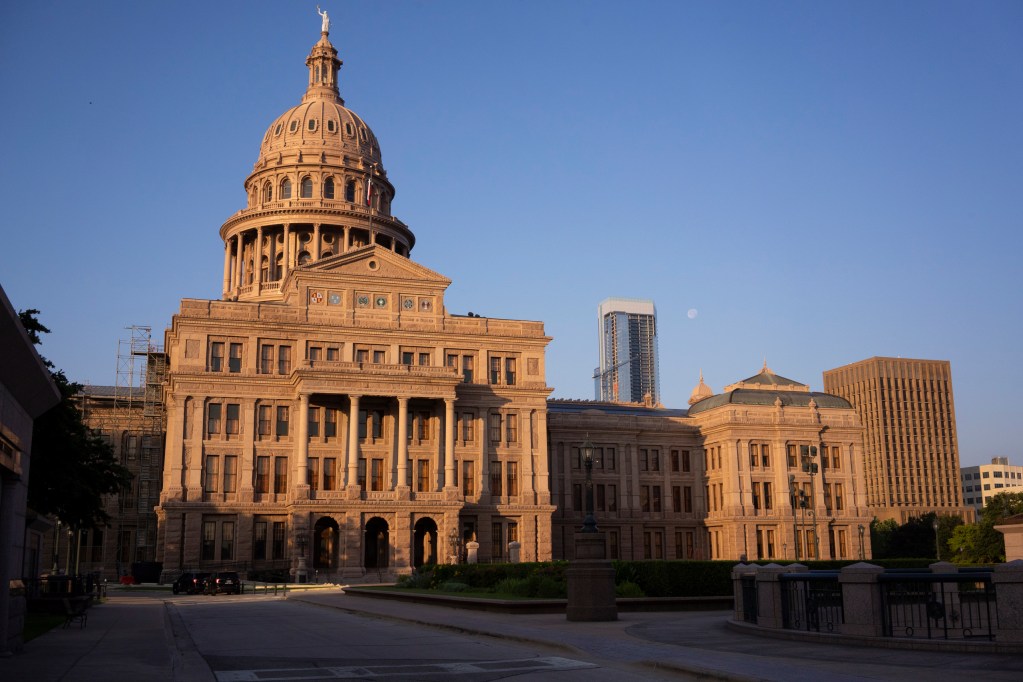
Lawmakers created a state Strategic Bitcoin Reserve earlier this year and dedicated $10 million to investing in cryptocurrency.
Democrat Colin Allred drops out of Senate race, announces run for 33rd Congressional District

The former Dallas congressman said he wanted to help his party avoid a runoff. In his campaign to return to the House, he will face U.S. Rep. Julie Johnson, his successor in Congress.
Pressure mounts on Mamdani to ‘continue the fight’ on illicit Chinese vapes flooding NYC
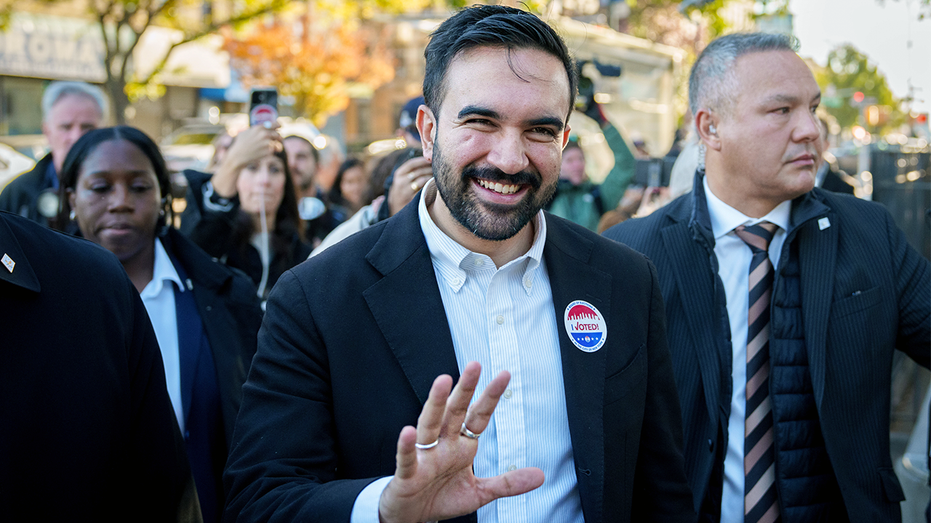
New York City’s socialist Mayor-elect Zohran Mamdani is facing pressure to outline his position and plans on cracking down on illicit Chinese vapes that have flooded the United States, which have sparked widespread concern as the illegal products are being sold inside bodegas throughout the city. “New York City has always been the capital of the criminal tobacco market and the illicit Chinese vape trade is no exception,” Former New York City Sheriff Edgar Domenech, who is also a former ATF official who focused on tobacco and related contraband, told Fox News Digital. “They continue to be sold by smoke shops in every borough and on every corner. The Adams administration made strong strides bringing enforcement action and Mayor-elect Mamdani needs to continue that fight to protect New York’s children and defend small businesses. The first step should be fighting for a piece of the $200 million that the FDA has allocated to enforcement and making sure it is used to fund local efforts to combat the illicit market.” For years, federal officials have warned that disposable flavored vapes, overwhelmingly manufactured in China, remain widely available in the U.S. despite a federal ban. But recent stings suggest they are only the visible tip of a much larger criminal operation. Investigators have uncovered that many smoke shops, which often appear to be ordinary convenience stores, are serving as fronts for narcotics trafficking, illegal firearms, and extensive money-laundering schemes. TRUMP ADMIN’S CRACKDOWN ON ILLICIT CHINESE VAPES IN US SCORES MAJOR WINS: ‘EMERGING THREAT’ New York City has emerged as a national hotspot for the illegal vape trade inside its local markets and bodegas. The Adams administration seized more than 1,200 pounds of illicit vape products worth over $80 million, so much that the city had to pay to destroy them because warehouses were overflowing. The city also sued nine major national distributors, including one based in Buffalo, accused of shipping Chinese-made, candy-flavored vapes into New York neighborhoods and targeting teenagers. “We are facing an epidemic of e-cigarette and vape use among young people, and we will not stand by while manufacturers and wholesalers supply our city with illegal, harmful products that target our most vulnerable New Yorkers — children,” a spokesperson for Mayor Adams told the New York Post last year. But with a new administration taking over, officials warn that now is not the time to scale back. China’s vape industry is estimated at $28 billion, and despite federal restrictions, government data indicates that two-thirds of its products reach U.S. consumers. More than 80 percent of vapes sold nationwide are illicit and not authorized for sale. 5-FIGURE AD BUY URGES STATES TO CRACK DOWN AS CHINA FLOODS MARKET WITH ILLICIT VAPES: ‘TRUMP WAS RIGHT’ It is unclear how strongly a Mamdani administration will enforce the crackdown on illicit Chinese vapes. Fox News Digital reached out to the Mamdani transition team for comment. Congress recently allocated $200 million through the FDA to combat illicit vapes in the United States, funds New York City could presumably use to address the issue. Mamdani has pledged to cut fees and fines on small businesses by 50 percent, and late in the campaign secured the endorsement of the United Bodegas of America, a group whose member stores have repeatedly been cited for violating federal and state vape bans.
Congress moves to block Pentagon from cutting US troops in Europe and South Korea

Congress is moving to limit the Pentagon’s ability to pull forces out of Europe and South Korea, easing concerns among allied governments. The 2026 National Defense Authorization Act, finalized by House and Senate negotiators and released Sunday evening, keeps force presence at roughly its current levels in both regions. It states that the U.S. cannot reduce its forces in Europe below 76,000 without submitting an assessment and certifying to Congress that such a move would not harm U.S. or NATO security interests. The bill places restraints on reductions below 28,500 in South Korea. Any drawdown would require the Pentagon to assure Congress that deterrence against North Korea would not be weakened, confirm that allies were consulted, and provide both a national security justification and an assessment of regional impact. CONGRESS UNVEILS $900B DEFENSE BILL TARGETING CHINA WITH TECH BANS, INVESTMENT CRACKDOWN, US TROOP PAY RAISE The legislation also requires the U.S. to retain the position of Supreme Allied Commander Europe (SACEUR), NATO’s top military post, codifying into statute a role traditionally held by an American general. These limits follow reports that the Pentagon had considered reducing forces in Europe and South Korea and even relinquishing the SACEUR position. Whether those ideas reflected genuine planning or were intended as pressure on allies to invest more in their own defenses, U.S. leaders have recently signaled they are stepping back from such moves even without congressional restrictions. During a meeting last week with U.S. national security officials and European leaders, American officials told their counterparts that Europe must be prepared to bear the brunt of NATO’s defense responsibilities by 2027, three European officials familiar with the meeting told Fox News Digital. The U.S. plans to hold onto the SACEUR position but will offer some other senior NATO military posts to European nations, officials said. They also noted that Washington has no near-term plans for major troop reductions in Europe. “We’ve been very clear in the need for Europeans to lead in the conventional defense of Europe. We are committed to working through NATO coordination mechanisms to strengthen the alliance and ensure its long-term viability as European allies increasing take on responsibility for conventional deterrence and defense in Europe,” Pentagon press secretary Kingsley Wilson said in response. GERMANY UNVEILS NEW INCENTIVES TO BOOST MILITARY RECRUITMENT AMID GROWING RUSSIA THREAT Earlier this year, the Army pulled a rotating brigade stationed largely in Romania back to the United States, prompting European allies to question whether that move might signal the beginning of broader U.S. force drawdowns on NATO’s eastern flank. The NDAA — the yearly must-pass package outlining the Pentagon’s spending and policy priorities — is expected to move swiftly to a House vote this week. Congress aims to have the legislation on the president’s desk before Christmas. The bill also includes $400 million for the Ukraine Security Assistance Initiative over two years and an amendment specifying when the Pentagon may reclaim equipment purchased for Ukraine but not yet delivered: only when the equipment is urgently needed for an ongoing or imminent U.S. contingency operation and failing to use it would risk loss of life or critical mission failure. This provision follows the Pentagon’s decision earlier this year to pause delivery of certain U.S.-funded military equipment to Ukraine. Over the weekend, War Secretary Pete Hegseth described South Korea and several European nations as “model allies.” “Model allies that step up, like Israel, South Korea, Poland, increasingly Germany, the Baltics and others, will receive our special favor,” he said at the Reagan National Defense Forum. “Allies that still fail to do their part for collective defense will face consequences.”