

After years of tension, Texas House emerges as cooperative partner for Dan Patrick and his conservative agenda
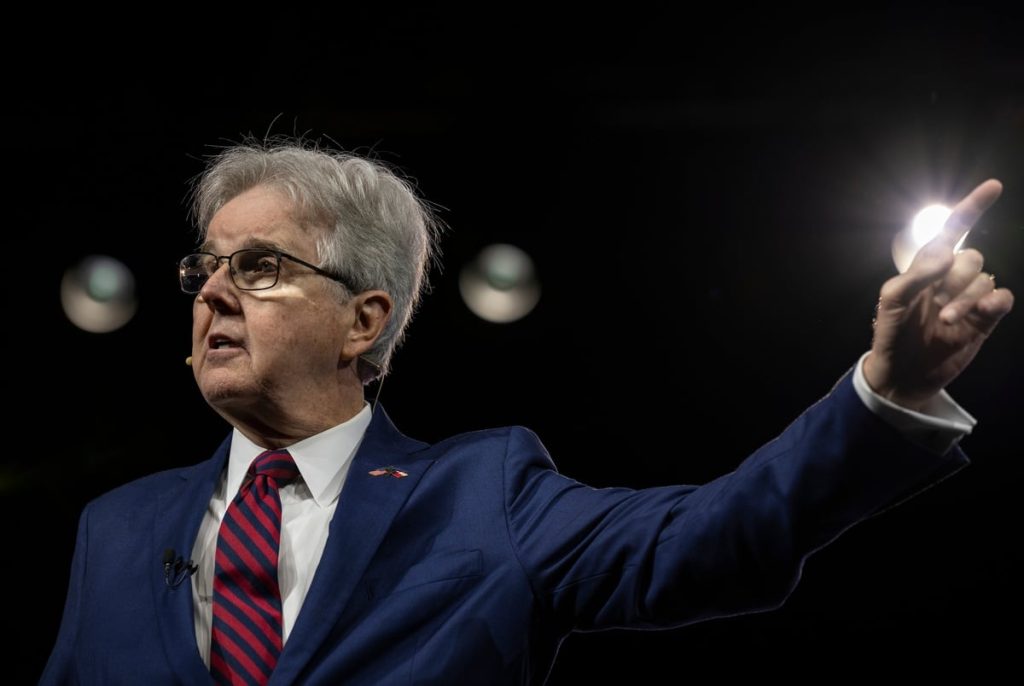
A 2024 war among Republicans tilted the House to the right. Now more closely aligned with the Senate, Speaker Dustin Burrows has accelerated action on bail, school vouchers and social issues.
Upending US birthright citizenship would have drastic negative impact, defenders warn
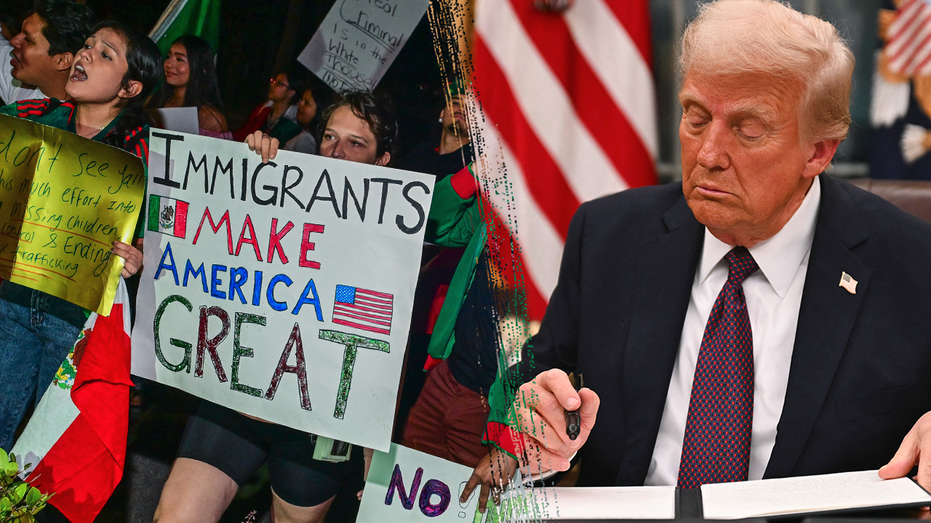
The Supreme Court heard a case this month centered on President Donald Trump’s executive order seeking to end so-called birthright citizenship, in one of the most closely watched and potentially impactful cases heard by the court in recent years. Though the case itself was used largely as a means of challenging lower court powers to issue so-called universal or nationwide injunctions, justices on the high court did inquire about the merits of the order itself, “Protecting the Meaning and Value of American Citizenship,” which Trump signed on the first day of his second White House term. The order, which was slated to take force Feb. 20, directed all U.S. agencies to stop issuing citizenship documents to children born to illegal immigrants or children born to mothers living in the country on a temporary visa, if the father is not a permanent resident or U.S. citizen. Despite the Supreme Court’s focus on universal injunctions in hearing the case, deep and unyielding concerns persist about Trump’s attempt to undo more than 100 years of legal precedent. JUDGES V TRUMP: HERE ARE THE KEY COURT BATTLES HALTING THE WHITE HOUSE AGENDA The ACLU included in its lawsuit the story of one couple from Indonesia but living in New Hampshire whom they said would be affected by the order. “They arrived in 2023, applied for asylum, and their application awaits review,” ACLU attorneys said of the couple. “The mom-to-be is in her third trimester. “Under this executive order, their baby would be considered an undocumented noncitizen and could be denied basic health care and nutrition, putting the newborn at grave risk at such a vulnerable stage of life,” they added. And such problems would persist throughout their lives, lawyers for the group noted. These persons would not be able to obtain necessary identification, such as drivers’ licenses, and would not be able to vote, hold some jobs or serve on juries. Though Trump had spoken in detail in his first term and on the campaign trail about wanting to end birthright citizenship, his executive order sent shockwaves through the nation. It was met by a wave of lawsuits from Democrat-led states and immigrants’ rights groups. WHO IS JAMES BOASBERG, THE US JUDGE AT THE CENTER OF TRUMP’S DEPORTATION EFFORTS? One lawsuit, brought by 18 Democratic attorneys general, warned that ending birthright citizenship would strip hundreds of thousands of U.S.-born children of their citizenship as the result of a circumstance completely outside a child’s control. Statistics also bear this out. Roughly 150,000 children are born annually in the U.S. to parents of noncitizens. If the order were to take force as Trump envisioned, experts warned the impact would be catastrophic. ”President Trump’s attempt to unilaterally end birthright citizenship is a flagrant violation of our Constitution,” New Jersey Attorney General Matthew Platkin, who joined 17 other Democrat-led states in suing to block the order, said earlier this year. TRUMP FACES ANOTHER DEPORTATION SETBACK WITH 4TH CIRCUIT APPEALS COURT “For more than 150 years, our country has followed the same basic rule: Babies who are born in this country are American citizens,” Platkin added. More than 22 U.S. states and immigrants’ rights groups sued the Trump administration to block the change to birthright citizenship prior to the Supreme Court’s decision to take up the case, arguing in court filings that the executive order is both unconstitutional and “unprecedented.” To date, no court has sided with the Trump administration in upholding the executive order.
RJD expels Tej Pratap Yadav from party for six years: ‘Ignoring moral values…’
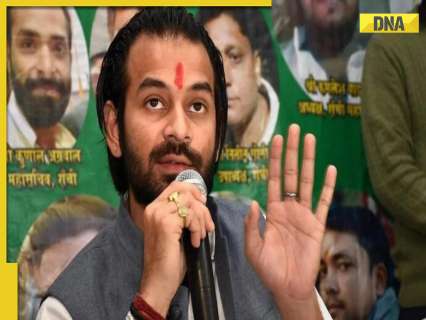
Former Bihar Chief Minister Lalu Prasad Yadav-led Rashtriya Janata Dal (RJD) has expelled Tej Pratap Yadav from the party for a period of six years.
Trump says Harvard’s foreign students are from countries paying ‘nothing’ for their education
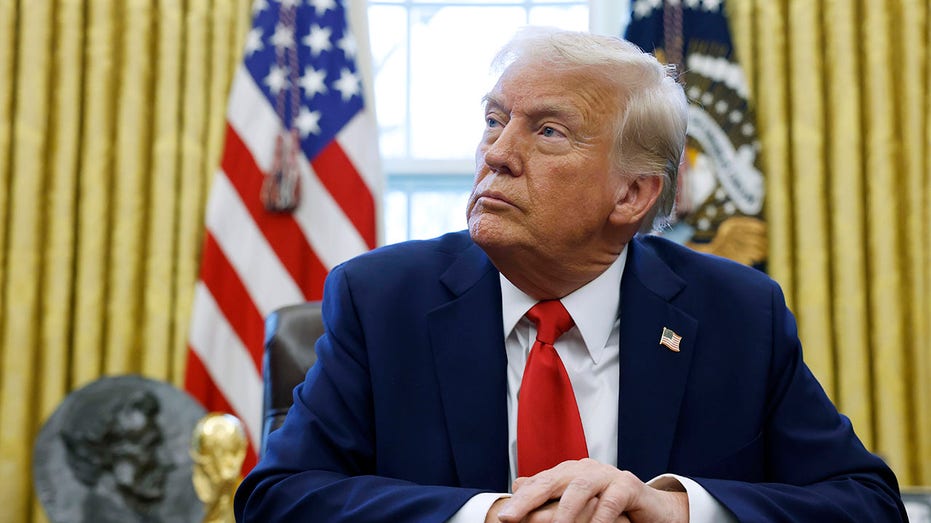
President Donald Trump on Sunday criticized foreign countries for paying “nothing” toward the education of their citizens who are attending college at Harvard and other U.S. institutions. This comes amid the fight between the Trump administration and Harvard for its plans to revoke the university’s ability to enroll foreign students. “Why isn’t Harvard saying that almost 31% of their students are from FOREIGN LANDS, and yet those countries, some not at all friendly to the United States, pay NOTHING toward their student’s education, nor do they ever intend to,” Trump wrote early Sunday morning on Truth Social. “Nobody told us that!” JUDGE TEMPORARILY PAUSES TRUMP MOVE TO CANCEL HARVARD STUDENT VISA POLICY AFTER LAWSUIT “We want to know who those foreign students are, a reasonable request since we give Harvard BILLIONS OF DOLLARS, but Harvard isn’t exactly forthcoming,” he continued. “We want those names and countries. Harvard has $52,000,000, use it, and stop asking for the Federal Government to continue GRANTING money to you!” On Friday, a judge temporarily blocked the administration from canceling Harvard’s student visa program after the university filed a lawsuit against the federal government. Harvard argued that the policy would affect more than 7,000 visa holders — nearly a quarter of the student body — and that the administration’s effort is a “blatant violation of the First Amendment, the Due Process Clause, and the Administrative Procedure Act,” according to its court filing. “It is the latest act by the government in clear retaliation for Harvard exercising its First Amendment rights to reject the government’s demands to control Harvard’s governance, curriculum, and the ‘ideology’ of its faculty and students,” Harvard wrote in its complaint. FEDERAL JUDGE BLOCKS TRUMP ADMINISTRATION FROM TERMINATING INTERNATIONAL STUDENTS’ LEGAL STATUS The Department of Homeland Security moved to terminate Harvard’s visa program after the university allegedly failed to provide extensive behavioral records of student visa holders the agency had requested. The records sought include any footage of protest activity involving student visa holders, even if it’s not criminal, and the disciplinary records of all student visa holders in the past five years. Requested records also include footage or documentation of illegal, dangerous or violent activity by student visa holders, any records of threats or the deprivation of rights of other students or university personnel. Harvard called the new policy “pernicious” and accused the administration of departing from “decades of settled practice” and coming “without rational explanation.” The university also said the policy was “carried out abruptly without any of the robust procedures the government has established to prevent just this type of upheaval to thousands of students’ lives.” At least a dozen Harvard students have had their student visas revoked over campus protest activity. Secretary of State Marco Rubio said before Congress on Tuesday that the administration has probably revoked thousands already and would “proudly” revoke more. The administration has already frozen close to $3 billion in federal funding to the university, largely dedicated to research, over claims that Harvard has not adequately responded to alleged campus antisemitism in protests and has not moved to eliminate diversity, equity and inclusion practices. Fox News’ Morgan Phillips contributed to this report.
‘Picture of our resolve, courage and…’: PM Modi in 1st Mann Ki Baat address after Operation Sindoor
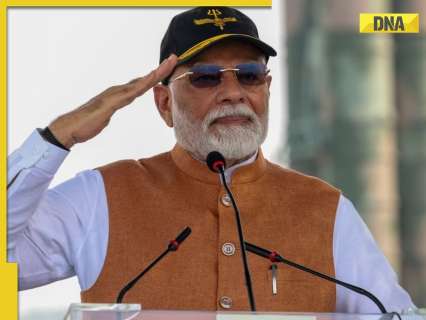
He further termed Operation Sindoor a picture of the country’s resolve, courage and a transforming India.
Texas bill requiring sheriffs to collaborate with ICE given initial approval by state House
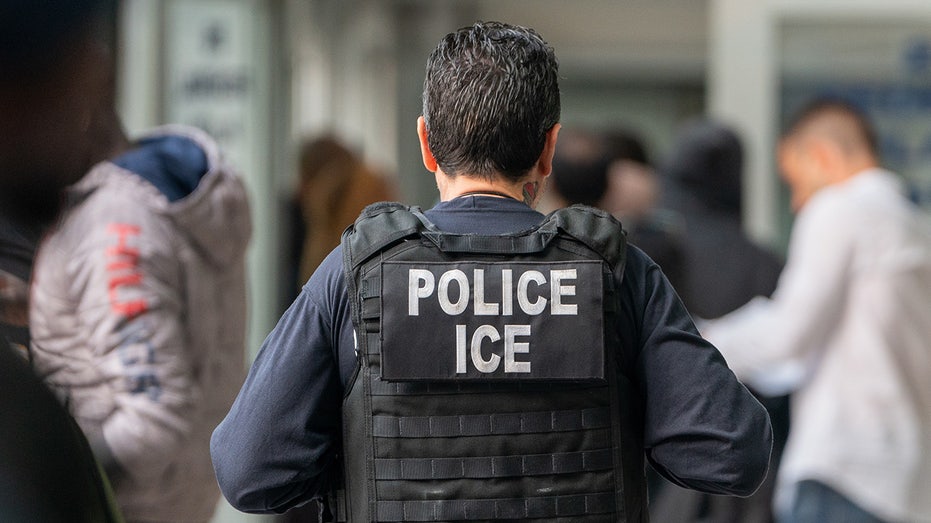
The Texas House gave initial approval on Saturday to a bill that would require sheriffs to collaborate with U.S. Immigration and Customs Enforcement by serving federal immigration warrants at local jails. Senate Bill 8 received preliminary approval with an 89-50 vote in the lower chamber after GOP state Rep. David Spiller, a sponsor of the legislation, amended the bill so it applies to all counties rather than just counties with populations over 100,000 as was the case in the original version, according to FOX 7 and The Texas Tribune. “This bill is not immigration reform,” Spiller said Saturday. “This bill is the strongest border security bill — indirectly — that we could have this session.” ALLEGED HUMAN SMUGGLERS ARRESTED IN TEXAS AFTER HIDING INSIDE HOLLOWED HAY BALES The measure needs another House vote before it can return to the Senate, where the upper chamber must agree to the changes or both chambers must straighten out their differences before the bill can be sent to Republican Gov. Greg Abbott’s desk. “Gov. Abbott has made it clear that cities and counties across Texas must fully cooperate with the federal government efforts to arrest, jail, and deport illegal immigrants,” Abbott’s Deputy Press Secretary Eduardo Leal said in a statement to The Texas Tribune. “The Governor will review this legislation, as he does with any legislation sent to his desk that helps achieve that goal.” Under the bill, sheriffs would be required to request partnerships with ICE, known as 287(g) agreements. The agreements allow ICE to authorize local authorities to perform certain types of immigration enforcement in local jails, including allowing local law enforcement to question inmates about their immigration status and serve administrative warrants. Local officers could also be authorized by ICE to question people about their immigration status during “routine police duties,” including DUI checkpoints, through a model the Trump administration has revived after it stopped being used over allegations that it led to racial profiling. The bill would also allow the Texas attorney general to sue sheriffs who do not adhere to the agreement. Sheriffs would need to at least enter the “warrant service” agreement. They can choose to enter into other agreements to meet the requirement. Additionally, the proposal would offer grants to sheriffs to help offset the costs of participating that are not reimbursed by the federal government. TEXAS LAWMAKERS SEEK TO GET FEDERAL REIMBURSEMENT FOR BIDEN-ERA BORDER CONTROL EXPENSES As of Friday, 72 Texas law enforcement agencies had signed 287(g) agreements with ICE, according to data published by ICE. Another four sheriff’s offices had pending agreements. Roughly 20% of the agreements in place between Texas law enforcement agencies and ICE were for the “task force model,” which extends immigration authorities to officers performing routine police duties. The legislation, filed by GOP state Sen. Charles Schwertner, could help the Trump administration’s mass deportation plans, but immigrants’ rights advocates say the requirement would lead to racial profiling of black and brown people and prompt fear among undocumented Texans who may be reluctant to report a crime or seek help from authorities who are collaborating with ICE, according to The Texas Tribune.
Meet Justice BV Nagarathna, who is in line to become first woman Chief Justice of India, will officially be part of Supreme Court Collegium on…

Justice BV Nagarathna, in line to become the first woman Chief Justice of India, is set to become a member of the Supreme Court Collegium after the retirement of Justice Abhay S Oka. Justice Nagarathna will officially become part of the collegium on May 25.
NITI Aayog CEO makes BIG statement, says India overtakes Japan to become fourth largest economy, will be third largest in…

India has become the fourth largest economy in the world, overtaking Japan, NITI Aayog CEO BVR Subrahmanyam said on Saturday. Briefing reporters after the 10th Governing Council meeting of NITI Aayog, Mr Subrahmanyam said the overall geopolitical and economic environment is favourable for India.
Texas DEI ban in public schools gets House approval

Senate Bill 12’s supporters say DEI programs use class time and public funds to promote political agendas.
EC announces bypolls for 5 seats In Gujarat, Kerala, Punjab, West Bengal next month, counting of votes on…
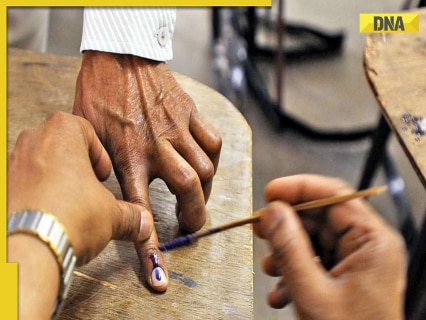
EC has decided to hold by-elections to fill vacancies in the Assembly Constituencies of Gujarat, Kerala, Punjab and West Bengal.