

Trump descends on Capitol Hill to patch Republican divides on his ‘one big, beautiful bill’
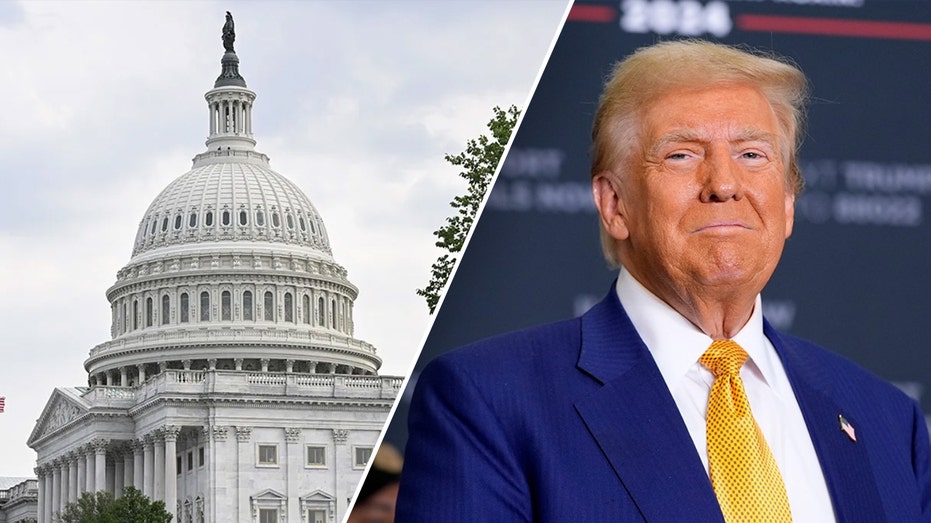
President Donald Trump will descend on Capitol Hill Tuesday morning where he’s expected to meet with House Republicans on his “one, big, beautiful bill.” Trump is attending the House GOP’s weekly conference meeting, three House GOP sources and two White House officials confirmed to Fox News Digital and Fox News Radio, respectively. It’s normally an hour-long session behind closed doors where Republicans discuss the week’s agenda and any outstanding issues. The president is expected to rally Republicans around the massive piece of legislation designed to advance his agenda on tax, immigration, defense, energy, and raising the debt limit. It’s a significant escalation in the president’s involvement in the process so far. TRUMP’S ‘BIG, BEAUTIFUL BILL’ PASSES KEY HOUSE HURDLE AFTER GOP REBEL MUTINY House Republicans, meanwhile, have several critical differences to resolve before their self-imposed deadline to pass the bill by Memorial Day. Conservatives are pushing for the bill to be more aggressive on cutting waste, fraud, and abuse in the Medicaid system, including a faster timeline for implementing work requirements for able-bodied recipients. Currently, the legislation has work requirements kicking in in 2029. Moderates, meanwhile, have been wary of making significant cuts to the program. Fiscal hawks are also pushing for a total and near-immediate repeal of the former Biden administration’s green energy subsidies in the Inflation Reduction Act (IRA), noting it was a Trump campaign promise – while other Republicans have pointed out businesses in their districts are benefiting from the tax relief. HOUSE GOP TARGETS ANOTHER DEM OFFICIAL ACCUSED OF BLOCKING ICE AMID DELANEY HALL FALLOUT There’s also disagreement over raising the state and local tax (SALT) deduction cap, a critical issue for blue state Republicans representing high-cost-of-living districts. GOP lawmakers in lower-tax states have dismissed it as a giveaway to high-tax Democrat-controlled areas, however. News of Trump’s likely appearance on Capitol Hill comes after Speaker Mike Johnson, R-La., said on a lawmaker-only call on Monday morning that the president is ready and willing to play an active role in discussions. “He wants to be involved as much as we need him,” Johnson told House GOP colleagues. The speaker also said he spoke with Trump by phone on Monday morning, and the president was “very excited, very encouraged.” Republicans are working to pass Trump’s policies on tax, immigration, energy, defense, and the national debt all in one massive bill via the budget reconciliation process. GOP lawmakers also see it as an opportunity to put the country on a better fiscal path, with the national debt already having surpassed $36 trillion. Budget reconciliation lowers the Senate’s threshold for passage from 60 votes to 51, thereby allowing the party in power to skirt the minority – in this case, Democrats – to pass sweeping pieces of legislation, provided they deal with the federal budget, taxation, or the national debt. House Republicans are hoping to advance Trump’s bill through the House by the end of this week, with a goal of a final bill on the president’s desk by Fourth of July. The House Rules Committee, the final gatekeeper before a House-wide vote, is set to take up the bill at 1 a.m. on Wednesday.
Chinese solar tech poses ‘chilling’ threat to US electric grid, lawmakers warn
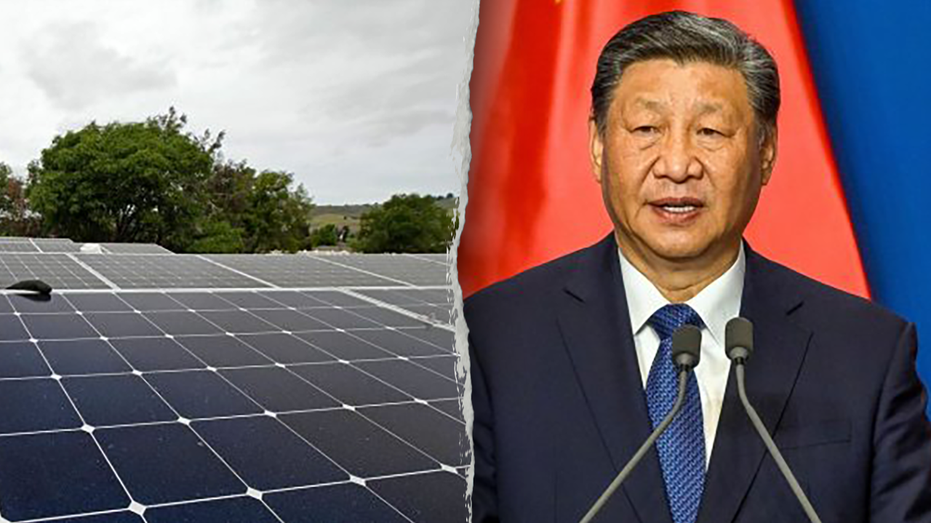
The reported discovery of “rogue communication devices” in Chinese-exported solar inverters spurred new scrutiny of Chinese imports and of the security of the domestic electric grid. In a blue state known for backing solar and other green energy alternatives, a top state Republican warned that “the time to act is now” to stop incursions by a malign foreign actor. “The recent discovery of rogue communication devices underscores a chilling reality: our critical infrastructure is vulnerable, and New Jersey’s leadership is asleep at the wheel,” said state Sen. Doug Steinhardt, R-Belvidere. Steinhardt, a former chair of the state GOP, said allowing “hostile foreign governments” to potentially penetrate U.S. energy networks is a national security writ large. TRUMP ENERGY CHIEF RECOUNTS EVOLUTION OF US ENVIRONS OVER 56 EARTH DAYS: A HANDILY-ENERGIZED SOCIETY WORKS In New Jersey’s case, three bills – all sponsored by Steinhardt – seek to blunt this new threat, including one banning the state from companies owned by or based out of certain foreign countries. Another bill in the Garden State would somewhat mirror Florida Gov. Ron DeSantis’ policy against Chinese land ownership near protected facilities. Such policies also grew out of CCP-linked purchases of land in the Sunshine State and across the country, including another controversial 380,000-acre purchase in North Dakota near the Grand Forks Air Force Base. A Reuters report last week discovered solar power inverters were found to have “rogue communication devices not listed in product documents” within the modules after being “stripped-down” by technologists. Inverters, of which a majority are imported, connect solar panels and wind installations to electric grids by converting DC power to AC power. While solar tech does typically have firewalls against outside incursion, the findings raised concern, according to Reuters. ENERGY CHIEF ENVISIONS US NUCLEAR RENAISSANCE, RESTORING PIT PRODUCTION, LOCALIZING NUKE POWER “We cannot afford to let our energy systems, our food supply, or any strategic assets fall into the hands of those who wish us harm – the time to act is now,” Steinhardt said in a statement. Citing national security concerns, a bipartisan pair of senators introduced the Decoupling from Foreign Adversarial Battery Dependence Act, which would prohibit the government from buying batteries from some foreign sources over similar concerns. “Our national security should not require reliance on components made by adversaries like China,” Sen. Maggie Hassan, D-N.H., said in drafting the bill with Sen. Rick Scott, R-Fla. “This bipartisan legislation will help safeguard both our supply chains and our national security by preventing the Department of Homeland Security from purchasing Chinese batteries for the devices and technology that keep Americans safe.” In comments to Fox News Digital on Monday, Scott called it “terrifying” the CCP could have any control over the U.S. grid. CLICK HERE TO GET THE FOX NEWS APP “Communist China is an adversary, led by a ruthless, authoritarian regime that wants to undermine our national security, spy on our citizens, steal our technology, and destroy our economy,” Scott said. “We cannot allow this regime to have access to the very systems and resources families and businesses depend on. That’s why I’ve introduced legislation to cut off our dependence on Chinese-made batteries that serve as Trojan horses for their surveillance state, and I’m bringing back the Protect American Power Infrastructure Act to slam the door shut on any Chinese influence over our electric grid.” Fox News Digital reached out to Gov. Phil Murphy as well as the Energy Department for comment.
Harvard University’s alleged ties to Chinese paramilitary group, Iran-backed research spark GOP probe

Harvard University is facing demands from key House Republicans to explain allegations it trained members of a Chinese paramilitary group and worked with Iran-linked researchers. In a letter sent this week, Reps. John Moolenaar, R-Mich., chairman of the House Select Committee on the Chinese Communist Party; Tim Walberg, R-Mich., chairman of the Education and the Workforce Committee; and Elise Stefanik, R-N.Y., requested internal documents and communications from Harvard officials detailing the university’s partnerships with foreign adversaries. The lawmakers raised alarm over Harvard’s repeated hosting and training of members of the Xinjiang Production and Construction Corps (XPCC) — a paramilitary organization sanctioned by the U.S. government for its role in the Chinese Communist Party’s genocide against Uyghur Muslims. According to the letter, Harvard allegedly used Department of Defense funding to partner with Chinese universities on research with potential military applications. HARVARD UPDATES LAWSUIT AFTER TRUMP CANCELS ADDITIONAL $450M IN FUNDING Between 2020 and 2024, Harvard researchers also collaborated on at least four projects funded by an agent of the Iranian regime, raising concerns about violations of U.S. sanctions laws. Harvard’s China Health Partnership reportedly hosted healthcare policy training sessions that included XPCC officials, a fact highlighted by Chinese government outlets. “We are deeply concerned the services and resources provided through these events may violate U.S. law and could have been deployed by XPCC to further repress the Uyghur people and other ethnic minorities in China,” the lawmakers wrote. Harvard replied to a request for comment: “We can confirm receipt and will respond to the Chairs’ letter.” HARVARD PRESIDENT CLAIMS ‘UNFOUNDED RETALIATION’ AMID TRUMP FUNDING FEUD The letter points to several specific research collaborations: In one case, Harvard researchers received DARPA funding to work with Tsinghua University faculty on zero-indexed materials — technology that could advance artificial intelligence systems. In another, a Harvard researcher partnered with a Zhejiang University professor on polymer science research funded by the U.S. Air Force, which could be applied to aircraft construction. A third project involved shape memory alloys, materials with aerospace applications, researched alongside faculty from Huazhong University, also under Air Force funding. “Harvard researchers should not be contributing to the military capabilities of a potential adversary,” the letter stated. The lawmakers also noted that Harvard researchers have routinely worked with Chinese military-linked institutions on dual-use technologies, including microelectronics, AI, and quantum science. Additionally, the lawmakers raised concerns over Harvard’s organ transplant research involving China-based collaborators, citing growing international scrutiny of China’s forced organ harvesting practices. “Harvard trained members of a sanctioned Chinese paramilitary group responsible for genocide, and its researchers partnered with Chinese military universities on DoD-funded research and worked with researchers funded by the Iranian regime,” said Moolenaar. “These are not isolated incidents — they represent a disturbing pattern that puts U.S. national security at risk. The Select Committee’s investigation will deliver answers, expose the truth, and hold Harvard accountable to the American people.
Trump hails cooperative effort at anti-revenge porn bill signing: ‘Bipartisanship is still possible’
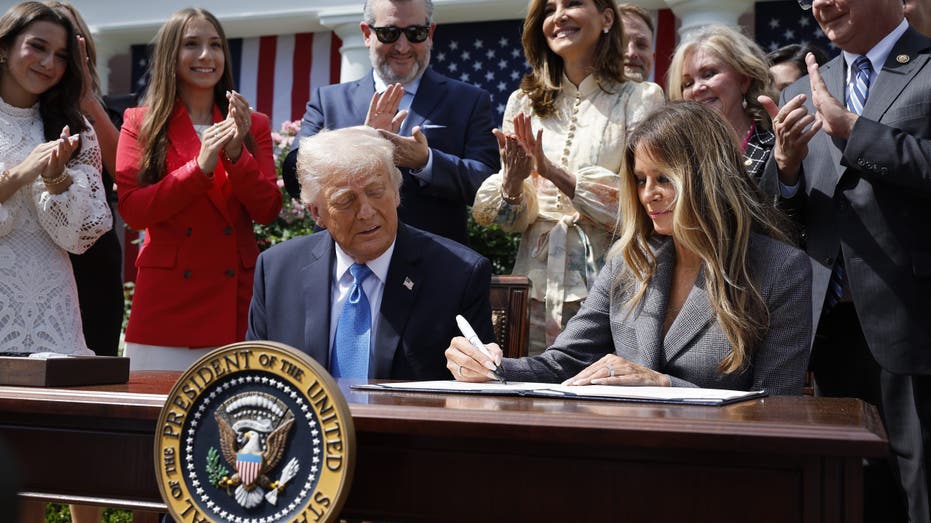
President Donald Trump said the cooperation he witnessed to get the Take It Down Act into law was one of the greatest moments of bipartisanship he has seen. The president signed the bill, which punishes internet abuse involving nonconsensual, explicit imagery, during an outdoors ceremony in the White House Rose Garden Monday afternoon, joined by first lady Melania Trump, who has been championing the issue since her husband’s inauguration. “This legislation is a powerful step forward in our efforts to ensure that every American, especially young people, can feel better protected from their image or identity being abused through non-consensual, or intimate imagery of NCII,” the first lady said from the rose garden Monday afternoon. “Artificial intelligence and social media at a digital candy for the next generation,” she added. “Sweet, addictive and engineered to have an impact on the cognitive development of our children. But unlike sugar, these new technologies can be weaponized to shape beliefs, and sadly affect emotions and even be deadly.” Trump reiterated the importance of the new legislation during the signing ceremony Monday afternoon from the White House. He also touted “a level of bipartisanship” he’s never seen before to get the legislation across the finish line, citing the work of the first lady as a big catalyst. “We’ve shown that bipartisanship is possible,” Trump said shortly before he signed the new act. “I mean, it’s the first time I’ve seen such a level of bipartisanship, but it’s a beautiful thing to do. I’m not even sure you realize, honey, you know, a lot of the Democrats and Republicans don’t get along so well. You’ve made them get along, and she didn’t even know about that. She didn’t know we had a problem. She didn’t know we had a problem. She got it. The Take It Down Act is a bill introduced in the Senate by Sens. Ted Cruz, R-Texas, and Amy Klobuchar, D-Minn., that would make it a federal crime to publish, or threaten to publish, nonconsensual intimate imagery, including “digital forgeries” crafted by artificial intelligence. The bill unanimously passed the Senate in February, and passed in the House of Representatives in April with a vote of 409–2. MELANIA TRUMP SPEAKS ON CAPITOL HILL FOR FIRST TIME IN ROUNDTABLE FOCUSED ON PUNISHING REVENGE PORN The law would require penalties of up to three years in prison for sharing nonconsensual intimate images — authentic or AI-generated — involving minors and two years in prison for those images involving adults. It also would require penalties of up to two and a half years in prison for threat offenses involving minors, and one and a half years in prison for threats involving adults. The bill requires social media companies, like Snapchat, TikTok, Instagram and similar platforms, to put procedures in place to remove such content within 48 hours of notice from the victim. AI-generated images known as “deepfakes” often involve editing videos or photos of people to make them look like someone else by using artificial intelligence. Deepfakes hit the public’s radar in 2017 after a Reddit user posted realistic-looking pornography of celebrities to the platform, opening the floodgates to users employing AI to make images look more convincing and widely shared in the following years. Right now, nearly every U.S. state has a law protecting people from nonconsensual intimate image violations, but the laws vary in classification of crime and penalty. In March, the first lady spoke on Capitol Hill for the first time since returning to the White House to participate in a roundtable with lawmakers and victims of revenge porn and AI-generated deepfakes. The first lady invited 15-year-old Elliston Berry, whose high school peers used AI to create nonconsensual imagery of her and spread them across social media. “It’s heartbreaking to witness young teens, especially girls, grappling with the overwhelming challenges posed by malicious online content, like deepfakes,” Trump said. “This toxic environment can be severely damaging. We must prioritize their well-being by equipping them with the support and tools necessary to navigate this hostile digital landscape. Every young person deserves a safe online space to express themselves freely, without the looming threat of exploitation or harm.” REVENGE PORN BILL BACKED BY MELANIA TRUMP HEADS TO PRESIDENT’S DESK AFTER OVERWHELMING HOUSE VOTE Berry, a Texas native, told the roundtable she was just 14 years old when she realized in 2023 that “a past Instagram photo with a nude body and my face attached made from AI,” was circulating on social media. “Fear, shock and disgust were just some of the many emotions I felt,” Berry said. “I felt responsible and began to blame myself and was ashamed to tell my parents. Despite doing nothing wrong. As I attended school, I was scared of the reactions of someone or someone could recreate these photos.” “We need to hold big tech accountable to take action,” the young woman continued. “I came here today to not only promote this bill, but to fight for the freedom of so many survivors, millions of people, male, female, teenage children, kids all are affected by the rise of this image-based sexual abuse. This is unacceptable. The Take It Down act will give a voice to the victims and provide justice.” Another young girl, Francesca Mani of New Jersey, recounted that she also was just 14 when she and other peers found deepfake images on themselves online. “Teenagers might not know all the laws, but they do know when something is wrong,” Mani said. “Schools need to take immediate, serious action to ensure that AI exploitation, harassment and deepfake abuse are met with real consequences.” The first lady invited the young women as her special guests for Trump’s first address to a joint session of Congress in March. Sharing nonconsensual and AI-generated explicit images on social media and the internet has not just affected young girls, as young boys and adults also face similar crimes. A woman named Breeze Liu told the roundtable that she worked tirelessly to remove AI-generated images of
Trump, alongside first lady, to sign bill criminalizing revenge porn and AI deepfakes
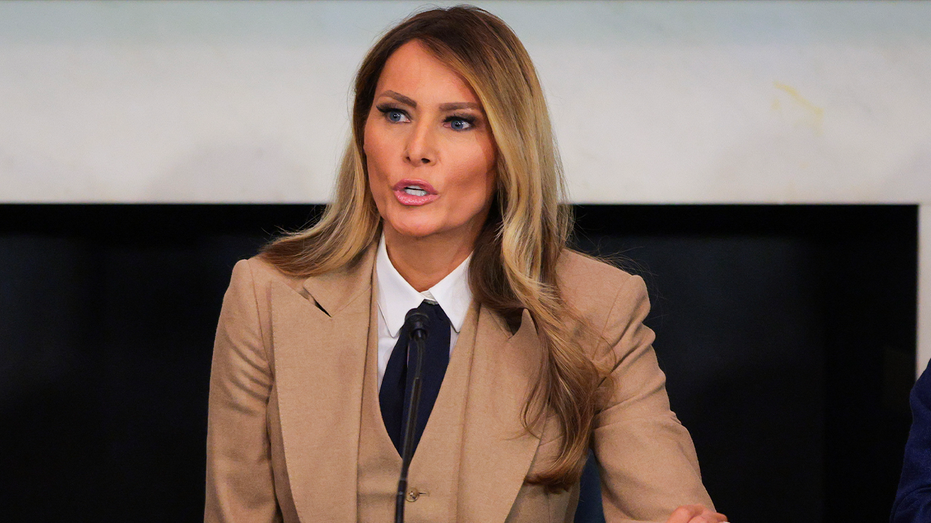
President Donald Trump is set to sign the Take It Down Act — a bill that punishes internet abuse involving nonconsensual, explicit imagery. The president is scheduled to sign the bill from the White House Monday afternoon, joined by first lady Melania Trump, who has been championing the issue since her husband’s inauguration. The Take It Down Act is a bill introduced in the Senate by Sens. Ted Cruz, R-Texas, and Amy Klobuchar, D-Minn., that would make it a federal crime to publish, or threaten to publish, nonconsensual intimate imagery, including “digital forgeries” crafted by artificial intelligence. The bill unanimously passed the Senate in February, and passed in the House of Representatives in April with a vote of 409–2. MELANIA TRUMP SPEAKS ON CAPITOL HILL FOR FIRST TIME IN ROUNDTABLE FOCUSED ON PUNISHING REVENGE PORN The law would require penalties of up to three years in prison for sharing nonconsensual intimate images — authentic or AI-generated — involving minors and two years in prison for those images involving adults. It also would require penalties of up to two and a half years in prison for threat offenses involving minors, and one and a half years in prison for threats involving adults. The bill would require social media companies, like Snapchat, TikTok, Instagram and similar platforms, to put procedures in place to remove such content within 48 hours of notice from the victim. AI-generated images known as “deepfakes” often involve editing videos or photos of people to make them look like someone else by using artificial intelligence. Deepfakes hit the public’s radar in 2017 after a Reddit user posted realistic-looking pornography of celebrities to the platform, opening the floodgates to users employing AI to make images look more convincing and widely shared in the following years. Right now, nearly every U.S. state has a law protecting people from nonconsensual intimate image violations, but the laws vary in classification of crime and penalty. In March, the first lady spoke on Capitol Hill for the first time since returning to the White House to participate in a roundtable with lawmakers and victims of revenge porn and AI-generated deepfakes. The first lady invited 15-year-old Elliston Berry, whose high school peers used AI to create nonconsensual imagery of her and spread them across social media. “It’s heartbreaking to witness young teens, especially girls, grappling with the overwhelming challenges posed by malicious online content, like deepfakes,” Trump said. “This toxic environment can be severely damaging. We must prioritize their well-being by equipping them with the support and tools necessary to navigate this hostile digital landscape. Every young person deserves a safe online space to express themselves freely, without the looming threat of exploitation or harm.” REVENGE PORN BILL BACKED BY MELANIA TRUMP HEADS TO PRESIDENT’S DESK AFTER OVERWHELMING HOUSE VOTE Berry, a Texas native, told the roundtable she was just 14 years old when she realized in 2023 that “a past Instagram photo with a nude body and my face attached made from AI,” was circulating on social media. “Fear, shock and disgust were just some of the many emotions I felt,” Berry said. “I felt responsible and began to blame myself and was ashamed to tell my parents. Despite doing nothing wrong. As I attended school, I was scared of the reactions of someone or someone could recreate these photos.” “We need to hold big tech accountable to take action,” the young woman continued. “I came here today to not only promote this bill, but to fight for the freedom of so many survivors, millions of people, male, female, teenage children, kids all are affected by the rise of this image-based sexual abuse. This is unacceptable. The Take It Down act will give a voice to the victims and provide justice.” Another young girl, Francesca Mani of New Jersey, recounted that she also was just 14 when she and other peers found deepfake images on themselves online. “Teenagers might not know all the laws, but they do know when something is wrong,” Mani said. “Schools need to take immediate, serious action to ensure that AI exploitation, harassment and deepfake abuse are met with real consequences.” The first lady invited the young women as her special guests for Trump’s first address to a joint session of Congress in March. Sharing nonconsensual and AI-generated explicit images on social media and the internet has not just affected young girls, as young boys and adults also face similar crimes. A woman named Breeze Liu told the roundtable that she worked tirelessly to remove AI-generated images of herself that landed on a pornography site in 2020 when she was 24 years old. And Republican South Carolina state Rep. Brandon Guffey also joined the group of lawmakers and the first lady in March, recounting how his 17-year-old son committed suicide in 2022 after he was caught up in a sextortion scam. “I lost my oldest son, Gavin Guffey, to suicide,” he shared. “We quickly found out that he was being extorted online. That someone pretending to be a young female at another college requested images to be shared back and forth. And as soon as he shared those images, he took his life. It was an hour and 40 minutes from the time that he was contacted until the time that he took his life.” Meanwhile, during the first Trump administration, Melania Trump hosted virtual roundtables on foster care as part of her “Be Best” initiative and focused on strengthening the child welfare system. The “Be Best” initiative also focused on online safety. “As first lady, my commitment to the ‘Be Best’ initiative underscores the importance of online safety,” she said. “In an era where digital interactions are integral to daily life, it is imperative that we safeguard children from mean-spirited and hurtful online behavior.” The first lady, in March, said the bill “represents a powerful step toward justice, healing and unity.”
‘Flood the system’: US attorney unleashes new task force to crack down on blue state’s sanctuary policies

EXCLUSIVE: United States Attorney for the District of California Bill Essayli is taking major action to crack down on “sanctuary” policies in the Golden State. He’s launching “Operation Guardian Angel,” which is a task force, made up of assets from ICE, HSI, DEA, FBI, ATF, and Border Patrol, to begin scanning a criminal database every single day to identify arrested illegal aliens in local jurisdictions that DOJ can charge with felony illegal-reentry. “They’ve made it almost impossible for ICE to do their job, issue detainers and get criminal illegal immigrants out of jails. So what we’re doing instead is we’re going to start issuing warrants,” he told Fox News. ‘DEPORTATION FLIGHTS HAVE BEGUN’ AS TRUMP SENDS ‘STRONG AND CLEAR MESSAGE,’ WHITE HOUSE SAYS “We’re going to flood the system with warrants for criminal illegal immigration that are in county jails, they can ignore a detainer, but they cannot ignore a criminal arrest warrant,” Essayli continued. “As soon as an illegal immigrant is booked into a county jail, we’re reviewing their file. And if they meet the elements of illegal reentry, which is a federal crime, we are filing a complaint and getting an arrest warrant issued before they’re released from state custody.” Essayli said that the first-of-its-kind program will make the Golden State a “testing ground” for other sanctuary jurisdictions throughout the country, as the administration aims to get illegal aliens with criminal charges and convictions swiftly out of the United States. TRUMP GOES TOE-TO-TOE WITH SANCTUARY CITIES OVER DEPORTATION AS ILLEGAL IMMIGRATION CRACKDOWN SET TO BEGIN While border crossings have plummeted, the administration is aiming to boost the number of removals. The CBP One app was turned into the CBP Home app, where those in the country illegally can now self-deport with a paid-for flight and an $1,000 stipend once they have been confirmed to leave the country. As for illegal aliens in the criminal justice system, the attorney said they plan to file up to 50 warrants a week in his jurisdiction, which covers Los Angeles – there’s already been 350 filed since Trump took office. CLICK HERE FOR MORE IMMIGRATION COVERAGE “They have no choice, they will comply. And if they don’t comply, if they interfere in our ability to arrest a federal felon, they can expect to face consequences for that. So I don’t expect any resistance from the local authorities,” he said. TRUMP GOES TOE-TO-TOE WITH SANCTUARY CITIES OVER DEPORTATION AS ILLEGAL IMMIGRATION CRACKDOWN SET TO BEGIN Felony re-entry was largely not prosecuted during the Biden administration. Essayli says his predecessor, the US Attorney in Los Angeles under Biden, only filed 17 of these cases in two years. The attorney said transferring from local to federal custody is one of the better ways to get hold of illegal aliens with criminal charges. “This is the safest way for us to get criminal illegal immigrants. Get them while they’re still in state custody, where they’ve been searched. They have no weapons, and we can do a safe transfer,” he said. Fox News’ Andrew Mark Miller contributed to this report.
Former Freedom Caucus Chair Bob Good calls out ‘the big glaring weakness for all of Republican government’
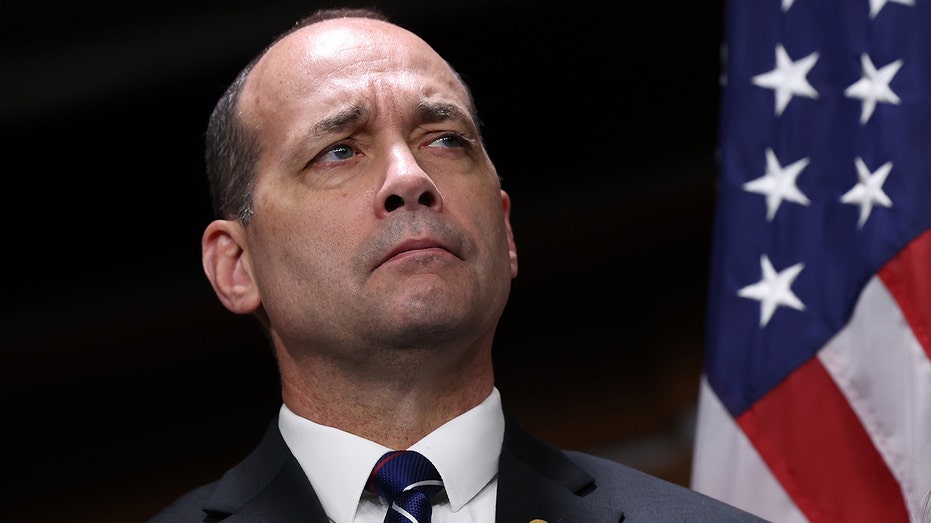
Former Rep. Bob Good, a Republican from Virginia who once chaired the conservative House Freedom Caucus, is sounding the alarm about America’s “fiscal crisis,” accusing fellow Republicans of failing to focus on the critical issue and slash spending. He blamed “all Republican leadership,” during an interview with Fox News Digital. “You’re not hearing a lot from Republican leadership — from the White House or from the Congress — about spending cuts,” he said. Good praised President Donald Trump on a variety of issues, crediting the president with doing a “great job in many executive actions,” but he described the moves as “quick fix sugar highs” that could easily be undone when a Democrat wins the presidency again and said that Congress has not been codifying Trump’s policies into law. He said that “the big glaring weakness for all of Republican government” is failing to focus on the nation’s debt and deficit, and slashing spending. TRUMP’S ‘BIG, BEAUTIFUL BILL’ PASSES KEY HOUSE HURDLE AFTER GOP REBEL MUTINY The U.S. national debt is over $36.2 trillion, according to fiscaldata.treasury.gov. President Trump and some GOP lawmakers have been seeking to push Trump’s “One, Big, Beautiful Bill” through Congress, but other Republicans have been pressing for changes. The House Freedom Caucus issued a statement on Sunday night declaring that the measure “does not yet meet the moment.” “As written, the bill continues increased deficits in the near term with possible savings years down the road that may never materialize. Thanks to discussions over the weekend, the bill will be closer to the budget resolution framework we agreed upon in the House in April, but it fails to actually honor our promise to significantly correct the spending trajectory of the federal government and lead our nation towards a balanced budget,” the caucus board’s statement reads, in part, later adding, “We face a serious fiscal crisis, and we must put an end to Washington’s wasteful spending now.” TRUMP’S ‘BIG, BEAUTIFUL BILL’ WINS SUPPORT FROM POLICE FOR OVERTIME TAX ELIMINATION Good, a fiscal hawk who has been referring to the measure as the “big, ugly bill,” indicated that if Republicans do not fight now when they only need 51 votes to pass a measure in the Senate due to reconciliation, they will not do so later. He said most GOP figures, like most Democrats, are largely focused on their own political careers and will “be even weaker” in 2026, the year of the midterm elections. Office of Management and Budget Director Russ Vought has pushed back against criticism of the reconciliation bill. “Critics have attacked the House’s One Big Beautiful reconciliation bill on fiscal grounds, but I think they are profoundly wrong,” he wrote in a part of a post on X last week. “The current House bill includes $1.6 trillion in savings. These are not gimmicks but real reforms that lower spending and improve the programs.” “So after nothing happening for decades, the House bill provides a historic $1.6 trillion in mandatory savings…with a three-seat majority. $36 trillion in debt is not solved overnight. It is solved by advancing and securing victories at a scale that over time, gives a fighting shot to addressing the problem. The House’s One Big Beautiful Bill deserves passage for many reasons … tax cuts, border security funding, eliminating the Green New Deal, work requirements to end dependency … but it should not be lost on anyone, the degree to which it ends decades of fiscal futility and gets us winning again. It deserves the vote of every member of Congress,” he asserted. ‘TOO LATE’: TRUMP BACKS CHALLENGER TO FREEDOM CAUCUS CHAIR DESPITE RECEIVING PRIOR ENDORSEMENT Good, who served in Congress from early 2021 until early 2025, lost a 2024 congressional GOP primary contest to a Trump-backed challenger. Trump repeatedly attacked Good in the lead up to the 2024 primary contest, asserting on Truth Social that “Bob Good is BAD FOR VIRGINIA, AND BAD FOR THE USA.” Good ultimately lost the primary by less than 1% of the vote. He had endorsed Florida Gov. Ron DeSantis for president in 2023 before the governor launched his White House bid that year. In 2024, Good endorsed Trump immediately after DeSantis dropped out. In his endorsement post, Good called Trump “the greatest President of my lifetime,” adding, “we need him to reinstate the policies that were working so well for America.” Good expressed interest in the prospect of potentially running for office again, telling Fox News Digital that he is keeping his “options open” and praying about it, but has not arrived at a decision yet.
DNA Verified: Did Col Sofiya Qureshi say about her religion?

A viral video falsely showing Colonel Sofiya Qureshi making religious remarks was confirmed to be AI-generated and manipulated, according to PTI’s fact-check.
New projection signals good news for families, workers in Trump’s ‘big, beautiful bill’
FIRST ON FOX: A key U.S. economic agency is projecting that President Donald Trump‘s tax policy in his “one big, beautiful bill” will lead to increased take-home pay for American families and higher wages for U.S. workers. The Council of Economic Advisers (CEA), which advises the White House on economic policy, released a report on Monday morning that said, “Taken as a whole, the CEA estimates that the tax cuts in the President’s proposals and the One Big Beautiful Bill will substantially boost investment and GDP relative to if expiring provisions from the [Tax Cuts and Jobs Act] are not extended.” Congressional Republicans are working to permanently extend Trump’s 2017 Tax Cuts and Jobs Act (TCJA), as well as implement a list of new, shorter-term Trump tax policies, like eliminating penalties on tipped and overtime wages, while granting seniors an added tax deduction. Republican leaders have warned that failure to extend TCJA could lead to a tax increase of up to 22% for millions of families. MEET THE TRUMP-PICKED LAWMAKERS GIVING SPEAKER JOHNSON A FULL HOUSE GOP CONFERENCE However, extending them could lead to more money in people’s pockets in the long run, the CEA said. “For workers and families, the CEA forecasts that wages will be about $6,100 to $11,600 higher, with family take-home pay $7,800 to $13,300 higher because of the increase in wages and reduction in tax obligations,” the new analysis said. The CEA said the added deduction for seniors, meanwhile, would increase the average take-home pay for qualifying seniors by approximately $400 to $450 per year. If passed, the policies would also boost U.S. investment in the long run from 4.9% to 7.5%, according to the projection, and could save or create as many as 4.2 million full-time equivalent jobs in the long run. It also estimated that Trump’s “no tax on tips” proposal alone would increase tipped workers’ pay by an average $1,675 per year, while eliminating the tax on overtime wages “will cause overtime workers to increase their overtime hours by 4.7 percent, leading to a 0.2 percent increase in aggregate labor supply while the provision is in effect.” “As a result, the level of GDP increases by 0.1 to 0.2 percent in the short run. The average overtime worker receives a tax cut of between $1,400 and $1,750 per year,” the projection said. White House press secretary Karoline Leavitt said during a Monday morning briefing, “This bill will give Americans the largest tax cuts in our nation’s history. When Republicans pass the bill, Americans will be keeping more of their hard-earned money and taking home much bigger paychecks.” “If Democrats get their way and the Trump tax cuts are not extended, Americans will face the largest tax hike in history to the tune of $4 trillion. Republicans must not side with Democrats in helping them raise taxes,” Leavitt added. It comes as Democrats accuse Republicans of trying to gut critical programs like Medicaid and Social Security to secure tax increases for wealthy Americans. They have pointed to projections like those by the Joint Committee on Taxation, which said people making less than $50,000 per year would get $263 in tax relief, and those making over $1 million would get more than $81,000. ANTI-ABORTION PROVIDER MEASURE IN TRUMP’S ‘BIG, BEAUTIFUL BILL’ COULD SPARK HOUSE GOP REBELLION However, Republicans have argued they are focused on aiding the working and middle classes with Trump’s tax bill – while not raising taxes on any Americans. Rep. Mike Haridopolos, R-Fla., also pointed out last week that the Republicans’ bill does not touch the top income tax bracket. “I kept hearing this idea that we’re cutting taxes on the rich,” Haridopolos said, referring to conversations by his Democratic colleagues on the House floor last week. “The current rate is 37%. Under our new proposed bill, it’s still 37%. We’re keeping that rate static, we’re not cutting taxes for the rich. What we need to do, of course, is invest in the people again – the best way you do that is offer tax relief.” Republicans are working to pass Trump’s policies on tax, immigration, energy, defense, and the national debt all in one massive bill via the budget reconciliation process. Budget reconciliation lowers the Senate’s threshold for passage from 60 votes to 51, thereby allowing the party in power to skirt the minority – in this case, Democrats – to pass sweeping pieces of legislation, provided they deal with the federal budget, taxation, or the national debt. House Republicans are hoping to advance Trump’s bill through the House by the end of this week, with a goal of a final bill on the president’s desk by Fourth of July.
Supreme Court allows Trump admin to move ahead with ending protected legal status for some migrants
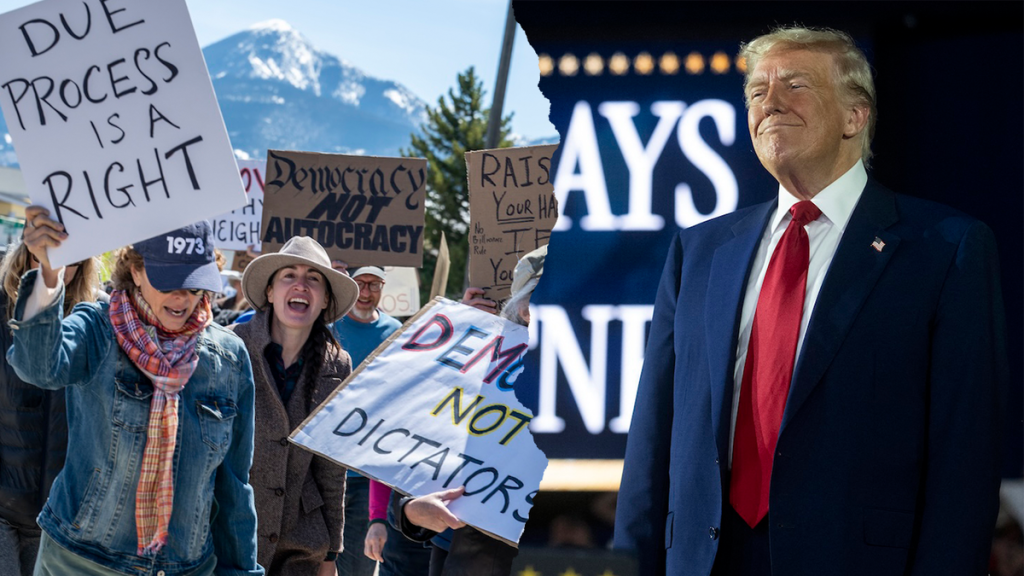
The Supreme Court on Monday lifted an injunction against the Trump administration, allowing it to move ahead, for now, with its plans to end protections for hundreds of thousands of migrants in the U.S. The decision is a victory for the Trump administration, allowing it to move forward with its plans to terminate Temporary Protected Status (TPS) protections for hundreds of thousands of people who came to the U.S. through parole processes for Cubans, Haitians, Nicaraguans, and Venezuelans. The TPS program provides legal status and work permits for these individuals. This is a breaking news story. Updates to come.