

Has Iran’s 10-point plan changed, as JD Vance claims?
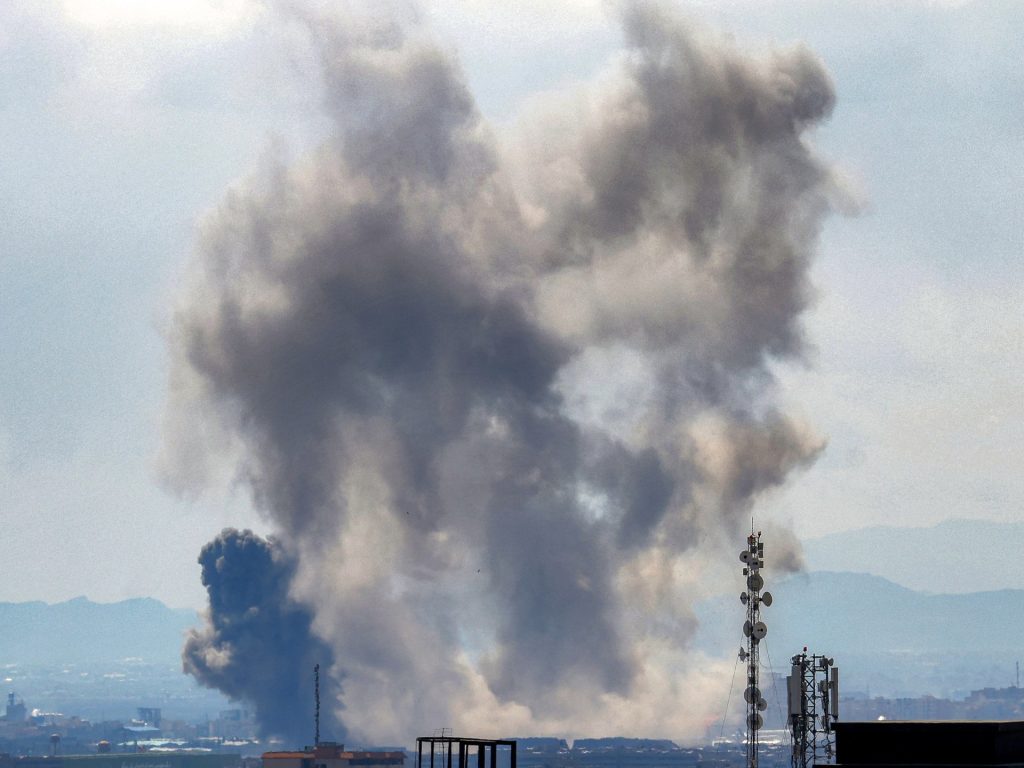
Confusion over competing United States and Iranian proposals to end the war is deepening uncertainty about the fragile two-week ceasefire between the longtime foes, with officials presenting sometimes differing accounts of what has been agreed. At the centre of the dispute is an Iranian 10-point plan, which is the basis for the upcoming negotiations with the US in the Pakistani capital, Islamabad, this weekend. President Donald Trump has called the plan “workable”, despite initially handing Iran a 15-point plan that Tehran dismissed as “maximalist”. Recommended Stories list of 4 itemsend of list However, hours after the ceasefire, US officials, including Trump, offered mixed responses to Iran’s proposal and what Washington understood the key points of the document to be. Vice President JD Vance dismissed the publicised version as little more than a “random yahoo in Iran submitting it to public access television”. Adding to the confusion, the Persian version of the plan notably diverges from the English one on a key sticking point between Washington and Tehran – Iran’s right to enrich uranium. What was the US’s 15-point plan, and what was Iran’s response? The Trump administration presented Iran with what officials described as a 15-point framework aimed at ending the war, and potentially achieving a permanent end to hostilities between the longtime foes. While the full details have not been publicly released, reports by US media outlets and others included the following elements: Iran commits to never developing nuclear weapons. Iran must also no longer enrich uranium within the country, and hand over its stockpile of already enriched uranium to the International Atomic Energy Agency (IAEA). Tehran would also commit to allowing the IAEA to monitor all elements of the country’s remaining nuclear infrastructure. Reopening of the Strait of Hormuz. Ending Iran’s support for regional proxies such as Hezbollah in Lebanon and the Houthis in Yemen. A removal of all sanctions imposed on Iran, alongside the ending of the United Nations mechanism that allows sanctions to be reimposed. Limits on the range and number of Iran’s missiles. Advertisement Donald Trump on Wednesday said that “many of the 15 points” in the proposal had been agreed upon, signalling optimism about a broader deal. “We are, and will be, talking tariff and sanctions relief with Iran,” the US president added. However, Iran rejected the US framework, with its Ministry of Foreign Affairs spokesperson Esmaeil Baghaei confirming that Tehran had received messages from the US via intermediaries. He dismissed Washington’s demands as “maximalist” and “illogical”. Tehran advanced its own positions in a 10-point counterproposal, which included demands of compensation for damages suffered by Iran during the war, a commitment to non-aggression by the US, Iran retaining its leverage over the Strait of Hormuz, and acceptance of Iran’s nuclear enrichment. How has the US reacted to the 10-point proposal? Trump on Wednesday said the US has received a 10-point proposal from Iran, which he called a “workable basis on which to negotiate”. However, later in the day, confusion over what the official US position was started to become apparent. Trump turned to his Truth Social platform to attack those he accused of spreading inaccurate accounts of supposed agreements. “There is only one group of meaningful ‘POINTS’ that are acceptable to the United States, and we will be discussing them behind closed doors during these Negotiations,” Trump said, without providing details. “These are the POINTS that are the basis on which we agreed to a CEASEFIRE.” The US president, in a separate post, said there will be “no enrichment of Uranium, and the United States will, working with Iran, dig up and remove all of the deeply buried (B-2 Bombers) Nuclear ‘Dust’”. White House press secretary Karoline Leavitt downplayed certain reports about the Iranian proposal and said that Trump would reject any uranium enrichment by Tehran. “The president’s red lines, namely the end of Iranian enrichment in Iran, have not changed,” Leavitt told reporters. While Iran says it is not seeking nuclear weapons, it insists on enriching its own uranium as a national right. Moreover, Leavitt said Iran’s initial 10-point proposal was “literally thrown in the garbage” by Trump’s team, but Tehran later put forward a revised “more reasonable and entirely different” plan, one which could be aligned with Trump’s own 15-point proposal. “The idea that President Trump would ever accept an Iranian wish list as a deal is completely absurd,” she said. Trump’s second-in-command, Vance, dismissed the publicised version as little more than a “random yahoo in Iran submitting it to public access television”. Advertisement “We don’t really concern ourselves with what they claim they have the right to do; we concern ourselves with what they actually do,” he added in remarks made to reporters in Budapest. He said he had seen at least three different drafts of the proposals. “The first 10-point proposal was something that was submitted, and we think, frankly, was probably written by ChatGPT,” Vance said. Are there different versions of Iran’s 10-point plan? In short, yes. At least two different versions of that same plan appear to exist, one in English and the other in Persian. In the Persian version, made public by Iran’s Supreme National Security Council, it said the “US has, in principle, committed to” a series of demands, most notably the “acceptance of enrichment”, signalling that any deal must recognise Iran’s right to continue enriching uranium. However, this phrase was allegedly omitted from the English-language version. Iran has consistently framed uranium enrichment as a sovereign right, while the Trump administration and its ally Israel call the demand a non-starter and a red line. For years, Tehran has maintained that its nuclear activities are strictly civilian and that it has no plans to build nuclear weapons. In 2015, it reached an agreement with the US to curb its nuclear programme in return for relief from sanctions. In 2018, however, Trump pulled Washington out of that landmark accord and reimposed sanctions on Iran. Adblock test (Why?)
Israeli attacks on Lebanon aimed to undermine ceasefire, critics say
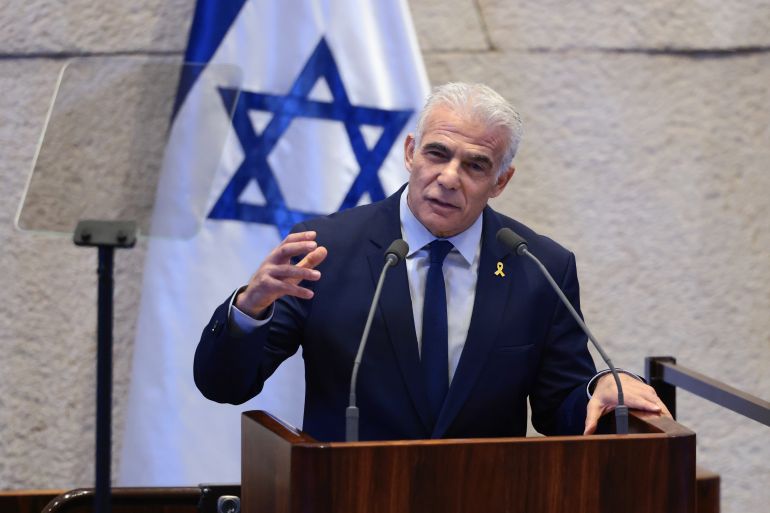
Just hours after the United States and Iran announced a ceasefire in the war that has dominated news headlines around the world and pushed oil prices to new heights, Israel bombarded Lebanon on Wednesday, killing hundreds, injuring thousands and prompting Iran to reimpose its blockade of the Strait of Hormuz. The bone of contention: whether or not Israel’s relentless strikes on Lebanon were included in the ceasefire at all. Pakistan, which brokered the agreement, said they were. Israel said they weren’t. Recommended Stories list of 4 itemsend of list Later on Wednesday, the US sided with Israel, with President Donald Trump calling the violence in Lebanon “a separate skirmish” even though Hezbollah had entered the war in defence of Iran. In Israel, Prime Minister Benjamin Netanyahu has come under intense political pressure since the US and Iran signed the ceasefire, which had little or no active involvement from Israel. None of Israel’s war aims, which Netanyahu had assured his country were the basis for what he framed as an existential battle with Iran, had been achieved, angering those who supported the war. Furthermore, under the terms of the truce published yesterday, a 10-point peace plan put forward by Iran has been accepted as a starting point for negotiations due to begin this weekend in Islamabad. Under early descriptions of the Iranian plan, Iran would retain its nuclear stock and could benefit financially from levies charged on shipping traffic through the Strait of Hormuz and from tariffs and sanctions relief promised by Israel’s ally, US President Donald Trump, on his Truth Social account. Advertisement This is far from the 15-point list of demands the US previously put forward to Iran, which would have seen the strait completely reopened without conditions, and Iran giving up its enriched uranium stocks, ending its ballistic missiles programme and promising to stop arming proxy groups in the region, such as the Houthis in Yemen, Hezbollah in Lebanon and a flurry of armed groups in Iraq. Arguing that Lebanon is exempt from the ceasefire agreement, Israel launched the most extensive bombardment on its neighbour in recent months on Wednesday. In the space of about 10 minutes, the Israeli military carried out more than 100 strikes on what it claimed were Hezbollah targets, hitting Beirut, southern Lebanon and the eastern Bekaa Valley, killing at least 254 people, 91 of them in the capital, Beirut, alone. The attacks have been condemned by numerous nations and international organisations, including Spain, France, the United Kingdom, the United Nations and Pakistan, which brokered the ceasefire deal and stated explicitly that Lebanon was included. Responding to the strikes, Iranian state media announced that its government was now considering walking away from the truce and has already announced that restrictions on the economically vital Strait of Hormuz will be reimposed. For its part, Israel says it is not trying to kill the ceasefire by launching strikes on Lebanon. Charles Freilich, Israel’s former deputy national security adviser, told Al Jazeera that the motivation for the strikes arose solely from the “opportunity to hit numerous mid to high-level Hezbollah fighters, not spoil the ceasefire, which both the US and Israel maintain does not include Lebanon”. ‘Provocateurs-in-chief’ Some analysts are sceptical, however. “Israeli officials will no doubt claim that this was a super sophisticated operation against necessary security targets, perhaps embellishing those arguments with claims of deep intel and technological penetration and sophistication, and you will probably have the usual mainstream Western media outlets slavishly parroting the Israeli line,” former Israeli government adviser Daniel Levy told Al Jazeera, before explaining that such operations typically combine two principal features. “The first is, sadly, an Israeli devotion to death and destruction, largely for its own sake, to spread terror and upend state capacity in various places in the region, and to upend civilian life,” he said. “And, secondly, a very transparent attempt to prolong the broader war against Iran, to collapse any ceasefire prospects, and to act as provocateurs-in-chief.” Advertisement Politically, support within Israel for the war may have weakened, however. Many of those who initially supported the war on Iran have been unsparing in their criticism of a potential pause in the conflict negotiated by the other two parties at Israel’s apparent expense. Posting on X, opposition leader Yair Lapid claimed that Prime Minister “Netanyahu has turned us into a protectorate state that receives instructions over the phone on matters pertaining to the core of our national security”. Democrats leader Yair Golan was equally scathing. “Netanyahu lied,” he wrote on X. “He promised a ‘historic victory’ and security for generations, and in practice, we got one of the most severe strategic failures Israel has ever known.” Israeli opposition leader Yair Lapid has been unsparing in his criticism of Prime Minister Benjamin Netanyahu following a ceasefire he claims Israel was excluded from [Evelyn Hockstein/Pool via AP] “Netanyahu is in real trouble, and he thinks he has to wreck the ceasefire to get out of it, just as he did previously in Gaza,” Member of the Knesset Aida Touma Sliman of the left-wing Hadash party, which has opposed the war from the start, told Al Jazeera. “The ceasefire has lost him a lot of support, even among those who backed the war. None of his war aims have been achieved and it looks like he is losing control to the Trump administration,” she said. “Don’t forget, we’re heading towards elections,” she added, referring to the vote currently slated for October, “and Netanyahu’s dropping in the polls. He needs something he can claim is a victory. “And that’s why he did what he did,” she said, of Wednesday’s barrage on busy Lebanese neighbourhoods that killed hundreds, including women, children and medical workers, according to emergency workers on the ground. “He conducted a massacre in Lebanon.” Adblock test (Why?)
Can global supply chains recover from the Iran war?
Conflict upends flow of critical raw materials for manufacturing, aviation and technology. The United States and Iran may have agreed to a ceasefire for now, but the world’s supply chains will continue to feel the effects. Beyond oil and gas, Iran’s near closure of the Strait of Hormuz has blocked shipments of critical raw materials from the Gulf. Petrochemicals, helium and aluminium are just some of the products that have not been able to reach manufacturing hubs around the world. Many everyday items are affected, from plastic packaging to the advanced semiconductors in our smartphones. How will our supply chains recover, and can they become more resilient to global shocks? Published On 9 Apr 20269 Apr 2026 Click here to share on social media share-nodes Share googleAdd Al Jazeera on Googleinfo Adblock test (Why?)
Assembly Elections 2026: Kerala voter turnout hits 33.2%, Assam records 38.9%, Puducherry at 37% so far

Polling for high-stakes electoral battles in two States and a Union Territory began on Thursday at 7 am. Voting for 126 seats in Assam, 140 in Keralam, and 30 in Puducherry is underway. The counting of votes will take place on May 4.
Women’s Reservation Bill: Will Congress back it as Shashi Tharoor seeks clarity after PM Modi’s appeal for support?
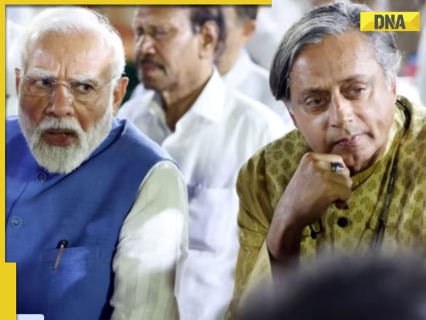
The Congress party is set to convene a meeting of its Congress Working Committee (CWC) in Delhi on April 10 to deliberate on developments related to the Women’s Reservation Bill.
Delhi Government accelerates Yamuna rejuvenation with citizen participation: CM Rekha Gupta leads inspection

Delhi CM Rekha Gupta and Lt. Governor Taranjit Singh Sandhu inspected the Yamuna, accelerating desilting and pre-monsoon rejuvenation, involving citizens and authorities to ensure cleaner, safer riverfronts.
Who is Rao Inderjeet Yadav? Gangster with 1.5 million followers, owns luxury cars, Rs 17 lakhs in cash, arrested in Dubai

Indian gangster Rao Inderjeet Yadav has been arrested in Dubai. Yadav had fled the UAE after murdering a businessman in Rohtak, Haryana. After his arrest, the Dubai authorities have asked for his documents and said that they will soon extradite to India.
Nitish Kumar set to take Rajya Sabha oath tomorrow; who will be Bihar’s next CM?
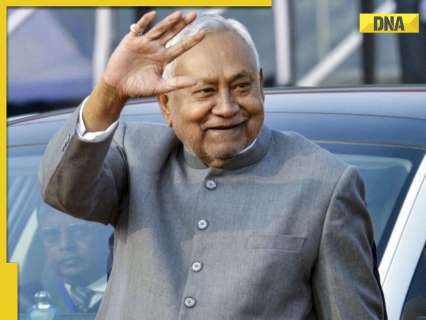
Bihar is set for a leadership transition as Nitish Kumar is expected to step down after the Khadmas period ends.
India-US trade deal to be signed this month? Here’s what Trump’s envoy Sergio Gor said
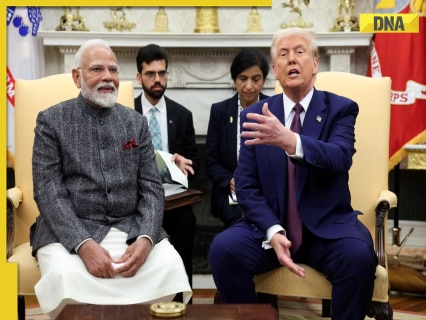
India and the US had announced a bilateral trade deal on February 2 this year, following months of negotiations between the two sides. Under the deal, US tariffs on Indian goods have been lowered from 50 percent to 18 percent.
US-Iran Strait of Hormuz Standoff: India’s oil crisis deepens, inflation fears rise; how will it brace?
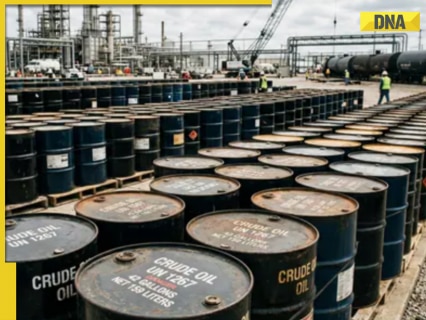
Higher oil prices could push inflation beyond 6%, weakening the rupee and eroding GDP growth by 1%. As energy demand spikes loom, is India ready for the oil shock?