

How does Trump solve key ‘nuclear dust’ hang-up in negotiations to end Iran War?
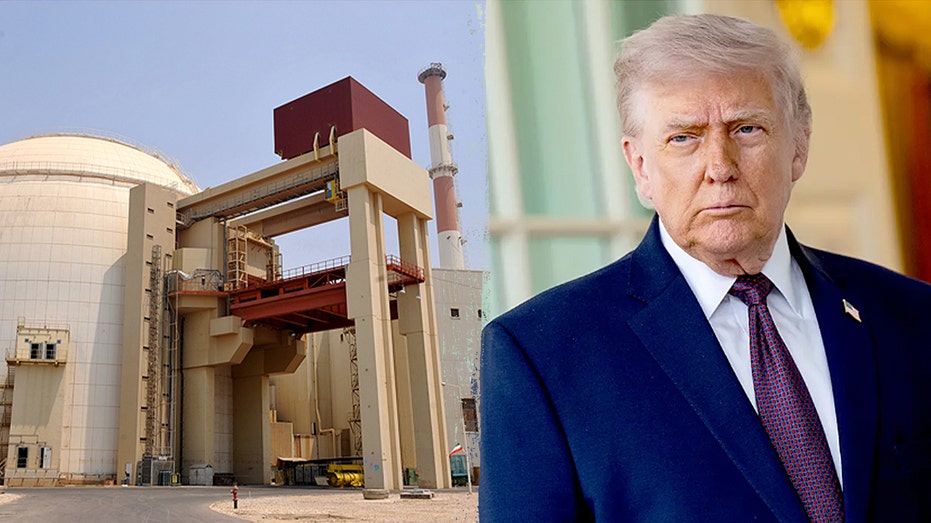
Even as U.S. and Iranian negotiators reportedly move toward a temporary framework agreement, one of the most consequential questions remains unresolved: What happens to Iran’s enriched uranium stockpile? Iranian officials have repeatedly insisted retaining enriched uranium is a red line in negotiations, even as President Donald Trump has vowed Iran “will not have a nuclear weapon” and suggested the United States could ultimately “take” the material if necessary. Nonproliferation experts say the issue sits at the center of whether any future agreement can credibly prevent Iran from rapidly moving toward weapons-grade enrichment — particularly after U.S. strikes damaged key nuclear facilities but did not necessarily eliminate the nuclear material itself. “I think it would put a poison pill in any agreement because retaining any of these 60% stockpile or really any of the lower enriched material,” Andrea Stricker, a research fellow at the Foundation for Defense of Democracies, told Fox News Digital. “That would give them the ability to go higher to weapons grade at a time of their choosing.” AFTER THE STRIKES, HOW WOULD THE US SECURE IRAN’S ENRICHED URANIUM? The issue has taken on renewed urgency following 2026’s Operation Epic Fury against Iran and 2025 U.S. strikes on key Iranian nuclear facilities, including Fordow, Natanz and Isfahan. While airstrikes can damage centrifuges, tunnel systems and enrichment infrastructure, experts say physically locating, securing and neutralizing enriched uranium presents a separate challenge altogether. Destroying infrastructure can slow or disrupt a nuclear program, but accounting for nuclear material itself requires sustained access, reliable intelligence and international oversight. “The stockpile is going to be the focus for the administration because that is the material, in particular the 60%,” Stricker said. Iran is believed to possess thousands of kilograms of enriched uranium ranging from low-enriched material to uranium enriched to 60%, which is considered near weapons-grade and can be more quickly refined to the 90% level typically associated with nuclear weapons. Stricker said the Trump administration is likely to insist the stockpiles either be destroyed inside Iran or removed from the country under international supervision. “The best option would be to destroy the stockpile in Iran, and then you’re not having to deal with who takes possession and what can Iran do with the stockpile as far as having it sent back under certain terms,” she said. EX-CENTCOM COMMANDER WARNS AGAINST ‘RISKY’ US GROUND OPERATION TO SEIZE IRAN’S ENRICHED URANIUM But even if Iran agreed to surrender or neutralize the uranium, carrying out such an operation would likely involve excavation teams, international nuclear inspectors and hazardous materials specialists working inside heavily damaged underground facilities. Any operation to physically secure or remove the uranium could also raise broader questions about how much direct U.S. or international involvement would ultimately be required on the ground, even as the administration faces political pressure to avoid a prolonged military commitment in Iran. “You’re talking about having to go down into heavily damaged sites, and you’re not sure what the state of the material even is,” Stricker said. Stricker said the underground Isfahan tunnel facility was struck with Tomahawk missiles, while Natanz and Fordow sites were hit with massive ordnance penetrators designed to reach buried nuclear infrastructure. “So you will need hazard material teams to handle it, to safely package it and either to have it destroyed or to remove it from the country safely,” she said. Stricker noted that enriched uranium in this form is chemically toxic and corrosive, though she said it would not pose the kind of large-scale radiological danger associated with a nuclear detonation. “People don’t want to be breathing that material or coming into contact with it with their skin,” she said. Another possible pathway would involve transferring the material to international custody. Stricker said the International Atomic Energy Agency, along with an international recovery team, could potentially oversee the removal of the uranium and transfer it to the agency’s low-enriched uranium fuel bank in Kazakhstan. Limited quantities could also eventually be converted into fuel rods for civilian nuclear reactors, she said, though she argued Iran should not retain direct access to the material itself. Kelsey Davenport, director for nonproliferation policy at the Arms Control Association, previously told Fox News Digital that internationally monitored downblending may ultimately prove more practical than attempting to physically seize or destroy the material inside damaged facilities. “The IAEA remains the best place to go back into Iran to monitor the sites, to try to track down and account for the enriched uranium,” Davenport said. The White House could not immediately be reached for comment. “The Enriched Uranium (Nuclear Dust!) will either be immediately turned over to the United States … or, preferably … destroyed in place,” Trump wrote on Truth Social Sunday. Iranian officials, however, have continued to insist the country has a right to maintain uranium enrichment and stockpiles as part of a civilian nuclear program. Ebrahim Azizi, head of the Iranian parliament’s national security committee, said Wednesday that maintaining enriched uranium stockpiles remains one of Iran’s “red lines” in negotiations with the United States. That position may ultimately collide with what many nonproliferation advocates view as the core objective of any agreement: preventing Iran from preserving a rapid nuclear breakout capability. Stricker said international inspectors had a relatively strong understanding of the quantities and locations of the material before access became more restricted, but argued that any future agreement would require continuous international monitoring over how the uranium is handled and removed. Stricker argued that any long-term deal would likely require not only removal of the stockpile, but also strict limits on Iran’s future enrichment capabilities and expanded access for international inspectors. “Ideally it would be a permanent ban,” she said, referring to uranium enrichment. “But it appears that they’re leaning more towards a long moratorium.” She added that any agreement would also require the International Atomic Energy Agency to regain deep access to Iranian facilities, including military sites, to verify compliance and account for nuclear materials. “They need full access to go wherever
WATCH: Black Hawk assists takedown of massive cocaine haul off coast of Puerto Rico
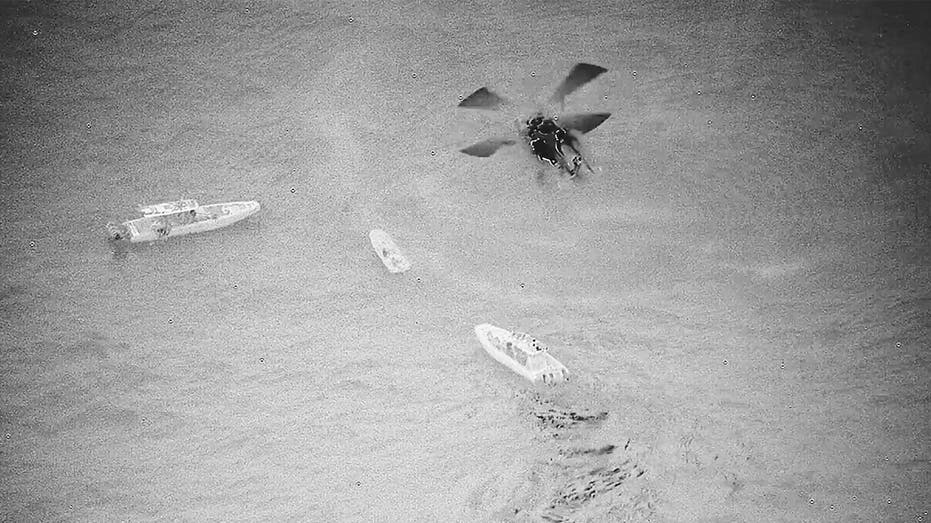
FIRST ON FOX: The U.S. Air and Marine Operations (AMO) deployed a Black Hawk helicopter to intercept a boat suspected of smuggling drugs off the coast of Puerto Rico earlier this month. On May 14, AMO detected a 25-foot blue vessel carrying three people and visible packages. After surveilling its activity, the San Juan Marine Unit deployed a pair of law-enforcement boats, flanked by the Black Hawk, according to U.S. Customs and Border Protection (CBP). The agency seized three Dominican Republic nationals along with five bales containing 391 pounds of cocaine. The helicopter-assisted takedown is just the most recent display of American military might that has been targeting narcotrafficking operations south of the U.S. border. BORDER CRISIS SHIFTS TO CARIBBEAN: HOMELAND SECURITY FIGHTS SILENT WAR IN PUERTO RICO “Our Air and Marine Operations teams demonstrated exceptional skill and coordination in this interdiction. The decisive use of air disabling fire by our Black Hawk crew was instrumental in stopping the vessel and preventing dangerous narcotics from reaching our communities,” Caribbean Air and Marine Branch Director Christopher Hunter said. “This operation highlights our commitment to working with partners across all levels to disrupt smuggling networks and protect the security of the United States and its territories,” he added. Early on in his second administration, President Donald Trump made it clear he would use all available designations to label drug smuggling as a threat to the homeland. On Jan. 20, 2025, Trump declared a state of emergency brought on by the influx of narcotics. “They present an unusual and extraordinary threat to the national security, foreign policy, and economy of the United States. I hereby declare a national emergency to deal with those threats,” the White House said in its executive order. SPEC OPS CHIEF ORDERED DEADLY CARIBBEAN STRIKE ‘IN SELF-DEFENSE’ WITH HEGSETH’S SIGN-OFF, WHITE HOUSE SAYS In turn, the Department of War caught the attention of the country when it began carrying out strikes on boats off the coast of Venezuela, in a manner it said was consistent with the administration’s posture. After nearly 20 strikes in waters around the Caribbean, Secretary of War Pete Hegseth said the efforts had successfully choked off some trafficking operations. “WINNING: Some top cartel drug-traffickers in the U.S. Southern Command have decided to cease all narcotics operations INDEFINITELY due to recent (highly effective) kinetic strikes in the Caribbean,” Hegseth said in a post to social media. In the Black Hawk confrontation, U.S. agents opted to approach the vessel instead of striking it from afar. Infrared video footage shared with Fox News Digital showed the three men on the boat desperately throwing the contents of the boat overboard as the Black Hawk and other U.S. boats encircled the craft. TRUMP’S WAR ON CARTELS ENTERS NEW PHASE AS EXPERTS PREDICT WHAT’S NEXT The three suspects put their hands above their heads as agents approached their vessel and were pulled onto U.S. boats. A search of the boat revealed empty plastic containers and other unidentified packages. The contraband thrown into the water was recovered, according to CBP.
US Treasury secretary confirms plans for banknote featuring Trump’s face

Proposed $250 bill would mark the first time a living person has appeared on US currency in more than a century. Published On 29 May 202629 May 2026 US Secretary of the Treasury Scott Bessent says preparations are under way to print a new $250 banknote featuring President Donald Trump’s face, with lawmakers to decide whether the bills will be put into circulation. US law bars any living person from appearing on US currency, but legislation was introduced last year to create an exception to allow current and former presidents to be featured. Recommended Stories list of 3 itemsend of list Speaking at the White House on Thursday, Bessent said a design had been prepared in anticipation of a change in the law. “Right now, there is proposed legislation – front of the House, in front of the Senate – to change the first requirement so that a living person, Donald J Trump, could be on a $250 bill,” Bessent said. Bessent made his comments after The Washington Post reported that Treasurer Brandon Beach, a Trump appointee, has been pushing the Bureau of Engraving and Printing to expedite the process for a new currency note to mark the 250th anniversary of the Declaration of Independence. “I don’t think that there’s anything untoward about having the president of the United States, the person who’s president of the United States, on the 250th anniversary bill,” Bessent told reporters. A design mock-up obtained by The Washington Post showed the words “America 250 anniversary”, a nod to the US declaring its independence on July 4, 1776. The Treasury Department did not immediately respond to Al Jazeera’s request for comment. Behaviour of dictators, monarchs A banknote featuring Trump’s face would be the latest example of the US president expanding his personal brand in his official capacity since returning to the White House in 2025. Advertisement Banners featuring Trump’s portrait have been hung on the Department of Justice and other federal buildings. And his slate of appointees to the Kennedy Center governing board added his name to the national performing arts facility, which Congress originally designated as a memorial to assassinated President John F Kennedy. Trump’s signature is also set to appear on US currency as part of plans to mark the 250th anniversary, a first for a sitting president. US banknotes have until now featured the signatures of the Treasury secretary and the treasurer. In March, the US Commission of Fine Arts, led by Trump appointee Rodney Mims Cook Jr, approved the minting of a commemorative gold coin bearing the Republican president’s image. The announcement, which relied on a legal loophole for commemorative coins, prompted a backlash from critics, who likened the move to the behaviour of dictators and monarchs. Adblock test (Why?)
Anthropic soars to $965bn valuation, leapfrogging OpenAI

Anthropic has usurped OpenAI as the world’s most valuable artificial intelligence startup, soaring to a $965bn valuation ahead of expected public listings by the rival firms. Anthropic, the maker of the Claude family of chatbots, said on Thursday that it had raised $65bn from private investors after a fundraising round led by Altimeter Capital, Greenoaks, Dragoneer and Sequoia Capital. Recommended Stories list of 4 itemsend of list The announcement catapults Anthropic, led by CEO and cofounder Dario Amodei, ahead of ChatGPT maker OpenAI in value, which attracted an $852bn valuation in its last fundraising round in March. “This funding will help us serve the historic demand we are experiencing, stay at the research frontier, and bring Claude to more of the places where work happens,” Anthropic’s Chief Financial Officer Krishna Rao said in a statement. Altimeter Capital CEO Brad Gerstner hailed the adoption of Claude among the “world’s most demanding organisations” as evidence of Anthropic’s command in the field. “This momentum positions Anthropic to lead the next phase of AI innovation and capture the enormous opportunity ahead,” Gerstner said. Founded in 2021 by former OpenAI researchers, Anthropic has rapidly emerged as one of the leading players in Silicon Valley’s scramble to dominate AI. Anthropic’s Claude, first launched in 2023, is among the most popular AI models worldwide. In March, the San Francisco-based company said that the chatbot was receiving more than 1 million new sign-ups each day. While achieving stellar success in rapid time, Anthropic has also faced challenges – in particular, a high-profile dispute with US President Donald Trump’s administration, which has labelled the firm a “supply chain risk” over its refusal to allow unrestricted access to its tools for military purposes. Advertisement Anthropic unveiled its latest iteration of Claude, Opus 4.8, in a separate announcement on Thursday, calling it a “modest but tangible improvement” on its predecessor. Anthropic, OpenAI and Elon Musk’s rocket company SpaceX are all expected to go public in the near future in what are expected to be among the biggest initial public offerings in history. Jay R Ritter, an emeritus professor at the University of Florida who specialises in IPOs, said Anthropic has generated a lot of market excitement due to its widespread use by companies for software coding. “This is a big market where apparently Anthropic has the best product,” Ritter told Al Jazeera. “The increase in valuation in a short period of time is unprecedented for a startup, although publicly traded tech companies such as SK Hynix, Nvidia, and Alphabet have seen even bigger increases, although not as much in percentage terms,” Ritter said, referring to the South Korean and US chip giants, and Google’s parent company. While it remains to be seen whether the massive investments pouring into AI are creating a bubble, Ritter said, the handful of successful firms that are likely to emerge in the field could see enormous profits. “Nobody wants to use the eighth best product, so these companies are either one of the handful of successful firms, or they will have a zero market share,” he said. “The tech industry is different than the restaurant industry, where there are not large economies of scale, and where competition limits the profit margins.” Adblock test (Why?)
Lebanon Latest: Mass evacuations as Israel expands attacks
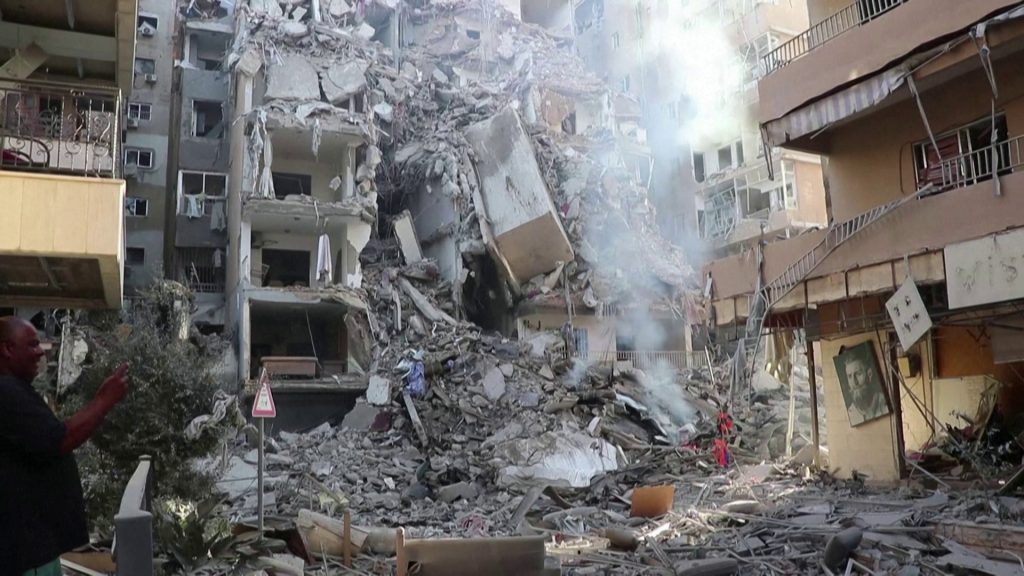
NewsFeed Al Jazeera’s Obaida Hitto brings you the latest from southern Lebanon amidst increasing Israeli attacks. Published On 29 May 202629 May 2026 Save Click here to share on social media share-nodes Share facebookxwhatsapp-strokecopylink googleAdd Al Jazeera on Googleinfo Adblock test (Why?)
Police find cash amounting to Rs 2.24 crore near TMC leader’s farmhouse, arrest him

Police raided TMC office and the farmhouse of one of its leaders and discovered Rs 2.24 crore in cash. The police are still investigating the matter and said that the amount could increase to Rs 3 crore. TMC Leader Dipankar Bhattacharya has been sent to police custody.
J&K: Heavy exchange of fire in Rajouri’s Dorimal Forest during Operation Sheruwali
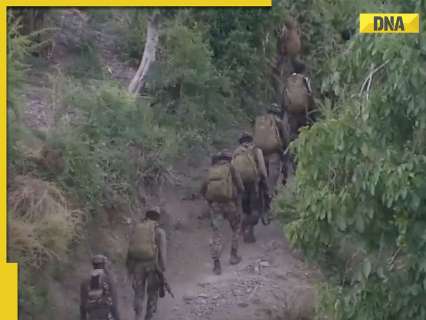
Heavy firing and shelling erupted in Rajouri’s Dorimal forest area on Thursday as Operation Sheruwali reached a critical stage, with security forces tightening the cordon to neutralise suspected militants hiding in the dense terrain.
Twisha Sharma Case: CBI creates ‘tunnel view’ of final hours to solve dowry death case mystery

‘Tunnel view’ works by combining CCTV footage, call records, Wi-Fi logs, internet usage, smart-device data, forensic mapping, and witness statements into one consolidated timeline to reconstruct a crime’s final moments.
Karnataka CM Siddaramaiah’s resignation accepted, governor dissolves Cabinet
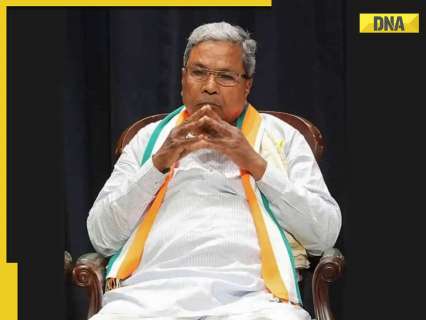
The development came after Siddaramaiah stepped down from the post following directions from the Congress high command.
Is centre govt planning to use military for NEET-UG re-exam on June 21? Here’s what we know

Centre may deploy armed forces for NEET-UG June 21 re-test logistics after paper leak. Military role limited to secure transport, weather emergencies.