

Chip Roy fields proposal to block pay and power for longtime lawmakers
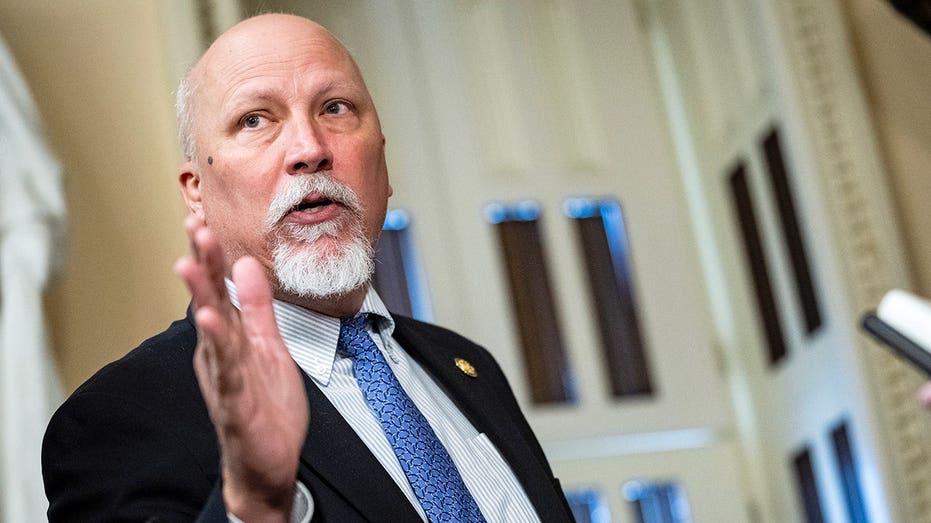
Republican Rep. Chip Roy of Texas has fielded a proposal to cut off pay and power from House and Senate lawmakers once they’ve served 12 years in their respective legislative chamber. “A Member of Congress (including a Delegate or Resident Commissioner to the Congress) who has served 12 or more cumulative years in the House of Representatives or in the Senate, as the case may be, may not, on and after the date that the Member reaches 12 years of service in the Member’s respective House of Congress, be eligible for any covered benefit described in subsection (b),” the text states. Under the proposal, such long-serving lawmakers would no longer be eligible for pay and would no longer be eligible to serve in House and Senate leadership posts or as the chair or ranking member of standing or select committees. FIRST ON FOX: SPLC’S TAX-EXEMPT STATUS UNDER THREAT AFTER FIERY CAPITOL HILL HEARING “For too long, Washington has rewarded longevity with greater power, higher pay, and deeper entrenchment. If members of Congress want to serve beyond 12 years absent a constitutional amendment limiting them, they should do so without taxpayer-funded salaries and without monopolizing committee chairs and leadership positions,” Roy said, according to a press release. “This bill helps ensure that public service remains exactly that: service to the people, not a lifelong career in politics,” he said, according to the release. Roy, who has served in the U.S. House of Representatives since 2019, lost the Texas attorney general Republican primary runoff contest last month to Lone Star State Sen. Mayes Middleton. SENATORS AGREE TO FORGO SHUTDOWN PAYCHECKS — BUT MANY WON’T FEEL THE PAIN The text of Roy’s proposal indicates that the restrictions would be enacted by the legislature “as an exercise of the rulemaking power of the Senate and House of Representatives, respectively, and as such are deemed a part of the rules of each House, respectively … ” and that the restrictions would be enacted “with full recognition of the constitutional right of either House to change the rules (so far as relating to the procedure of that House) at any time, in the same manner, and to the same extent as in the case of any other rule of that House.” “The prohibition under this section shall apply with respect to the One Hundred Twenty-First Congress and each succeeding Congress,” the measure states. The 121st Congress will start in early 2029. TEXAS MAGA BATTLE ENDS WITH MIDDLETON VICTORY AS CHIP ROY FALLS SHORT IN AG RACE The U.S. Constitution stipulates that “Each House may determine the Rules of its Proceedings,” but also states that “The Senators and Representatives shall receive a Compensation for their Services, to be ascertained by Law, and paid out of the Treasury of the United States.”
Second Amendment fights grow across several states over 3D-printed gun laws

Lawmakers in an increasing number of states are attempting to impose restrictions on 3D-printed firearms amid a Second Amendment fight over ghost guns. As a bipartisan slate of states attempt to restrict the possession and manufacturing of ghost guns — firearms without serial numbers often made or modified with the use of 3D printers — Second Amendment activists and gun rights advocates argue the restrictions impinge on their constitutional right to bear arms. At least 16 states have now put 3D gun laws on the books, with seven states adding major legislation this year. Lawmakers in Colorado, New Jersey, Maine, New York, Virginia, and Washington have all imposed various restrictions on weapons manufactured without serial numbers in 2026 while California’s legislators added to the states already robust anti-3D manufactured firearm laws by advancing a bill that would require 3D printer manufacturers to equip their devices with technology that would block the printing of firearms. MARYLAND MAN ON THE RUN AFTER POLICE ALLEGEDLY FIND MASSIVE STASH OF ILLEGAL GHOST GUNS IN HOME New York lawmakers added a similar law to the state’s budget this year that will go into effect by mid-June. Manhattan’s Democratic District Attorney Alvin Bragg compared the law to statutes preventing commercial and consumer printers from producing U.S. dollars. “We’re going to put technology into our machines such that they will not be a 3D gun. Much like, you know, we don’t have, you know, commercial printers that print US currency,” Bragg told ABC 7 Eyewitness News. In January, Maine’s legislature passed a bill requiring serial numbers on all firearms, included 3D-manufactured guns. The same month, former New Jersey Gov. Phil Murphy signed Bill A4975, which requires state residents to own a firearms license to even possess instructions or blueprints to print a 3D firearm. COLORADO POISED TO BAN SALE OF AR-15S, OTHER RIFLES AND SHOTGUNS WITH EXTENDED MAGS Colorado and Virginia also passed similar laws against weapons without serial numbers while a Washington state law that Gov. Bob Ferguson signed in March restricted the ability for residents to possess the serial-free weapons while also imposing constraints on the digital blueprints and devices that would manufacture the 3D guns. A Minnesota legislative package considering a wide slate of restrictions failed to pass the statehouse in March. The impetus to restrict the DIY ordinance coincides with a sharp rise in 3D-printed guns recovered at crime scenes. Data from the Bureau of Alcohol, Tobacco, Firearms and Explosives (ATF) shows the bureau recovered over 27,000 3D-printed ghost guns from crime scenes in January 2023 compared to just over 1,600 recovered in January 2017. ONLINE ‘GORE’ FORUMS ARE ‘GATEWAY TO EXTREMISM’ IN MASS SHOOTINGS, NORMALIZING HORROR FOR KIDS: EXPERTS Proponents for stricter gun laws argue that the rise of 3D-printed weapons increases the likelihood of adverse shootings in American communities. “As 3D-printing technology becomes more affordable and accessible, young people are increasingly able to manufacture their own firearms—often without the knowledge of the adults in their lives. As schools purchase 3D printers and train students how to use them, the problem of 3D guns is now entering the classroom as well,” reads a statement on the Everytown For Gun Safety website. Others, however, argue that placing restrictions on the weapons violated Second Amendment rights and that bans don’t fundamentally impact public safety. “The gun is not the problem. The individual committing the crime is the problem,” William Sack, the senior director of legal operations at the Second Amendment Foundation, told Michigan Advance. Several states with restrictions are facing constitutional lawsuits. In February, a three-judge panel on the United States Court of Appeals for the Third Circuit dealt a blow to the constitutional argument, siding with the state of New Jersey in a case against Texas-based 3D-gun blueprint designed Defense Distributed. The Third Circuit upheld a lower court ruling that affirmed a cease and desist that New Jersey’s Attorney General delivered to Defense Distributed ordering the company to stop distributing gun-printing blueprints to unlicensed individuals. Defense Distributed’s legal team is requesting the court to take up the case again and will petition the Supreme Court if unsuccessful, according to the Association of New Jersey Rifle and Pistol Clubs.
Missouri senator warns Dem immigration policies threaten Western civilization after scoring ICE funding win
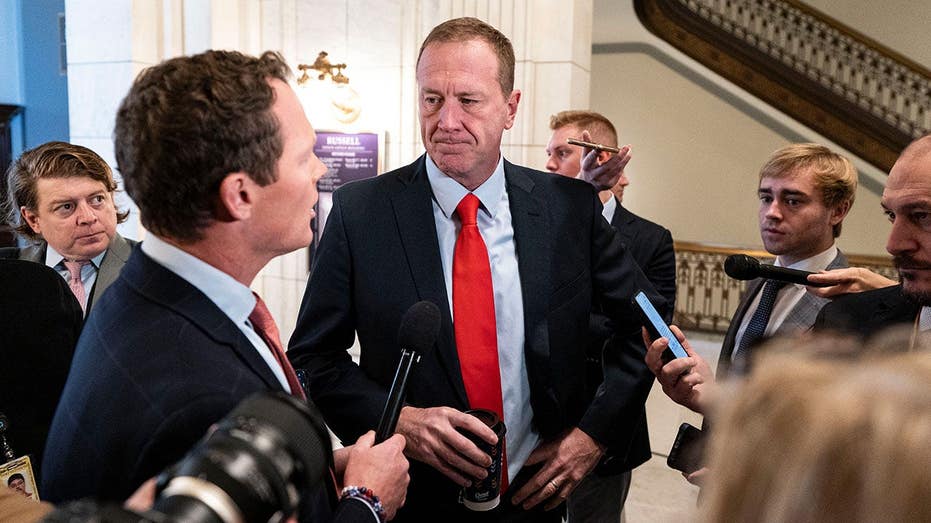
Democrats’ “suicidal empathy” on immigration will “destroy our country,” a Republican senator warned after his proposal targeting sanctuary city policies was included in the reconciliation package funding Immigration and Customs Enforcement (ICE) and Customs and Border Protection (CBP). In a Tuesday interview with Fox News Digital, Sen. Eric Schmitt, R-Mo., argued that Democrats’ approach to immigration is also driven by political self-interest and not entirely by the desire for moral high-ground. “There’s an electoral play here. It’s about raw power,” he said. Schmitt’s provision, which was included in the House-passed funding package Tuesday, would provide $350 million for ICE agents to arrest criminal illegal immigrants after their release from state or local custody. It comes as law enforcement in sanctuary states and cities continue to refuse to cooperate with federal officials. Schmitt also warned that failing to deport illegal aliens is a threat to the West itself. NEW DEM PROPOSAL WOULD RESTRICT ICE’S KEY TOOL TO DETAIN CRIMINAL ILLEGAL ALIENS “I think it’s a very important time for Western civilization, honestly, to stand up and say, ‘no, we actually believe in sovereignty. We believe that a country can decide who can come and who has to go,’ and that this is our moment,” he said. “And the easiest of low-hanging fruit is to say that when you’re here illegally and you’ve committed a violent act, when you’re released from prison, we’re actually going to send you back home, and that’s what this legislation does.” In sanctuary cities and states, officials often flout federal immigration law and refuse to coordinate with ICE to ensure criminal illegal aliens are deported after they’re freed, Schmitt explained. “And I know that sounds crazy, but that’s the practical implication,” said Schmitt, adding that there were 18,000 such cases in 2025 alone. ICE WARNS ILLINOIS IS RELEASING VIOLENT CRIMINAL ILLEGAL ALIENS DESPITE DETAINERS, RISKING PUBLIC SAFETY “These violent rapists or other violent criminals are just being let loose into the community,” said Schmitt, who argued that being in the country illegally — even without committing a violent crime — is justification enough for deportation. “But these sanctuary jurisdictions have decided that they would rather let these criminal illegal aliens back in the community than have them deported. That’s how inverted the morality is on all this,” he continued. “And so this sets to right that wrong. It says that these sanctuary jurisdictions… you don’t want to cooperate? Okay, well we’re going to have the resources to go do it on our own with ICE.” Schmitt’s successful provision and the larger debate on the funding bill comes as criminal illegal aliens continue to make headlines. Just last week, four members of the barbaric Venezuelan Tren de Aragua street gang pleaded guilty to murdering two Americans by gunning them down in cold blood. WAVE OF ALLEGED MIGRANT MURDERS IGNITES FURY ACROSS US AS OFFICIALS WARN OF MORE CARNAGE, CRACKDOWN NEEDED Another illegal alien in California, accused of killing a two-month-old baby, grinned in court during a pretrial hearing on June 2. Yet another illegal alien was sentenced at the end of May to 25 years in prison after raping and impregnating a 12-year-old girl in Missouri. “I can’t explain why they wanted an open border,” Schmitt said of the opposition party. “I can’t explain why they don’t want criminals deported from this country. I can’t explain why they don’t want people denaturalized who have, you know, committed terrorist acts in this country.” “That’s on them, but we’ve got a job to do, which is to make the American people more safe.” Schmitt noted that arresting criminal illegal aliens when they’re released from jail is also much safer than arresting them in immigration raids and operations, and expressed disbelief that such a policy has not yet been implemented. “I can’t believe it hadn’t happened before, but I also don’t know that we’ve really been confronted with political leaders on the other side here who just don’t believe in the sovereignty of our country, and that’s kind of where we’re at. I mean, they wanted to defund ICE,” he told Fox News Digital. “They don’t really want enforcement of our federal immigration laws, and I think the American people do.”
IMD issues orange alert for Kerala as heavy rain likely till June 14
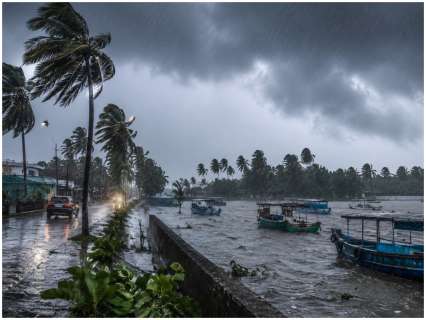
As per the India Meteorological Department (IMD), Kerala is predicted to witness heavy rainfall in the state till June 14. Along with this, strong winds with speeds of 40-60 kmph are also likely to hit the coastline.
Will Delhi-NCR witness rain and thunderstorms on June 11? IMD issues alert
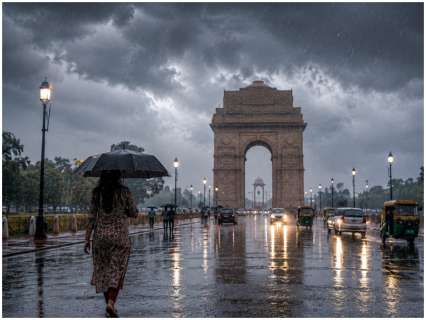
People in Delhi-NCR, Uttar Pradesh, Bihar, and Jharkhand may get relief from the heat on June 11 as the IMD has predicted rain, thunderstorms, and strong winds in several areas.
US-Iran war: 3 Indian crew members missing after attack on tanker off Oman coast
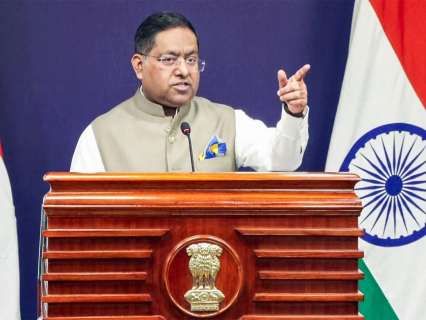
In a statement on Wednesday, the Ministry of External Affairs said three Indian seafarers were missing while 21 had been rescued as search and rescue efforts continued. The vessel had 24 Indian nationals on board at the time of the attack.
Trump congratulates Modi on becoming India’s longest-serving elected PM: ‘Strong and wise man’
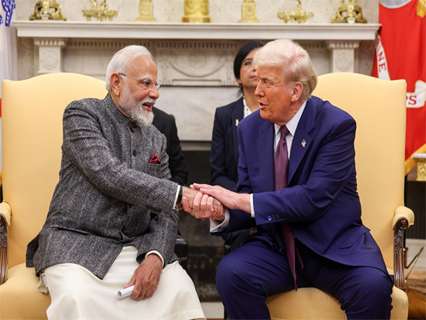
The US leader’s praise came after PM Modi completed 4,399 days in office, surpassing Jawaharlal Nehru’s record of 4,398 days as India’s first elected prime minister.
India summons top US diplomat to protest attack on tanker off Oman coast

The move comes after India condemned the attack on the vessel Settebello off the Oman coast, which had 24 Indian crew members on board. While 21 Indians have been rescued, three remain missing, according to a statement from the Ministry of External Affairs.
Kerala reports fresh Nipah case, implements contamination protocol

Kerala reports a suspected Nipah virus case in Kozhikode as a 40-year-old man tested positive in preliminary tests. Health authorities have started treatment, contact tracing, and containment measures.
Three Indian sailors missing after US hits vessel with 21 men onboard off Oman coast

India condemned the attack on the commercial vessel Settebello off the coast of Oman, which had 24 Indian crew members onboard. While 21 Indians have been rescued, three remain missing.