

Texas agriculture commissioner primary: Who is running and what you need to know

Agriculture is the second largest industry in Texas, which is home to more than 230,000 farms. Here’s a look at who’s running in the 2026 Democratic and Republican primaries to oversee the agriculture department and where they stand on the issues.
New Talarico campaign ad puts spotlight on his role in passing bill that caps insulin costs
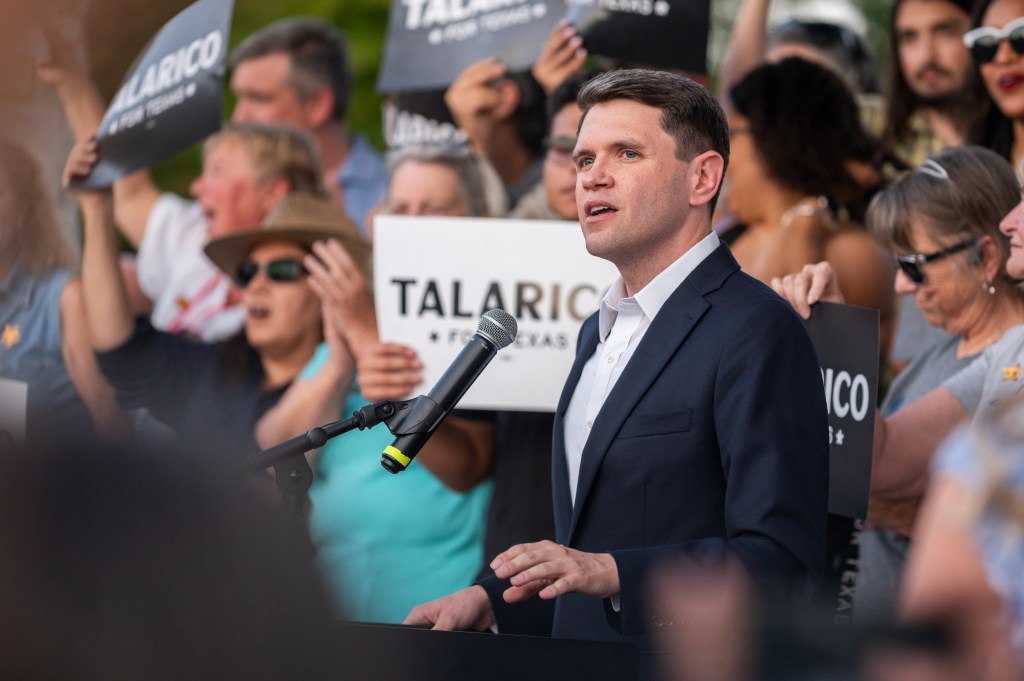
While GOP lawmakers accused the Austin Democrat of overstating his role in passing a statewide cap on insulin copays, his Democratic colleagues said his personal battle with diabetes generated key momentum for the effort.
Low test scores on one campus can trigger a state takeover in Texas, affecting Black, Hispanic and low-income students most

The demographic makeup of the trigger schools raises questions about whether Texas’ accountability system fairly considers historic inequities tied to race and poverty.
Florida GOP Rep Vern Buchanan to retire, adding to wave of House exits
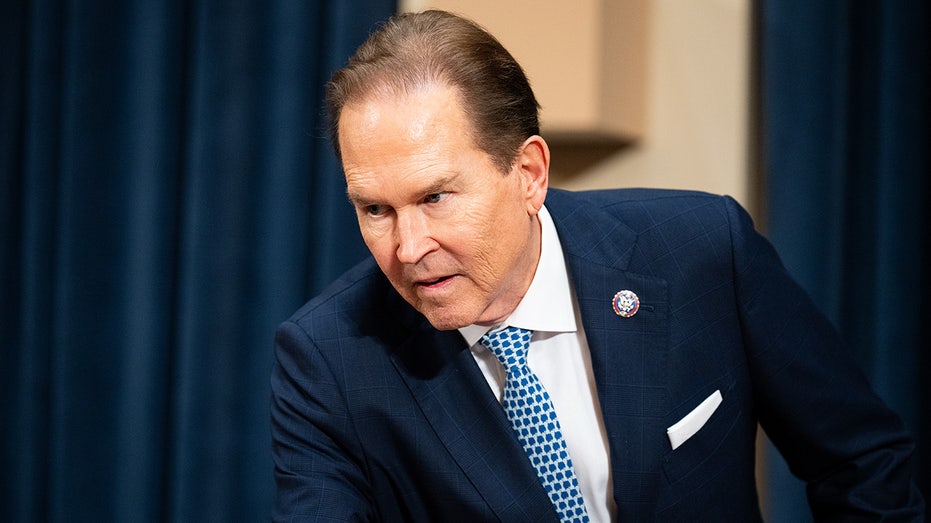
A longtime House Republican who sits on Congress’ powerful tax-writing committee is retiring after 20 years on Capitol Hill. Rep. Vern Buchanan, R-Fla., announced on Tuesday that he will not be seeking re-election, ending a two-decade-long career in Washington at the age of 74. He’s the 28th Republican to join what appears to be a mass exodus from the House of Representatives after the current term. Twenty-one House Democrats will also not seek re-election to the chamber. Buchanan said in a statement that it was the honor of a lifetime to serve his southwest Florida congressional district. GOP UNVEILS PLAN TO CUT DEFICIT BY $1 TRILLION WITH SECOND ‘BIG, BEAUTIFUL BILL’ “Every achievement worth doing began with listening to my constituents and fighting for their priorities. I came to Congress to solve problems, to fight for working families and to help ensure this country remains a place where opportunity is available to everyone willing to work for it,” Buchanan said. “After 20 years of service, I believe it’s the right time to pass the torch and begin a new chapter in my life.” Buchanan spent nearly all of his time in Congress as a member of the House Ways & Means Committee, a powerful panel that oversees a variety of issues including tax policy. HEADED FOR THE EXITS: WHY 3-DOZEN HOUSE MEMBERS AREN’T RUNNING FOR RE-ELECTION He was in contention to chair the committee after Republicans retook the House of Representatives in November 2022 but ultimately lost the gavel to current Chairman Jason Smith, R-Mo. Since then, Buchanan has served as the committee’s vice chair and chairman of its subcommittee on health. Before he leaves office, he’s still likely to play a key role as Republicans in Congress eye another “big, beautiful bill” via the budget reconciliation process. REP. LAMALFA’S DEATH FURTHER SHRINKS REPUBLICAN HOUSE MAJORITY Budget reconciliation allows the party controlling both the House and Senate to pass massive policy overhauls by dropping the Senate’s requirement for passage to be in line with the House’s own simple majority threshold. While the first bill was a vast compilation of President Donald Trump’s campaign promises, Republicans are hoping a second round would more narrowly focus on making Americans’ lives more affordable — including tackling soaring healthcare costs. The nonpartisan Cook Political Report rates Buchanan’s district as solidly Republican, meaning it’s not likely to flip in the 2026 midterms. But his retirement comes at a time when House Republicans are expected to face an uphill battle to keep their razor-thin majority for the latter half of Trump’s term.
Minnesota fraud whistleblower says ‘lack of guardrails was pretty shocking’
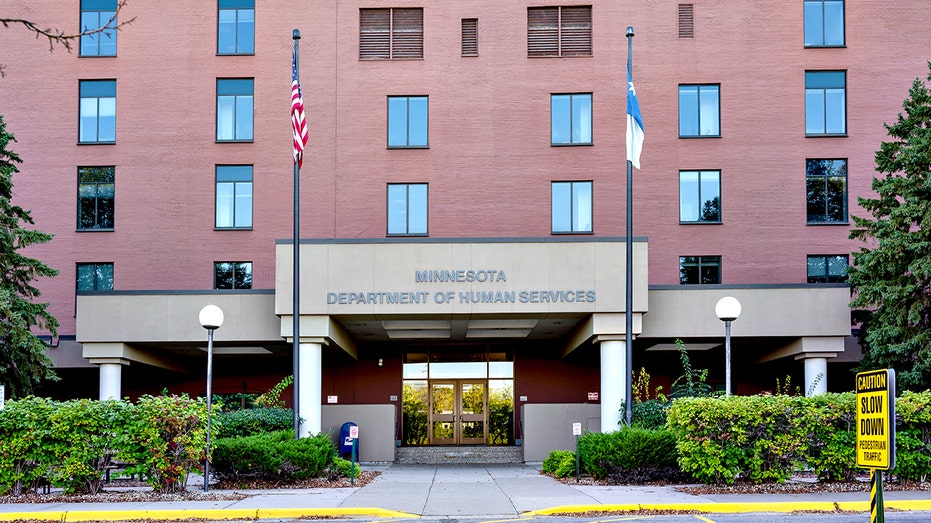
A Minnesota woman employed by the state’s Department of Human Services is speaking out against what she describes as incompetence within the department following the discovery of rampant fraud in the state’s healthcare system. Faye Bernstein told the City Journal in an interview that she first began to realize the high risk of fraud at Minnesota’s DHS in 2018 and 2019 following a promotion to a lead position. “Over the years, I had often thought that DHS is sloppy,” she said. “But 2018 and 2019 are when I saw, oh gosh, this is beyond normal. If we don’t have fraud today, we’re going to have fraud soon.” Bernstein has been a DHS employee for two decades, working in contract management and as a compliance officer, she told the outlet. In her lead position, she said she was able to see all the contracts being worked on by those in her division and witnessed conflicts with the contracts that could be deemed risky. MINNESOTA ‘ON THE CLOCK’ AS HHS THREATENS PENALTIES OVER CHILDCARE FRAUD SCANDAL “I was aware that our contracting processes were leaving us completely open to fraud,” Bernstein said. “But to realize the lack of guardrails was pretty shocking.” Federal prosecutors estimate that up to $9 billion was stolen through a network of fraudulent fronts posing as daycare centers, food programs and health clinics. The majority of those charged, so far, in the ongoing investigation are part of Minnesota’s Somali population. When she tried to report the issues at the time to her deputy director, Bernstein said she was told to stop asking questions. Bernstein said she felt retaliated against after most of her duties were reassigned and was eventually “shuffled from one job to another.” HOUSE REPUBLICANS CALL MINNESOTA FRAUD PROBE ‘TIP OF THE ICEBERG’ AS MORE BLUE STATES FACE SCRUTINY “Even our human resources people would tell us, ‘If your supervisor tells you to do something, you must do it.’ And when you didn’t, the word ‘insubordination’ came up,” she said. “They considered it insubordinate if you resisted an unlawful direction.” Bernstein told the outlet that she has been going through emails received beginning in 2024 from members of the public warning about the alleged fraud. “I was really surprised at how much notification we had,” she told the outlet. “Did we really ignore all those people writing in? Members of the public had advised us of this [alleged fraud] in email after email after email.” TRUMP ADMIN PUTS MINNESOTA ON NOTICE, MOVES TO AUDIT MEDICAID AND CLAW BACK FUNDS TO PROTECT TAXPAYERS The state’s DHS on Friday said that recently released federal data shows Minnesota’s Medicaid program has a significantly lower improper payment rate than the national average, with an error rate of just over 2.1%, compared with a national average of 6.1%. State officials also noted the data was collected before Minnesota began rolling out additional measures aimed at reducing fraud risk. “We’re committed to making Minnesota a national model for preventing fraud and catching errors,” said Shireen Gandhi, the state’s interim human services commissioner. “This review shows we have strong internal controls that we continue to improve, and we are not stopping there as we accelerate our efforts to fight fraud.” Bernstein, who said she has only voted Democratic, said the fraud was genuine and not partisan politics. “This is definitely not something that the Republicans are making up,” she said. “This is real.” Fox News Digital’s Alex Miller contributed to this report.
Federal judge rules ICE in Iowa illegally detained man, tried to ‘cover its tracks’

A federal judge ruled that U.S. Immigration and Customs Enforcement (ICE) illegally detained a man in Iowa after a court ordered his release, finding the agency had no legal authority at the time and later attempted to “cover its tracks.” In a Jan. 2 order, U.S. District Judge Stephen Locher said ICE violated federal law when it detained Jorge Eliecer Gonzalez Ochoa on Dec. 23 because it had not yet issued a valid “Notice to Appear,” a document the court said is required to start removal proceedings and justify detention. “It is undisputed that ICE had an arrest warrant and order to detain as of that time, but that a Notice to Appear was not issued until some unspecified time later in the day,” Locher wrote. Although ICE later issued a Notice to Appear and thereby “cured” the initial defect, the court said the agency’s actions at the time of the arrest were unlawful and inconsistent with federal regulations. FEDERAL JUDGE LIMITS ICE ARRESTS WITHOUT WARRANT, PROBABLE CAUSE Locher sharply criticized ICE for mailing the Notice to Appear later that day rather than serving it in person while Gonzalez Ochoa was already in custody. “In context, it appears that ICE served the Notice to Appear by regular mail to obfuscate the timing of events and suggest that it might have been issued at the same time as the arrest warrant and order to detain. In other words, ICE knew it should not have issued the arrest warrant and order to detain in the absence of a Notice to Appear but sought to ‘cover its tracks,’” the judge wrote. “This is unacceptable. With no pending removal proceeding, and no Notice to Appear, ICE was required to allow Gonzalez Ochoa to be released at 10:00 a.m., period — not to arrest him and then scramble around later to backfill crucial missing documents in a misleading way,” he added. FEDERAL JUDGE TEMPORARILY BLOCKS DHS TERMINATION OF FAMILY REUNIFICATION PAROLE PROGRAMS OVER NOTICE CONCERNS The court declined to order Gonzalez Ochoa’s immediate release but ruled he is entitled to an individualized bond hearing in the Immigration Court within seven days. WASHINGTON DEM PUSHES BILL TO BAR RECENT ICE HIRES FROM FUTURE POLICE JOBS, SLAMMING TRUMP’S ‘OCCUPYING FORCE’ Court documents reviewed by Fox News Digital show that Gonzalez Ochoa is a native of Colombia who entered the United States after fleeing what he said were threats against him and his family. He was initially placed into immigration removal proceedings in late 2024, but they were dismissed in October 2025 at the request of the Department of Homeland Security. Gonzalez Ochoa was separately indicted by a grand jury in the Southern District of Iowa on Oct. 9 on charges of fraud and misuse of documents, unlawful use of immigration identification documents, and false representation of a Social Security number. He remained in custody pending those criminal proceedings until a judge ordered his release under conditions in December, setting the stage for ICE’s subsequent detention.
Redistricting fight erupts as Maryland Democrats move to redraw lone GOP House seat
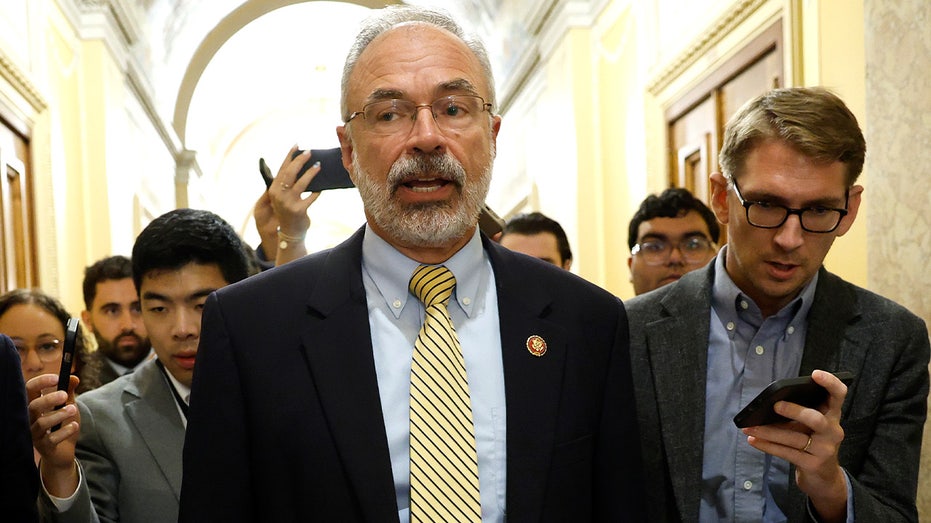
EXCLUSIVE: Maryland’s lone House Republican is pledging to take Democratic leaders in his state to court if they follow through on plans that could see him booted out of Congress next year. Lawmakers in the Old Line State’s House of Delegates are set to take the first step toward drawing a new congressional map on Tuesday afternoon, which, if passed, would give Democrats an edge in every district in the state. Currently, just one House Republican represents part of Maryland — House Freedom Caucus Chairman Andy Harris, R-Md. REDISTRICTING BATTLES BREWING ACROSS THE COUNTRY AS PARTIES COMPETE FOR POWER AHEAD OF 2026 MIDTERMS When asked about Democrats pushing the move last week, Harris took aim at Maryland Gov. Wes Moore’s Redistricting Advisory Commission. “His partisan gerrymandering commission certainly lived up to its name,” Harris told Fox News Digital with a laugh. “They literally drew the district across a five-mile-long Bay Bridge to go into two other pieces of two other different counties.” Harris pointed out that even Maryland’s Senate President Bill Ferguson, a Democrat, criticized the new map when it was released last week. DOJ URGES SUPREME COURT TO BLOCK CALIFORNIA MAP, CALLS NEWSOM-BACKED PLAN A RACIAL GERRYMANDER “Look, the Senate president called it, and I quote, objectively unconstitutional. So Wes, we’ll see you in court,” the conservative caucus leader said. Meanwhile, Moore is set to testify before a committee in the Annapolis State House on Tuesday, after which the panel will vote on whether to send the new map to the full House of Delegates for a vote. He met with House Democratic Leader Hakeem Jeffries, D-N.Y., at the U.S. Capitol last week to discuss the issue. Maryland is the latest state wading into the redistricting war that has gripped the country. It began last year when Texas’ GOP-led legislature pushed through a new congressional map that could give Republicans as many as five new seats in the House of Representatives come the November midterms. California quickly followed suit with its own successful referendum to redraw its maps in favor of Democrats. Democrats in Virginia are now eyeing ways to make their congressional map more favorable to Democrats, and North Carolina Republicans approved a new map late last year that would imperil the state’s lone House Democrat.
Dems’ DHS shutdown threat would hit FEMA, TSA while immigration funding remains intact
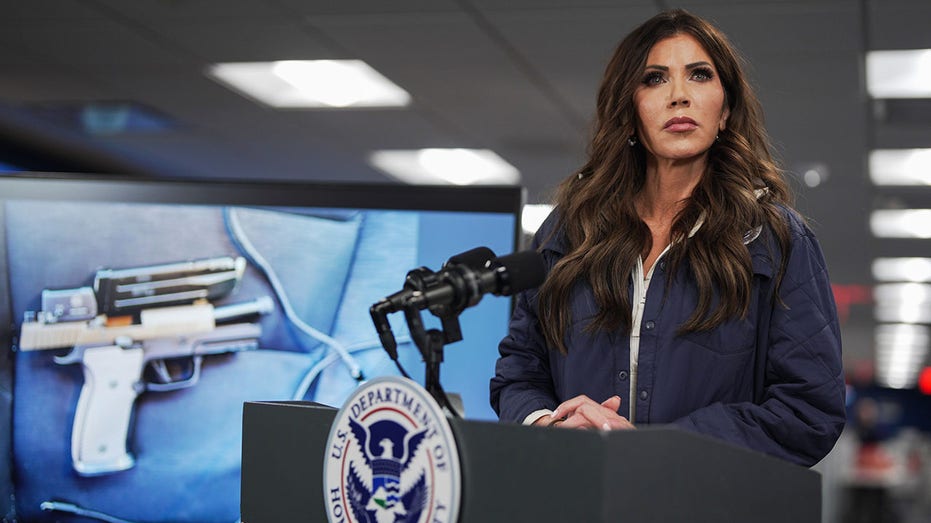
The Senate is again on the verge of entering into another government shutdown as Democrats rage over the fatal shooting of Alex Pretti during an immigration enforcement operation in Minnesota. But despite Senate Minority Leader Chuck Schumer, D-N.Y., and Senate Democrats’ demands to sideline the Department of Homeland Security (DHS) funding bill, the agency’s immigration enforcement apparatus is flush with cash thanks to Republicans’ efforts last year with President Donald Trump’s One Big Beautiful Bill Act. Still, there are other vital government functions under the DHS umbrella that, should a partial government shutdown happen Friday, would suffer. THUNE STEAMROLLS DEMS’ DHS REVOLT AS FETTERMAN DEFECTS, SCHUMER UNDER PRESSURE Homeland Security Assistant Secretary Tricia McLaughlin told Fox News in a statement that while Schumer and Senate Democrats “play games with Americans’ safety, they are blocking vital DHS funding that keeps our country secure and its people safe.” The department, created in 2003 after the Sept. 11, 2001, terrorist attacks, has jurisdiction over a broad range of agencies, including the Federal Emergency Management Agency (FEMA), the Transportation Security Administration (TSA), the Cybersecurity and Infrastructure Security Agency (CISA), the U.S. Coast Guard, and the Secret Service. That means those offices would likely be impacted by a partial government shutdown come next month. “This funding supports national security and critical national emergency operations, including FEMA responses to a historic snowstorm that is affecting 250 million Americans,” McLaughlin said. “Washington may stall, but the safety of the American people will not wait.” The current DHS funding bill, which is snarled in a political duel between Schumer and Senate Republicans, would provide $64 billion for the agency. Immigration and Customs Enforcement (ICE) would receive $10 billion of that. The largest allocation would go to FEMA at $32 billion, then TSA at $11.6 billion, and CISA at $2.6 billion. GOP SENATOR DEMANDS DHS IMMIGRATION CHIEFS TESTIFY AFTER FATAL SHOOTINGS IN MINNESOTA Even if the government shuts down, immigration operations would likely be untouched. DHS received billions as part of Trump’s marquee legislation, a move to meet his and Republicans’ desire last year to turbocharge border security and immigration operations on the heels of former President Joe Biden’s term. In total, the “big, beautiful bill” added over $170 billion to DHS’ coffers. Notably, ICE received $75 billion, split into two pots: $45 billion for detention expansion and roughly $29 billion for immigration enforcement operations. The detention funding is set to last through FY 2029, effectively giving the agency about $10 billion per year — their average base budget — without the need for congressional approval during that period. Schumer and Senate Democrats contend that they want to continue negotiations on the DHS bill and strip it from a broader six-bill funding package, called a “minibus.” Doing so would almost certainly guarantee a government shutdown, given that any changes would have to go back to the House. “If Leader Thune puts those five bills on the floor this week, we can pass them right away,” Schumer said. “If not, Republicans will again be responsible for another government shutdown.” WHITE HOUSE NOT BUDGING ON DEMOCRATS’ DEMANDS AS DHS FUNDING MUTINY THREATENS GOVERNMENT SHUTDOWN Still, it would complicate matters for the remaining agencies under DHS’ purview, and create a déjà vu scenario akin to the last government shutdown, which barreled onward for 43 days. The shutdown saw TSA agents go unpaid for weeks — spurring massive travel delays across the country as both they and air traffic controllers were forced to call out of work and take on second jobs to make ends meet, or otherwise work without pay. Notably, air traffic controllers would be similarly affected this time around as well. Funding for the Department of Transportation is included in the larger minibus the Senate is expected to consider this week. The threat of missed paychecks for the U.S. Coast Guard — along with other members of the armed forces, because the defense funding bill is included in the minibus as well — would also rear its ugly head and become a political quagmire for lawmakers once again. Cuts to FEMA could also impact its ability to help everyday Americans during natural disasters, with the agency’s Disaster Relief Fund (DRF) in danger of running dry without more congressionally approved funding. A program that helps Americans in flood-prone areas secure home insurance would similarly be imperiled. Sen. Katie Britt, R-Ala., played a vital role in ending the last shutdown, and as chair of the Senate Homeland Security Appropriations Committee, will again act as a key negotiator in averting another closure. She noted that DHS goes beyond just immigration operations, and reminded Senate Democrats of the cost of the last shutdown. “We know from recent history that government shutdowns do not help anyone and are not in the best interest of the American people,” Britt said in a statement. “As we approach a government funding deadline, I remain committed to finding a pathway forward.”
Support slipping for Trump immigration push as majority say crackdown ‘goes too far’: poll

President Donald Trump‘s approval ratings on tackling illegal immigration dropped to a new low as a majority of Americans say the crackdown by federal agents has gone too far, according to a new national poll. The survey, by Reuters/Ipsos, was conducted Friday through Sunday, both before and after federal immigration agents fatally shot a second U.S. citizen who was protesting enforcement operations in Minneapolis, Minnesota. The poll is the latest national survey to spotlight the deterioration of Trump’s approval on immigration and flagging support for aggressive enforcement operations by Immigration and Customs Enforcement (ICE) agents. Thirty-nine percent of adults nationwide questioned in the poll said they approve of the job the president’s doing on immigration, with 53% disapproving. TRUMP IMMIGRATION CRACKDOWN IGNITES BACKLASH The president’s approval on the issue stands at its lowest level in Reuters/Ipsos polling since Trump returned to the White House a year ago. In February of last year, weeks after his second inauguration as president, Trump stood at 50% approval and 41% disapproval on immigration, as he quickly shut down the flow of migrants across the nation’s southern border with Mexico. Illegal immigration, with Trump promising a massive surge in deportations of undocumented migrants, was a key issue that boosted Trump and the GOP to decisive ballot box victories in 2024, as they won back the White House and Senate and successfully defended their razor-thin House majority. WHY A MINNESOTA REPUBLICAN CANDIDATE DROPPED HIS BID FOR GOVERNOR AFTER SECOND FATAL SHOOTING But the fatal shootings of Renee Good, a mother of three, earlier this month, and nurse Alex Pretti this past weekend, as they protested aggressive actions by masked federal agents carrying out immigration operations, sparked national debate and demonstrations, further inflaming political tensions over Trump’s mass deportation push. “The approval for Donald Trump on an issue that worked for him, immigration, is down and going down further,” University of Minnesota public affairs professor Larry Jacobs told Fox News Digital. Jacobs said that the “cracking down on illegal immigration, the conduct of ICE, has squandered the advantage” in public opinion that Trump once enjoyed. A veteran Republican strategist who asked to remain anonymous to speak more freely told Fox News Digital that “the missteps have turned a plus into either a neutral issue or a net negative at best. People don’t like illegal immigration, but they are also troubled by the tactics that they’re seeing.” REPUBLICAN GOVERNOR BELIEVES TRUMP IS GETTING ‘BAD ADVICE’ ON IMMIGRATION AMID OUTRAGE OVER ICE SHOOTING Pretti was shot and killed on Saturday by Border Patrol agents while recording federal immigration operations in Minneapolis. Department of Homeland Security (DHS) officials initially said Pretti, who was legally armed with a handgun, was threatening agents, who they say fired in self-defense. DHS Secretary Kristi Noem labeled the actions of Pretti as “domestic terrorism” and White House deputy chief of staff Stephen Miller called him a “would-be assassin.” Videos of the shooting depict Pretti, an ICU nurse at a VA Hospital, appearing to attend to a woman agents had knocked down when he was sprayed with an irritant, pushed to the ground and beaten. On the ground, bystanders said he was brandishing a cell phone rather than his weapon, and an agent was seen pulling Pretti’s gun from his waistband before other agents fired several shots and killed him. “The sickening lies told about our son by the administration are reprehensible and disgusting,” Pretti’s family wrote in a statement obtained by the AP. “Alex is clearly not holding a gun when attacked by Trump’s murdering and cowardly ICE thugs. He has his phone in his right hand and his empty left hand is raised above his head while trying to protect the woman ICE just pushed down all while being pepper sprayed. Please get the truth out about our son. He was a good man. Thank you.” Fifty-eight percent of poll respondents said federal immigration agents have gone “too far” in their crackdown, with 12% saying they had not gone far enough and 26% said the agents’ efforts were “about right.” There was an expected wide partisan divide, with roughly nine in 10 Democrats and six in 10 independents saying the agents have gone too far, compared to just two in 10 Republicans. Fox News Digital’s Alexandra Koch contributed to this report.
Trump’s 401(k) housing pitch collapses into reality check as economists say supply is the real crisis

The Trump administration’s quick about-face, pitching 401(k) retirement plans as a path to homeownership, was never likely to work because it ignores the deeper forces driving the housing crunch, some economists are now arguing. Experts pointed to two key factors doing the most damage: restrictive zoning and regulatory policies that have choked supply, pushing home prices out of reach. Restrictive zoning controls what gets built; regulatory policies determine how hard it is to make it happen. Ben Harris, vice president and director of economic studies at the Brookings Institution, said policies that don’t directly increase housing supply are unlikely to lower prices. “Anything that doesn’t answer the question, ‘Are we going to have more homes at the end of this?’ is going to be an insufficient response,” Harris told Fox News Digital. HASSETT REVEALS TRUMP HOUSING PLAN WOULD LET AMERICANS TAP 401(K)S FOR DOWN PAYMENTS Harris noted that while cities in the South, for example, once saw rapid homebuilding — including places like Houston, metro areas in Florida and Phoenix — new construction has slowed sharply in recent years, contributing to rising prices. That resistance to new construction, experts say, is why restrictive zoning and regulatory barriers sit at the top of the list of forces driving America’s housing crisis. “There are just many, many ways to halt and stop development,” explained Joseph Gyourko, a professor of real estate and finance at the Wharton School at the University of Pennsylvania. “And we’ve gotten very, very good at it in the United States.” Jim Tobin, president and CEO of the National Association of Home Builders, added that the cost of regulations alone plays a massive role in housing affordability. Tobin explained that roughly $94,000 of the cost of a new, single-family home is inflated by regulations at “all three levels of local, state and federal government.” He added that some local governments intentionally restrict growth, adding time, uncertainty and cost to the process. THE PRICE OF BUILDING A HOME KEEPS CLIMBING — AND UNCERTAINTY ISN’T HELPING “Time is money in real estate,” he said. “You own the land, you’re paying taxes and, while you wait for local approvals, costs keep rising. Then many communities require developers to install sewer, water, roads and electrical infrastructure and all of that gets folded into the final price of the home.” Those mounting costs on builders, economists say, ultimately get passed on to buyers, pricing many out of the market. California offers one of the clearest examples of how those pressures play out, where strict zoning and environmental review laws have severely limited new construction. TRUMP’S 50-YEAR MORTGAGE MAY BURDEN AMERICANS WITH MORE DEBT, EXPERTS SAY Wayne Winegarden, a senior fellow in business and economics at the Pacific Research Institute, told Fox News Digital that the state’s regulatory framework has created an enormous housing shortfall. In practical terms, economists say that when housing construction fails to keep pace with population growth and demand, buyers end up competing for a limited number of homes, driving prices higher. Winegarden said that California’s strict zoning laws make it more difficult to build homes, like the California Environmental Quality Act (CEQA), a five-decade-old law that requires builders to “look before they leap,” according to Gov. Gavin Newsom’s Office of Land Use and Climate Innovation. The framework requires environmental reviews that can significantly delay development and raise costs. “And we have what is a million-home shortage, something just astronomical like that,” Winegarden said. “That’s just basic economics. When supply is inadequate to demand, prices go up. And now the median home price in California is roughly twice the median in the United States.”