Rubio seals civil nuclear cooperation agreement with Hungary

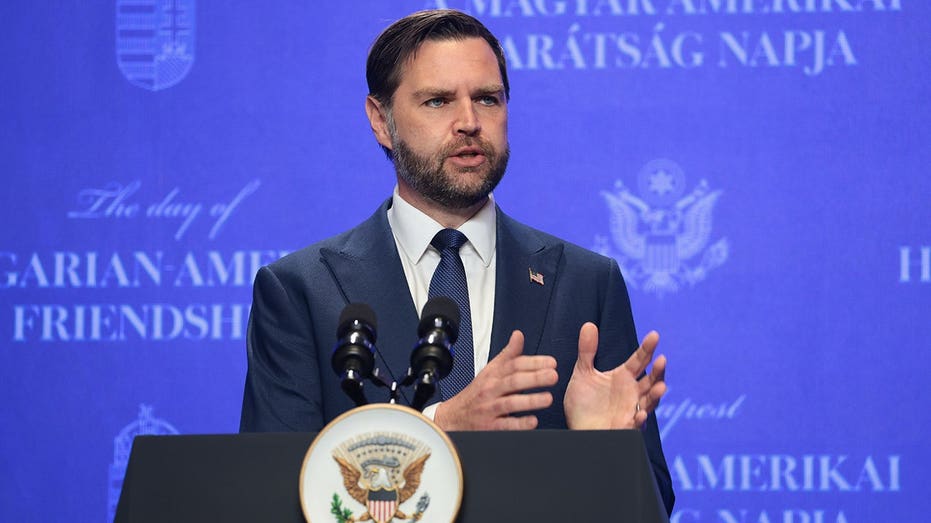
U.S. Secretary of State Marco Rubio signed a civil nuclear cooperation agreement involving the U.S. and Hungary on Monday. During remarks at the signing ceremony, Rubio indicated that the U.S.-Hungary relationship, and the relationship between President Donald Trump and Hungarian Prime Minister Viktor Orbán, is very close. The American diplomat described the relationship between the two nations as being “as close as I can possibly imagine it being.” RUBIO BLASTS ‘WORLD WITHOUT BORDERS’ FANTASY, WARNS MASS MIGRATION THREATENS WESTERN CIVILIZATION Rubio, during remarks delivered alongside Orbán, asserted, “Your success is our success.” He noted that if Hungary ever faces financial problems, impediments to growth or threats to national stability, he knows “President Trump will be very interested” in “finding ways” to help. HUNGARY’S ORBAN SAYS BUDAPEST IS EUROPE’S SAFEST CITY FOR JEWS AS ANTISEMITISM SURGES Trump has praised Orbán and backed him for re-election. “Highly Respected Prime Minister of Hungary, Viktor Orbán, is a truly strong and powerful Leader, with a proven track record of delivering phenomenal results. He fights tirelessly for, and loves, his Great Country and People, just like I do for the United States of America. Viktor works hard to Protect Hungary, Grow the Economy, Create Jobs, Promote Trade, Stop Illegal Immigration, and Ensure LAW AND ORDER!” Trump declared on Truth Social this month. THE ONE SENTENCE IN RUBIO’S MUNICH SPEECH THAT REVEALED TRUMP’S RED LINE FOR EUROPE CLICK HERE TO GET THE FOX NEWS APP “Relations between Hungary and the United States have reached new heights of cooperation and spectacular achievement under my Administration, thanks largely to Prime Minister Orbán. I look forward to continuing working closely with him so that both of our Countries can further advance this tremendous path to SUCCESS and cooperation. I was proud to ENDORSE Viktor for Re-Election in 2022, and am honored to do so again. Viktor Orbán is a true friend, fighter, and WINNER, and has my Complete and Total Endorsement for Re-Election as Prime Minister of Hungary — HE WILL NEVER LET THE GREAT PEOPLE OF HUNGARY DOWN!” Trump added.
Nancy Mace proposes bill to make aliens deportable, inadmissible for animal cruelty

Republican Rep. Nancy Mace of South Carolina has introduced legislation that would make illegal immigrants who engage in animal cruelty inadmissible to the United States and subject to deportation. The measure is called the “Illegal Alien Animal Abuser Removal Act of 2026.” “If you come here illegally, you’re already a criminal. Add animal cruelty to the list and you’re on the next flight back to where you came from,” Mace said, according to a press release. NANCY MACE RIPS TRANS ATHLETE’S ATTORNEY FOR REFUSING TO DEFINE SEX AT SCOTUS WOMEN’S SPORTS HEARING “We have a duty to protect the voiceless from torture and abuse. Animal cruelty is a proven red flag for violence against people. These criminals escalate. Our bill makes it crystal clear: commit these sick acts and you’re deported. Immediately. No second chances,” she added. Mace, who has served in the House since 2021, is currently running for South Carolina governor. REP NANCY MACE SLAPS DOWN EARLY RETIREMENT RUMOR: ‘BIG FAT NO FROM ME’ “The message is clear: abuse animals, get deported. America will not be a sanctuary for animal abusers, especially ones who broke into our country illegally in the first place. Pack your bags,” she noted, according to the release. Under the legislation, an alien convicted under state, tribal or local laws related to animal cruelty, abuse or animal fighting would be deemed inadmissible and deportable. The bill also specifies that convictions under certain federal animal welfare statutes would carry the same immigration consequences. ‘TR*NSGENDER ANTIFA’ EXTREMIST CHARGED WITH ATTEMPTED MURDER AFTER SKATING ON DEATH THREAT, REP MACE SAYS CLICK HERE TO GET THE FOX NEWS APP The proposal further states that an alien who admits to committing acts that constitute such offenses could also be deemed inadmissible.
Partial government shutdown drags on as DHS funding talks stall

The partial government shutdown stretched into another week after negotiators failed to reach a deal to fund the Department of Homeland Security (DHS) over the weekend. Congress is on a weeklong recess and is not scheduled to return to Washington, D.C., until next week, leaving the shutdown’s end in limbo as both parties remain far apart on key provisions. Senate Democrats are demanding a series of reforms to Immigration and Customs Enforcement (ICE), a position they have maintained since the fatal shootings of Alex Pretti and Renee Nicole Good during ICE operations in Minnesota. FETTERMAN BUCKS DEMOCRATS, SAYS PARTY PUT POLITICS OVER COUNTRY IN DHS SHUTDOWN STANDOFF Senate Minority Leader Chuck Schumer, D-N.Y., and his caucus are standing by a list of 10 proposed reforms, including requiring ICE agents to obtain judicial warrants and limiting the use of face coverings — proposals Republicans have described as red lines. “Americans are tired of masked agents conducting warrantless operations in their communities — secret police,” Schumer said. “They’re tired of chaos, secrecy and zero accountability. That is not what law and order looks like, and Republicans simply cannot pretend that this outrage does not exist.” However, ICE received additional funding under previously passed legislation, and core enforcement operations are expected to continue. Other DHS agencies, including the Transportation Security Administration (TSA), the Federal Emergency Management Agency (FEMA) and the Coast Guard, remain affected by the shutdown. GOVERNMENT TO SHUT DOWN AT MIDNIGHT AFTER DEMS, WHITE HOUSE FAIL TO STRIKE DHS DEAL The White House has led negotiations for Senate Republicans and offered Senate Democrats a proposal that they have rejected. Details of that proposal have not been made public. “This is a Democrat-driven shutdown caused by their intransigence and desire to use government funding for services all Americans rely on as a hostage in order to achieve an unrelated political goal,” a senior White House official said. Senate Majority Leader John Thune, R-S.D., said lawmakers would receive 24 hours’ notice to return if a deal is reached. DHS SHUTDOWN EXPLAINED: WHO WORKS WITHOUT PAY, WHAT HAPPENS TO AIRPORTS AND DISASTER RESPONSE “I think all those reasonable efforts and requests have been overshadowed by the fact that the Democrats don’t seem to want to play ball,” Thune said. On the House side, Speaker Mike Johnson, R-La., told lawmakers they would receive 48 hours’ notice to return if the Senate passes a bill. The House is also in recess until Feb. 23. Johnson and other Republicans have expressed support for the original DHS funding bill crafted by House and Senate appropriators, but the speaker said he does not want further delays in DHS funding to be attributed to the House. House Minority Leader Hakeem Jeffries, D-N.Y., has said Democrats will not accept a funding bill that does not include significant reforms to ICE.
Russia-Ukraine war: List of key events, day 1,453

These are the key developments from day 1,453 of Russia’s war on Ukraine. Listen to this article Listen to this article | 4 mins info By News Agencies Published On 16 Feb 202616 Feb 2026 Click here to share on social media share2 Share Here is where things stand on Monday, February 16: Fighting Russian forces launched attacks across Ukraine on Sunday, wounding six people in the central-eastern Dnipropetrovsk region, three in the northeastern Sumy region, and two in the southeastern city of Zaporizhzhia, the Ukrinform news outlet reported, citing local officials. Ukrainian President Volodymyr Zelenskyy said Russia has launched about 1,300 drones, 1,200 guided aerial bombs and dozens of ballistic missiles at Ukraine over the past week alone. About 1,600 buildings in the Ukrainian capital, Kyiv, remained without heat on Sunday following recent Russian attacks on Ukraine’s energy infrastructure, officials said. Deputy Prime Minister Oleksii Kuleba said Russian strikes overnight on Sunday had damaged railroad infrastructure in the southern region of Odesa and the Dnipropetrovsk region. The Ukrainian military said in a statement that it hit a key oil terminal in southern Russia, near the Moscow-annexed Crimean Peninsula, on Sunday. The attack was on the Tamanneftegaz oil terminal near the village of Volna in the Krasnodar region. Ukrainian forces also launched a drone attack on the Russian Black Sea port of Taman, which handles oil products, grain, coal and commodities, causing damage and triggering several fires, according to Veniamin Kondratyev, the governor of Russia’s Krasnodar region. He said more than 100 people were working to put out the fires. Kondratyev said there were more Ukrainian attacks on the Russian resort city of Sochi and the village of Yurovka, close to the seaside town of Anapa. They caused less significant damage, he added. Advertisement Russian air defences downed five drones approaching the Russian capital, Moscow, according to Mayor Sergei Sobyanin. A Ukrainian attack also left five municipalities in the Russian border region of Bryansk and parts of its capital without heat and electricity, Governor Alexander Bogomaz said. Russia’s Ministry of Defence said on Sunday that its troops had taken the village of Tsvitkove in the southeastern Zaporizhia region, according to the TASS news agency. Russia controls about 75 percent of the Zaporizhia region, but battle lines had been largely static since 2022 until recent Russian advances. Russia’s army chief, Valery Gerasimov, said on Sunday that Russian troops had seized a dozen villages in eastern Ukraine in February. He made the announcement while visiting Russian troops in Ukraine, the AFP news agency reported. Politics and diplomacy Ukraine’s National Anti-Corruption Bureau arrested the country’s former energy minister, German Galushchenko, who resigned in November amid a huge corruption scandal, as he tried to cross Ukraine’s border. Zelenskyy said in a statement that Ukraine has agreed to new energy and military support packages with European allies. The European Union’s foreign policy chief, Kaja Kallas, said she felt that the bloc’s governments were not ready to give Ukraine a date for membership into the EU, despite demands from Zelenskyy. Latvian President Edgars Rinkevics echoed Kallas’s comments, saying that “there is no readiness to accept a date” for Ukrainian membership. He added that he has little hope of an imminent peace deal between Russia and Ukraine. Slovak Prime Minister Robert Fico has accused Ukraine of delaying the restart of a pipeline carrying Russian oil to Eastern Europe via Ukraine to “blackmail” Hungary to drop its opposition to Ukraine’s future EU membership. North Korean leader Kim Jong Un presided over the completion ceremony of a new housing district in Pyongyang for families of troops who died in overseas military operations, state media KCNA reported. It is believed that more than 6,000 North Korean soldiers were killed while fighting alongside Russian troops in Ukraine. Russia will not end the militarisation of its economy after fighting in Ukraine ends, the head of Latvia’s intelligence agency, Egils Zviedris, told the AFP news agency on the sidelines of the Munich Security Conference, which ended on Sunday. A wounded Ukrainian serviceman walks in a street in Kyiv during snow fall on Sunday, February 15 [Sergei Supinsky/AFP] Adblock test (Why?)
Israel’s move to register land ‘systematises dispossession’ of Palestinians

Listen to this article Listen to this article | 5 mins info Israel’s decision to resume the land registration processes in the occupied West Bank for the first time since 1967 will facilitate the dispossession and displacement of Palestinians in violation of international law, Israeli rights groups say. The land registration process – also known as settlement of land title – has been reinstated after nearly six decades, following the government’s approval on Sunday of a proposal submitted by far-right Minister of Finance Bezalel Smotrich, Minister of Justice Yariv Levin, and Minister of Defence Israel Katz. Recommended Stories list of 4 itemsend of list While Israel has increased the confiscation of Palestinian land through military orders, with the activity reaching record levels in 2025, the new move gives Israel a legal avenue that “systemati[ses] the dispossession of Palestinian land to further Israeli settlement expansion and cement the apartheid regime”, Bimkom, an Israeli human rights organisation that focuses on land and housing rights, said in a statement. Michal Braier, head of research at Bimkom, told Al Jazeera that land registration will be inaccessible to large segments of the Palestinian population who never had their land formally registered, or who may fail to prove ownership. In the occupied West Bank, land registration under the Jordanian Administration – which followed British Mandate rule and lasted from 1949 to 1967 – covered about 30 percent of the total area. As a consequence, about 70 percent of the West Bank is “completely unregistered”, Braier said, making it “very hard to determine who actually owns the land”. Advertisement Even for those whose land was registered, “the legal bar for proving land ownership is very, very high, in a way that most Palestinians won’t have the proper documents to prove it”, said Braier. ‘Full annexation’ In 1968, Israeli occupation authorities froze most land settlement procedures in the Gaza Strip and the West Bank, making transfer of ownership down the family line hard to prove for Palestinians. Additionally, legal documents could have been lost or stored in homes that are now out of reach to Palestinian refugees displaced by the Arab–Israeli war (1948-49) – when the newly-founded Israel seized control of 77 percent of Palestine – and in the Six Day War of 1967, which ended with Israel capturing the Sinai Peninsula from Egypt and the Golan Heights from Syria, while occupying the West Bank, East Jerusalem and Gaza. The Israeli anti-settlement group Peace Now said the newly reinstated process of land registration amounts to a “full annexation” of Palestinian land. “This is a way for Israel to take control over the West Bank,” Hagit Ofran, a Peace Now member, told Al Jazeera. “The government is asking for papers that are dating back to the British mandate or to the Jordanian time 100 years ago.” “This is something that, very rarely, Palestinians will be able to prove, and therefore, by default, the land will be registered under [Israel’s] name,” she added. Israel’s Supreme Court last month rejected a petition opposing the resumption of the land registration process, filed by local human rights groups Bimkom, Yesh Din, the Association for Civil Rights in Israel and HaMoked. The court deemed it “premature” to rule on the implementation of the government’s decision. Israeli settlers attempt to stop foreign activists and Palestinians from picking olives during harvest season in the village of Turmus Aya near Ramallah, in the Israeli-occupied West Bank [File: Mohammed Torokman/Reuters] ‘Totally invalid’ Israeli authorities have provided few details on how the process will unfold. Yet, a similar scenario has already played out in occupied East Jerusalem, where the settlement of land title that began in 2018 resulted in the expropriation of Palestinian land. Research conducted by Bimkom found that only 1 percent of the East Jerusalem land registered for ownership between 2018 and 2024 was registered to Palestinians, while the rest came under the control of the Israeli state or private Israeli owners. The move expanded Israel’s de facto annexation over East Jerusalem in breach of international law, including, most recently, an advisory opinion issued by the International Court of Justice (ICJ) in 2024. Advertisement In its landmark ruling, the World Court found that Israel’s “expropriation of land and properties, transfer of populations, and legislation aimed at the incorporation of the occupied section are totally invalid and cannot change that status”. More broadly, the ICJ ruled that Israel’s long-term occupation of Palestinian territory – comprised of East Jerusalem, the West Bank and the Gaza Strip – was unlawful, and must be terminated “as rapidly as possible”. Braier said the Israeli government’s decision was its latest move expand control over Palestinian territory in breach of international law. “The government is not hiding its intentions. They want to expand settlements and push Palestinians into as small an area as possible.” Adblock test (Why?)
Netanyahu calls for dismantling Iran’s nuclear programme in any US deal

Listen to this article Listen to this article | 4 mins info Israeli Prime Minister Benjamin Netanyahu has outlined the conditions he considers necessary for any prospective deal between the United States and Iran, including the dismantling of all of Tehran’s nuclear infrastructure. His comments on Sunday came as Iranian Minister of Foreign Affairs Abbas Araghchi headed to Switzerland for a second round of nuclear talks with the US. Recommended Stories list of 3 itemsend of list Speaking at the annual Conference of Presidents of Major American Jewish Organizations, Netanyahu said he was sceptical of a deal, but had told US President Donald Trump last week that any agreement must include several elements. “The first is that all enriched material has to leave Iran,” he said. “The second is that there should be no enrichment capability – not stopping the enrichment process, but dismantling the equipment and the infrastructure that allows you to enrich in the first place”. The third, he said, was resolving the issue of ballistic missiles. Netanyahu also called for sustained inspections of Tehran’s nuclear programme. “There has to be real inspection, substantive inspections, no lead-time inspections, but effective inspections for all of the above,” he said. Iran and the US resumed nuclear negotiations in Oman on February 6, months after previous talks collapsed when Israel launched an unprecedented bombing campaign against Iran last June, which started a 12-day war. The US joined in the attacks, bombing three Iranian nuclear sites. Netanyahu’s comments mark the first time he has spoken publicly on the discussions with Trump in Washington, DC, last Wednesday. The meeting was their seventh since Trump returned to office last year. Advertisement Trump told reporters afterwards that they had reached no “definitive” agreement on how to move forward with Iran, but that he had “insisted that negotiations with Iran continue to see whether or not a deal can be consummated”. According to a report by Axios, the two leaders agreed to intensify economic strangleholds on Iran, mostly on its oil sales to China. More than 80 percent of Iranian oil exports current go to China. The report, which cited US officials, said Netanyahu and Trump agreed in their meeting on the necessary end state: an Iran without the capability to obtain nuclear weapons. But they disagreed about how to get there. Netanyahu told Trump it would be impossible to make a good deal, while Trump said he thought it was possible. “Let’s give it a shot”, Trump said, according to Axios. Iran has long denied any intent to produce nuclear weapons, but has said it is prepared to discuss curbs on its atomic programme in exchange for the lifting of sanctions. It has ruled out linking the issue to missiles, however. The CBS broadcaster, meanwhile, reported on Sunday that Trump had told Netanyahu during a meeting in Florida in December that he would support Israeli strikes on Iran’s ballistic missile programme if the US and Iran could not reach a deal. The network cited two sources familiar with the matter. There was no immediate comment from the US or Israel on the CBS report. The renewed push for diplomacy comes after Trump threatened new attacks on Iran and sent a US aircraft carrier to the region, citing a deadly crackdown on antigovernment protesters in January. Tensions in the region remain high, meanwhile. On Friday, Trump said he was sending a second aircraft carrier to the Middle East, and openly discussed changing Iran’s government. Asked if he wanted a government change in Iran, Trump responded that it “seems like that would be the best thing that could happen”. Asked why a second aircraft carrier was headed to the Middle East, Trump said: “In case we don’t make a deal, we’ll need it … if we need it, we’ll have it ready.” For its part, Iran has promised to retaliate to any attack, saying it will strike US bases in the Middle East. The continued tensions have sparked fears of a wider regional war. Adblock test (Why?)
Delhi-NCR AQI: National Capital air quality sees marginal improvement but remains ‘poor’, AQI stands at 214; Check area-wise pollution level

Delhi’s Anand Vihar recorded AQI at 293, Bawana at 259, Chandni Chowk at 247, DTU at 203, Dwarka Sector 8 at 234, ITO at 200, Jahangirpuri at 285, Narela at 243, Punjabi Bagh at 203, RK Puram at 239, and Wazirpur at 268.
Department of War transports next-generation reactor in nuclear energy milestone

The Department of War on Sunday transported a next-generation nuclear reactor aboard a C-17 from California to Utah, advancing President Donald Trump’s executive order to modernize America’s nuclear energy infrastructure and strengthen U.S. national security. The reactor was flown from March Air Reserve Base in California to Hill Air Force Base in Utah and is expected to be transported to the Utah San Rafael Energy Lab in Orangeville for testing and evaluation – a key step in assessing how advanced nuclear systems could support military installations and remote defense operations. The Department of War shared images on X showing the reactor loaded onto the C-17 aircraft. “We’re advancing President Trump’s executive order on nuclear energy,” the post read. “Moments from now, we will airlift a next-generation nuclear reactor.” TRUMP ADMIN POURS $1B INTO MASSIVE EFFORT TO RESTART NUCLEAR REACTOR AT HISTORIC MELTDOWN SITE The Department of War said the successful delivery and installation of the reactor will open new possibilities for energy resilience and strategic independence for the nation’s defense, highlighting what officials described as an agile, innovative and commercial-first approach to addressing critical infrastructure challenges. “By harnessing the power of advanced nuclear technology, we are not only enhancing our national security but championing a future of American energy dominance,” the agency said in a press release. “This event is a testament to the ingenuity of the American spirit and a critical advancement in securing our nation’s freedom and strength for generations to come.” Fox News Digital has reached out to the Department of War for additional comment. THREE MILE ISLAND NUCLEAR PLANT MAKES COMEBACK WITH $1B IN FEDERAL BACKING TO MEET INCREASING ENERGY DEMANDS In May, President Donald Trump signed several executive orders aimed at expanding domestic nuclear energy development. At the time, Interior Secretary Doug Burgum said America led the postwar world on “all things nuclear” until it “stagnated” and was “choked with overregulation.” War Secretary Pete Hegseth added that the U.S. was “going to have the lights on and AI operating when others are not because of our nuclear capabilities.” One of Trump’s nuclear directives called for reforming Energy Department research and development, accelerating reactor testing at national laboratories and establishing a pilot program for new construction. ENERGY SECRETARY REVEALS HOW US NUCLEAR TESTS WILL WORK Nuclear energy, the White House said in the order, “is necessary to power the next generation technologies that secure our global industrial, digital, and economic dominance, achieve energy independence, and protect our national security.” The nuclear expansion effort is part of a broader administration push to reinforce domestic energy production and grid reliability across multiple sectors. Days later, Trump signed another executive order directing the Department of War to work directly with coal-fired power plants on new long-term power purchasing agreements, arguing the move would ensure “more reliable power and stronger and more resilient grid power.” The order, “Strengthening United States National Defense with America’s Beautiful Clean Coal Power Generation Fleet,” states, “The United States must ensure that our electric grid … remains resilient and reliable, and not reliant on intermittent energy sources,” calling the grid “the foundation of our national defense as well as our economic stability.” “It is the policy of the United States that coal is essential to our national and economic security,” the order adds. Fox News Digital’s Jasmine Baehr and Charles Creitz contributed to this report.
Schumer says Dems will fight voter ID push ‘tooth and nail,’ balks at DHS role in elections

Senate Minority Leader Chuck Schumer, D-N.Y., vowed Sunday that Senate Democrats will block the latest GOP-backed effort to require proof of citizenship to vote. “We will not let it pass in the Senate,” Schumer told CNN’s Jake Tapper. “We are fighting it tooth and nail. It’s an outrageous proposal that is, you know, that shows the sort of political bias of the MAGA right. They don’t want poor people to vote. They don’t want people of color to vote because they often don’t vote for them.” Schumer’s comments came after Tapper pressed him on his opposition, noting that polling shows roughly 83% of Americans support some form of voter identification. That figure comes from a Pew Research poll published last year that found 71% of Democratic voters surveyed supported presenting an ID to vote. COLLINS BOOSTS REPUBLICAN VOTER ID EFFORT, BUT WON’T SCRAP FILIBUSTER Still, Schumer and most Senate Democrats have criticized the Safeguarding American Voter Eligibility (SAVE) America Act, which passed the House last week and is expected to face a vote in the Senate. The bill would require proof of citizenship to register to vote and would establish a system for state election officials to share information with federal authorities to verify voter rolls. It would also allow the Department of Homeland Security (DHS) to pursue immigration cases if noncitizens are found listed as eligible voters. Schumer and his caucus have panned the bill as voter suppression targeting poorer Americans and minority groups. FETTERMAN SLAMS DEMOCRATS’ ‘JIM CROW 2.0’ VOTER ID RHETORIC AS PARTY UNITY FRACTURES “What they are proposing in this so-called SAVE Act is like Jim Crow 2.0,” Schumer said. “They make it so hard to get any kind of voter ID that more than 20 million legitimate people, mainly poorer people and people of color, will not be able to vote under this law.” Without support from Senate Democrats — save for a possible defection from Sen. John Fetterman, D-Pa. — the bill is likely to fail. The only way around that would be eliminating the Senate’s 60-vote filibuster threshold — a move Republicans oppose — or forcing a so-called talking filibuster that could require hours of debate and stall other Senate business. HARDLINE CONSERVATIVES DOUBLE DOWN TO SAVE THE SAVE ACT Schumer also pushed back on comments from DHS Secretary Kristi Noem, who earlier this week said elections “may be one of the most important things that we need to make sure we trust, is reliable, and that when it gets to Election Day that we’ve been proactive to make sure that we have the right people voting, electing the right leaders to lead this country.” The comments come as Senate Democrats and the White House negotiate funding for DHS, which has been shut down since midnight Friday. Part of those negotiations includes Democrats’ demand that Immigration and Customs Enforcement (ICE) agents be kept away from several areas, including schools and polling places. “That’s a load of bull,” Schumer said. “They show no evidence of voter fraud. They show there’s so little in the country. And to have ICE agents, these thugs, be by the polling places, that just flies in the face of how democracy works, of how we’ve had elections for hundreds of years, very successfully.”
Hillary Clinton clashes with Czech leader over Trump policies at Munich security conference

Former Secretary of State Hillary Clinton clashed with a Czech political leader at the Munich Security Conference in Germany on Saturday. Clinton was speaking during a panel on the state of the West where she heavily criticized President Donald Trump for his dealings with Europe. Petr Macinka, a Czech deputy prime minister, defended the Trump administration as Clinton repeatedly mocked his statements and tried to speak over him. “First, I think you really don’t like him,” Macinka said as he began to respond to Clinton’s Trump-bashing. “You know, that is absolutely true,” Clinton said. “But not only do I not like him, but I don’t like what he’s actually doing to the United States and the world, and I think you should take a hard look at it if you think there is something good that will come of it.” TRUMP RIPS EUROPE AT DAVOS FOR WRONG ‘DIRECTION,’ POINTS TO MIGRATION AND SPENDING “Well, what Trump is doing in America, I think that it is a reaction. Reaction for some policies that really went too far, too far from the regular people,” Macinka said as Clinton interjected to ask for examples. Macinka referenced “woke” ideologies, gender theories and cancel culture that ran rampant throughout the U.S. in recent years. Clinton then mocked him, suggesting he was opposed to “women getting their rights.” THE ONE SENTENCE IN RUBIO’S MUNICH SPEECH THAT REVEALED TRUMP’S RED LINE FOR EUROPE Macinka then rebuffed her hostility, saying he can tell he was making her “nervous.” The exchange came during the same panel where Clinton discussed immigration in the U.S., admitting that it had gone “too far.” “It went too far, it’s been disruptive and destabilizing, and it needs to be fixed in a humane way with secure borders that don’t torture and kill people and how we’re going to have a strong family structure because it is at the base of civilization,” she added. Clinton acknowledged that there are places where a physical barrier is appropriate but opposed large-scale expansion of a border wall during her 2016 presidential campaign. At the time, she supported then-President Barack Obama’s executive actions that deferred immigration enforcement against millions of children and parents in the country illegally and wanted to end the practice of family detention. Clinton also planned on continuing Obama’s policy of deporting violent criminals, but wanted to scale back immigration raids, which she said at the time produced “unnecessary fear and disruption in communities,” Fox News Digital previously reported. Fox News’ Ashley DiMella contributed to this report.