

Senate push to reauthorize nation’s spy powers stumbles over controversial Trump decision
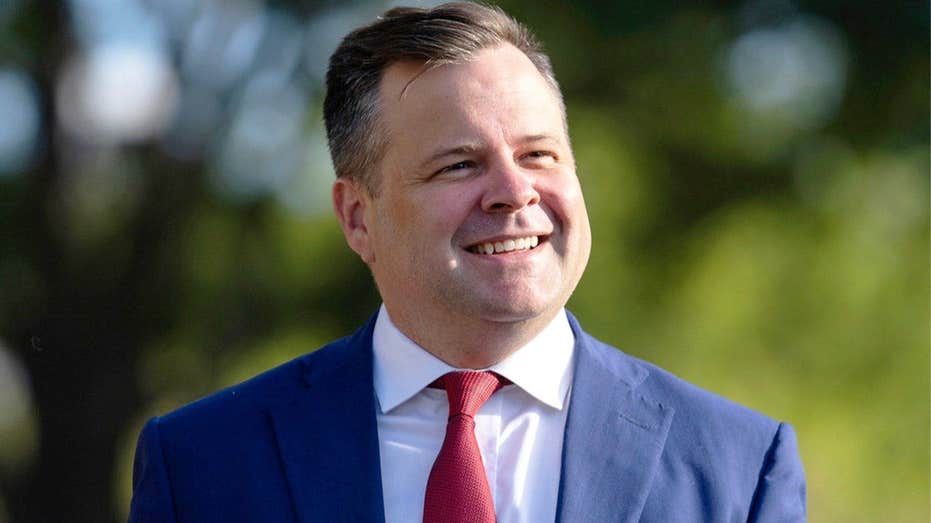
The Senate failed to move one step closer to extending the nation’s spy powers amid brewing consternation against President Donald Trump’s pick to lead the nation’s intelligence agencies. Nearly every Senate Democrat and six Senate Republicans banded together to block a procedural hurdle to reauthorize the Foreign Intelligence Surveillance Act (FISA) in the wee hours of Friday morning. The stumble comes as the deadline to make a move on the spy powers next week rapidly approaches. What would have likely been a bipartisan vote was marred by Trump’s pick to oversee the nation’s intelligence agencies as Director of National Intelligence (DNI), Bill Pulte. CONGRESS EXTENDS CONTROVERSIAL SPY LAW FOR 45 DAYS AFTER SENATE REJECTS HOUSE BILL Senate Majority Leader John Thune, R-S.D., argued that Congress couldn’t “afford to go dark” by not reauthorizing FISA, and hoped that Senate Democrats could have a change of heart on the matter next week when the upper chamber returns. Complicating matters for Thune is that, given Republicans who outright dislike the program, he will need Democrats to reauthorize FISA. “We need some help from Democrats, obviously, and I think it’s a terrible irresponsible position that they’ve taken,” Thune said. “But we’ll find out if that changes.” Pulte currently serves as the director of the Federal Housing Finance Agency, and was tapped by Trump earlier this week to fill in for ex-DNI Tulsi Gabbard, who exited the position last month. HOUSE PASSES FISA RENEWAL IN BIPARTISAN VOTE, PUTTING PRESSURE ON SENATE BEFORE LOOMING DEADLINE The choice left Republicans scratching their heads, and elicited fury among Democrats. Sen. Mark Warner, D-Va., the top-ranking Democrat on the Senate Intelligence Committee, warned that Democrats wouldn’t support reauthorizing FISA if Pulte were in charge. “I don’t see how you get the necessary Democrat votes… that would get them to 60,” Warner said. Lawmakers are concerned because Pulte has no experience in the intelligence field, and in the role of DNI, would be charged with overseeing the country’s 18 intelligence agencies. HOUSE PUNTS TRUMP SPY POWERS EXTENSION AFTER CONSERVATIVES BLOCK DEAL, FORCING END-OF-MONTH SHOWDOWN “I know what he’s been doing in the housing sector,” Sen. Lisa Murkowski, R-Alaska, said. “I’m not so familiar with why the president would have selected him.” Senate Minority Leader Chuck Schumer, D-N.Y., charged that Trump’s move to pick Pulte “appears to have been a hastily considered backroom deal based on loyalty to Trump, not the security of our nation.” “The timing of this announcement could not be worse, with just over a week until FISA 702 authorities expire,” Schumer said. “This announcement and its timing clearly make passing an extension of FISA much harder.” Meanwhile, Senate Republican leadership hopes to have their bipartisan bill completed and shipped to the House before the June 12 deadline. Pulte’s appointment further complicates a fight over FISA that has, so far, led to Congress punting twice on the issue, particularly over disagreements with the controversial Section 702. The spy law fight is one of the few horseshoe issues in Congress that blends Democrats and conservatives in a push for stronger privacy protections. Section 702 allows the government to spy on foreign nationals abroad. However, nothing in the law prevents it from collecting data on Americans if they happen to be involved in those communications.
Trump scores victory despite growing GOP divide after Senate passes $70B ICE, Border Patrol funding package
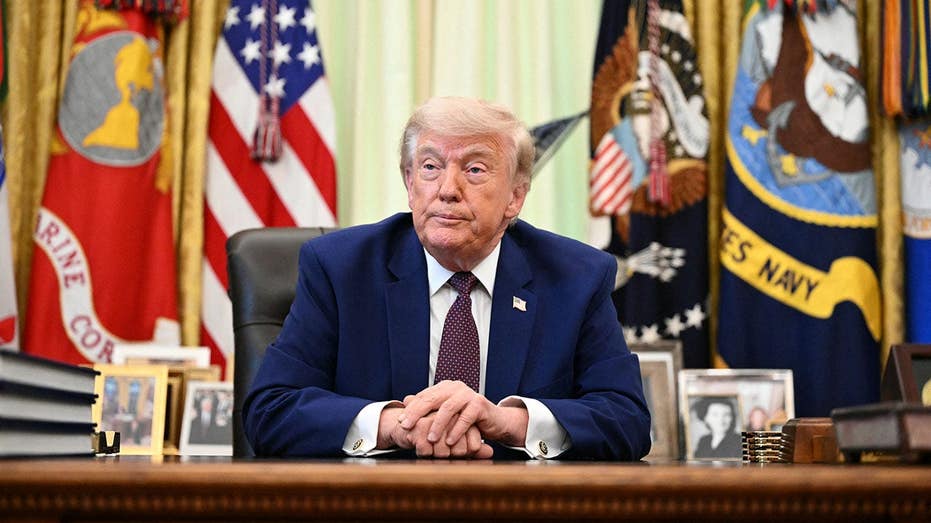
Senate Republicans managed to stitch together a unified front to advance President Donald Trump’s roughly $70 billion immigration enforcement package, but divisions over the president’s agenda were laid bare after a marathon day of votes. Passage of the budget reconciliation package geared toward funding Immigration and Customs Enforcement (ICE) and Border Patrol for the next three and a half years closes a long, drawn out chapter in the Senate that began during the longest shutdown in history. It’s a point that Senate Republicans tried to return to throughout the day, reiterating that Senate Minority Leader Chuck Schumer, D-N.Y., and Democrats had forced their hands after refusing to fund immigration operations without a plethora of reforms. DOZEN GOP REBELS FAIL TO PERMANENTLY KILL TRUMP’S CONTROVERSIAL $2B FUND “Democrats would not agree to anything, and eventually they walked away altogether, presumably because they thought that it would serve them better to have an issue for November,” Senate Majority Leader John Thune, R-S.D., said. But the day, and preceding weeks, were dominated by a growing rift between Senate Republicans and the Trump administration that threatened to blow up the process altogether. First, it was the inclusion of $1 billion in funding for security upgrades to Trump’s ballroom, which was later stripped out. Then, it was the Department of Justice’s (DOJ) announcement that a nearly $2 billion “anti-weaponization” fund was being launched to allow people who felt targeted by the government to make a claim from the pot of taxpayer money. GOP ADVANCES ICE FUNDING PACKAGE AFTER FORCING TRUMP’S CONTROVERSIAL $2B FUND INTO RETREAT Several Senate Republicans worried that the money could be accessed by Jan. 6, 2021, rioters who were convicted of assaulting police. Schumer and Democrats leaned into that open wound and spent much of the marathon, “vote-a-rama” vote series trying to spell a permanent end to the fund, despite acting Attorney General Todd Blanche vowing that the administration would no longer pursue it. “Do we believe that Donald Trump, who has lied to us day in and day out, do we believe that he will be able to resist getting his sticky fingers in the slush fund when it would benefit himself and his family? No way, no way,” Schumer said. GOP LEVERAGES ICE FUNDING PACKAGE TO MAKE TRUMP’S CONTROVERSIAL $2B FUND ‘NEVER EXIST’ Many of the amendments pushed by Democrats placed Republicans in tough bids for reelection, Sens. Susan Collins, R-Maine, Jon Husted, R-Ohio, and Dan Sullivan, R-Alaska, into politically challenging positions. Republicans tried to kill it, too, causing tensions on the Senate floor to rise. “It’s not that tense,” Sen. John Kennedy, R-La., said. “I mean, I’ve seen worse. Nobody’s stabbed anybody yet.” Still, the process nearly came to a grinding halt because of the fund at the start of the marathon vote series when Sen. Bill Cassidy, R-La., and others wanted to ensure that GOP attempts to end the fund would get a vote, too. “I just wanted to optimize the chances of success,” Cassidy said of the delay. Ultimately, despite a dozen Republicans voting for Sen. Thom Tillis’, R-N.C., amendment, and several voting for Cassidy’s, all attempts to thwart future bids to revive the fund failed. The ballroom also came back into the picture when six Republicans joined Senate Democrats to prevent construction on the colossal structure from going forward without congressional approval. Then there was an attempt by Sen. Lindsey Graham, R-S.C., to attach the SAVE America Act to the reconciliation package, which met Republican resistance and ultimately failed, too. The package now heads to the House, where Republicans are expected to pass it by next week.
Massive Mexico-California border busts uncover eye-popping amount of drugs: ‘Remain vigilant’
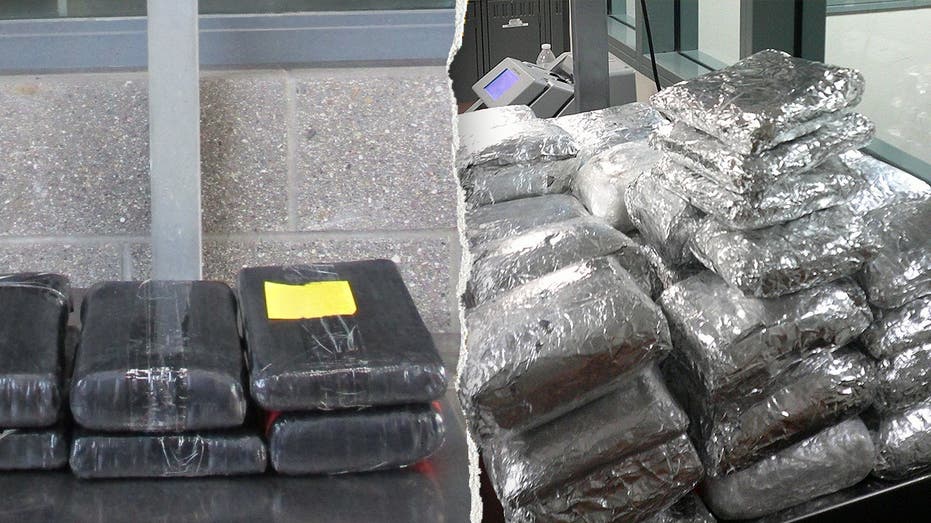
Customs and Border Protection stopped two separate vehicles and confiscated over $300,000 worth of narcotics over the span of a day. The apprehensions continue to demonstrate the high volume of narcotics that smugglers are attempting to bring across the southern U.S. border, even as immigration numbers have plummeted in recent months. On Sunday, May 17, agents at the San Ysidro Port of Entry referred a 2013 Honda Civic for secondary inspection. After an imaging system detected anomalies in the car’s firewall, they discovered six packages of white fentanyl powder worth roughly $113,600 along with 8.4 pounds of cocaine worth an estimated $161,600. CBP OFFICERS SEIZE OVER $14M OF ALLEGED METHAMPHETAMINE AT SOUTHERN BORDER That same day at the Calexico East Port of Entry, about 100 miles away, a 2011 Nissan Cube was also sent for secondary inspection. Agents there discovered 63 packets of methamphetamine after a scan of that vehicle detected anomalies in its flooring. Officials praised both detections. “Sunday may be a day of rest for many, but criminals don’t take days off, and neither do our CBP officers,” San Diego Director of Field Operations Sidney Aki said. “Our officers remain vigilant around the clock, and these significant seizures are a direct result of their commitment to keeping dangerous drugs like these from entering our country.” SOUTHERN BORDER APPREHENSIONS PLUNGE MORE THAN 90% FROM YEAR AGO IN APRIL, CBP SAYS The agency believes its operations are a continuation of efforts laid out by President Donald Trump and DHS Secretary Markwayne Mullin, even as immigration border crossings have come down. Since the end of 2024, border crossings have plummeted, going from over 144,000 encounters in December 2024 to just 10,000 in April. Even so, CBP has reported several high-profile smuggling attempts that have sought to bring weapons, narcotics and humans across the U.S. border. ARREST OF GANG MEMBER CONVICTED OF MURDER PUTS DEM STATE’S SANCTUARY POLICIES ON BLAST Recently, CBP has released reports on how it had prevented a car carrying a rocket-propelled grenade launcher from crossing the border, detected dozens of immigrants crammed into a semi-truck and even detained a boat off the coast of the Dominican Republic with the help of a Black Hawk helicopter. “CBP officers along the southwest border stop illegal activity, including the smuggling of drugs and humans, and facilitate lawful entry for millions of legitimate travelers into the United States,” CBP said in a statement.
Democrat fails to block US measure to deepen Israel military cooperation
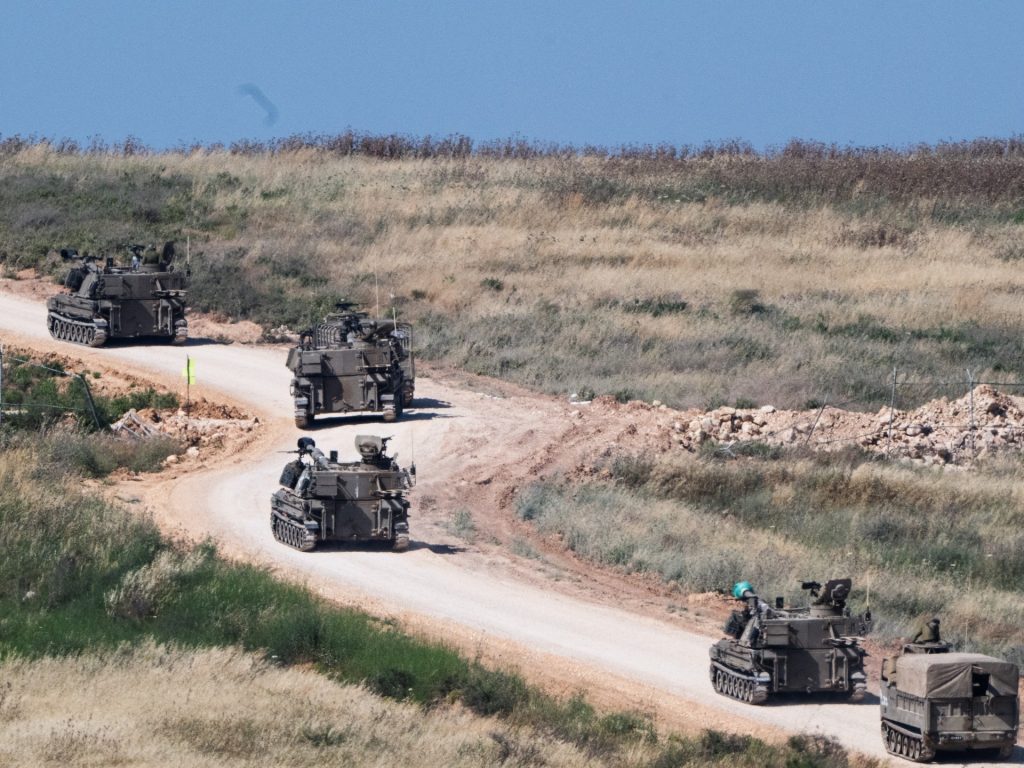
A congressional panel in the United States has rejected an effort to revoke a provision from the defence budget that would further integrate the US and Israeli militaries. An amendment to sink the pro-Israel measure, introduced by Democratic Congressman Ro Khanna, failed in a voice vote on Thursday in the House Armed Services Committee. Recommended Stories list of 3 itemsend of list That defeat paves the way for the proposal to advance to the floor of the House of Representatives. Khanna had argued that the provision in the National Defense Authorization Act (NDAA), formally called Section 224, rewards Benjamin Netanyahu at a time when the Israeli prime minister is trying to dictate US policy in the Middle East. The progressive Democrat cited recent reports that President Donald Trump is angry at Netanyahu over Israel’s escalation in Lebanon. “Everyone in America — whether you’re a Republican, an independent or a Democrat — says that we need to tell Netanyahu that America calls the shots, not the prime minister of any other country,” Khanna said. “They want less cooperation and blank checks to Israel, not more. Only the United States Congress would dream up at this moment, ‘Let’s actually do more for Israel.’” The vote on the amendment was taken by calling on committee members to say aloud either “yes” and “no”, and the “nays” clearly were more numerous. It was not recorded as a roll-call vote, which would require each member’s preference to be logged. Section 224 would require the Pentagon chief “to designate an executive agent responsible for synchronising cooperative efforts between the United States and Israel”. Advertisement That official would be in charge of overseeing several joint initiatives, “including bilateral defence technology research, development, testing, evaluation, integration, and industrial cooperation”, the NDAA reads. Netanyahu’s endorsement Critics have raised concern that Section 224 may make US military aid to Israel more opaque, concealing the assistance as cooperation rather than a separate expense. The measure also risks tethering the US military to its Israeli counterpart technologically at a time when the American public is rapidly turning against Israel, according to recent public opinion polls. “As political pressure builds to reduce US military assistance to Israel, Section 224 provides the framework for continuing — and expanding — US-Israel military ties by entrenching Israeli technology within the US defense supply chain in a way that would shield it from the annual appropriations process,” the nonprofit lobbying group A New Policy said in a brief last week. “The use of must-pass legislation as the NDAA as a mechanism of integration speaks to the plummeting popularity of continuing unconditional support to Israel.” The measure comes as Netanyahu pushes to transform US aid to Israel from direct assistance to military “cooperation”. The Israeli prime minister wrote a letter to Republican Congressman Marlin Stutzman endorsing a bill facilitating that transition. In the letter, Netanyahu said, “The time has now arrived for us to move from aid recipient to partner.” He added he supported Stutzman’s plan for a “new framework of joint defense cooperation, codevelopment, coproduction and mutual investment in areas including advanced missile defense, artificial intelligence … and next generation military platforms”. Referencing the letter on Thursday, Khanna argued that Section 224 “directly” follows Netanyahu’s language. “I am for Team America. I am for the interests of this country, and I believe that when Donald Trump ran, he ran ‘America First’,” the Democrat said. “That includes American interests against any foreign country. We should have American sovereignty and make it clear that we strike 224. If we want to give aid to Israel, if we want to sell them weapons, that should be a vote for the entire Congress.” But both Democrats and Republicans pushed back against his argument, saying that the provision aims to streamline existing cooperative programmes that benefit the US. Key Democrat backs Section 224 Congressman Adam Smith, the top Democrat on the panel, said he was “very sympathetic” to Khanna’s frustration with Netanyahu. Advertisement “Mr Netanyahu insisted on this war with Iran that has strengthened Iran and weakened our position. I do not like his leadership of Israel or where he is going,” Smith said. But he added that it is in the US’s interests to have deep military ties with Israel, a country accused by leading rights groups and United Nations investigators of committing genocide in Gaza. “The reason that we have these partnerships with Israel, where we may not have as many developed partnerships with other NATO countries, is because Israel has actually been having to fight,” Smith said. “They have faced drone attacks and missile attacks. They have had to develop new technologies, technologies that we’ve benefitted from.” Rights advocates often decry the promotion of Israel’s weapons as “battle-tested” — because they have been tested on the Palestinian and Lebanese communities that they devastated, killing tens of thousands of people along the way. Earlier on Thursday, Palestinian rights advocates warned against approving Section 224 during a news conference on Capitol Hill. “It is unfathomable that this is the American response to a country that has, over the past two and a half years, carried out a genocide against Palestinians and started wars in both Iran and Lebanon,” said Margaret DeReus, the executive director at the Institute for Middle East Understanding (IMEU). Republican Congressman Thomas Massie has promised to introduce an amendment to revoke Section 224 when the NDAA goes to a full House vote. Adblock test (Why?)
Iran war live: Hezbollah rejects truce as Israel continues Lebanon strikes

blinking-dotLive updatesLive updates, Israel’s supreme court annuls a government ban on the International Committee of the Red Cross visiting Palestinian prisoners held in Israeli jails. Published On 5 Jun 20265 Jun 2026 Click here to share on social media share-nodes Share googleAdd Al Jazeera on Googleinfo Adblock test (Why?)
Why Mogadishu clashes are deepening Somalia’s political crisis again
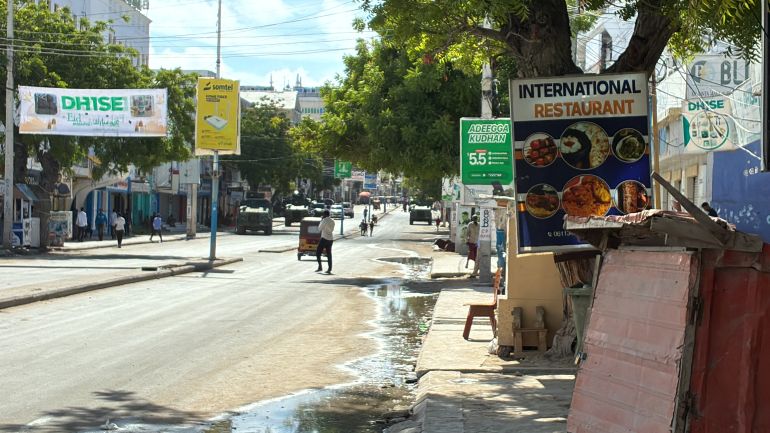
Mogadishu, Somalia – Mustafa, 33, dreads election time in Somalia. He drives a bajaj — a three-wheeled taxi — and says that when tensions rise, as they always do when polls are near, the whole city feels it, and drivers like him are among the first. On Wednesday, he was passing through the Hawl Wadaag district when heavy gunfire between government and opposition forces erupted all around him. Recommended Stories list of 2 itemsend of list “I couldn’t even think. Everyone was shouting and running for their lives, and we all fled from the bullets,” he told Al Jazeera. “We haven’t seen fighting this bad in years.” The shooting that began that afternoon around the homes of former Prime Minister Hassan Ali Khaire and, later, former President Sheikh Sharif Sheikh Ahmed, came as opposition figures were planning to organise protests against what they describe as an illegal term extension by incumbent President Hassan Sheikh Mohamud. Khaire and Sharif Sheikh Ahmed were among opposition leaders spreadheading the planned protests amid rising tensions with the federal government. The government said the planned protests would undermine security in a city still grappling with persistent armed violence. Hundreds of families fled neighbourhoods near the fighting, and by the next day, many of the capital’s central areas had emptied. The sudden eruption of violence ended a period of improving security in Mogadishu, shattering the perception that the city had begun turning a corner. “The most frustrating thing is that we have nothing to do with it, and it impacts so many of us,” Mustafa said. “We make our living in this city”. Advertisement Security forces sealed Maka al-Mukarama Road, one of Mogadishu’s main arteries, while Bakara market, the largest commercial hub in the city, was effectively closed for business. Maka al-Mukarama Road, Mogadishu’s main thoroughfare, is usually a bustling commercial hub, but recently, it has been largely empty, with the exception of military vehicles [Faisal Ali/Al Jazeera] “Look, it’s midday, and there’s almost no one here, shops are closed, and usually by this time the place is jammed,” Ahmed, a street vendor at Bakara market, told Al Jazeera, gesturing at shuttered stalls. Ali Wardheere, the deputy central bank governor, estimated the direct cost to businesses and services at $3.8m, though he stressed the figure was a model-based projection, not an official or final tally. Like most Somalis, Mustafa has never voted for a president or a member of parliament. The country has not held a direct election for national leadership since the late 1960s. Since the state was re-established in 2012 after its 1991 collapse, leaders have been selected through an indirect system negotiated by clan elders and political elites. As presidential terms near their end, low trust among political actors often leads to intense competition over power — and at times violence — as disputes over the electoral timetable come to a head. At a press conference in late May, Sharif warned that the political deadlock could turn violent if negotiations failed. “Where do things stand? [We say] Leave, and [you say] I won’t leave. What comes next? Bullets.” The warning echoed events in 2021, when then-President Mohamed Abdullahi Farmaajo remained in office more than a year beyond the end of his term, triggering clashes in Mogadishu before a political agreement was reached. Higher stakes this election This time, the political standoff carries higher stakes. President Hassan Sheikh Mohamud says that constitutional amendments approved by parliament extended his mandate by an additional year from May 15. The opposition rejects that and has begun referring to him as a “former president”. Two of Somalia’s most influential federal states also reject the amendments, leaving the country divided over the constitutional framework governing the next election, with no constitutional court to resolve the dispute. After parliament approved the changes, Mohamud declared that the “provisional constitution, and the provisional era, was a sun which set yesterday,” signalling that his administration would press ahead despite objections from its opponents. Advertisement Tensions had been building for days. Ahead of a protest planned for Thursday, opposition leaders left the heavily fortified “green zone” near Mogadishu’s airport and returned to their residences across the city. Some opposition figures said they would deploy their own armed guards at the demonstration, a proposal Mohamud rejected. The dispute heightened fears of a confrontation before fighting eventually broke out. Both sides blame the other for starting the clashes. Khaire accused Mohamud of directing a “sustained and indiscriminate military assault” that lasted more than 20 hours, a claim Sharif echoed after fighting reached his own residence. Ahmed Moalim Fiqi, the defence minister, accused the opposition of militarising the standoff, likening it to Sudan’s Rapid Support Forces and alleging that opposition figures had “distributed mortars and artillery across the capital”. “Force and militias,” he said, would no longer be allowed to “seize power or block the state.” How it came to this The roots of the crisis run back to the 2012 provisional constitution, which set up a federal, parliamentary system built on broad consensus and clan-based power-sharing, which every government since has promised to achieve and failed to attain. This year, after a long review, parliament amended the constitution through a disputed process that split the political class. The government has insisted that the new constitution advances the statebuilding process and that the Somali public should be allowed to directly elect its representatives. For Ahmed Abdi Koshin, a federal MP who boycotted the draft, the danger is that the whole settlement comes apart. The process, he said, “clearly doesn’t have buy-in,” and the original constitution, for all its faults — “an imperfect product of compromise” — was the “only glue holding Somalia together”. Koshin is not against a direct vote in principle, he said, but does not believe the country is ready for one. “We don’t have legislation for a direct vote; censuses and the security situation remains compromised. It really is up to the president to either reach a deal and save Somalia, or watch
IndiGo Suspends 6 key Asian Routes amid rising costs, other challenges

IndiGo airline on Thursday announced some changes to a part of its international network, expecting low demand in the coming quarter and a risinh cost scenario. The operations have been suspended on temporary basis.
Faridabad Construction Site Accident: Jewar Expressway project hit by crane collapse, 5 workers feared trapped; rescue operation underway

A gantry crane collapsed at a Jewar Expressway flyover construction site in Faridabad, Haryana, trapping several workers.
Cockroach Janata Party: Ahead of Jantar Mantar protest, CJP founder Abhijeet Dipke makes appeal to supporters; Here’s what he said

Ahead of its June 6 protest at Jantar Mantar over the NEET paper leak issue, the Cockroach Janata Party urged supporters not to gather at Delhi Airport to welcome founder Abhijeet Dipke.
Another Hotel Fire in Delhi: Blaze erupts in Humayunpur days after Malviya Nagar tragedy
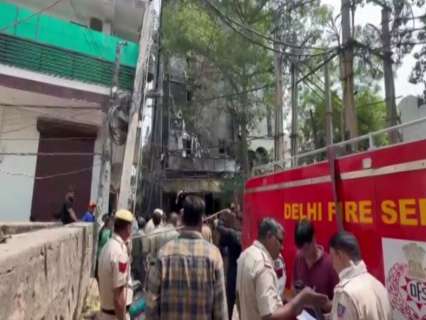
A fire broke out in the basement of a hotel in Humayunpur Village, near Safdarjung Enclave, on Thursday evening, according to the Delhi Fire Services (DFS).The Fire Department received a distress call regarding the incident at 7:06 PM.