

Left-wing streamer blasts New Jersey governor over state police response at ICE facility protests
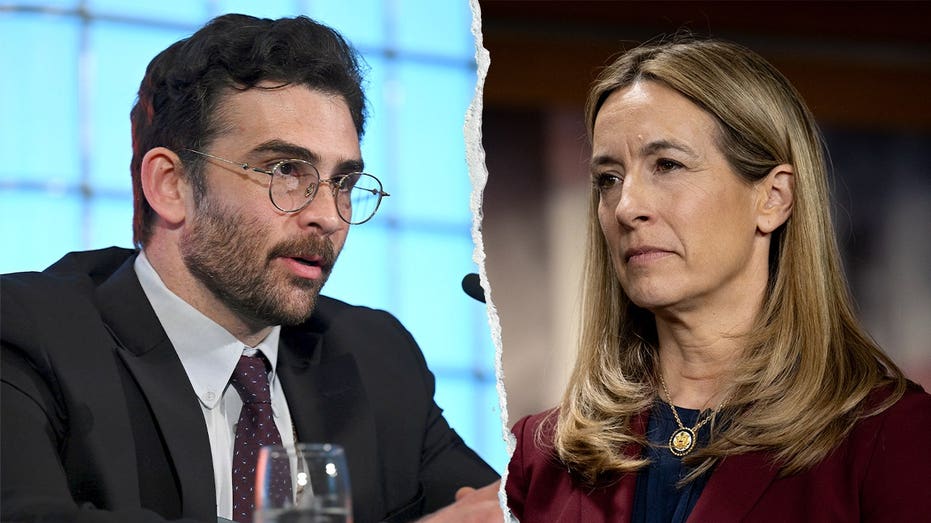
Marxist political commentator and Twitch streamer Hasan Piker blasted New Jersey Gov. Mikie Sherrill during a livestream Sunday, accusing the Democratic governor of aiding the Trump administration’s immigration agenda through her response to anti-ICE protests outside a Newark detention facility. Piker’s criticism came after Sherrill defended the deployment of state police around demonstrations outside Delaney Hall, an ICE detention center in Newark, saying she would not allow unrest to provide a pretext for expanded federal immigration operations in New Jersey. “I refuse to let that happen in New Jersey. I will not give ICE a pretext,” Sherrill said in remarks aired during a news segment Piker was reacting to on stream. Piker quickly mocked the governor’s explanation. GOV. SHERRILL BLAMES ICE, DEFENDS RIOTERS AFTER DEPLOYING TROOPERS TO QUELL VIOLENT MOB “Yeah, I won’t give ICE a pretext. So I’m going to ensure that they don’t have to do anything because I’m going to do it myself,” Piker said. “That’s basically what the meta is here for this blue state and its new blue governor.” The political commentator then broadened his criticism beyond Sherrill’s handling of the protests. “This is the centrist wing of the Democratic Party, ladies and gentlemen. This is what happens,” Piker said. ANTI-ICE PROTESTERS CLASH WITH AGENTS OUTSIDE NEW JERSEY DETENTION CENTER AS GOV. SHERRILL DENIED ENTRY The comments came as anti-ICE demonstrations continued outside Delaney Hall, where activists have alleged detainees are being held in poor conditions and not receiving adequate food. The Department of Homeland Security has disputed those claims. Later in the stream, Piker accused Sherrill of helping advance President Donald Trump’s immigration policies. “The story is not the far-left activists continuing to rage at ICE in New Jersey,” Piker said. “The real story is the horrifying conditions inside of this facility … and the governor acting as though she’s powerless to put a stop to it, and using what power she does have to basically work alongside the MAGA movement alongside the Trump administration, because these are state troopers in anti-riot gear on horseback.” FEDERAL AGENTS IN NEW JERSEY BEAT BACK ANTI-ICE AGITATORS IN CHAOS OUTSIDE DELANEY HALL DETENTION FACILITY “These are state troopers that are brutalizing New Jerseyans,” he added. Piker further accused authorities of mistreating journalists covering the demonstrations. “They’re doing Israeli occupying force s—. It’s disgusting,” he said while discussing reports that an Associated Press photographer was injured while covering the protests. WATCH: POLICE ABSENT FROM DELANEY HALL CHAOS AS AGITATORS BLOCK ICE VEHICLES AND AGENTS USE PEPPER SPRAY The streamer also used the broadcast to criticize Democratic lawmakers over immigration policy. “Democrats have absolutely participated in this process,” Piker said, arguing that some members of the party have supported legislation and funding measures related to immigration enforcement. “I want to change that system,” he later added. “Part of that also revolves around getting people elected who will make a big fuss.” NJ DEMOCRATS PUSH ‘F—ICE ACT’ TO LET RESIDENTS SUE OVER IMMIGRATION ENFORCEMENT Later in the stream, Piker told viewers, “That’s what I’m trying to f—ing change.” In recent months, Piker has crisscrossed the country canvassing for candidates endorsed by the Democratic Socialists of America. During Sunday’s livestream, he also voiced support for billionaire gubernatorial candidate Tom Steyer and quoted Mao Zedong, the founder of the Chinese Communist Party. Piker has previously drawn scrutiny for his support of progressive candidates and activism surrounding immigration policy. Earlier this year, he campaigned in New Jersey for congressional candidate Adam Hamamy, a Democratic Socialists of America-backed candidate whom Piker publicly defended following media scrutiny over his background. Sherrill’s office did not immediately respond to a request for comment from Fox News Digital.
Trump warns judge against sacrificing national security by blocking White House ballroom, drone base

President Donald Trump is warning against obstruction of the $400 million White House ballroom and rooftop drone base, directly calling out U.S. District Judge Richard Leon for giving in to a “serial plaintiff” and a “ridiculous lawsuit” putting U.S. national security at risk. “The DronePort at the White House Ballroom will be, perhaps, the most sophisticated anywhere in the World!” Trump wrote Sunday on Truth Social. “It will safeguard our Nation’s Capital, Washington, D.C., long into the future. “Judge Richard Leon should stop playing games with America’s Security!” Trump urged Leon to dismiss the lawsuit from a person he described as a “highly litigious woman,” warning the judge would be “held responsible” if an attack hits the White House. FEDERAL JUDGE QUESTIONS TRUMP AUTHORITY ON WHITE HOUSE BALLROOM PROJECT “If anything happens, he will be held responsible for the Death and Destruction caused to our Country,” Trump added. “He has already created enough problems by allowing ‘Top Secret’ information to be released and exposed based on a ridiculous lawsuit started by a highly litigious woman (serial plaintiff!) whose ‘strolling,’ in her opinion, will be disturbed by the new, desperately needed structure – In any event, a woman who has absolutely no STANDING! “With the advent of highly sophisticated, and powerful, modern day weaponry, we can no longer defend Washington, D.C., with rifles and pistols, alone. This ridiculous lawsuit must be dismissed, IMMEDIATELY!” Trump added. The post came as the Justice Department again pressed Leon to lift an injunction that has held up parts of the project, arguing in a court filing that a shooting outside a White House checkpoint earlier this month underscored the need for stronger security measures at the executive mansion. TRUMP PULLS BACK CURTAIN ON WHITE HOUSE BALLROOM’S FORTRESS-LIKE DEFENSES ABOVE AND DEEP BELOW “In light of the recent attacks against President Trump’s life — including two attempts in less than a month — the injunction entered by this Court for the benefit of a strolling woman, who filed suit against the East Wing Project long before she knew what was going to be built (This is a woman who is a known serial plaintiff throughout Washington, D.C.), and who has absolutely no standing, must be immediately vacated, and this suit, which is a complete embarrassment to our Country, must be dismissed,” acting Attorney General Todd Blanche wrote in the five-page filing. “This is a terrible, tremendously harmful case to the United States of America, and all it stands for!” . The gunman who opened fire at the White House checkpoint was shot by officers and later died at a hospital. APPEALS COURT LETS TRUMP RESUME WHITE HOUSE BALLROOM CONSTRUCTION, SEEKS LOWER COURT CLARITY Leon ruled in April that Trump lacked the legal authority to build the ballroom without congressional approval. He issued an injunction halting “above-ground construction of the planned ballroom,” though an appeals court quickly put that order on hold, allowing construction to continue until June. The lawsuit was brought by the National Trust for Historic Preservation, a congressionally chartered nonprofit organization. The group has said it would not drop the case, even after the Justice Department cited a foiled attack at the White House Correspondents’ Association dinner in April as a reason to dissolve the injunction and dismiss the lawsuit. Trump previously disclosed that the ballroom project would include a rooftop drone base and a six-story underground military complex with a hospital and research facilities. During a tour with reporters , Trump said the ballroom’s roof would be built for military use and designed to withstand a direct attack. “The entire roof is built for military,” Trump said. “They have a massive drone capacity. Not only is it drone-proof, if a drone hits it, it bounces off, it won’t have any impact. But it’s also meant as a drone port that would protect all of Washington.” The proposed 90,000-square-foot ballroom would dwarf the historic White House complex and has become a flashpoint in a broader fight over presidential authority, security spending and the preservation of historic federal buildings. WHITE HOUSE SAYS EAST WING DEMOLITION WAS NECESSARY DUE TO STRUCTURAL ISSUES Trump has argued that the ballroom is necessary to host large events of up to 1,000 people in a secure location, saying current White House entertainment spaces are too small. The White House has said the project’s security features include titanium fencing, hardened roofing, thick special glass and underground facilities. Trump told reporters the roof would be made of “impenetrable steel,” and said the fencing was strong enough that “a bulldozer cannot knock it over.” Leon has not yet ruled on the Justice Department’s latest request to dissolve the injunction and dismiss the case. Reuters contributed to this report.
Why NATO’s defense spending imbalance lasted for decades
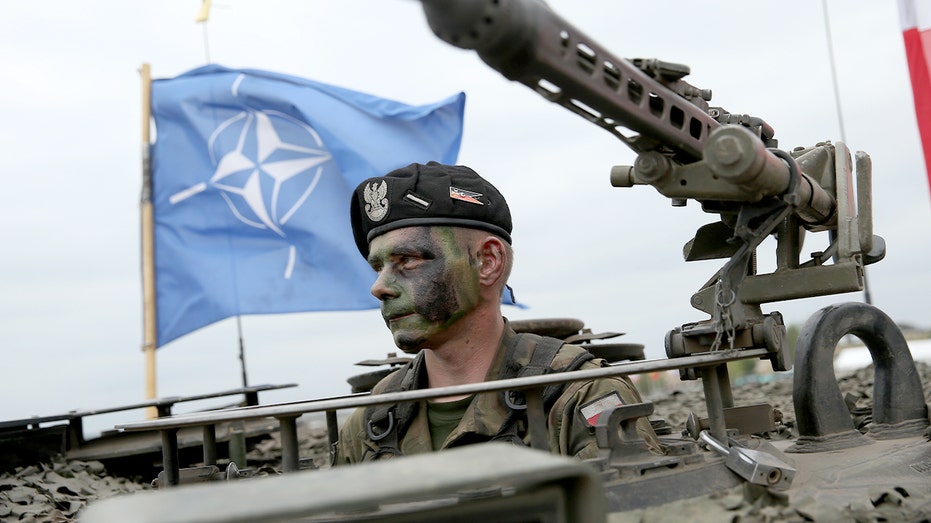
This is part five of a series examining the challenges confronting the NATO alliance. For more than three decades, the U.S. carried the largest share of NATO’s military burden while many European allies spent far less on defense than Washington wanted. The imbalance survived the Cold War, multiple U.S. administrations and repeated debates over burden sharing. Only in recent years — following Russia’s 2022 invasion of Ukraine and renewed pressure from President Donald Trump — have many NATO members begun significantly increasing defense spending. So why did the gap persist for so long? Defense analysts say the answer lies in a combination of post-Cold War optimism, domestic political priorities and an American defense umbrella that convinced much of Europe it could safely spend less on defense without sacrificing its security. GLOBAL SYSTEM TOOK ADVANTAGE OF AMERICA ON TRADE AND DEFENSE. THAT FREE RIDE IS OVER “For much of the post–Cold War period, it is fair to say that Europeans underinvested in defense, partly because threats were low, and partly because a series of U.S. presidents did everything they could to convince Europeans that we would stay there forever,” Barry Posen, a professor of political science at the Massachusetts Institute of Technology, told Fox News Digital. The collapse of the Soviet Union reinforced that mindset. With the primary threat NATO had been created to deter suddenly gone, governments across Europe moved to collect a so-called “peace dividend,” redirecting resources toward domestic priorities and away from their militaries. Between 1992 and 1999, defense spending among European NATO members fell 22%, helping establish a pattern of underinvestment that would persist for decades even as the United States maintained troops in Europe and continued serving as NATO’s ultimate security backstop. GERMANY UNVEILS NEW INCENTIVES TO BOOST MILITARY RECRUITMENT AMID GROWING RUSSIA THREAT As defense spending declined, many European governments expanded or maintained social welfare systems that consumed a growing share of public budgets. Programs such as healthcare, pensions and higher education became deeply embedded in domestic politics, often making them harder to cut than military spending. With the U.S. continuing to provide the bulk of NATO’s military power, many governments faced little immediate pressure to reverse course. Critics of the alliance’s spending imbalance argued that American taxpayers were effectively subsidizing Europe’s security, allowing allies to devote a larger share of public resources to domestic priorities. The result was what some defense analysts describe as a “moral hazard” problem: because the U.S. commitment to NATO was viewed as ironclad, allies could spend less on their own militaries without facing the full consequences of those decisions. NATO CHIEF WARNS EUROPE CAN’T DEFEND ITSELF WITHOUT US AS TENSIONS RISE OVER GREENLAND Over time, that dynamic became self-reinforcing. As European militaries shrank, many allies grew increasingly dependent on American capabilities ranging from logistics and intelligence to missile defense, strategic airlift and nuclear deterrence. “We are still having a strong, conventional U.S. presence in Europe,” NATO Secretary-General Mark Rutte said earlier in 2026, “and, of course, the nuclear umbrella as our ultimate guarantor.” American frustration over burden sharing is nearly as old as NATO itself. In 1953, President Dwight D. Eisenhower warned European allies that “the American well can run dry” and pressed them to assume a larger share of the alliance’s defense burden. The issue resurfaced repeatedly over the following decades as successive administrations sought greater European contributions to collective defense. The concern persisted long after the Cold War. In a blunt 2011 farewell speech in Brussels, then-War Secretary Robert Gates warned of a “dim if not dismal future” for NATO if European governments continued underinvesting in their militaries. Gates cautioned that there would be “dwindling appetite and patience” among American lawmakers and taxpayers to bear a disproportionate share of the alliance’s defense costs. Yet despite decades of warnings, the underlying incentives changed little. Washington repeatedly reaffirmed its commitment to NATO and maintained a large military presence on the continent, reducing pressure on allies to rapidly increase defense spending. “Every administration has been pushing allies to spend more money on their own defense,” former Deputy Assistant Secretary of Defense for Europe and NATO Jim Townsend told Fox News Digital. The issue gained renewed urgency after Russia’s annexation of Crimea in 2014, when NATO established a benchmark for members to spend at least 2% of GDP on defense. While spending gradually increased, progress remained uneven across the alliance. “Nations slowly began going to that. But it’s been slow,” Townsend said. For years, burden-sharing disputes followed a familiar pattern: American officials urged allies to spend more, European leaders promised improvements and NATO continued to rely heavily on American military power. What finally broke that cycle, Townsend said, was the combination of Russia’s growing aggression and Trump’s willingness to challenge assumptions that had shaped the alliance for decades. “What really woke everyone up were two things,” Townsend said. “One was the 2022 invasion by Putin the second time. And then the second was Trump.” Unlike previous presidents, Trump openly questioned whether the United States should defend allies that failed to meet defense spending commitments. During his first term and again during his return to office, Trump argued that NATO members were taking advantage of American taxpayers and suggested U.S. protection should not be unconditional. Whether European leaders viewed Trump’s approach as pressure, a warning or a negotiating tactic, it altered assumptions that had shaped the alliance since the end of the Cold War and accelerated a debate that had simmered for decades. The shift culminated at NATO’s summit in The Hague, where allies agreed to a new goal of spending 5% of GDP on defense and defense-related investments by 2035. The agreement marked a dramatic leap from NATO’s long-standing 2% benchmark and reflected a growing consensus that the alliance faced a far more dangerous security environment than the one that emerged after the Soviet Union’s collapse. The agreement also signaled that many allies had come to the same conclusion American presidents had voiced for decades: the post-Cold War era of
Trump expands Turkey ambassador’s diplomatic role, adding Iraq, Syria amid Middle East tensions
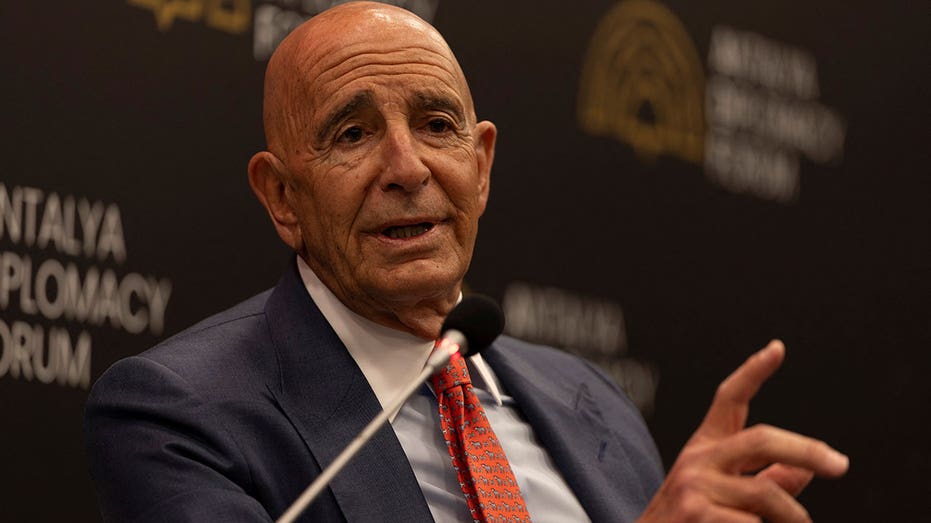
U.S. Ambassador to Turkey Tom Barrack is getting expanded duties from President Donald Trump to serve as special envoy to Syria and Iraq as the administration tries to forge lasting peace in the Middle East. “I am pleased to announce that United States Ambassador to Türkiye, Tom Barrack, who has done an outstanding job, will be named Special Presidential Envoy to Syria and, likewise, Special Presidential Envoy to Iraq, as we advance our strategic cooperation with the Governments of Syria and Iraq, our relationship with them continues to grow,” Trump wrote in a Truth Social post Sunday. Syria, a longtime Iranian terrorist proxy battleground, has moved to make peace with the Trump administration and Israel in recent years. It has largely been moved in that direction with the guidance of Turkey, the northern neighbor of Iraq and Syria. “Tom will remain Ambassador to Türkiye, and operate with the full backing of the United States Department of State,” Trump’s post continued. “We greatly appreciate the work that Tom Barrack has done, and his continued willingness to serve our Country.” US AMBASSADOR BARRACK NAMED SPECIAL ENVOY TO SYRIA AMID SANCTIONS RELIEF PLAN The announcement came as Washington remains locked in high-stakes negotiations with Iran and as Tehran’s Revolutionary Guards launched new attacks on separatist groups in northern Iraq, according to Reuters. Barrack’s expanded assignment places him at the center of several overlapping pressure points in the region: the future of U.S. engagement with Syria, the stability of Iraq, Turkey’s role as a regional power broker and the broader fallout from the U.S.-Iran conflict. The move also follows earlier reporting that Barrack had already been playing a major role in Syria policy, including discussions involving Trump and Secretary of State Marco Rubio on the administration’s approach to Damascus. TRUMP TENTATIVELY MAKING PEACE WITH IRAN, BUT POTENTIAL FUTURE STRIKES REMAIN AS LEVERAGE Trump’s announcement landed during a tense weekend for U.S. diplomacy. The president has not announced a final decision on a proposed Iran agreement, and recent reports said he requested changes to a draft deal negotiated by his envoys, including tougher provisions related to Iran’s nuclear materials. Trump said in a Fox News interview that he was “in no hurry” to finalize a deal with Tehran, while warning the U.S. could resume military action if negotiations fail. War Secretary Pete Hegseth also said the U.S. military remained poised to resume strikes against Iran. The administration’s core peace demands have centered on preventing Iran from developing or acquiring nuclear weapons, reopening the Strait of Hormuz and securing terms that Trump has described as tougher than earlier proposals. The Strait of Hormuz remains a central point of contention because of its importance to global energy shipments. The northern Iraq strikes underscored the risk that the conflict could continue to spill across borders even as diplomacy continues. Iranian forces have repeatedly targeted Kurdish opposition groups based in Iraq’s Kurdistan region, accusing them of threatening Iran’s security. Those attacks have placed additional pressure on Baghdad and the Kurdistan Regional Government while complicating U.S. efforts to stabilize Iraq. Barrack, a longtime Trump ally and businessman, is now expected to help manage U.S. relationships with three countries that sit at the heart of the administration’s Middle East strategy.
Rescuers race to save two people still trapped in cave in Laos
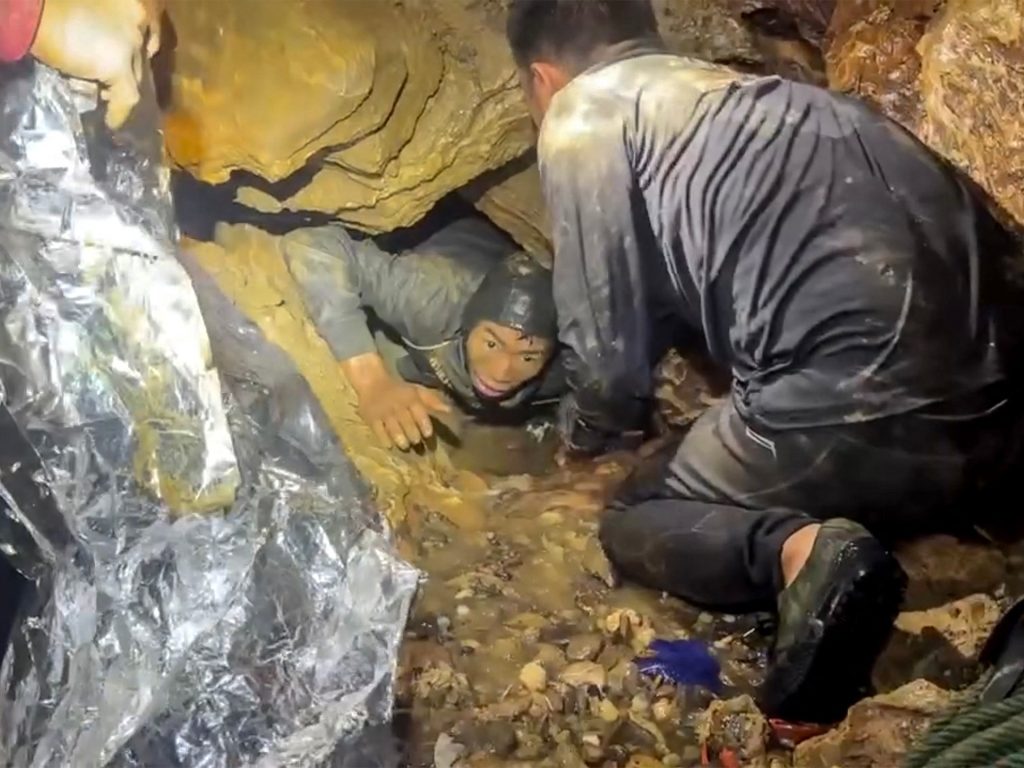
Rescuers face heavy rains, equipment failures in search for two people trapped in central Laos cave by flash floods. By AFP and AP Published On 31 May 202631 May 2026 Heavy rains have threatened to delay the search for two people who remain missing in a flooded cave in Laos, after five others were rescued after being trapped underground for more than a week. Finnish diver Mikko Paasi, one of the first international rescuers to arrive at the site, told The Associated Press news agency that rains on Sunday had filled the cave up to the second chamber, preventing divers from entering until pumps can lower the water level. Recommended Stories list of 3 itemsend of list A drainage pump also broke, making the situation even more difficult, said fellow diver Yoshitaka Isaji of Japan. Rescue teams from Laos and neighbouring Thailand have been working together over the past week to rescue the trapped villagers, alongside divers from countries including Finland, Malaysia, Japan, Indonesia, France and Australia. Seven people entered the cave in a remote mountainous area of central Xaysomboun province last week to look for valuable minerals such as gold, before being trapped by a flash flood that blocked their way out, according to local media reports. One other person escaped and alerted the authorities. A Laotian rescue group said on Sunday it had received “substantial” information on the cave system from the five men who were rescued earlier this week. “The hope is that today’s mission will locate both remaining victims,” the group wrote on social media. The rescued men were being treated at a local hospital and were doing well, Malaysian diver Lee Kian Lie, who is taking part in the operation, told AP. Advertisement “We interviewed them about how the deeper part of the cave looks like. We will continue to search based on the information we have, and perhaps we will be able to get to the other two,” he said. Rescuers said they navigated more than 200m (650 feet) into the cave and discovered five chambers in the system. The five people rescued so far were found in the fifth chamber. Paasi, the Finnish diver, told AP that the survivors reported a narrow crack in the fifth chamber that could be a passage leading to a deeper part of the cave system. “This was the only place that we haven’t checked in the mine, where the two lost miners could still be,” he said in a video interview. The five men who were rescued – identified by their first names as Khamla, Mued, Ee, Ing and Laen – were first found last Wednesday. The first man was safely extracted on Friday, guided through a narrow flooded passage by an expert diver. The remaining four left the cave on Saturday, after the water receded enough for them to walk out on their own, rescuers said. Videos posted online on Saturday showed emotional moments as the men emerged one by one from the cave. Some collapsed on the ground at the cave’s entrance, and were hugged by a group of workers who cried with joy. Later moments showed them lying on stretchers, wrapped in foil blankets and fitted with oxygen masks before being transported out. Adblock test (Why?)
Germany World Cup 2026 team preview: Players to watch, group and squad list
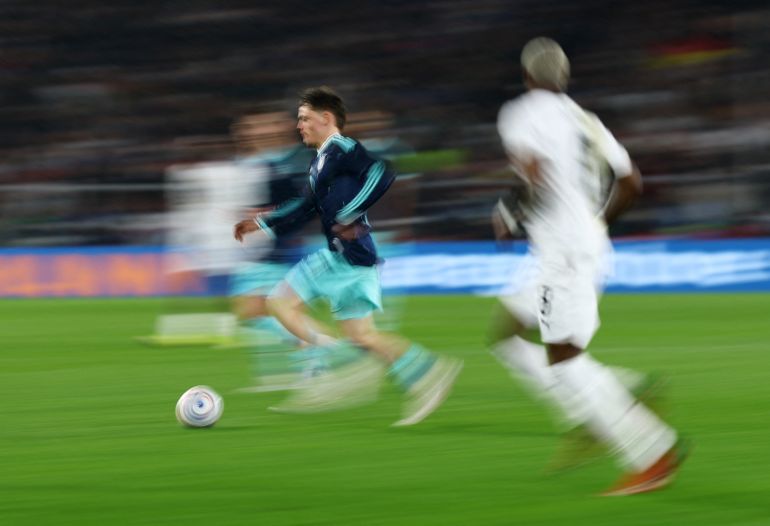
Previous World Cup appearances: 20Best performance: Winners (1954, 1974, 1990, 2014)First appearance: 1934 (Italy)Top goal scorer: Miroslav Klose (16)Most appearances: Lothar Matthaus (25)Player to watch: Florian WirtzFIFA world ranking: 8 Germany are desperate for a successful World Cup after two spectacular failures – they were knocked out in the group stages in 2018 and 2022. Recommended Stories list of 4 itemsend of list They certainly look improved under coach Julian Nagelsmann. Germany eased through their World Cup qualification group with five wins from six matches. The squad blends the youthful brilliance of Jamal Musiala and Florian Wirtz with the experience of Joshua Kimmich, Antonio Rudiger and veteran goalkeeper Manuel Neuer, who surprised many by coming out of international retirement for the tournament. However, whether the team as a whole is talented enough to pose a serious threat to the favourites and whether all the pieces really fit together under the pressure of a tournament remain to be seen. Group stage hoodoo Gary Lineker famously said: “Football is a simple game: 22 men chase a ball for 90 minutes, and at the end, the Germans always win.” So the failures of the last two tournaments were almost unthinkable for the four-time winners. In 2018, they crashed out after losing to South Korea. In 2022, they were defeated by Japan en route to being eliminated on goal difference. Nagelsmann took over in September 2023 and has restored some national pride. Germany looked decent as the host nation at Euro 2024 and were perhaps unlucky to lose to Spain in the quarterfinals. The mood around the squad seems optimistic, and they will expect to go deep in the tournament. Gifted young attackers At the heart of Germany’s ambitions are gifted young attackers in Musiala, Wirtz and Lennart Karl. Advertisement Musiala, 23, was the standout performer at Euro 2024 and gives the team an individual spark of genius. However, he suffered a horrific injury in Bayern Munich’s FIFA Club World Cup quarterfinal defeat to Paris Saint-Germain (PSG) in July, breaking his leg and dislocating an ankle in a collision with then-PSG goalkeeper Gianluigi Donnarumma. He has suffered injury setbacks during his recovery and has not played as much as expected in recent weeks, mostly from the bench. Germany will be hoping he can get back to full fitness and form before the monthlong tournament, which begins on June 11. Wirtz, meanwhile, has endured a difficult season after his big money move to Liverpool. After failing to register a goal or an assist in the first few months of the season, he seems to have found his feet in the rough and tumble of the Premier League and is looking increasingly like his old self. He offers Germany versatility across the front line, and wherever he plays, Wirtz is capable of unpicking any defence. Florian Wirtz in action for Germany against Ghana in March 2026 [File: Kai Pfaffenbach/Reuters] Karl is another exciting prospect. The 18-year-old Bayern attacker, who can play on the wings or centrally, burst onto the scene this year. He became Bayern’s youngest scorer in the UEFA Champions League and third youngest in the Bundesliga after scoring against Club Brugge and Borussia Monchengladbach. He has even earned himself comparisons to Lionel Messi for his dribbling and low centre of gravity. Neuer’s shock return The 40-year-old goalkeeper was a surprise inclusion in Nagelsmann’s 26-man World Cup squad. Neuer retired from international play after Euro 2024, but the Bayern keeper is now set to make his fifth World Cup appearance with Nagelsmann saying he is the first choice ahead of Oliver Baumann and Alexander Nubel. “Everyone knows the aura and quality Manu has, what he brings to a team,” Nagelsmann said as he announced the squad. “He has an impact on his own team, on the opposition and can create special moments.” Kimmich remains as captain despite the return of Neuer, who was Germany’s longtime skipper. Manuel Neuer, left, makes a save against Real Madrid’s Kylian Mbappe in the Champions League quarterfinal first leg in April 2026 [File: AFP] Nagging questions for Nagelsmann Several players look nailed on to start – think Leon Goretzka alongside Aleksandar Pavlovic as a double pivot in midfield and Kimmich at right back. But other positions are less settled, not least up front, where Germany lack a world-class out-and-out striker. Advertisement Niclas Fullkrug is a traditional number nine but did not make the cut after a terrible season in front of goal for AC Milan, netting just once in Serie A. Newcastle’s Nick Woltemade did make the squad despite a mixed season for his club and has looked better playing as a deeper lying forward. Kai Havertz can be used as a false nine, but it is not his most natural position. However, the Arsenal star is likely to get the nod in the absence of better alternatives. Despite the squad’s limitations, Nagelsmann remains ambitious. “I have repeatedly said we want to become world champions,” Nagelsmann said when he unveiled the squad. How does their group look? No disrespect to the other teams, but Germany will likely have breathed a sigh of relief when the draw for Group E was made. On paper, they will expect to progress comfortably. They open their campaign on June 14 against Curacao, the smallest nation ever to reach a World Cup. Their second game on June 20 against Ivory Coast should provide a stiffer test as the Ivorians, who are returning to the World Cup for the first time in 12 years, are a dangerous side and boast the likes of Amad Diallo. The final group game is on June 25 against Ecuador, who finished second in qualifying ahead of Brazil, Colombia and Uruguay. They are a disciplined, well drilled side who conceded just five goals in 18 qualifiers and could be hard for Germany to break down. Nevertheless, Germany will fully expect to be in the knockout stages in a World Cup for the first time since 2014 when they went on
Juan Manuel Santos on Colombia’s peace process, 10 years on

Ten years after Colombia’s landmark peace agreement, former president Juan Manuel Santos assesses its legacy. The Nobel Peace Prize laureate discusses renewed violence, political divisions and what Colombia’s experience can teach a world facing growing conflict. Published On 31 May 202631 May 2026 Click here to share on social media share-nodes Share googleAdd Al Jazeera on Googleinfo Adblock test (Why?)
Mamata Banerjee’s video threatening hospital authorities over nephew Abhishek Banerjee’s treatment surfaces

After the incident of an alleged attack on former West Bengal chief minister Mamata Banerjee’s nephew Abhishek Banerjee, a video of the former has now surfaced online. The video showed the former CM threatening the hospital authority in Kolkata.
Mamata Banerjee claims Congress’ Rahul Gandhi offered assistance for Abhishek Banerjee’s treatment

Former West Bengal Chief Minister Mamata Banerjee on Saturday claimed that Leader of Opposition in the Lok Sabha and Congress MP Rahul Gandhi had personally reached out to her for help
After Abhishek Banerjee row, TMC MP Kalyan Banerjee injured in clash outside Hooghly police station

TMC MP Kalyan Banerjee suffered a head injury during a clash outside Chanditala police station in Hooghly. The violence erupted between TMC and BJP supporters during a protest demanding the release of arrested party workers, prompting heavy police deployment.