

US Treasury secretary confirms plans for banknote featuring Trump’s face

Proposed $250 bill would mark the first time a living person has appeared on US currency in more than a century. Published On 29 May 202629 May 2026 US Secretary of the Treasury Scott Bessent says preparations are under way to print a new $250 banknote featuring President Donald Trump’s face, with lawmakers to decide whether the bills will be put into circulation. US law bars any living person from appearing on US currency, but legislation was introduced last year to create an exception to allow current and former presidents to be featured. Recommended Stories list of 3 itemsend of list Speaking at the White House on Thursday, Bessent said a design had been prepared in anticipation of a change in the law. “Right now, there is proposed legislation – front of the House, in front of the Senate – to change the first requirement so that a living person, Donald J Trump, could be on a $250 bill,” Bessent said. Bessent made his comments after The Washington Post reported that Treasurer Brandon Beach, a Trump appointee, has been pushing the Bureau of Engraving and Printing to expedite the process for a new currency note to mark the 250th anniversary of the Declaration of Independence. “I don’t think that there’s anything untoward about having the president of the United States, the person who’s president of the United States, on the 250th anniversary bill,” Bessent told reporters. A design mock-up obtained by The Washington Post showed the words “America 250 anniversary”, a nod to the US declaring its independence on July 4, 1776. The Treasury Department did not immediately respond to Al Jazeera’s request for comment. Behaviour of dictators, monarchs A banknote featuring Trump’s face would be the latest example of the US president expanding his personal brand in his official capacity since returning to the White House in 2025. Advertisement Banners featuring Trump’s portrait have been hung on the Department of Justice and other federal buildings. And his slate of appointees to the Kennedy Center governing board added his name to the national performing arts facility, which Congress originally designated as a memorial to assassinated President John F Kennedy. Trump’s signature is also set to appear on US currency as part of plans to mark the 250th anniversary, a first for a sitting president. US banknotes have until now featured the signatures of the Treasury secretary and the treasurer. In March, the US Commission of Fine Arts, led by Trump appointee Rodney Mims Cook Jr, approved the minting of a commemorative gold coin bearing the Republican president’s image. The announcement, which relied on a legal loophole for commemorative coins, prompted a backlash from critics, who likened the move to the behaviour of dictators and monarchs. Adblock test (Why?)
Anthropic soars to $965bn valuation, leapfrogging OpenAI
Anthropic has usurped OpenAI as the world’s most valuable artificial intelligence startup, soaring to a $965bn valuation ahead of expected public listings by the rival firms. Anthropic, the maker of the Claude family of chatbots, said on Thursday that it had raised $65bn from private investors after a fundraising round led by Altimeter Capital, Greenoaks, Dragoneer and Sequoia Capital. Recommended Stories list of 4 itemsend of list The announcement catapults Anthropic, led by CEO and cofounder Dario Amodei, ahead of ChatGPT maker OpenAI in value, which attracted an $852bn valuation in its last fundraising round in March. “This funding will help us serve the historic demand we are experiencing, stay at the research frontier, and bring Claude to more of the places where work happens,” Anthropic’s Chief Financial Officer Krishna Rao said in a statement. Altimeter Capital CEO Brad Gerstner hailed the adoption of Claude among the “world’s most demanding organisations” as evidence of Anthropic’s command in the field. “This momentum positions Anthropic to lead the next phase of AI innovation and capture the enormous opportunity ahead,” Gerstner said. Founded in 2021 by former OpenAI researchers, Anthropic has rapidly emerged as one of the leading players in Silicon Valley’s scramble to dominate AI. Anthropic’s Claude, first launched in 2023, is among the most popular AI models worldwide. In March, the San Francisco-based company said that the chatbot was receiving more than 1 million new sign-ups each day. While achieving stellar success in rapid time, Anthropic has also faced challenges – in particular, a high-profile dispute with US President Donald Trump’s administration, which has labelled the firm a “supply chain risk” over its refusal to allow unrestricted access to its tools for military purposes. Advertisement Anthropic unveiled its latest iteration of Claude, Opus 4.8, in a separate announcement on Thursday, calling it a “modest but tangible improvement” on its predecessor. Anthropic, OpenAI and Elon Musk’s rocket company SpaceX are all expected to go public in the near future in what are expected to be among the biggest initial public offerings in history. Jay R Ritter, an emeritus professor at the University of Florida who specialises in IPOs, said Anthropic has generated a lot of market excitement due to its widespread use by companies for software coding. “This is a big market where apparently Anthropic has the best product,” Ritter told Al Jazeera. “The increase in valuation in a short period of time is unprecedented for a startup, although publicly traded tech companies such as SK Hynix, Nvidia, and Alphabet have seen even bigger increases, although not as much in percentage terms,” Ritter said, referring to the South Korean and US chip giants, and Google’s parent company. While it remains to be seen whether the massive investments pouring into AI are creating a bubble, Ritter said, the handful of successful firms that are likely to emerge in the field could see enormous profits. “Nobody wants to use the eighth best product, so these companies are either one of the handful of successful firms, or they will have a zero market share,” he said. “The tech industry is different than the restaurant industry, where there are not large economies of scale, and where competition limits the profit margins.” Adblock test (Why?)
Lebanon Latest: Mass evacuations as Israel expands attacks

NewsFeed Al Jazeera’s Obaida Hitto brings you the latest from southern Lebanon amidst increasing Israeli attacks. Published On 29 May 202629 May 2026 Save Click here to share on social media share-nodes Share facebookxwhatsapp-strokecopylink googleAdd Al Jazeera on Googleinfo Adblock test (Why?)
Police find cash amounting to Rs 2.24 crore near TMC leader’s farmhouse, arrest him

Police raided TMC office and the farmhouse of one of its leaders and discovered Rs 2.24 crore in cash. The police are still investigating the matter and said that the amount could increase to Rs 3 crore. TMC Leader Dipankar Bhattacharya has been sent to police custody.
J&K: Heavy exchange of fire in Rajouri’s Dorimal Forest during Operation Sheruwali

Heavy firing and shelling erupted in Rajouri’s Dorimal forest area on Thursday as Operation Sheruwali reached a critical stage, with security forces tightening the cordon to neutralise suspected militants hiding in the dense terrain.
Twisha Sharma Case: CBI creates ‘tunnel view’ of final hours to solve dowry death case mystery

‘Tunnel view’ works by combining CCTV footage, call records, Wi-Fi logs, internet usage, smart-device data, forensic mapping, and witness statements into one consolidated timeline to reconstruct a crime’s final moments.
Karnataka CM Siddaramaiah’s resignation accepted, governor dissolves Cabinet
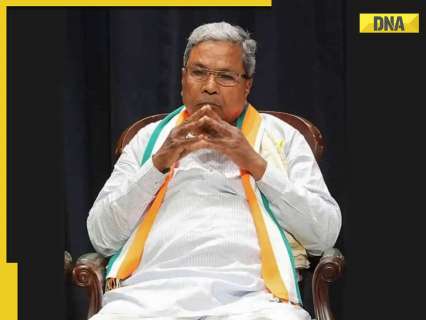
The development came after Siddaramaiah stepped down from the post following directions from the Congress high command.
Is centre govt planning to use military for NEET-UG re-exam on June 21? Here’s what we know

Centre may deploy armed forces for NEET-UG June 21 re-test logistics after paper leak. Military role limited to secure transport, weather emergencies.
Texas using DPS records to confirm citizenship of voters flagged by federal database
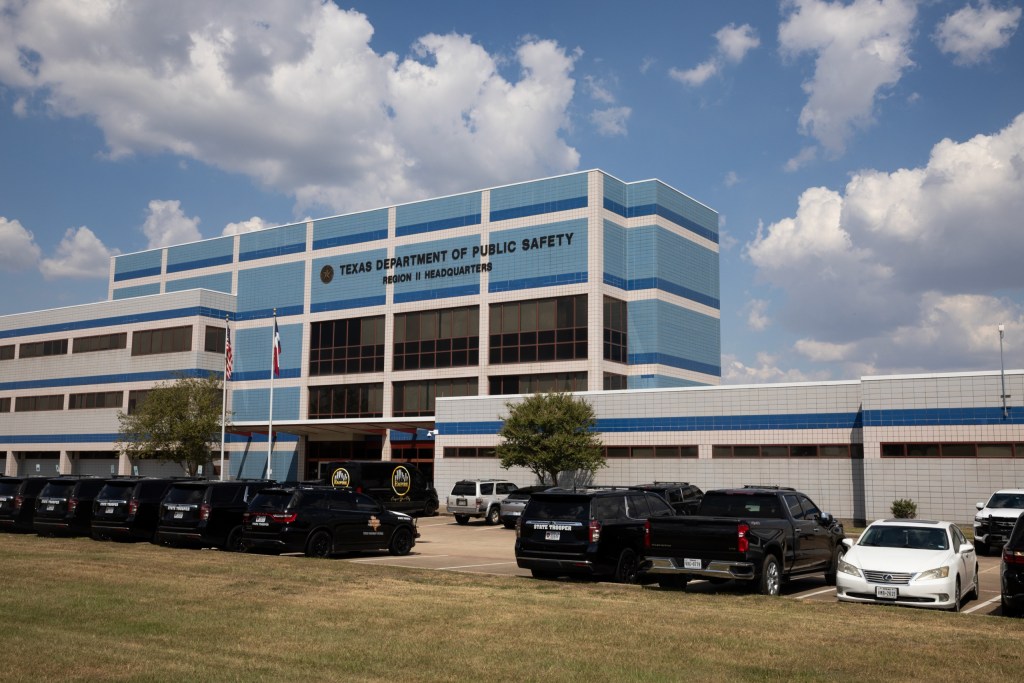
County officials found that hundreds of the flagged voters registered through DPS, which requires proof of citizenship.
Texas prisoners face new book ban after hundreds test positive for synthetic drugs
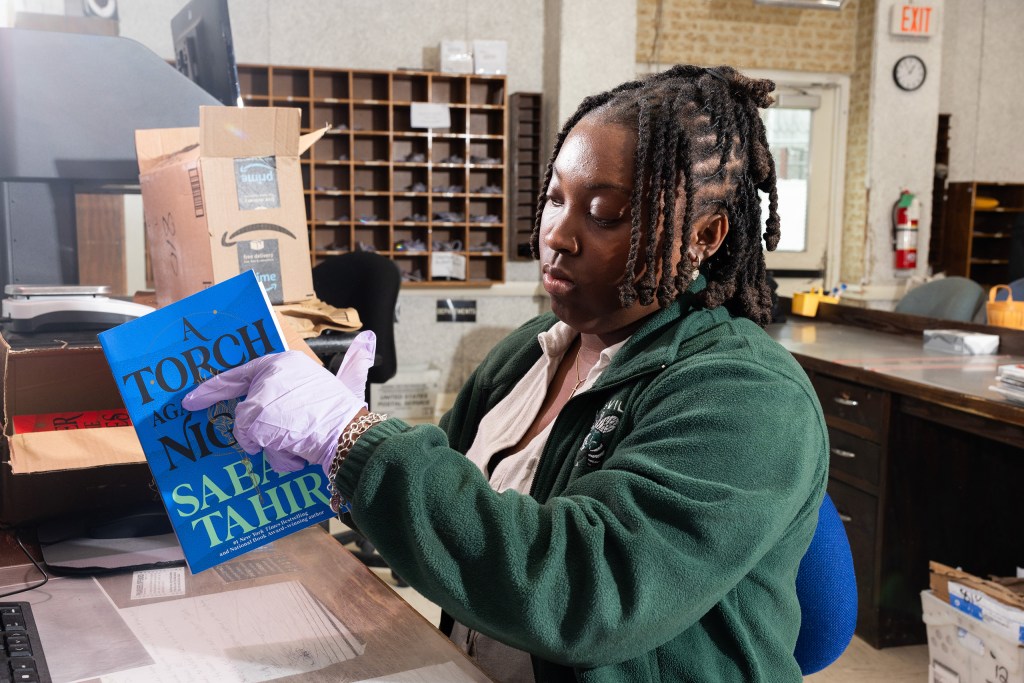
Inmates say the policy unfairly punishes them — and note that prison staff also bring in contraband.