

Major conspiracy foiled? Pakistani boat ‘Al-Madina’ intercepted by Indian Coast Guard in Arabian Sea, 9 detained; investigation underway

The Indian Coast Guard intercepted a Pakistani fishing boat near the International Maritime Boundary Line in the Arabian Sea during a night operation. Nine crew members were found on board, and the vessel is being taken to Porbandar for investigation amid heightened maritime security.
Delhi-NCR air quality remains in ‘very poor’ category, AQI crosses 360-mark in Anand Vihar, Bawana, RK Puram; Check area-wise pollution levels

Delhi’s air quality remained in the ‘very poor’ category for the fourth consecutive day, with AQI touching 345. The CPCB has warned that pollution levels may worsen, possibly reaching the ‘severe’ category by Sunday, raising serious health concerns for residents.
From 2017 to 2026: Why Mumbai’s BMC Elections were held after a long gap; Key reasons explained

Vote counting for the long-delayed BMC elections is underway today, January 16, after polling was held on January 14 across Mumbai’s 227 wards. Over 1.03 crore voters participated in the civic polls, which were postponed for years due to COVID-19, legal hurdles and ward delimitation.
In South Texas, local Republicans push for more wins as Latinos appear to sour on Trump
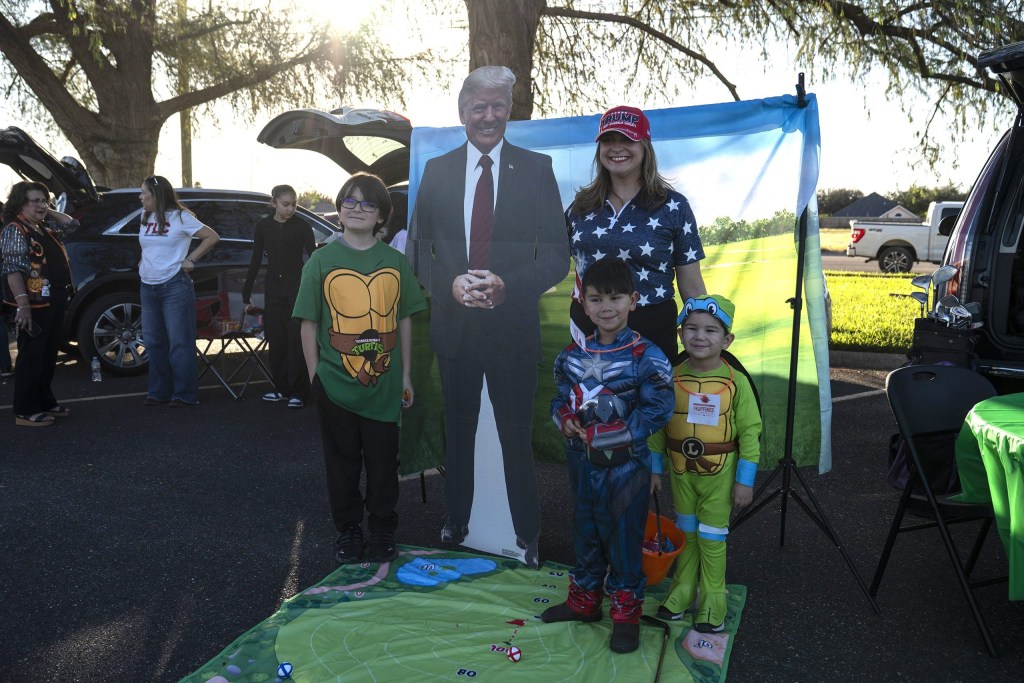
Even as Trump’s approval ratings fall with Latinos, a constellation of grassroots Republicans are working to secure wins in the midterms.
New Texas poll finds Talarico leading Crockett by 9 points in Senate Democratic primary
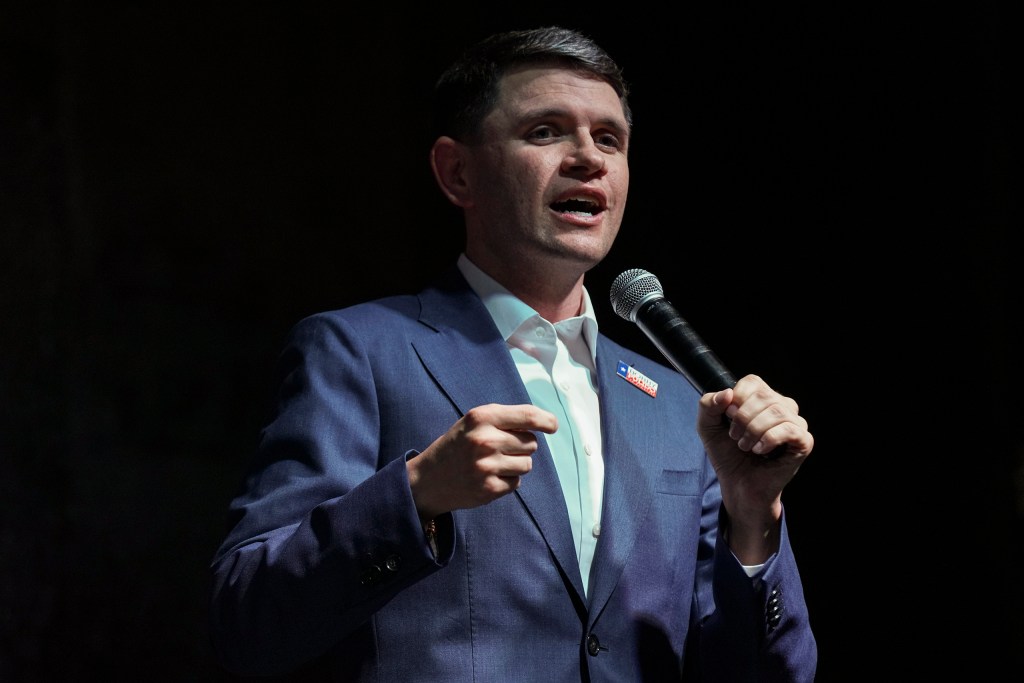
Texas’ Senate Republican primary, meanwhile, looks headed for a runoff. The survey found U.S. Sen. John Cornyn in a dead heat against Attorney General Ken Paxton, with neither eclipsing 30%.
Texas A&M abruptly cancels ethics course over race, gender policy
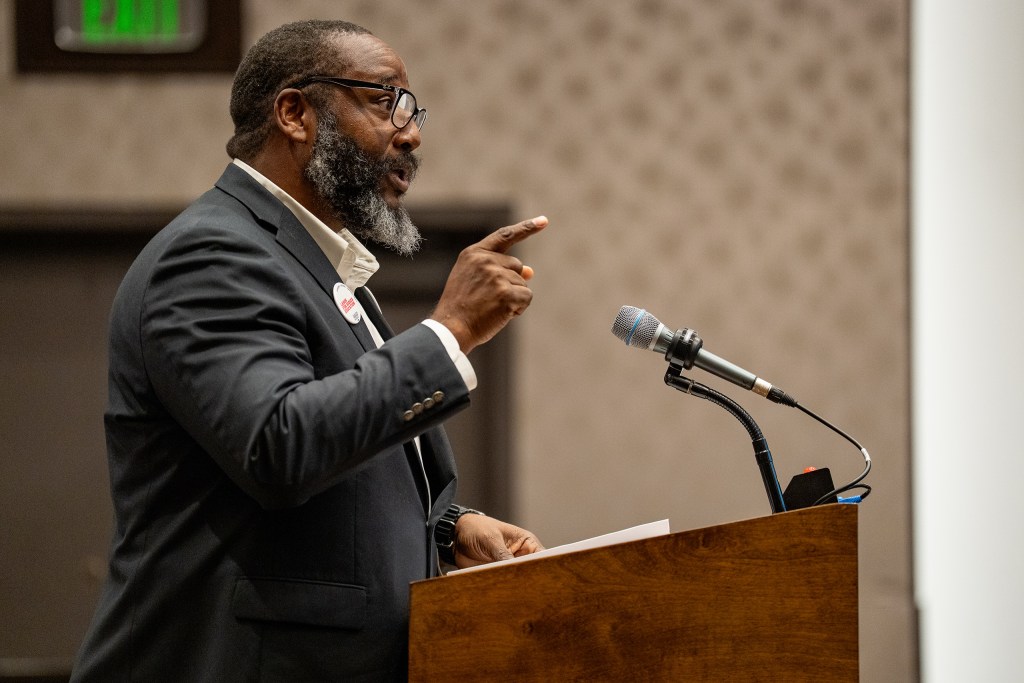
The university said content of the graduate course, which was already underway, was not adequately disclosed, forcing the cancellation. The professor disagrees.
Greg Abbott enters 2026 Texas governor’s race with staggering $106 million on hand
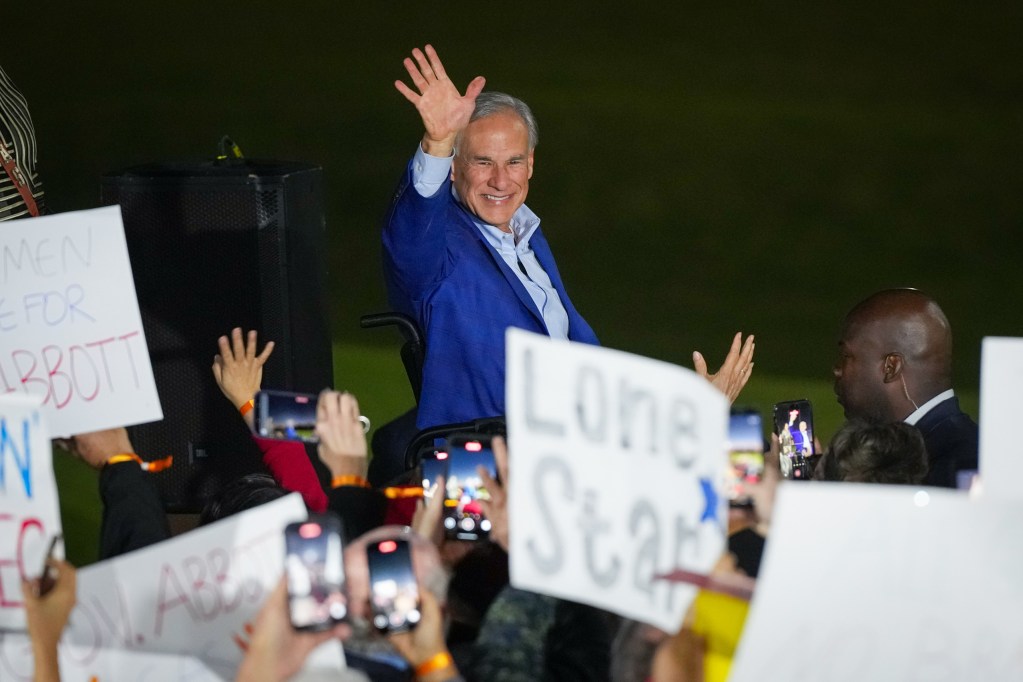
Abbott raised almost $23 million from July through December, while his leading Democratic challenger, state Rep. Gina Hinojosa, brought in $1.3 million in the last 10 weeks of 2025.
Noem names Charles Wall ICE deputy director following Sheahan resignation
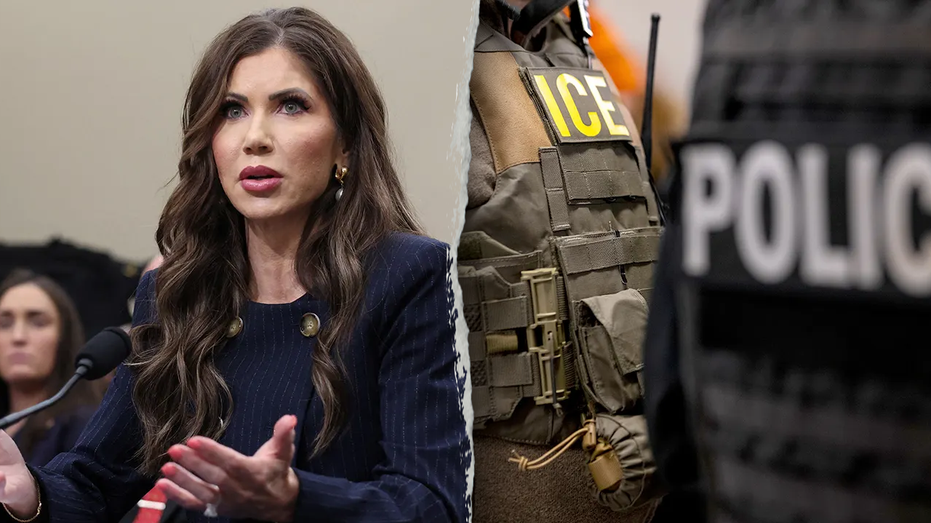
Department of Homeland Security (DHS) Secretary Kristi Noem announced Thursday via X that longtime U.S. Immigration and Customs Enforcement (ICE) attorney Charles Wall will serve as the agency’s new deputy director as enforcement operations intensify nationwide. “Effective immediately, Charles Wall will serve as the Deputy Director of @ICEGov,” wrote Noem. “For the last year, Mr. Wall served as ICE’s Principal Legal Advisor, playing a key role in helping us deliver historic results in arresting and removing the worst of the worst criminal illegal aliens from American neighborhoods.” Wall replaces Madison Sheahan, who stepped down earlier Thursday to pursue a congressional run in Ohio. Her departure left ICE leadership in transition at a moment when the agency has faced increasing resistance to enforcement efforts and heightened threats against officers in the field. The move comes as the Trump administration intensifies immigration enforcement against murderers, rapists, gang members and suspected terrorists living illegally in the U.S., even as sanctuary jurisdictions and activist groups seek to block or disrupt ICE actions. DHS DEMANDS MN LEADERS HONOR ICE DETAINERS, ALLEGES HUNDREDS OF CRIMINAL ALIENS HAVE BEEN RELEASED UNDER WALZ ICE officials said Wall brings more than a decade of experience inside the agency. “Mr. Wall has served as an ICE attorney for 14 years and is a forward-leaning, strategic thinker who understands the importance of prioritizing the removal of murderers, rapists, pedophiles, gang members, and terrorists from our country,” Noem added. Wall most recently served as ICE’s principal legal advisor, overseeing more than 3,500 attorneys and support staff who represent the DHS in removal proceedings and provide legal counsel to senior agency leadership. He has served at ICE since 2012, previously holding senior counsel roles in New Orleans, according to DHS. ‘WORST OF THE WORST’: ICE ARRESTS CHILD PREDATOR, VIOLENT CRIMINALS AMID SURGE IN ANTI-AGENT ATTACKS DHS has described the appointment as part of a broader effort to ensure ICE leadership is aligned with the Trump administration’s public safety priorities. The leadership change comes as ICE operations have drawn national attention following protests in Minneapolis after the ICE-involved fatal shooting of 37-year-old Renee Good on Jan. 7. Administration officials have repeatedly emphasized that ICE’s focus remains on what they describe as the “worst of the worst” criminal illegal aliens, warning that local resistance and political opposition increase risks for officers carrying out enforcement duties. ICE has recently created a specific landing page where these ‘worst of the worst’ offenders can be viewed with names and nationalities attached. “I look forward to working with him in his new role to make America safe again,” Noem concluded. ICE did not immediately provide additional comment to Fox News Digital.
WATCH: ICE takes down illegal alien who allegedly rammed law enforcement vehicles, nearly running over officer
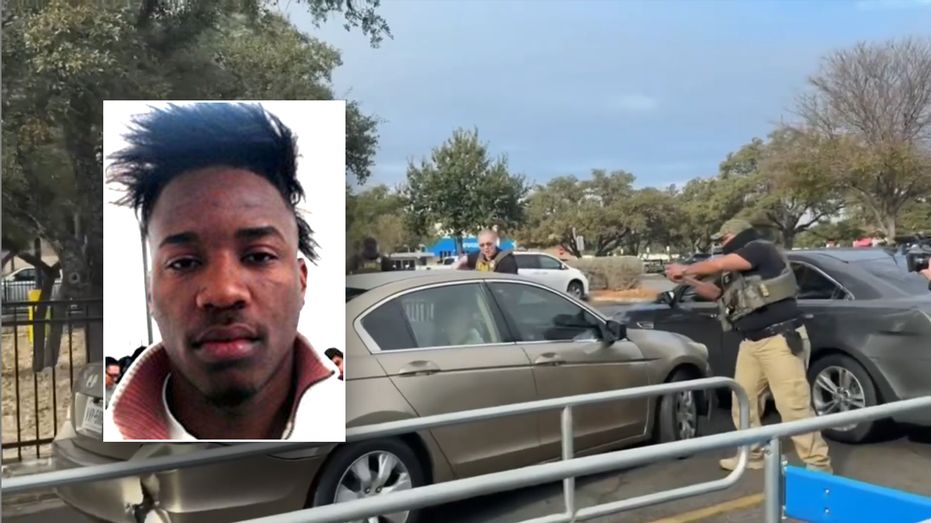
U.S. Immigration and Customs Enforcement arrested an illegal immigrant who the agency said “weaponized” his vehicle by ramming two ICE vehicles, nearly running over an agent. Cuban illegal Robyn Argote Brooks rammed two ICE cars in a San Antonio parking lot in an attempt to evade arrest during a targeted vehicle stop, according to the Department of Homeland Security. Video captured of the incident shows Brooks, who is driving a sedan and is boxed in by agents’ vehicles, defying law enforcement directions and suddenly reversing, narrowly missing an agent and hitting a federal SUV. After unsuccessfully accelerating into the larger vehicle, Brooks then speeds into another ICE vehicle in front of him, a sedan, and continues to accelerate as agents attempt to stop him. Eventually, an agent breaks through Brooks’ window and pulls him out of the car to make the arrest. The incident occurred Tuesday and comes amid heightened concern about illegals and anti-ICE agitators violently attempting to disrupt federal law enforcement operations. THREE VENEZUELAN ILLEGALS ARRESTED AFTER ICE OFFICER ‘AMBUSHED AND ATTACKED’ DURING TRAFFIC STOP: NOEM DHS said ICE officers are facing a 3,200% increase in vehicular attacks. The agency said that, from Jan. 21, 2025, to Jan. 7, 2026, ICE officers experienced 66 “vehicular attacks,” compared to only two during the same time period the previous year. Assistant DHS Secretary Tricia McLaughlin said one of the ICE officers involved in the arrest was injured and said, “We are praying for him, his health and his family.” She placed the blame squarely on pro-sanctuary politicians she said “have encouraged illegal aliens to evade arrest.” “They have created an environment that incites violence against our law enforcement,” said McLaughlin, adding that agents are also facing a “more than 1,300% increase in assaults against them.” OFFICER INJURED AFTER SUSPECT RAMS LAW ENFORCEMENT VEHICLES DURING CHARLOTTE IMMIGRATION RAIDS “Secretary Noem has been clear: Anyone who assaults law enforcement will be prosecuted to the fullest extent of the law,” she warned. According to the agency, Brooks entered the U.S. using the Biden administration’s CBP One app in 2024, which it said “allowed over a million unvetted aliens into the country.” Brooks is in ICE custody. Acting ICE Director Todd Lyons argued Tuesday that federal immigration agents are facing “constant impediments” and “constant attacks.” “When we hear elected officials calling upon individuals to impede or obstruct ICE law enforcement operations nationwide, you’re going to see incidents like this,” said Lyons. “You saw the officers and agents attempting to apprehend a criminally illegal alien, and there they are using their car as a weapon.” ILLEGAL IMMIGRANT INDICTED IN ASSAULT ON ICE AGENTS IN TEXAS Lyons said one of the agents involved later went to a hospital with neck injuries. “Every day, this is what the men and women of ICE are facing,” he said. “It’s constant impediments, constant attacks like this. And it’s not safe for my folks, it’s not safe for the public. It really needs to stop.”
Trump’s tariffs could be undone by one conservative doctrine: ‘Life or death’
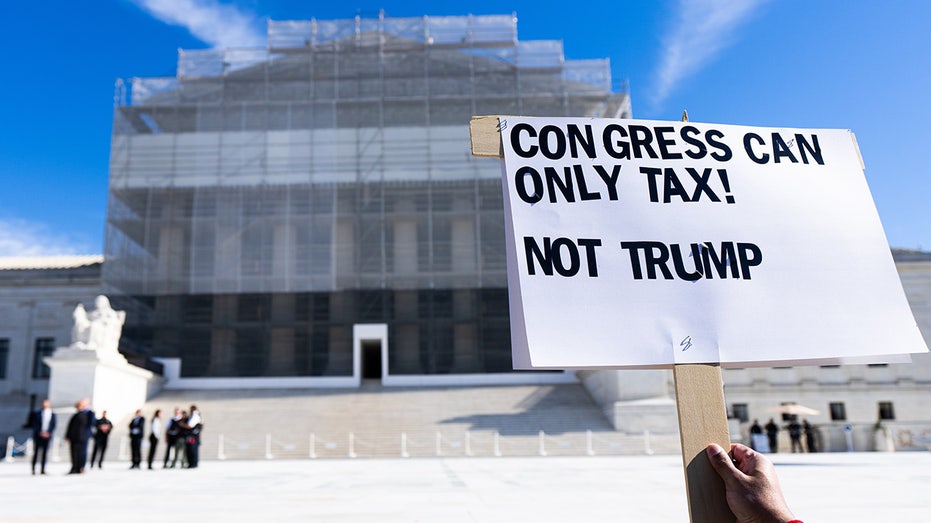
The Supreme Court is poised to rule soon on President Donald Trump’s use of an emergency wartime law to unilaterally impose sweeping tariffs on most U.S. countries, which brought key questions over the “major questions doctrine (MQD),” or the limiting principle by which courts can, in certain circumstances, move to curb the power of executive agencies. During oral arguments over Trump’s tariffs in November, justices honed in on the so-called major questions doctrine, which allows courts to limit the power of executive agencies on actions with “vast economic and political significance,” and how it squares with Trump’s use of the International Emergency Economic Powers Act to enact his sweeping global and reciprocal tariffs. Plaintiffs told the court Trump’s use of IEEPA to unilaterally impose his steep import duties violates the major questions doctrine, since IEEPA does not explicitly mention the word “tariffs.” Rather, it authorizes the president to “regulate … importation” during a declared national emergency, the plaintiffs noted, arguing it falls short of the standard needed to pass muster for MQD. “Congress does not (and could not) use such vague terminology to grant the executive virtually unconstrained taxing power of such staggering economic effect — literally trillions of dollars — shouldered by American businesses and consumers,” they told the court in an earlier briefing. TRUMP TARIFF PLAN FACES UNCERTAIN FUTURE AS COURT BATTLES INTENSIFY Lawyers for the Trump administration countered that the text of the IEEPA emergency law is the “practical equivalent” of a tariff. “Tomorrow’s United States Supreme Court case is, literally, LIFE OR DEATH for our Country,” Trump posted on Truth Social in November. “With a Victory, we have tremendous, but fair, Financial and National Security. Without it, we are virtually defenseless against other Countries who have, for years, taken advantage of us. “Our Stock Market is consistently hitting Record Highs, and our Country has never been more respected than it is right now,” he added. “A big part of this is the Economic Security created by Tariffs, and the Deals that we have negotiated because of them.” While U.S. Solicitor General D. John Sauer acknowledged to the justices that IEEPA does not explicitly give an executive the power to regulate tariffs, he stressed in November that the power to tariff is “the natural commonsense inference” of IEEPA. But whether the high court will back his argument remains to be seen. That was the conclusion reached by the U.S. Court of International Trade last year. Judges on the three-judge panel voted unanimously to block Trump’s tariffs from taking force, ruling that, as commander in chief, Trump does not have “unbounded authority” to impose tariffs under the emergency law. “The parties cite two doctrines — the nondelegation doctrine and the major questions doctrine — that the judiciary has developed to ensure that the branches do not impermissibly abdicate their respective constitutionally vested powers,” the court said in its ruling. The doctrine was also a focus in November, as justices pressed lawyers for the administration over IEEPA’s applicability to tariffs, or taxation powers, and asked the administration what guardrails, if any, exist to limit the whims of the executive branch, should they ultimately rule in Trump’s favor. Though it’s not clear how much the court will rely on the MQD in its ruling, legal experts told Fox News Digital they would expect it to potentially be cited by the Supreme Court if it blocks Trump’s tariff regime. US COURT OF INTERNATIONAL TRADE SIDES WITH TRUMP IN TARIFF CASE The high court agreed to take up the case on an expedited basis last fall, and a ruling is expected to be handed down within the coming days or weeks. There’s little precedent for major questions as a formal precedent cited by the courts, the University of Chicago College of Law noted in 2024. The doctrine was cited formally by the Supreme Court for the first time ever in its 2022 ruling in West Virginia v. EPA, when the court’s majority cited the doctrine as its basis for invalidating the EPA’s emissions standards under the Clean Power Plan. Prior to that, the doctrine existed as a more amorphous strand of statutory interpretation, a phenomenon Justice Elena Kagan noted in her dissent in the same case. “The current Court is textualist only when being so suits it,” Kagan said then. “When that method would frustrate broader goals, special canons like the ‘major questions doctrine’ magically appear as get-out-of-text-free cards.” SUPREME COURT FREEZES ORDER TO RETURN MAN FROM EL SALVADOR PRISON One factor that could play in Trump’s favor is the fact that the tariff case is to some degree a foreign policy issue, which is an area in which executives enjoy a higher level of deference from the court. Still, if oral arguments were any indication, the justices seemed poised to block Trump’s use of IEEPA to continue his steep tariff plan. Justices pressed Sauer why Trump invoked IEEPA to impose his sweeping tariffs, noting that doing so would be the first time a president used the law to set import taxes on trading partners. They also seemed skeptical of the administration’s assertion that it did not need additional permission from Congress to use the law in such a sweeping manner and pressed the administration’s lawyers on their contention that EEPA is only narrowly reviewable by the courts. “We agree that it’s a major power, but it’s in the context of a statute that is explicitly conferring major powers,” Sauer said. “That the point of the statute is to confer major powers to address major questions — which are emergencies.”