

Hegseth cuts Ivy League ties in military education shake-up, taps Hillsdale
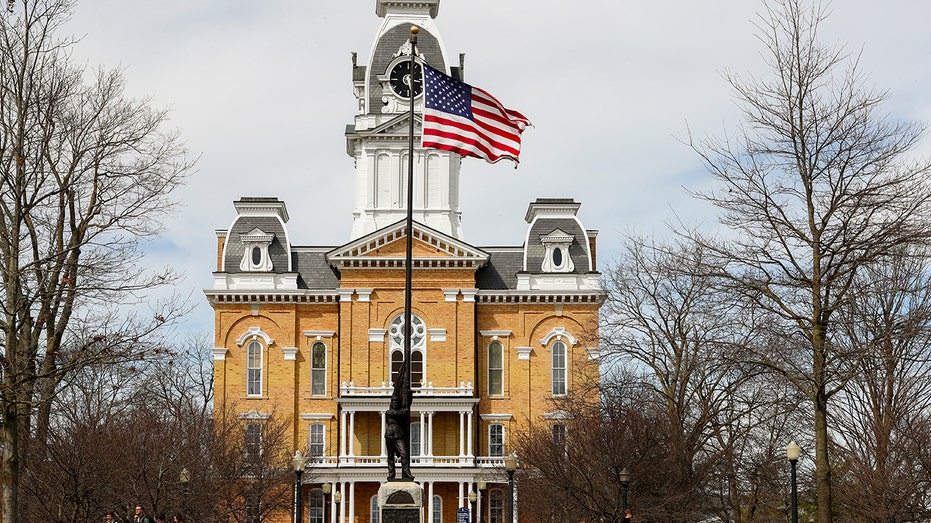
FIRST ON FOX: Hillsdale College told War Secretary Pete Hegseth it would be “honored” to help educate senior U.S. military officers — aligning itself with the administration’s push to cut ties with Ivy League schools over concerns about ideological influence. In a March 30 letter to Hegseth, Hillsdale College President Larry Arnn thanked the Department of War for including the school among institutions selected for the Senior Service College Fellowship Program, which sends senior military officers to civilian universities for advanced education as they prepare for top leadership roles. “Thank you for including Hillsdale College among the institutions qualified to educate America’s military leaders,” Arnn wrote, adding that he supports Hegseth’s goal of equipping the military with “the lethality necessary to protect our national interest.” The letter comes weeks after Hegseth announced the Department of War would end partnerships with several elite universities, including Harvard and Princeton, arguing that “woke” ideology had weakened military education. HEGSETH ENDING MILITARY EDUCATION TIES WITH HARVARD AMID TRUMP FEUD: ‘WE TRAIN WARRIORS, NOT WOKESTERS’ A February memorandum shows the Department of War canceled 93 fellowship positions across 22 institutions, including Harvard, MIT, Georgetown, Columbia and Princeton. “We train warriors, not wokesters,” Hegseth said at the time. Hegseth himself is a graduate of Princeton University and later earned a degree from Harvard University’s Kennedy School. In their place, the Pentagon is steering officers toward a new set of schools, including Hillsdale, Liberty University, George Mason University, Pepperdine University and Texas-based Baylor University, along with large public universities such as the University of Florida, Auburn University and the University of North Carolina. The new list also includes senior military colleges such as The Citadel and Virginia Tech, as well as Pentagon-affiliated programs like the Ted Stevens Center for Arctic Security Studies in Alaska. The institutions were selected based on criteria including “intellectual freedom,” limited ties to foreign adversaries and alignment with the department’s mission, according to the memo. WHY ELITE COLLEGES FEAR TRUMP AND MCMAHON’S NEW ACADEMIC COMPACT TYING FUNDING TO FREE SPEECH In his letter, Arnn pointed to Hillsdale’s curriculum and mission, saying the school emphasizes the U.S. Constitution and the “political philosophy of the West.” He also echoed criticism of higher education, writing that “anti-American ideologies” have “infect(ed) so many of our colleges and universities.” Arnn said Hillsdale “refuses all government money to preserve its independence” and that any role in the program would be funded through private sources. The shift away from traditional academic partners marks a significant change in how senior military officers may receive advanced education, with the administration steering the program toward institutions that more closely align with its views on education and national identity. Hillsdale has also worked with the White House on initiatives tied to America’s 250th anniversary, including contributing historical material for the administration’s “Freedom Trucks” campaign and collaborating on a video series featuring President Donald Trump. It remains unclear when the Department of War will finalize new partnerships under the program or how many officers will ultimately be sent to schools like Hillsdale.
Meet the Fairfax killers: Top violent illegal alien criminals wreaking havoc on major American suburb
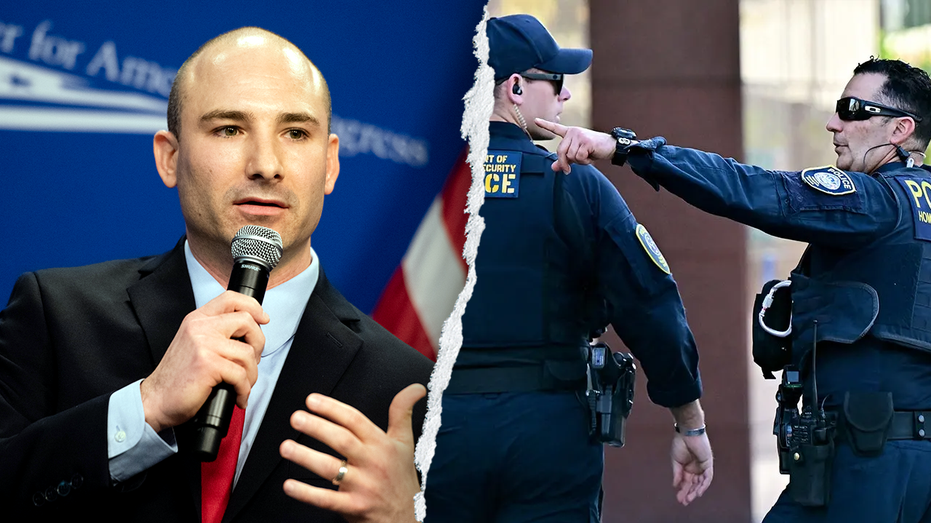
Democratic leaders in Virginia’s most populous county are facing criticism over an ongoing “epidemic” of violence by illegal immigrants that has left 13 dead in a major American suburb near the nation’s capital. Seven illegal immigrants have been arrested in Fairfax County, a suburb of Washington, D.C., in recent years for violent attacks ranging from infanticide to a machete killing and gang activity. Despite these arrests, critics of Fairfax County leaders say they are prioritizing criminal illegal immigrants over Americans’ safety by maintaining sanctuary-type policies that limit cooperation with U.S. Immigration and Customs Enforcement. Virginia’s new Democratic Gov. Abigail Spanberger is also facing criticism for a day-one executive order that reversed the state’s policy of cooperating with ICE. One critic, Katie Gorka, chair of the Fairfax County GOP, referred to the spate of violence as an “epidemic” ravaging her community. She blamed local Commonwealth’s Attorney Steve Descano and the Democratic-controlled Fairfax County Board of Supervisors. ‘VIRGINIA FATHER’ CHARGED WITH MURDERING INFANT DAUGHTER IS ILLEGAL ALIEN, SAYS DHS Meet the illegal immigrants behind the ongoing spate of violence in Fairfax County. ICE has lodged a detainer, or request to hold, with the Fairfax County Sheriff’s Office for Misael Lopez Gomez, 28, who is charged with murder and felony child abuse for allegedly killing his 3-month-old daughter. According to the Fairfax County Police Department, the 3-month-old was in the care of Lopez Gomez at the time of the incident at a home in Bailey’s Crossroads, Virginia. The department said that during the investigation, detectives and hospital staff observed evidence consistent with abuse. Preliminary results from an autopsy by the Office of the Chief Medical Examiner determined the cause of death to be blunt force trauma. Lauren Bis, a spokesperson for the Department of Homeland Security, called Lopez Gomez a “cold blooded killer” and “monster.” DHS said Lopez Gomez crossed the border into the country illegally in New Mexico in July 2023, under the Biden administration. The same week, ICE lodged a detainer request asking Fairfax County not to release Anibal Armando Chavarria Muy, 38, following his arrest in connection with a fatal stabbing the prior weekend. ICE PRESSURES SPANBERGER AS FAIRFAX MURDER SUSPECTS TRIGGER NEW DETAINERS IN ‘SANCTUARY’ CLASH Chavarria Muy is charged with second-degree murder in connection with the stabbing, which also took place in a home in Bailey’s Crossroads. Local outlet WUSA9 reported that officers responding to the scene found a man with multiple stab wounds inside the home. The man was later pronounced dead at a nearby hospital. According to DHS, Chavarria Muy is in the U.S. illegally and entered the country at an unknown place and time. A month before Chavarria Muy’s arrest, Fairfax County Police arrested and charged Abdul Jalloh, 32, with second-degree murder in connection with the fatal stabbing of a 41-year-old Virginia woman named Stephanie Minter. Officers responding to the incident, which took place at a bus stop in the Hybla Valley neighborhood in Fairfax County, found her with multiple stab wounds in her upper body. She was pronounced dead at the scene on Feb. 23. Surveillance footage captured Jalloh and Minter exiting a bus at the stop where she was killed, and Fairfax County detectives determined Jalloh was allegedly responsible for the stabbing. He is charged with second-degree murder. He is also charged with larceny that occurred the day after the fatal stabbing. According to DHS, Jalloh is an illegal alien from Sierra Leone who entered the U.S. illegally under the Obama administration in 2012. DHS said that before his arrest for murder, Jalloh had been arrested more than 30 times and faced charges including rape, malicious wounding, assault, drug possession, identity theft, trespassing, larceny, firing a weapon, contributing to the delinquency of a minor, and pickpocketing. On Dec. 19, DHS said it “vehemently condemns Fairfax County’s sanctuary policies” after Salvadoran illegal immigrant Marvin Fernando Morales Ortez, 23, was charged with second-degree murder for a fatal shooting the day after the agency said local authorities released him after declining to honor a detainer request. DHS said ICE had lodged a detainer request for Morales Ortez after he was arrested for assault and brandishing a firearm on Sept. 14. Morales Ortez had prior arrests for aggravated assault of a police officer, larceny and disorderly conduct, according to DHS. Morales Ortez was charged with second-degree murder in connection with a fatal shooting at a home in Reston, Virginia, which is in Fairfax County. He illegally entered the U.S. in Sept. 2016 near Hidalgo, Texas. DHS said he was released into the country by the Obama administration and that in 2022, the Biden administration dismissed his immigration proceedings and marked him as a non-enforcement priority. Maldin Anibal Guzman, 27, a Honduran illegal immigrant, was convicted of second-degree murder by mob in connection with a July 2024 killing in Oakton, within Fairfax County. Local outlet ABC7 reported that Guzman was given a plea deal by Descano’s office, allowing him to serve only five years in prison. Local affiliate Fox 5 reported that Guzman entered the country illegally through the Texas border under the first Trump administration in 2018. The outlet said that ICE lodged multiple detainers for Guzman with the Fairfax County Sheriff’s Office that were not honored, allowing Guzman back into the community before the mob murder. Elmer De Jesus Alas Candray, 28–29, a Salvadoran illegal immigrant and member of the MS-13 gang, was convicted of six murders, including conspiracy to participate in a racketeering enterprise; five counts each of conspiracy to commit murder in aid of racketeering and murder in aid of racketeering; and three counts of using a firearm during a violent crime resulting in death. Five of the murders took place in Fairfax County from 2018 to 2022. The killings were carried out by Candray and co-conspirators using pistols and machetes. One of the killings, which took place in Reston in 2020, involved Candray and co-conspirators luring a young woman under false pretenses and taking turns shooting her in the face. In Herndon, a
Ukraine strikes Russian Black Sea energy hub Novorossiysk
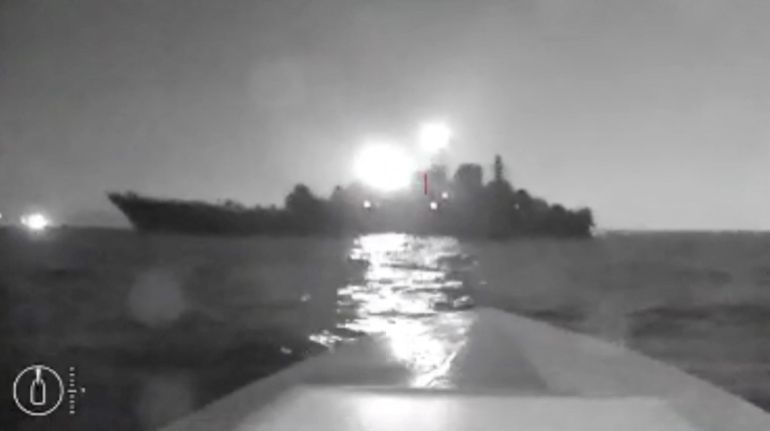
The Ukrainian military reports that it has struck a Russian warship and a drilling rig in the Black Sea. Kyiv’s drone forces commander, Robert Brovdi, said on Monday that the overnight attack targeted the Admiral Makarov missile carrier in the port of Novorossiysk, which is Russia’s largest oil exporting outlet on the Black Sea. Ukraine has increased its attacks on Russian energy infrastructure in a bid to disrupt export revenues that feed into Moscow’s war chest. Recommended Stories list of 3 itemsend of list Russian authorities said at least eight people, including two children, were injured in Novorossiysk, without specifying whether the port was struck. Videos posted on Telegram and verified by Al Jazeera’s verification unit showed a fire at one of the oil port’s docks in the city. Novorossiysk Mayor Andrei Kravchenko said debris from drones had fallen on two locations in the city, including a residential area. Russia’s military said in the early morning that air defence units had downed 148 Ukrainian drones over a three-hour period. It added that officials said emergency crews were restoring power to nearly half a million households in outages linked to air attacks. Ukraine has concentrated drone attacks around the port of Novorossiysk throughout the war but has ramped up its efforts to halt Russian energy exports recently [File: Reuters] A Caspian Pipeline Consortium (CPC) terminal is located in the Novorossiysk port area. It exports oil from Kazakhstan, and its shareholders include major US oil companies, such as Chevron and ExxonMobil. Advertisement Ukraine has significantly intensified its attacks on Russia’s energy facilities, including the largest oil exporting hubs on both the Baltic and Black seas, as it seeks to reduce Moscow’s revenues from the sales of oil, the lifeblood of its economy. The Kremlin has tried to boost its exports after United States President Donald Trump gave it a temporary waiver from sanctions to ease supply constraints as the US-Israeli war on Iran upends oil markets following a de facto closure of the Strait of Hormuz. Kyiv officials complained that Russia will use the additional revenue to buy new weapons to hit Ukraine harder. Later on Monday, Russia reported that Ukrainian drones had attacked the CPC terminal. The export facility, which handles 1.5 percent of global oil supplies, reported damage to mooring, loading and storage infrastructure, the Reuters news agency reported. “The Kyiv regime deliberately attacked facilities of the international oil transportation company Caspian Pipeline Consortium in order to inflict maximum economic damage on its largest shareholders – energy companies from the United States and Kazakhstan,” the Russian Ministry of Defence said in a statement. The Black Sea strikes come a day after Ukrainian drones struck Russia’s Baltic Sea port of Primorsk, one of Russia’s main oil exporting outlets, and the NORSI oil refinery in the western region of Nizhny Novgorod. Alexander Drozdenko, governor of northwestern Russia’s Leningrad region, said a fuel reservoir in the Primorsk port area leaked when it was hit by shrapnel. Ukrainian drones also repeatedly struck Russia’s Baltic Sea port of Ust-Luga last month, damaging several buildings in the sprawling complex of oil-processing facilities and export terminals. Odesa has been targeted numerous times by Russian strikes (EPA) In Ukraine, an overnight Russian drone attack on the southern port city of Odesa on Monday killed two women and a toddler, authorities said. Ukrainian President Volodymyr Zelenskyy said in a post on X that 16 people were wounded, including a pregnant woman and two children. Russian strikes also hit energy infrastructure in the Chernihiv, Sumy, Kharkiv and Dnipro regions, Zelenskyy said. More than 300,000 households were without electricity in the Chernihiv region in the north after distribution facilities were damaged in attacks, according to the regional power utility. Zelenskyy said that over the past week, Russia launched at Ukraine more than 2,800 attack drones, nearly 1,350 glide bombs and more than 40 missiles. Adblock test (Why?)
Where are Iran’s power plants that Trump has threatened to destroy?
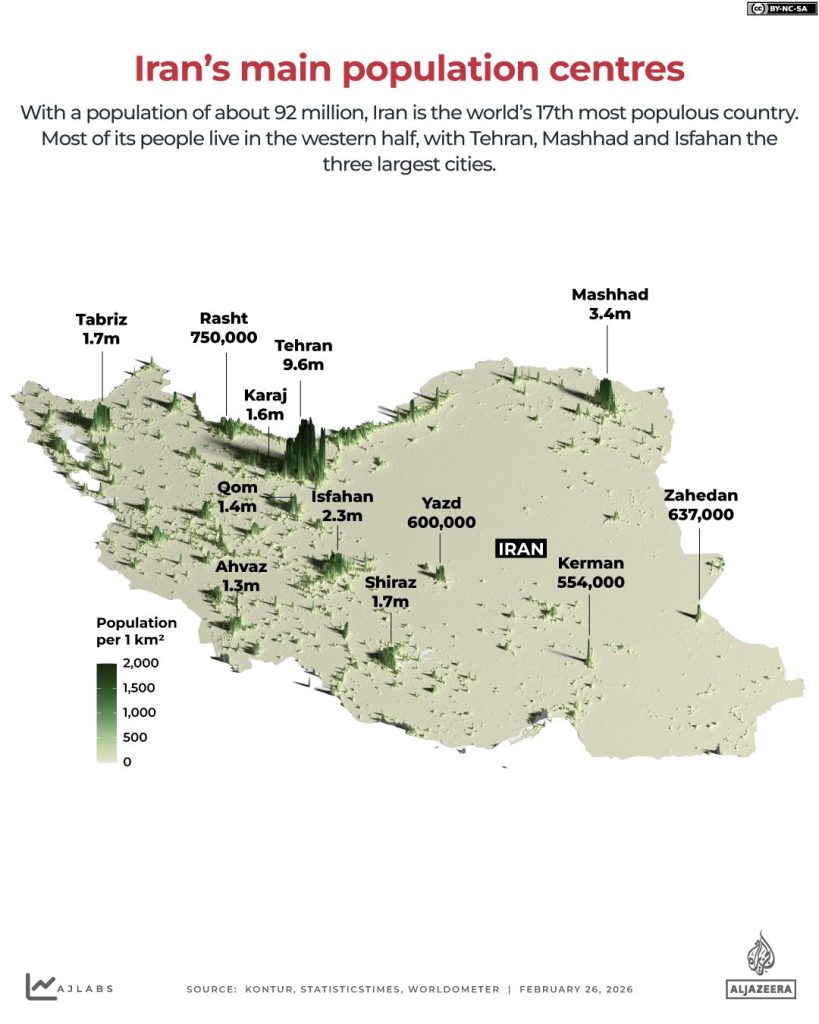
US President Donald Trump has issued a direct ultimatum to Iran: reopen the Strait of Hormuz by 8pm Eastern Time in the United States on Tuesday, April 7 (midnight GMT on April 8), or face the destruction of national power plants and bridges. This echoes an earlier March 21 ultimatum in which he threatened to attack Iran’s power plants – “the biggest one first” – if the strait was not fully reopened within 48 hours. President Trump has since extended that deadline several times, citing progress in negotiations he claims the US is having with Iran to end the ongoing war. Iran denies it is holding direct talks with the US. While Trump has made grand statements such as “they’re going to lose every power plant and every other plant they have in the whole country”, he has not mentioned specific targets. The US president has also threatened to destroy the country’s bridges. Over the weekend, a US-Israeli strike hit the B1 bridge in the city of Karaj, west of Tehran. The major highway link, described as the tallest bridge in the Middle East, had been scheduled to be inaugurated soon. It sustained significant damage in the strike. Legal experts say that targeting civilian sites amounts to “collective punishment”, which is prohibited under the laws of war. Where are Iran’s power plants? Iran operates hundreds of power plants which, together, form one of the largest electricity systems in the Middle East, supplying energy to 92 million people. Most of the country’s power plants are close to major population centres and industrial hubs. The majority of Iran’s population lives in the western half of the country, with Tehran, Mashhad and Isfahan the three largest cities. (Al Jazeera) Iran has a mixture of gas, coal, hydro, nuclear and oil-fired power plants, but most are gas-fired. In the north and centre of the country, clusters of gas-fired plants supply electricity to the country’s largest population centres, including Tehran, Karaj, Isfahan and Mashhad. Advertisement Another major concentration of power plants lies along the Gulf coast. These plants sit close to major gasfields and ports, allowing large thermal stations to run on abundant natural gas. The coast is also home to the Bushehr Nuclear Power Plant, Iran’s only nuclear power facility, which has a capacity of 1,000MW. The US and Israel have repeatedly hit this nuclear power plant, raising risks of radioactive contamination far beyond Iran’s borders, the state-run Atomic Energy Organisation of Iran (AEOI) has warned. A satellite image shows new reactors under construction at the Bushehr site in Iran in this handout image dated January 1, 2025 [Maxar Technologies/Handout via Reuters] Iran also operates a handful of hydropower dams concentrated along the Karun River, the country’s most important source of hydroelectric generation. Electricity generated from all these plants is fed into a national transmission network operated by Iran Grid Management Company, which distributes power to cities, industries and homes across the country. The map below shows all of Iran’s power stations with a capacity of 100MW or more. A 100MW power plant can typically supply electricity to roughly 75,000 to 100,000 homes, depending on consumption patterns. Iran’s largest power plant by capacity is the Damavand Power Plant located in the Pakdasht area, roughly 50km (31 miles) southeast of Tehran, with a capacity of some 2,900MW, enough to power more than two million homes. Which are Iran’s most important power plants? Iran’s largest power plants include: Damavand (Pakdasht) Power Plant – Near Tehran.Fuel: Natural gas (combined-cycle).Capacity: 2,868MW. Shahid Salimi Power Plant – Neka, along the Caspian Sea coast.Fuel: Natural gas.Capacity: 2,215MW. Shahid Rajaee Power Plant – Near Qazvin.Fuel: Natural gas.Capacity: 2,043MW. Karun-3 Dam – Khuzestan Province.Fuel: Hydropower.Capacity: 2,000MW. Kerman Power Plant – Kerman.Fuel: Natural gas.Capacity: 1,912MW. Other smaller but strategically important power plants include: Ramin Power Plant – Ahvaz, Khuzestan.Fuel: Gas.Capacity: 1,903MW. Bushehr Nuclear Power Plant – On the Gulf.Fuel: Nuclear.Capacity: 1,000MW. Bandar Abbas Power Plant – Near the Strait of Hormuz.Fuel: Oil.Capacity: 1,330MW. How does Iran generate its electricity? Iran’s electricity system relies heavily on large thermal power plants fuelled by natural gas. The country has one of the world’s largest natural gas reserves, and this fuel forms the backbone of its power system. Advertisement In 2025, 86 percent of Iran’s electricity came from natural gas. Oil-fired plants provide a smaller share, generating roughly seven percent of electricity. Some power stations switch to diesel or fuel oil when natural gas supplies are tight, especially during winter demand peaks. (Al Jazeera) Hydropower accounts for about five percent of electricity. Large dams on rivers such as the Karun River generate power by using flowing water to spin turbines. Nuclear energy contributes around two percent of the country’s electricity, mainly from the Bushehr Nuclear Power Plant, Iran’s only operational nuclear reactor. Renewables such as solar and wind play a very small role, together accounting for less than one percent of electricity generation. Overall, more than 90 percent of Iran’s electricity comes from fossil fuels, making it one of the most gas-dependent power systems in the world. Adblock test (Why?)
Gaza grandmother loses her family due to Israeli attacks

NewsFeed Azza Odwan shares her experience living under Israeli bombardment in Gaza and the devastating loss of her loved ones, including her grandson, with whom she traveled to Egypt so he could receive urgent medical care. Published On 6 Apr 20266 Apr 2026 Click here to share on social media share2 Share googleAdd Al Jazeera on Googleinfo Adblock test (Why?)
Assam beef row rages amid polls: FM Nirmala Sitharaman’s husband backs Kunki Chowdhury, controversial candidate, details here

Amid this beef rage row, a video of Parakala Sitharaman, husband of Finance Minister Nirmala Sitharaman, has emerged online, where the political analyst and author has urged people to vote for Chowdhury.
Delhi Assembly: Big security breach after car hits gates, forcefully enters; here’s what happened

Delhi Assembly Security Breach: In what was a heavy breach of security, an unidentified car entered forcefully in the Delhi Legislative Assembly premises on Monday. The vehicle crashed the main gate heavily before entering the complex, triggering alarm among staff and security personnel.
Delhi CM Rekha Gupta flags off Saksham Yatra 2026, initiative for entrepreneurs; details here

Delhi Chief Minister Rekha Gupta on Sunday launched the ‘Saksham Yatra 2026’, an initiative aimed at supporting grassroots innovation and early-stage entrepreneurs. The Chief Minister said the journey, with Delhi at its centre, seeks to create a platform where local ideas can grow, receive support, and translate into real-world impact.
Delhi Assembly security breach: Ink attack, red bouquet, arrests made; How a masked man sparks panic
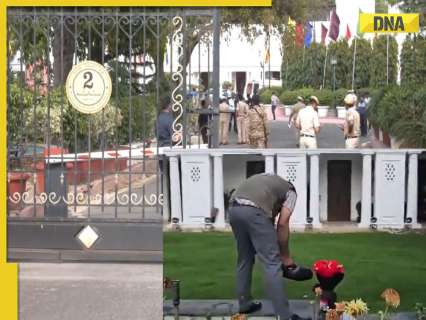
The police have arrested the man who breached the security of the Delhi Assembly on Monday afternoon. The man wore a mask and was arrested while the police also recovered the car few hours after the incident.
Delhi CM Rekha Gupta meets LG Tarunjeet Singh Sandhu, shares details on govt’s water, power management for summer season
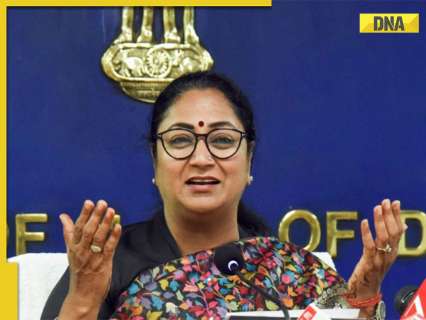
Delhi Chief Minister Rekha Gupta met Lieutenant Governor Tarunjeet Singh Sandhu on Monday and shared detailed information regarding the Delhi Government’s preparedness for the upcoming summer season. Discussions were held on key areas including water supply, power management, healthcare services, and disaster management.