

Iran war nears ‘completion’ as Trump eyes deadline — what the endgame could look like
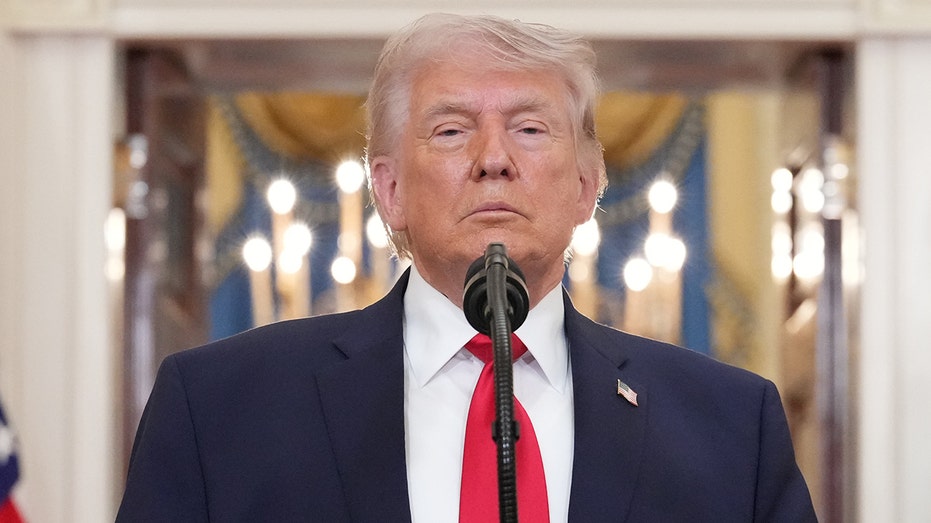
President Donald Trump says the war with Iran is “nearing completion,” but a looming deadline could determine whether the conflict is actually ending — or about to escalate. “We are going to finish the job, and we’re going to finish it very fast. We’re getting very close,” Trump said Wednesday night, adding that U.S. forces will “hit them extremely hard over the next two to three weeks” and “bring them back to the Stone Ages, where they belong.” As the war enters what analysts describe as its final phase, the administration is signaling a shift from broad military gains to a narrower endgame — raising questions about what “finishing the job” actually means militarily and politically. Trump gave Iran until Tuesday to reopen the Strait of Hormuz, warning that failure to comply could trigger sweeping strikes on the country’s energy infrastructure. TRUMP PAUSES IRAN ENERGY PLANT STRIKES FOR 10 DAYS AS TALKS ‘GOING VERY WELL’ “If no deal is made … we are going to hit each and every one of their electric-generating plants, very hard and probably simultaneously,” he said. “With a little more time, we can easily OPEN THE HORMUZ STRAIT, TAKE THE OIL, & MAKE A FORTUNE. IT WOULD BE A ‘GUSHER’ FOR THE WORLD???” he said on Truth Social Friday. The U.S. has already begun expanding its target set to include major infrastructure. This week, American strikes hit one of Iran’s largest bridges — a critical transportation artery — signaling that mixed-use infrastructure supporting military logistics is now firmly on the table. “The biggest bridge in Iran comes tumbling down, never to be used again — Much more to follow!” Trump wrote on Truth Social. “IT IS TIME FOR IRAN TO MAKE A DEAL BEFORE IT IS TOO LATE.” That raises a central question heading into the final weeks: what, exactly, would “finishing the job” look like? Military analysts say it is unlikely to be a single decisive strike. Instead, the endgame may unfold as a series of escalating options — from intensified attacks on Iran’s remaining missile and drone network, to broader strikes on infrastructure designed to force the regime into a deal, or a longer-term strategy of containing Iran’s capabilities from above. “We will continue to see very aggressive attrition of offensive and defensive targets, as well as infrastructure targets,” said RP Newman, a retired Marine ground combat veteran and counterterrorism consultant. Some critics doubt that Trump has a clear exit strategy. Trump’s public address Wednesday “was a summary, somewhat in chronological order, of things he’s already said on social media for the last month — and that, in and of itself, reveals that he doesn’t have a plan,” said Trita Parsi, a geopolitical analyst with the Quincy Institute, on X. “I think he wants to get out of this war. I just don’t think he knows how.” Rather than winding down, Newman said, the U.S. may still be expanding its options. “That gives the President more options, and it gives the enemy an additional problem set to ponder.” He also cautioned that Iran retains significant capability despite weeks of strikes. “Iran likely has more missiles and drones remaining in their inventory than some people in organizations think or are claiming,” Newman said. Recent U.S. intelligence assessments cited by CNN suggest that roughly half of Iran’s missile launchers remain intact and thousands of drones are still in its arsenal. Behnam Taleblu, a senior fellow at the Foundation for Defense of Democracies, said the likely objective now is to “degrade and defang the regime of its long-range strike capabilities and prevent it from being able to pose a threat abroad.” That effort, he said, would focus not just on weapons, but on the systems that sustain them. “The regime’s bases that house these missiles and drones need to be targeted and collapsed … as well as the domestic supply chain and defense industrial base that supports these projectiles,” Taleblu said. At the same time, the administration appears to be signaling limits to how far it will go. Trump has suggested the U.S. may rely on continuous surveillance of Iran’s nuclear sites rather than launching new strikes or sending in ground forces to seize enriched uranium — a strategy Taleblu described as “watching them like a hawk.” WHY TRUMP’S WAR SPEECH FAILED: DECLARING VICTORY BUT STILL BOMBING IRAN BACK TO THE ‘STONE AGES’ The influx of thousands of new troops from Marine Expeditionary Units and the 82nd Airborne Division in recent weeks has fueled speculation that the U.S. may be eyeing a ground operation to seize Kharg Island or recover Iran’s nuclear stockpile — estimated at more than 400 kilograms of highly enriched uranium — believed to be entombed deep within the Isfahan tunnel complex since the U.S. first collapsed its entrances in June 2025. That approach could allow Washington to step back militarily while maintaining pressure, but it risks leaving key elements of Iran’s nuclear program intact. “Keeping this material relatively accessible for the regime will mean that this will be a problem that the U.S. will be coming back to,” Taleblu said. Trump also has signaled that, even as the U.S. pressures Iran to reopen the Strait in the short term, it may not pay a role in securing global energy flows, shifting more responsibility to allies. “To those countries that can’t get fuel… go to the Strait and just take it. Protect it. Use it for yourselves,” he said. Still, whether the war can truly be “finished” within Trump’s timeline remains uncertain. Iran is believed to retain portions of its missile and drone arsenal, and analysts warn that even a degraded regime could continue to pose a threat — particularly if key capabilities survive the current campaign. What happens next may depend on whether the pressure applied in the coming days — especially ahead of the April 6 deadline — is enough to force an outcome.
Pair of Democrat lawmakers slam ‘blockade of fuel’ to Cuba, ‘economic bombing’ after visit to island
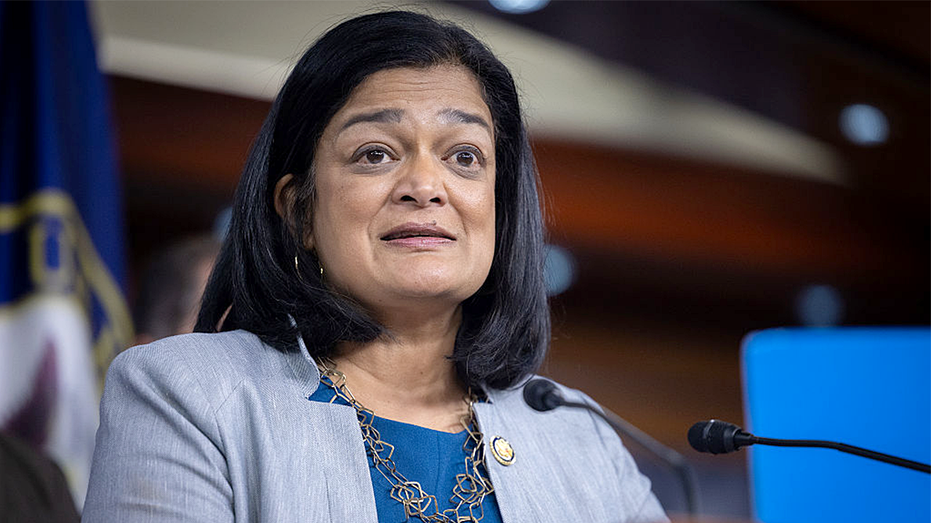
Reps. Pramila Jayapal, D-Wash., and Jonathan Jackson, D-Ill., said after a congressional delegation returned from Cuba that U.S. economic restrictions on the island represented an “illegal U.S. blockade of fuel” and “effectively an economic bombing of the infrastructure of the country.” The lawmakers, following their five-day delegation to Cuba, spoke out against what they described as a humanitarian crisis on the island that they argue is linked to the U.S. embargo. “The illegal U.S. blockade of fuel to Cuba—90 miles south of the United States—adds to the longest embargo in world history and is causing untold suffering to the Cuban people,” the lawmakers said in a statement on Sunday. “The United States prevented a single drop of oil from entering Cuba for over three months. This is cruel collective punishment—effectively an economic bombing of the infrastructure of the country—that has produced permanent damage. It must stop immediately.” US ALLOWS RUSSIAN OIL TANKER TO REACH CUBA AMID BLOCKADE AS TRUMP SAYS ISLAND ‘HAS TO SURVIVE’ “We witnessed firsthand premature babies in incubators, weighing just two pounds, who are at tremendous risk because their ventilators and incubators cannot function without electricity,” they continued. “Children cannot attend school because there is no fuel for them or their teachers to travel. Cancer patients cannot receive lifesaving treatments because of lack of medications. There is a water shortage because there is little electricity to pump water. Businesses have closed. Families cannot keep food refrigerated, and food production on the island has dropped to just 10 percent of the people’s needs.” This comes as U.S. President Donald Trump has escalated his pressure campaign on Cuba in recent weeks, calling the island a “failed nation” and suggesting that “Cuba is next” following recent U.S. military actions in Venezuela and Iran. The trip came after Jayapal and Rep. Gregory Meeks, D-N.Y., introduced legislation to block federal funds for military action against Cuba without congressional approval. Jayapal and Jackson said they spoke with families, religious leaders, entrepreneurs, civil society organizations, the Cuban government, Latin American and African ambassadors, humanitarian aid organizations and Cubans across the political spectrum, including dissidents. “Across all sectors, there is agreement: this illegal blockade must end immediately. We do not believe that the majority of Americans would want this kind of cruelty and inhumanity to continue in our name,” the lawmakers said. The pair added that the Cuban government “has sent many signals that this is a new moment for the country.” “While we were there, President Diaz-Canel released over 2,000 prisoners. The Cuban government has begun to liberalize its economy with significant reforms, including allowing Cuban American entrepreneurs to invest in private businesses in Cuba. Entrepreneurship has grown substantially, with small- and medium-sized private businesses now comprising large parts of the economy,” the statement said. CUBA RELEASES 2,000 PRISONERS AMID TRUMP PRESSURE, ENERGY CRISIS “Significantly, the Cuban government has invited in the FBI to conduct an independent investigation of a lethal speedboat shooting,” it continued. “The remaining obstacles to progress in Cuba now rest with the United States changing our outdated, Cold War-era policy of coercive economic measures and military pressures against Cuba.” Jayapal and Jackson went on to say that “true reform will only come from charting a new course.” “The United States and Cuba must immediately enter into real negotiations that provide for the dignity and freedom of the Cuban people and the tremendous benefits to the American people that will accrue from a real collaboration between our two countries,” they concluded.
UK police arrest seven protesters near RAF base used by US

The activists were protesting the alleged use of the RAF base as a departure point for US aircraft involved in the US-Israel war on Iran. Published On 5 Apr 20265 Apr 2026 British police have arrested seven people on suspicion of supporting the banned group Palestine Action at a protest near a Royal Air Force (RAF) air base in eastern England used by United States forces. The five men and two women arrested at a peace encampment just outside the Lakenheath airbase had gathered with other activists on Sunday to protest the alleged use of the base as a departure point for US aircraft involved in the US-Israeli war on Iran. Recommended Stories list of 3 itemsend of list The Lakenheath Alliance for Peace, which organised the protest, said the seven had been arrested wearing clothing with the message: “We oppose genocide, we support Palestine Action.” Police said the protesters had been arrested “on suspicion of supporting a proscribed organisation”. Prime Minister Keir Starmer’s Labour government banned Palestine Action as a “terrorist” organisation last year, making it a criminal offence to belong to or support the group. In February, a court ruled the ban was “disproportionate” and interfered with the right to free speech. But the government has appealed, and the ban remains in effect in the meantime. More than 2,700 people have been arrested and hundreds charged over rallies in support of the group, according to protest organisers Defend Our Juries. Police said in a statement on the latest arrests that they had a duty to enforce the law “as it currently stands, not as it might be in the future”. Two protesters were also arrested on Saturday at Lakenheath and charged with obstructing public thoroughfares, police said. Advertisement US President Donald Trump has railed against Starmer for what he calls insufficient support in the US-Israel war on Iran, straining the countries’ longtime alliance. The United Kingdom has authorised the US to use British military bases to carry out “defensive” operations against Iran and protect the vital Strait of Hormuz, through which about 20 percent of the world’s oil passes in peacetime. Adblock test (Why?)
Iran war live: Tehran rejects Trump’s Hormuz deadline; 2 killed in Haifa

blinking-dotLive updatesLive updates, Iranian officials dismiss Trump’s ultimatum and condemn the latest threats as ‘incitement to war crimes’. Published On 6 Apr 20266 Apr 2026 Click here to share on social media share2 Share googleAdd Al Jazeera on Googleinfo Adblock test (Why?)
Vietnam’s gig workers slammed by rising fuel costs amid fallout of Iran war
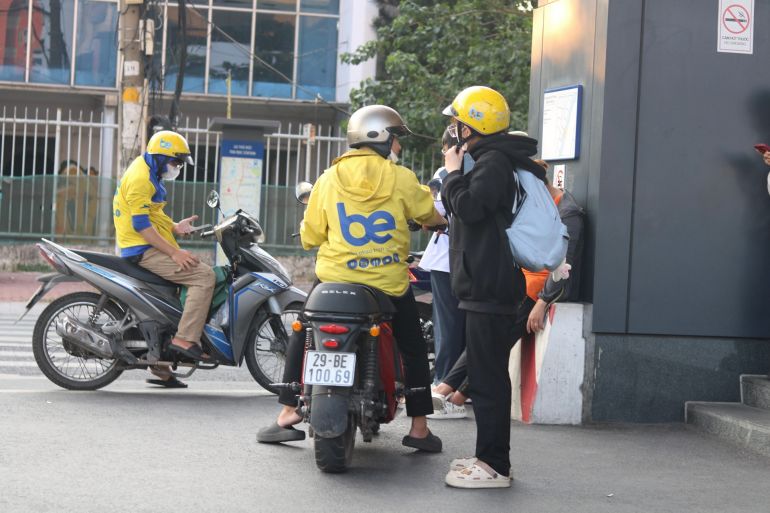
Ho Chi Minh City, Vietnam – After a long day of ferrying passengers to and fro recently, e-hailing driver Nguyen was dejected to find he had spent half of his earnings on fuel. “I drove for around seven or eight hours, making around 240,000 Vietnamese dong [$9.11] and then I paid 120,000 Vietnamese dong [$4.56] on petrol,” Nguyen, a motorcyclist who connects with passengers via the locally developed super-app Be, told Al Jazeera, asking not to be identified by his real name. Recommended Stories list of 4 itemsend of list “I can’t survive with this amount of money in the city.” In Vietnam, the ripples of the US-Israel war on Iran are hitting many gig workers hard. The Southeast Asian country normally sources about 80 percent of its crude oil from Kuwait, but shipments have dried up amid Iran’s effective blockade of the Strait of Hormuz, driving up fuel prices. Diesel prices have more than doubled, while petrol prices have risen almost 30 percent, making getting from point A to point B an increasingly expensive proposition in cities such as Ho Chi Minh City, home to more than 7 million motorcycles. “Because the petrol price is so high, so many drivers are turning off the app, going home and just not working,” Nguyen said. “After today, I will turn off the app and stop working for a few days to see if the price goes down or if the government is helping in any way.” A Be driver picks up a passenger at Thu Duc Metro Station in Ho Chi Minh City, Vietnam, on March 30, 2026 [Govi Snell/Al Jazeera] Vietnam’s government has rolled out a series of emergency measures to cushion the blow for citizens. Advertisement Prime Minister Pham Minh Chinh last month announced that an environmental tax on diesel, petrol, and aviation fuel would be suspended until April 15 to help stabilise prices. Nguyen Khac Giang, a Vietnamese-born visiting fellow at the ISEAS-Yusof Ishak Institute in Singapore, said authorities had been forced to act to stave off rising disgruntlement among citizens. “There are a lot of complaints and frustrations about rising living costs, because gas prices are everything in Vietnam,” Giang told Al Jazeera. “It’s not only necessary in terms of making the population feel relief about the rise of gas prices, but at the same time, it will keep the macroeconomic stability intact, given the turbulence outside Vietnam.” Despite the government sacrificing an estimated $273m in revenue via the tax cut, signs of strain are mounting across the economy. Public transportation is stretched to capacity in major cities, while domestic carriers such as Vietnam Airlines and Vietjet Air have slashed flights. “As a very, very open economy, Vietnam is super vulnerable to international shocks,” Giang said. Gig workers have been particularly exposed due to the double whammy of heavy fuel consumption and minimal labour protections. “Their income is changeable due to factors beyond their control,” Do Hai Ha, a research fellow at the University of Melbourne who has studied Vietnam’s gig platforms, told Al Jazeera. “They have no chance to negotiate with the platforms.” Many drivers have had no choice but to work longer hours as they are “excluded from labour protection, so there’s no guarantee in terms of minimum wages or overtime pay”, Do said. A commuter refuels at a petrol station in Ho Chi Minh City, Vietnam, on March 27 [Govi Snell/Al Jazeera] Companies, too, are feeling the crunch. Anh Dao, who collects fares on Ho Chi Minh City’s bus route 13, said the bus operator has been losing money due to the surge in fuel prices, despite raising ticket prices by 3,000 Vietnamese dong ($0.11). “As we already signed the contract, we cannot just stop running the buses,” she told Al Jazeera. For one fisherman in the coastal region of Binh Thuan, about 200km (124 miles) from Ho Chi Minh City, rising fuel costs have prompted a frantic search for cheaper options to power his basket boat. “Now that fuel prices are rising, it’s having a big impact,” the fisherman told Al Jazeera, asking not to be identified by name. The middlemen he does business with have been citing weak demand to justify offering lower prices for his catch, he said. Advertisement “What I was usually able to sell for 800,000 Vietnamese dong [$30] is now only selling for 650,000 Vietnamese dong [$24],” he said. Families kept apart For some low-income families, the rising costs are reshaping daily life in other ways. After a weeklong trip to the Mekong Delta region, Uyen Pham, a communications manager for the Saigon Children’s Charity, said she has seen the strain firsthand. “Several parents noted that the cost of bottled cooking gas has nearly doubled,” Pham told Al Jazeera. “Most of our beneficiary families have always relied on wood-fired stoves or a hybrid of wood and gas to save money. With the recent price hike, they are now strictly limiting their gas usage even further, relying almost entirely on wood to cut every possible expense.” For many parents, the rising fuel costs have also meant less time with family. “Many parents in remote areas must leave their children with grandparents to work in cities,” Pham said. “Rising fuel prices directly increase their commuting costs, while manual labour wages remain stagnant. This pinches their take-home pay and, in some cases, reduces how often they can afford to travel home to see their children.” For the government in Hanoi, the price volatility has intensified the focus on greater energy independence, Giang, the visiting fellow, said. “The longer-term question this crisis has enacted is a very important question about the strategic autonomy of Vietnam in terms of energy dependencies, especially when we are a net importer of oil,” he said. Policymakers will need to “more aggressively accelerate Vietnam’s energy independence by building more refineries,” Giang said, “because now we only have two refineries, which is not enough for the Vietnamese market.” With long-term solutions likely to take years to come
US-Israel-Iran war: How LPG crisis is forcing migrant workers to leave cities and return home
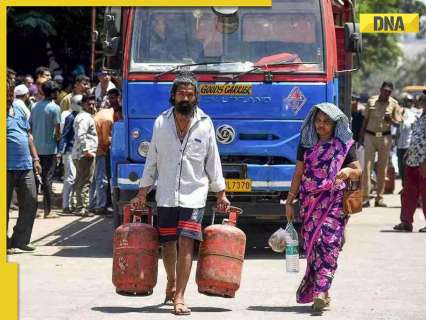
The LPG crisis has been triggered by the war in Iran, which began in late-February and is now in its fifth week. The conflict has significantly disrupted global energy supplies as the vital waterway Strait of Hormuz remains largely blocked.
Assam Election 2026: Who is Kunki Chowdhury and why CM Himanta Sarma used photo of ‘eating beef’ to target her

CM Sarma told reporters that Chowdhury’s mother, Sujata Gurung Chowdhury, had shared pictures of “eating beef” on social media, and also flashed one such purported photo.
Delhi to Dehradun in just 2.5 hours: This new Rs 12000 expressway to reduce travel time between these two cities, inauguration to take place soon; Check date, timing, route and more
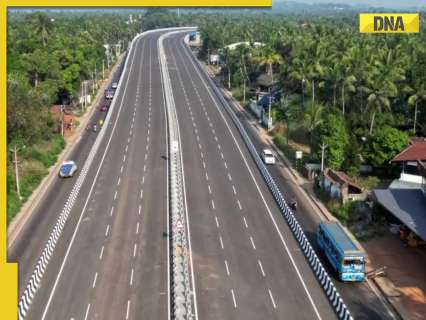
The distance between Delhi and Dehradun has been reduced by 22 kilometers, making it a more efficient route. The expressway is designed for speeds of 100 km/h or more, ensuring a smooth and fast journey.
West Bengal Election 2026: PM Modi, Amit Shah, Yogi Adityanath, Himanta Biswa among BJP star campaigners for first phase
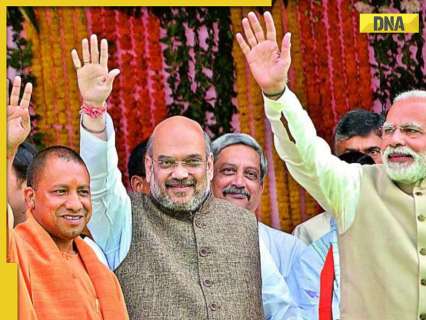
The list includes top national and state leaders of the BJP who are expected to campaign extensively across West Bengal in the run-up to the elections. West Bengal will go to the polls in two phases on April 23 and 29 and votes will be counted on May 4.
Assam Election 2026: Congress-BJP war of words escalates over Himanta Biswa Sarma’s wife’s alleged foreign assets

Khera further questioned why the Assam CM had allegedly concealed details of overseas properties linked to his wife in official disclosures ahead of Assam polls.