

Heritage Foundation warns America ‘dangerously close’ to family breakdown point of no return

A new report from the Heritage Foundation argues the American family is in crisis and that strengthening marriage and family formation should be a core focus of U.S. federal policy. The conservative think tank calls for sweeping policy changes to reverse declining birth and marriage rates, including a proposed $2,500 investment account for every newborn child, as well as other proposals. The report says government policies “should encourage and protect the formation of families, not mere fertility.” “The country should not seek a mere boost in the number of children born or in the monetary support that parents receive, the report says. “Yes, the country needs more children. But it matters how and to whom children are born. Society depends on men and women who want to form families, that is, who freely want to marry, and then freely bear and nurture children.” ‘SEX & THE CITY’ REPUBLICANS WANT INTO THE CONSERVATIVE TENT. ALEX CLARK HAS SOMETHING TO SAY ABOUT IT The think tank assesses that decades of cultural change and public policy have contributed to the erosion of family formation, pointing to historically low fertility and marriage rates and a growing share of children raised outside married-parent households. The report ties the decline of the family to broader social and economic problems facing the country. The report argues that traditional family structure remains essential, describing the family as “the foundation of civilization” and defining marriage — one man and one woman — as the ideal environment for raising children. Heritage Foundation President Kevin Roberts warned that the country is nearing a point of no return when it comes to family breakdown. “The family is the foundation of every healthy society, and, tragically, the American family is on the brink,” Roberts said in a statement. “We are dangerously close to being unable to reverse the decline. Our country will not survive if families continue to crumble at this rate.” Roberts said the stakes extend beyond family life to the nation’s future itself. SCHOLAR WARNS FEMINISM HAS BECOME A ‘MEGACHURCH’ REPLACING FAITH, FAMILY AND CHRISTIAN VIRTUE “If we want to secure the Golden Age of America, we must have bold solutions like those in this report that lay the foundation for stronger families,” he said. “Strong families build strong communities, churches, schools, and businesses. Without them, freedom cannot last.” The report also criticizes welfare and government programs, arguing they often “punish marriage and family formation” by creating financial incentives that make marriage less attractive. It frames family decline not as inevitable, but as the result of policy choices and calls for a “culture-wide Manhattan Project” to rebuild family norms. To reverse the trend, the report recommends eliminating so-called marriage penalties in welfare programs, requiring federal agencies to review policies for their impact on marriage and family and encouraging policies that strengthen traditional families at all levels of government. It also proposes financial incentives, including baby investment accounts seeded with $2,500 at birth, which the report says could help families build long-term financial stability. Other proposed incentives include expanded adoption and child tax credits. The report also advocates for efforts to discourage online dating and the creation of marriage “bootcamp” classes aimed at supporting long-term relationships. “‘Online’ has become the most common way couples meet in America today,” the report says. “While there are plenty of dating app success stories, studies show that couples who meet online and subsequently marry are six times more likely to get divorced within the first three years of marriage than are those who meet through in-person methods. Beyond higher divorce rates, couples who meet online are also less likely to get married in the first place.” The report also calls for a minimum age of 16 for social media platforms and certain A.I. chatbots, arguing that digital culture has contributed to declining family formation.
Expert warns painting slain anti-ICE activist as ‘George Floyd 2.0’ will fail
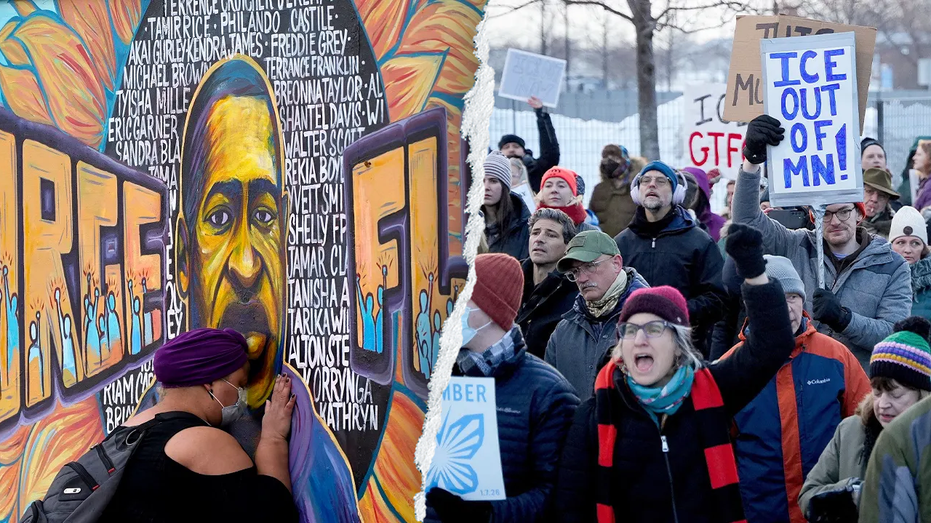
Despite large protests erupting in Minneapolis and throughout the country, an immigration expert said that the left’s attempt to paint slain anti-ICE protester Renee Nicole Good as “George Floyd 2.0” is “just not sticking.” Leading Democrats have responded with outrage after an ICE officer killed Good in a Wednesday confrontation. The Trump administration has said the agent fired in self-defense in response to Good allegedly attempting to run him over with her vehicle. Democrats have rushed to portray it as an example of unjust violence by the Trump administration. Hillary Clinton posted on X on Thursday that “last night, at the corner where an ICE agent murdered Renee Good, thousands of Minnesotans gathered in the frigid dark to protest her killing.” RENEE GOOD’S WIFE CLAIMED MINNEAPOLIS SHOOTING WAS ‘MY FAULT’ IN VIDEO AMID ANTI-ICE FURY Clinton said that “in the face of this administration’s lawless violence, solidarity is the answer,” adding, “They want to mold America to their cruelty. We refuse.” Minneapolis Mayor Jacob Frey told ICE to “get the f— out of Minneapolis” during a Wednesday press conference, a sentiment that was echoed by Rep. Ilhan Omar, D-Minn., who also posted to the Department of Homeland Security, “Get out of our city.” Amid widespread protests, Minnesota Gov. Tim Walz said the state’s National Guard was prepared to deploy if necessary, saying, “We’ve never been at war with our federal government.” In an interview with Fox News Digital, Lora Ries, director of the Heritage Foundation’s Border Security and Immigration Center, said that a lot has changed in the several years since Floyd’s killing, including a decline in trust of the mainstream media and a subsequent surge in independent journalism. VANCE DEMAND DEMOCRATS ANSWER WHETHER ICE OFFICER IN MINNEAPOLIS SHOOTING WAS ‘WRONG IN DEFENDING HIS LIFE “This isn’t 2020 anymore, and a lot of Americans’ eyes have opened during 2020 from the COVID shutdowns, the mandates, the censorship, the nightly riots, the election fraud, and it’s just not going to work anymore,” said Ries. “People can see what’s really happening and decide for themselves, not just take mainstream media’s word for it or mainstream media omission of facts as the truth.” Ries said that as soon as the fatal shooting happened on Wednesday, she knew “the left is going to try to make this George Floyd 2.0.” “But within 24 hours, even less, that hasn’t come to pass,” she said. Ries believes this is because of both a general “distrust of the left,” but also “the opportunity to see these videos, to know that this same agent had been subject to a different car dragging him and having to go to the hospital mere months ago, providing all the context that what the left is trying to push, it’s just not sticking.” Vice President JD Vance said during a Thursday news conference that the ICE agent who fired the shots was involved in a harrowing incident six months prior in which he was dragged by a car and required 33 stitches to his leg. He might be “a little bit sensitive about somebody ramming him with an automobile,” Vance said. Despite this, Ries said that “the left is aiming all of its ire and even literally its fire at ICE, not any other federal agency, not the DEA going after drugs or fentanyl, not the FBI, not even defund the police anymore. It is solely ICE.” AG PAM BONDI WARNS MINNESOTA PROTESTERS AFTER ICE SHOOTING: ‘DO NOT TEST OUR RESOLVE’ “Why? Because ICE is deporting their political base,” she said. “The left has built their political house of cards on mass migration, immigration fraud. Now it seems welfare fraud for political kickbacks, for votes, for headcount, for the census, which determines congressional districts, which in turn determines electoral college votes for the presidency. This is all about politics and if we had valid elections and valid censuses that only counted U.S. citizens for congressional apportionment, how different would the political map look right now? That’s the question.” “The left is trying to paint this woman who was killed yesterday as a victim,” she went on. “She came from out of state. What was she doing there? There are accounts where she had been in her car, leading, harassing, tracking, stalking ICE agents all day long. The agents seemed to know her, and when they told her to get out of the car, she didn’t obey … So, this is on her, unfortunately.” Ries said it is the same deal with illegal immigration. “If people come here and break the law, then that’s their choice. That is their decision, and they should be personally responsible for that,” she said. “We, as a sovereign nation, enforcing our laws, should deport them. And there’s nothing wrong with that. We shouldn’t apologize for it.” “For too long, we’ve not held people personally responsible,” Ries concluded. “We need to make personal responsibility great again and stop trying to make the perpetrators the victim.”
Inside the Trump administration’s effort to quickly reach audiences behind media walls in Venezuela, Iran
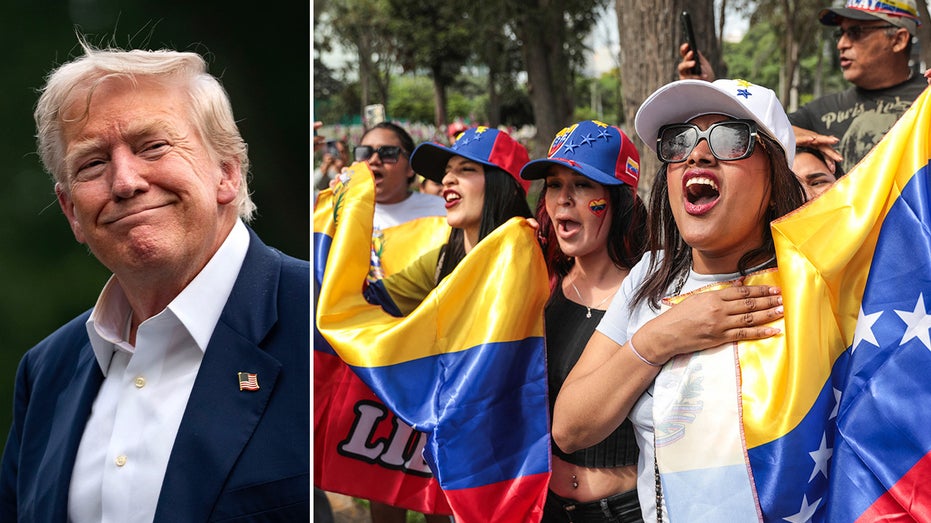
EXCLUSIVE: As protests erupted in Iran and a dramatic U.S. operation unfolded in Venezuela, the U.S. Agency for Global Media (USAGM) moved quickly to push information into some of the world’s most tightly controlled media environments, the agency’s head, Kari Lake, told Fox News Digital in an interview. In the early morning hours of Jan. 3, reports began to trickle out about a law enforcement operation carried out by the U.S. military to remove Venezuelan dictator Nicolás Maduro, prompting USAGM, the agency responsible for broadcasting U.S. news in areas where press freedom is restricted, to take immediate action. “I found out about the situation in Venezuela, the incredible bravery of our service members who extracted Maduro,” Lake said. “And the minute I heard about it, I had the team down in Miami that operates our office of Cuba broadcasting on the phone.” Lake described a rapid expansion of coverage, with the agency ramping up broadcasts, expanding language services and surging personnel within hours to reach audiences via Radio Martí and Martí Noticias out of Miami, broadcasting directly into Cuba, Venezuela, and across Latin America. TRUMP DISCUSSES EXPANSION OF DRUG CARTEL CRACKDOWN, ISSUES GRIM WARNING TO IRAN “They were immediately deployed into the newsroom and they started coverage right away, bringing out exactly what was happening,” Lake explained. “They were covering it in Spanish to the folks in Cuba, and then we also have affiliates all around the Caribbean. We’re taking our broadcast and pushing it in and pumping it in so that more people in Cuba were able to hear it.” “When people in Cuba hear that Maduro has been taken down, it gives them hope that they too can one day have that freedom. What we want to see is the people rising up and saying, we want freedom, we want conditions that are improved. We don’t want to live this way any longer. So we’ve been doing incredible nonstop coverage.” USAGM’s Voice of America carried Trump’s major addresses on Venezuela live while covering the latest developments, congressional reaction, and responses within Venezuela, reaching more than 6.6 million global audience impressions. IRAN REGIME CUTS NATIONWIDE INTERNET ACCESS AS PROTESTS CLAIM 44 LIVES ACROSS MAJOR CITIES Roughly a week before explosions rocked Venezuela during the Maduro extraction, USAGM sprung into action in another global crisis when protests erupted on the streets of Iran as citizens mobilized against the Khomeini regime in one of the world’s most media-restricted regions. Lake spoke to Fox News Digital about how her team took action in that instance as well and immediately began trying to reach as many Iranians as possible with U.S.-backed coverage. “Think about the people on the ground in Iran,” Lake said. “Iranian people have been subjected to such horrible conditions with a dictator and a regime that has been just cruel for 47 years. They don’t get fair media. They don’t get honest coverage over there. We’ve been able to provide them with honest coverage.” “We’re working to get more of it in. We’re hiring contractors to up our coverage and add more additional hours to coverage. What we’re watching on the streets in the country of Iran is historic. The people are rising up saying we don’t care anymore. We have to get our freedom back and we’re there to do that coverage.” After protests erupted in Iran, the USAGM moved quickly to expand coverage through Voice of America’s Persian-language service, significantly increasing satellite television programming aimed at Iranian audiences. Over the first 12 days of unrest, the service added seven additional hours of live broadcasts, including two hour-long primetime breaking newscasts on Jan. 3 and Jan. 4, while extending its regular evening newscasts from one hour to two as demonstrations spread. IRANIAN MILITARY LEADER THREATENS PREEMPTIVE ATTACK AFTER TRUMP COMMENTS As the unrest continued, VOA’s Persian-language service also ramped up its digital and social media footprint, publishing 52 web stories focused on the protests by Jan. 7. During that same period, the service pushed more than 1,700 pieces of content across six social media platforms, including over 170 user-generated videos sent from inside Iran that showed demonstrations and documented the regime’s crackdown. The surge in coverage, according to the agency, resulted in a surge in audience engagement in the form of VOA’s Persian website recording a record 1.69 million daily visits on Dec. 28. Over the first 12 days of protests, video views jumped more than 160 percent and article views rose nearly 80 percent, driving a total of roughly 13 million visits to the site during that period representing a 15% increase. Lake told Fox News Digital that there is overlap between their Iran and Cuba coverage, explaining that they are pumping information about what’s happening in Venezuela to the people of Iran. “People in Iran are very interested in what happened in Venezuela, and so we’re using both our Office of Cuba broadcasting with our Persian Farsi language services, and we’re kind of combining forces and making sure that everyone realizes, everybody living under these regimes realizes that the people are rising up all over the world right now.” “This is such a historic moment and the people in Cuba know what’s happening in Venezuela. The people in Cuba now know what is happening in Iran and vice versa. Iran realizes what happened in Venezuela and what’s happened in Cuba as well. It’s amazing. We’re at the precipice, I believe, of not only just a peaceful world, but one where the people are free in places where they haven’t experienced that lovely feeling of freedom for a long time. I’m happy with the work that we’re doing. We’re doing it with a smaller staff and it shows that the federal government doesn’t have to be bloated, slow-moving dinosaur anymore.” Lake’s reference to the agency no longer being a “dinosaur” stems from her efforts to streamline an agency she says was wasting taxpayer dollars and not delivering a message across the world that was defending America’s interests. “We
Syrian army ramps up Aleppo strikes against SDF fighters
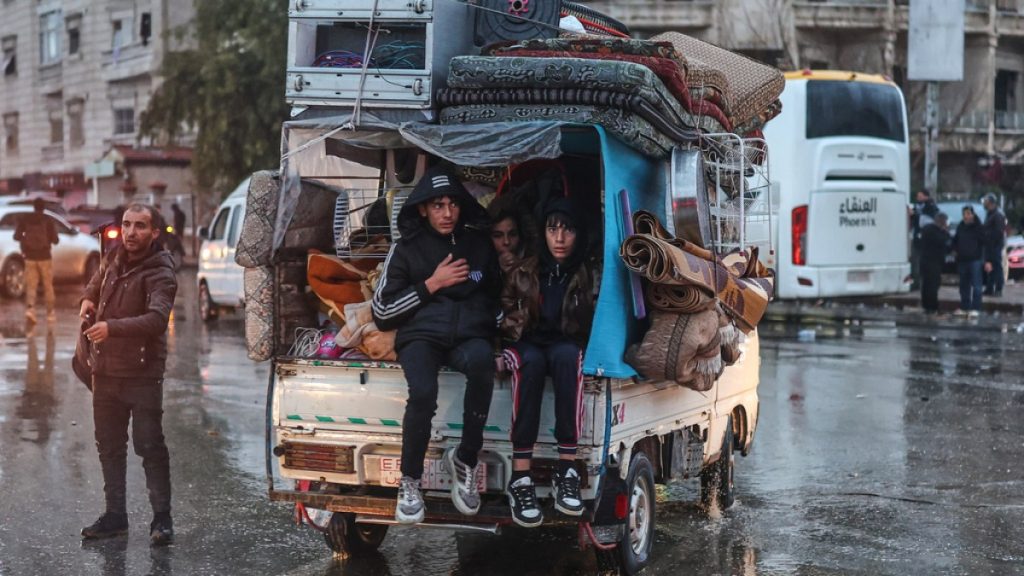
The Syrian army is locked in intense fighting in Aleppo after Kurdish-led Syrian Democratic Forces (SDF) fighters refused to withdraw under a ceasefire, as more civilians fled their homes to escape the violence in the northern Syrian city. Aleppo’s emergency chief Mohammed al-Rajab told Al Jazeera Arabic that 162,000 people have fled fighting in the city’s Ashrafieh and Sheikh Maqsoud neighbourhoods. Recommended Stories list of 3 itemsend of list A Syrian military source has told Al Jazeera Arabic that the army is “making progress” in the Sheikh Maqsoud neighbourhood, the epicentre of the most intense fighting, and now controls 55 percent of the area. Meanwhile, Syria’s state-run SANA news agency said that the military had arrested several members of the SDF in its latest operations in Sheikh Maqsoud, which the army announced on Friday evening after a deadline for Kurdish fighters to evacuate the area, imposed as part of its temporary ceasefire, expired. Syria’s Ministry of Defence had declared the ceasefire earlier on Friday, following three days of clashes that erupted after the central government and the SDF failed to implement a deal to fold the latter into the state apparatus. After some of the fiercest fighting seen since last year’s toppling of Syria’s former leader, Bashar al-Assad, Damascus presented Kurdish fighters a six-hour window to withdraw to their semi-autonomous region in the northeast of the country in a bid to end their longstanding control over parts of Aleppo. But Kurdish councils that run the city’s Sheikh Maqsoud and Ashrafieh districts rejected any “surrender” and pledged to defend areas that they have run since the early days of Syria’s war, which erupted in 2011. Advertisement Syria’s army then warned it would renew strikes on Sheikh Maqsoud and urged residents to evacuate through a humanitarian corridor, publishing five maps highlighting targets, with strikes beginning roughly two hours later. As violence flared, the SDF posted footage on X showing what it said was the aftermath of artillery and drone attacks on Khaled Fajr Hospital in Sheikh Maqsoud, accusing “factions and militias affiliated with the Damascus government” of “a clear war crime”. A Defence Ministry statement cited by the state-run news agency SANA said the hospital was a weapons depot. In another post on X, the SDF said that government militias were attempting to advance on the neighbourhood with tanks, encountering “fierce and ongoing resistance by our forces”. Later, the Syrian army said three of its soldiers had been killed and 12 injured in SDF attacks on its positions in Aleppo. It also claimed that Kurdish fighters in the neighbourhood had killed more than 10 Kurdish youths who refused to take up arms with them, then burned their bodies to intimidate other residents. The SDF said on X that the claims were part of the Syrian government’s “policy of lies and disinformation”. At least 22 people have been killed and 173 others wounded in Aleppo since the fighting broke out on Tuesday, the worst violence in the city since Syria’s new authorities took power after toppling Bashar al-Assad a year ago. The director of Syria’s civil defence told state media that 159,000 people had been displaced by fighting in Aleppo. Mutual distrust The violence in Aleppo has brought into focus one of the main faultlines in Syria, with powerful Kurdish forces that control swaths of Syria’s oil-rich northeast resisting integration efforts by Syria’s President Ahmed al-Sharaa’s government. The agreement between the SDF and Damascus was struck in March last year, with the former supposed to integrate with the Syrian Defence Ministry by the end of 2025, but Syrian authorities say there has been little progress since. Sheikh Maqsoud and Ashrafieh have remained under the control of Kurdish units linked to the SDF, despite the group’s assertion that it withdrew its fighters from Aleppo last year, leaving Kurdish neighbourhoods in the hands of the Kurdish Asayish police. Marwan Bishara, senior political analyst with Al Jazeera, said there were significant gaps between the two sides, particularly when it came to integrating the Kurdish fighters into the army as individuals or groups. “What would you do with the thousands of female fighters that are now part and parcel, of the Kurdish forces? Would they join the Syrian army? How would that work out?” said Bishara. Advertisement “The Kurdish are sceptical of the army and how it is formed in Damascus, and of the central government and its intentions. While … the central government is, of course, wary of and sceptical that the Kurds want to join as Syrians in a strong united country,” he added. Turkiye refrains from military action In the midst of the clashes, Syria’s President al-Sharaa spoke by phone with Turkish leader Recep Tayyip Erdogan, saying he was determined to “end the illegal armed presence” in Aleppo, according to a Syrian presidency statement. Turkiye, which shares a 900-kilometre (550-mile) border with Syria, views the SDF as an extension of the Kurdistan Workers’ Party (PKK), which waged a four-decade armed struggle against the Turkish state, and has warned of military action if the integration agreement is not honoured. Turkiye’s Defence Minister Yasar Guler welcomed the Syrian government operation, saying that “we view Syria’s security as our own security and … we support Syria’s fight against terrorist organisations”. Omer Ozkizilcik, nonresident senior fellow for the Syria Project in the Atlantic Council, told Al Jazeera that Turkiye had been intending to launch an operation against SDF forces in Syria months ago, but had refrained at the request of the Syrian government. Elham Ahmad, a senior official in the Kurdish administration in Syria’s northeast, accused Syria’s authorities of “choosing the path of war” by attacking Kurdish districts in Aleppo and of trying to end deals between the two sides. Alarm spreads Al-Sharaa spoke with Iraqi Kurdish leader Masoud Barzani on Friday, affirming that the Kurds were “a fundamental part of the Syrian national fabric”, the Syrian presidency said. The former al-Qaeda commander has repeatedly pledged to protect minorities, but government-aligned fighters have killed hundreds of Alawites and
Trump promises oil executives ‘total safety’ if they invest in Venezuela
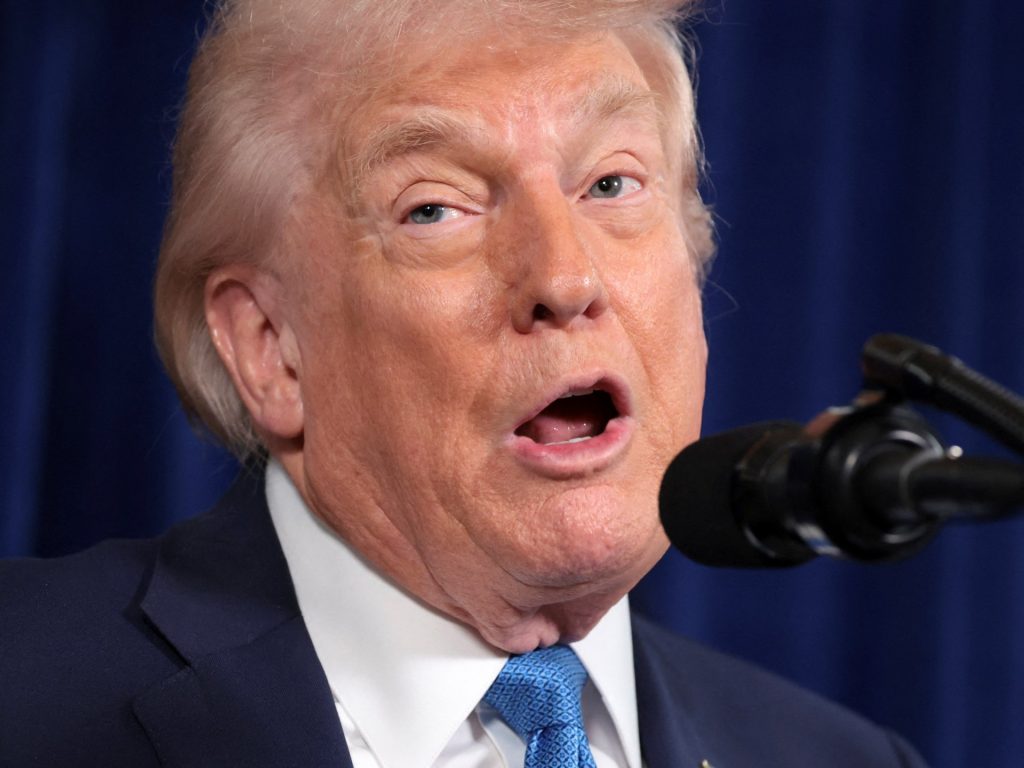
United States President Donald Trump has called on oil executives to rush back into Venezuela as the White House looks to quickly secure $100bn in investments to revive the country’s ability to fully tap into its expansive reserves of petroleum. Trump, as he opened the meeting with oil industry executives on Friday, sought to assure them that they need not be sceptical of quickly investing in and, in some cases, returning to the South American country with a history of state asset seizures as well as ongoing US sanctions and the current political uncertainty. Recommended Stories list of 3 itemsend of list “You have total safety,” Trump told the executives. “You’re dealing with us directly and not dealing with Venezuela at all. We don’t want you to deal with Venezuela.” Trump added: “Our giant oil companies will be spending at least $100bn of their money, not the government’s money. They don’t need government money. But they need government protection.” Trump welcomed the oil executives to the White House after US forces earlier on Friday seized their fifth tanker over the past month that has been linked to Venezuelan oil. The action reflected the determination of the US to fully control the exporting, refining and production of Venezuelan petroleum, a sign of the Trump administration’s plans for ongoing involvement in the sector as it seeks commitments from private companies. “At least 100 Billion Dollars will be invested by BIG OIL, all of whom I will be meeting with today at The White House,” Trump said on Friday in a predawn social media post. Advertisement The White House said it invited oil executives from 17 companies, including Chevron, which still operates in Venezuela, as well as ExxonMobil and ConocoPhillips, which both had oil projects in the country that were lost as part of a 2007 nationalisation of private businesses under former President Nicolas Maduro’s predecessor, Hugo Chavez. “If we look at the commercial constructs and frameworks in place today in Venezuela, today it’s un-investable,” said Darren Woods, ExxonMobil CEO. “And so significant changes have to be made to those commercial frameworks, the legal system, there has to be durable investment protections and there has to be change to the hydrocarbon laws in the country.” Benjamin Radd, a senior fellow at the UCLA Burkle Center for International Relations, told Al Jazeera that he had “noted the hesitation and less-than-full-throated enthusiasm for re-entering the Venezuelan market”, citing Woods, who told the gathering that the company had its assets there seized twice already. “The bottom line is that until Trump can outline and provide assurances of a plan towards political stability, it will continue to be a risky endeavour for these oil companies to re-engage Venezuela. And what is there is a regime change in Iran in the days or weeks or months to come, and all of a sudden that re-emerges as a place where Western oil companies can do business? Even though the reserves don’t equal what Venezuela has, the risk is far less, and the infrastructure is more sound,” Radd said. Other companies invited included Halliburton, Valero, Marathon, Shell, Singapore-based Trafigura, Italy-based Eni and Spain-based Repsol, as well as a vast swath of domestic and international companies with interests ranging from construction to the commodity markets. Wait and see Large US oil companies have so far largely refrained from affirming investments in Venezuela, as contracts and guarantees need to be in place. Trump has suggested that the US would help to backstop any investments. Venezuela’s oil production has slumped below one million barrels per day (bpd). Part of Trump’s challenge to turn that around will be to convince oil companies that his administration has a stable relationship with Venezuela’s interim President Delcy Rodriguez, as well as protections for companies entering the market. While Rodriguez has publicly denounced Trump and the abduction and ouster of Maduro, the US president has said that to date, Venezuela’s interim leader has been cooperating behind the scenes with his administration. Advertisement Most companies are in a wait-and-see mode as they await terms from the Venezuelans, stability and wait to find out how much the US government will actually help, said Rachel Ziemba, an adjunct senior fellow at the Center for a New American Security. Those like Chevron that are already in there are in a better position to increase investments as they “already have sunk costs”, Ziemba pointed out. Ziemba said she expects a partial ramp-up in the first half of this year as the volumes that were going to China – Venezuelan oil’s largest buyer – are redirected and sold via the US. “But long-term investments will be slow,” she said as companies wait to find out about US commitments and Venezuelan terms. Tyson Slocum, director of the consumer advocacy group Public Citizen’s energy programme, criticised the gathering and called the US military’s removal of Maduro “violent imperialism”. Slocum added that Trump’s goal appears to be to “hand billionaires control over Venezuela’s oil”. So far, the US government has not said how the revenue from the sale of Venezuelan oil will be shared and what percentage of the sales would be given to Caracas. Ziemba said she was worried that “if funds do not go to Venezuela for basic goods, among other local needs, there will be instability that will deepen the country’s economic crisis“. In the news conference on Friday, Trump said the US had a formula for distributing payments. UCLA’s Radd said that “if the US can or will guarantee security and stability, it makes sense for it to expect a return on investment in that sense. But then this makes it sound more like a mafia-style ‘racket’ than a government-led operation”, he told Al Jazeera. Meanwhile, the US and Venezuelan governments said on Friday they were exploring the possibility of restoring diplomatic relations between the two countries, and a delegation from the Trump administration arrived in the South American nation on Friday. Adblock test (Why?)
Russia-Ukraine war: List of key events, day 1,416
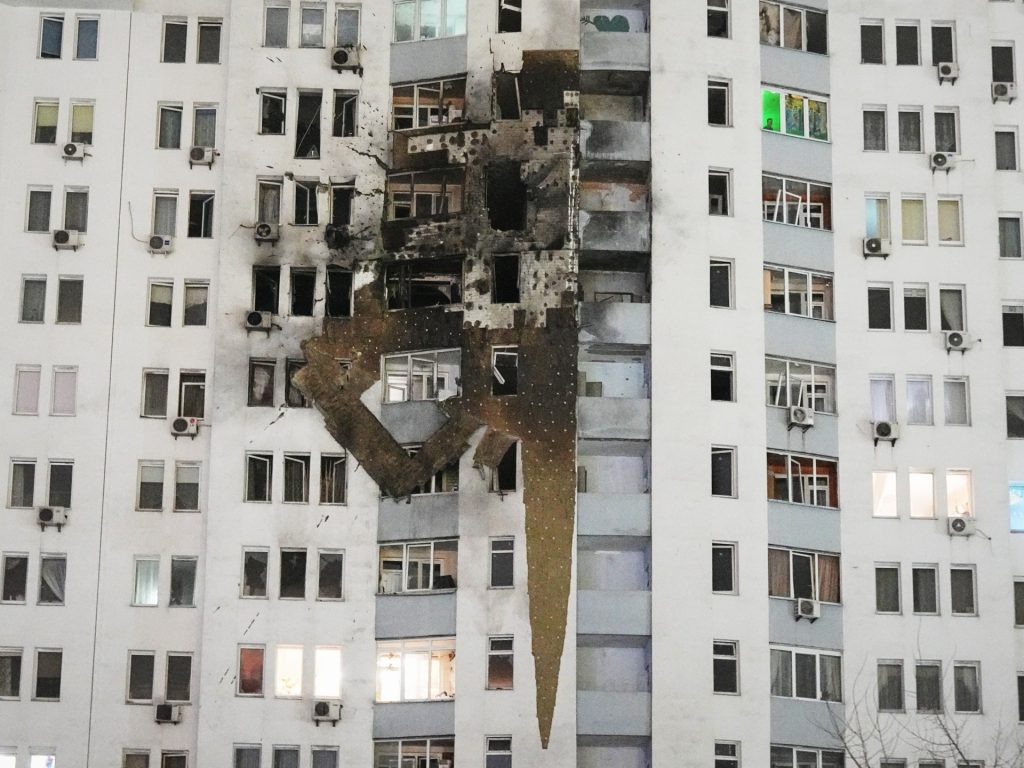
These are the key developments from day 1,416 of Russia’s war on Ukraine. By News Agencies Published On 10 Jan 202610 Jan 2026 Click here to share on social media share2 Share Here is where things stand on Saturday, January 10: Fighting: The death toll from a massive Russian attack on Ukraine’s capital Kyiv that began on Thursday night has risen to four, the Ukrainian State Emergency Service wrote in an update shared on Facebook on Friday. At least 25 people were also injured, including five rescuers, the service added. The attack left thousands of Kyiv apartments without heat, electricity and water as temperatures fell to minus 10 degrees Celsius (14 degrees Fahrenheit) on Friday, Kyiv Mayor Vitali Klitschko and other local officials said. Klitschko called on people to temporarily leave the city, saying on Telegram that “half of apartment buildings in Kyiv – nearly 6,000 – are currently without heating because the capital’s critical infrastructure was damaged by the enemy’s massive attack”. Russian forces shelled a hospital in the Ukrainian city of Kherson just after midday on Friday, damaging the intensive care unit and injuring three nurses, the regional prosecutor’s office wrote on Telegram. “As a result of the attack, three nurses aged 21, 49, and 52 were wounded. At the time of the shelling, the women were inside the medical facility,” the office said in a statement. The head of the World Health Organization (WHO), Tedros Adhanom Ghebreyesus, condemned attacks on healthcare in Ukraine in a statement shared on X, saying that there had been nine attacks since the beginning of 2026, killing one patient, one medic and injuring 11 others, including healthcare workers and patients. Tedros said that the attacks further “complicated the delivery of health care during the winter period” and called for “the protection of health care facilities, patients and health workers”. Russian forces attacked two foreign-flagged civilian vessels with drones in Ukraine’s southern Odesa region, killing a Syrian national and injuring another, Ukraine’s Deputy Prime Minister Oleksii Kuleba and other officials said on Friday. A Ukrainian drone attack on a bus in Russia’s Belgorod region injured four people, the regional task force reported, according to Russia’s TASS state news agency. Russian forces seized five settlements in Ukraine’s Zaporizhia region, including Zelenoye, the Russian Ministry of Defence said, according to TASS. Ukrainian battlefield monitoring site DeepState said on Friday that Russian forces advanced in Huliaipole and Prymorske in the Zaporizhia region, but did not report any further changes. Ukrainian President Volodymyr Zelenskyy said on Friday that Russia’s Oreshnik missile strike late on Thursday was “demonstratively” close to Ukraine’s border with the European Union. The International Atomic Energy Agency has begun consultations to establish a temporary ceasefire zone near Ukraine’s Zaporizhzhia nuclear power plant after military activity damaged one of two high-voltage power lines, Director General Rafael Mariano Grossi said in a statement on Friday. Advertisement Sanctions US forces seized the Olina oil tanker and forced it to return to Venezuela so its oil could be sold “through the GREAT Energy Deal”, United States President Donald Trump said in a post on Truth Social on Friday. According to The Associated Press news agency, US government records showed that the Olina had been sanctioned for moving Russian oil under its prior name, Minerva M. Ukraine’s ambassador to the US, Olha Stefanishyna, said that Ukrainian nationals were among members of the crew of the Russian-flagged tanker Marinera seized earlier this week by US forces over its links to Venezuela, according to Interfax Ukraine news agency. The Russian Foreign Ministry separately said on Friday that the US had released two Russian crewmembers from the Marinera, expressing gratitude to Washington for the decision and pledging to ensure the return home of crewmembers. Politics and diplomacy Qatar’s Ministry of Foreign Affairs expressed “deep regret” over damage to its embassy in Kyiv, confirming that no diplomats or staff were hurt, in a statement on Friday. The ministry underscored the importance of protecting diplomatic buildings and reiterated its call for a “resolution to the Russian-Ukrainian crisis through dialogue and peaceful means”. British Defence Secretary John Healey said that the United Kingdom was allocating 200 million pounds ($270m) to fund preparations for the possible deployment of troops to Ukraine, during a visit to Kyiv on Friday. The leaders of Britain, France and Germany described Russia’s use of an Oreshnik intermediate-range ballistic missile in western Ukraine as “escalatory and unacceptable”, according to a readout of their call released by Prime Minister Keir Starmer’s office on Friday. Adblock test (Why?)
Himachal bus accident: 14 people dead, PM Modi announces ex-gratia compensation for victims
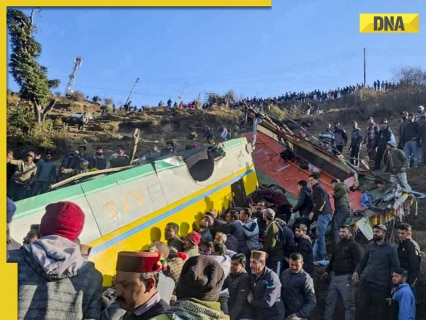
Fourteen people reportedly lost their lives after a private bus, carrying more than 30 passengers, skidded off the road and plunged into a deep gorge near Harpur Dhar in Sirmaur district.
India slams NYC Mayor Zohran Mamdani over letter to Umar Khalid: ‘Better to focus on…’
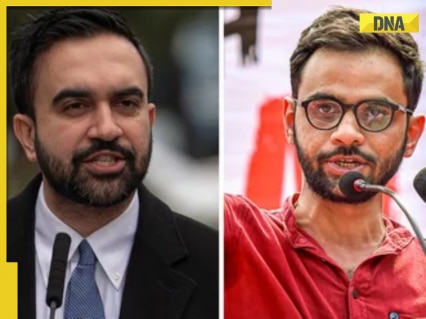
Umar Khalid, a former PhD scholar at Delhi’s Jawaharlal Nehru University, has been lodged in jail for more than five years in connection with the February 2020 riots in the capital, in which 53 people were killed. He was recently denied bail by the Supreme Court, and his trial remains pending.
School Holiday January 10: Schools to remain closed in THESE states today due to…; Check state-wise list here

Schools across several Indian states are closed on January 10, 2026, due to severe cold-wave conditions, dense fog, extended winter vacations, and Sankranti festival holidays in southern states, as authorities prioritise student safety and follow academic calendars.
Delhi-NCR’s cold wave continues as it records season’s lowest temperature at…, AQI reaches…, IMD issues yellow alert
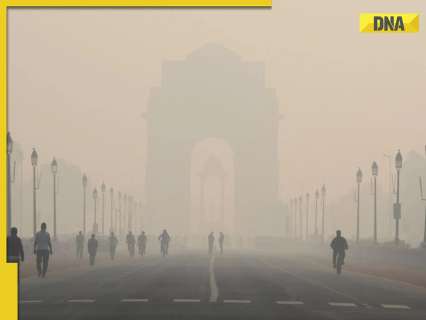
Delhi remained shrouded in dense fog and severe cold on January 10 as the IMD issued a yellow alert. Temperatures fell to 4.6 degrees, air quality slipped into the ‘very poor’ category, and foggy conditions are expected to persist through mid-January.