

Eyebrow-raising claim from ‘Hunter Biden’ X account draws GOP mockery
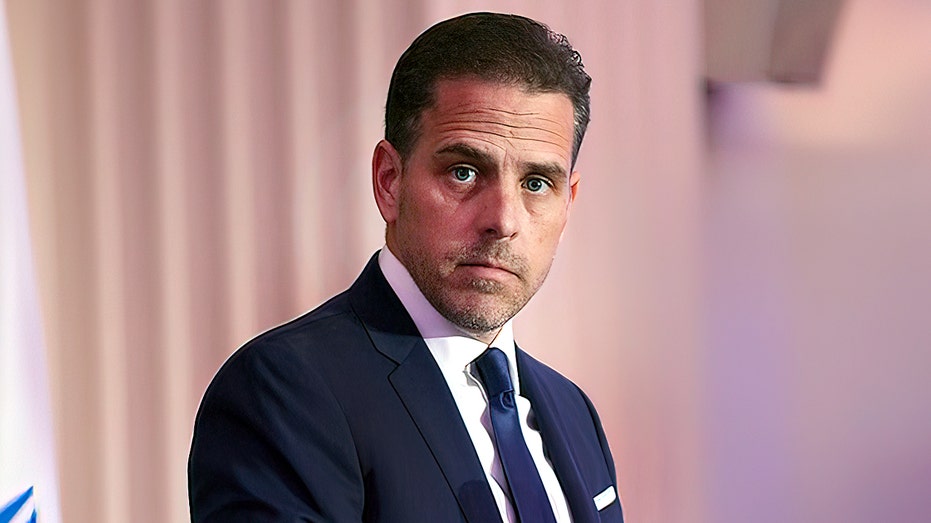
A newly active X account bearing former first son Hunter Biden’s name drew mockery from GOP lawmakers and prominent social media personalities after posting its first message Tuesday. “Your laptop’s reputation precedes you,” Tennessee Sen. Marsha Blackburn wrote in response to the “@HunterBiden” account. Fox News Digital reached out to X and Hunter Biden’s art gallery to verify if the account belongs to the former president’s son, but did not receive confirmation. The account has garnered thousands of followers and interactions since Tuesday, when it launched its first message. “I’m Hunter Biden. You’ve never actually heard from me,” the account blaring the former first son’s name posted. The account’s profile reads: “Artist. Author. Recovery Advocate.” HUNTER BIDEN HELPED MAKE CAMPAIGN DECISIONS, WAS MAJOR FIXTURE IN FATHER’S ORBIT, AUTHOR SAYS Hunter, 56, has re-emerged in the public spotlight as he attempts to rebuild his image following years of controversy involving drug addiction, legal troubles and scrutiny surrounding his personal life. The X account, @HunterBiden, was first launched in 2013, according to a Fox News Digital review, but posted its first public message on Tuesday. Hunter Biden’s art gallery website is linked to the X account, while the art gallery’s website links to the X account, a YouTube page and a Substack account. The tweet sparked a wave of mockery aimed at the younger Biden, as well as a handful of accounts quipping that the former first son would allegedly launch a 2028 run. “We’ve heard plenty,” Republican Indiana Sen. Jim Banks responded to the account. “Trust me, we’ve heard and seen ENOUGH from you,” Republican Missouri Rep. Jason Smith chimed in. Other social media users quickly piled onto the alleged Hunter Biden post, resurfacing past controversies and even floating him as a potential political candidate. “Oh this oughta be good,” said conservative commentator Nick Sortor in an X response. “Very real chance he doesn’t remember that we have, in fact, heard from him in hours of podcasting before now,” said Fox News contributor Mary Katharine Ham. “The 2028 Dark Horse Candidate,” wrote one X user, while another added “He’s running.” MAMDANI’S WIFE’S ‘STUDENT SKETCHBOOK’ ART IS HUNTER BIDEN EFFECT ALL OVER AGAIN, SAYS US ARTIST Additionally, Candace Owens tagged the X account in a trailer for her upcoming interview with Hunter Biden, who is continuing a media tour following years of controversy while under the public spotlight. The @HunterBiden account reposted the video, writing, “She’s got questions. I’ve got answers. Thursday.” JOE BIDEN POSES WITH HUNTER’S CHINESE BUSINESS ASSOCIATES IN NEWLY SURFACED PHOTOS: ‘INCREDIBLY DAMNING’ HUNTER BIDEN’S FINANCIAL WOES REVEALED IN NEW MOTION TO DROP LAWSUIT: ‘SIGNIFICANT DEBT’ Hunter Biden has been involved in a string of controversies spanning his foreign business dealings, tax and gun charges, and scrutiny tied to his family’s political connections. Hunter received a pardon from President Joe Biden for any offense he “has committed or may have committed” from Jan. 1, 2014, to Dec. 1, 2024, before his father left office. In September 2024, Hunter Biden pleaded guilty to nine federal tax charges in California for a scheme evading over $1.4 million in taxes from 2016 to 2019. He was also convicted in Delaware in June 2024 for lying on a federal form about his drug use to purchase a firearm in 2018. Hunter published a memoir titled “Beautiful Things: A Memoir” in 2021, detailing his battle with severe substance abuse and family tragedies from his own perspective.
Trump jolts immigration hawks with surprising defense of Chinese students in USA
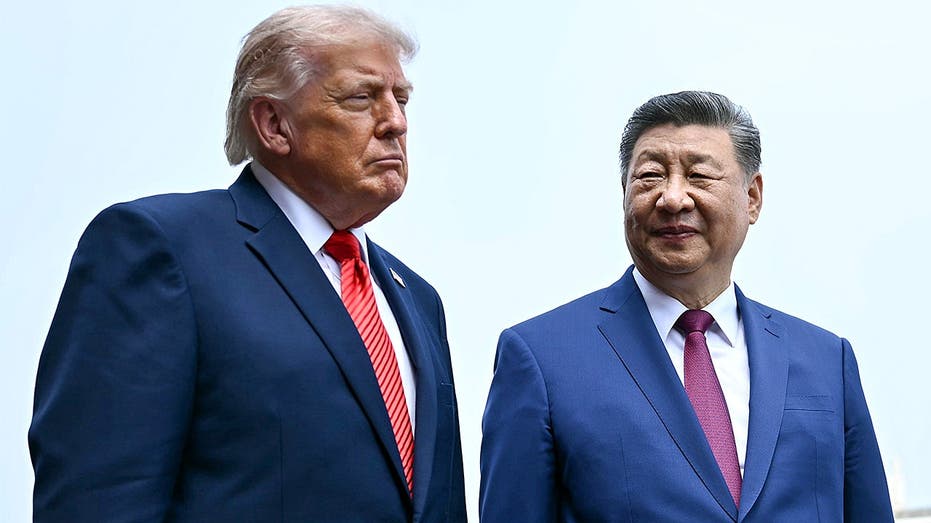
President Donald Trump split with immigration hawks by defending Chinese students in the U.S. while also softening on Chinese-owned farmland — creating friction inside MAGA and unexpected overlap with moderate Democrats. Fox News’ Sean Hannity asked Trump in a recent interview from Beijing about concerns surrounding Chinese nationals attending school in the U.S. and China-linked entities purchasing farmland, including in sensitive areas like near a North Dakota military base that raised eyebrows earlier this decade. Republicans have long warned that Chinese student visa programs could expose U.S. research and state secrets to the Chinese Communist Party, while GOP officials like Florida Gov. Ron DeSantis and Nebraska Sen. Deb Fischer have pushed for tougher restrictions on Chinese ownership of American farmland. “It’s not that I love it. You want to see farm prices drop; you want to see farmers lose a lot of money just take that out of the market. But they’ve had a lot of land for a long time. Obama did nothing about it,” Trump said. SENATORS RICKETTS, FETTERMAN UNITE AGAINST CHINA’S QUIET INVASION OF US FARMLAND Trump also defended allowing Chinese students to study in the U.S., calling them “good students” and arguing that banning them would unnecessarily inflame tensions with Beijing. “I frankly think that it’s good that people come from other countries and they learn our culture and many of them want to stay here,” Trump said, while admitting that it “doesn’t sound like a very conservative position – and I’m a conservative… commonsense guy. I think MAGA is ‘common sense,’” he said. The comments triggered backlash from the right wing of the MAGA movement, with former Rep. Marjorie Taylor Greene disputing, “No — that’s not commonsense.” “Trump says it’s insulting to tell China their students can’t go to our universities, imagine being an American student and receiving a rejection letter while 500,000 Chinese students get in,” Greene said, according to the left-wing New Republic. “And no – it’s not OK for China to buy our farmland.” Some Democrats, however, appeared heartened by Trump’s more moderate stance on a major sticking point in the immigration field. Fox News Digital reached out to top Democrats on the moderate New Democrat Coalition’s Border Security Working Group. Chairman Gabe Vasquez of New Mexico told Fox News Digital that while he disagrees with Trump “on a lot” regarding immigration enforcement, he will continue to support efforts to bring new blood into the American economy. “I have long supported building America’s workforce by encouraging the best and brightest across the world to come study in the U.S. and build their careers and families here,” said Vasquez. “Congress should expand more legal pathways for students to stay here and start businesses, grow the American economy, and help our country fill critical needs in key industries like healthcare, manufacturing, quantum AI and engineering.” A Vasquez spokesperson added that the lawmaker, however, agrees with conservatives on one point where Trump differed — that Chinese nationals should not be permitted to purchase U.S. farmland. “Food security is national security,” the spokesperson said. Speaking to Hannity, Trump added: “I could tell [Xi], I don’t want any students, it’s a very insulting thing to say to a country. They would then immediately go out and start building universities all over China.” Trump argued that without the influx of Chinese students, middling and lower-tier universities would begin dying on the vine financially. Lora Ries, former counsel for the House Judiciary Committee’s immigration subcommittee and a 30-year policy expert now with the Heritage Foundation, told Fox News Digital that universities have grown too dependent on foreign students because they often pay “full freight” — and made the case for scrutinizing the education system rather than keeping it propped up with foreign tuition. TRUMP CLAIMS GOP ‘VERY OPEN’ TO KEEPING ‘DREAMERS’ IN US, TAKES SHOT AT ‘VERY DIFFICULT’ DEMS “It is no longer a level playing field for American students to get into these universities. We also know many of these universities are producing degrees that don’t have a great return on investment: gender studies, et cetera. So why on earth do we want to keep universities that depend on those sorts of degrees afloat?” Ries said. “We shouldn’t justify continuing to bring in high levels of foreign students to keep so many universities in business when the Big-Ed model is absolutely upside-down.” According to Ries, Chinese and other foreign student blocs exacerbate the difficulty American students face getting into colleges — while native students are also not finding meaningful jobs after graduation. Ries said the issue is “right up Trump’s alley,” but not in the way the president posited on “Hannity.” She said Trump could shake up “Big-Ed” by incentivizing quality degrees and disincentivizing ones that leave American graduates occupationally stranded. FOREIGN STUDENTS WHO HATE AMERICA DON’T DESERVE VISAS — AND WE HAVE TOOLS TO STOP THEM When it comes to the adage about jobs Americans supposedly won’t do, she pointed to the medical field, which has seen an influx of foreign students. “You can’t say medicine is a job that Americans won’t do, so what’s going on?” she said. She also noted that Chinese nationals cannot come to live in America without the knowledge of — and often information-sharing with — the CCP, which itself poses a risk. “Also, Chairman Xi can say, ‘Well, America is in decline,’ as he just did in this summit.” When asked for comment, a White House spokesperson directed Fox News Digital to the president’s remarks to Hannity. Trump’s comments set up a new potential divergence between presidential policy and conservative politics among some of his current and former most ardent supporters, including Greene. It also, however, potentially opens up a rare immigration dialogue with Democrats like Vasquez and his coalition of moderates, who have been trying to advance their own fixes to the broken system.
The battle of perception: From Israel’s Fauda to Hezbollah’s FPV footage

The footage lasts just three minutes. An Israeli flag flies over a position in the village of al-Bayada, in occupied southern Lebanon. One drone approaches the flagpole while another observes from above. The flag falls after the impact. The final frame displays a digitally rendered, torn Israeli flag with the words: “Al-Bayada does not welcome you.” The video’s caption reads: “Flag lowering ceremony”. This is the latest video released by Hezbollah, which reflects a broader context beyond a single hillside in southern Lebanon. Journalists and observers who covered southern Lebanon in the late 1990s may recall Hezbollah’s media strategy before the Israeli withdrawal. Al-Manar TV functioned as more than a television channel; it operated as a psychological campaign in plain view. Repeated footage of Israeli soldiers screaming after being attacked with a roadside bomb, retreating, positions abandoned, and flags lowered, created the perception in the Arab world that Israel was already departing before any official decision to do so had been taken. Back then, the image pushed forward a new reality, one that played a vital role in mobilising support for Hezbollah and adding pressure on the Israeli government internally to withdraw its forces from Lebanon. Then the withdrawal occurred in May 2000, and to many, it felt like a natural result of all that was happening. This approach was never abandoned, but it became unnecessary for a long period due to Hezbollah leader Hassan Nasrallah’s commanding presence and speeches. Advertisement For two decades, Nasrallah was the face of the media war. A man whose son was killed in battle. A leader who said things and then made them happen. What he had could not be taught or replicated; it was credibility accumulated over years of real achievement, giving him the rare ability to reshape how his audience understood events. When something went wrong, he could reframe it. When a setback came, he could place it inside a longer story that made sense. He was the frame that held everything together. The war in Syria badly damaged Hezbollah’s image. Seeing its fighters in Qalamoun, Aleppo, Homs, and other Syrian cities, in what much of the Arab world saw as a sectarian war, was hard to absorb. But Nasrallah was there to absorb it for his base, give it logic, and keep the narrative from collapsing. He framed it as a war to preserve resistance against Israel, rather than one to defend an ally combating a revolution. Without him, the organisation could have faced an even worse image, not only among his critics but also among his supporters. The image itself could not survive without him. Then came 2024. Fuad Shukr, one of Hezbollah’s most senior commanders, was killed in Beirut at the end of July. Less than two months later, the pager operation tore through Hezbollah’s ranks, hundreds of devices detonating at once, an intelligence penetration so complete it felt almost unreal. Then the assassinations kept coming. Senior commanders, one after another. And on September 27, Nasrallah himself was killed in an Israeli strike on the southern suburbs of Beirut. His successor, Naim Qassem, was the deputy leader for 30 years. His organisational capabilities helped the party restructure and rebuild, but he is not a communicator. What Nasrallah had was not a transferable skill. It grew from decades of confrontation, presence, and delivery. Qassem’s words lack the crucial layer of strategic narrative his predecessor mastered. So Hezbollah’s media machinery, which always depended on the leader’s voice to shape everything, found itself, for the first time in decades, without a centre, without the voice capable of putting things together, and giving a hint to supporters of what’s to come. As for Israel, its communications strategy wasn’t something it wandered into by accident. For years, Israel had been building it on two tracks simultaneously. The first was operational. A well-resourced apparatus of military spokespersons, carefully managed press access, and rapid-fire media briefings, all designed to get the Israeli military’s version of any story to people’s mobile phones and newsrooms before any alternative could take hold. Advertisement An investigation by Swiss public television SRF released in October revealed how the Israeli military had been quietly producing slick 3D animation videos weeks before major operations, ready to deploy the moment the strikes began, justifying hits on hospitals, residential blocks, and civilian infrastructure. Many broadcasters ran them, and many did not even ask questions about the accuracy of what they were showing. The second track was cultural and ran deeper. Fauda, the Netflix thriller written by veterans of Israeli undercover units, spent several seasons building audiences worldwide, painting Palestinian and Hezbollah fighters as brutal and ultimately incompetent, always outthought, always outmanoeuvred. Tehran, on Apple TV+, did the same job on Iran: Mossad as professionals, the Islamic Republic as a paranoid bureaucracy lurching from one failure to the next. Neither series was crude propaganda, and that was their leverage. They entered living rooms in countries with no prior opinion or knowledge of the conflict and quietly arranged the furniture before the next war arrived. When Israel attacked Iran in June 2025, a LEGO animation video with the soundtrack from Tehran started circulating online. The Iranian responded with another LEGO video that didn’t leave a real impact, but it was just the beginning. By the time the United States and Israel launched their campaign in February, aimed openly at Iran’s nuclear programme and its leadership, Tehran had assembled a media response that caught many observers off guard. Explosive Media, a Tehran-based group producing animated short videos in English, began releasing Lego-style animated films at a pace matching the news cycle. One showed US President Donald Trump and Israeli Prime Minister Benjamin Netanyahu beside the devil, looking at Epstein Files, before Trump presses a button and a rocket flies towards Iran. The camera then cuts to the rubble of an Iranian girls’ school that was attacked by Israel and the US military. In another video, missiles are flying towards their targets, each dedicated to a different victim
Oscar-winning director calls Trump, Netanyahu and Putin ‘monsters’
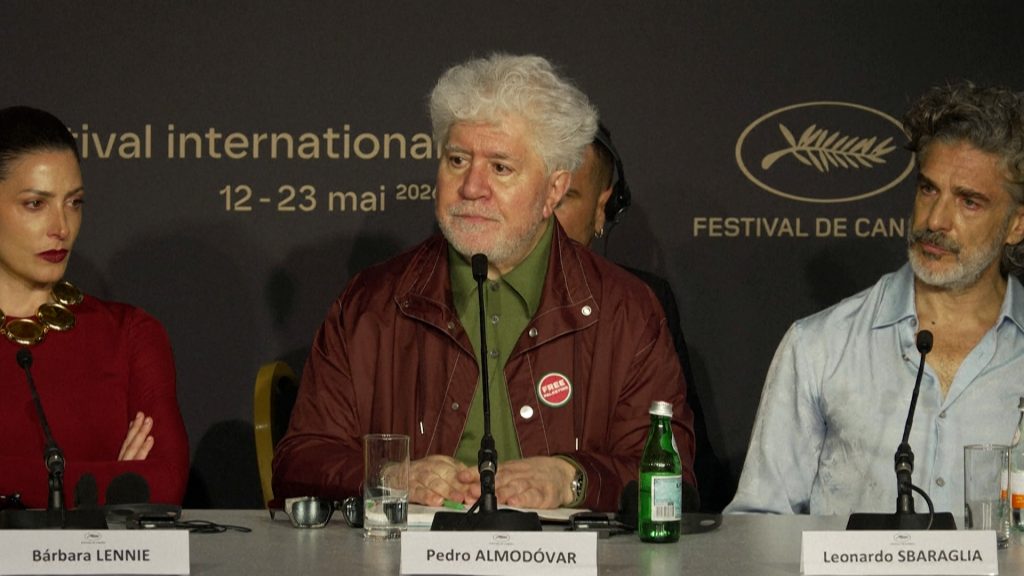
Oscar-winning Spanish director Pedro Almodovar called Donald Trump, Benjamin Netanyahu and Vladimir Putin ‘monsters’ during a press conference at the Cannes Film Festival on Wednesday, where he wore a Palestine solidarity pin. Published On 20 May 202620 May 2026 Click here to share on social media share-nodes Share googleAdd Al Jazeera on Googleinfo Adblock test (Why?)
At least eight killed in Israel’s air attacks on southern Lebanon

Israeli attacks on Lebanon continue despite the ‘ceasefire’ that was recently extended until the beginning of July. Published On 20 May 202620 May 2026 At least eight people have been killed in Israeli attacks on southern Lebanon, in the latest violation of an ongoing “ceasefire” agreement, according to Lebanon’s state-run National News Agency (NNA). Israeli fighter jets struck in the village of Doueir on Wednesday, killing five people and injuring two others, NNA reported. Several homes were flattened in the attack, the agency said. Recommended Stories list of 3 itemsend of list Another Israeli attack killed two people near a hospital in the village of Tibnin, while one person riding a motorcycle was killed in a drone attack on the village of Burj Shemali in the Tyre district, NNA said. The Red Cross said it recovered the body of one person on the outskirts of the town of Shebaa in the Nabatieh governorate. Israeli attacks across Lebanon continue despite the United States-mediated “ceasefire” that was recently extended until the beginning of July. The fresh wave of Israeli attacks came hours after at least 16 people were killed in Israeli air attacks across southern Lebanon on Tuesday. The Health Ministry said three women and three children were among the victims. Moreover, the Lebanese armed group Hezbollah said its forces clashed with Israeli troops trying to advance to the centre of the village of Haddatha late last night. The group also reported clashes with Israeli forces in the town of Biyyada and the municipality of Rashaf. Attacks on eastern Lebanon ongoing Israeli forces continue to expand their military campaign beyond the country’s south into the western Bekaa Valley. Advertisement “For weeks, the Israeli army has been targeting Muslim Shia majority villages in the western Bekaa Valley where Hezbollah has support,” Al Jazeera’s Zeina Khodr reported. “They lie on the road that links the southern front-line villages to the east of the country.” Yousef Hasan, displaced from the town of Yuhmor, called Israel “an expansionist state that kills women and children”. “They don’t believe in borders. For them, the border is as far as Israeli soldiers can reach. It is a state that occupies others’ lands,” Hasan told Al Jazeera. Since March 2, Israel has killed 3,073 people in Lebanon and injured 9,362 others, and displaced more than 1.6 million, about one-fifth of the country’s population, according to Lebanese authorities. Israeli forces have also destroyed entire villages in southern Lebanon, prompting comparisons with the devastation caused by Israel’s genocidal war against the Palestinians in Gaza. Adblock test (Why?)
Medical shops to remain shut today: Chemists association launches 24-hour nationwide strike; What are the key demands?

The medical shops and pharmacies to remain shut across India on Wednesday as the All India Organisation of Chemists and Druggists (AIOCD) observed a nationwide 24-hour strike. What are the key demands?
Modi-Meloni bonds over ‘Melody’, memefest takes over internet: ‘Modi ji rizz is crazy…’
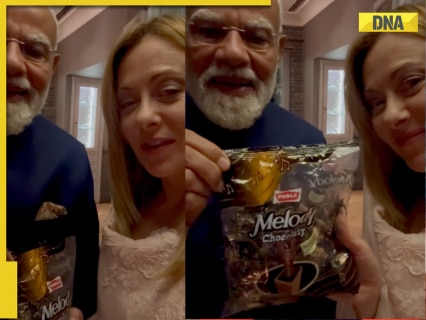
Italian PM Meloni shared a post on X, thanking PM Modi for the gift as they laughed over the cheerful internet trend. Melody is a term often used on the internet to highlight the good friendship between PM Modi and Meloni.
Bengal political row intensifies: TMC dismisses ‘leaked’ municipal notice to Abhishek Banerjee, calls it ‘completely false, fabricated’
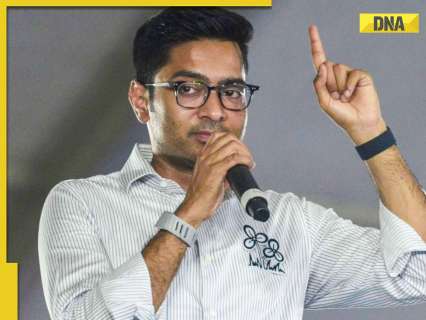
TMC has denied reports claiming KMC issued notices to Abhishek Banerjee over alleged property irregularities.
TMC MP Saayoni Ghosh breaks silence on alleged property ties to Mamata Banerjee’s nephew Abhishek Banerjee: ‘STOP NOW’

Trinamool Congress MP and youth wing chief Saayoni Ghosh breaks silence on allegations that she owns a Kolkata property allegedly associated with TMC Leader and Nephew of Mamata Banerjee, Abhishek Banerjee. She dismissed the reports as “fake news”, and urged people to stop defaming her.
Rahul Gandhi slams PM Modi over viral ‘Melodi’ moment: ‘Handing out toffees while economic storm is brewing’
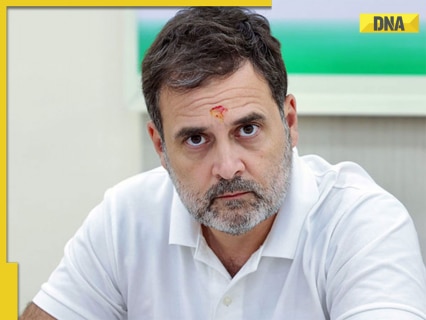
Gandhi made the remarks after the prime minister gifted the Melody candies to Giorgia Meloni, bringing back the “Melodi” phrase associated with the two leaders that has time and again garnered attention on social media.