

Trump demands California hand over recipient lists as $10B paused amid fraud concerns
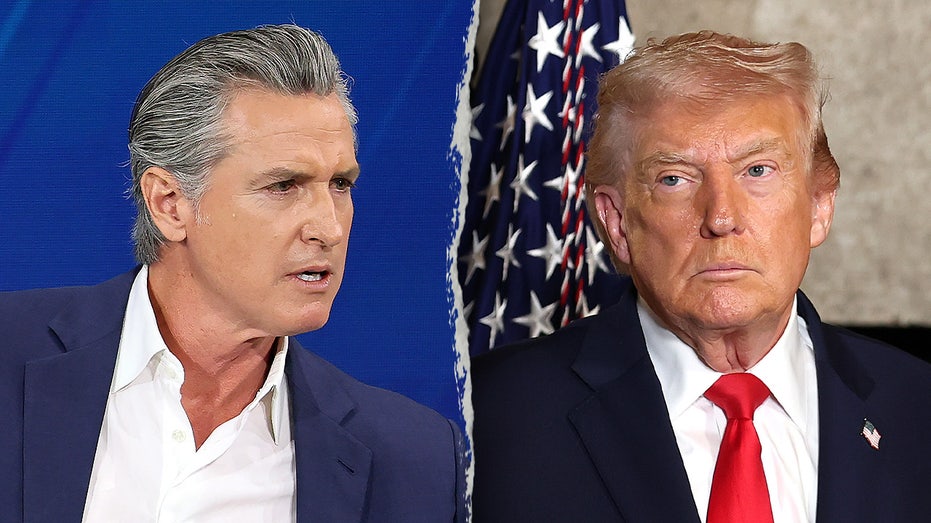
The Trump administration is demanding California hand over a list of people and groups that receive taxpayer funds amid concerns money was fraudulently funneled to noncitizens. On Tuesday, the administration announced it will pause more than $10 billion in funds to five Democrat-led states, including California, amid widespread claims of fraud. In a series of letters to California Gov. Gavin Newsom, the Administration for Children and Families said the Department of Health and Human Services will halt taxpayer funding to the Child Care Development Fund (CCDF), the Temporary Assistance for Needy Families (TANF) program and the Social Services Block Grant. NEW YORK REPUBLICANS CALL FOR INDEPENDENT FRAUD INVESTIGATION FOLLOWING MINNESOTA REVELATIONS The letters asked Newsom for “verified attendance documentation” for subsidized childcare services that include logs of hours and payment information from providers, the New York Post reported. The letter from TANF asked for recipients’ names, addresses, Social Security numbers and dates of birth. “These concerns have been heightened by recent federal prosecutions and additional allegations that substantial portions of federal resources were fraudulently diverted away from the American families they were intended to assist,” ACS Assistant Secretary Alex J. Adams said in the letters, according to the Post. “Additionally, ACF has reason to believe that the State of California is illicitly providing illegal aliens with CCDF benefits intended for American citizens and lawful permanent residents.” More than $7.3 billion in TANF funding would be withheld from the five states — California, Colorado, Illinois, Minnesota and New York — along with nearly $2.4 billion from the CCDF and another $869 million from the Social Services Block Grant. GOP LAWMAKER DEMANDS MINNESOTA FRAUD BE TREATED AS ‘ORGANIZED CRIME’ SCHEME In a statement to Fox News Digital, Newsom’s office said the California Department of Social Services (CDSS) administers childcare and other essential programs that allow working families to “afford safe, reliable care so parents can go to work, support their families, and contribute to their communities.” “These funds are not optional — they are critical lifelines for working families across California,” his office said. “The State of California aggressively investigates and prosecutes fraud. Using unsupported allegations to withhold child care funding only from states that didn’t vote for the President doesn’t stop fraud — it harms struggling moms and dads President Trump claims to be fighting for.” President Donald Trump has been highly critical of California and Newsom. “California, under Governor Gavin Newscum, is more corrupt than Minnesota, if that’s possible??? The Fraud Investigation of California has begun. Thank you for your attention to this matter!” he wrote Tuesday on Truth Social. The pause came amid heavy scrutiny of Minnesota’s massive welfare assistance fraud scandal. More than 90 people — most from Minnesota’s large Somali community — have been charged since 2022 in what has been described as the nation’s largest COVID-era scheme. The amount of money stolen through money laundering operations involving fraudulent meal and housing programs, daycare centers and Medicaid services is still being tabulated. But the U.S. attorney in Minnesota said the scope of the fraud could exceed $1 billion and rise to as high as $9 billion. Fox News Digital’s Greg Wehner contributed to this report.
9 House Republicans defy Mike Johnson, join Dems to advance Obamacare extension vote
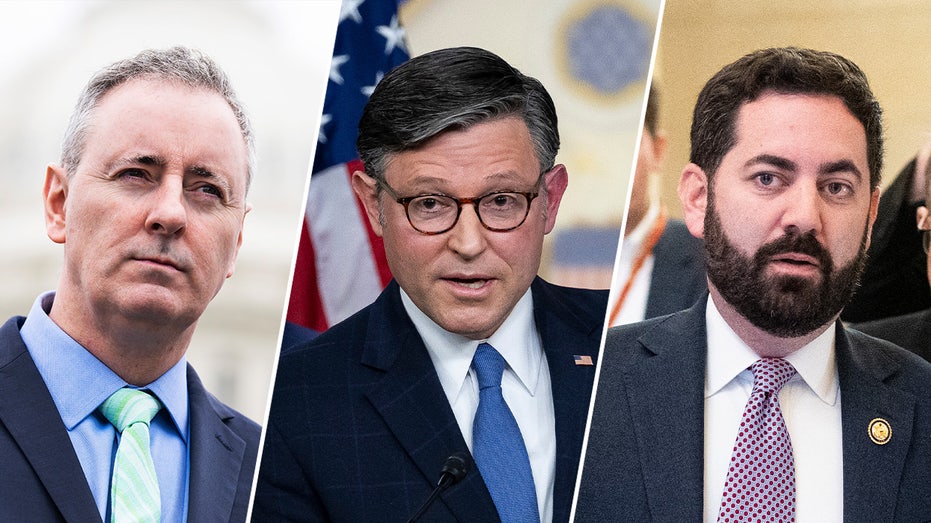
Nine House Republicans bucked their party leaders on Wednesday evening to advance a vote on a Democrat-led healthcare bill. The nine GOP lawmakers’ support was key to pushing ahead on a vote to extend enhanced Obamacare subsidies that expired at the end of last year. A vote on the bill itself is now expected Thursday afternoon. It’s a blow to Speaker Mike Johnson, R-La., who argued for weeks that the majority of House Republicans were opposed to extending the COVID-19 pandemic-era tax subsidies. BIPARTISAN HOUSE GROUP PUSHES NEW ‘COMMONGROUND 2025′ HEALTHCARE FRAMEWORK But a significant number of GOP moderates were frustrated that their party leaders in the House and Senate had done little to avert a price hike for millions of Americans’ insurance premiums. Four of them signed onto a discharge petition filed by House Minority Leader Hakeem Jeffries, D-N.Y., last month aimed at forcing a vote on extending the subsidies for three years over House GOP leaders’ objections. A discharge petition is a mechanism for getting legislation considered on the House floor even if the majority’s leadership is opposed to it. SENATE QUIETLY WORKS ON BIPARTISAN OBAMACARE FIX AS HEALTHCARE CLIFF NEARS Those four lawmakers — Mike Lawler, R-N.Y.; Brian Fitzpatrick, R-Pa.; Rob Bresnahan, R-Pa.; and Ryan Mackenzie, R-Pa. — were among the nine to vote to advance Jeffries’ petition on Wednesday. At the time, they criticized leadership in both parties for not working toward a bipartisan solution earlier and said they were left with little choice. The other five lawmakers who voted to advance the petition were Reps. Nick LaLota, R-N.Y.; Maria Salazar, R-Fla., David Valadao, R-Calif., Max Miller, R-Ohio, and Tom Kean Jr., R-N.J. The bill is expected to pass the House on Thursday, but it is all but certain to die in the GOP-controlled Senate. Similar legislation led by Senate Democrats failed to reach the necessary 60-vote threshold to advance in December. The vast majority of Republicans believe the subsidies are a COVID-era relic of a long-broken federal healthcare system. Conservatives argued that the relatively small percentage of Americans who rely on Obamacare meant that an extension would do little to ease rising health costs that people across the country are experiencing. But a core group of moderates has been arguing that a failure to extend a reformed version of them would force millions of Americans to grapple with skyrocketing healthcare costs this year. House Republicans passed a healthcare bill in mid-December aimed at lowering those costs for a broader swath of Americans, but that legislation has not been taken up in the Senate.
Venezuelan oil shipments surge to US ports with heavy crude after Maduro capture
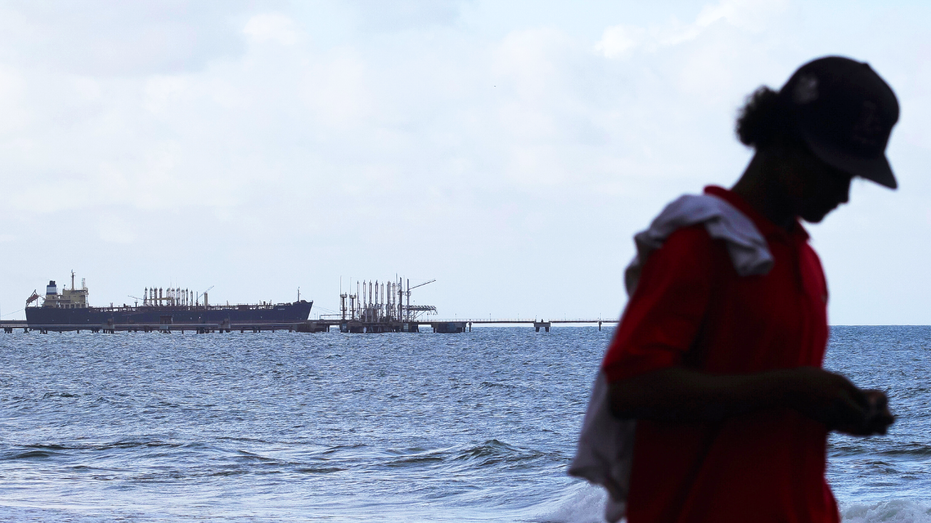
Venezuelan crude oil is being shipped to the U.S. at speed and in bulk following the arrest of former President Nicolás Maduro, according to a maritime intelligence analyst. As many as “15 very large crude carrier shipments” carrying 50 million barrels will end up en route, said Michelle Wiese Bockmann, senior maritime intelligence analyst at Windward, which has tracked oil tanker movements around the troubled region for months. “The moves overnight that were announced to sell about 30 to 50 million barrels of oil,” Wiese Bockmann said at a press conference. “That’s equivalent to about 15 very large crude carrier shipments,” the analyst added. TRUMP’S MADURO TAKEDOWN RESETS THE GLOBAL CHESSBOARD AND REASSERTS AMERICAN POWER The rapid surge in shipments comes days after President Donald Trump announced that Venezuela would move between 30 million and 50 million barrels of sanctioned oil to the U.S., worth roughly $2.8 billion at current prices. Trump said Tuesday the oil would be sold at market value and that he would control the proceeds to ensure they are “used to benefit the people of Venezuela and the United States!” Windward maritime intelligence data indicates massive oil flows are already materializing, according to Wiese Bockmann. “And just for comparison, over December, using our commodities tracking partners, Vortex, about 47 million barrels of crude and containers were shipped from Venezuela,” she noted. “They’re going to be taken by storage ships to the U.S.,” Wiese Bockmann added. According to the analyst, U.S. infrastructure is well-prepared to handle the influx. TRUMP UNLEASHES THE ‘DONROE DOCTRINE’ AND PUTS SOCIALISTS ON NOTICE WORLDWIDE “U.S. refineries have been configured for Venezuela’s heavy crude,” she said, adding that “we’re already very quickly seeing some action there.” Windward tracking data shows increasing tanker activity tied to Western operators, with four Western-linked tankers being tracked sailing for Venezuela, she said, as well as reports of tankers already chartered. The developments follow dramatic geopolitical events earlier this month, when U.S. forces captured Maduro and his wife and transported them to New York City to face criminal drug charges. Trump later said the U.S. would temporarily run Caracas until a safe transition could occur, warning he was “ready to stage a second and much larger attack” if necessary. “There are reports of more tankers chartered,” the analyst said. “Two arrived at Jose Terminal on the fifth and sixth of January, and two have sailed so far for the U.S. on Jan. 2 and Jan. 6.” she claimed. US MILITARY SEIZES TWO SANCTIONED TANKERS IN ATLANTIC OCEAN According to reports, Venezuela is said to hold more than 300 billion barrels of proven reserves, which is more than Saudi Arabia, Iran or Kuwait, but sanctions and isolation have impacted production and exports. As previously reported by Fox News Digital, Energy Secretary Chris Wright has been tasked with executing Trump’s plan “immediately,” as major U.S. energy companies such as Chevron, ConocoPhillips and ExxonMobil prepare for White House meeting Friday to revive Venezuela’s oil industry. But Wiese Bockmann said the arrest of Maduro had disrupted the so-called dark fleet trade that had been taking Venezuelan crude to Asia. “We’ve had this phenomenon of the dark fleet exploding since Russia invaded Ukraine,” she added. “And we’ve had this axis of Venezuela, Iran, Russia, China basically trading oil between them. “If it’s condensate from Iran to Venezuela or if it’s crude back from Venezuela to China, which is about 600,000 barrels a day on average,” she added. “These days, Asia-bound exports remain poor and are paralyzed, but we have seen a very quick resumption of crude flows to the U.S. after the seizure of Maduro.” Fox News Digital has reached out to the White House for comment.
Duffy says ‘time’s up’ for Newsom as feds withhold $160M over illegal trucking licenses
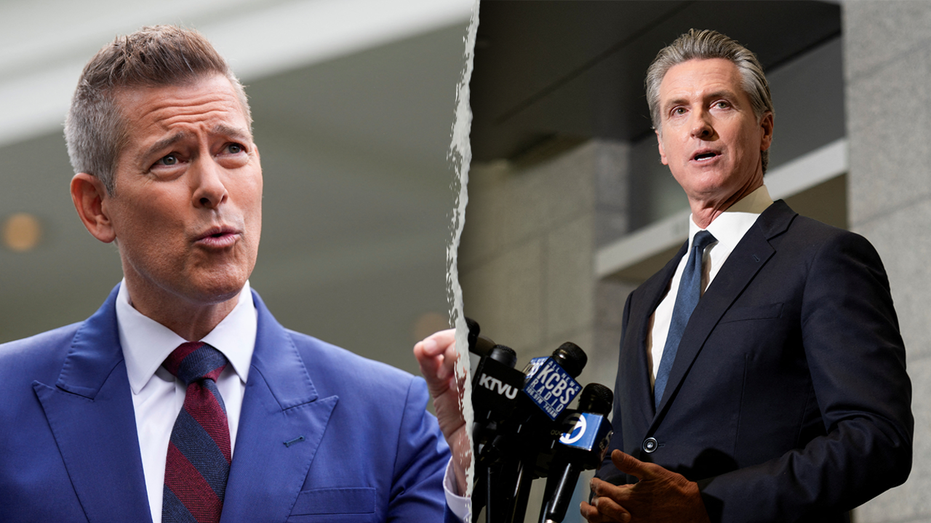
The Trump administration is withholding roughly $160 million in federal transportation funding from California beginning in fiscal year 2027 after the state failed to revoke more than 17,000 commercial drivers’ licenses (CDLs), which federal regulators say were unlawfully issued, by a federally agreed-upon deadline, U.S. Transportation Secretary Sean Duffy announced Wednesday. The funding penalty follows a “final determination” issued by the Federal Motor Carrier Safety Administration (FMCSA) after California missed a Jan. 5, 2026, deadline to cancel the licenses. Federal officials say this allowed foreign drivers whose licenses did not comply with federal lawful-presence requirements to continue operating heavy commercial vehicles on U.S. roads. “It’s reckoning day for [Gov.] Gavin Newsom and California. Our demands were simple: follow the rules, revoke the unlawfully-issued licenses to dangerous foreign drivers, and fix the system so this never happens again,” Duffy said in a statement. “Gavin Newsom has failed to do so, putting the needs of illegal immigrants over the safety of the American people.” TRUMP ADMINISTRATION WITHHOLDS $40M FROM CALIFORNIA OVER TRUCKER ENGLISH PROFICIENCY RULES Duffy added the administration is pulling the funding “to ensure federal tax dollars don’t fund this charade.” According to the FMCSA, the agency’s audit uncovered what it described as a “systemic collapse” of California’s non-domiciled CDL program. Federal officials said the state illegally issued licenses with expiration dates extending years beyond a driver’s lawful presence and granted CDLs to individuals who were ineligible to hold them under federal safety regulations. Overall, more than 20,000 active non-domiciled — people whose permanent home is located outside the U.S. — CDLs were issued by California in violation of federal rules, according to the audit. TRUMP THREATENS TO CUT $75M FROM PENNSYLVANIA OVER ILLEGAL IMMIGRANT CDL SCANDAL “Federal regulations are clear: states must correct safety deficiencies on a schedule mutually agreed upon by the Agency, and California failed to meet its commitment to rescind these unlawfully-issued licenses by January 5,” FMCSA Administrator Derek D. Barrs said. “We will not accept a corrective plan that knowingly leaves thousands of drivers holding noncompliant licenses behind the wheel of 80,000-pound trucks in open defiance of federal safety regulations.” Federal officials said a nationwide audit conducted in September found that more than 25% of California’s non-domiciled CDLs were unlawfully issued, including licenses extended as many as four years beyond the expiration of lawful presence documentation. The audit cited one case in which California issued a CDL to a driver from Brazil with endorsements to operate a passenger bus and a school bus, even though the license remained valid for months after the driver’s legal presence expired. In November, California agreed to revoke every illegally issued license within 60 days and to work with federal officials so the agency could verify that the failures allowing the licenses to be issued had been corrected, according to the release. Federal officials said the state failed to meet that commitment and attempted to extend the revocation deadline without federal approval. Newsom’s office, the California Department of Motor Vehicles and the California State Transportation Agency did not immediately respond to Fox News Digital’s request for comment. Fox News Digital’s Michael Ruiz contributed to this reporting.
Trump pulls US out of UN-linked migration forum in bold immigration move
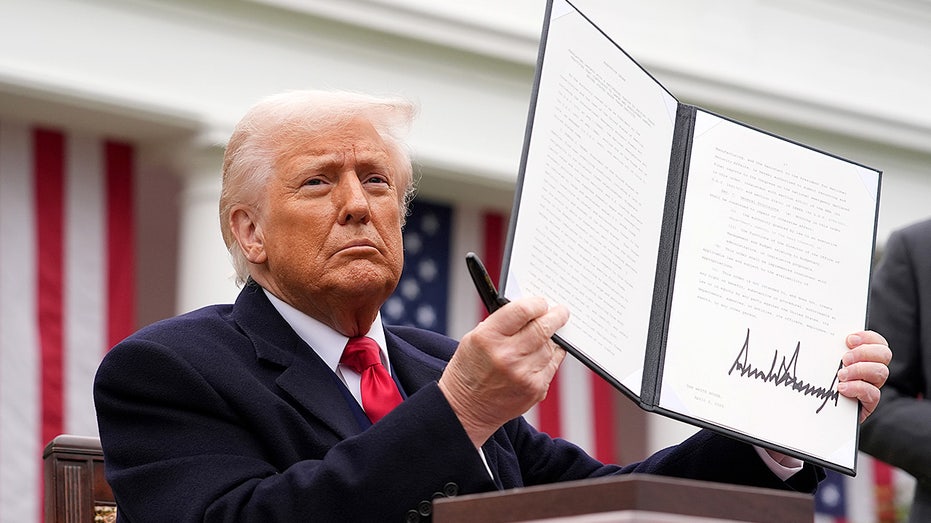
FIRST ON FOX: President Donald Trump signed an executive order Wednesday withdrawing the United States from the Global Forum on Migration and Development (GFMD), formally pulling the country out of an international body tied to the United Nations’ Global Compact for Migration. The move ends U.S. participation in a forum critics have long argued promotes mass migration and undermines national sovereignty by advancing the concept of an international “right” to migrate. The Global Forum on Migration and Development played a key role in shaping the U.N.’s Global Compact for Migration, a nonbinding framework that seeks to expand international cooperation on migration policy and migrant rights. The Trump administration has opposed the compact, arguing it erodes the ability of sovereign nations to enforce their own immigration laws and border controls. “For too long, international organizations have fueled an endless flow of mass migration and have sought to compel Americans to accept the same destructive agenda,” Principal Deputy Spokesperson Tommy Pigott said in a statement. “Under President Trump, the era of mass migration is over.” TRUMP REWRITES NATIONAL SECURITY PLAYBOOK AS MASS MIGRATION OVERTAKES TERRORISM AS TOP US THREAT Pigott said the administration will not support organizations that “run cover for illegal immigration or attempt to erode America’s sovereignty,” adding that the GFMD was among the leading international bodies promoting the idea of an international right to migration. The Biden administration previously supported the Global Compact for Migration and maintained U.S. engagement with the GFMD, a position Trump officials now describe as a sharp departure from the former president’s border enforcement agenda. The GFMD has drawn criticism from immigration hawks for opposing what it calls the “criminalization of migration” and for partnering with advocacy groups that condemn large-scale deportations. The organization also has hosted events warning against the “normalization of rapid mass deportations” and narratives that portray migrants as criminals. TRUMP CUTS FAMILY REUNIFICATION PROGRAMS FOR SEVEN COUNTRIES CITING FRAUD AND SECURITY CONCERNS In a 2020 document aimed at shaping public opinion, the GFMD urged governments and media to move away from terms such as “illegal migrant,” arguing that such language fuels polarization. The group has acknowledged receiving input from left-wing billionaire George Soros’ Open Society Foundation as part of its work on migration messaging. The organization has also promoted remittances sent by migrants to their home countries as a positive global economic force — a practice critics say drains hundreds of billions of dollars from the U.S. economy annually. Administration officials say the withdrawal underscores Trump’s broader effort to reassert U.S. control over immigration policy and reject what they view as globalist pressure campaigns aimed at normalizing mass migration. “The United States will not hesitate to assert sovereign control of its border, protect the true God-given natural rights, and end wasteful globalist spending,” Pigott said. During his first term, Trump withdrew from or declined to join several U.N.-backed frameworks, arguing they conflicted with domestic law and U.S. sovereignty, including the Paris climate agreement. The administration has frequently cited Europe’s migrant crisis as a warning, arguing that permissive migration policies have fueled social unrest, overwhelmed public services, and weakened internal security across the continent.
Trump says he wants to free up Venezuelan oil flow. What was blocking it?
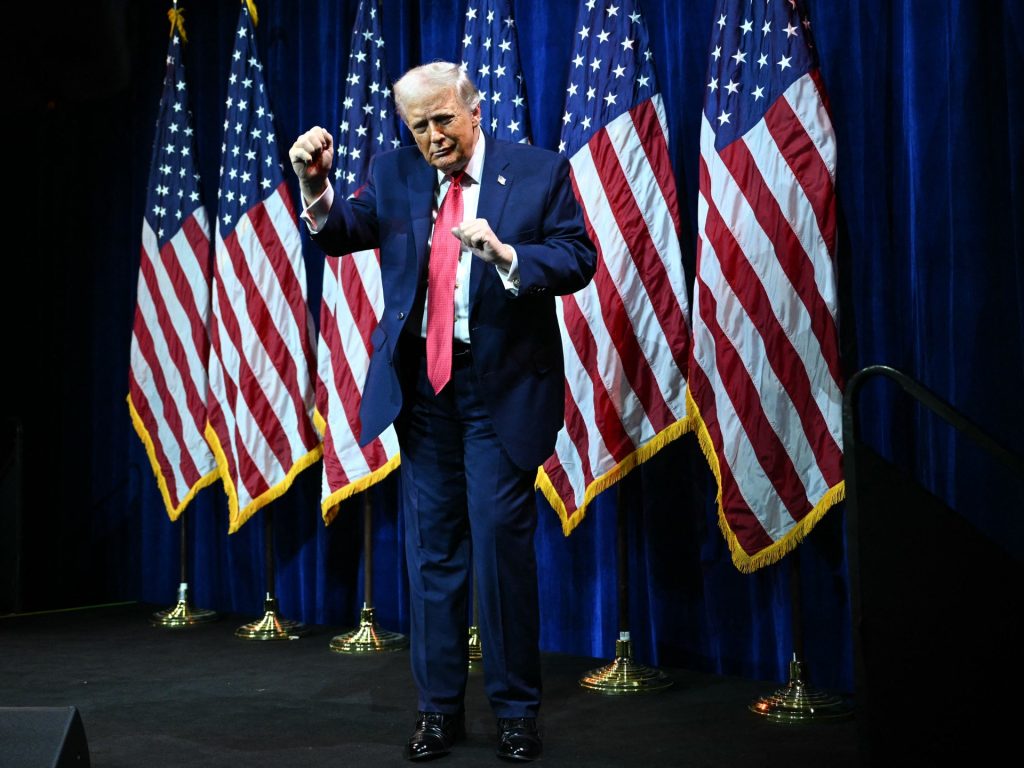
United States President Donald Trump and Secretary of State Marco Rubio say they want to free up the flow of Venezuelan oil to benefit Venezuelans after US forces abducted President Nicolas Maduro from Caracas. “We’re going to rebuild the oil infrastructure, which requires billions of dollars that will be paid for by the oil companies directly,” Trump said at a media briefing at his Mar-a-Lago estate in Florida hours after Maduro was seized on Saturday. “They will be reimbursed for what they’re doing, but it’s going to be paid, and we’re going to get the oil flowing.” Then, on Tuesday, the US president said he wanted to use proceeds from the sale of Venezuelan oil “to benefit the people of Venezuela and the United States”. Rubio has echoed Trump in his comments in recent days. But what has been holding back the flow of Venezuelan oil, preventing the country from attracting investments and driving the country into poverty? A key reason is one that Trump and Rubio have been silent about: Washington’s own efforts to strangle Venezuela’s oil industry and economy through sanctions, which also have set off a refugee crisis. What has Trump said about Venezuelan oil? In a post on his Truth Social platform on Tuesday night, Trump said Venezuela will turn over 30 million to 50 million barrels of sanctioned oil to the US. Trump wrote: “This Oil will be sold at its Market Price, and that money will be controlled by me, as President of the United States of America, to ensure it is used to benefit the people of Venezuela and the United States!” Advertisement Trump added that he had directed his energy secretary, Chris Wright, to execute the plan “immediately”. “It will be taken by storage ships, and brought directly to unloading docks in the United States,” Trump wrote. During the news conference on Saturday, Trump said US oil companies would fix Venezuela’s “broken infrastructure” and “start making money for the country”. Earlier Trump had accused Venezuela in a Truth Social post of “stealing” US oil, land and other assets and using that oil to fund crime, “terrorism” and human trafficking. Top Trump adviser Stephen Miller has made similar claims in recent days. What does it mean for the US to take Venezuelan oil? Oil is trading at roughly $56 per barrel. Based on this price, 30 million barrels of oil would be worth $1.68bn and 50 million barrels of oil would be worth $2.8bn. “Trump’s statement about oil in Venezuela is beyond an act of war; it is an act of colonisation. That is also illegal based on the UN Charter,” Vijay Prashad, the director of the Tricontinental Institute for Social Research based in Argentina, Brazil, India, and South Africa, told Al Jazeera. Ilias Bantekas, a professor of transnational law at Hamad Bin Khalifa University in Qatar, told Al Jazeera that the US involvement in Venezuela was “less about Maduro as it is about access to Venezuela’s oil deposits”. “This [oil] is the number one target. Trump is not content with just allowing US oil firms to get concessions but to ‘run’ the country, which entails absolute and indefinite control over Venezuela’s resources.” According to the website of the US Energy Information Administration, the US consumed an average of 20.25 million barrels of petroleum per day in 2023. What has Rubio said about Venezuelan oil? In an interview on the NBC TV network’s Meet the Press programme that aired on Sunday, Rubio said: “We are at war against drug trafficking organisations. That’s not a war against Venezuela.” “No more drug trafficking … and no more using the oil industry to enrich all our adversaries around the world and not benefitting the people of Venezuela or, frankly, benefitting the United States and the region,” Rubio said. Rubio said in the interview that since 2014, about eight million Venezuelans have fled the country, which he attributed to theft and corruption by Maduro and his allies. According to a report by the Office of the UN High Commissioner for Refugees from May, nearly 7.9 million people have indeed left Venezuela. But he was silent on the US’s own role in creating that crisis. Advertisement What are the US sanctions against Venezuela’s oil? Venezuela nationalised its oil industry in 1976 under then-President Carlos Andres Perez during an oil boom. He established the state-owned Petroleos de Venezuela SA (PDVSA) to control all oil resources. Venezuela continued to be a major oil exporter to the US for some years, supplying 1.5 million to 2 million barrels per day in the late 1990s and early 2000s. After President Hugo Chavez took office in 1998, he nationalised all oil assets, seized foreign-owned assets, restructured the PDVSA and prioritised using oil revenue for social programmes in Venezuela. From 2003 to 2007, Venezuela under Chavez managed to cut its poverty rate in half – from 57 percent to 27.5 percent. Extreme poverty fell even more sharply, by 70 percent. But exports declined, and government authorities were accused of mismanagement. The US first imposed sanctions on Venezuela’s oil in retaliation for nationalising US oil assets in 2005. Under US sanctions, many senior Venezuelan government officials and companies have been barred from accessing any property or financial assets held in the US. They cannot access US bank accounts, sell property or access their money if it passes through the US financial system. Critically, any US companies or citizens doing business with any sanctioned individual or company will be penalised and risk becoming subject to enforcement actions. Maduro took over as president in 2013 after Chavez’s death. In 2017, Trump, during his first term in office, imposed more sanctions and tightened them again in 2019. This further restricted sales to the US and access for Venezuelan companies to the global financial system. As a result, oil exports to the US nearly stopped, and Venezuela shifted its trade mainly to China with some sales to India and Cuba. Last month, the Trump administration imposed yet more
Do Russia and China pose a national security threat to the US in Greenland?
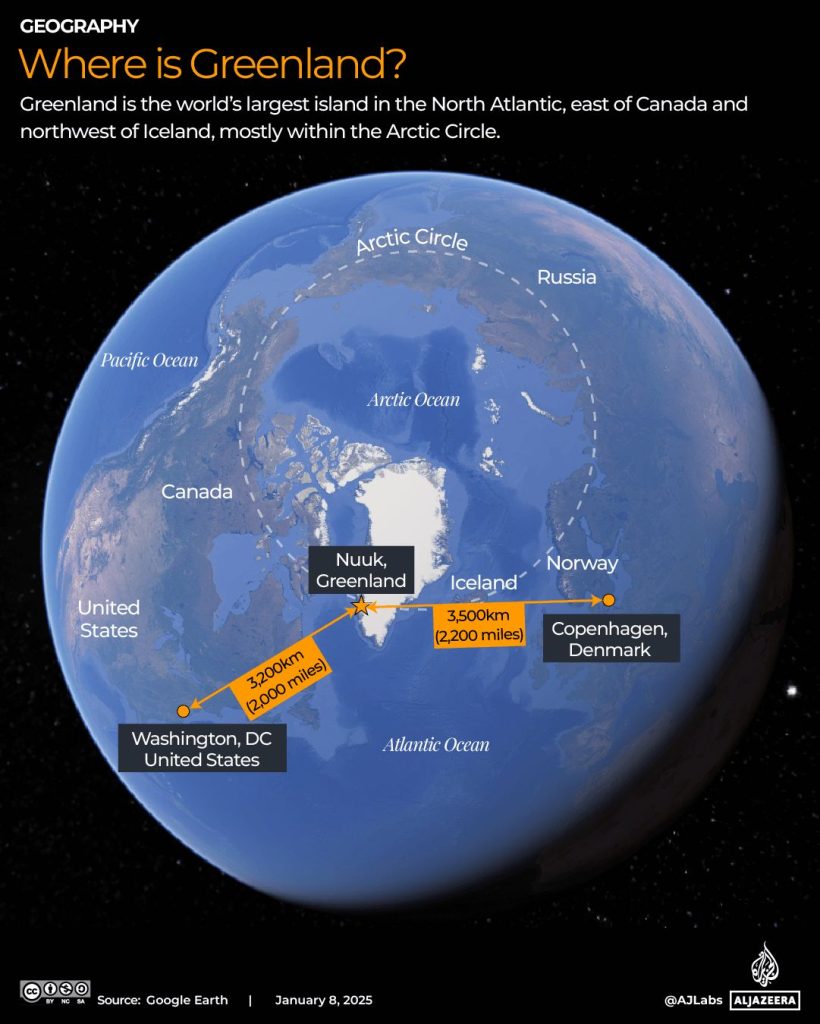
US President Donald Trump sees Greenland as a United States national security priority to deter Washington’s “adversaries in the Arctic region”, according to a White House statement released on Tuesday. The statement came days after Trump told reporters that the US needs Greenland from a national security perspective because it is “covered with Russian and Chinese ships”. Recommended Stories list of 4 itemsend of list Here’s what you need to know about what Trump said, whether Russia and China are present in Greenland, and whether they do pose a threat to American security. What has Trump recently said about Greenland? “Right now, Greenland is covered with Russian and Chinese ships all over the place. We need Greenland from the standpoint of national security,” Trump told reporters aboard Air Force One on January 4. The White House statement on Tuesday fleshed out further details on how the US would go about its acquisition of Greenland. “The president and his team are discussing a range of options to pursue this important foreign policy goal, and of course, utilizing the US military is always an option at the commander-in-chief’s disposal,” the White House statement says. Over the course of his second term, Trump has talked about wanting Greenland for national security reasons multiple times. “We need Greenland for international safety and security. We need it. We have to have it,” he said in March. Since 1979, Greenland has been a self-governing territory of Denmark, and since 2009, it has had the right to declare independence through a referendum. Advertisement Trump has repeatedly expressed a desire to take control of the island, which hosts a US military base. He first voiced this desire in 2019, during his first term as US president. As a response, leaders from Greenland and Denmark have repeatedly said that Greenland is not for sale. They have made it clear that they are especially not interested in becoming part of the US. On January 4, Denmark’s Prime Minister Mette Frederiksen said, “It makes absolutely no sense to talk about the US needing to take over Greenland.” “The US has no right to annex any of the three countries in the Danish kingdom,” she said, alluding to the Faroe Islands, which, like Greenland, are also a Danish territory. “I would therefore strongly urge the US to stop the threats against a historically close ally and against another country and another people who have very clearly said that they are not for sale,” Frederiksen said. US special forces abducted Venezuelan President Nicolas Maduro during an operation in the Venezuelan capital, Caracas, on January 3. Hours later, Katie Miller, the wife of close Trump aide and US Homeland Security Advisor Stephen Miller, posted a photo on X showing the US flag imposed on the map of Greenland. Greenland’s Prime Minister Jens-Frederik Nielsen hit back in an X post, writing, “Relations between nations and peoples are built on mutual respect and international law – not on symbolic gestures that disregard our status and our rights.” Why does Trump want Greenland so badly? The location and natural resources of the Arctic island make it strategically important for Washington. Greenland is geographically part of North America, located between the Arctic Ocean and the North Atlantic Ocean. It is home to some 56,000 residents, mostly Indigenous Inuit people. It is the world’s largest island. Greenland’s capital, Nuuk, is closer to New York City – some 2,900km (1,800 miles) away – than the Danish capital Copenhagen, which is located 3,500km (2,174 miles) to the east. Greenland, a NATO territory through Denmark, is an EU-associated overseas country and territory whose residents remain European Union citizens, having joined the European Community with Denmark in 1973 but having withdrawn in 1985. “It’s really tricky if the United States decides to use military power to take over Greenland. Denmark is a member of NATO; the United States is a member as well. It really calls into question what the purpose of the military alliance is, if that happens,” Melinda Haring, a senior fellow at the Atlantic Council Eurasia Center, told Al Jazeera. Advertisement Greenland offers the shortest route from North America to Europe. This gives the US a strategic upper hand for its military and its ballistic missile early-warning system. The US has expressed interest in expanding its military presence in Greenland by placing radars in the waters connecting Greenland, Iceland and the United Kingdom. These waters are a gateway for Russian and Chinese vessels, which Washington aims to track. The island is also incredibly rich in minerals, including rare earth minerals used in the high-tech industry and in the manufacture of batteries. According to a 2023 survey, 25 of 34 minerals deemed “critical raw materials” by the European Commission were found in Greenland. Greenland does not carry out the extraction of oil and gas, and its mining sector is opposed by its Indigenous population. The island’s economy is largely reliant on its fishing industry. Are Chinese and Russian ships swarming Greenland? However, while Trump has spoken of Russian and Chinese ships around Greenland, currently, facts don’t bear that out. Vessel tracking data from maritime data and intelligence websites such as MarineTraffic do not show the presence of Chinese or Russian ships near Greenland. Are Russia and China a threat to Greenland? The ships’ location aside, Trump’s rhetoric comes amid a heightened scramble for the Arctic. Amid global warming, the vast untapped resources of the Arctic are becoming more accessible. Countries like the US, Canada, China and Russia are now eyeing these resources. “Russia has never threatened anyone in the Arctic, but we will closely follow the developments and mount an appropriate response by increasing our military capability and modernising military infrastructure,” Russian President Vladimir Putin said during an address in March 2025 at the International Arctic Forum in the Russian city of Murmansk, the largest city within the Arctic Circle. During this address, Putin said that he believed Trump was serious about taking Greenland and that the US will continue with
Extreme flooding submerges Kosovo cities, villages
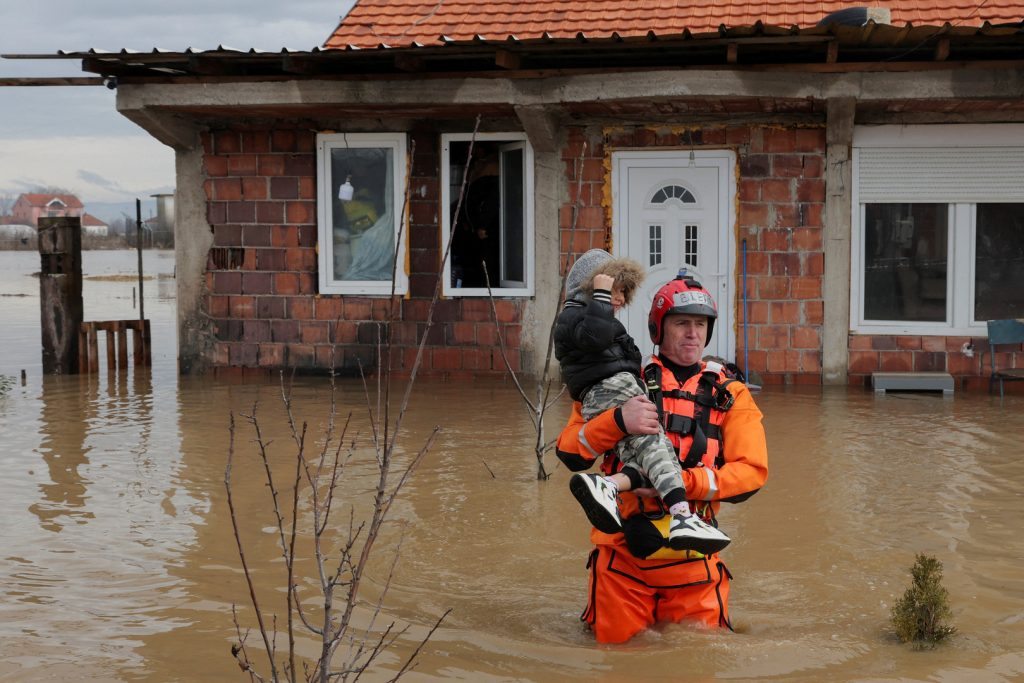
NewsFeed Emergency crews in Kosovo carried out a second day of evacuations after the region was devastated by floods. Footage shows people being evacuated from submerged homes as floodwaters slammed several municipalities. Published On 7 Jan 20267 Jan 2026 Click here to share on social media share2 Share Adblock test (Why?)
JNU to take BIG action on students over allegedly raising provocative slogans, says, ‘expulsion, debarment…’

Jawaharlal Nehru University (JNU) is set to take a strict action against students allegedly chanting ‘objectional’ slogans against PM Narendra Modi and Home Minister Amit Shah in a protest inside the premises. JNU administration vowed to take action.
Karnataka SHOCKER: BJP woman worker alleges police of assaulting, stripping during arrest, Cops claim, ‘attacked…’

A Bhartiya Janata Party’s woman worker was allegedly brutally assaulted and stripped by cops in Karnataka’s Hubballi city, while she was being arrested by police officers.