

Jailed Palestine Action activist ends 60-day hunger strike as health fails

Prisoners For Palestine says activist Teuta Hoxha needs to be hospitalised but has been denied medical treatment by prison authorities. Published On 5 Jan 20265 Jan 2026 Click here to share on social media share2 Share Palestine Action activist Teuta Hoxha has paused her hunger strike in the United Kingdom after more than two months without food while demanding immediate bail and the right to a fair trial. The group Prisoners For Palestine wrote on Instagram on Monday that Hoxha is in serious condition and needs to be hospitalised. It alleged the 29-year old has been denied proper treatment by prison authorities. Recommended Stories list of 4 itemsend of list Hoxha “needs urgent medical care in hospital to prevent refeeding syndrome. The prison is refusing [her] medical treatment, which is required to prevent death in extreme cases of starvation”. Refeeding syndrome, a potentially fatal condition, happens when nutrition is restarted in a starving person too quickly. There was no immediate comment from prison or government officials. For the past 63 days, Palestine Action members have been on hunger strikes in prisons around the UK after being jailed over alleged involvement in break-ins at the UK subsidiary of Elbit Systems in Filton near Bristol in 2024. Elbit Systems is an Israeli defence company with factories and offices across Britain. Some members of Palestine Action are also being held for an alleged break-in at a Royal Air Force base in Oxfordshire, where two military aircraft were sprayed with red paint. The prisoners deny the charges against them, which include burglary and violent disorder. After Hoxha has paused her protest, only three of eight Palestine Action hunger strikers continue to refuse food as they demand their release. ‘Apartheid regime’ In July, the British government voted in favour of proscribing Palestine Action as a “terrorist” organisation – putting it into the same category as armed groups such as al-Qaeda and ISIL (ISIS). Advertisement More than 1,600 people have been arrested in connection with support for Palestine Action after near-weekly protests for the ban to be revoked. The proscription is being challenged in court. The protest group, launched in 2020, has described itself as a movement “committed to ending global participation in Israel’s genocidal and apartheid regime”. Those still on hunger strike include Heba Muraisi, 31, and Kamran Ahmed, 28. Lewie Chiaramello, 22, is also refusing food every other day because he’s diabetic. The strikers have made five demands: immediate bail, the right to a fair trial, an end to censorship of their communications, “de-proscribing” Palestine Action and closing Elbit Systems factories in the UK. People protest at a pro-Palestine demonstration in Manchester, England [File: Gary Roberts/SOPA Images/LightRocket via Getty Images] Adblock test (Why?)
Trump has made US militarism worse
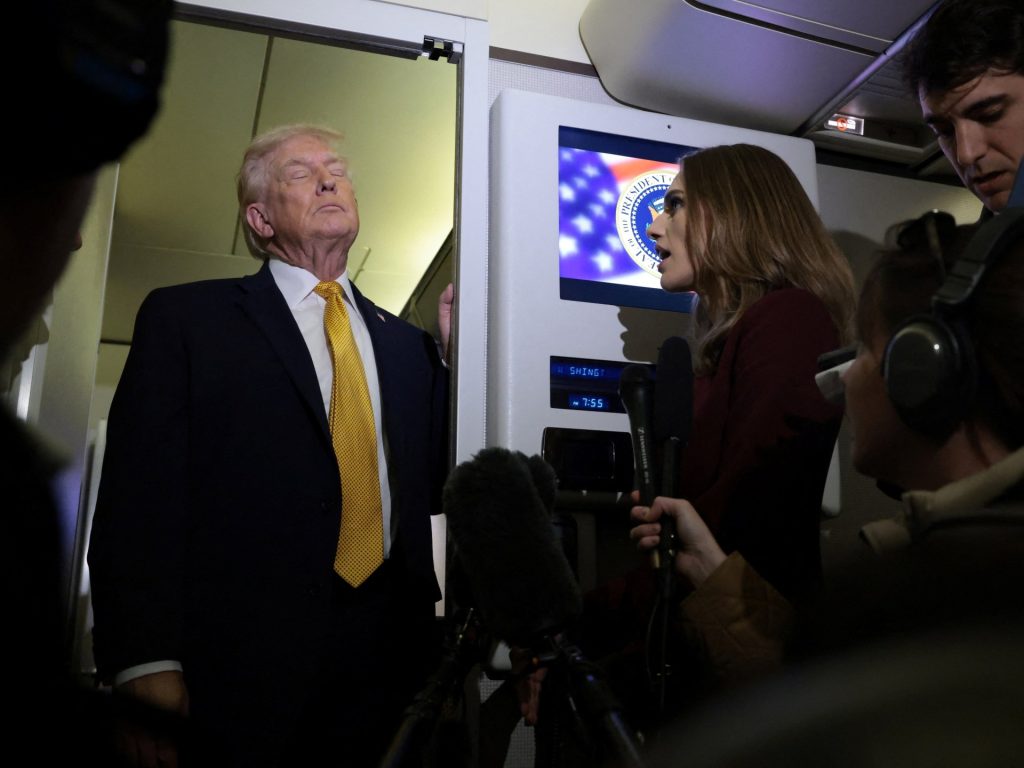
For many years before becoming president, Donald Trump publicly criticised the George W Bush administration over its decision to launch the war on Iraq. And yet, today, in his second term as president, he finds himself presiding over a military debacle that is quite reminiscent of Bush’s. Trump ordered a military intervention to remove an antagonistic foreign leader, based on a flimsy argument of national security, with the goal of accessing that country’s oil. In both cases, we see a naive confidence that the United States can simply achieve its goals through regime change. US intervention into Venezuela reeks of the same hubris that surrounded the Iraq invasion two decades ago. Yet there are also important differences to consider. The most important distinguishing feature of the operation in Venezuela is its lack of an overarching vision. On Saturday after Trump finished an hour-long news conference alongside his secretaries of defence and state, it was not clear what the plan was for Venezuela going forward, or if there was a plan at all. His statements threatening more attacks in the following days brought no clarity either. Past instances of US-led regime change fit into the larger ideological visions of the incumbent US commander-in-chief. In 1823, President James Monroe declared the Western Hemisphere off-limits to European colonialism. As the United States spent the 20th century consolidating its sphere of influence across the Americas, the Monroe Doctrine would justify various interventions in Latin America and the Caribbean. The Cold War added new justifications for the United States to overthrow leftist regimes and install friendly governments in the Americas. Advertisement As the Cold War ended, President George HW Bush sought to serve as a caretaker for a “new world order” in which the US had emerged as the world’s lone superpower. When Bush sent troops to Somalia in 1992 and his successor Bill Clinton reversed a military coup in Haiti in 1994, they did so under the paradigm of “humanitarian intervention”. When George W Bush ordered the invasion of Iraq, it was done under the umbrella of the post-9/11 “war on terror”. When President Barack Obama intervened against the forces of Libyan leader Muammar Gaddafi in 2011, he was guided by the “responsibility to protect” doctrine concerning civilians in danger. But in the case of the US attack on Venezuela, there has been no ideological justification. Trump and his team have haphazardly thrown around references to humanitarianism, counterterrorism and more to justify the attack. The president even brought up the Monroe Doctrine. But just as it seemed that he was grounding his foreign policy in a larger ideology, albeit one borrowed from two centuries ago, he made a joke of the concept. “The Monroe Doctrine is a big deal,” Trump explained on Saturday. “But we’ve superseded it by a lot, by a lot. They now call it the Donroe Doctrine.” Trump did not make up this pun; it was used by the New York Post a year ago to describe Trump’s aggressive foreign policy as he threatened to annex Canada, Greenland and the Panama Canal. The president’s decision to embrace the tongue-in-cheek term illustrates a disturbing reality of his foreign policy: Any notion that he is promoting an ideological vision is a joke. The truth is Trump is pursuing an increasingly aggressive and militaristic foreign policy in his second term, not because he wants to impose a grand vision, but because he has discovered he can get away with it. Striking a variety of foreign “bad guys” who have little capacity to fight back – ISIL (ISIS) affiliates in Nigeria who are “persecuting” Christians and “narcoterrorists” in Latin America – appeals to members of Trump’s base. After he mentioned the Venezuelan gang Tren de Aragua during Saturday’s news conference, he went on a minutes-long tangent to brag about his military interventions into US cities. While the president’s inability to stay on topic may be concerning for those questioning his health and mental fitness, this digression into domestic affairs had some relevance for his Venezuelan intervention, at least as far as he was concerned: His increasingly militarised war on drugs and crime abroad justifies an increasingly militarised war on drugs and crime at home. Advertisement Past presidents have used US power to pursue a wide variety of ideologies and principles. Trump appears to be paying lip service to past ideologies to justify the use of US power. Many times, the “good” intentions of previous presidents paved the way to hellish outcomes for the peoples who found themselves on the receiving end of US intervention. But those intentions at least created a level of predictability and consistency for the foreign policies of various US administrations. Trump, by contrast, seems driven solely by immediate political concerns and short-term prospects for glory and profit. If there is a saving grace of such an unprincipled foreign policy, it may be the ephemeral nature of interventions conducted without an overarching vision. An unprincipled approach to military intervention does not foster the kind of ideological commitment that has led other presidents to engage in long-term interventions like the Iraq occupation. But it also means that Trump could conceivably use military intervention to settle any international dispute or to pursue any ostensibly profitable goal – say assuming control of Greenland from Denmark. Last year, he decided tariffs were a potent tool for asserting his interests and started applying them almost indiscriminately on allies and adversaries alike. Now that Trump has grown comfortable using the US military to achieve a range of goals – profit, gunboat diplomacy, distraction from domestic scandals, etc – the danger is that he will grow similarly haphazard in his use of force. That does not bode well for the US nor for the rest of the world. At a time when multiple global crises are overlapping – climate, conflict and impoverishment – the last thing the world needs is a trigger-happy superpower without a clear strategy or a day-after plan. The views expressed in this article are
Colombia’s Petro promises to defend homeland amid Trump threats

President criticizes Trump, calling US threats an undue interference in Colombian internal matters under international law. Published On 5 Jan 20265 Jan 2026 Click here to share on social media share2 Share Colombian President Gustavo Petro says he would “take up arms” for his country if necessary as the United States issues threats against him and his government. In a social media post on Monday, Petro, a former leftist fighter, said any violent US intervention in Colombia, such as the kind carried out in Venezuela over the weekend, would provoke a response. Recommended Stories list of 3 itemsend of list “I swore not to touch a weapon again,” Petro said. “But for the homeland I will take up arms again.” Petro has emerged as an outspoken critic of US President Donald Trump, who has threatened Colombia with possible military strikes in the name of combating drug trafficking. The two leaders have frequently traded insults, but Trump’s threats have become increasingly hostile in recent days. The US president said over the weekend that Petro should “watch his a**” after the abduction of Venezuelan leader Nicolas Maduro, an act widely considered illegal by scholars of international law. Speaking with reporters on Sunday, Trump said a similar operation against Petro’s government “sounds good to me”. “Colombia is very sick, too, run by a sick man, who likes making cocaine and selling it to the United States, and he’s not going to be doing it very long,” Trump said. Colombia’s Ministry of Foreign Affairs denounced Trump’s comments as “an undue interference in the internal affairs of the country, against the norms of international law”. Trump has accused Petro of facilitating the trafficking of drugs to the US, a claim for which there is no evidence and is firmly denied by Petro, who says his government has worked to combat drug production while taking steps away from the militarised approach of the war on drugs. Advertisement “I have enormous trust in my people,” Petro said. “And that is why I have asked the people to defend the president from any illegitimate violent act against him.” Adblock test (Why?)
BIG move by Ratan Tata’s company: Air India eyeing to replace CEO Campbell Wilson due to…; Here’s why
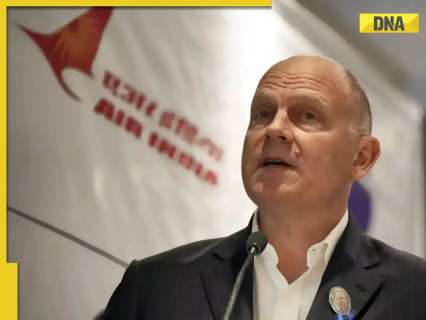
Air India is reportedly considering replacing CEO and MD Campbell Wilson before his term ends in 2027, amid regulatory scrutiny following a deadly crash and operational lapses. Tata Group chairman N. Chandrasekaran is said to be unhappy with crisis management and has begun exploring new leadership.
Customer Alert! Banks to remain closed on January 27? Employees’ unions to go on nationwide strike due to…
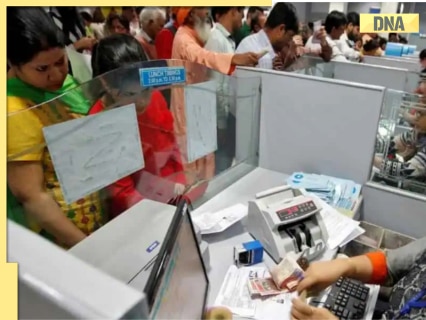
Customers can expect service disruptions for branch-based activities like cheque clearances, cash services, and loan processing, while digital banking will likely remain unaffected.
Magh Mela 2026: Good news for pilgrims as Indian Railways offers extra…at Prayagraj Railway station, check details

Indian Railways has added temporary train stops at Prayag, Rambagh, and Jhunsi stations during Magh Mela 2026 in Prayagraj to help millions of pilgrims travel comfortably, with improved facilities and reduced crowding.
CHILLING video shows Punjab AAP Sarpanch Jarmal Singh shot dead in broad daylight at Amritsar wedding

According to the DCP, Jarnail Singh had come to Amritsar to attend a wedding ceremony at the Marigold Marriage Palace. The attack took place between 2.30 pm and 3 pm on Sunday, shortly after the bride and groom had left, police said.
Umar Khalid’s FIRST reaction after SC denies bail in Delhi riots case: ‘Ab yahi…’
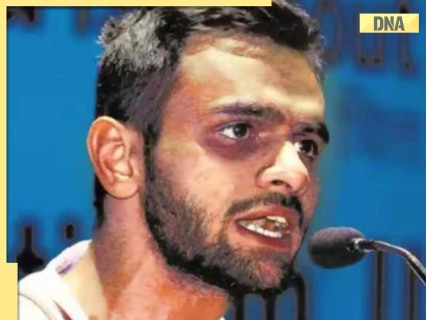
Student activist Umar Khalid, who was denied bail by the Supreme Court in the Delhi riots case, has become hopeless as he said that now jail has become his life. Banjyosna Lahiri, Khalid’s partner, shared that Khalid was happy and relieved for the co-accused who were granted bail, despite his own denial. Sharing Khalid’s reaction on X, Lahiri wrote, “I am really happy for the others, who got bail! So relieved, Umar said. “I’ll come tomorrow for Mulaqat”, I replied. “Good good, aa jana. Ab yahi zindagi hai”.
Umar Khalid’s FIRST reaction after SC denies bail in Delhi riot case: ‘Ab yahi…’
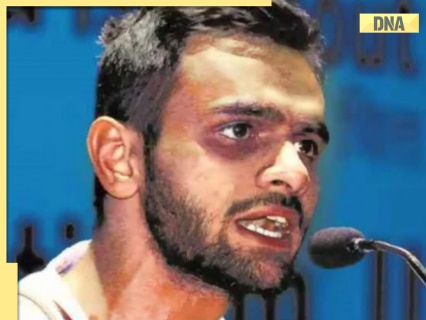
Khalid remains in Tihar jail as the Supreme Court, in its verdict, denied his and Sharjeel Imam’s bail, while granting bail to five other activists in the same case-Gulfisha Fatima, Meeran Haider, Shifa Ur Rehman, Mohd. Saleem Khan and Shadab Ahmad.
Andhra: Gas leak at ONGC oil well in Konaseema triggers fire, mass evacuation
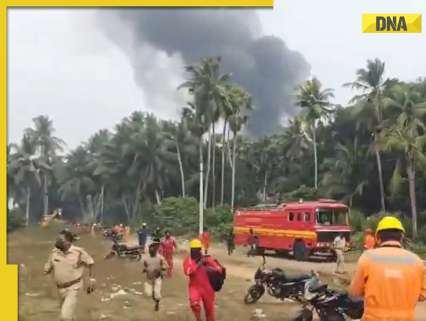
ONGC officials have reached the site to assess the situation and analyse the cause of the incident.