

Critics say Mamdani’s vow to swap ‘rugged individualism’ with ‘warmth of collectivism’ has sinister undertone
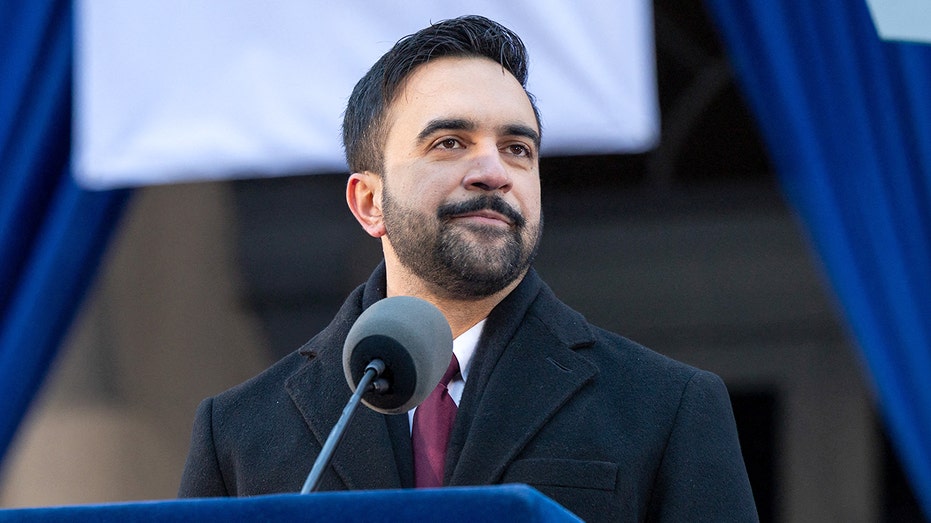
Freshly inaugurated New York City Mayor Zohran Mamdani, a self-described Democratic socialist, promoted “collectivism” over “rugged individualism” during a speech on Thursday, and prominent conservative figures nationwide responded by sounding the alarm about collectivist ideology. “We will replace the frigidity of rugged individualism with the warmth of collectivism,” Mamdani declared in his inaugural address. Florida Gov. Ron DeSantis — a Republican who pursued the GOP presidential nomination during the past election cycle but ultimately dropped out and endorsed President Donald Trump — raised the matter of the massive death toll associated with collectivism. HOURS AFTER TAKING OFFICE, NYC MAYOR MAMDANI TARGETS LANDLORDS, MOVES TO INTERVENE IN PRIVATE BANKRUPTCY CASE “The ‘warmth’ of collectivism that always requires coercion and force. How many dead over the past 100 years due to collectivist ideologies?” DeSantis wrote in a post on X. House Republican Conference Chair Rep. Lisa McClain of Michigan called Mamdani a “communist,” a label which he has previously rejected. DESANTIS WARNS GOP FACES ‘ISSUE’ KEEPING TRUMP VOTERS ENGAGED IN FUTURE ELECTIONS “Zohran Mamdani is a dangerous communist who is likely to DESTROY NYC through his dedication to communist ideology. Let’s be clear: COMMUNISM HAS FAILED everywhere it has been tried. NYC will be no different,” she asserted in a post on X. Mamdani said last year during an appearance on “The View” that he is “not a Communist.” Sen. Ted Cruz, R-Texas, responded to Mamdani’s controversial remark on Thursday by asserting, “When communists rule, individual rights — invariably — are taken away.” NYC MAYORAL CANDIDATE ZOHRAN MAMDANI DENIES TRUMP’S ‘COMMUNIST’ LABEL ON ‘THE VIEW’ “Collectivism isn’t warm,” Sen. Mike Lee, R-Utah, declared in a post. “It’s as cold as ice and locks the poor into perpetual poverty,” he continued. “Free markets have elevated more people out of poverty than any government program ever could.” CLICK HERE TO GET THE FOX NEWS APP Rep. Chip Roy, R-Texas, who is running for Lone Star State attorney general, asserted in a post, “The Marxist and the Islamist are the enemy. The Mayor of New York is both.”
Minnesota fraud scandal intensifies debate over stripping citizenship

A massive fraud scandal tied to taxpayer-funded daycare, Medicaid and social services programs in Minnesota — involving potentially billions of dollars in suspicious billing — is prompting renewed scrutiny of whether some naturalized Americans obtained U.S. citizenship under false pretenses and whether denaturalization could now be used more aggressively. The fallout has already led the Department of Health and Human Services to freeze certain childcare payments to Minnesota, citing alleged fraud involving daycare providers throughout the past decade. Immigration authorities have confirmed they are reviewing whether fraud uncovered in Minnesota could provide the legal basis to revoke U.S. citizenship from naturalized individuals who concealed or misrepresented material facts during the immigration process. Denaturalization is legally constrained, requires individualized civil court proceedings and historically has been used sparingly. KAROLINE LEAVITT WARNS ‘PEOPLE WILL BE IN HANDCUFFS’ AS FEDS ZERO IN ON MINNESOTA FRAUD SCANDAL Attorney David Schoen said it remains legally viable but under extraordinary circumstances. He said on Fox News the process would likely trigger “significant” court challenges but “it is legally possible. In an extraordinary circumstance, we’d have to know the facts.” Schoen emphasized that immigration law already provides clearer mechanisms for removing noncitizens, particularly lawful permanent residents who violate the law, describing denaturalization as a far more extraordinary step requiring fact-specific scrutiny. COMER SUMMONS MINNESOTA OFFICIALS AS HOUSE PROBES MASSIVE SOCIAL SERVICES FRAUD White House press secretary Karoline Leavitt said on “Fox & Friends” that the administration is “not afraid to use denaturalization,” and confirmed that the Department of Homeland Security (DHS) and the State Department are “looking at” whether citizenship could be revoked in connection with those of Somali origin in the Minnesota fraud probe. DHS confirmed it is actively reviewing immigration and naturalization cases involving migrants from 19 countries of concern, including Somalia, to determine whether any individuals obtained U.S. citizenship through fraud that could warrant denaturalization. “Under U.S. law, if an individual procures citizenship on a fraudulent basis, that is grounds for denaturalization,” DHS Assistant Secretary Tricia McLaughlin said in a statement to Fox News. The review focuses on whether fraud occurred during the immigration or naturalization process, including false statements or marriage fraud used to obtain legal status or citizenship. DHS stressed that denaturalization is governed by strict legal standards and applies only under limited circumstances. President Donald Trump weighed in on the Minnesota investigations Wednesday, sharply criticizing the state’s handling of fraud and linking the scandal to illegal immigration in a Truth Social post. “Much of the Minnesota Fraud, up to 90%, is caused by people that came into our Country, illegally, from Somalia,” Trump wrote. “Lowlifes like this can only be a liability to our Country’s greatness,” he added. “Send them back from where they came, Somalia, perhaps the worst, and most corrupt, country on earth.” Federal prosecutors say their investigation has expanded to suspicious billing across 14 Medicaid-funded programs, where providers billed about $18 billion since 2018. A preliminary assessment cited by prosecutors suggests “half or more” of that amount could be fraudulent. The widened probe builds on yearslong scrutiny of Minnesota following some of the largest benefit-fraud cases ever prosecuted in the state, including a pandemic-era food aid scheme involving roughly $250 million in alleged losses. Federal officials say those cases exposed systemic weaknesses in oversight that may extend across multiple aid programs. HHS CUTS OFF MINNESOTA CHILD CARE PAYMENTS OVER ALLEGED DAYCARE FRAUD SCHEME Minnesota is home to one of the largest Somali communities in the country. Census Bureau–based estimates suggest roughly 260,000 people of Somali descent live in the U.S. and close to 100,000 are in Minnesota. Republican lawmakers argue that fraud on such a scale raises broader questions about whether individuals involved were truthful throughout the immigration process — and whether citizenship should shield offenders who obtained it through deception. House Majority Whip Tom Emmer, R-Minn., called for the deportation of all Somali immigrants involved in fraud cases in Minnesota. SENATE PRESSURE MOUNTS AS MINNESOTA FRAUD SCANDAL CONTINUES TO UNFOLD “I have three words regarding Somalis who have committed fraud against American taxpayers: Send them home. If they’re here illegally, deport them immediately; if they’re naturalized citizens, revoke their citizenship and deport them quickly thereafter. If we need to change the law to do that, I will,” he wrote on X. The renewed focus on denaturalization also aligns with broader efforts inside the Trump administration to tighten the naturalization process itself. U.S. Citizenship and Immigration Services Director Joseph Edlow has previously criticized the current citizenship test as “too soft,” calling for deeper civics knowledge and more rigorous English evaluation throughout the naturalization interview. Historically, the federal government has pursued only a small number of denaturalization cases each year. Civil liberties groups warn that expanding its use could raise due-process concerns, teeing up a potential legal battle.
The economic policies shaping Trump’s return to the White House
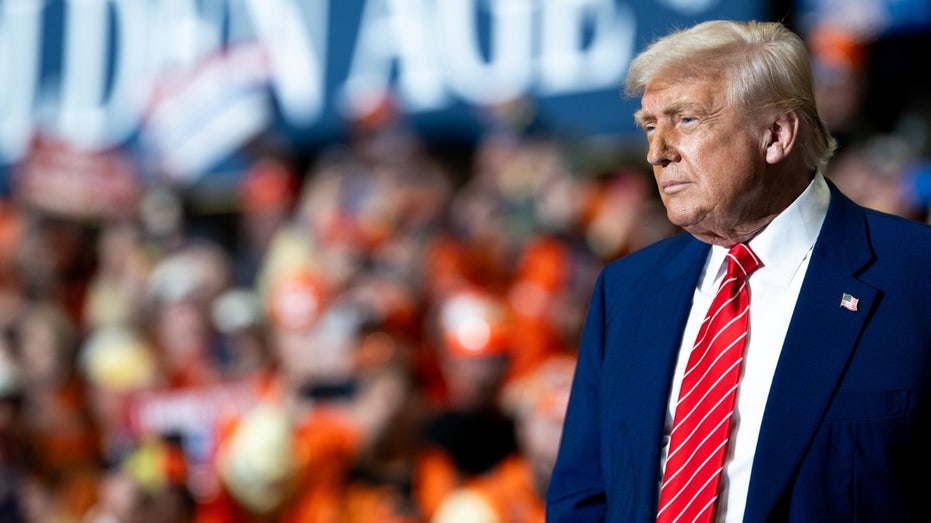
From sweeping tax cuts and aggressive trade policy to sharp market swings and renewed inflation concerns, President Donald Trump’s return to the White House was defined by economic decisions that reshaped the U.S. economy and sent ripple effects through global markets. In his first year back in office, Trump moved quickly to translate that agenda into policy, reviving and expanding key initiatives that affected fiscal policy, trade and household finances. Here’s a look at some of his key economic policies so far. Central to Trump’s economic agenda, his trade policy relies heavily on tariffs as a tool to generate revenue and exert leverage over foreign trading partners. Since Trump announced his “Liberation Day” tariffs in April, total duty revenue reached $215.2 billion in fiscal year 2025, which ended Sept. 30, according to the Treasury Department’s Customs and Certain Excise Taxes report. That momentum has carried into the new fiscal year, with the government collecting $96.5 billion in duties since Oct. 1, according to the latest Treasury statement. Trump administration officials argue the tariffs will reduce chronic trade imbalances, revive U.S. manufacturing and strengthen national security. Critics, however, warn that higher tariffs could raise costs for American consumers and invite retaliation from U.S. trading partners — risks they say are not reflected in the budget’s assumptions. The tariff strategy now faces a legal test, with the Supreme Court expected to rule in the new year on Trump’s authority to impose certain tariffs. TRUMP SAYS TARIFF REVENUE TO FUND $2K CHECKS FOR AMERICANS, LOWER NATION’S $38T DEBT The cases — Learning Resources Inc. v. Trump and Trump v. V.O.S. Selections Inc. — brought by an educational-toy manufacturer and a family-owned wine and spirits importer, center on whether the International Emergency Economic Powers Act granted Trump power to issue tariffs, or whether it crossed constitutional limits. Trump has described the cases as “life or death” for the nation’s economic and national security agenda. Signed into law on July 4, Trump’s landmark One Big Beautiful Bill Act (OBBBA) is a sweeping tax and spending package that builds on the 2017 Tax Cuts and Jobs Act (TCJA), enacted during his first term, while introducing new federal initiatives. The bill extends tax cuts originally enacted under the TCJA that were scheduled to expire at the end of this year, preventing a broad tax increase for individuals. Several provisions are made permanent, including lower individual income tax rates and an expanded standard deduction. Other provisions are extended temporarily, reshaping the tax landscape for households and businesses while adding new programs aimed at long-term savings. FIVE MAJOR POLICIES TO KNOW FROM THE ONE BIG BEAUTIFUL BILL ACT Beyond tax policy, the legislation and its implementation also reflect the administration’s broader priorities. The Trump administration has ramped up efforts to bar undocumented immigrants from a range of taxpayer-funded benefits, framing the move as part of a broader campaign to reduce government waste. Tucked into the OBBBA, Trump accounts are a new government-created investment program for children. Individuals can contribute up to $5,000 per year to a Trump account. The accounts are funded through a combination of federal seed money, private contributions from families and, when applicable, supplemental deposits from employers or nonprofit organizations. ‘TRUMP ACCOUNTS,’ EXPLAINED: WHO QUALIFIES, HOW THEY WORK AND WHEN YOU CAN CLAIM The program is scheduled to become available in mid-2026, with initial contributions beginning after July 4, 2026. The money is largely locked in until the child reaches adulthood. During what the IRS calls the “growth period” — from birth until Jan. 1 of the year the child turns 18 — funds generally cannot be withdrawn, even in cases of financial hardship. ‘TRUMP ACCOUNTS’ FOR NEWBORNS COULD GROW TO $1.9M, TREASURY SAYS The Department of Treasury estimates that the Trump accounts could accumulate into a seven-figure balance by early adulthood if families maximize contributions and allow the funds to grow. A fully funded account could reach as much as $1.9 million by age 28, according to the Treasury’s Office of Tax Analysis. At the lower end of projected returns, the savings account could still yield nearly $600,000 over the same period. Even without additional contributions beyond the federal government’s initial $1,000 deposit, Treasury estimates the account could grow to between $3,000 and $13,800 over 18 years. Trump has made affordability a central promise of his return to the White House, but delivering on that pledge has put him on a collision course with the Federal Reserve. Trump has repeatedly pressed the central bank to cut interest rates, arguing that high borrowing costs are squeezing households and slowing key sectors such as housing and autos. While the Fed doesn’t set the price of groceries or cars, its interest-rate decisions heavily influence how expensive it is to borrow money — and for now, borrowing remains costly. TRUMP SAYS HE’S CHOSEN NEXT FED CHAIR AS AFFORDABILITY PRESSURES RISE Elevated rates have pushed up monthly payments on mortgages, car loans and credit cards, even when the price of a home or vehicle hasn’t changed. As a result, everyday life can still feel more expensive. That dynamic has become a political vulnerability for Trump, as high borrowing costs in the housing and auto markets continue to fuel voter frustration. The president has placed much of the blame on Federal Reserve Chairman Jerome Powell, accusing him of moving too slowly to cut rates while simultaneously pointing to a strong economy. Powell and other Fed officials have said their decisions are guided by incoming economic data, including inflation and labor-market trends, rather than political pressure. Powell, who Trump appointed in 2017, is set to complete his term in May 2026, keeping the standoff between the White House and the central bank firmly in place.
Here are the key 2026 House and Senate races to watch that could decide control of Congress
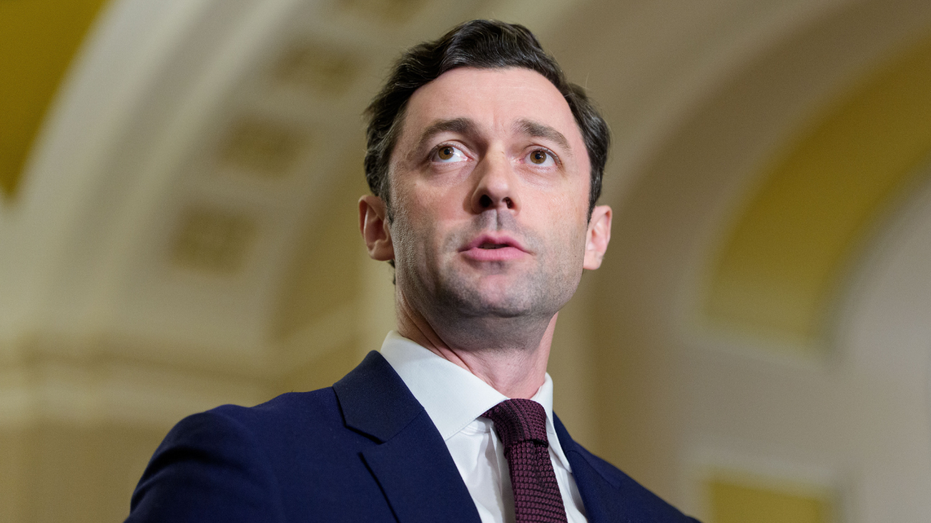
With margins tight in both chambers, control of Congress in 2026 is expected to hinge on a small group of competitive Senate contests and House districts sensitive to national trends. As America plunges into a new year, here are the races that are most likely to define the midterm races. Senate Republicans are looking to maintain their razor-thin majority after flipping the upper chamber in 2024. There are 33 seats in-cycle in the forthcoming midterms, which often act as a check on an incumbent president’s performance. The GOP is hoping to replicate the Election Day successes that helped preserve its majority at the midpoint of President Donald Trump’s first term, entering 2026 with what many analysts consider a favorable map. Why it matters: Georgia is the top prize of Senate Republicans and their campaign arm, the National Republican Senatorial Committee (NRSC). Incumbent Sen. Jon Ossoff, D-Ga., is vulnerable in his first attempt at re-election to the Senate and will be met with the full weight of the NRSC’s campaign war chest. SENATE REPUBLICAN CAMPAIGN CHAIR REVEALS HOW MANY SEATS HE’S AIMING FOR IN 2026 What to watch: Before the general election, Republicans will first have to let the dust settle on a bloody, four-way primary fight among Reps. Buddy Carter, R-Ga., Mike Collins, R-Ga., former University of Tennessee head football coach Derek Dooley and horse trainer Reagan Box. Republicans’ prized candidate, Georgia Gov. Brian Kemp, opted not to enter the contest, leaving a wide open playing field for the GOP to fight over. Why it matters: In the heat of the Senate advancing Trump’s “big, beautiful bill,” Sen. Thom Tillis, R-N.C., announced his retirement. What would likely have been a gimme race for the GOP has now turned into a wide open contest for an open seat. SOCIALIST WINS PILE UP AFTER GOP’S BRUTAL 2025 OFF-YEAR ELECTION LOSSES What to watch: Democrats believe they can flip the seat for the first time since 2008 and hope that former North Carolina Gov. Roy Cooper will carry them to victory and provide a crucial win to tip the balance of power. Republicans scored their preferred candidate, too, in former Republican National Committee Chair Michael Whatley. He will have a primary challenge though from Michele Morrow. Why it matters: Similar to North Carolina, Democrats lost their incumbent Sen. Gary Peters, D-Mich., to retirement. Both parties are now gunning for the open seat, but Democrats’ have a tangled primary to survive first before their true candidate emerges. 4 KEY SENATE SEATS REPUBLICANS AIM TO FLIP IN 2026 MIDTERMS TO EXPAND THEIR MAJORITY What to watch: Rep. Haley Stevens, D-Mich., state Sen. Mallory McMorrow and physician Abdul El-Sayed, are all in on the Democratic side, while Trump and Republicans have coalesced behind former Rep. Mike Rogers, who narrowly lost to Sen. Elissa Slotkin last year. Why it matters: Incumbent Sen. Susan Collins, R-Maine, is Senate Democrats’ top target in the midterms. Collins, who is looking to score a sixth term in the Senate, could face a formidable opponent in the general election with the full backing of Senate Minority Leader Chuck Schumer, D-N.Y., or an upstart progressive candidate that’s looking to throw a wrench into Democrats’ plans. THE GOP’S TAKE ON HIGH-PROFILE SENATE DEMOCRATIC PRIMARIES: ‘THEY’RE IN SHAMBLES’ What to watch: There are several local candidates that have jumped in on both sides of the race, but the main contenders are Collins, popular Democratic Gov. Janet Mills and oyster farmer Graham Platner, who has rubbed shoulders with progressive heavyweights Sen. Bernie Sanders, I-Vt., and Rep. Alexandria Ocasio-Cortez, D-N.Y. Why it matters: Sen. Jon Husted, R-Ohio, who was appointed to replace Vice President JD Vance earlier this year, will look to finish out the remaining two years of his predecessor’s term. But he’ll face a tough opponent in former Sen. Sherrod Brown, D-Ohio, who narrowly lost last year. TIM SCOTT TELLS MAGA VOTERS TRUMP ‘IS ON THE BALLOT’ AS GOP FIGHTS TO GROW SENATE MAJORITY IN 2026 What to watch: Schumer and Democrats scored their best chance at picking up a seat in Ohio, again trying to turn the state purple after Brown’s loss to Sen. Bernie Moreno, R-Ohio. And there will be eye-popping amounts of money thrown at this contest. Why it matters: Democrats took yet another hit from the retirement train when Sen. Jeanne Shaheen, D-N.H., announced she’d leave Congress at the end of her term. That has opened up the field to several familiar Republican names jumping into the contest in the hopes of turning part of the Granite State red. What to watch: Republicans have two prime candidates, former Sen. John Sununu, R-N.H., and former Rep. Scott Brown, R-Mass., who also served as an ambassador for Trump, to pick from. Meanwhile, Rep. Chris Pappas, D-N.H., is the likely heir apparent on the Democratic side. Control of the House is likely to hinge on fewer than two dozen districts nationwide, as both parties focus their resources on a small set of competitive seats that could decide the chamber. The battlegrounds span suburbs, rural communities and diverse metro areas, underscoring how varied the path to a majority has become. Why it matters: With GOP Rep. Gabe Evans defending the seat, Colorado’s 8th District remains one of the most competitive House districts in the country. Drawn as a true swing seat after redistricting, it has flipped parties in back-to-back cycles and is often decided by slim margins. CORNYN TORCHES DEMOCRATIC FIELD, SAYS PARTY NOW ‘RULED BY SOCIALISTS’ What to watch: Whether Latino and working-class voters break decisively toward one party and whether the race is decided by a narrow margin. A comfortable win here typically signals momentum heading into other battleground House races. Why it matters: With a history of close results, Iowa’s 1st District is once again a top battleground as Republican Rep. Mariannette Miller-Meeks seeks re-election. 5 PIVOTAL 2026 SENATE RACES WILL DETERMINE WHETHER REPUBLICANS MAINTAIN GOVERNING TRIFECTA UNDER TRUMP What to watch: The district spans college towns, rural counties and small manufacturing hubs, creating an electorate
Trump says US will intervene if Iran starts killing protesters: ‘Locked and loaded’
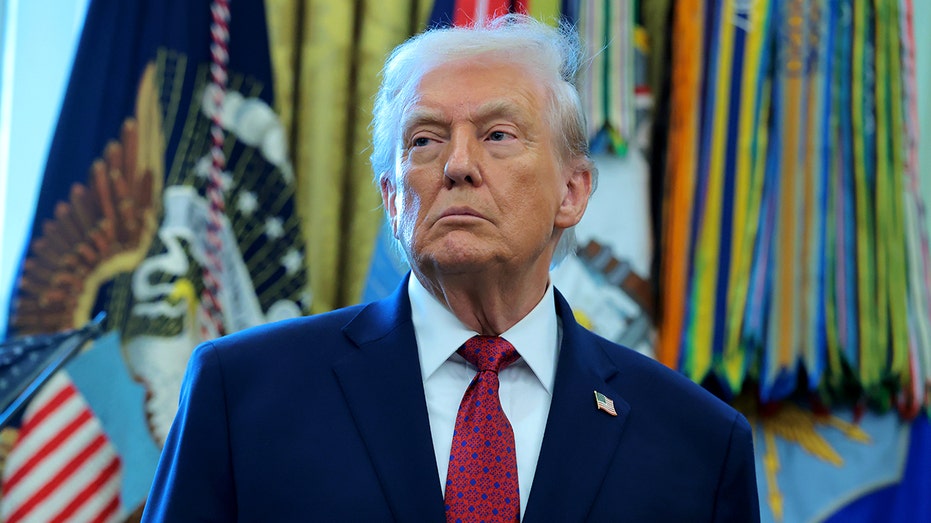
President Donald Trump warned early Friday that the U.S. would intervene if Iran started killing protesters. Writing on Truth Social, the president said if Iran shoots and “violently kills peaceful protesters, which is their custom, the United States of America will come to their rescue.” “We are locked and loaded and ready to go,” Trump said. Trump’s warning comes as demonstrations triggered by Iran’s deteriorating economy expand beyond the capital and raise concerns about a potential heavy-handed crackdown by security forces. At least seven people — including protesters and members of Iran’s security services — have been reported killed during clashes, according to international reporting. IRANIAN PROTESTERS CLASH WITH SECURITY FORCES AS TEAR GAS FILLS TEHRAN STREETS AMID NATIONWIDE UNREST Ali Larijani, a former parliament speaker who serves as the secretary of Iran’s Supreme National Security Council, pushed back on Trump’s post, writing on X that, “With the statements by Israeli officials and Donald Trump, what has been going on behind the scenes is now clear. We distinguish between the stance of the protesting shopkeepers and the actions of disruptive actors, and Trump should know that U.S. interference in this internal matter would mean destabilizing the entire region and destroying America’s interests.” “The American people should know — Trump started this adventurism. They should be mindful of their soldiers’ safety,” Larijani added. The threat came after Iran launched an attack on Al-Udeid, the American airbase in Qatar, in June 2025. The base is home to 10,000 American forces and is the U.S.’s largest military installation in the Middle East. Located southwest of Doha, it serves as a hub for logistical operations for the U.S. mission to fight ISIS in Iraq and Syria. At the time, Iran vowed to retaliate against the U.S. after American B-2 bombers dropped 14 bunker buster bombs on three Iranian nuclear sites. In the recent Iranian demonstrations, some of the most severe violence has been reported in western Iran, where videos circulating online appeared to show fires burning in streets and the sound of gunfire during nighttime protests. “We are to blame… Do not look for America or anyone else to blame. We must serve properly so that people are satisfied with us…. It is us who have to find a solution to these problems,” Iranian President Masoud Pezeshkian said on Thursday, according to Reuters. The unrest marks Iran’s most significant protests since 2022, when the death of 22-year-old Mahsa Amini in police custody sparked nationwide demonstrations. Officials say the current protests have not yet reached the same scale or intensity, but they have spread to multiple regions and include chants directed at Iran’s theocratic leadership. Iran’s civilian government under reformist President Masoud Pezeshkian has signaled a willingness to engage with protesters, but the administration faces limited options as the country’s economy continues to deteriorate. Iran’s currency has sharply depreciated, with roughly 1.4 million rials now required to buy a single U.S. dollar, intensifying public anger and eroding confidence in the government. TRUMP HINTS AT REGIME CHANGE IN IRAN WHILE DECLARING ‘MAKE IRAN GREAT AGAIN’ AFTER US STRIKES State television reported the arrests of several people accused of exploiting the unrest, including individuals it described as monarchists and others allegedly linked to Europe-based groups. Authorities also claimed security forces seized smuggled weapons during related operations, though details remain limited. The demonstrations come amid heightened regional tensions following a 12-day conflict with Israel in June, during which the United States bombed Iranian nuclear sites. Iranian officials have since said the country is no longer enriching uranium, attempting to signal openness to renewed negotiations over its nuclear program to ease sanctions. However, talks have yet to resume, as both Trump and Israeli Prime Minister Benjamin Netanyahu have warned Tehran against reconstituting its nuclear capabilities — adding further pressure on Iran’s leadership as protests continue.
‘We will not wait’: Mamdani kicks off housing plans after inaugural party
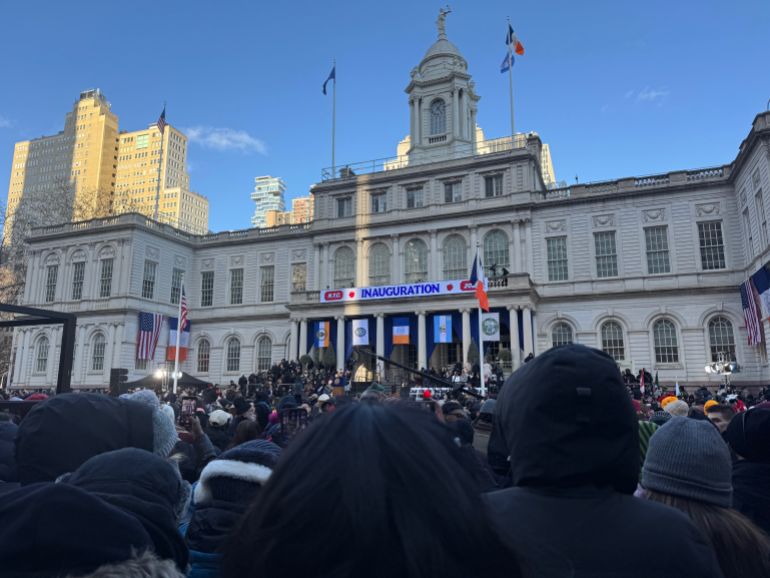
New York, United States – Sprawling crowds, a seven-block-long party and chants to “tax the rich” in the world’s wealthiest city marked Zohran Mamdani’s public inauguration as New York City mayor on Thursday, as the metropolis welcomed a new year with a new leadership. Political inaugurations are usually more stolid affairs. But, as he had in his campaign for the mayoralty, Mamdani flipped the script with his swearing-in events. Recommended Stories list of 4 itemsend of list In act one, just after midnight, as the ball dropped in Times Square to ring in 2026, Mamdani took the oath of office in a small ceremony on the steps of the landmark New York City Hall subway station. New York State Attorney General Letitia James administered the oath as Mamdani stood beside his wife, Rama Duwaji, on a staircase inside the transit hub, which has not been used for passenger service since 1945. He used a historic Quran borrowed from the New York Public Library for his swearing in, and a second one that belonged to his grandfather. The public celebration arrived later, on New Year’s Day, when Mamdani repeated the oath on the steps of City Hall before a crowd that spilled across the surrounding plaza and into the streets. Despite the blistering cold, tens of thousands of supporters streamed into Lower Manhattan to watch the new mayor – along with the city’s comptroller, Mark Levine, and Public Advocate Jumaane Williams – formally assume office. National political heavyweights, including Representative Alexandria Ocasio-Cortez and Senator Bernie Sanders of Vermont, flanked the city’s new leadership and delivered speeches outlining the progressive movement’s governing ambitions in New York and the national reverberations the race has already sent to lawmakers across the country. Advertisement “The most important lesson that can be learned today is that when working people stand, when they don’t let them [the ultra-wealthy] divide us up, there is nothing that we cannot accomplish,” Sanders said before swearing in Mamdani. While guests and the press gathered inside the City Hall grounds, the city staged a seven-block-long public block party – a new twist on the traditionally ticketed inauguration format. In addition to a closed event capped at a few thousand attendees, anyone willing to RSVP and endure the frigid air and blustering winds after a night of snowfall could try their luck at getting in. And many did, bundled New Yorkers shuffled through security checkpoints, hoping to glimpse the swearing-in of a 34-year-old democratic socialist now charged with running the largest city in the United States, streaming on large monitors stationed throughout the surrounding area outside City Hall. Some supporters told Al Jazeera they waited in line for hours, and many never made it through the checkpoints in time. While crowds cheered and horns blasted in solidarity from a distance, a handful of protesters lingered behind police barricades. The block party in and of itself was symbolic in its effort to reach more New Yorkers who have normally been left out of the political process, Democratic strategist Nomiki Konst told Al Jazeera. “It was a way of opening up something that hasn’t been accessible for anybody, you know, that wasn’t part of the inner circle of New York politics and media,” Konst told Al Jazeera. “It was an opportunity to give back to the people who helped him get into office.” New Yorkers gathered in a first-of-its-kind inauguration open to the general public [Andy Hirschfeld] A message of unity and affordability Mamdani, Williams and Levine spoke about unity for all New Yorkers, delivering remarks in English, Spanish, Hebrew and Greek, and appearing alongside faith leaders of several different faiths, including Islam, Christianity and Judaism. “We have three swearings-in. One by a leader using a Quran, one by a leader using a Christian Bible, and one using a Hebrew Bible. I am proud to live in a city where this is possible,” Levine said after taking the oath of office. Mamdani echoed that sentiment. “We will draw this city closer together. We will replace the frigidity of rugged individualism with the warmth of collectivism. If our campaign demonstrated that the people of New York yearn for solidarity, then let this government foster it,” Mamdani said in his address. Advertisement “We will deliver nothing less as we work each day to make this city belong to more of its people than it did the day before.” But the core message, voiced repeatedly by Mamdani, Levine, Williams, Sanders and Ocasio-Cortez, was the same one that defined the campaign: that the ultra wealthy should pay higher taxes. “Demanding that the wealthy and large corporations start paying their fair share of taxes is not radical. It is exactly the right thing to do,” Sanders said, as supporters chanted, “Tax the rich.” One of Mamdani’s core promises was to raise the corporate tax rate in New York City from 7.25 percent to 11.5 percent, equivalent to that of neighbouring New Jersey, as well as a 2 percent increase in taxes on those who make more than $1m a year. Any tax plan would need the approval of the governor to move forward. “This movement came out of eight-and-a-half million somewheres – taxi cab depots and Amazon warehouses, DSA [Democratic Socialists of America] meetings and curbside domino games. The powers that be had looked away from these places for quite some time – if they’d known about them at all – so they dismissed them as nowhere. But in our city, where every corner of these five boroughs holds power, there is no nowhere and there is no no one,” Mamdani said. Housing policy has been central to that affordability message for Mamdani. One of his signature campaign promises was to freeze the rent on the city’s rental stabilised apartments, which represent about half of the city’s rental housing stock. “Those in rent-stabilised homes will no longer dread the latest rent hike – because we will freeze the rent,” Mamdani said in his remarks. Only hours later, Mamdani introduced
Kim Jong Un’s potential heir makes public visit to N Korean founder’s tomb

Kim Ju Ae’s first public visit to the Kumsusan Mausoleum added to speculation she may become the next in line. Published On 2 Jan 20262 Jan 2026 Click here to share on social media share2 Share North Korean leader Kim Jong Un’s daughter, Ju Ae, who is widely speculated to be his potential successor, made her first public visit to the Kumsusan Mausoleum in Pyongyang alongside her parents, state media images show. Photographs released by the Korean Central News Agency (KCNA) on Friday captured the family paying respects to Ju Ae’s grandfather and great-grandfather, Kim Jong Il and Kim Il Sung, the founder of the North Korean state. Analysts say that propaganda surrounding the Kim family’s “Paektu bloodline” has allowed its members to dominate daily life in the isolated country and maintain power for decades. Recommended Stories list of 4 itemsend of list Over the past three years, Ju Ae has appeared more frequently in state media, prompting speculation from analysts and South Korea’s intelligence services that she may be positioned as the country’s fourth-generation leader. North Korean leader Kim Jong Un and his daughter Ju Ae inspect a training of the Korean People’s Army at an undisclosed location in North Korea [File: KCNA via KNS/AFP] Photographs show Ju Ae accompanying her father, mother Ri Sol Ju, and senior officials on the visit on January 1, standing between her parents in the main hall of the Kumsusan Palace of the Sun. Ju Ae was first publicly introduced in 2022 when she accompanied her father to the launch of an intercontinental ballistic missile. Believed to have been born in the early 2010s, she also took part in this year’s New Year celebrations, and in September made her first public overseas visit, travelling to Beijing with her father. Advertisement The visit to the mausoleum coincided with key dates and anniversaries, reinforcing the dynastic narrative of the nuclear-armed state. North Korean media have referred to her as “the beloved child” and a “great person of guidance” – or “hyangdo” in Korean – a term traditionally reserved for top leaders and their designated successors. Prior to 2022, Ju Ae’s existence had only been indirectly confirmed by former NBA player Dennis Rodman, who visited the North in 2013. North Korea’s leaders have never formally announced their successors, instead signalling transitions gradually through public appearances and expanding official responsibilities. Meanwhile, Kim Jong Un has pledged to further increase production of missiles and artillery shells, describing them as a “war deterrent” amid heightened military readiness from the United States and South Korea. Adblock test (Why?)
Flights from Aden airport in Yemen halted amid latest tensions

STC separatists accuse Saudi Arabia of requiring flights to UAE to land in Jeddah; Saudi source rejects claim. By News Agencies Published On 2 Jan 20262 Jan 2026 Click here to share on social media share2 Share Flights from Aden international airport in Yemen were halted on Thursday amid continuing tensions between the Southern Transitional Council (STC) separatist group and the Saudi Arabia-backed internationally recognised government in Yemen. Reuters news agency reported that all flights were suspended at the airport on Thursday, although further details of flight operations and possible resumptions remained unclear. Recommended Stories list of 3 itemsend of list The STC has formally been a part of the Saudi-led coalition that, since 2015, has been fighting the Houthi takeover of large parts of Yemen. But the STC also seeks to carve out a separate nation in southern Yemen, and in December, expanded its military operations in Hadramout and al-Mahra provinces that border Saudi Arabia, setting off a rapid escalation in tensions. Saudi Arabia has accused the United Arab Emirates – also a part of the anti-Houthi coalition – of arming the STC and of encouraging the separatist group to expand into Hadramout and al-Mahra, which Riyadh has said threatens its national security. The UAE has denied those allegations, insisting that it supports Saudi Arabia’s security. However, while the UAE has since agreed to demands from Yemen’s Riyadh-backed Presidential Leadership Council and Saudi Arabia to withdraw its troops from Yemen, the STC has refused to pull back from Hadramout and al-Mahra. On Thursday, the STC-aligned Transport Ministry within the internationally recognised government claimed that the stoppage at the airport was a result of Saudi Arabia imposing new requirements mandating that flights to and from Aden airport undergo inspection in Jeddah. Advertisement The ministry said it was “shocked” by the move, adding that Saudi authorities later clarified the restriction only applied to flights operating between Aden and the United Arab Emirates. A Saudi source denied to the Reuters news agency that it was involved in restricting flights, saying Yemen’s internationally recognised government, led by the Presidential Leadership Council, was behind the requirement for UAE-bound flights. Yemeni presidential adviser, Thabet al-Ahmadi, confirmed to Al Jazeera that it had imposed a requirement that applied to one flight route departing from Aden airport. He said the move was meant to prevent STC money smuggling. Al-Ahmadi said the government did not support a complete halt to flights, adding it wanted to ensure air traffic continued unimpeded. Earlier this week, the UAE announced it was voluntarily withdrawing its remaining “counterterrorism” forces from Yemen. That came after Riyadh struck what it claimed to be a UAE-linked weapons shipment in the southern port city of Mukalla. On Wednesday, Rashad al-Alimi, the head of the internationally recognised government in Yemen, warned that any moves by the STC to further entrench their position in the provinces would have severe consequences. The STC has, however, remained defiant, saying it would remain in the provinces. However, STC spokesperson Mohammed al-Naqeeb said the group was coordinating its movements with the Homeland Shield forces, which had been the main security force in the provinces prior to the STC offensive. The Homeland Shield is affiliated with the Yemeni government and the Saudi-led coalition. Yemen has been embroiled in a civil war since Houthi forces took control of the capital Sanaa in 2014. The group continues to control large swaths of the country’s northwest, with the STC and government contesting the southern and eastern flanks. Adblock test (Why?)
Delhi NCR Weather Update:Air quality slips to ‘very poor’ category, thick fog affects flight operations, airlines issue advisories
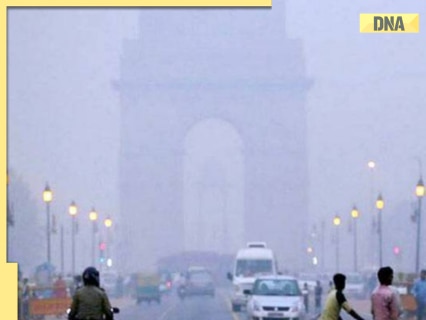
The low visibility disrupted flight operations with airlines Air India and IndiGo issuing travel advisories. Predicting dense fog in Delhi-NCR, Air India issued an advisory on January 1, citing that flight services might be impacted the next day.
Good news for commuters: Uttar Pradesh to get new state highway between THESE two districts, travel time to cut by…; Check details here

The PWD has proposed an 81.41 km Aligarh-Sambhal state highway via Sasni to cut travel time and ease congestion. Linking NH-509 and NH-32, the route will upgrade narrow district roads, benefit Aligarh, Hathras and Sambhal, and improve regional connectivity.