

Dallas’ Highland Park votes to leave Texas’ second-largest public transit system

Voters in Highland Park chose to leave Dallas Area Rapid Transit amid complaints that the transit service isn’t worth the cost.
Obama-era ‘clean energy’ solar power plant still uses fossil fuels – and kills thousands of birds annually
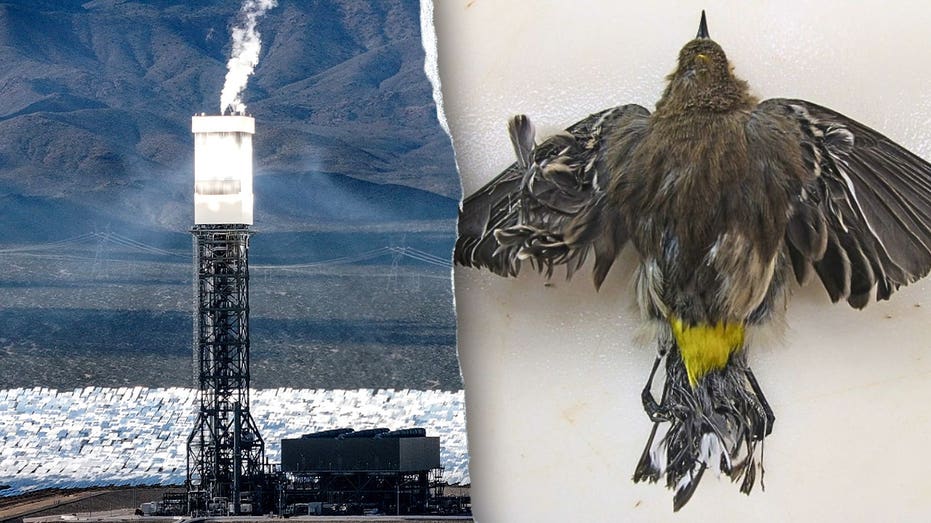
This is part 2 of a series on California’s troubled Ivanpah Solar Power Plant in the Mojave Desert. SAN BERNADINO, Calif. – More than a decade after it opened, an Obama-era taxpayer-backed “clean energy” solar plant in California still burns fossil fuels and kills thousands of birds each year. The Ivanpah Solar Power Plant, a massive facility in the Mojave Desert near the California-Nevada border, uses hundreds of thousands of mirrors to reflect sunlight into three towering structures, generating intense heat to produce electricity. But those same beams have proven deadly. OBAMA-BACKED $2.2B GREEN ENERGY ‘BOONDOGGLE’ LEAVES TAXPAYERS ON THE HOOK Federal researchers and monitoring reports have documented thousands of birds being killed after flying through the plant’s concentrated solar rays — a phenomenon known as “solar flux.” The plant also relies on natural gas to start up each day – producing tens of thousands of metric tons of carbon dioxide annually – an amount comparable to the energy use of thousands of homes, raising questions about how “clean” the facility really is. Standing near the site, its footprint is unmistakable. The towers glow intensely as beams of reflected sunlight converge at their tops, creating an almost surreal scene against the desert landscape. Once promoted as a symbol of the future of renewable energy, Ivanpah is now drawing scrutiny over whether its environmental costs outweigh its benefits, with critics saying the project raises broader concerns about how “clean energy” is evaluated. “If oil and gas spills a drop, literally a drop, the entire operation is shut down. And to an extent that’s a good thing,” Daniel Turner, founder of the energy advocacy group Power The Future, told Fox News Digital. “But you label something ‘green’ or ‘clean’ and all regulations are waived.” TRUMP’S UN SPEECH REVEALS INCONVENIENT TRUTH OF MASSIVE GREEN ENERGY COSTS Despite the documented wildlife impacts, the plant continues to operate — with California regulators declining efforts to shut it down and instead arguing it is still needed to support the power grid. Officials under both the Trump and Biden administrations have supported shutting the facility down, citing the high cost of its electricity compared to newer alternatives. The project was built with more than $1.6 billion in federally backed loans and additional taxpayer-funded incentives, leaving hundreds of millions of dollars still outstanding — even as environmental concerns continue to mount. In addition, the U.S. Department of the Treasury provided a $539 million grant to help build the facility, covering about 30% of construction costs. Bird deaths and wildlife impacts The facility spans more than 4,000 acres of the Mojave Desert and uses roughly 350,000 mirrors — mounted on more than 170,000 heliostats — to reflect sunlight toward three central towers. That same concentrated light has had unintended consequences. Researchers say insects are drawn to the bright towers, which in turn attract birds. Some then fly through the plant’s concentrated solar beams — known as solar flux — where they can be injured or killed. Researchers dubbed the phenomenon “streamers,” with video released by the U.S. Geological Survey showing birds trailing smoke as their feathers burn. A 2016 federal study by the U.S. Fish and Wildlife Service found evidence of birds suffering feather damage and trauma consistent with exposure to intense heat near the towers. Monitoring reports filed with California regulators and reviewed by Fox News Digital continue to document bird and bat deaths at the site, with hundreds of birds found dead each year. Environmental reviews conducted before construction anticipated some level of wildlife impact, including bird deaths linked to mirror collisions and concentrated solar beams, according to California Energy Commission documents. “Bird mortality is still a significant concern at concentrated solar plants like Ivanpah,” Lewis Grove, director of wind and energy policy at the American Bird Conservancy, told Fox News Digital. “Public estimates are that thousands of birds are killed every year by this single facility,” he said, adding that the trade-off is “generally not worth it for birds.” CALIFORNIA’S POLITICIANS DIDN’T START THE FIRES. THEY MADE THEM WORSE He noted that newer photovoltaic solar systems have significantly lower impacts on wildlife, underscoring how the industry has shifted away from the technology used at Ivanpah. “The Ivanpah plant was a financial boondoggle and environmental disaster,” Julia Dowell of the Sierra Club said in a previous Fox News Digital report. She added the project “killed thousands of birds and tortoises” and showed that “not all renewable technologies are created equal.” Habitat impact Beyond bird deaths, the project has reshaped the surrounding desert. The site was once considered a high-quality habitat, according to federal environmental reviews conducted before construction. Development cleared large areas of land, displacing tortoises and other wildlife and raised concerns about long-term survival. Early monitoring reports showed dozens of protected desert tortoises went unaccounted for during initial operations — including animals held in controlled enclosures — according to California Energy Commission documents reviewed by Fox News Digital. Critics have also questioned whether efforts to relocate tortoises away from the site have been effective. Burning fossil fuels The plant’s environmental footprint extends beyond wildlife. Ivanpah relies on natural gas to start up operations each day — a requirement that has raised questions about how “clean” the facility really is. While the original design assumed limited gas use, actual operations often require several hours of gas-burning to bring the system online. The plant also lacks large-scale energy storage, meaning it cannot generate electricity at night — a limitation newer solar projects increasingly address. Project documents show the facility was originally approved to use significantly less natural gas than it ultimately required, with operators later seeking approval to increase usage by roughly 60% to maintain reliable operations, according to California Energy Commission filings reviewed by Fox News Digital. The plant has burned natural gas to support daily startup and operations, producing roughly 25,000 to 30,000 metric tons of carbon dioxide annually — roughly equivalent to the emissions from several thousand U.S. homes. That level of emissions is
ActBlue sues Texas AG Ken Paxton, alleging political retaliation over Democrats’ fundraising
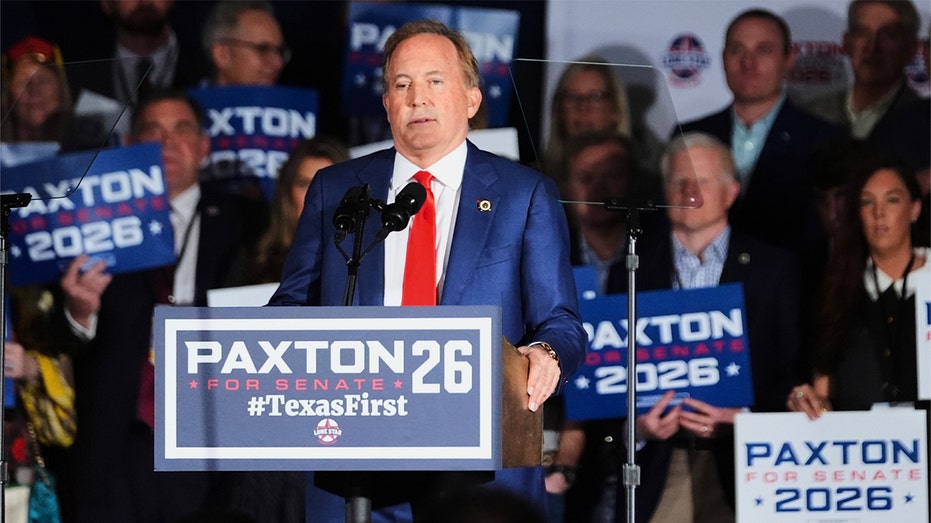
Democratic fundraising platform ActBlue is suing Texas Attorney General Ken Paxton, accusing the Republican of using his office for “retaliation” to punish the group for its political work and asking a federal judge to block his investigations and litigation against the organization. “ActBlue is trying to take me down,” Paxton, who is running for Senate in Texas, wrote on X. “I sued the fundraising platform for deceiving Americans by lying about its donation processes that allow fraudulent and foreign donations. “I will hold those who break the law accountable.” The ActBlue lawsuit, filed Friday in federal court in Boston, seeks to counter the case Paxton brought last month in Texas state court accusing ActBlue of misleading Congress and the public about its donation practices. ActBlue said Paxton’s actions are part of an unlawful retaliation campaign targeting the nation’s leading small-dollar Democratic fundraising platform. TEXAS AG PAXTON SUES DEM FUNDRAISING PLATFORM ACTBLUE, ALLEGING ‘FRAUDULENT AND FOREIGN DONATIONS’ “Ken Paxton has spent more than two years using the power of his office to investigate, harass, and sue ActBlue,” Lawrence Oliver, ActBlue’s chief legal officer, said in a statement. “The timing of Paxton fighting for his political life in his run for U.S. Senate and his use of the Attorney General’s office to attack ActBlue, should not be lost on anyone. He is wasting taxpayer dollars to benefit his political ambitions. “That is not law enforcement. It is retaliation against constitutionally protected speech and association, and it is exactly what the First Amendment forbids.” DEM FUNDRAISING GIANT ACTBLUE ROCKED BY ALLEGATIONS IT MISLED CONGRESS ABOUT FOREIGN DONATIONS ActBlue also argues selective prosecution, noting Paxton has never investigated WinRed — the Republican fundraising counterpart to ActBlue — alleging in the lawsuit that “Paxton has a history of targeting Democratic-aligned entities.” “During his tenure as Texas Attorney General, Paxton has signaled an emphasis on enforcement against entities enabling voting and political speech that he perceives as aligned with the Democratic Party,” the lawsuit reads. “He has consistently sought to suppress speech with which he disagrees and hobble his political opponents by abusing the powers of his Office.” ActBlue cited a New York Times report that Talarico “had posted strong fundraising numbers for the first quarter of 2026,” in potentially being the nexus for Paxton’s opening his investigation. ‘OPEN BORDERS TRUMP-HATING RADICAL’: GOP UNLEASHES EARLY BLITZ ON TEXAS DEMOCRAT TALARICO The timing of his investigation shows a political motive, ActBlue’s lawsuit argues. The group says Paxton’s investigators began conducting undercover transactions on ActBlue’s platform Feb. 18, one day after Talarico announced he had raised $2.5 million in 24 hours, including more than $2.2 million through ActBlue. The lawsuit said Paxton filed his Texas case five days after national reporting described Talarico as a major fundraising threat who had raised more than $36 million through the platform. The lawsuit marks an escalation in a broader Republican-backed campaign targeting ActBlue and other online fundraising platforms. President Donald Trump last year directed his Department of Justice to investigate the groups, and Paxton has pursued ActBlue through a series of inquiries dating back to December 2023. ‘TIPPING THE SCALES’: HOUSE GOP LEADERS RIP ACTBLUE AFTER DEM FUNDRAISING GIANT HIT WITH SUBPOENA The issue comes as the Democratic National Committee reportedly carried more than $17.5 million in debt this winter, according to the FEC. The House Administration, Judiciary and Oversight committees have been investigating ActBlue for more than a year and issued a 2025 report titled “Fraud on ActBlue.” “ActBlue has engaged in good faith at every turn,” the group wrote in a statement after sending a letter to the committees last week before filing the Paxton lawsuit. TOP HOUSE COMMITTEES ACCUSE DEM FUNDRAISING GIANT OF FACILITATING ‘BAD ACTORS’ IN BOMBSHELL DOJ LETTER “We are asking the Committees to do the same: engage with us directly before sending accusatory public correspondence, and answer unresolved questions about the relationship between their oversight work and a DOJ investigation ordered by a President who has made no secret of his hostility towards ActBlue. “We see what this is,” the statement added. “And we’re going to keep showing up, keep correcting the record — because that’s what transparency actually looks like. Not as a talking point. As a practice.” Paxton’s Texas lawsuit, filed April 20, seeks financial penalties and asks a state court to stop ActBlue from allowing donations through gift cards and prepaid debit cards. Paxton alleged those payment methods could obscure a donor’s identity and enable illegal contributions, including from foreign nationals. His suit also claimed ActBlue continued to process gift card donations after saying in 2024 that it would stop doing so. DEMOCRAT PLATFORM ACTBLUE SUBPOENAED BY HOUSE COMMITTEE AMID CONCERNS FOREIGN DONORS EXPLOITED SECURITY FLAWS ActBlue denied the allegations. “This is a thinly veiled attempt to distract from Ken Paxton’s numerous legal and ethical issues ahead of next month’s runoff,” ActBlue spokeswoman De’Andra Roberts-LaBoo told Fox News in an April 20 statement via email. “If he and his Republican allies actually cared about donor fraud, they would work to strengthen security standards across the board, including within their own operations, rather than targeting ActBlue. “Our platform has done more than any other, regardless of party, to prevent improper donations and protect donors. Full stop.” SCOOP: DEM FUNDRAISING GIANT ACTBLUE HIT WITH SUBPOENA BY TOP HOUSE COMMITTEES Investigators from Paxton’s office attempted three times to use an American Express gift card on ActBlue’s platform, and all three attempts were rejected by the platform’s automated fraud-prevention tools, according to the complaint. ActBlue said Paxton nevertheless filed a lawsuit accusing the group of having “secretly resumed” accepting gift cards and failed to disclose the failed test transactions to the Texas court, calling the allegations “false and inflammatory.” “Paxton’s decision to use his government office to target ActBlue with legal sanctions as retribution for its protected speech and political association is an affront to the Constitution and must not be tolerated,” ActBlue’s lawyers wrote in the federal lawsuit. Since its founding in 2004, ActBlue said it has helped raise $19
Rubio to visit Italy, Vatican amid troop drawdown call, tension with Trump, Pope Leo: reports

Secretary of State Marco Rubio is reportedly planning to travel to the Vatican and Italy this week for meetings aimed at steadying relations after public spats between President Donald Trump, Pope Leo and Italian Prime Minister Giorgia Meloni. Rubio, a Catholic, is expected to meet with Cardinal Pietro Parolin, the Vatican’s top diplomatic official, Reuters reported, citing Italian newspapers La Repubblica and Corriere della Sera. Rubio is also expected to hold talks with Italy’s foreign and defense ministers, the Italian newspapers reported. The visit would come at a tense moment for U.S.-European relations. The Pentagon on Friday announced a drawdown of 5,000 U.S. troops from Germany, the largest American base presence in Europe, as disagreements over Iran and tariffs deepen strains between Washington and several European capitals. TRUMP MEETS WITH ITALIAN PM GIORGIA MELONI AT HIS MAR-A-LAGO RESORT Trump added he “probably should” weigh a drawdown of U.S. troops for NATO in Italy, too. “Why shouldn’t I? Italy has not been of any help to us, and Spain has been horrible,” Trump said Friday from the Oval Office. “I didn’t need the help, but I said, ‘Yeah, we’d love to have your help,’ because I want to see if they’d do it. And they, in all cases, they said, ‘We don’t want to get involved.’ And you know the amazing thing is they use the Strait of Hormuz, and we don’t. We don’t use it. We don’t need it. We have a lot of oil.” Trump has praised Rubio for his peacemaking and diplomatic efforts. FIRST AMERICAN POPE WELCOMES VANCE AND RUBIO FOR PRIVATE VATICAN AUDIENCE “People like you,” Trump said of Rubio during his State of the Union address earlier this year. The president even joked he might consider firing Rubio after the Munich Security Conference for being so likable and effective on the world stage. “You have done a great job, a great secretary of state. I think he’ll go down as the best ever.” Italy remains one of the largest hosts of U.S. forces in Europe, with nearly 13,000 active-duty American troops stationed across six bases at the end of 2025. It is uncertain whether Rubio will also meet with the pope, who has been critical of the Trump administration’s peacemaking efforts in the Middle East. Rubio and Vice President JD Vance attended Pope Leo’s inaugural Mass in St. Peter’s Square and held a private meeting with him the following day in May 2025. TRUMP ACCUSES POPE LEO OF BEING ‘TERRIBLE’ ON FOREIGN POLICY OVER PONTIFF’S ANTI-WAR COMMENTS The reported trip also comes weeks after Trump drew criticism from Christians across the political spectrum for attacking Leo on social media, including at one point calling the pontiff “terrible.” “I have no fear of the Trump administration,” Pope Leo said last month before backing down and saying “I will not enter into debate.” Trump had repeatedly blasted the pope for criticizing the war on Iran and the Trump administration’s hard-line immigration policies. POPE LEO SLAMS THOSE WHO ‘MANIPULATE RELIGION’ FOR MILITARY OR POLITICAL GAIN, TRUMP RESPONDS “Pope Leo is WEAK on Crime, and terrible for Foreign Policy,” Trump wrote in a scathing Truth Social post. “Leo should get his act together as Pope, use Common Sense, stop catering to the Radical Left, and focus on being a Great Pope, not a Politician. It’s hurting him very badly and, more importantly, it’s hurting the Catholic Church,” he concluded. Fox News reached out to the White House, State Department, Holy See press office and the Italian government for comment. The trip is aimed in part at easing tensions between Washington and Rome after Trump publicly criticized Meloni, one of his closest European allies, over her stance on the Iran war and her defense of the pope. Corriere reported that Rubio’s schedule has not been finalized. La Repubblica said a meeting with Meloni has not been ruled out. Reuters contributed to this report.
The ballot box showdowns this month that you need to watch
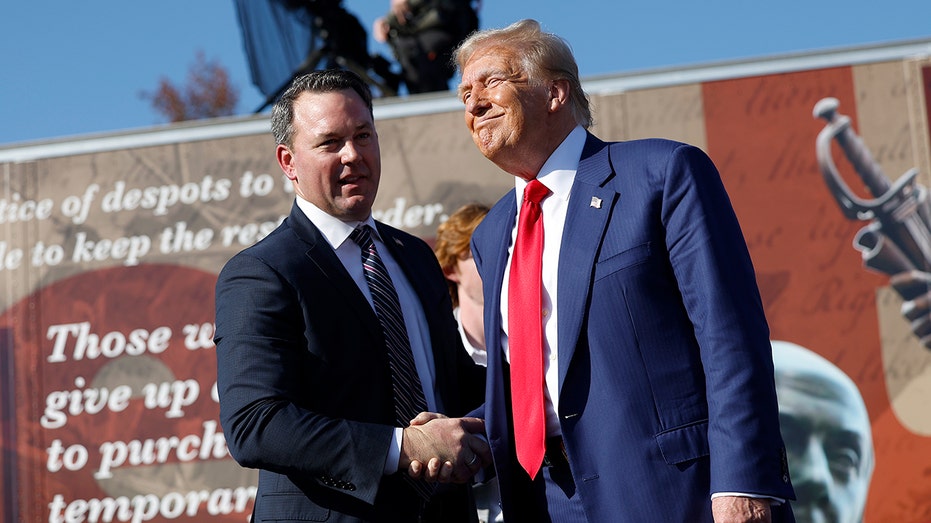
After a month on the sidelines, the 2026 primary season is back with a vengeance. A dozen states from coast to coast hold primaries or runoffs in May, and the results of those nomination contests may ultimately determine the outcomes of November’s midterm elections, when Republicans will be defending their slim Senate and razor-thin House majorities. Also on the line in some of the ballot box showdowns: President Donald Trump’s immense sway over the GOP, as his endorsements in key races will be tested. ONLY ON FOX NEWS: TRUMP WILL ‘DELIVER’ – RNC CHAIR SIGNALS MIDTERM CONFIDENCE DESPITE ‘DOOM AND GLOOM’ Indiana and Ohio kick off the action on May 5, with Nebraska and West Virginia holding primaries a week later, on May 12. Louisiana’s nominating contest follows on Saturday, May 16. Three days later marks the busiest day of the month, with Alabama, Georgia, Idaho, Kentucky, Oregon and Pennsylvania holding primaries. Texas wraps up May with runoff showdowns on May 26. Here’s a closer look at some of the top races. The first major test of Trump’s grip on the GOP comes in Indiana. Five months ago, Republicans in the GOP-dominated state Senate withstood immense pressure from Trump and his allies and voted down congressional redistricting, which would have given solidly red Indiana two more right-leaning U.S. House seats ahead of the midterms. Seeking retribution, the president endorsed challengers to eight GOP state senators who voted against the redistricting bill. The president’s allies have spent millions of dollars to try to oust the state lawmakers who opposed Trump’s redistricting push. Among those in the political fight on behalf of the president are Turning Point USA’s political wing and the Club for Growth. WHAT THE LATEST FOX NEWS NATIONAL POLL SAYS ABOUT DEMOCRATS AND REPUBLICANS The intra-party battle is seen not just as a test of fealty to Trump but rather a fight between MAGA forces and more traditional conservatives for the future of the GOP. “We’ve got to change those old-style Republicans, put in people who will fight, fight against the Democrat gerrymandering,” Club for Growth President David McIntosh told Fox News Digital. McIntosh, a former congressman from Indiana, said, “I want to see my state do the right thing.” In neighboring Ohio, there’s a lot less drama. Vivek Ramaswamy, the multimillionaire biotech entrepreneur and business leader who grabbed national attention during his bid for the 2024 GOP presidential nomination before dropping out and becoming a top Trump surrogate, is all but certain to capture the Republican gubernatorial nomination in his home state. Ramaswamy, who is backed by Trump, will face off in November against Dr. Amy Acton, a doctor and researcher who served as director of the state Department of Health from 2019 to 2020. Acton is unopposed in the Democratic primary. The winner will succeed term-limited GOP Gov. Mike DeWine. DEMOCRACY ’26: STAY UP TO DATE WITH THE FOX NEWS ELECTION HUB It’s the same story in Ohio’s Senate primary, where appointed Republican Sen. Jon Husted, a former lieutenant governor, is unopposed in the GOP primary. Former longtime Democratic Sen. Sherrod Brown is expected to cruise to his party’s nomination. The winner will serve the final two years of the term of Vice President JD Vance, who stepped down from the Senate after the Trump-Vance ticket won the 2024 presidential election. Once a top general election battleground state, Ohio has shifted to the right over the past decade, with Trump carrying the state by 11 points in the 2024 election. But this year’s races for the Senate and governor are expected to be very competitive. And the Senate race is one of a handful across the country that may determine if the GOP holds the majority or if the Democrats flip the chamber. Sen. Bill Cassidy of Louisiana is facing primary challenges from two Republicans: Rep. Julia Letlow and former Rep. John Fleming, who is currently the state treasurer. Trump earlier this year weighed into the race by endorsing Letlow. Cassidy was one of only seven Senate Republicans who voted in early 2021 to convict Trump after he was impeached by the House for his role in the violent Jan. 6 attack on the U.S. Capitol by supporters who aimed to upend congressional certification of former President Joe Biden’s 2020 election victory. Trump was acquitted by the Senate. CRUZ WARNS ‘RADICAL DEMOCRATS’ WILL ‘BURN IT DOWN’ IF THEY WIN BACK CONGRESS But since the start of Trump’s second term 15 months ago, Cassidy has been supportive of the president’s agenda and his nominees. If no candidate cracks 50% of the primary vote, the top two finishers will face off for the nomination in a June 27 runoff election. The third major test of Trump’s endorsement power this month is in Kentucky’s 4th Congressional District, where Rep. Thomas Massie is facing a challenge from Trump-backed Ed Gallrein. Massie has long been one of Trump’s most vocal GOP critics in Congress, repeatedly taking aim at the president over the Epstein files and foreign policy. Trump allies have spent big bucks to boost Gallrein, a former Navy SEAL, and to take aim at Massie. The president’s endorsement is also being tested in Georgia’s GOP gubernatorial nomination, in the 2026 race to succeed popular conservative Gov. Brian Kemp, who is term limited. Trump has endorsed Lt. Gov. Burt Jones, who is trading fire in a competitive and combustible battle with healthcare executive and mega GOP donor Rick Jackson, who has infused millions of his own money in his bid. Among the others battling for the nomination in a crowded Republican field are state Attorney General Chris Carr and Georgia Secretary of State Brad Raffensperger. Former Atlanta Mayor Keisha Lance Bottoms, who later served in then-President Joe Biden’s administration, is the frontrunner for the Democratic nomination. Among the other contenders in the crowded field of candidates are Mike Thurmond, a former DeKalb County CEO and former state labor commissioner, and former Republican lieutenant governor turned Democrat Geoff Duncan. Republicans are hoping to flip the U.S.
Tripura Horror: Grandfather arrested for raping 16-year-old granddaughter multiple times, sent to 14-day judicial custody

The 70-year-old grandfather who was arrested on charges of rape and murdering his 16-year-old granddaughter has been sent to 14-day judicial custody after being produced before a local court on Saturday, police said.
Delhi: 8 killed after massive fire breaks out in building in Vivek Vihar, AC blast suspected

At least 8 killed, 4 injured after a massive fire broke out in a four-storey residential building due to suspected AC blast in East Delhi’s Vivek Vihar area during the early hours of Sunday.
TCS Nashik Case: Nida Khan’s anticipatory bail rejected, search underway in Maharashtra

A court denied anticipatory bail to Nida Khan in a Nashik case involving alleged sexual exploitation and religious coercion linked to a TCS BPO.
Odisha: 1 killed, 58 people admitted to hospital after eating ‘Dahi Bara’ in Jajpur district, Food poisoning suspected

One elderly woman died and 58 people, including children, fell ill due to suspected food poisoning after allegedly eating contaminated Dahi Bara in ‘Pata Pur’ village in Odisha’s Jajpur district.
Sen. Ted Cruz makes Iowa appearance, fueling speculation about another presidential bid
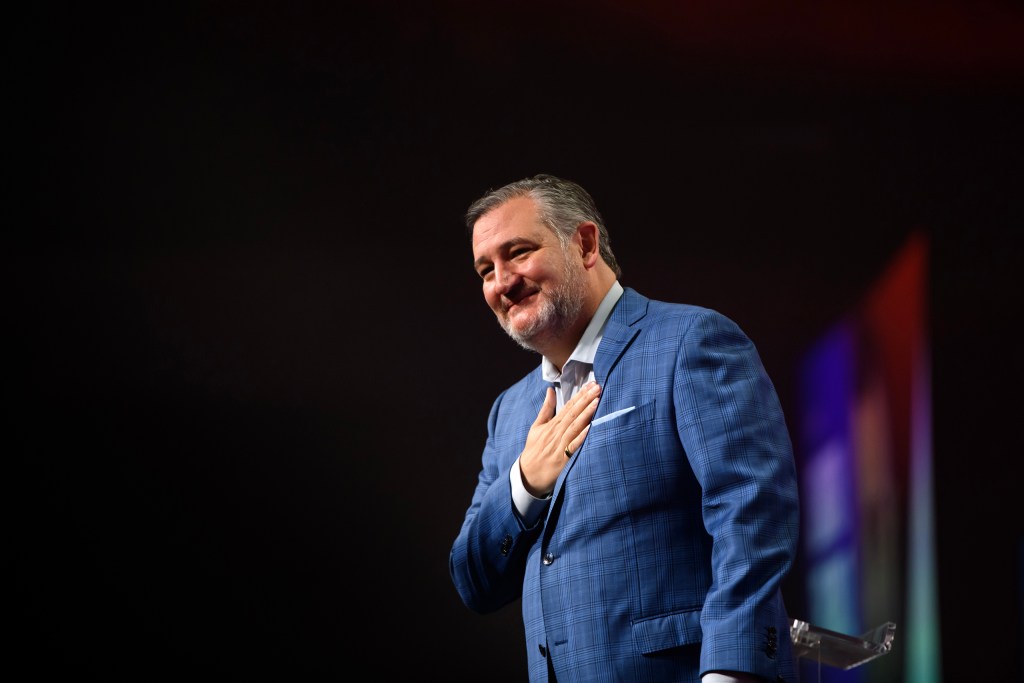
The U.S. senator won the Hawkeye State during the 2016 Republican primaries. This year he used his appearance to blame Democrats for anti-Semitism and call out GOP Trump foes Tucker Carlson and Marjorie Taylor Greene.