

Trump admin tightens vise on student aid fraud in ‘ghost student’ crackdown

FIRST ON FOX: The Trump administration is stepping up its crackdown on fraud and “ghost students,” launching a real-time fraud detection tool for the Free Application for Federal Student Aid (FAFSA), Fox News Digital learned. “Instead of student aid and education grants going to students who deserve it, corrupt Democrats and the inept bureaucrat class of the Biden Administration allowed it to flow straight into the pockets of fraudsters for years,” a spokesperson for Vice President JD Vance, who President Donald Trump recently tapped as the administration’s fraud czar, told Fox News Digital. The Department of Education launched a screening tool Monday morning directly into the FAFSA process that flags potentially high-risk applicants, requiring them to provide government-issued identification before accessing federal student aid, including Pell Grants and loans. The Education Department estimates its efforts to identify and deny aid to fraudulent students will save taxpayers over $1 billion during this year’s FAFSA cycle, with the tool already screening 50,000 applications as of Monday afternoon. READ: DR. OZ PUTS ALL 50 GOVERNORS ON NOTICE OVER BILLIONS LOST TO MEDICAID FRAUD The new fraud detection efforts follow a surge in “ghost student” scams tied to loosened verification requirements during the COVID-19 pandemic, according to the Department of Education. Ghost students are a growing trend involving fabricated or stolen identities, often powered by AI bots or criminal networks using real Americans’ personal information, used to enroll in programs, trigger financial aid disbursements, and then disappear. SBA FREEZES OVER 100,000 CALIFORNIA BORROWERS IN SWEEPING $9B PANDEMIC FRAUD CRACKDOWN “Americans deserve education. Fraudsters deserve nothing,” a senior White House official told Fox News Digital. Key verification safeguards were removed during the COVID-19 pandemic under the Biden administration, the Education Department reported, when less than 1% of students were required to verify their identity following their FAFSA submission. “This new fraud detection tool will stop fraud at the start of the process, before money goes out the door, strengthening the integrity of our programs and expanding opportunity for students who depend on these resources to finance their postsecondary education,” Secretary of Education Linda McMahon told Fox News Digital. The announcement comes as Trump established the White House Task Force to Eliminate Fraud, led by Vance, to combat fraud across federal programs. UNDERPERFORMING DC SCHOOLS’ STAFF HAS GROWN 7 TIMES FASTER THAN ENROLLMENT: AUDIT “Under the Vice President’s task force, student aid will go to students and students only,” the vice president’s spokesperson added. The increased verification process follows the Trump administration uncovering more than $1 billion in student aid fraud last year, including stopping suspected bots and ghost students from obtaining taxpayer-funded loans. The administration also previously uncovered $90 million that was disbursed to suspected scammers in 2024, including $30 million in loans to dead people and more than $40 million disbursed to companies using bots disguised as fake students. Fox News Digital’s Emma Colton contributed to this report.
Plane crashes near South Sudan’s Juba, killing all 14 on board
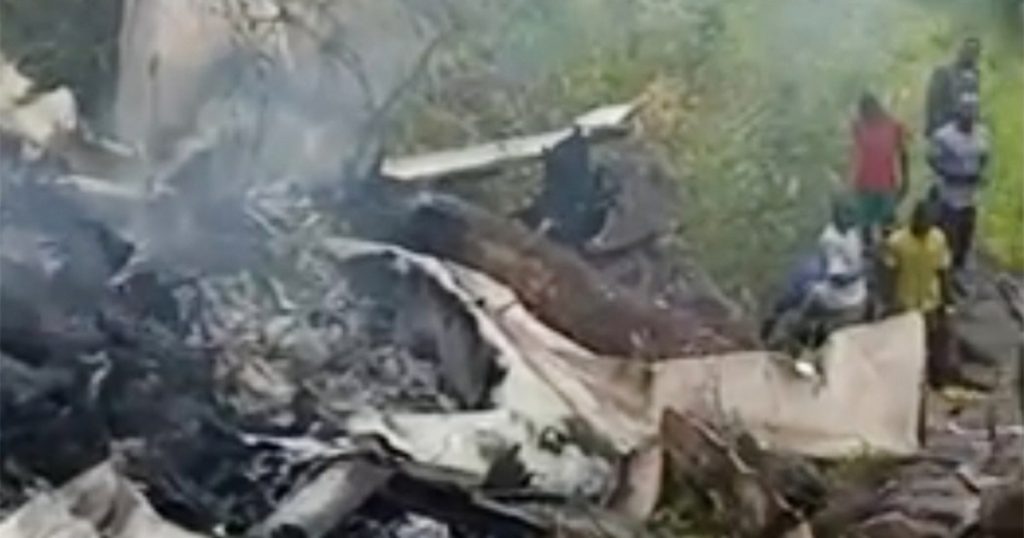
Preliminary reports indicate Cessna aircraft may have crashed due to bad weather conditions that caused low visibility. By AP and Reuters Published On 27 Apr 202627 Apr 2026 A plane has crashed on the outskirts of South Sudan’s capital, Juba, killing all 13 passengers and the pilot. The country’s civil aviation authority said on Monday that initial reports indicate the aircraft may have crashed due to bad weather conditions that caused low visibility. The Cessna 208 Caravan, which was operated by CityLink Aviation, lost communication while flying from Yei to Juba International Airport, it added in a statement. Among those onboard were two Kenyan nationals, while the rest were South Sudanese. A team has been sent to the site to gather information and support emergency services, the aviation authority said. Videos of the crash site, located some 20km (12 miles) outside of Juba, showed the remains of the aircraft in flames. Adblock test (Why?)
Timeline: How Mali went from democracy beacon to instability
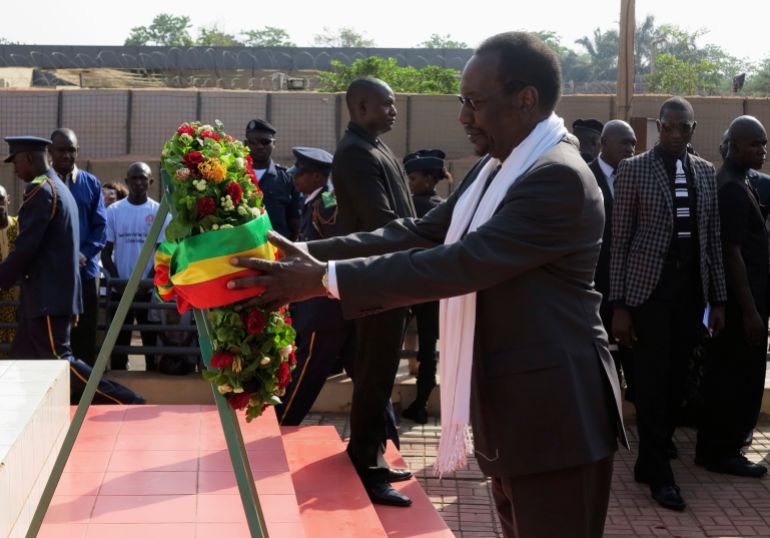
Mali’s security crisis has worsened since rival armed groups have allied and launched coordinated attacks across the country. Al-Qaeda-linked Jama’at Nusrat al-Islam wal-Muslimin (JNIM) has claimed responsibility for attacks by gunmen that began on Saturday. They were carried out in Kati near Bamako as well as the capital’s airport and other locations farther north, including Kidal, Mopti, Sevare and Gao. Tuareg rebels claimed participation in the assaults. Recommended Stories list of 3 itemsend of list Defence Minister Sadio Camara was killed in the attacks. The attacks have exposed security vulnerabilities in the country, which once was a beacon of democracy in the region but has been reeling from political and security crises since 2012. Here’s a timeline of how the security situation has deteriorated in Mali: 1960: Mali gains independence The former French colony became independent on September 22, 1960, and Modibo Keita was elected the country’s first president. Keita was a staunch proponent of African socialism. But his rule of the country through socialist policies of nationalisation failed to yield economic benefits. The country also experienced severe droughts, which led to poor harvests under his leadership. In November 1968, Keita was overthrown in a bloody military coup led by Lieutenant Moussa Traore. 1968-1991: Military dictatorship After leading the coup, Traore established himself as president for the next 23 years. According to the Africa Center for Strategic Studies, Traore established “a highly repressive regime that routinely opened fire on protesters and eliminated rivals or those that dared to voice dissent”. Advertisement In a 2020 report, the centre noted that Traore’s government was likely responsible for the killing of thousands of Malians while economic growth was “anaemic”. Corruption was also rampant during his rule, the report said. In March 1991 after mass student-led protests, Lieutenant Colonel Amadou Toumani Toure led a coup to overthrow Traore. “After his ouster, Traore was tried and convicted for the killing of at least 200 protesters in March 1991. He was later pardoned for his crimes by President Alpha Oumar Konare in 2002,” the report added. 1992-2012: Democracy prevails After the 1991 coup, Toure served as interim head of state during a transition that led to a new constitution and multiparty elections. While the northern part of the country was still unstable with Tuareg rebels seeking to secure their own independent region, the country held municipal, parliamentary and presidential elections in 1992. Alpha Oumar Konare was elected president. Konare served two terms from 1992 to 2002 during which, according to the Africa Center for Strategic Studies, there was steady economic growth and citizens enjoyed civil liberties and political rights. During this time, Mali also became a founding member of the intergovernmental Community of Democracies in 2000. In 2002, elections were held again, and Toure, who led the 1991 coup, was elected president. During his two terms, which lasted until 2012, corruption was rife in government institutions and the economy shrank. Interim President Dioncounda Traore lays a wreath at a monument in Bamako in 2013 on Martyrs’ Day, which commemorates the day when General Moussa Traore was overthrown on March 26, 1991 [File: Adama Diarra/Reuters] 2012-2020: Military coup and security deterioration In March 2012, Captain Amadou Haya Sanogo led a coup weeks before elections and forced Toure to resign. He established a military government, and Dioncounda Traore was made interim civilian president until elections could be organised. During this period, ethnic Tuareg separatists, allied with fighters from an al-Qaeda offshoot, launched a rebellion that took control of northern Mali. The instability in the north led leaders from neighbouring African countries to suggest that members of the Economic Community of West African States (ECOWAS) fight alongside the Malian military against the Tuareg rebels. Sanogo, however, refused the deployment of foreign forces and asked for logistical support only. Fighters from another armed group, Ansar Dine, swiftly pushed out the Tuareg rebels and seized key northern cities. This triggered French military intervention in early 2013 at the request of the government. Ansar Dine later merged with several other groups to form the JNIM. Advertisement In September 2013, the country held elections, and Ibrahim Boubacar Keita was elected president. His fragile democratic rule ended in 2020 in yet another military coup. During his time in power, the United Nations brokered a peace deal between his government and northern Tuareg groups fighting for an independent Azawad in 2015. 2020: Another military coup Colonel Assimi Goita led the coup that deposed Ibrahim Boubacar Keita in August 2020 after months of mass protests over severe economic problems and the renewed advance of armed groups in the north. In September that year, Bah Ndaw, a retired colonel, was sworn in as interim president with Goita as vice president. Russian President Vladimir Putin shakes hands with interim Malian President Assimi Goita at the Kremlin in Moscow on June 23, 2025 [Pavel Bednyakov/Pool via Reuters] 2021-2026 – Yet another military coup and Goita’s rule In May 2021, Goita seized power in a second coup. Mali is currently ruled by Goita’s military government. Initially, it pledged to return Mali to civilian rule by March 2024, but it has not kept this promise. Goita invited Russian mercenaries to support the military administration in its fight against armed groups in December 2021 after asking French troops, who had been helping to hold off rebels in the north, to leave the country. France and other supporting European Union nations eventually withdrew in 2023, leaving a security vacuum in Mali. During Goita’s rule, Mali along with Burkina Faso and Niger withdrew from ECOWAS in January 2025. Together, the three nations formed the Alliance of Sahel States (AES). Last week, Malian Foreign Minister Abdoulaye Diop attended a security forum in Senegal, where he said the withdrawal from ECOWAS was “final” but AES would maintain a constructive dialogue with the bloc on freedom of movement and preserving a common market. In January 2024, Mali’s rulers terminated the UN-brokered 2015 peace deal with Tuareg rebels in the north, accusing them of not complying with
Germany’s Merz says US has no strategy in Iran war
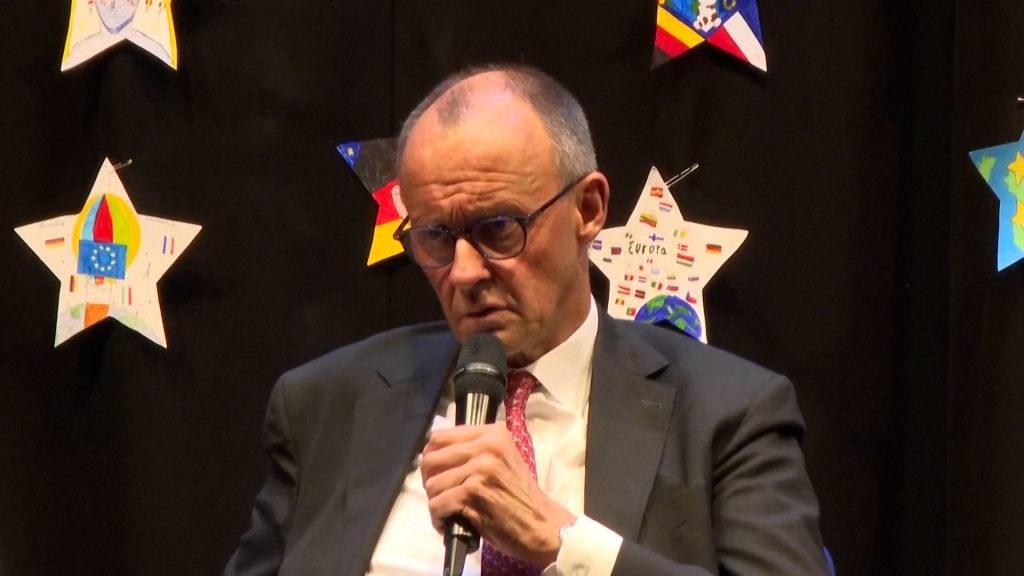
NewsFeed German Chancellor Friedrich Merz said the US has no clear exit strategy with their war on Iran, warning “an entire nation is being humiliated by the Iranian leadership”. Published On 27 Apr 202627 Apr 2026 Click here to share on social media share-nodes Share googleAdd Al Jazeera on Googleinfo Adblock test (Why?)
Arvind Kejriwal to skip HC hearing, expresses distrust in Judge Swarana Kanta, eyes SC appeal
The case relates to the Delhi Excise Policy 2021-22, in which the CBI has challenged the discharge of Kejriwal and other accused persons.
Who was Sheikh Yusuf Afridi? How was Lashkar-e-Taiba founder Hafiz Saeed’s close aide killed?
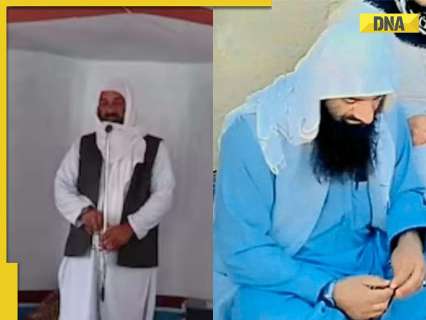
Sheikh Yusuf Afridi was considered an important link in the US-proscribed terror group’s operations in the Khyber Pakhtunkhwa region, and investigators are treating his death as a targeted assassination.
Rebranded Raghav Chadha? Ahead of Punjab polls, Rajya Sabha MP tries to arrest backlash, explains AAP exit, calls it ‘toxic workplace’ : Watch

Raghav Chadha took to Instagram account and posted a video saying his move to Join BJP was driven by concerns over what he described as a toxic work environment within his former party, AAP.
West Bengal Election 2026: PM Modi challenges Mamata Banerjee as campaign ends, who will have last laugh in TMC vs BJP contest?
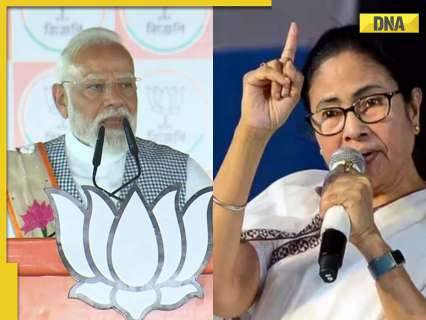
Prime Minister Narendra Modi on Monday addressed a Vijay Sankalp rally in Barrackpore ahead of the second phase of polling in West Bengal, highlighting his long association with the state and expressing confidence in a BJP victory after the results on May 4.
School Holiday Alert: Delhi-NCR, Uttar Pradesh & other states declare early breaks due to heatwave; check state-wise summer vacation dates, new timings

In the Noida and Greater Noida area, the District Magistrate has issued a mandatory revision for all schools, Government, Private, CBSE, ICSE, and others. From April 27, Noida schools were asked to revise their timings to 7:30 AM to 12:30 PM. Check State-wise Summer holidays 2026 date and time here
India, New Zealand sign historic free trade agreement: Here are key points from the deal
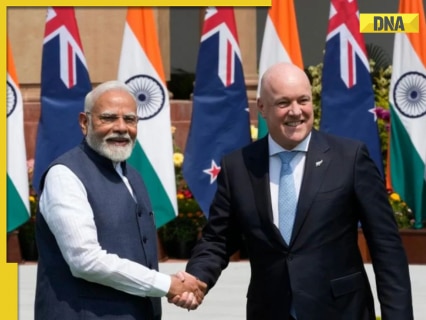
This comes after teams from New Delhi and Wellington completed talks in December last year. The agreement reportedly has a total of 20 chapters, covering trade in goods, remedies, dispute settlement, legal provisions, and more.