

Trump makes historic SCOTUS appearance for birthright citizenship case
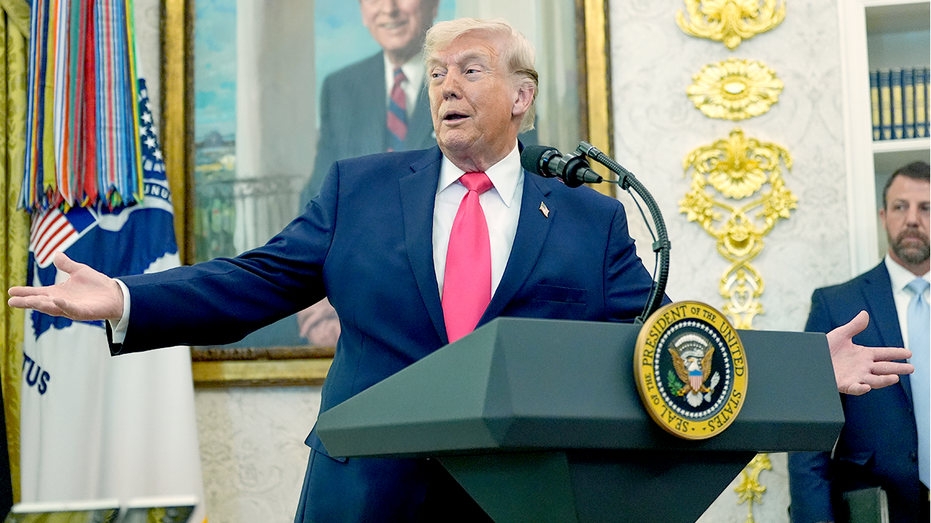
President Donald Trump is making a historic appearance at the Supreme Court on Wednesday to listen as justices weigh his executive order to curb birthright citizenship. No sitting president has attended oral arguments at the high court before, underscoring the weight Trump has placed on the landmark case, which could upend more than 100 years of precedent that has allowed most babies born in the U.S. to receive automatic citizenship. Attorney General Pam Bondi accompanied Trump at the Supreme Court on Wednesday morning. “I have listened to this argument for so long, and this is not about Chinese billionaires, or billionaires from other countries who all of a sudden have 75 children or 59 children in one case, or 10 children becoming American citizens. This was about slaves,” Trump told Fox News’ Peter Doocy in the Oval Office on Tuesday of the case. SUPREME COURT PREPARES TO REVIEW TRUMP’S EXECUTIVE ORDER ON BIRTHRIGHT CITIZENSHIP At issue in the case is the language in the 14th Amendment that says anyone born in the United States and “subject to the jurisdiction thereof” is automatically a citizen. Trump noted that the provision was a relic of the Civil War. “It had to do with the babies of slaves,” Trump said. “It didn’t have to do with the protection of multimillionaires and billionaires wanting to have their children get American citizenship. It is the craziest thing I’ve ever seen. It’s been so badly handled by legal people over the years.” BIRTHRIGHT CITIZENSHIP SUPPORTERS GET THE LAW WRONG BY IGNORING OBVIOUS EVIDENCE Trump’s order would change the scope of birthright citizenship, which allows babies born to noncitizens in the United States to automatically receive U.S. citizenship, except in the cases of those born to foreign diplomats. Lower courts have uniformly rejected Trump’s policy and blocked it through injunctions in class-action lawsuits. Trump has argued that as part of his immigration crackdown, he wants to curtail abuses of the 14th Amendment, which can include foreigners traveling to the United States strictly to give birth with no intention of legally settling in the country. The amendment also incentivizes migrants to enter the country illegally to give birth and rewards pregnant women already living illegally in the country by imparting citizenship to their children, the administration has said. HOW TO MAKE PRESIDENT DONALD TRUMP’S IMMIGRATION PAUSE STICK IN COURT Trump is expected to look on as John Sauer, his solicitor general, makes the case to the justices that they should side with the president. Traditionally, only the justices and the lawyers arguing the case speak during oral arguments. An American Civil Liberties Union lawyer will argue against Trump’s executive order before the high court on Wednesday. In a statement, an ACLU executive director said that Trump could “watch the ACLU school him in the meaning of the Constitution” and that the organization would “be glad to sit alongside of him.”
Sanders-backed NJ Dem accused of hiding from voters as skipped forums pile up
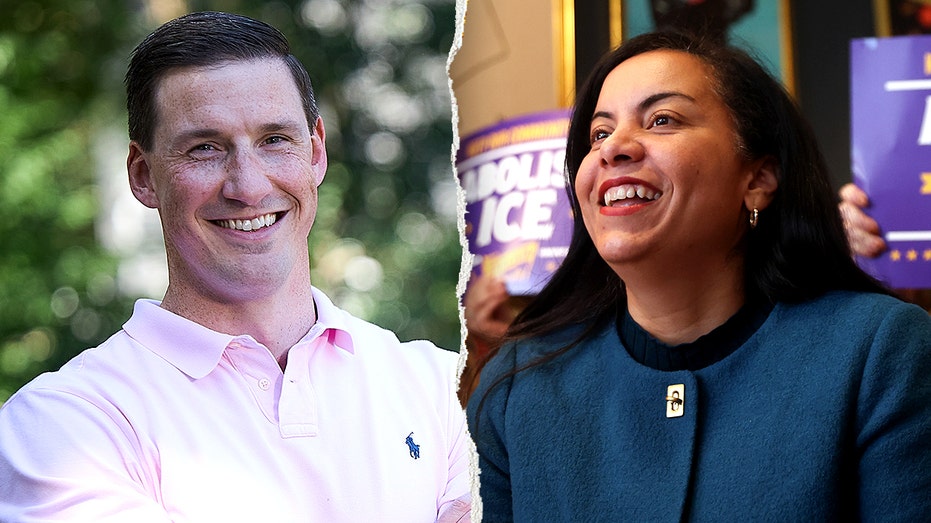
A progressive House candidate backed by Sen. Bernie Sanders, I-Vt., and Rep. Alexandria Ocasio-Cortez, D-N.Y., is under fire for dodging in-person debates with her GOP opponent ahead of an April special election, prompting accusations that she is reluctant to defend her far-left platform before voters. Republican candidate Joe Hathaway is ripping his Democratic opponent, Analilia Mejia, for agreeing to a virtual debate — after repeatedly declining a series of face-to-face opportunities. The candidates are scheduled to participate in a live virtual forum sponsored by the New Jersey Globe on Wednesday evening. “Unfortunately, when my opponent dodges and lies about debates, it limits the opportunity for a head-to-head matchup with two weeks left in the election,” Hathaway said in a statement to Fox News Digital. “For now, she can hide behind a screen, but she cannot hide from her record.” The special election winner will fill an open seat vacated by Gov. Mikie Sherrill, D-N.J., who resigned after winning the state’s 2025 governor’s race. The outcome will be closely watched for its potential impact on House Republicans’ razor-thin majority. WHERE SANDERS AND AOC BACKED PROGRESSIVE CONGRESSIONAL CANDIDATE ANALILIA MEJIA STANDS ON KEY ISSUES Hathaway’s blistering criticism comes after Mejia repeatedly declined debate opportunities with Hathaway that he accepted, the Hathaway campaign told Fox News Digital. Proposed debates sponsored by Montclair High School, On New Jersey, Fairleigh Dickinson University and New Jersey Spotlight News ultimately fell through after Mejia did not accept the invites, according to the Hathaway campaign. Mejia, who narrowly upset a crowded field of challengers in February’s Democratic primary, has also faced backlash for appearing to misrepresent her rationale for backing out of a separate debate opportunity with local chapters of the left-leaning League of Women Voters. The New Jersey Democrat said she rejected the debate invite — co-sponsored by the American Civil Liberties Union (ACLU) of New Jersey — because the group was “unable to commit” to having a person of color as the moderator. The woman-led group fired back in a statement accusing Mejia of lying, saying their intended moderator would have been a person of color. Mejia’s primary objection was not being able to control the selection process herself, according to the group. BALLOT BOX SHOCKER: PROGRESSIVE BACKED BY SANDERS, AOC ON VERGE OF UPSET IN DEM CONGRESSIONAL PRIMARY “We were asked to provide a campaign with a list of potential moderators for approval,” Jennifer Howard, LWV president, said in a release. “This is a request that the League of Women Voters cannot accommodate. Our nonpartisan stance does not permit a candidate to influence the selection of the moderator.” Hathaway, a Randolph Township councilmember who faces an uphill battle to win the Democratic-leaning district, slammed Mejia for backing out of the planned debate. “If she is willing to lie about something as simple as a debate, what other lies can we expect to hear from her tomorrow?” Hathaway told Fox News Digital. “We will show a clear contrast between the practical common-sense leadership that I am running on, and the dangerous, radical, and socialist policies of my opponent,” he added. When asked to comment on Monday, a spokesperson for the Mejia campaign said, “All Joe Hathaway does is complain. We will see him tomorrow.” The Mejia campaign previously told Fox News Digital that she accepted the New Jersey Globe debate because the outlet met her diversity requirements and was closely following the race. Mejia, a staunch progressive who served in a senior role in Sanders’ 2020 presidential campaign, has called for the abolition of Immigration and Customs Enforcement (ICE) and is a vocal critic of Israel. The winner of the special election will face voters again in November for a full two-year term.
US Supreme Court to hear constitutional test of birthright citizenship
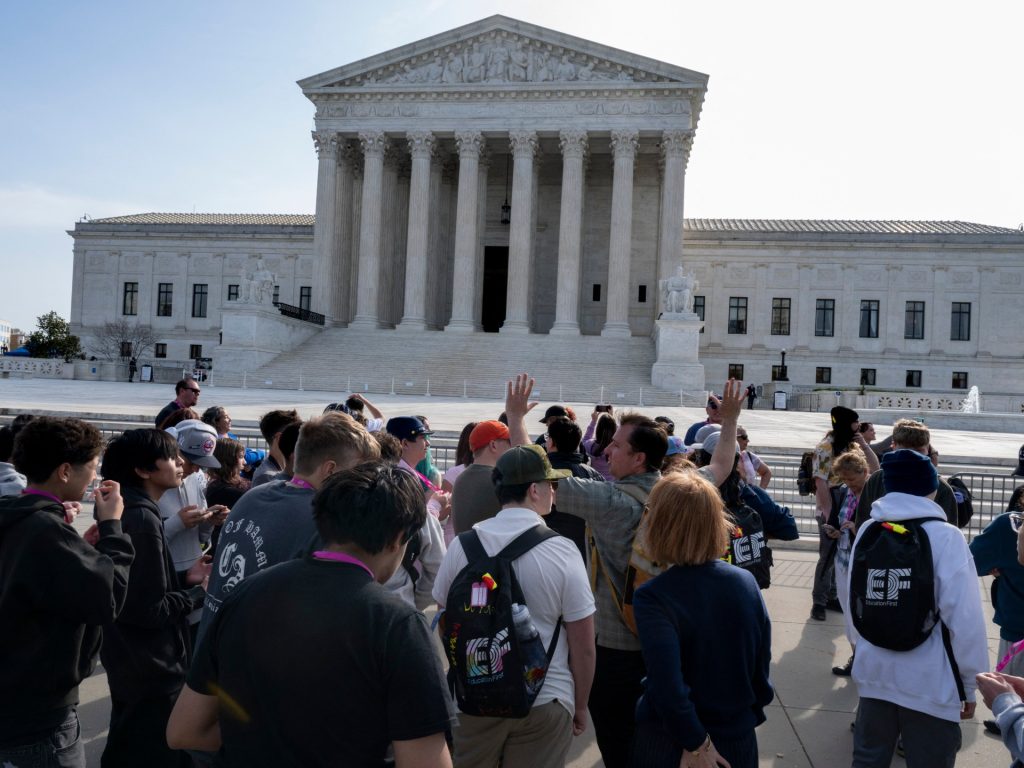
Washington, DC – If you are born on United States soil, are you automatically a citizen of the country? This is the question that will be put before the US Supreme Court on Wednesday, a response to President Donald Trump’s extraordinary effort to change longstanding interpretations of the country’s constitution amid his wider hardline immigration drive. Recommended Stories list of 3 itemsend of list Advocates challenging Trump’s efforts to do away with so-called birthright citizenship – in which any infants born in the US, regardless of their parents’ immigration status, concurrently become US citizens – hope to present what they see as an open-and-shut case to a nine-justice panel of the country’s top court. “This is one of the biggest issues for American society,” said Aarti Kohli, who will be present at Wednesday’s hearing as executive director of the Asian Law Caucus, one of several groups that brought the challenge. “It’s not just about what the executive order does, but it’s about the power that the president has to rewrite the Constitution.” Advocates have not shied from the difficult context of the highly consequential case, which they say risks transforming the cultural fabric of the US, inflating the number of people living in the US not afforded equal rights, and creating a “permanent underclass” for some immigrant groups. It will be brought before a US Supreme Court dominated by a 6-to-3 conservative supermajority. The panel has recently handed Trump a handful of major defeats, but it has largely leaned in the president’s favour on immigration. Advertisement “Every judge in the lower courts, regardless of which party appointed that judge, has ruled in our favour,” Kohli said. Trump’s executive order and the 14th Amendment Wednesday’s case before the Supreme Court represents the culmination of a months-long challenge to an executive order signed by Trump just hours after taking office on January 20, 2025. The order sought to effectively end birthright citizenship, long interpreted as established under the 14th Amendment of the US Constitution, ratified in 1868, three years after slavery was officially outlawed in the US. The amendment overturned the 1857 Dred Scott v Sandford Supreme Court ruling, which maintained that Black slaves born in the US were not US citizens. Instead, the 14th Amendment stated: “All persons born or naturalised in the United States, and subject to the jurisdiction thereof, are citizens of the United States and of the State wherein they reside.” Trump’s executive order argued the 14th Amendment “has never been interpreted to extend citizenship universally to everyone born within the United States”. It singled out the phrase “subject to the jurisdiction thereof” to argue the constitutional amendment does not apply to those in the United States without documentation or on temporary visas. If further ordered, “no department or agency” is to issue or accept citizenship documents for individuals born to parents of those categories. The executive order said it would take effect for those born after 30 days of its signing, but its enforcement has been widely blocked amid ongoing legal challenges. What will challengers argue? At least 10 legal challenges have been launched against Trump’s order, but Trump v Barbara is the first to be heard before the Supreme Court. The case is named after one of the plaintiffs, “Barbara”, a Honduran citizen who was expecting her fourth child while living in New Hampshire in October 2025, awaiting the processing of her asylum application. Her co-plaintiffs include a woman from Taiwan – in the US on a student visa – who gave birth to a child in Utah in April 2025 and a Brazilian national, whose wife gave birth in March 2025. Because the case is a class action, it is brought on behalf of all people in the same “class” as the plaintiffs: children who would be denied citizenship under Trump’s order. Kohli, whose organisation brought the case alongside the ACLU, the Legal Defence Fund, and the Democracy Defenders Fund, said the arguments put forward on Wednesday will be relatively straightforward: Trump’s order directly runs counter to the “clear language” of the 14th Amendment. Advertisement A subsequent US Supreme Court ruling, 1898’s United States v Wong Kim Ark, further affirmed that a child born to non-citizen parents was a US citizen, the lawyers will argue. The concept was then codified in the 1952 Immigration and Nationality Act, which said: “a person born in the United States, and subject to the jurisdiction thereof … shall be nationals and citizens of the United States at birth”. The practice had previously been English common law. “If you look at the legislative history, it’s very clear that Congress understood it to mean that it’s any child who is born in the United States. Nowhere in the Constitution or in the [1952] statute does it say anything about the domicile of the parents,” Kohli said. “It’s very clear settled law,” she said. The phrase “subject to the jurisdiction thereof” has long been applied only to a very limited group of individuals, including the children of foreign diplomats, those born to invading armies while on US soil and those born on sovereign Native American territory, she added. Trump admin claims ‘misreading’ Beyond Trump’s executive order, Department of Justice lawyers have argued that more than a century of US practice has been predicated on a fundamental “misreading” of the US Constitution. In court filings, they argued the 14th Amendment was drafted for “newly freed slaves and their children, not on the children of aliens who are temporarily present in the United States or of illegal aliens”. They further argued that the Supreme Court ruling in the Ark case related only to non-citizens “enjoying a permanent domicile and residence” in the US, which, they said, precludes some categories of people living in the country. The lawyers, led by Solicitor General John Sauer, argued that the 1952 law’s language, which “transplants” directly from the 14th Amendment, should also be reinterpreted. While once considered a fringe legal perspective, the position broadly follows an argument laid out in the Heritage
UK PM says war on Iran will impact Britain’s future
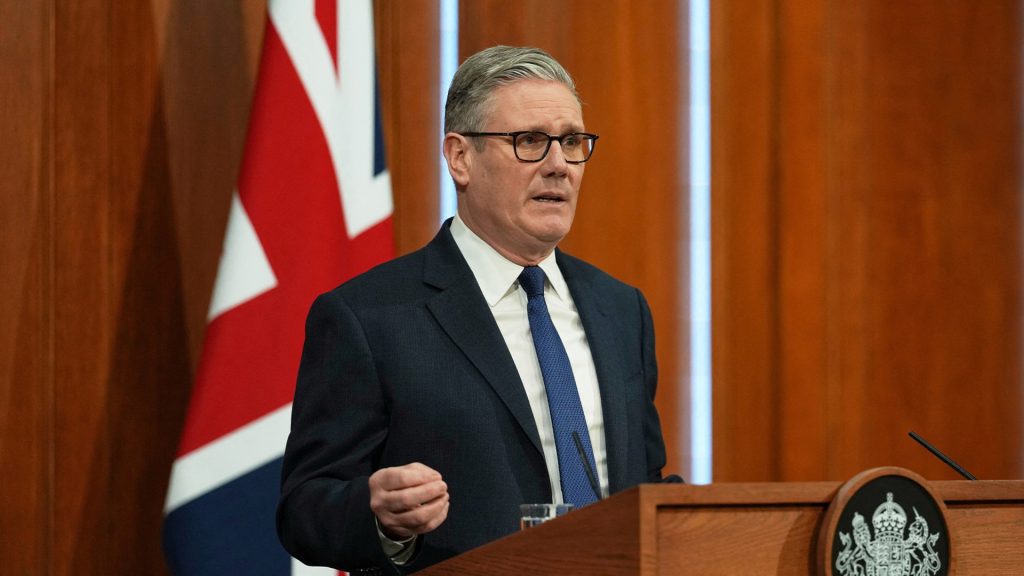
NewsFeed UK Prime Minister Keir Starmer says the war on Iran will shape Britain’s future, warning it could have long-term economic and security impacts, but insists the UK will not be drawn into the conflict. Instead, he says London will seek de-escalation and more cooperation with European allies. Published On 1 Apr 20261 Apr 2026 Click here to share on social media share2 Share googleAdd Al Jazeera on Googleinfo Adblock test (Why?)
How are NATO allies pushing back against Trump’s Iran war demands?
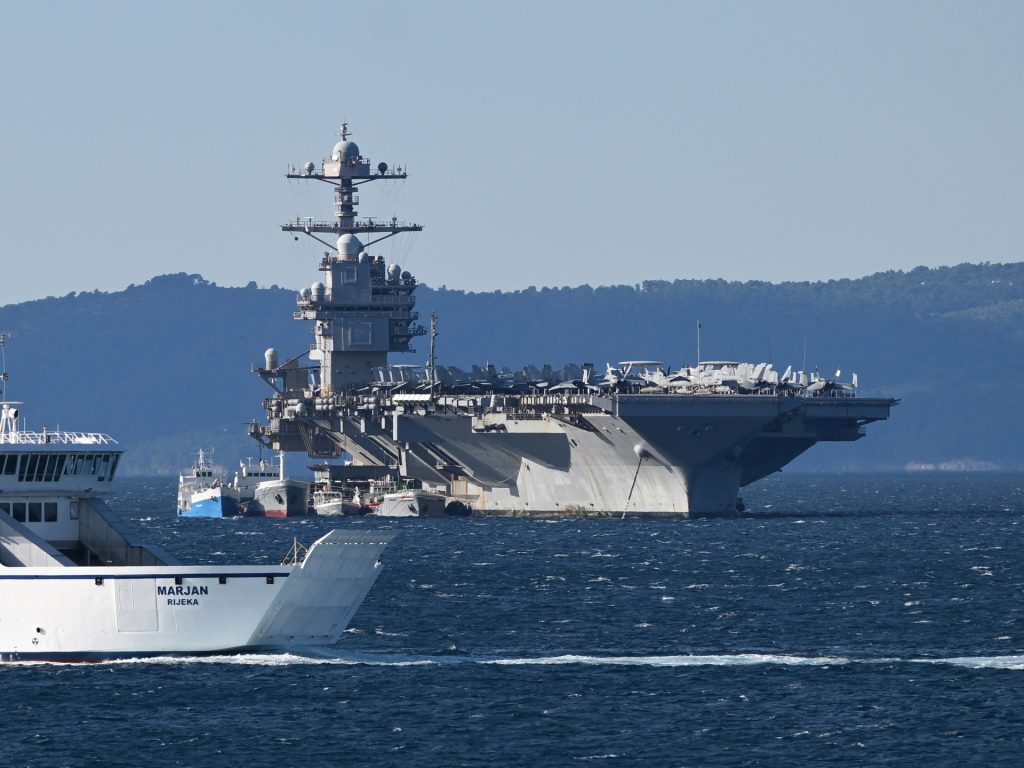
EXPLAINER Trump says he is considering a NATO exit as allies resist cooperation in US-Israel war on Iran. Here are the fractures emerging within the alliance. United States President Donald Trump’s already fraught relationship with NATO allies is fraying further as the US-Israel war on Iran is in its second month. A growing number of partners are resisting Washington’s requests for support in the conflict, deepening a transatlantic rift. From the deployment of naval forces to the Strait of Hormuz to the use of military bases in Europe, Trump wants more support from US allies. But their responses remain lukewarm and so does the Trump administration’s enthusiasm for them. Recommended Stories list of 3 itemsend of list “I always knew they were a paper tiger,” Trump lashed out in an interview published on Wednesday in The Telegraph newspaper, saying he was strongly considering pulling out of NATO. The same sense of disdain towards the allies was echoed a day earlier by Secretary of State Marco Rubio, who told Al Jazeera that if the transatlantic alliance was “just about defending Europe” but not the other way around, that’s “not a very good arrangement”. That, Rubio said, is going “to have to be re-examined”. Let’s get into the details of the growing rift. What allies have denied access to their military bases? Spain, the most vocal European opponent of the war, said on Monday that the country’s airspace is closed to US military planes involved in the conflict. “I think everyone knows Spain’s position. It’s very clear,” Defence Minister Margarita Robles said. Spain said last month that the US could not use jointly operated military bases in the war, which Spanish Prime Minister Pedro Sanchez has described as “unjustifiable” and “dangerous”. In response to that, Trump threatened to cut trade with Madrid. On Tuesday, Italy’s newspaper Corriere della Sera reported that the Italian government denied US bombers the use of a military base in Sicily. The Italian government, though, rushed to make it clear there were no tensions with Washington and that each US request would be considered on a case-by-case basis. The United Kingdom has allowed US bombers to use military bases on its territory but only for defensive missions, such as striking Iranian military sites involved in attacks on British interests. On Wednesday, British Prime Minister Keir Starmer said in an address to the nation: “This is not our war. We will not be drawn into the conflict. That is not in our national interest.” The US president has also hit out at France, saying it was “VERY UNHELPFUL” after Paris refused to allow planes “loaded up with military supplies” and “headed to Israel” to fly over French territory. Sources told the Reuters news agency the refusal was made as Israel wanted to use France’s airspace to transport US weapons to be used in the war against Iran. And Poland‘s defence minister, Wladyslaw Kosiniak-Kamysz, said on Tuesday that his country, which borders Ukraine, had “no plans” to relocate its Patriot air defence systems to the Middle East. “Poland’s security is an absolute priority,” he wrote on X. Advertisement The split over the Strait of Hormuz Reluctance in joining the war efforts among US allies was also evident after Trump’s repeated requests to help Washington in securing the opening of the Strait of Hormuz, a key waterway through which about a fifth of global oil and gas exports pass. Thanks to its geography, Iran has been able to bring traffic through the narrow chokepoint to a near-total halt by carrying out relatively few attacks on vessels there. Italy, the UK, France, Greece and other countries have all responded with a flat no to the request of joining a naval coalition to open the strait. German Defence Minister Boris Pistorius gave his country’s reasoning behind such a position: “This is not our war. We have not started it.” “Does … Trump expect a handful or two handfuls of European frigates to do in the Strait of Hormuz what the powerful US Navy cannot do?” Still, some countries do have the capacity to help, such as support in minesweeping. Starmer said London was discussing with other allies the possibility of using its mine-hunting drones already in the region. But that’s not what Trump wants. “All of those countries that can’t get jet fuel because of the Strait of Hormuz, like the United Kingdom, which refused to get involved in the decapitation of Iran, I have a suggestion for you: Number 1, buy from the U.S., we have plenty, and Number 2, build up some delayed courage, go to the Strait, and just TAKE IT,” Trump wrote on his Truth Social account this week. Experts warned that comments from Trump and his cabinet members suggest mounting anger that could also take hold of the followers of the president’s Make America Great Again, or MAGA, movement. “These things can accumulate momentum in Trump’s mind within the MAGA community,” Samir Puri, a visiting lecturer on war studies at King’s College London, told Al Jazeera, referring to what he described as “visceral anger voiced by Trump towards the UK and other European allies but also by [Defense Secretary] Pete Hegseth.” As a result of the tensions over the war on Iran, he said, “The bond of NATO weakens further.” Could NATO allies really say no? Trump’s suggestion that allies should solve the de facto blockade in the Strait of Hormuz has added to concerns that he might be willing to end the war with Iran in control of the waterway. “What happens in the strait, we’re going to have nothing to do with,” Trump said. Should that happen, NATO allies along with the rest of the world would face even greater economic repercussions. Advertisement Already, the slowdown in marine traffic through the waterway has caused major disruptions to the global economy with shipping companies afraid of attacks if they send their vessels through. Oil and gas prices have gone up by up to 60 percent in
Bengaluru Horror: Techie woman finds husband dead at home, jumps from 17th floor

Tragic incident in Bengaluru: Couple from Telangana, tech professionals, die by suicide. Husband found dead, wife jumps off 17th floor after discovering body.
New IT-regime from April 1: HRA, education, meal exemptions, tightened compliance norms, is new IT Act 2025 game-changer for salaried taxpayers?

The new Income-tax Act, 2025, set to come into effect from April 1, 2026, marks a comprehensive overhaul of India’s six-decade-old tax framework, with a focus on simplifying compliance, enhancing transparency, and rationalising exemptions for salaried taxpayers.
Govt explains commercial LPG cylinder price hike, aviation sector welcomes partial ATF price increase, details here

India’s Petroleum Ministry said domestic LPG, petrol, and diesel prices remain stable despite global fuel spikes.
Should India buy US F-35 to counter Chinese JF-20 after it crashes in Las Vegas? Details here

With several cases of F-35 fighter jet crashes, most recently in north of Las Vegas on Tuesday, should India purchase the US advanced F-35 stealth fighter jets?
Delhi CM Rekha Gupta campaigns for BJP in Kerala, says, ‘UDF and LDF have pushed Keralam into debt burden’

She said, the path to Viksit Bharat goes through Viksit Keralam. When the farmers and fishermen of Alappuzha prosper, when the youth become self-reliant, and when every family feels secure, development gains real meaning.