

Utah justice allegedly sent ‘inappropriate’ texts to lawyer in key redistricting case, officials launch probe
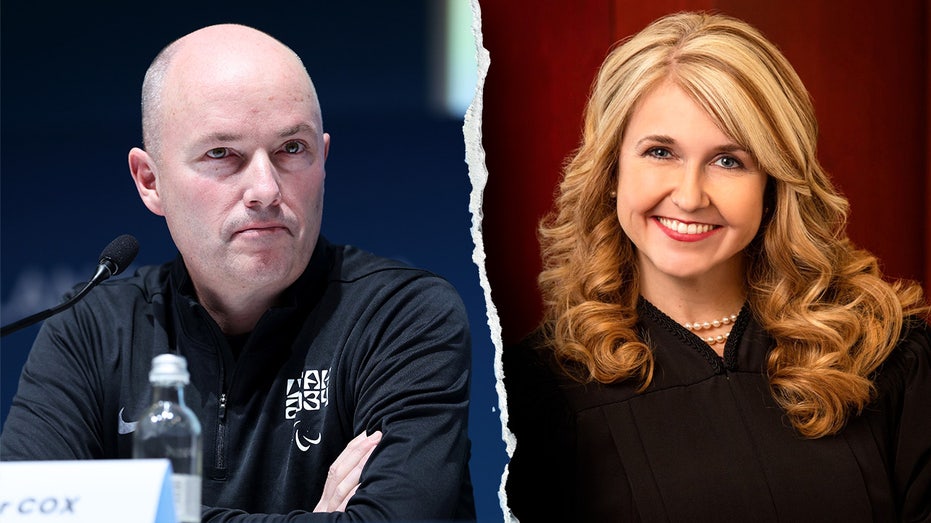
Republican Utah Gov. Spencer Cox and top state lawmakers ordered an independent investigation Friday into a state Supreme Court justice over allegations she had an unethical relationship with an attorney who worked on a high-stakes redistricting case. Justice Diana Hagen, who was appointed by Cox, stands accused by her ex-husband of sending what he described as “inappropriate” text messages to an attorney who helped challenge a Republican-friendly map that maintained four red congressional seats in Utah. Hagen joined a unanimous decision to toss out Republicans’ redistricting plan in July 2024, a ruling that led to one of the seats flipping blue in time for the 2026 midterms. FEDERAL JUDGE SCORCHES DEMS FOR PANDERING TO LATINOS WITH CALIFORNIA MAP IN FIERY DISSENT The revelation of a possible relationship between Hagen and the attorney, David Reymann, who worked on behalf of progressive voting rights groups in the case, stemmed from a complaint that a lawyer for Hagen’s husband submitted to Chief Justice Matthew Durrant and the Judicial Conduct Commission, according to local outlet KSL. Hagen and Reymann have both denied the allegations. Fox News Digital reached out to a Utah Supreme Court representative and Reymann for comment. The Judicial Conduct Commission, described on its website as an independent body comprising several state lawmakers, judges and members of the public, conducted a preliminary investigation based on the complaint and chose not to pursue the matter further, KSL reported. Fox News Digital reached out to the Judicial Conduct Commission for comment. The Utah Supreme Court issued a public statement on behalf of Hagen Friday afternoon in which she said she never had a conflict of interest. SUPREME COURT SIDES WITH NEW YORK REPUBLICAN IN CONGRESSIONAL REDISTRICTING FIGHT “My last involvement in the redistricting case was October 2024,” Hagen said. “I voluntarily recused myself from all cases involving Mr. Reymann in May 2025, and my recusal was reflected in the Court’s September 15, 2025 opinion in League of Women Voters. “I took prompt, prudent, and transparent steps in response to the allegations made by my ex-husband, including reporting them myself to the Judicial Conduct Commission and submitting a sworn statement. The Judicial Conduct Commission recently reviewed the matter, dismissed the complaint, and closed the case. I remain committed to upholding the highest standards of judicial ethics, integrity, and impartiality.” The complaint and interviews conducted by the Judicial Conduct Commission found that Hagen and her husband began discussing divorce in September 2024, had interacted together with Reymann toward the end of that year and that Hagen did not meet one-on-one with Reymann until 2025, according to KSL. Cox, along with Senate President Stuart Adams and House Speaker Mike Schultz, who joined the governor in launching the new investigation, said in a joint statement that more “transparency” was needed on the matter, signaling that the public’s trust in the state’s highest court was at stake, especially after a polarizing decision in a redistricting case set to affect the midterms. “An initial review by the Judicial Conduct Commission and the court left important questions unresolved,” they said. “Allegations of this nature, especially involving public officials, must be examined with transparency and accountability to establish the facts and to maintain public confidence.”
Texas AG sues Houston mayor and city council over new sanctuary city ordinance limiting ICE cooperation
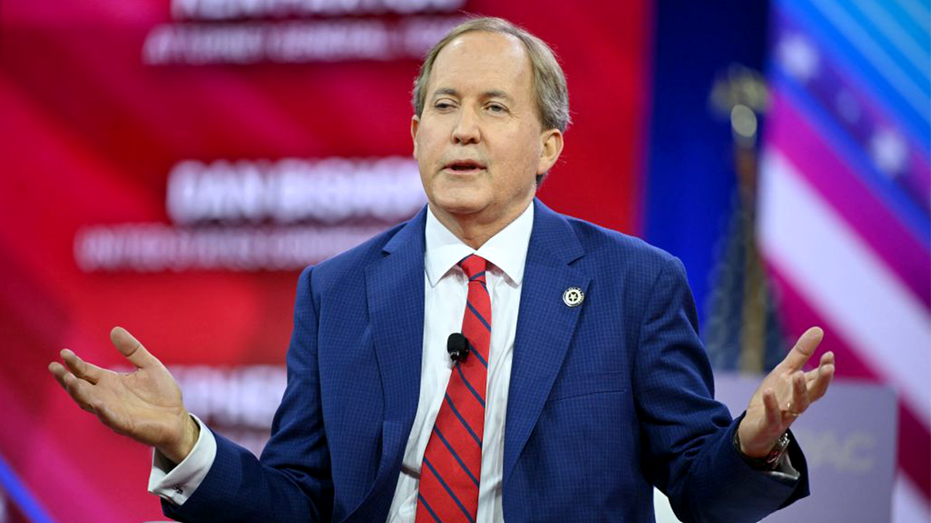
Texas Attorney General Ken Paxton is suing Houston city officials over the adoption of a “sanctuary” ordinance designed to limit cooperation between local authorities and U.S. Immigration and Customs Enforcement (ICE). The ordinance, passed by a 12-5 vote last week, ended a Houston police policy that required officers to wait at least 30 minutes for ICE to arrive if a suspect had an immigration warrant. The lawsuit names Houston Mayor John Whitmire, the city’s 16 council members and Houston Police Chief J. Noe Diaz as defendants. Paxton argued the ordinance violates Senate Bill 4, a state law passed in 2017 that prevents local governments from adopting, enforcing or endorsing policies that prohibit or materially limit the enforcement of federal immigration laws. EXCLUSIVE: NYC OFFICIALS REFUSE ICE HOLD FOR ILLEGAL ALIEN ACCUSED IN ARSON THAT KILLED 4 AND INJURED 7: DHS “I will not allow any local official to push sanctuary policies that make our communities less safe,” Paxton said in a statement. “Under my watch, no Texas city will be a safe harbor for illegals. “The Texas Legislature passed strong legislation that specifically stops the type of lawless ordinance that Houston adopted,” he added. “Houston has no authority to ignore the Constitution and the laws duly enacted by the Legislature. I’m calling on Houston to immediately repeal this ordinance.” LOUISIANA AG URGES NOPD TO COOPERATE FULLY WITH FEDERAL IMMIGRATION AUTHORITIES In a statement, Whitmire said it was “unfortunate that so much time and resources are being spent on an issue that should not be partisan. It interferes with our responsibility to keep Houston safe and protect all residents.” Houston City Council member Alejandra Salinas urged the city to defend the ordinance in court. BOSTON POLICE IGNORED 100% OF ICE DETAINER REQUESTS IN 2025, CITING SANCTUARY LAW “It’s no longer a question about whether the City should go to court,” she wrote on X. “We’re already there. The Mayor and City Council must vigorously defend the law we voted for and that the City Attorney deemed legal. I stand ready to work with my colleagues to defend our laws and protect Houstonians’ constitutional rights.” Fox News Digital has reached out to several city council members for comment. Texas Gov. Greg Abbott has also threatened to freeze public safety funding if Houston moves forward with the ordinance. “Houston received more than $100 million from the state based on a written agreement that they will comply with immigration enforcement,” Abbott wrote on X in a post Tuesday. “If they refuse to comply, they better get out their checkbook. It will be costly if they refuse to keep their streets safe.” A special City Council meeting scheduled for Friday was rescheduled after Abbott extended the deadline for the city to respond to his funding freeze threat.
Can Pakistan secure Iran-US nuclear compromise, as Trump says deal ‘close’?
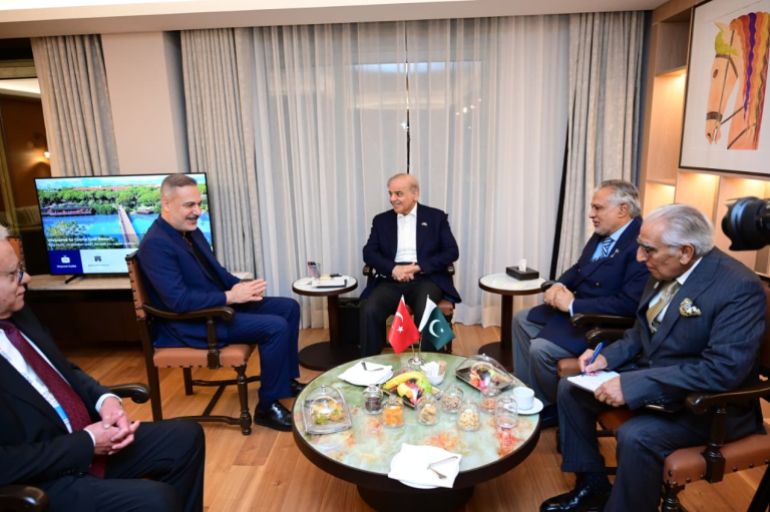
Islamabad, Pakistan – Standing on the South Lawn of the White House before boarding his helicopter for Las Vegas on Thursday, United States President Donald Trump offered his most optimistic assessment yet of the war with Iran. “We’re very close to making a deal with Iran,” he told reporters. “They’ve totally agreed to that [no nuclear weapons]. They’ve agreed to almost everything, so maybe if they can get to the table, there’s a difference.” Recommended Stories list of 4 itemsend of list He went further, saying Iran had agreed to hand over its stockpile of enriched uranium, material that, if further enriched, can be used to build a nuclear weapon. “They’ve agreed to give us back the nuclear dust that’s way underground because of the attack we made with the B-2 bombers,” he said, referring to US strikes in June last year. A deal, he added, could come “over the weekend”. Trump said he would consider travelling to Islamabad himself if an agreement was signed there. “If the deal is signed in Islamabad, I might go. They want me to go.” Iran’s Ministry of Foreign Affairs presented a different picture. Spokesperson Esmaeil Baghaei confirmed that messages were being exchanged through Pakistan, but was unequivocal on enrichment. Iran, he said, “based on its needs, must be able to continue enrichment”. No Iranian official has confirmed agreeing to surrender the country’s enriched uranium stockpile. Tehran’s public position, that enrichment is a sovereign right, remains unchanged. Asif Durrani, a former Pakistani diplomat who served as Islamabad’s ambassador to Tehran from 2016 to 2018, said framing the situation as a gap between the two sides was misleading. Advertisement “There are no gaps, really. If Trump has read the NPT, he would know that every country has the right to access nuclear technology for peaceful purposes,” he told Al Jazeera. “Iran has said multiple times that it does not want a weapon. What it wants is civil nuclear use, within the framework of both the NPT and the JCPOA.” The NPT, or Treaty on the Non-Proliferation of Nuclear Weapons, aims to prevent the spread of nuclear weapons while promoting peaceful nuclear energy and disarmament. The JCPOA, or Joint Comprehensive Plan of Action, was the 2015 agreement between Iran and six world powers that capped Tehran’s uranium enrichment and placed its facilities under international supervision in exchange for sanctions relief. The United States withdrew from the deal in 2018 during Trump’s first term, reimposing sanctions and setting in motion the gradual erosion of its limits on Iran’s nuclear programme. Seyed Mojtaba Jalalzadeh, an international relations analyst, said the reality was more complex than public statements suggest. “We should avoid simplistic binaries such as ‘one side is lying’,” he told Al Jazeera. “The gap visible between Trump’s remarks and the position of Iran’s foreign ministry is more a reflection of the complex, multilayered, and still unfinished nature of the negotiations.” When Trump speaks of “total agreement”, Jalalzadeh said, “he is most likely offering the most maximalist possible reading of the negotiating process.” It remains unclear whether Trump’s remarks reflect genuine backchannel progress or are a pressure tactic in advance of the April 22 ceasefire deadline, but Trump and Iran’s descriptions paint completely different pictures of the same negotiations. Pakistan’s diplomatic orchestra Foreign Minister of Türkiye Hakan Fidan calls on Prime Minister Muhammad Shehbaz Sharif in Antalya on Thursday, April 16, 2026 [Handout/Prime Minister’s Office] The most active diplomacy on Thursday ran through Tehran, where Pakistan’s army chief, Field Marshal Asim Munir, held a series of high-level meetings. Munir met Iranian Parliament Speaker Mohammad Bagher Ghalibaf, who led Iran’s delegation at the Islamabad talks with the US last Saturday, followed by a meeting with President Masoud Pezeshkian. He also met Major-General Ali Abdollahi, commander of Iran’s Khatam al-Anbiya Central Headquarters, the operational command of the Islamic Revolutionary Guard Corps. Al Jazeera reported on Wednesday that Pakistani officials were expecting a “major breakthrough” on Iran’s nuclear programme “in days to come”, with messages continuing to pass between Washington and Tehran. Advertisement While Munir engaged Iranian leaders in Tehran, Prime Minister Shehbaz Sharif pursued a parallel track, meeting Gulf leaders in Saudi Arabia and Qatar before arriving at Turkiye’s Antalya Diplomacy Forum on Thursday evening. Pakistan’s central role has been acknowledged by both sides. White House spokesperson Karoline Leavitt said any further in-person talks would most likely take place in Islamabad. “The Pakistanis have been incredible mediators throughout this process, and we really appreciate their friendship and their efforts to bring this deal to a close, so they are the only mediator in this negotiation,” she said. Durrani cautioned that Pakistan’s role has limits. “Pakistan is facilitating this meeting, and the most it can do is suggest certain things that mediators can offer in their capacity,” he said. “But ultimately, it all depends on the political will of the two parties.” That political will now faces a ceasefire deadline set to expire on April 22. Official sources told Al Jazeera that nearly 100 visa applications from journalists have been received in the past week, while authorities have begun tightening security in the capital in anticipation of a possible high-level event — the potential visit of US President Donald Trump, or at the very least, another round of high-level talks led by senior officials from Tehran and Washington. Hardline signals from Tehran Alongside diplomatic movement, Iran’s hardline establishment struck a sharper tone. Iranian Parliament Speaker Mohammad Bagher Ghalibaf, right, welcoming Pakistan’s Army Chief Asim Munir before their meeting in Tehran on Thursday, April 16 [Handout/Iranian Parliament Public Relations Office] Mohsen Rezaei, a former IRGC commander and now a military adviser to Supreme Leader Mojtaba Khamenei, said on a state-owned television channel that he did not support extending the ceasefire. “Unlike the Americans who are afraid of continuous war, we are fully prepared and familiar with a long war,” he said, according to Tasnim News Agency. Abdollahi, speaking during his meeting with Munir and quoted by state news agency IRNA, said the conflict
Controversy as Lebanese banker Sehnaoui is praised for supporting Israel
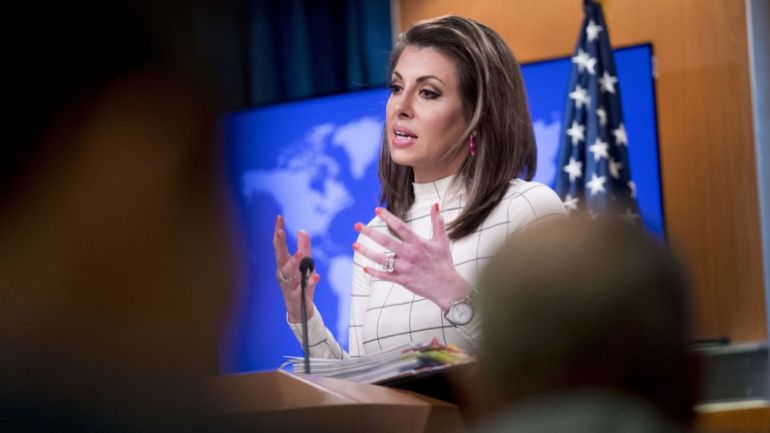
Even as Israel was attacking his home country of Lebanon, killing hundreds, and occupying territory within the country’s south, Antoun Sehnaoui was being publicly praised for his support for Israel, and his family’s history of being “Lebanese Christian Zionists”. Sehnaoui, one of Lebanon’s leading bankers and the chairman of Societe Generale de Banque au Liban (SGBL), was attending an event on Tuesday at the United States Holocaust Memorial Museum, which he had donated to. And the person praising him for his pro-Israel bona fides was his reported romantic partner, Morgan Ortagus, a US Middle East envoy. Recommended Stories list of 4 itemsend of list Addressing the audience, Ortagus, who had been widely criticised in Lebanon for her perceived pro-Israel bias during her time in the Trump administration, framed support for Israel as an act that requires “moral clarity”, even when it involves personal risk. Praising Sehnaoui, Ortagus claimed his actions in funding a US-Israeli opera project were “technically illegal in Lebanon”, which prohibits dealings with Israeli individuals or institutions. Continuing, Ortagus described Sehnaoui as coming from generations of “committed Lebanese Christian Zionists”, saying he had been “trained to be a supporter of the State of Israel and the Jewish people” by his family. She also referred to what she characterised as a longstanding familial relationship with Israel, including that of his father, Nabil, one of the primary funders of the Christian militia, the Lebanese Forces (LF), which allied with Israel during its 1982 invasion and was credited with participating in massacres at Shatila, a Palestinian refugee camp, and the adjacent neighbourhood of Sabra in Beirut the same year. Advertisement However, this latest iteration of Sehnaoui’s support for Israel comes at a particularly difficult moment for many in Lebanon, still waiting to feel the benefits of a US-imposed ceasefire. Israel has been accused of multiple war crimes since it launched ground operations in Lebanon in mid-March, including that it used a “quadruple tap” method intended to maximise civilian harm from any single strike. Israeli action has also displaced more than a million people – about 20 percent of the population – from southern Lebanon in a chaotic flight that has destabilised the country and heightened sectarian tensions. Responding to footage of one of the country’s most prominent individuals appearing to align with Israel elicited condemnation across much of the country’s social media sphere. One post quoted by Israeli media said Sehnaoui belonged “behind bars”, while another accused him of converting to Judaism and “betraying his country”. “You are a disgusting despicable person with no sense of respect to your own people,” another post claimed. Ortagus ties “I think that the timing of the appearance is more problematic than the actual appearance itself,” Lebanese academic and political commentator Makram Rabah said, adding that a visit to a holocaust museum in itself should never be a source of controversy. However, that was distinct from being a supporter of Israel and many of the Lebanese factions that had previously backed it. Further evidence of the rumoured romantic connection between Ortagus and Sehnaoui will also be controversial. Since her appointment by the Trump administration in April 2025, Ortagus has done little to disguise her support for Israel and strident opposition to Hezbollah, drawing criticism of her role as a supposedly neutral broker in her dealings with Middle Eastern states. Morgan Ortagus, during her time as State Department spokesperson, speaking at a news conference in Washington [Andrew Harnik/AP] Video evidence of both her outspoken support for Israel as well as her words about Sehnaoui’s support should surprise no one, said Michael Young, a Lebanon expert for the Carnegie Middle East Center. “I think to a certain extent, it highlighted what many people thought: Was Ortagus really the best envoy the United States could send to Lebanon, given her very clear leaning towards the Israeli side?” Young said. Bad egg Irrespective of Ortagus’s role, Sehnaoui’s position within Lebanon’s financial elite, including his chairmanship of SGBL, one of the country’s largest banks, has, critics say, allowed him to influence the course of Lebanese politics at all levels of the state and across the country’s religious divides. Advertisement Nevertheless, despite that influence, Sehnaoui faces legal problems both at home and abroad. Within Lebanon, prosecutors have filed charges against him and his bank over alleged money laundering linked to currency trading operations during the financial crisis that began in 2019, which continues to cripple daily life across Lebanon to this day. The bank denies any wrongdoing. In the US, the SGBL are also subject to a 2020 civil lawsuit filed by families of victims of attacks attributed to Hezbollah in Iraq. They allege the bank provided material support to the group, claims SGBL also denies. ”He [Sehnaoui] can buy or sell anyone,” Lebanese MP Paula Yacoubian told Al Jazeera. “He’s ready to work with everyone, from [Christian militia] Jnoud el-Rab to Hezbollah. He doesn’t care,” she said, referring to the far-right militia, which the International Centre for the Study of Radicalisation says is financed by Sehnaoui, and which has carried out a series of violent attacks on Lebanon’s LGBTQ community. “These latest moves are there just to buy an additional layer of immunity for him, presumably in return for his help normalising relations with Israel, but that isn’t how normalisation works,” Yacoubian said. “Normalisation works by giving your government cards to play, such as negotiating for the millions of people to the south to return home, and not by bypassing the government altogether.” For now, while anger over the video continues to bristle across Lebanon, more are left dealing with the repercussions of the relentless attacks Israel has been launching at the country since March 2. Tens of thousands of people are reported to have returned to the battered south in the hours following the ceasefire’s announcement, some to recover the bodies of the dead, and others just to discover what remains of their homes and what is left of their lives. Adblock test (Why?)
Men caught competing as women in prestigious South African marathon

Two women runners initially finished outside the top 10 in the Two Oceans Marathon in Cape Town before bib swap spotted. By The Associated Press Published On 17 Apr 202617 Apr 2026 Two men have been disqualified from one of South Africa’s flagship marathon races after they finished in the top 10 of the women’s race. Their attempt at swapping bibs, which bear the identification numbers worn by racers, resulted in two women runners initially finishing outside the top 10 in the Two Oceans Marathon in Cape Town on April 12. Recommended Stories list of 4 itemsend of list The annual Two Oceans race is one of South Africa’s iconic marathons and includes a 56km (34.7-mile) ultramarathon and a 21.1km (13.1-mile) half-marathon. The event attracts more than 16,000 participants, and finishing among the top 10 is a significant achievement for most runners. The two men, Luke Jacobs and Nic Bradfield, finished seventh and 10th. They were disqualified after a marathon board member uncovered the deception. The women runners who had been bumped were subsequently recognised for their legitimate finishes. Jacobs and Bradfield will face disciplinary processes by the marathon’s disciplinary subcommittee, said Two Oceans Marathon board member Stuart Mann, who helped uncover the cheating, which overshadowed the performance of honest runners. Swapping bibs is unethical and risky Exchanging bibs with another marathoner has become more common while also carrying far-reaching consequences, Mann said. “Not only is it considered unethical, but it also poses health and medical risks in case of an emergency, as wrong medication may be administered to a wrong person,” Mann said. Swapping numbers can result from different motivations, Mann explained. For some, it is done to avoid losing money if they are injured or for some other unexpected reason, cannot run the race. For others, the deceptive practice allows them to obtain a faster time to use for qualifying in a future race. Advertisement Online photos lead to discoveries and apologies Mann was tipped off to one of the swaps after Jacobs posted pictures of himself at the race on social media and people noticed his bib displayed the name “Larissa”. After further investigation, Mann learned Jacobs competed using a bib assigned to Larissa Parekh, who was registered to compete in the women’s race. “I made an error in judgment and did not consider the consequences. I should not have taken part,” Jacobs said in a written apology. Jacobs and Bradfield were also tripped up by modern sports technology. Race officials watched the first 10 women cross the finish line, but data from chips in the bibs indicated two other women had also crossed, although they were not observed by the officials. The discrepancy led to the revelation that Bradfield competed with a number belonging to Tegan Garvey, who later admitted to giving up her bib after she suffered a hip problem prior to the race. “The day before, my hip gave in completely, leaving me unable to even walk. I felt bad as to give up my race entry so my friend ran in my place,” Garvey said. Parekh did not give a clear explanation for her actions, according to Mann, who said both women have apologised and face two-year bans from the Two Oceans Marathon. Adblock test (Why?)
Delimitation Row: Rahul Gandhi invokes ‘wife issue’ comment on Women’s Reservation: ‘PM Modi and I take input from…’
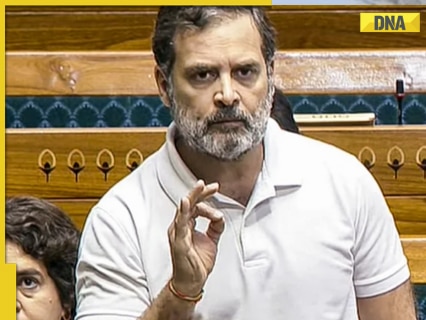
Leader of Opposition Rahul Gandhi was taking part in the debate in the Lok Sabha on the three bills aimed at implementing the women’s quota from the 2029 general elections.
Bengaluru to Pune in Just 13 Hours: Vande Bharat sleeper train approved on this route, check route, station, fare, launch date and more

Vande Bharat Express trains have already become one of the most preferred options in the country. With this new addition, the Vande Bharat network looks to give passengers a quicker and more comfortable overnight option.
Delhi-NCR Weather: Delhiites gets relief from scorching heat, light rain brings respite from 40°C temperature; Check full weather forecast

Earlier on Friday, the India Meteorological Department had issued a yellow alert for Delhi. The department had forecast thunderstorms accompanied by light rain for the region.
TCS Nashik Case: Is it related to godman Ashok Kharat case? Check it here
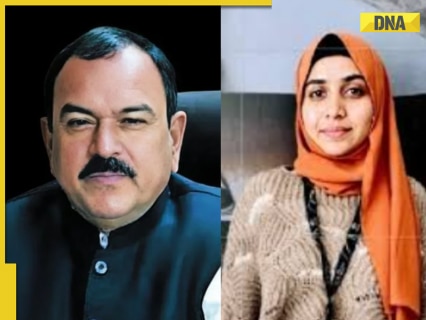
Nida Khan’s father claimed that his daughter was being targeted to put pressure on another individual. He claimed that the case has been created to cover other matters, including the Kharat case. Check details here.
Rahul Gandhi Dual Citizenship Case: On BJP worker’s plea, Allahabad HC orders FIR against Congress leader, details here

Rahul Gandhi Dual Citizenship Controversy: The court directed the Kotwali police station in Uttar Pradesh’s Rae Bareli district to register an FIR against Gandhi, who is both Rae Bareli’s Lok Sabha MP and leader of the opposition in the Lok Sabha.