

Trump unloads on ‘lunatic’ John Bolton after ex-aide pleads guilty in classified docs case
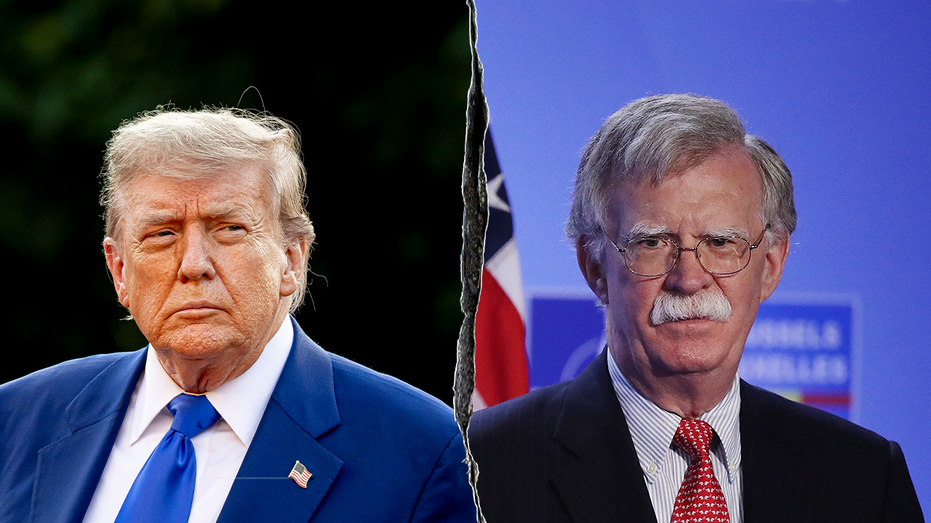
President Donald Trump on Friday mocked former National Security Advisor John Bolton after his one-time aide admitted to mishandling a classified national defense document. Bolton pleaded guilty hours earlier during a hearing in U.S. District Court in Greenbelt, Maryland, to one count of unauthorized possession of a national defense document. His guilty plea was part of a plea agreement that will see prosecutors dismiss the remaining 17 counts at sentencing. The guilty plea prompted an immediate response from Trump, who has repeatedly clashed with Bolton over foreign policy and the former advisor’s highly critical memoir ever since their very public falling out in 2019. EX-TRUMP OFFICIAL JOHN BOLTON PLEADS GUILTY TO 1 OF 18 COUNTS IN CLASSIFIED DOCS INDICTMENT “John Bolton, a very dumb, unbalanced, and unskilled former representative of the United States of America, just pleads guilty!” Trump wrote in a Truth Social post late Friday. “He is a terrible person, a lunatic who only wanted to start trouble and wars, and who was a needless pusher of death and destruction wherever he went. Hopefully, he will be dealt with harshly!” Bolton, 77, is scheduled to be sentenced Oct. 28 and, under his plea agreement, faces a $2.25 million fine, up to five years in prison, three years of supervised release and up to 100 hours of community service. And he will lose his federal pension. His defense attorneys have said they hope Bolton will avoid jail time. According to prosecutors, Bolton unlawfully kept classified national defense information after leaving government service, including documents classified as top secret. Authorities alleged he kept more than 1,000 pages of notes detailing his day-to-day activities as national security advisor and shared portions of that material with two family members using a personal email account. Federal prosecutors said the documents included highly sensitive intelligence involving covert action programs, human intelligence sources and methods and foreign military threats. FBI Director Kash Patel said the investigation demonstrated that Bolton knowingly mishandled classified information. BOLTON CASE PACKED WITH ‘VERY DAMNING’ EVIDENCE AND NATIONAL SECURITY RISKS, LEGAL EXPERTS WARN “This FBI’s investigation proved that John Bolton knowingly transmitted top-secret information using personal online accounts and retained said documents in his house — all in direct violation of federal law,” Patel said in a statement to Fox News Digital. “Despite an onslaught of false claims by the fake news stating this case was ‘retribution,’ this investigation was based on meticulous work from dedicated professionals at the FBI who followed the facts without fear or favor, and Bolton chose to admit his guilt and plead guilty.” Bolton served as Trump’s national security advisor from April 2018 until September 2019. Trump has said he fired Bolton, while Bolton said that he resigned. Their relationship deteriorated further after the publication of Bolton’s 2020 memoir, “The Room Where It Happened,” which offered a highly critical account of Trump’s presidency. The Trump administration sought unsuccessfully to block the book’s publication, arguing it contained classified information. Bolton never faced any charges stemming from allegations that his memoir contained classified information. Bolton’s attorney, Abbe Lowell, defended his client’s decision to plead guilty, saying it reflected accountability. “He took responsibility for a mistake he made, thereby saving the government resources to pursue a case that could expose additional sensitive information,” Lowell said in a statement. “By contrast, President Trump thumbed his nose at the classified information laws, took actual classified documents to his Florida mansion, interfered with the investigation of that conduct and has never accepted any accountability for his conduct. Ambassador Bolton, whose offense was only keeping a diary which contained classified information, kept a record to preserve history, but Donald Trump kept secrets to serve himself.”
Former House intel leader points to Dem rhetoric ‘encouraging’ violence; eighth man charged in UFC terror plot
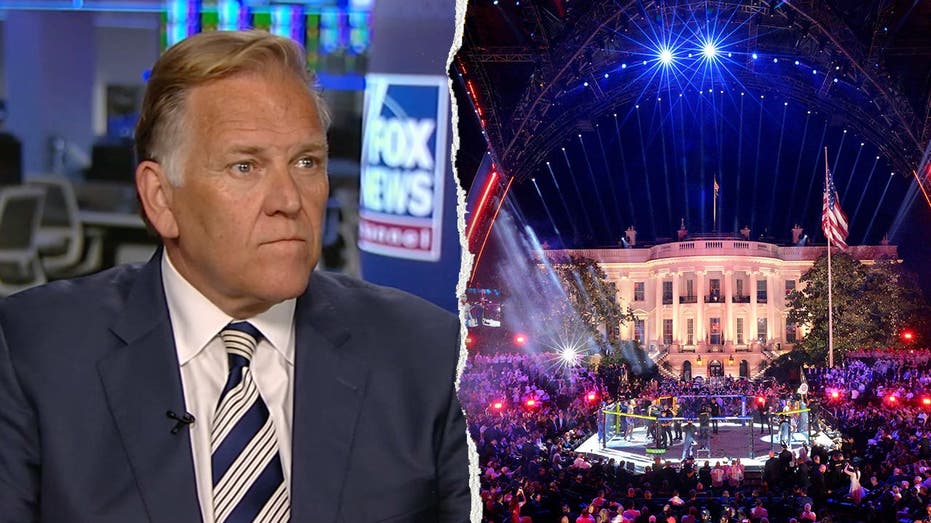
An eighth person was charged in a thwarted plot allegedly targeting the Freedom 250 Ultimate Fighting Championship (UFC) event at the White House, and a former key lawmaker, ex-FBI agent and current candidate for Senate warned that escalating rhetoric on the left is stoking violence. “They’re calling people Nazis and anti-American,” former House Intelligence Committee Chair Mike Rogers, who is running for Senate in Michigan, told Fox News Digital. “This No Kings notion. People are destroying your government and your way of life. It gives people who are already out there a little bit of permission to take the next step, and they’ve got to control their rhetoric on this.” Rogers said Democrats are “encouraging” people to move beyond “normal political discourse” and into violent attacks. All eight suspects are accused of conspiring to use explosive-laden drones to trigger a mass evacuation of the June 14 event before directing fleeing crowds toward pre-positioned shooters, with a “second wave” planned to target the White House gate, FBI officials previously told Fox News Digital. “They are encouraging a lot of people to get worked up to cross that line between what would be normal political discourse into radical, aggressive political behavior, including attempted murder, which you just saw in the UFC fights,” Rogers said. FBI DISRUPTS ALLEGED EXPLOSIVE-DRONE PLOT TARGETING WHITE HOUSE UFC EVENT, OFFICIALS SAY Rogers, a former FBI special agent, is running in Michigan’s Republican Senate primary on Aug. 4 for the seat being vacated by retiring Sen. Gary Peters. Rogers said “self-radicalized” individuals are harder to identify but praised law enforcement for stopping the alleged plot in time. AMERICAN YOUTH RADICALIZED ONLINE, BUSTED IN SUSPECTED TERROR PLOTS AFTER HATING COUNTRY ON SOCIAL MEDIA “That self-radicalization can be really dangerous,” he said. “It causes somebody to get in the car, drive, run over somebody or, you know, do some other act of violence.” According to the Washington state complaint, the suspects allegedly used a Telegram chat to conspire to obtain multiple drones capable of carrying heavy explosive payloads, while federal investigators said they also acquired guns, ammunition, ballistic gear and other tactical equipment in preparation for the attack. The plotters allegedly met around March through a TikTok community before moving to encrypted Signal chats, according to the complaint, and later agreed to commit murder on White House grounds and in the surrounding area during the UFC Freedom 250 event, prosecutors said. RISING ANTISEMITIC VIOLENCE, TERROR ATTACKS IN US SPUR HOUSE HOMELAND SECURITY COMMITTEE HEARING The alleged plot was eventually foiled with the help of a tip from the mother of one of the suspects. Pointing to a recent attack on a Michigan synagogue, Rogers said the rhetoric can lead some people to believe political violence is “OK.” “In Michigan, we had an individual who decided that it was OK to drive a car full of explosives into a synagogue where 130 schoolchildren were being educated and tried to blow himself up,” he said. In that March attack, Ayman Mohamad Ghazali allegedly crashed his pickup into a West Bloomfield synagogue with more than 100 children inside before officers fatally shot him. Officials previously said the attack came after several of his family members were killed in Lebanon during the country’s war with Israel, and he became radicalized by Iran-backed Hezbollah. Rogers said social media has contributed to political violence, saying the violent rhetoric plastered online is “very, very concerning.” “All of that activity is fed online and through the internet, through conversations and through this heated and wrong-headed violent rhetoric, and their violent terminology is very, very concerning,” he said. Fox News Digital’s Morgan Phillips, Michael Ruiz, David Spunt and Jake Gibson contributed to this report.
With water cuts looming in Arizona in US, locals fight data centres
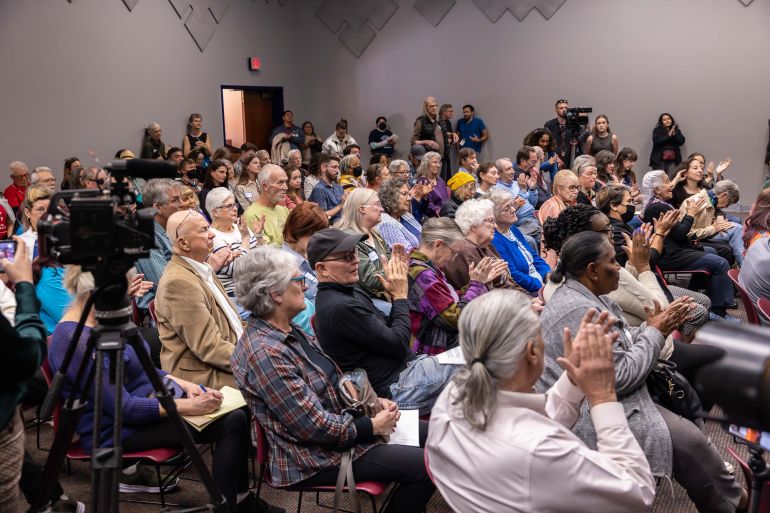
Every morning Marisol Winfrey Herrera’s three-and-a-half-year-old daughter Jo reminds her to turn off the tap while washing her hands and brushing her teeth. When they leave home, she reminds her mother to keep a bottle of ice with them to offer it to homeless people, who they sometimes find wilting in the Tucson heat. At first, they press the ice-filled bottles on the homeless folks to help them revive, then they offer the water to drink and hydrate. At her daycare, Jo is taught water-saving habits to combat Tucson’s soaring heat. It is what prompted Herrera to join No Desert Data Center, a residents’ group that opposes two large data centres coming up on either side of Tucson – the $3.6bn project on the city’s southeast edge and a $5bn project on its northwest side in the town of Marana, together known as Project Blue. The group believes these would consume more water and power than the city set in the Sonoran Desert can afford. “We are in the middle of a 30-year drought, which is now an extreme drought,” says Lisa Shipek, co-executive director of the Watershed Management Group, a Tucson-based nonprofit. “Water was a unifying theme in our campaign. The Colorado River cuts are looming, and this project would take water away,” Herrera told Al Jazeera. Water flows in the Colorado River, which provides much of Tucson’s water through the Central Arizona Project canal system, have dropped by 20 percent since the year 2000 compared with water flows in the 20th century due to climate change, melting snow caps and warmer weather, making water cuts to Tucson imminent as the state could face as much as 77 percent water cuts. Advertisement “We say Not One Drop for data centres,” says Herrera, speaking of the campaign’s particularly emotive appeal for residents as water cuts get deeper and temperatures rise, with Tucson recording the warmest weather in 125 years last July and August. Beale Infrastructure, a San Francisco-based company that is owned by investment management company Blue Owl in New York, had asked the city of Tucson to acquire 290 acres that were outside city limits for Project Blue. That would make it the city’s largest water consumer and among its largest power consumers. Beale did not respond to an emailed request for comment. But at city council meetings, City Councillor Kevin Dahl began seeing hundreds of residents turn up to express their opposition to the project. “Not for many issues do we get so much response,” he said. Herrera was among those who went. Pitting environment against unions At council meetings, Beale executives proposed that Project Blue could be the economic engine the city needed. It would create a few thousand jobs for construction workers, ironmongers, plumbers and other such workers during the construction of the project and a few hundred after that. “Sometimes people travel as far as Phoenix for work,” Dahl said about Arizona’s largest city, which is nearly a two-hour drive from Tucson. The project could bring jobs closer. Beale also expected the project to generate nearly $250m in taxes for the city, county and state in the first 10 years. This left councillors with a difficult decision to make, weighing the project’s economic benefits against allocating it a share of the city’s increasingly scarce water and power. Tucson residents raised questions in a town hall about whether proposed rate hikes by TEP, their power utility, is due to capacity expansion for data centres [Photo Courtesy Kathleen Dreier] Activists also raised concerns about whether Tucson Electric Power (TEP), the power utility, would raise rates for consumers so it could expand capacity to provide power for Project Blue. After raising rates by 10 percent in 2023, TEP proposed a 14 percent rate hike in June 2025 for grid upgrades made in the previous year. Lee Ziesche, an activist from the Democratic Socialists of America who is campaigning to make TEP a public utility, said Project Blue could “lead to higher temperatures and higher rates” because of the heat island effect of the air conditioners and higher rates for power. She often hears from residents that a rate hike would make it hard to pay bills or put on air conditioning, even as the number of 100-degree Fahrenheit (37.8 degree-Celsius) days has increased in Tucson, which is among the hottest cities in the United States. Advertisement The same concerns of needing ramped-up air conditioning would plague data centres too, experts say. “The viability of data centres in Arizona will always be subject to climate change and heat risks,” says Kate Gordon, chief executive of California Forward, a think tank that works on a sustainable economy. “The heat in Arizona makes energy less efficient, and servers heat up, so projects will need higher amounts of water and cooling, which developers have to balance against a possibly lower real estate and labour cost,” she said. “I am always amazed at how climate does not figure in business plans.” Dahl and Andres Cano, a supervisor in Pima County, in which Tucson is located, had discussions with Beale representatives. “We thought they would go elsewhere if the city did not acquire the land” for the project, Dahl said. Cano also came away with the same impression. In August 2025, Tucson councillors voted unanimously not to acquire the land for the project or provide it with water and power. In December, Cano became one of only two supervisors in Pima County to oppose the project, and it was approved for construction in an unincorporated part of the county. “It will create short-term construction jobs for what will ultimately be a project with few wins,” Cano said. “This pitted the environment and unions, but industry is not for unions. This will have just about 100 jobs when it is done.” With no access to Tucson’s water supply, Beale decided to cool its servers with air conditioners rather than water and use a closed-loop water system, so it would recycle and reuse water. But
Hezbollah rejects Israel-Lebanon agreement as Israeli attacks hit south
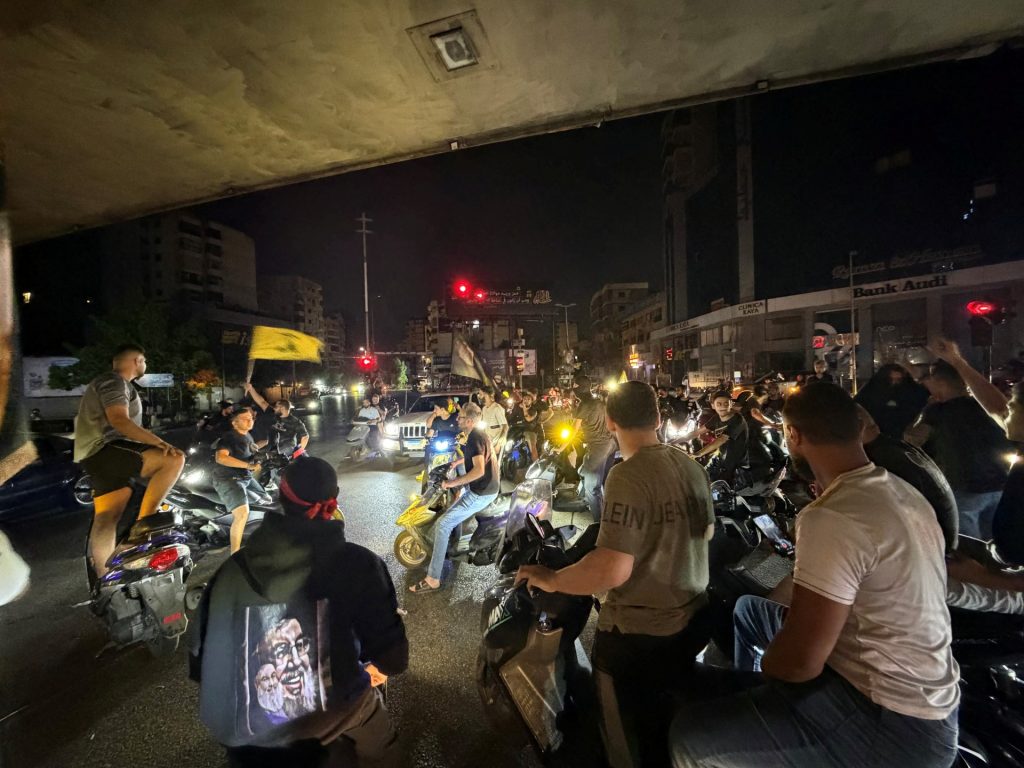
Hezbollah supporters and many others in Lebanon view latest agreement with Israel as a ‘surrender of sovereignty’. Hezbollah leader Naim Qassem has rejected the framework agreement signed by Lebanon and Israel in Washington DC, calling it “humiliating, shameful and a surrender of sovereignty” for Beirut. In a statement released on Saturday, Qassem rejected linking Israel’s withdrawal from Lebanon to Hezbollah’s disarmament, which is a key part of the US-mediated agreement signed on Friday. Recommended Stories list of 4 itemsend of list “We will continue as a resistance in the field to defeat the occupation [Israel] … We did not leave the field under difficult circumstances and we will not abandon it,” Qassem said. The Hezbollah leader also accused Lebanon’s government of legitimising Israel’s occupation “for many years to come” by signing the agreement with Israel, saying that it “could lead to the annexation of these lands to the Zionist entity”. Israel’s Prime Minister Benjamin Netanyahu, Finance Minister Bezalel Smotrich and other officials have suggested that Israel might remain in Lebanon regardless of Hezbollah’s disarmament. “We are there until Hezbollah disarms and I think also beyond that, because we need defendable borders,” Smotrich said earlier this week. The agreement does not force Israel to withdraw from southern Lebanon. As Al Jazeera’s Lebanon correspondent Zeina Khodr noted: “The word withdrawal is not in [the] text”. Instead, Khodr said the text is a “path towards normalisation [between Israel and Lebanon] – the two states both recognise each other’s right to exist in ‘peace’, declare intention to formally end state of war, pursue direct negotiations under US mediation, establish permanent channels of direct communication and begin drafting a comprehensive peace and security agreement”. Advertisement After the signing, Hezbollah supporters in Lebanon made their anger known, taking to the streets of Beirut on Friday evening, burning tyres and blocking a road leading to the airport. They were protesting the agreement, as well as Israeli forces remaining in Lebanese territory and continuing Israeli air raids in southern Lebanon. Despite the agreement, Lebanon’s state-run National News Agency (NNA) said Israeli forces bombed near the southern towns of Markaba and Nabatieh al-Fawqa on Saturday morning. NNA said Israeli forces bombed overnight near the town of Markaba, 1.5km (1 mile) from the Israel-Lebanon border. Lebanon finally ‘acting like a state’ Lebanese officials seem optimistic about the deal and its potential for ending hostilities with neighbouring Israel, despite Hezbollah not being involved in the agreement nor the talks that preceded it. Lebanese member of parliament and former justice minister, Ashraf Rifi, praised the agreement, saying Lebanon was finally “acting like a state”. “It is no longer acceptable for Lebanese decision-making to remain hostage to the Iranian project, or for Hezbollah to continue its dominance over the state and its institutions,” he added. Lebanese MP and leader of the Free Patriotic Movement, Gebran Bassil, said the framework agreement between Israel and Lebanon “requires responsible engagement”. In response to the Hezbollah-led protests, Public Prosecutor Judge Ahmad Rami al-Hajj issued a judicial order, tasking the Lebanese security forces with preventing riots, NNA reported. The judge also requested that security agencies work to identify rioters so legal action can be taken. Alon Pinkas, an Israeli former ambassador and consul general in New York, told Al Jazeera that he’s “very doubtful and sceptical that this [agreement] will work out because the deal is between Israel and Lebanon with the US, and Israel and Lebanon do not really have territorial issues or any kind of issues; the issue here is Hezbollah”. Hezbollah MP Hassan Fadlallah told Al Jazeera that any attempt by the Lebanese army to enforce a Washington-brokered agreement would lead to “civil war”. Adblock test (Why?)
Bosnia: The lilies and dragons of the World Cup
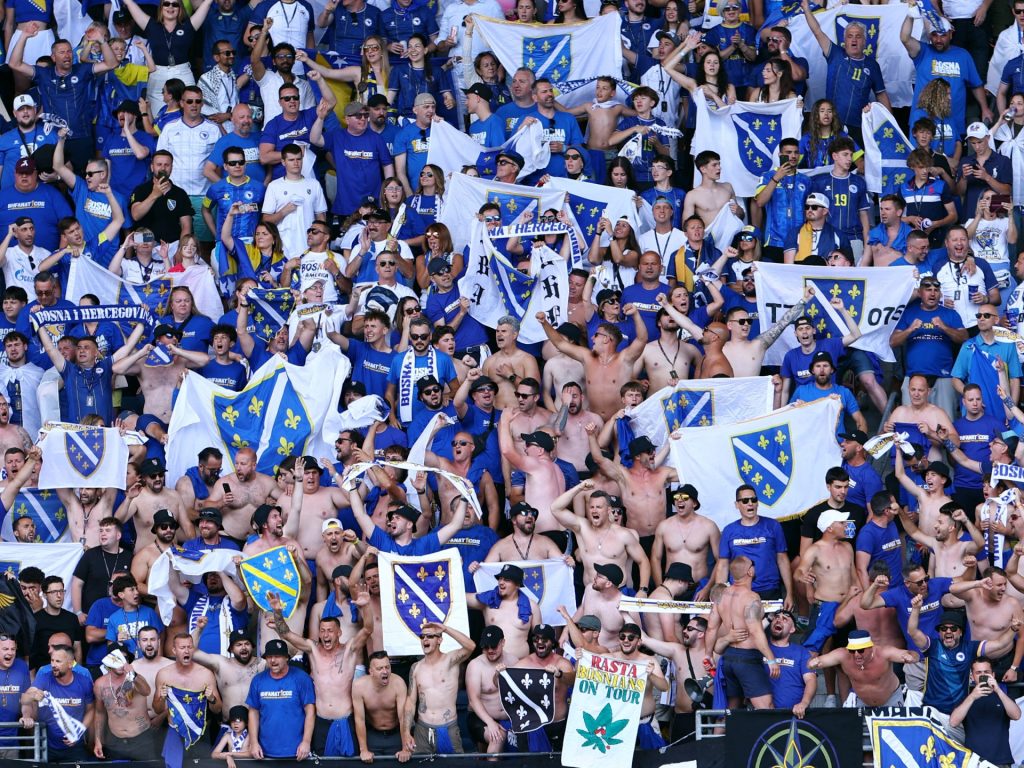
When Bosnia and Herzegovina qualified for the World Cup, contagious excitement spread through the country. It was more than just football fever. Three decades after the end of the war, after surviving genocide and the now-infamous Dayton Accords, we’re back on US territory to show we can finally start dreaming beyond that bad deal, which imposed on us harmful political structures and left our country in a straitjacket. Truly, football has brought out the core of what it means to be Bosnian: we are the softest and the hardest of souls, we do our best in adversity, but are tough on ourselves in peace. We are dragons, but we are also lilies. On June 24, when our team beat Qatar and qualified for the knockout stage for the first time in its history, the country was ecstatic. It was not just extreme happiness but a sense of freedom and unity. We Bosnians may excel in quarrels, disagreement and self-deprecation, but boy, do we love this headstrong country. And we love those blue boys. Huge blue-clad crowds took over not just the streets of Seattle and Sarajevo, but every single city and town in the world where Bosnians live. Even Bosnians on vacation in exotic places had watching parties in hotels and took other guests to the streets to sing in celebration. In Republika Srpska, those in power have supported the Bosnian team’s opponents in the past. But this time, many people did not fall for the hate and celebrated at home in front of the TV. Some even dared to display their joy publicly. Advertisement In neighbouring Serbia and Croatia, people also defied ethnic politics and openly celebrated with the Bosnians, posting on social media messages of support for our team. Images of Bosnian fans marching through the streets of Canadian and American cities made the news internationally. Ahead of the match with Switzerland, a crowd of Bosnian fans stunned locals as they moved through a notorious neighbourhood in Inglewood, chanting “Palestina! Palestina!”. In between the chants, fans sang. But these were not proud nationalistic songs like we often see in such contexts. Those were not songs prepared by big stars especially for the World Cup. No, those were old songs that organically attached themselves to the game, and that very much reflect the national psyche. The first one is a satirical song by the popular band Dubioza Kolektiv, “I am from Bosnia, take me to America,” a song that cuts deep into the illusion of the American dream and asks Bosnians who easily assimilate to dream another dream, a bigger dream, a dream of the motherland. Funny and nostalgic. Hilarious and sentimental. The second song, which is even bigger, is the love song by the late folk star Halid Bešlić, “Poljem se siri miris ljiljana.” This is a soft and beautifully intimate song, which in translation goes like this: “The smell of lilies is spreading across the field, and the flowers smell like my darling. And the small swallows are coming back from the south, as if carrying her love back to me. In this city, I have no one. Darling, I will die if you’re someone else’s.” Yes, our country was at war just 30 years ago but we are not singing the “we’re-the-best”, “crush-em-all” warrior songs. This is unheard of. This is so out of left field. Our choice of songs testifies to how we see ourselves: we are tough and we bear scars of war, but we make fun of everything (mostly, of ourselves) and we sing of love. We call ourselves the Dragons, a reference to the famous Bosnian military commander and rebel Husein Gradaščević (1802-1835). But we also call ourselves lilies, like in Bešlić’s song. We were meant to be wiped out, but we survived and turned into seeds. This is why, in addition to the official blue-yellow star-spangled flag, you are seeing white flags with a coat of arms with golden lilies. The white flag is that of independent Bosnia, the flag under which we survived, and under which we were accepted into the United Nations. The other flag was a compromise, another bad deal – just like Dayton, just like the national anthem, which was agreed to be without lyrics after our leaders who deal in ethnic politics could not come up with a unifying text. Advertisement But we are not a people without lyrics. And you see it in the World Cup. You hear us sing of lilies and you see them bloom on the football field. Aside from the seasoned stars like Edin Džeko, ours is a young team. Some of these boys were born to refugee parents far from the heart-shaped motherland. These are the kids who were not meant to exist, whose parents were hunted down and driven away. They now move on the green field of Seattle as if they are playing in the Bosnian meadows. They fight, but they do not fight dirty. That goal in the game against Qatar by Kerim Alajbegović, who just made the list of the youngest goalscorers at the World Cup, was a work of art. It reminded me of the graceful but fierce penalty Esmir Bajraktarević scored to knock off four-time World Cup winner, Italy, in the qualifications. It is hard to rewatch that goal without thinking of how incredibly symbolic it was: the child of genocide survivors from Srebrenica, born and raised in the US, a member of the new generation of golden lilies. A Bosnian American boy who will now have to play against his second homeland, the US, on July 2. In one fell swoop, with a couple of goals, these boys crushed all the nasty political rhetoric that seeks to divide and secure the power of the corrupt elites. They are Edin, Esmir, Jovo, Ermin, Kerim, Martin, Osman, Sead, Dennis, Tarik, Nihad, Stjepan, Nidal, Amir, Benjamin, Armin, Dženis, Ermedin, Samed, Haris, two Nikolas, two Ivans, and two Amars. And the coach is Sergej. Most of
Sonia Gandhi blasts Modi government’s ‘stony silence’ on Gaza ‘genocide’; Rahul Gandhi, Mallikarjun Kharge come in support
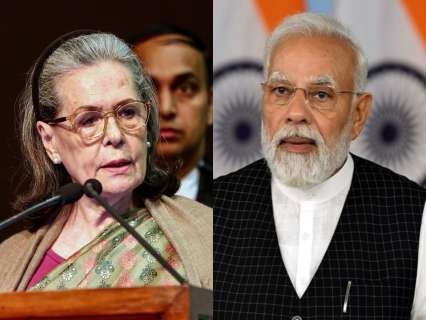
In an op-ed about Gaza, Sonia Gandhi said the deaths and injuries indicate that “the targeting of children is not incidental, but a deliberate strategy.”
Ram Temple donation theft case: Priest slams former UP minister Swami Prasad Maurya, demands action over controversial remarks
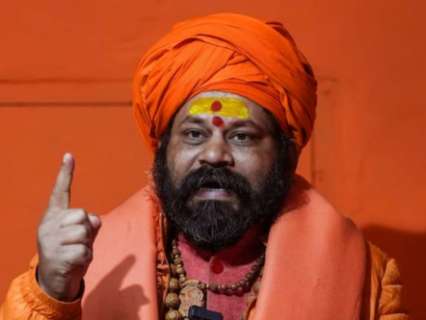
A Ram Temple donation theft case in Ayodhya has sparked political controversy after Swami Prasad Maurya’s remarks triggered backlash. Eight arrests have been made and ?80 lakh recovered.
Ketan Agarwal Murder Case: Lohagad Fort staff who found body recount ‘crushed skull, multiple bruises’ on victim, reveals Siya’s reaction

Ketan Agarwal, a director with Pune-based Success Group, died on June 18 after falling from Lohagad Fort in Pune. Police are investigating the case as suspected murder.
Khalistani Terror Threat: High alert in Delhi, Uttarakhand; Temples, railway stations among key targets
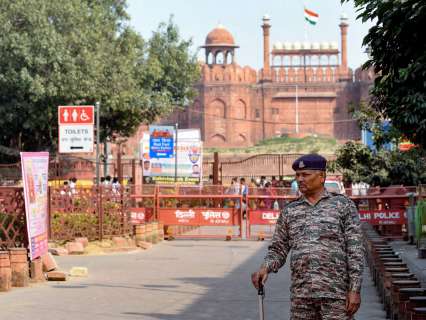
The conflict began on June 16 in Karnaprayag, Chamoli, after a group of Nihang Sikh pilgrims allegedly attacked locals with swords.
Who is Narendra Mittal? Man linked with Ketan Agarwal, Siya Goyal’s families under police probe

Pune Police are interrogating Narendra Mittal, the matchmaker between Ketan Agarwal, Siya Goyal. He arranged the meetings of the two families with the marriage proposal and was part of the discussions.