

Trump agrees to 2-week ceasefire if Iran opens Strait of Hormuz
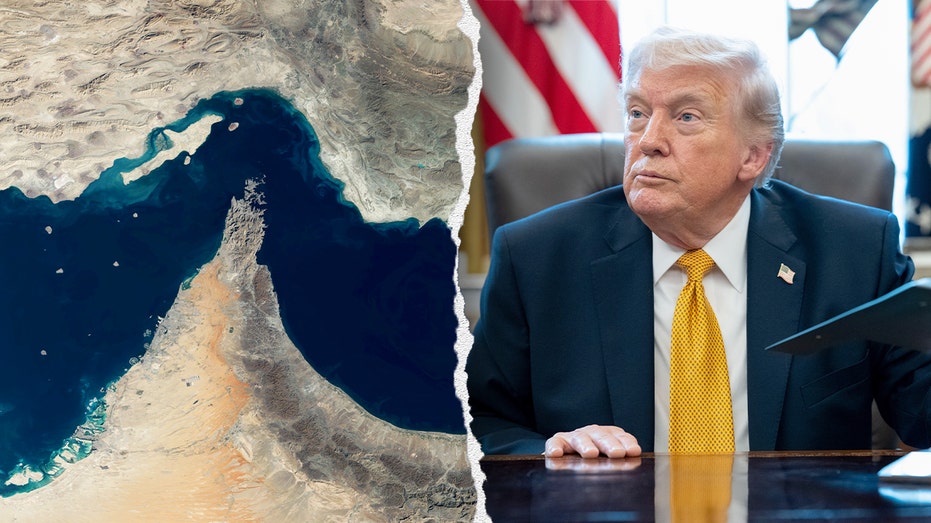
President Donald Trump on Tuesday announced that, based on conversations with Pakistani Prime Minister Shehbaz Sharif and Field Marshal Asim Munir, he will delay the “bombing and attack of Iran” for two weeks. Trump said the decision came after the leaders requested the U.S. “hold off the destructive force being sent tonight to Iran,” which the president previously threatened would start at 8 p.m. eastern time if a deal was not reached. The president said the postponement is subject to the Islamic Republic of Iran agreeing to “the COMPLETE, IMMEDIATE, and SAFE OPENING of the Strait of Hormuz.” TRUMP REVEALS IRAN MADE ‘SIGNIFICANT PROPOSAL’ AFTER ULTIMATUM, BUT ‘NOT GOOD ENOUGH’ “This will be a double sided CEASEFIRE!” Trump wrote in a Truth Social post. “The reason for doing so is that we have already met and exceeded all Military objectives, and are very far along with a definitive Agreement concerning Longterm PEACE with Iran, and PEACE in the Middle East.” He added the administration received a 10-point proposal from Iran, and officials “believe it is a workable basis on which to negotiate.” “Almost all of the various points of past contention have been agreed to between the United States and Iran, but a two week period will allow the Agreement to be finalized and consummated,” Trump wrote. “On behalf of the United States of America, as President, and also representing the Countries of the Middle East, it is an Honor to have this Longterm problem close to resolution.” IRAN’S TALLEST BRIDGE COLLAPSES AFTER REPORTED US AIRSTRIKES, IRAN THREATENS AMERICAN ALLIES IN RETALIATION The Supreme National Security Council of the Islamic Republic of Iran responded in a statement, thanking Sharif and Munir for their “tireless efforts” to end the war in the region, and agreeing to cease defensive operations if attacks against Iran are halted. For a period of two weeks, Iran said safe passage through the Strait of Hormuz “will be possible via coordination with Iran’s Armed Forces” and with “due consideration of technical limitations.” Israel has also agreed to suspend its bombing campaign in Iran as part of the last-minute deal. Sharif wrote in a statement the ceasefire will apply “everywhere,” including Lebanon, effective immediately. “I warmly welcome the sagacious gesture and extend deepest gratitude to the leadership of both the countries and invite their delegations to Islamabad on Friday, 10th April 2026, to further negotiate for a conclusive agreement to settle all disputes,” Sharif said. “Both parties have displayed remarkable wisdom and understanding and have remained constructively engaged in furthering the cause of peace and stability. We earnestly hope, that the ‘Islamabad Talks’ succeed in achieving sustainable peace and wish to share more good news in coming days!” The White House cautioned nothing is confirmed while addressing reports that further talks would happen in Pakistan on Friday. “There are discussions about in person talks, but nothing is final until announced by the President or the White House,” White House press secretary Karoline Leavitt told Fox News.
Democrat swing candidate called Biden’s border handling ‘a huge misstep’ after backing his approach as mayor
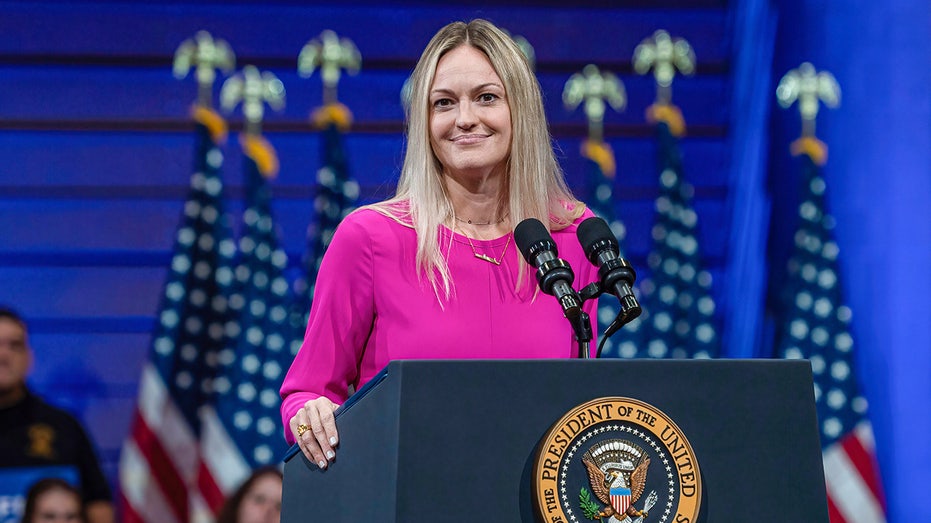
A Democratic candidate is facing scrutiny over an apparent reversal on the southern border as she seeks to flip a battleground House seat this year. Scranton Mayor Paige Cognetti recently criticized former President Joe Biden’s handling of the southern border, calling it “a huge misstep” and “really terrible” during a March podcast appearance. The House hopeful, however, did not appear to publicly criticize the administration’s border policies when Biden was president. Cognetti, who has served as the mayor of Biden’s hometown since 2020, is vying to unseat freshman Rep. Rob Bresnahan in November’s midterm elections. The Northeastern Pennsylvania contest promises to be one of the most competitive House elections this year. JAMES TALARICO SAYS BIDEN ADMINISTRATION WAS CONVINCED BORDER SECURITY WAS ‘RACIST’ Cognetti’s recent messaging criticizing Biden comes as some Democrats have largely pivoted toward the center on border security after the party’s messaging fell flat in 2024. When Cognetti called for “better control at our borders” during a September 2021 interview with a local outlet, she did not appear to hold the Biden administration responsible for the problem. In August 2023, Cognetti co-signed a letter with a handful of Pennsylvania mayors appearing to approve of the Biden administration’s approach to the border. “You are working to bring more order to the southern border with a combination of strategies,” the group wrote to Biden, adding that he had “rightfully promised” to tie border security with expanding pathways to citizenship for illegal immigrants living in the United States. A spokesperson for Cognetti said the mayor had been consistent in urging Biden to secure the border during his presidency. “Like a lot of Northeastern Pennsylvanians, she has seen what the scourge of Fentanyl has done to our community and has said that President Biden didn’t do enough to secure the southern border,” the spokeswoman said, adding that Cognetti is “no stranger to calling out politicians from either political party when they get it wrong.” JOSH SHAPIRO KNOCKS BIDEN RECORD, SAYS DEMOCRATS FAILED TO DELIVER RESULTS AMERICANS COULD ‘SEE OR FEEL’ Cognetti also advocated for a more lenient approach to immigration when Biden was president, arguing immigrants, including those who entered the U.S. illegally, “contribute greatly to our cultural and economic growth.” The 2023 letter to Biden that Cognetti signed urged the president to grant and expand legal protections to Venezuelan, Honduran, Salvadoran and Nicaraguan nationals living in the United States. Cognetti, who became mayor in 2020, also called for mass amnesty for millions of illegal immigrants during the onset of Biden’s presidency in July 2021. She warned that failure to deliver pathways to citizenship could become a “national security issue,” The Center Square reported. “If we don’t do this now, we will start to erode in our strength and that becomes a national security issue,” Cognetti told reporters. Bresnahan said Cognetti’s support for mass amnesty would make the district less safe and accused her mayoral tenure of resulting in a Scranton crime spike in a statement to Fox News Digital. “Mayor Paige Cognetti’s soft-on-crime policies have already led to a spike in violence in Scranton, and her support for legalizing every illegal immigrant in the country will only make things worse, especially in her city where she downplays homicides and gang violence and wants to disarm the police,” Bresnahan said. A spokesperson for Cognetti fired back that the mayor has a “proven track record” of investing in local law enforcement and said she has overseen a decrease in violent crime. The nonpartisan Cook Political Report rates the swing contest as “Lean Republican.”
Blanche invokes Trump ‘love’ when asked about staying on after Bondi
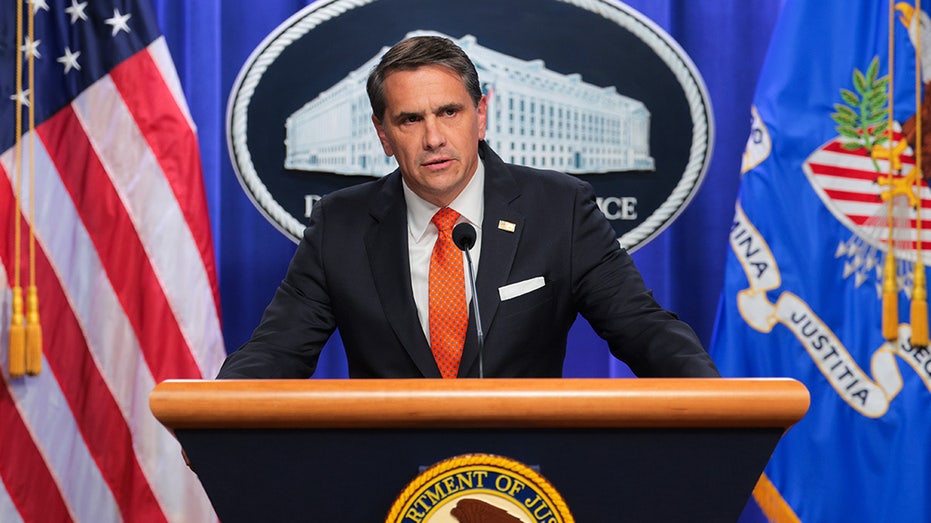
Acting Attorney General Todd Blanche showered President Donald Trump with praise during a Justice Department anti-fraud press conference and said any decision on permanently replacing Pam Bondi was up to the president. “As to whether or not I want this job, I did not ask for this job. I love working for President Trump,” Blanche said in his first public remarks since Bondi’s firing. “It’s the greatest honor of a lifetime, and if President Trump chooses to keep me as acting, that’s an honor. If he chooses to nominate me, that’s an honor.” Blanche added: “If he chooses to nominate somebody else and asks me to go do something else, I will say, ‘Thank you very much. I love you, sir.’” PAM BONDI IS OUT AS AG — HERE ARE THE CONTENDERS WHO COULD REPLACE HER Blanche’s remarks came after Trump announced last week that Bondi would be leaving her role and that Blanche, his formal personal attorney and the DOJ’s deputy attorney general, would fill in indefinitely as acting attorney general. Officials can serve in an acting capacity for up to 210 days. Trump has not signaled a nominee to take the role permanently, but he could nominate Blanche. Fox News Digital previously reported that the president has also had discussions with Environmental Protection Agency Administrator Lee Zeldin about taking the job. Blanche noted that Bondi’s transition out of the department remained ongoing. Bondi announced last week that she would take the next 30 days to shift responsibilities to Blanche. When asked why she was pushed out of her job, Blanche said “nobody has any idea… except for the president.” Trump had fired Bondi after she failed to secure successful indictments against some of Trump’s top political rivals and amid long-simmering frustrations with her handling of Jeffrey Epstein’s sex trafficking case files. “As far as Pam Bondi’s last day on the job, I am the acting attorney general,” Blanche said, adding, “We’ve been regularly communicating over the past several days for an appropriate transition. She is very much a big supporter of this department.” Most of Blanche’s remarks focused on the DOJ’s crackdown on fraud, as he pointed to several recent cases totaling more than half a billion dollars in healthcare and COVID-19-related schemes. Blanche cited a string of examples, including prosecutors securing a guilty plea in a $160 million healthcare enrollment fraud operation and a sentencing in a $100 million COVID-19 fraud case. He contended that such cases represented a fraction of the fraud occurring nationwide and formally rolled out the DOJ’s new National Fraud Enforcement Division, led by newly confirmed Assistant Attorney General Colin McDonald, who stood by Blanche during his remarks. The division, Blanche said, would involve specialized prosecutors and expanded staffing in U.S. attorney’s offices across the country, and it would use more advanced technology to more effectively investigate fraud. JD VANCE ANNOUNCES MULTI-STATE FRAUD TASK FORCE IN WAKE OF MINNESOTA SCANDAL “We have a storied history of combating fraud and bringing criminal actors to justice, but the department has never adopted a comprehensive and coordinated approach to investigating and prosecuting fraud against taxpayer dollars and taxpayer-funded programs,” Blanche said. Former U.S. Attorney John Fishwick of Virginia told Fox News Digital he thought Blanche appeared to be vying for the attorney general role. “Todd Blanche seems to be trying out for the top job today in his opening press conference and surely trying to catch Trump’s attention with his criticism of many of the questions by the press,” Fishwick said in a statement, observing how Blanche derided some reporters for their questions.
Spanberger dodges questions on whether she would reverse sanctuary policy as DHS turns up heat

RICHMOND, VA — Virginia’s Democratic Governor Abigail Spanberger on Tuesday ignored questions on whether she would entertain calls from the Department of Homeland Security to end sanctuary policies in the state. “Governor Spanberger must end her sanctuary policies that allow these illegal aliens onto our streets and work with DHS to protect the citizens of the commonwealth,” the agency said in a post to social media. Virginia — and in particular Fairfax County — has made headlines in recent weeks for a string of deadly attacks carried out by illegal aliens. DHS BLASTS SPANBERGER ON POTENTIAL RELEASE OF ILLEGAL MIGRANT WITH 30+ ARRESTS CURRENTLY CHARGED WITH MURDER Earlier this month, authorities charged 28-year-old Guatemala native Misael Lopez Gomez with the murder of his 3-month-old daughter. His arrest comes on the heels of an attack by Anibal Armando Chavarria Muy, 38, another Guatemalan charged with fatally stabbing a man in his home. The county was also where repeat offender and Sierra Leone national Abdul Jalloh, 32, stabbed a victim to death at a bus stop in February. DHS noted that three of the four suspects charged with murders in Fairfax County so far in 2026 are illegal aliens. Spanberger did not comment on the figure. MIGRANT ACCUSED OF GROPING MULTIPLE HIGH SCHOOL GIRLS FACES CHARGES AS DHS WARNS SPANBERGER AGAINST RELEASE At the beginning of her term, Spanberger joined a handful of Democratic governors like California Governor Gavin Newsom and Illinois Governor J.B. Pritzker who have made it harder for local law enforcement to cooperate with federal immigration enforcement efforts. On Jan. 17, Spanberger rescinded local-federal coordination requirements, arguing that Virginia’s resources would be better spent enforcing its own laws. “Virginians have been deprived of critical public safety and local law enforcement to divert their limited resources for use in enforcing federal civil immigration laws,” Spanberger said in a press release. “Federal authorities should enforce federal civil immigration laws — law enforcement in the Commonwealth should prioritize the safety and security of all residents in Virginia, the enforcement of local and state laws and coordination with federal entities on criminal matters,” she added. Another illegal alien who has gotten attention in Virginia is Israel Flores Ortiz, 19, who is facing nine counts of assault and battery for groping girls at a Fairfax County high school he was attending. Victims and parents have alleged that Ortiz approached about 12 girls from behind in crowded hallways, grabbed them between the legs and groped their private areas, according to 7News. DHS Deputy Assistant Secretary Lauren Bis said last month that the agency is “calling on Fairfax County sanctuary politicians to NOT release this predator from jail back into our communities to assault more teenage women.” She went on to slam Spanberger for ending former Republican Gov. Glenn Youngkin’s policy of cooperation with ICE, saying it is “siding with criminal illegal aliens over American citizens.” NEW POLL REVEALS SPANBGERGER’S POPULARITY IS PLUMMETING AMID BACKLASH OVER GERRYMANDERING DHS explained in a statement to Fox News Digital that it depends on partnerships to coordinate detention and removal of illegal aliens like Gomez, Muy and Jalloh. “ICE can only detain illegals for the purpose of removal,” a DHS spokesperson said when asked how the agency coordinates handovers of suspects. Fox News’ Peter Pinedo contributed to this report.
Second choke point crisis looms as Houthis threaten key Red Sea shipping lane
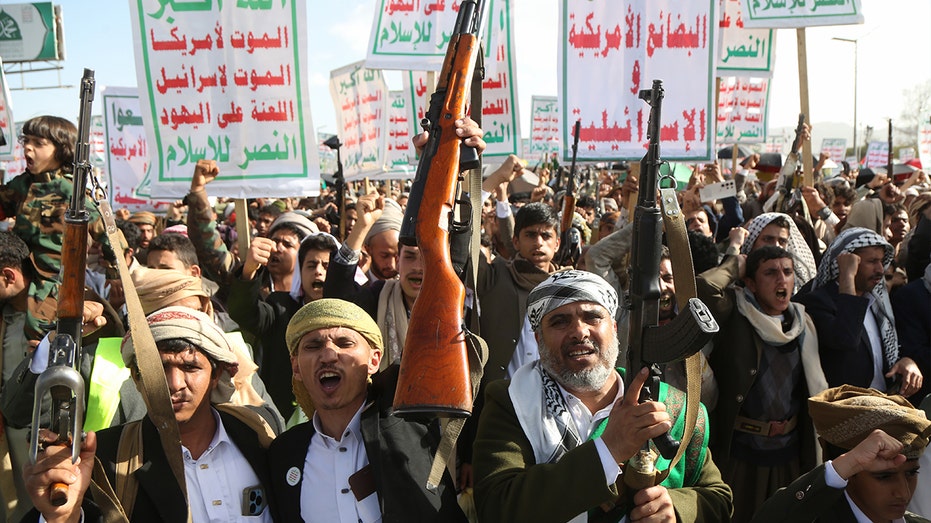
Iran-backed Houthi forces are raising the prospect of a second global shipping choke point in the Red Sea, threatening to deepen pressure on energy markets and global trade as the conflict with Iran intensifies. The Houthis entered the conflict in early April with missile and drone strikes on Israel and have since warned they could target shipping in the Bab al-Mandeb — a narrow corridor linking the Red Sea to the Gulf of Aden — raising concerns the war could expand beyond the Strait of Hormuz and further disrupt global trade. Analysts warn that if Houthi forces begin targeting vessels again, it could open a second maritime front in a conflict that has already choked off traffic through the Strait of Hormuz, adding pressure to global energy markets and supply chains. The Bab al-Mandeb is one of the world’s most critical shipping choke points, handling roughly 12% of global seaborne oil trade and serving as a key gateway for cargo moving between Europe and Asia through the Suez Canal. TRUMP SEEKS WARSHIPS FROM OTHER COUNTRIES TO HELP SECURE STRAIT OF HORMUZ The Houthis, formally known as Ansar Allah, are an Iran-backed armed group that controls much of northern Yemen and has been fighting a yearslong civil war against the country’s internationally recognized government. Houthi leaders, in coordination with Iran, have framed the potential escalation as part of their response to U.S. and Israeli military operations against Iran and its allies, warning they could target shipping or restrict access to the Red Sea if the conflict intensifies. Iranian official Aliakbar Velayati posted on X on Sunday: “Today, the unified command of the Resistance front views Bab al-Mandeb as it does Hormuz. If the White House dares to repeat its foolish mistakes, it will soon realize that the flow of global energy and trade can be disrupted with a single move.” The Red Sea has taken on added importance as the conflict disrupts shipping through the Strait of Hormuz, pushing more cargo and energy flows toward alternative routes. That shift has increased reliance on the Bab al-Mandeb — a choke point that handles roughly $1 trillion in goods annually — raising the stakes of any renewed disruption. Traffic through the Bab al-Mandeb is already running well below normal levels after earlier Houthi attacks pushed major shipping lines to reroute vessels around Africa. Ship-tracking data shows daily transits have fallen to roughly half of typical levels, underscoring that the route is already under strain even before any renewed escalation. “It’s less about what they can actually do and more about the threat,” former Fifth Fleet commander Vice Adm. Kevin Donegan told Fox News Digital. “Once that risk is there, shipping companies decide not to take it.” Even limited attacks or threats can drive up insurance costs and push major carriers to reroute vessels around Africa, effectively reducing traffic through the strait without a formal blockade. The U.S. launched a major air and naval campaign in 2025 — known as Operation Rough Rider — to counter Houthi attacks on Red Sea shipping, after the group began targeting commercial vessels in opposition to Israel’s war in Gaza. U.S. and allied forces carried out hundreds of strikes on missile launchers, drones, radar systems and other Houthi infrastructure across Yemen in an effort to restore freedom of navigation through the Red Sea. RUSSIA, CHINA VETO UN RESOLUTION AIMED AT REOPENING STRAIT OF HORMUZ, HOURS BEFORE TRUMP DEADLINE The campaign degraded parts of the group’s capabilities but failed to fully eliminate the threat, as shipping companies continued to avoid the route due to ongoing security risks. Both U.S. and regional experts say the Houthis lack the capability to fully shut down the Bab al-Mandeb, but retain the ability to harass vessels with missiles, drones and small boats — tactics that have previously disrupted shipping across the Red Sea. The Houthis field a growing arsenal of ballistic and cruise missiles, anti-ship weapons and drones, much of it derived from Iranian designs. While Iran has long supplied key components through smuggling networks, the group has also developed the ability to assemble and produce weapons inside Yemen — though analysts say those supply lines may now be constrained by the broader conflict. “They do have the ability to pester international maritime traffic,” Middle East analyst Gregg Roman said, warning that broader attacks could trigger “a severe international response” from the U.S., Israel and Gulf allies. So far, the Houthis have limited their involvement to strikes on Israel, avoiding the kind of sustained maritime attacks that disrupted global shipping in previous years — a sign analysts say reflects both strategic restraint and pressure from regional actors. Officials and analysts say Iran could still encourage the group to escalate attacks on Red Sea shipping if the conflict deepens, positioning the Houthis as a secondary pressure point in the broader war. That dynamic has raised concerns the conflict could evolve into a multi-chokepoint crisis, testing the ability of the U.S. and its allies to keep critical global trade routes open. Beyond the immediate threat to shipping, Donegan warned that efforts by Iran or its proxies to influence who can safely transit key waterways could challenge long-standing norms of free passage — raising concerns about how similar tactics could play out in other global choke points.
India’s nuclear leap: Why its fast breeder reactor success matters
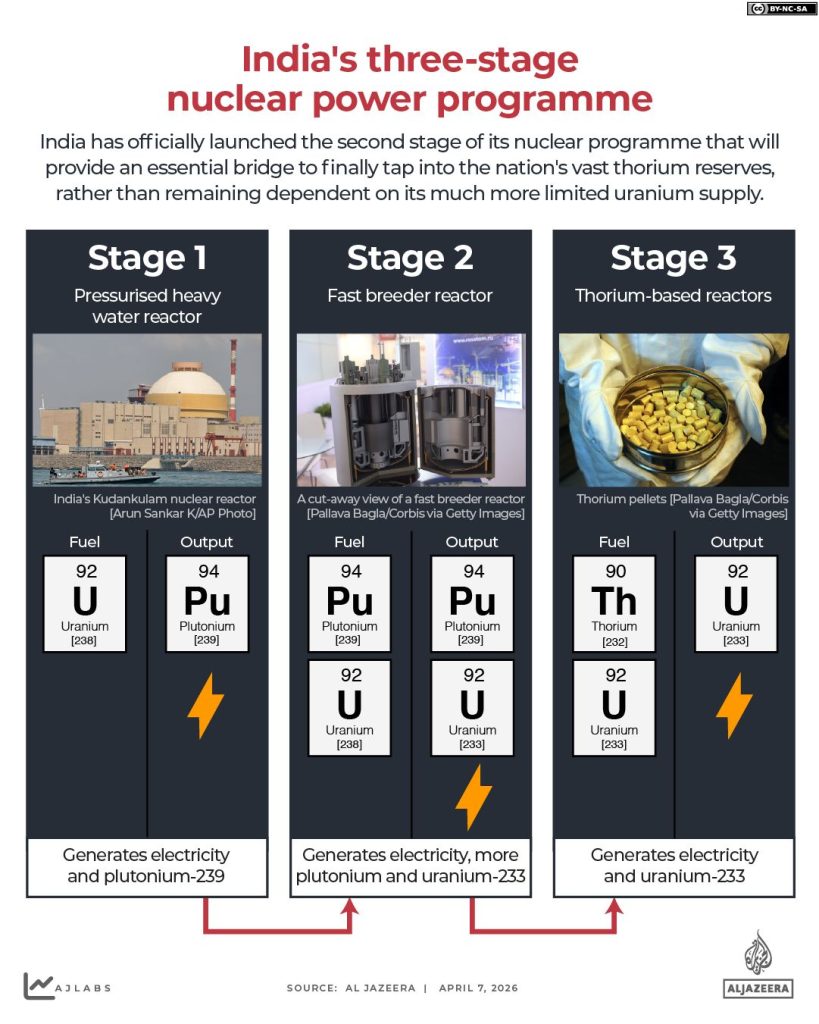
India’s most advanced nuclear reactor has reached a self-sustaining stage that marks a major leap for the country’s atomic energy programme, and takes it a step closer to cutting dependance on uranium. The prototype fast breeder reactor (PBFR) at Kalpakkam in the southern Indian state of Tamil Nadu reached criticality – the stage at which a nuclear chain reaction can continue on its own – on Monday. Once the reactor becomes fully operational, India will become only the second country after Russia to have a commercial fast breeder reactor. Recommended Stories list of 3 itemsend of list Indian Prime Minister Narendra Modi called it “a proud moment for India” and “a defining step” in advancing the country’s nuclear programme. “This advanced reactor, capable of producing more fuel than it consumes, reflects the depth of our scientific capability and the strength of our engineering enterprise. It is a decisive step towards harnessing our vast thorium reserves in the third stage of the programme,” he said in a post on X on Monday. So what is a fast breeder reactor, and why does this latest advance matter – for India and the world? Here’s what we know: What is India’s fast breeder reactor all about? A fast breeder reactor is an advanced nuclear reactor that produces more fissile material – fuel that can be used for fission nuclear reactions – than it consumes. India’s fast breeder reactor has been designed and developed by the Indira Gandhi Centre for Atomic Research (IGCAR), a key research and development institution under the country’s Department of Atomic Energy. It has a 500 megawatt electrical (MWe) capacity. Advertisement The nuclear reactors that India and most other countries otherwise use are what are known as pressurised heavy water reactors. They use uranium as their fuel, and churn out plutonium as waste. But a fast breeder reactor can then use that ejected plutonium as fuel to set in motion a self-sustaining nuclear reaction. Fast breeder reactors also use uranium as fuel, but need less since they can also consume plutonium. So in effect, the Kalpakkam reactor will need less uranium to generate electricity than heavy water reactors would. That’s why it’s called the second stage of India’s nuclear programme. On Monday, the Indian government said that the reactor is designed to enable “India to extract greater energy from its limited uranium reserves, while paving the way for large-scale deployment of thorium-based reactors.” A March 2024 report by Modi’s office said India’s PFBR “will initially use the Uranium-Plutonium Mixed Oxide (MOX) fuel. The Uranium-238 ‘blanket’ surrounding the fuel core will undergo nuclear transmutation to produce more fuel, thus earning the name ‘Breeder’.” Uranium-238 refers to the most abundant, naturally occurring form of uranium that is only weakly radioactive by itself, but that can capture neutrons to turn into plutonium. “Since it uses the spent fuel from the first stage, [the] FBR [fast breeder reactor] also offers great advantage in terms of significant reduction in nuclear waste generated, thereby avoiding the need for large geological disposal facilities,” the report added. How does a fast breeder reactor work? Paul Norman, a professor of nuclear physics and nuclear energy at the University of Birmingham, told Al Jazeera that – as the Indian prime minister’s office said in its report – fast breeder reactors use both plutonium and uranium. The uranium is converted further into plutonium, too. “One bonus of this type of system is that it can increase nuclear fuel reserves enormously, by in theory making use of ‘all of the uranium’ [via plutonium conversion] rather than just a small part of it,” he said. “The technology can also be tweaked towards thorium systems, and there is meant to be more thorium out there in the earth than uranium, providing a further huge boost in the amount of nuclear fuel,” he explained. Globally, thorium reserves are four-times larger than uranium reserves. And in India, this equation is even more loaded: The country is home to about 1-2 percent of the world’s uranium, but has more than 25 percent of the world’s thorium. Advertisement How do the vast thorium reserves help India? The construction of the PFBR officially began in 2004 after multiple delays. But its importance was highlighted by the country’s scientists much earlier. An October 1996 report written by Indian scientists Shivram Baburao Bhoje and Perumal Chellapandi for the International Atomic Energy Agency said that the fast reactor programme was important in India because of the country’s growing and continuous demand for electricity. India is the world’s third-largest energy guzzler, after China and the United States. With the world’s largest population and a fast-growing economy, India’s energy consumption is only expected to grow further. As the war on Iran, and its impact on global energy prices has demonstrated, a continuing overwhelming dependence on fossil fuels poses a risk to economies like India’s. At the moment, nuclear energy represents only 3 percent of the country’s energy mix, but India wants to raise that dramatically, from 8,180MW in 2024 to 100GW by 2047. That’s where the three-stage nuclear programme and thorium fit in. In the second stage, the fast breeder reactors use uranium and the plutonium waste from heavy water reactors to generate electricity. They also produce more plutonium and a lighter isotope of uranium called uranium-233, which is ready, fissile material that can be used as fuel in third-stage reactors. Those third-stage reactors, once designed, would be thorium-based. They would be fed with thorium – which India has in abundance – and uranium-233. The waste those reactors would produce: also uranium-233, which can be fed back as fuel for the reactors. Once India accomplishes its three-stage process, it would in effect be able to reduce its need for naturally found uranium significantly, and instead use thorium for much of its nuclear energy needs. Why does this matter to the rest of the world? Other countries – including the US, France, UK, Japan and Russia – have worked on fast breeder reactor technology.
From 9pm shutdowns to remote work: Egypt cuts fuel amid power crisis
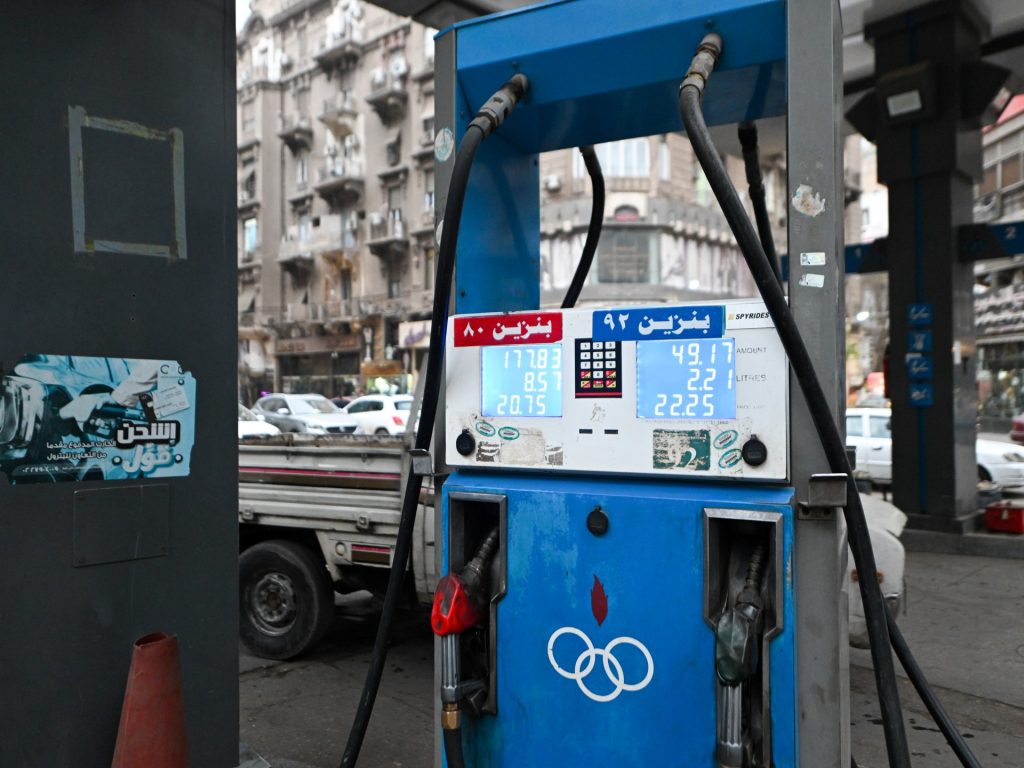
The US-Israel war on Iran has sparked a global fuel crisis as thousands of tankers carrying crucial deliveries of oil and liquefied natural gas (LNG) remain stranded on either side of the Strait of Hormuz, currently under a blockade imposed by Iran. On Saturday, Egypt’s government said it is among the “best-performing” countries in tackling the crisis because of the measures it has implemented to save on fuel. Here is what we know about the steps Egypt is taking and whether other countries are doing the same. Why has the Iran war caused an energy crisis? Pressure on oil and gas markets is mounting due to the almost complete halt to shipping through the Strait of Hormuz as well as air strikes on and around key energy facilities in the Gulf as the United States-Israel war on Iran enters its sixth week. One-fifth of the world’s oil and LNG is shipped from producers in the Gulf through the Strait of Hormuz in peacetime. This is the only route from the Gulf to the open ocean. On March 2, two days after the US and Israel began strikes on Iran, Ebrahim Jabari, a senior adviser to the commander in chief of Iran’s Islamic Revolutionary Guard Corps (IRGC), announced that the strait was “closed”. If any vessels tried to pass through, he said, the IRGC and the navy would “set those ships ablaze”. Since then, traffic through the strait, carrying cargoes including 20 million barrels of oil each day, has plunged by more than 95 percent. Now, Tehran is allowing just a handful of tankers through after reaching agreements with some countries to do so. Advertisement Besides this, energy infrastructure in the Middle East has suffered damage over the course of the war. On March 24, QatarEnergy declared force majeure on some of its long-term LNG supply contracts after an Iranian attack on Qatar’s Ras Laffan LNG facility – the largest in the world – wiped out about 17 percent of the country’s LNG export capacity, causing an estimated $20bn in lost annual revenue and threatening supplies to Europe and Asia. All of this disruption has sent energy prices soaring. On Tuesday, global oil benchmark Brent crude was around $109 per barrel, compared to around $65 per barrel right before the war started. How is Egypt tackling the energy crisis? Egypt’s Petroleum Ministry has announced rises in fuel prices ranging from 14 percent to 30 percent. On March 28, Egyptian Prime Minister Mostafa Madbouly’s office told a press conference that the country’s energy import bill had increased from $1.2bn in January to $2.5bn in March. Egypt is both one of the region’s largest energy importers and among its most heavily indebted economies. While domestic gas and oil account for the majority of its total energy supply, the country still relies on imported fuels, especially refined oil products and some natural gas, from Israel and the Gulf states. Madbouly announced measures Egypt is taking to mitigate this and preserve state energy resources. From March 28, shops, malls and restaurants are closing at 9pm (19:00 GMT) every day for one month, except Thursdays and Fridays. On Thursdays and Fridays, the closing time will be 10pm (20:00 GMT). Fuel allocations for government vehicles will be reduced by 30 percent. Street lighting and street advertisement lighting will be cut by 50 percent. From April 1, eligible employees will work remotely on Sundays, the first day of the working week. Some essential services, such as pharmacies, grocery stores and tourist facilities, will be exempted from this. Which other countries have introduced energy conservation measures? Besides Egypt, other countries are also taking steps to save energy. Last week, Malaysia ordered civil servants to work from home to save energy in government offices. In mid-March, it was revealed that government offices in the Philippines had moved to a four-day work week, officials in Thailand and Vietnam were being encouraged to work from home and limit travel, and Myanmar’s government had imposed alternating driving days. Pakistan, which imports about 80 percent of its energy from the Gulf, announced on Monday of this week that markets and shopping malls would close at 8pm (15:00 GMT) across the country, except in Sindh province. The government’s statement added that food outlets would close at 10pm (17:00 GMT), which is also when marriage ceremonies at private properties and houses must end. Advertisement Bangladesh has reduced working hours for government and private workers and banking services hours in a bid to conserve electricity. In Sri Lanka and Slovenia, authorities have introduced fuel rationing and purchase limits to manage shortages and soaring costs. Adblock test (Why?)
Trump threatens Iran: ‘A whole civilisation will die tonight’

NewsFeed Donald Trump warned that “a whole civilisation will die tonight” if Iran does not open the Strait of Hormuz, ahead of a Tuesday night deadline for Tehran to comply. The comments follow a “pretty shocking” silence from US Congress on the US-Israeli war, Al Jazeera’s Kimberly Halkett explains. Published On 7 Apr 20267 Apr 2026 Click here to share on social media share2 Share googleAdd Al Jazeera on Googleinfo Adblock test (Why?)
West Bengal CM Mamata Banerjee’s TMC hits back on Pakistan’s bizarre threat of attacking Kolkata: ‘Enter their homes’

West Bengal CM Mamata Banerjee’s TMC party leader Abhishek Banerjee has strongly reacted to Pakistan threatening to attack Kolkata. Banerjee has slammed the silence of Indian government over Pakistan openly threatening to attack Kolkata.
Assam Police visit Pawan Khera’s Delhi residence amid passport row with CM Himanta Biswa Sarma
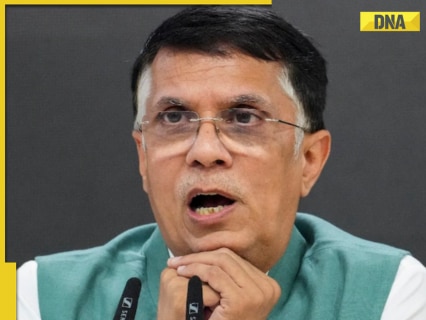
Amid the ongoing controversy over Congress’s claims that Assam Chief Minister Himanta Biswa Sarma’s wife holds three passports, Assam Police searched Congress leader Pawan Khera’s residence in Delhi. The searches followed the FIR lodged by Sarma’s wife, Riniki Bhuyan Sarma, into the matter on Monday.