

Top GOP hawk Graham warns Iran deal has ‘troubling aspects’ as ceasefire begins
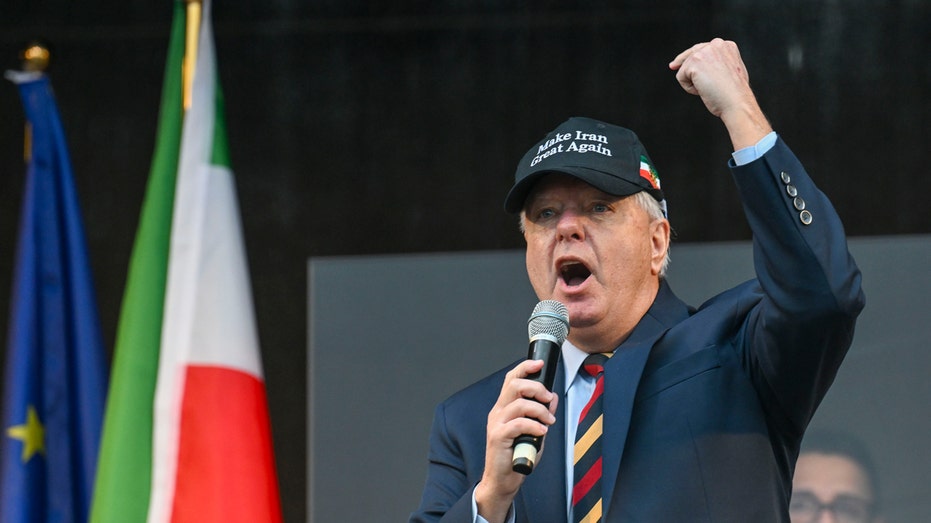
One of the Iran war’s strongest backers in the Senate said there were “troubling aspects” to the ceasefire deal announced hours ahead of President Donald Trump’s deadline. Sen. Lindsey Graham, R-S.C., has long supported going after the Iranian regime and gave a full-throated endorsement of Trump’s military action in the region when it began. For now, the conflict has paused after both sides agreed to a two-week ceasefire. Graham said a “diplomatic solution” is the preferred outcome, but he is not sold on the ceasefire deal brokered Tuesday night. TRUMP’S IRAN THREAT RATTLES GOP AS SOME REPUBLICANS BREAK RANKS “The supposed negotiating document, in my view, has some troubling aspects, but time will tell,” Graham said on X Wednesday. Graham also is calling on Vice President JD Vance and other administration officials to explain the deal to Congress. The request echoes demands by congressional Democrats for Trump officials, including Secretary of State Marco Rubio and Secretary of War Pete Hegseth, to testify about the war before Congress. “I look forward to the architects of this proposal, the vice president and others, coming before Congress and explaining how a negotiated deal meets our national security objectives in Iran,” Graham said. VANCE WARNS IRAN WILL ‘FIND OUT’ TRUMP IS ‘NOT ONE TO MESS AROUND’ IF CEASEFIRE DEAL FALLS APART Whether administration officials will come to Capitol Hill to break down the deal remains unclear. A spokesperson for Vance referred Fox News Digital to the White House for comment. White House Press Secretary Anna Kelly told Fox News Digital that Trump has “been transparent with the Hill since before Operation Epic Fury began, and administration officials provided more than 20 bipartisan briefings for members of Congress to keep them apprised of military updates.” “As the president said, many points have already been agreed to during the diplomatic process, and we are far along on a definitive agreement to deliver long-term peace in Iran and across the region,” Kelly said in a statement. Vance, along with Special Envoy to the Middle East Steve Witkoff and Jared Kushner, are set to negotiate in-person in Islamabad for a broader peace agreement, White House Press Secretary Karoline Leavitt said Wednesday. DEMOCRATS THREATEN TO GRIND SENATE TO A HALT TO FORCE PUBLIC IRAN HEARINGS “The first round of those talks will take place on Saturday morning local time, and we know we look forward to those in-person meetings,” Leavitt said. For now, Trump’s threat to bomb bridges and power plants in Iran is on hold while the broader peace agreement is negotiated. Iran publicly presented a 10-point plan to end hostilities that includes repayment for war damage, the ability to continue enriching uranium, full control of the Strait of Hormuz, and an end to all sanctions against the country, among other demands, in exchange for an agreement not to develop a nuclear weapon. Graham argued Iran should not be allowed to “save face” by maintaining even a small nuclear enrichment program. He said the only outcome he supports is “a deal that will stop their maniacal drive to a nuclear weapon, among other things.” Trump has already criticized that proposal on Truth Social. “There is only one group of meaningful ‘POINTS’ that are acceptable to the United States, and we will be discussing them behind closed doors during these negotiations,” Trump said. “These are the POINTS that are the basis on which we agreed to a CEASEFIRE.”
Trump admin scores Minnesota court win in Medicaid fraud crackdown
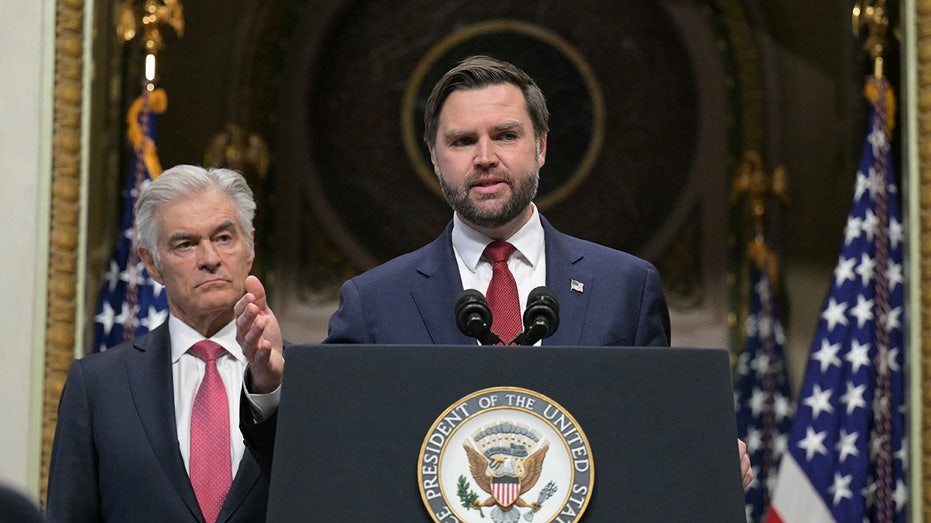
A federal judge declined to block the Trump administration’s Medicaid funding deferral to Minnesota, finding the state’s challenge was premature and giving the White House a temporary legal win as it expands its anti-fraud push. Judge Eric Tostrud, an appointee of President Donald Trump, concluded this week that the Centers for Medicare and Medicaid Services could, for now, withhold more than $259 million in Medicaid funds from Minnesota and require the state to provide piecemeal evidence that Medicaid reimbursements were legitimate before receiving them. The order was a boon to the Trump administration’s new, aggressive anti-fraud campaign that was largely spurred by a recent multimillion-dollar welfare fraud scandal in Minnesota. Tostrud said in a 42-page order that Minnesota’s lawsuit challenging the deferral was premature and that a preliminary injunction was unwarranted for numerous reasons. VANCE ANTI-FRAUD TASK FORCE SUSPENDS 221 CALIFORNIA HOSPICE AND HEALTHCARE PROVIDERS SO FAR “Some of the legal theories Minnesota asserts are novel, and the law does not support them,” Tostrud said. The White House announced an anti-fraud task force in March, saying in an executive order that “staggering fraud and waste in Minnesota alone is a case in point.” Trump tapped Vice President JD Vance as the fraud czar, and the task force has taken a multi-agency approach to its crackdown. CMS, led by Administrator Mehmet Oz, was enlisted to be more proactive with Medicaid by temporarily withholding reimbursements to states over potential instances of fraud rather than proven fraud. In addition to Minnesota, CMS is also eyeing Medicaid deferrals in California, New York and Maine, meaning more litigation could arise and lead to federal judges across the country weighing in and a potential escalation to higher courts. Minnesota’s notorious $250 million Feeding Our Future fraud scandal first broke onto the national radar in 2022 and drew renewed national attention in 2025 as convictions piled up and the state became a flashpoint in the broader fight over public-benefits fraud. A state-commissioned review of Minnesota’s Medicaid program report became a major flashpoint this year in the Trump administration’s broader “war on fraud.” The report highlighted vulnerabilities in 14 “high-risk” Medicaid services during a four-year period and flagged that $1.7 billion could have been “potentially improper.” NEW AUDIT EXPOSES FLAWED SYSTEM CRITICS SAY LET MINNESOTA FRAUD TO SLIP THROUGH CRACKS: ‘DIDN’T ACT FOR YEARS’ In the state’s lawsuit against the Trump administration and CMS, Democratic Attorney General Keith Ellison alleged that “the federal government has … weaponized Medicaid against Minnesota as political punishment” in violation of the Administrative Procedures Act and due process under the Constitution. “Deferral has never been used to categorically deny funds to a state across entire service areas, as is being done here,” Ellison’s complaint read. Citing the 2019 Supreme Court case Department of Commerce v. New York, Tostrud said that even if the Trump administration’s motives were, in part, political, that would not necessarily deem the Medicaid deferral unlawful. “A court may not set aside an agency’s policymaking decision solely because it might have been influenced by political considerations or prompted by an Administration’s priorities,” Tostrud wrote, quoting a concurring opinion in the case. “Agency policymaking is not a rarified technocratic process, unaffected by political considerations or the presence of Presidential power.” Ellison’s office did not immediately respond to a request for comment.
JD Vance slams Zelenskyy comments on Orban ahead of Hungary election

US vice president in Hungary calls Ukrainian leader’s ‘threatening’ remarks ‘completely scandalous’. Published On 8 Apr 20268 Apr 2026 US Vice President JD Vance has said Ukraine’s prime minister made “scandalous” comments about Hungarian Prime Minister Viktor Orban, as he echoed Budapest’s accusations that Kyiv is trying to influence the upcoming elections there. Vance’s remarks on Wednesday came during a visit to Budapest days before the far-right Orban, a Trump ally, faces the toughest challenge of his 16-year rule in an election on April 12. Recommended Stories list of 4 itemsend of list Hungary’s strained relations with Ukraine have taken centre stage in the election campaign, with Budapest’s government accusing Kyiv of deliberately stopping flows of Russian oil through the Druzhba pipeline in an effort to sway the ballot. Kyiv says the pipeline was damaged by a Russian drone attack in late January, and it is fixing it as quickly as it can. Hungary responded by blocking a 90-billion-euro ($105bn) EU loan for Ukraine, prompting Ukrainian President Volodymyr Zelenskyy to say he could give the address of whoever was responsible to the Ukrainian army, who could “speak with him in their own language”. ‘Completely scandalous’ Speaking at a Hungarian university, Vance said Orban had told him about Zelenskyy’s remarks. “It’s completely scandalous,” Vance said. “You should never have a foreign head of government … threatening the head of government of an allied nation.” Vance then accused the media of double standards in their coverage of alleged foreign interference in the 2016 US presidential election and in the Hungarian vote. “You saw this back in 2016 where a lot of the American media said that it was a true scandal that the Russian government bought like $500,000 of Facebook advertisements … That’s foreign influence,” he said. Advertisement “But what’s not foreign influence is when the European Union threatens billions of dollars withheld from Hungary because you guys protect your borders… What’s not foreign influence is when the Ukrainians shut down pipelines, causing suffering among the Hungarian people in an effort to influence an election.” Budapest has been embroiled in a long‑running dispute with the European Union over issues ranging from judicial independence to the treatment of migrants. Vance had already lambasted what he said was EU meddling in the Hungarian vote at a news conference on Tuesday. A European Commission spokesperson said on Wednesday Brussels would use diplomatic channels “to convey our concerns to our US counterparts” following those comments, according to the Reuters news agency. Adblock test (Why?)
White House says Trump’s ‘red line’ against Iran nuclear enrichment remains
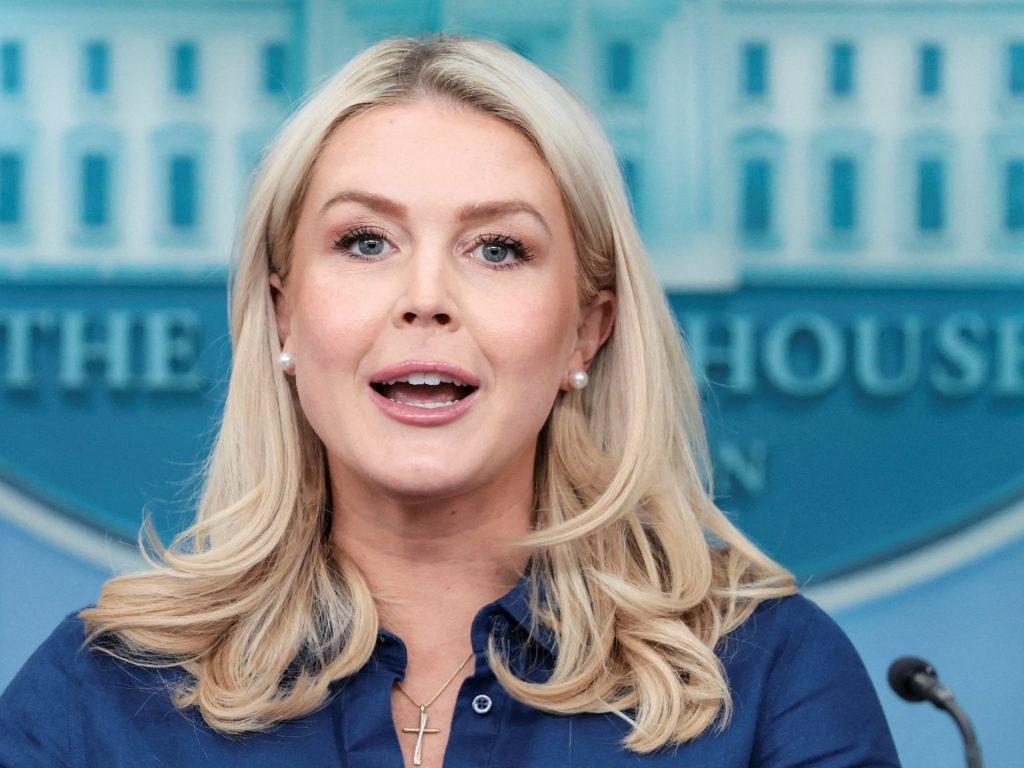
The White House has said that the United States continues to reject any uranium enrichment inside Iran, reiterating that US President Donald Trump did not agree to a “wish list” submitted by Tehran. Trump’s spokesperson, Karoline Leavitt, suggested on Wednesday that the 10-point proposal put forward by Iran as the basis for a ceasefire in the US-Israel war on Iran differs from the proposal published by the government in Tehran. Recommended Stories list of 3 itemsend of list That plan said the US would accept Iran’s right to enrich uranium as well as sanctions relief and a permanent end to the attacks on Iran. “The president’s red lines, namely the end of Iranian enrichment in Iran, have not changed,” Leavitt said. Domestic uranium enrichment has been a major sticking point in previous talks between Tehran and Washington. While Iran says it is not seeking nuclear weapons, it insists on enriching its own uranium as a national right. The Trump administration, however, has been pushing for dismantling the Iranian nuclear programme altogether. After more than 38 days of war, Washington and Tehran announced a two-week ceasefire that will see the US stop its attacks and Iran reopen the Strait of Hormuz, whose closure at the outset of the conflict sent energy prices soaring. Leavitt said Iran’s initial 10-point proposal was “literally thrown in the garbage” by Trump’s team, but Tehran later put forward a revised plan. “The idea that President Trump would ever accept an Iranian wish list as a deal is completely absurd,” she said. Advertisement “The president will only make a deal that serves in the best interests of the United States of America.” Trump said late on Tuesday that the Iranian proposal was a “workable basis on which to negotiate”. Leavitt said Trump and his aides will focus on talks with Iran over the next two weeks “so long as the Strait of Hormuz remains open with no limitations or delays”. She confirmed that the first round of negotiations will take place in the Pakistani capital, Islamabad, on Saturday, and the US team will be led by Vice President JD Vance, Special Envoy Steve Witkoff and Trump’s son-in-law, Jared Kushner. But later on Wednesday, Iran’s Parliament Speaker Mohammad Bagher Ghalibaf cast doubt over the fate of the talks. He said the US and Israel have already violated the ceasefire by continuing the war in Lebanon, failing to stop their drones from entering Iranian airspace and denying Tehran’s right to uranium enrichment. “Now, the very ‘workable basis on which to negotiate’ has been openly and clearly violated, even before the negotiations began. In such [a] situation, a bilateral ceasefire or negotiations is unreasonable,” Ghalibaf wrote on X. For her part, Leavitt echoed the Pentagon in claiming victory against Iran, which also said it won the war. “Their navy, their missiles, their defence industrial base, and their desire and their plan to build a nuclear bomb inside their country is no longer going to be allowed, can no longer happen, thanks to the remarkable success of Operation Epic Fury,” the White House spokeswoman said. The Trump administration says US and Israeli attacks all but destroyed Iranian military capabilities, though Iran continued to fire missiles and drones against Israel and across the region throughout the conflict. Washington has argued that the main reason for the war was to prevent Tehran from acquiring a nuclear weapon, but Trump had repeatedly said for eight months before the assault that the June 2025 US attacks “obliterated” Iran’s nuclear programme. Adblock test (Why?)
Iranians breathe a ‘ceasefire’ sigh of relief as all sides claim victory
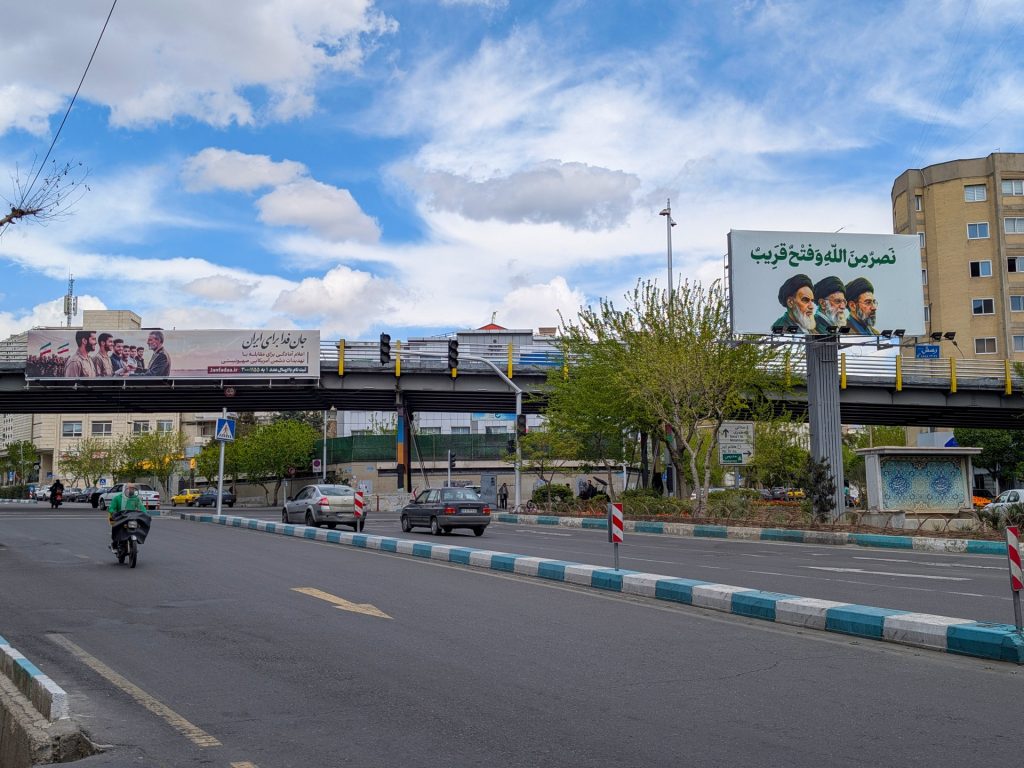
Tehran, Iran – The mental strain of living under daily bombardment has been partially lifted in Tehran and much of Iran as all parties to the war with the United States and Israel claim victory after a ceasefire was announced. Some traffic has returned to the streets of the Iranian capital during daylight on Wednesday, the first day of a two-week ceasefire agreed between Iran and the US with mediation from Pakistan. Negotiations aimed at reaching a long-lasting agreement are expected to begin in Islamabad on Friday. Recommended Stories list of 3 itemsend of list But Tehran, home to more than 10 million people, is still far from its usual commotion after being targeted by several thousand munitions since February 28. Air defence systems were activated for short periods several times since the ceasefire was announced overnight, but there were no reports of impacts or any official explanation for the activations. People across Tehran, from young men and women huddling in vibrant cafes downtown to families sitting in parks, were debating whether the ceasefire would hold and what the future could have in store for them. “Looks like the ceasefire will continue. I heard the Israelis are opening up their airspace more,” a young man said, referring to an announcement by Israeli authorities that flights will resume from Ben Gurion Airport. Others, however, were more pessimistic, especially after two critical islands off southern Iran were attacked on Wednesday morning, hitting oil facilities. It is unclear who was behind the attack. The Islamic Revolutionary Guard Corps (IRGC) said it shot down a drone in the southern province of Fars. Advertisement Saudi Arabia, the United Arab Emirates, Qatar, Kuwait and Bahrain also reported attacks on their territories by missiles and drones from Iran with Iranian state television confirming this was in retaliation for the post-ceasefire oil attacks. Tehran said it was ready to restart military operations if attacked again. On Tuesday, Iranians had been worried about the targeting of critical civilian infrastructure, such as power plants and bridges after a threat earlier in the day from US President Donald Trump to end “civilisation” in a country with one of the world’s oldest civilisations, dating back more than five millennia. The ceasefire was announced shortly before the midnight GMT deadline that Trump had set for an agreement to be reached to avoid US forces carrying out his threat. The Israeli military did, however, intensify its attacks in the hours preceding the ceasefire, hitting electricity outposts, bridges and the railway network. Warplanes also struck the Iranian Aluminium Company in Arak, damaging the country’s largest aluminium production facility. The Israeli army also extensively bombed Iran’s steel factories and petrochemical companies on Tuesday, putting them out of commission in an effort to impose more pressure on the already strained Iranian economy and population of more than 90 million. Even after the ceasefire, Israel continued attacking Lebanon, killing more than 250 people in a devastating day of attacks on Wednesday. Israel said it was targeting Iran’s ally Hezbollah, but civilian locations across Lebanon were hit. ‘Celebrations of victory’ to continue Trump hailed what he described as a decisive victory against Iran while announcing the ceasefire, but Dan Caine, his top general, emphasised that the deal only signifies a pause and combat operations could start once again if no final deal is reached. The US military said it struck 13,000 targets across Iran in less than six weeks of war. In Iran, similar proclamations of victory and celebrations were broadcast from Iranian state television, and a statement from the Supreme National Security Council urged the most fervent supporters of the government to trust in the system and refrain from making “divisive commentary”. The council also stressed that affairs were being overseen by Mojtaba Khamenei, who was declared Iran’s supreme leader after his father, Ayatollah Ali Khamenei, was killed on the first day of the war on February 28. The younger Khamenei and IRGC commander-in-chief Ahmad Vahidi have not been seen or heard from publicly since the start of the war. Advertisement A large number of events were organised by the theocratic and military establishment throughout Wednesday, and more were planned for Thursday to mark 40 days since the killing of the former supreme leader. These included marches on foot and in vehicles, public religious eulogy sessions and banners erected across the country. A video of an old Khamenei speech being recirculated by state-affiliated media on Wednesday showed him telling supporters to insist on “resistance”. Regardless of the ceasefire, pro-government Iranians have been told to continue driving in motorcades broadcasting religious chanting and take their children to join checkpoints and security patrols. However, some government supporters said they were caught off-guard by the ceasefire announcement because the establishment had repeatedly emphasised it would never agree to a temporary ceasefire and it would continue launching missiles and drones while it had the “upper hand”. Majid Nouri, son of Hamid Nouri, a former Iranian judiciary official who was handed a life sentence in Sweden for his role in the deaths of political prisoners but ended up being exchanged in a 2024 swap, recorded a video from among government supporters in Tehran to say they were “shocked and saddened”. “Many good arguments and some disagreements have taken place between the people since the announcement of the ceasefire. They say, “We came to the streets for 40 nights. We did not expect this,’” he said. A week earlier, a senior correspondent on Iranian state television was explaining emphatically how the government would not agree to a temporary cessation of hostilities because it would allow the US and Israel to rearm and restart attacks at a time more appropriate for them. But state television’s English-language Press TV on Wednesday claimed Iran has become a “new superpower” since the ceasefire. In the meantime, the vast majority of Iranians continue to suffer from a state-imposed internet outage, which has cut traffic down to 1 percent of pre-war levels, according to monitors. After the ceasefire, the
Pawan Khera moves Telangana HC seeking anticipatory bail in case filed in Assam
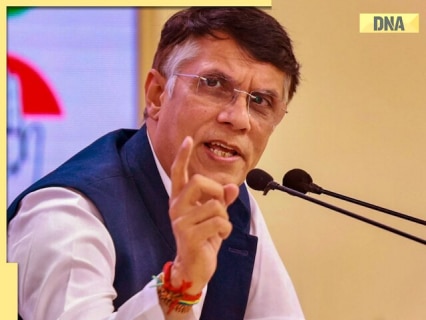
Khera had made serious allegations against Assam Chief Minister Himanta Biswa Sarma and his wife Riniki Bhuyan Sarma at a press conference in the national capital. Both the chief minister and his wife have refuted the accusations.
Ahead of Assam assembly elections 2026, CM Himanta Sarma’s remarks ‘Eat beef at home’ sparks fresh political row
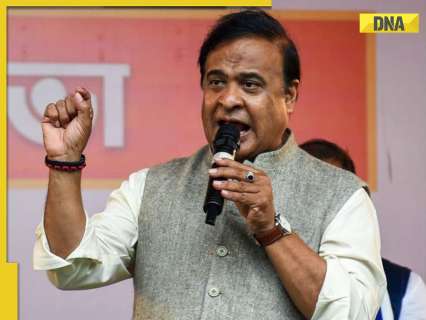
Assam assembly elections will take place on April 9, Thursday, and a day before Chief Minister Himanta Biswa Sarma has clarified his stance on beef consumption, saying he is not wanting to ban it but wants it to be limited to private spaces.
Kerala, Assam, Puducherry set to vote today to elect new legislative assemblies | Top points

Voting will be held for 126 seats in Assam, 140 in Kerala, and 30 in Puducherry in this phase of the election. Tamil Nadu will go to the polls on April 23 and West Bengal on April 23 and April 29. Votes will be counted on May 4.
Earthx2026 Tackles Major Climate Issues with Thought-Provoking Conversation

Climate Issues Political Polarization, Market-Driven Solutions, Resource Management, Public Trust, and the Future of Life-Centered Design
Amid license review, Camp Mystic being investigated by Texas Rangers and state health officials
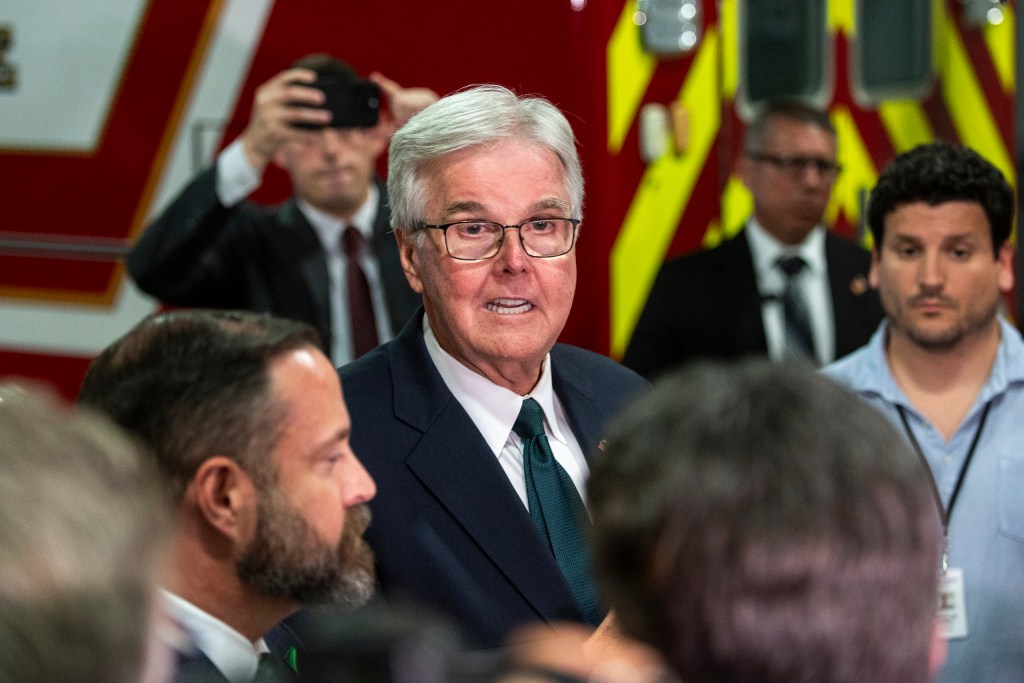
Camp Mystic filed to renew its license in March. Lt. Gov. Dan Patrick has repeatedly urged state officials to reject the application.