

Ex-counterterrorism chief says Trump must restrain Israel before he can declare victory in Iran
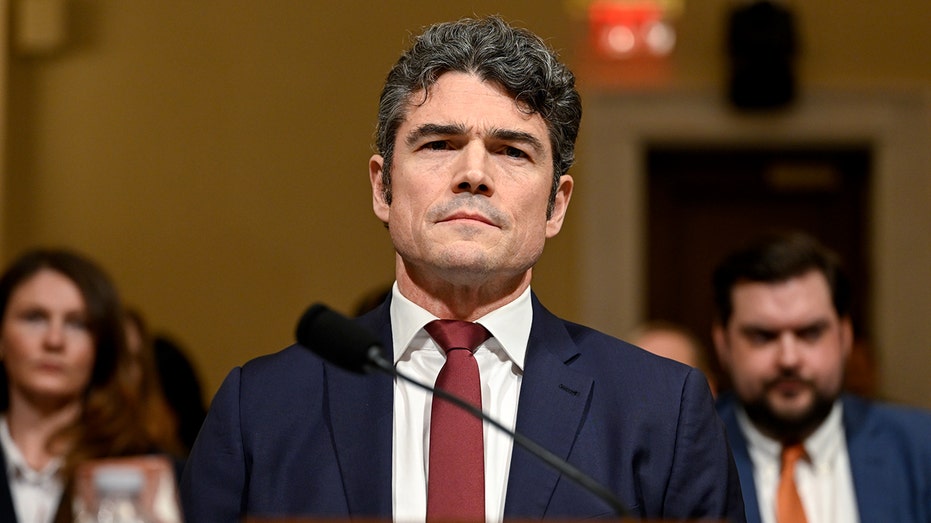
Former National Counterterrorism Center Director Joe Kent — who quit his government role last month over his opposition to the Iran war — suggested in a Wednesday night post on X that President Donald Trump will only be able to declare victory in Iran if he “restrains” Israel. “The purpose of POTUS’s speech this evening was to show that we can declare victory when we choose. This is only possible if POTUS restrains the Israelis 1st. Israel needs us committed indefinitely, we are seeking a quick end to the war. We have drastically different goals than Israel & must act accordingly,” Kent asserted in the post. Kent made the comments after Trump — who launched the controversial U.S. war against Iran last month in conjunction with Israel — delivered an address to the nation about the ongoing conflict on Wednesday night. TRUMP SAYS IRAN ‘NO LONGER A THREAT’ AFTER 32 DAYS — OUTLINES NEXT PHASE OF US WAR “Thanks to the progress we’ve made, I can say tonight that we are on track to complete all of America’s military objectives shortly, very shortly. We are going to hit them extremely hard over the next two to three weeks. We are going to bring them back to the stone ages where they belong. In the meantime, discussions are ongoing,” he said. “Because of the actions we have taken, we are on the cusp of ending Iran’s sinister threat to America and the world. And I’ll tell you, the world is watching. And when we do… the United States will be safer, stronger, more prosperous and greater than it has ever been before,” Trump said during his remarks. WHAT YOU NEED TO KNOW: 5 KEY TAKEAWAYS FRM TRUMP’S IRAN ADDRESS Kent indicated that the U.S. should exit the war immediately. “We do not honor our fallen by getting more of our best men & women killed in the Middle East. We honor our fallen by learning from our past & only shedding American blood in defense of our nation. The best time to get out of a war of choice is now, before we lose more lives,” he wrote in a post on X. Fox News Digital reached out to the White House for comment on Thursday. FORMER REP MTG VENTS THAT SHE’S ‘SO BEYOND DONE,’ CHARACTERIZING TRUMP’S ADDRESS AS ‘WAR WAR WAR’ In a Thursday morning post on X, Kent wrote, “The purpose of a system is what it does: Israel is targeting the negotiators to ensure we can’t end the war & to ensure that the Iranian leaders who come next will be more extreme, thereby ensuring that the war goes on. The 1st step to end the war must be restraining Israel.”
Senate passes bill to fund most of DHS after House GOP caves
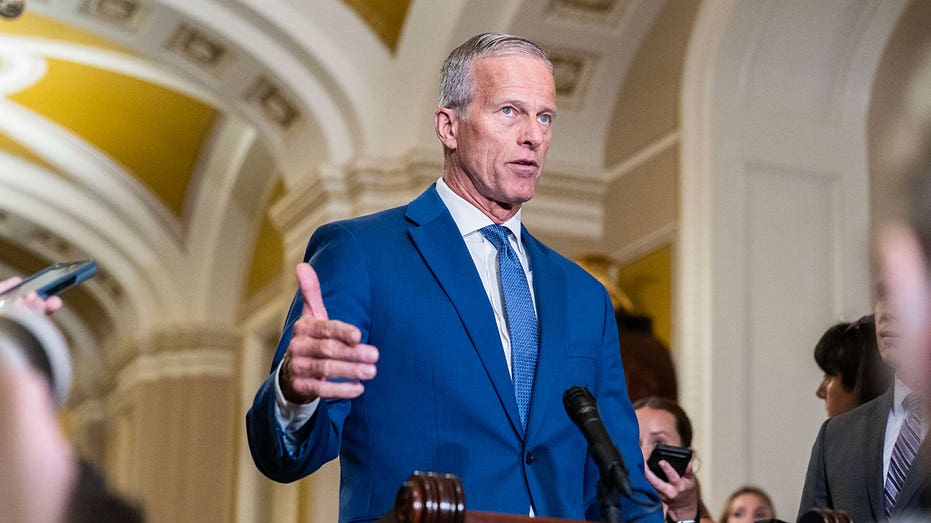
The 48-day Department of Homeland Security shutdown is one step closer to ending after the Senate moved to fund most of the department Thursday morning. The Senate agreed via voice vote to send a bipartisan deal funding the whole department except for President Donald Trump‘s immigration enforcement and border security efforts to the House for consideration. The chamber is not expected to vote on the legislation until House lawmakers return to Washington on April 13. The Senate vote follows GOP leaders endorsing a two-track approach to funding DHS on Wednesday, with President Trump giving lawmakers a hard deadline to end the record-breaking funding lapse. HOUSE CONSERVATIVES RAGE AGAINST SENATE DHS SHUTDOWN DEAL The Senate bill accomplishes the first phase of the plan by working with Democrats to fund as much of DHS as possible on a bipartisan basis. However, it would zero out funding for ICE and much of the Border Patrol, save for $11 billion in customs funding going to the agency. Additionally, $10 billion teed up for ICE won’t be funded under the measure. As for ICE and the Border Patrol, Republicans have said they will seek three full years of funding for both of these agencies in a party-line budget reconciliation package that will bypass Democrats’ opposition. Trump says he wants the forthcoming bill on his desk by June 1. “We are going to work as fast, and as focused, as possible to replenish funding for our Border and ICE Agents, and the Radical Left Democrats won’t be able to stop us,” Trump wrote on Truth Social on Wednesday. The Senate bill’s passage on Thursday was a déjà vu moment for Senate Majority Leader John Thune, R-S.D., who helped steer the same measure through the upper chamber last week. But House GOP leadership sharply rejected it, calling the measure’s exclusion of ICE and CBP money a “crap sandwich” and warning about the risks of funding those entities using the budget reconciliation process. The chamber then put forward a rival proposal that Senate Minority Leader Chuck Schumer, D-N.Y., made clear was “dead on arrival” in the Senate. Thune said shortly after the vote that he was hopeful the House would move onto the bill quickly, and that the next step would be budget reconciliation. Still, he blamed Senate Democrats, and not Republicans in-fighting at the finish line, for the current position Congress was in. “I think this whole where we are is just a regrettable place. We have the Democrats who are holding the appropriations process hostage and their anti-law enforcement, open borders, defund the police wing is the ascendant wing,” Thune said. “And there, I think everybody’s afraid of them, and so we’re stuck in a spot that’s just not good for the country, the future of the appropriations process, or, for that matter, the future of the Senate.” House Speaker Mike Johnson, R-La., appeared to relent Wednesday after Trump issued a statement outlining an end to the shutdown that appeared to side with Thune’s two-part approach to funding the department. GOP INFIGHTING, DEMOCRATS’ UNMET DEMANDS AND A CLEAR WINDFALL: WHO’S WINNING AND LOSING THE DHS SHUTDOWN As the DHS shutdown drags on, Trump and congressional Republicans are gambling that budget reconciliation will be the way to fund immigration enforcement for several years to come. Some Republicans have floated funding ICE not just through Trump’s term, but for up to a decade. The GOP used the same process to fund ICE last year, teeing up $75 billion for enforcement operations for the next four fiscal years. But the party-line process comes with a host of challenges that could test Republican unity in an election year. GOP lawmakers will have to identify spending cuts to pay for it. When Republicans used the process to pass Trump’s One Big Beautiful Bill Act in July 2025, lawmakers nearly stumbled at the finish line over disagreements on cuts to federal Medicaid spending and food assistance programs. Without a looming deadline like the expiration of Trump’s 2017 tax cuts that Republicans extended in July 2025 through the “big, beautiful bill,” some GOP lawmakers have voiced concern that the party will stay unified. Republicans have proposed adding other issues into the reconciliation mix, including supplemental funding for the Iran war, affordability measures, the president’s tariff regime and pieces of the election integrity-focused SAVE America Act. The budget reconciliation process allows a party with control of the White House and both chambers of Congress to pass tax and spending priorities with a simple majority threshold, though the process is governed by stringent requirements for what is eligible to be included. Punting ICE and CBP money to a future spending bill could also negatively affect support staff employed by both agencies who have not been paid during the seven-week shutdown. Democrats have repeatedly blocked funding for ICE and the Border Patrol in the Senate since the beginning of the shutdown in mid-February. Though none of their proposals to reform immigration enforcement have been adopted, Democratic leaders claimed victory on Wednesday. “Throughout this fight, Senate Democrats never wavered,” Senate Minority Leader Chuck Schumer, D-N.Y., said Wednesday. “We were clear from the start: fund critical security, protect Americans, and no blank check for reckless ICE and Border Patrol enforcement. “We were united, held the line, and refused to let Republican chaos win.” The Senate deal funding most of DHS could still face roadblocks in the House. A handful of conservatives have already said they will vote “no” while using the same messaging employed by House GOP leadership to oppose the bill last week. “Let’s make this simple: caving to Democrats and not paying CBP and ICE is agreeing to defund Law Enforcement and leaving our borders wide open again,” Rep. Scott Perry, R-Pa., wrote on social media Wednesday. “If that’s the vote, I’m a NO.”
South Texas woman loses wrongful arrest lawsuit in controversial abortion case

A federal judge on Tuesday dismissed Lizelle Gonzalez’s suit seeking $1 million in damages in which she accused local officials of malicious prosecution and conspiracy.
FBI agents from US arrive in Cuba to probe lethal speedboat shooting

Trump administration has denied involvement after Cuban government says a boat of armed men tried to infiltrate island. By Reuters Published On 1 Apr 20261 Apr 2026 A technical team from the Federal Bureau of Investigation (FBI) has arrived in Cuba to launch an “independent investigation” into a deadly shootout between local border patrol officers and a Florida-tagged speedboat. The United States embassy in Havana announced the FBI agents’ arrival on Wednesday, following pressure from officials to look into the incident. Recommended Stories list of 3 itemsend of list On the night of February 25, 10 Cuban nationals tried to enter Cuba by speedboat, armed with nearly 13,000 rounds of ammunition, 13 rifles and 11 pistols, according to authorities in Havana. Five were killed in the shootout that ensued. The others were wounded and were taken into custody, where they received medical attention, the Cuban government has said. The US embassy said in a statement the FBI trip to Cuba was part of a “thorough and independent investigation” into the incident. An embassy official told the Reuters news agency the US would verify Havana’s version of events. “Consistent with US policy, we do not make decisions in the United States on the basis of what Cuban authorities are saying,” the official said. “We will independently verify the facts and make decisions based solely on US interest, US law, and the protection of US citizens.” Tensions have soared between the two nations since January, when US President Donald Trump imposed a virtual oil blockade on the island after abducting and imprisoning Venezuelan President Nicolas Maduro, a crucial Cuban benefactor, on January 3. Cuba said the assailants were Cuban exiles who came from the US with the intent to sow chaos and attack military units. Advertisement A Cuban patrol of five border guard members on a nine-metre boat spotted the incoming vessel early that morning, about one nautical mile (equivalent to about 1.85km) off a remote channel on the Caribbean island’s northern coast, some 160km (100 miles) from Marathon, Florida. The infiltrators fired on the patrol from 185 metres away, striking the captain in the abdomen, Cuba said. Bleeding heavily, the wounded captain remained at the helm and steered towards the enemy vessel, leading to a firefight at a distance of about 20 metres. Trump’s Secretary of State Marco Rubio said the speedboat incursion was not a US operation and that no US government personnel were involved. Adblock test (Why?)
Magnitude 7.4 quake hits off Indonesia’s Ternate, tsunami warning triggered

The epicentre of the earthquake was about 120km (75 miles) from Ternate, in Indonesia’s North Maluku province. Published On 1 Apr 20261 Apr 2026 A magnitude 7.4 earthquake has hit the Northern Molucca Sea off the coast of the city of Ternate, in eastern Indonesia, triggering a tsunami warning for nearby islands. The United States Geological Survey (USGS) said Thursday’s quake, which was initially recorded at a magnitude of 7.8, struck at a depth of 35km (22 miles), greater than the early figure of 10km (six miles). There were no immediate reports of injuries. The epicentre of the earthquake was about 120km (75 miles) from Ternate, in Indonesia’s North Maluku province. Local authorities in some cities, such as Ternate and Tidore, were urged to prepare citizens for evacuation, while news channel Metro TV broadcast images of damaged buildings. According to the US Tsunami Warning System, dangerous tsunami waves were possible within 1,000km (621 miles) of the epicentre along the coasts of Indonesia, the Philippines and Malaysia. Waves of height ranging from 0.3 metres to 1 metre (0.98 feet to 3.28 feet) above the tide level could hit some coastal areas of Indonesia, the Pacific Tsunami Warning Center said. It also warned of the risk of waves less than 0.3 metres over tide levels for the coasts of Guam, Japan, Malaysia, Papua New Guinea, the Philippines and Taiwan.Japan may see waves of up to 0.2 metres (eight inches), but no damage is expected, the Japan Meteorological Agency said, as it warned a tsunami could occur in the Pacific. Indonesia straddles the so-called Pacific Ring of Fire, an area of high seismic activity where tectonic plates meet and earthquakes are frequen Advertisement Adblock test (Why?)
Iran war live: Trump claims goals nearing completion, vows to ‘finish job’

blinking-dotLive updatesLive updates, Iran denies seeking a truce and keeps up counterattacks, as US-Israeli raids cause deaths and damage across the country. Published On 2 Apr 20262 Apr 2026 Click here to share on social media share2 Share googleAdd Al Jazeera on Googleinfo Adblock test (Why?)
Elon Musk’s Texas-based SpaceX files initial paperwork to sell shares to the public

The offering, which could come in June, would likely make Musk the world’s first trillionaire.
Behind the scenes of Congress’ eleventh-hour rush to fund the DHS
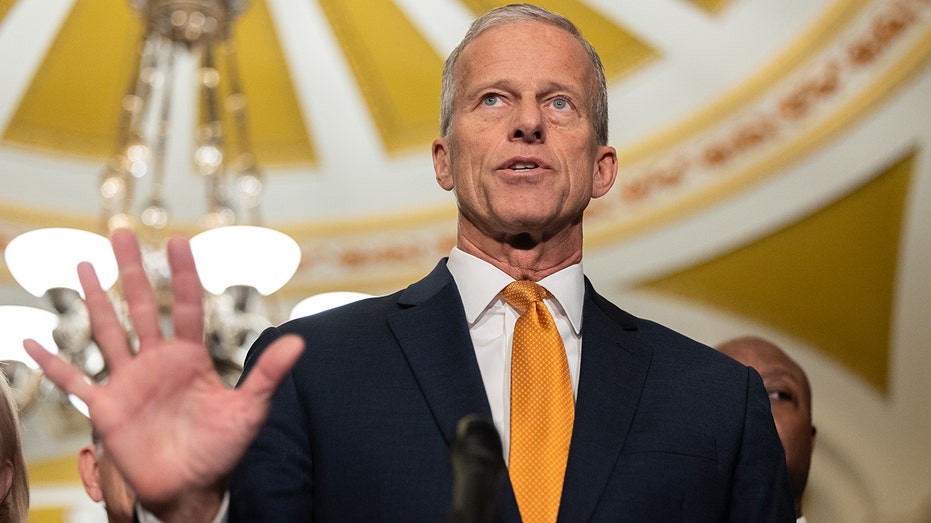
What would you say if one body of Congress didn’t take a formal roll call vote on a major piece of legislation – yet passed it at 2:19 on a Friday morning? Would you try to outdo your colleagues across the Capitol Rotunda with some Congressional chicanery of your own? Perhaps by passing an equally important version of the same bill – while officially sidestepping a direct up/down vote on the measure – at 11:28 p.m. on that same Friday night. That’s what happened late last week. The Senate scored approval from all 100 senators to pass a bill to fund most of the Department of Homeland Security for the rest of the fiscal year – but did it on a voice vote at 2:19 a.m. Friday with only five senators in the chamber. House Republicans scoffed at this. So they passed their own bill – to fund all of DHS – just before the witching hour Friday. But technically, the House didn’t even vote directly on the legislation itself. The House voted to approve a “rule” (which manages debate for bills). With adoption of that rule, the House “deemed” the underlying DHS funding measure as passed. GOP LEADERS ENDORSE TRUMP’S SHUTDOWN-PROOF MOVE TO END DHS FUNDING LAPSE But despite all of this, the House and Senate weren’t aligned. They hadn’t approved the same bill. And despite the parliamentary antics, House Republicans then implored the Senate to pass the measure it approved Friday night on Monday morning – without a roll call vote and with just two senators in the chamber. If you followed all of that, that is exactly what’s unfolded on Capitol Hill the past few days as lawmakers struggled to end the six-week Department of Homeland Security shutdown. It was clear early Thursday evening that there wasn’t a path in the Sente to approve a partisan GOP bill to fund DHS after a lengthy roll call vote which started in the afternoon. But something was afoot. TRUMP ADMINISTRATION MAKES MAJOR MOVE TO RELIEVE ‘UNFAIR BURDEN’ ON DHS WORKERS AS SHUTDOWN DRAGS ON Congress was staring at a 15-day recess for Easter and Passover on Friday. Failure to address the crisis now meant that lawmakers would leave town until the middle of April – extending the shutdown until then as airport lines swelled. So Senate Majority Leader John Thune, R-S.D., got to work on something which could pass the Senate – and potentially pass the House – before everyone abandoned Washington for the break. Thune suggested earlier in the week that the Senate usually has to get “to Thursday” before frozen positions may begin to thaw. He was right. There was a corridor for the Senate to approve a bipartisan bill to tackle most of the funding crisis at DHS. So Thune’s charge late Thursday night and into the wee hours of Friday morning was not necessarily to persuade bipartisan senators to support the bill he was putting on the floor. But instead, Thune’s goal was to coax skeptical senators not to object and blow the whole thing up. There’s something called a “hotline” in the Senate. Any time the leadership wants to set up a series of votes, make particular amendments in order and perhaps allocate wedges of time to debate, it sends around a “hotline” to all 100 senators. If any senator objects, they let the leadership know. This streamlines the process ahead of time. It also ensures that senators aren’t blindsided by something called a “unanimous consent” request. Unanimous consent requests, or “UC’s,” happen all the time in the Senate. One of the most powerful tools in the Senate is “unanimous consent.” If you obtain the “unanimous consent” of all 100 senators, you can make the sun rise in the west. But all it takes is one objection to block a UC – even if all other 99 senators agree. The behind the scenes hotline takes care of this in advance. Any senator could object and block Thune’s proposal to fund most of DHS. But there shouldn’t be any problem if he cleared it with all 100 senators offstage in advance. That’s why Thune went to the floor at 2:19 a.m. Friday. Not a single senator flagged his proposal. And so the South Dakota Republican went to the floor with a team of five senators – and passed the bill. Not by UC. But by something called a “voice vote. Those in favor shout yea. Those who oppose holler nay. The louder side wins. The Senate passed the bill. There was no roll call vote. HOUSE GOP RAMS THROUGH NEW DHS FUNDING PLAN WITH SHUTDOWN FAR FROM OVER So, this wasn’t something snuck by in the dead of night on the sly. If any senator had a reservation, they could have flagged it. Or better yet, come down to the floor at 2:19 a.m. and contested it. In short, there were 100 senators, 100 chiefs of staff, 100 legislative directors and 100 counsels who should have known about Thune’s plan. That’s a universe of at least 400 people – if not more. So, this wasn’t an episode of someone pulling a fast one. By morning, Sen. Rick Scott, R-Fla., said he “opposed this bill.” Same with Sen. Mike Lee, R-Utah. Well, that’s fine. But no one objected nor pushed back on the hotline. No one went down to the floor to demand a roll call vote – or even argued that the Senate couldn’t do anything because there wasn’t a quorum present to conduct business. So anything said by Republican senators upset about the bill were simply academic or rhetorical objections. If those senators truly opposed the bill, they missed their opportunity to do something about it. It was thought that the House might take up the bill – reluctantly – the next day to end most of the shutdown and pay TSA workers. House Minority Leader Hakeem Jeffries, D-N.Y., signaled support. So did Rep. Rosa DeLauro, D-Conn., the top Democrat on the Appropriations
Trump says Iran ‘no longer a threat’ after 32 days — outlines next phase of US war
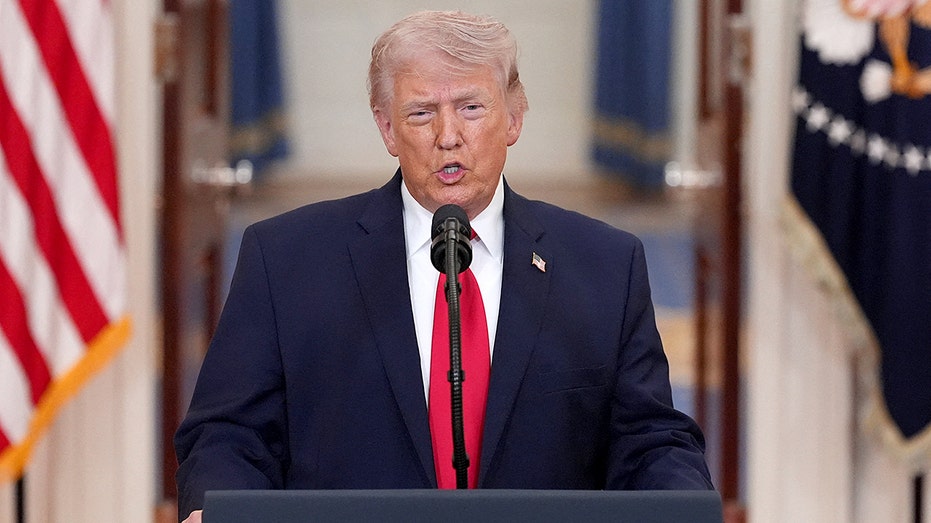
President Donald Trump declared Iran is “essentially really no longer a threat” after a 32-day U.S. military campaign, telling Americans in a primetime address Wednesday that the country has been “eviscerated” following weeks of strikes. Even so, Trump said the United States is preparing additional attacks in the coming weeks even as diplomatic discussions continue. “I can say tonight that we are on track to complete all of America’s military objectives shortly. Very shortly, we are going to hit them extremely hard over the next two to three weeks,” Trump said. “We’re going to bring them back to the Stone Ages where they belong. In the meantime, discussions are ongoing.” Trump pointed to U.S. attacks on Iran’s nuclear infrastructure, saying sites hit by B-2 bombers were “obliterated” and warning the United States would launch additional strikes if Tehran attempts to recover nuclear material. INSIDE IRAN’S MILITARY: MISSILES, MILITIAS AND A FORCE BUILT FOR SURVIVAL “The nuclear sites that we obliterated with the B-2 bombers have been hit so hard that it would take months to get near the nuclear dust,” Trump said. “If we see them make a move, even a move for it, we’ll hit them with missiles very hard.” The remarks come as key questions remain about the fate of Iran’s enriched uranium stockpile, including roughly 900 pounds to 1,000 pounds of uranium enriched to near weapons-grade levels, according to international watchdog estimates. The conflict has driven volatility in global energy markets and rising fuel costs for Americans. WHY TRUMP, IRAN SEEM LIGHT-YEARS APART ON ANY POSSIBLE DEAL TO END THE WAR Addressing those concerns directly, Trump blamed recent increases in gasoline prices on Iranian attacks targeting commercial shipping and regional infrastructure. “Many Americans have been concerned to see the recent rise in gasoline prices here at home,” Trump said. “The short-term increase has been entirely the result of the Iranian regime launching deranged terror attacks against commercial oil tankers and neighboring countries.” Trump also suggested Iran’s leadership structure has been fundamentally altered by the strikes, saying senior figures are dead and warning of additional attacks if Tehran does not reach an agreement with the United States. “We never said regime change, but regime change has occurred because of all of their original leaders’ death. They’re all dead,” Trump said. “If there is no deal, we are going to hit each and every one of their electric generating plants very hard and probably simultaneously.” He further claimed Iran’s air defenses had been eliminated. “They have no anti-aircraft equipment,” Trump said. “Their radar is 100% annihilated. We are unstoppable.” This is a breaking news story and will be updated.
Trump administration makes major move to relieve ‘unfair burden’ on DHS workers as shutdown drags on
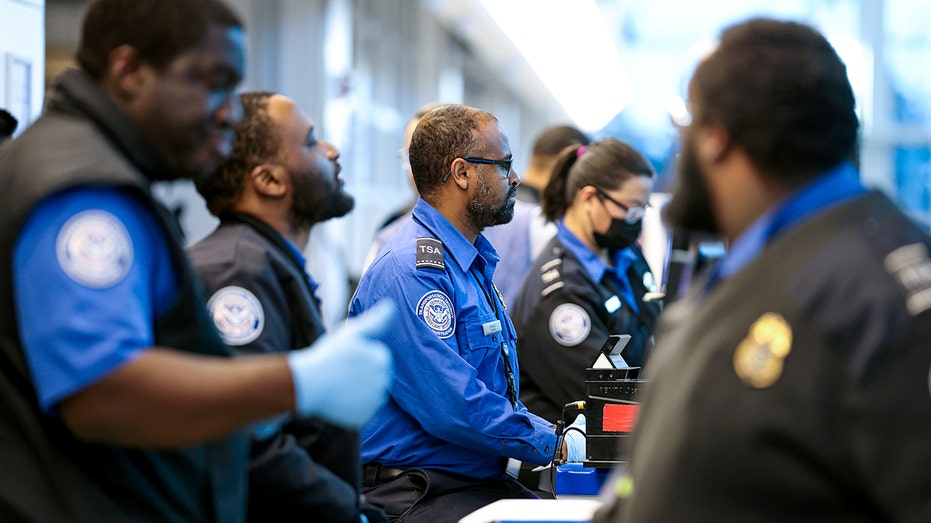
FIRST ON FOX: The Trump administration will extend tax filing deadlines for Department of Homeland Security (DHS) personnel as the ongoing shutdown intensifies financial pressure on thousands of federal workers. The Treasury Department and IRS will announce a 30-day automatic tax filing extension for affected employees, shielding them from penalties and interest. The partial government shutdown is in its 46th day, intensifying pressure on federal workers. HOUSE GOP RAMS THROUGH NEW DHS FUNDING PLAN WITH SHUTDOWN FAR FROM OVER Such broad tax relief is highly unusual and typically reserved for major disasters and other extraordinary circumstances, underscoring the severity of the current shutdown. “The continued shutdown of the Department of Homeland Security has created unnecessary disruptions, placing an unfair burden on DHS personnel and their families,” Treasury Secretary Scott Bessent said. “We are committed to supporting our hard-working DHS officers and employees so they can stay focused on their mission and keep the American people safe without being penalized for missing a tax filing deadline.” AVERAGE TAX REFUND TOPS $3,700 MIDWAY THROUGH FILING SEASON, TREASURY SAYS Under the measure, affected workers will now have until May 15, 2026, to file their taxes and pay what they owe without facing additional financial penalties. DHS personnel include Border Patrol agents, TSA officers, Secret Service agents and FEMA responders, frontline workers responsible for border security, aviation safety, disaster response and counterterrorism. Many have reported struggling to cover basic expenses such as rent, mortgages and childcare as missed paychecks pile up. The decision comes as pressure mounts over the real-world consequences of the shutdown, with DHS employees caught between their national security responsibilities and growing financial strain. While the administration says the relief is intended to ease the burden, for many workers it remains only a temporary lifeline as the broader standoff continues.