

‘I Like Him’: What Siya Goyal told her parents before the marriage proposal; Here’s what we know

The parents of Siya Goyal, accused of murdering her fiancé Ketan Agarwal with her alleged lover Chetan Chaudhary, say they were unaware of any relationship between the two.
‘Push Siya From the Fort if Guilty’: Her father demands justice for Ketan, claims no clue about Chetan

Demanding justice in Ketan’s case, Siya’s father claimed that the culprit should be punished even if that is his own daughter. Pravin Goel also claimed that he has no knowledge of Chetan Choudhary, Siya’s alleged boyfriend.
‘Darkest chapter in history of Indian democracy’: Delhi CM Rekha Gupta on Emergency anniversary
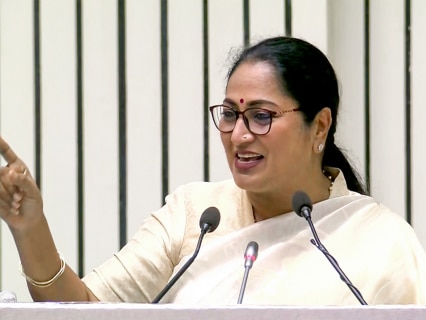
Marking the 51st anniversary of the Emergency, CM Gupta said that the period witnessed the suppression of civil liberties, restrictions on press freedom, and curbs on freedom of expression.
Tensions with landowners rise as a raft of gas pipelines push through Texas properties

Rising demand for Texas natural gas by data centers and foreign nations has sparked a surge in pipeline projects
Texas must pay millions to fix errors in Bluebonnet school materials, contract shows

Thousands of corrections — from typos to copyright concerns — are needed in state-produced reading and math materials used by hundreds of public schools.
WATCH: AOC won’t rule out Senate bid after New York progressives notch primary wins: ‘Inspired and encouraged’
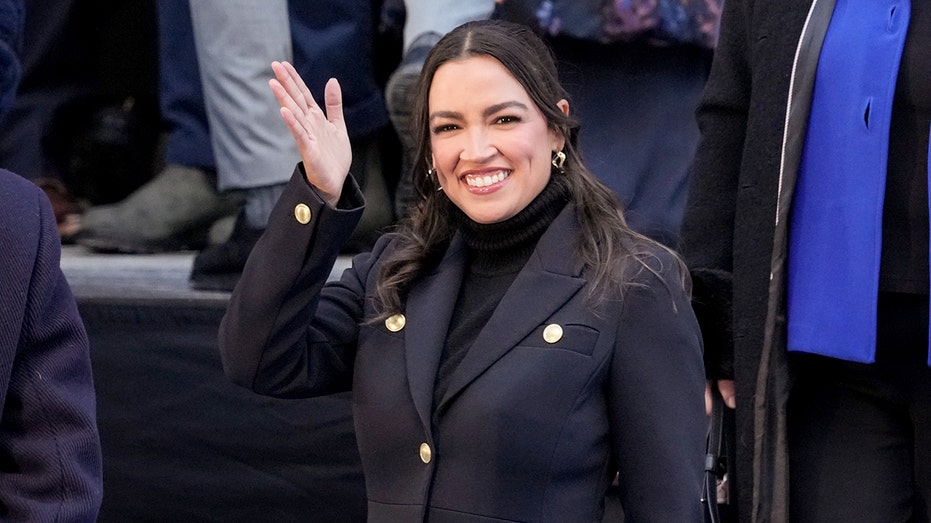
Rep. Alexandria Ocasio-Cortez, D-N.Y., declined to rule out a future Senate campaign after a trio of far-left candidates won New York’s primary elections Tuesday, saying the results left her “inspired and encouraged.” “I’m sorry I’m not going to be breaking any news here as I consider what’s going to happen in the future,” Ocasio-Cortez told Fox News Digital when asked whether the election results made her more inclined to run for Senate. “But I’m definitely inspired and encouraged by all the new faces that we’re going to be sending to the states and to Congress next year,” she continued. AOC CRUISES TO PRIMARY VICTORY AS SPECULATION SWIRLS ABOUT POLITICAL FUTURE The four-term “Squad” member crushed her two Democratic primary challengers running to unseat her in New York’s 14th Congressional District. Coupled with the victories by three fellow progressives in her state, the results fueled speculation that Ocasio-Cortez could potentially mount a successful primary race against Senate Minority Leader Chuck Schumer, D-N.Y. Ocasio-Cortez’s comments come after broader speculations have continued to swirl around the possibilities of her political future. The progressive New York Democrat has also refused to rule out a 2028 presidential run, telling Fox News Digital “maybe, maybe not” on whether her running for president was in consideration. The victories by candidates backed by socialist New York City Mayor Zohran Mamdani over more moderate Democrats also fueled debate over whether the progressive wing is becoming a national blueprint for the Democratic Party. WATCH: AOC LEAVES DOOR OPEN TO 2028 WHITE HOUSE BID: ‘MAYBE, MAYBE NOT’ Asked whether the wins by candidates critical of Israel represented a blueprint for Democrats nationally, Ocasio-Cortez shifted the focus from policy to campaign strategy. “It’s not only about our substantive positions, but also how we organize and run as well,” she said. Like Ocasio-Cortez, the three primary winners have all been critical of Israel’s military campaign in Gaza, making the issue a defining point of the Democratic Party’s progressive wing. RISING SOCIALIST STARS ON TRACK TO CONGRESS: WHO ARE DARIALIZA AVILA CHEVALIER, BRAD LANDER AND CLAIRE VALDEZ? The victories showcased a surge of support for socialist-backed Democratic candidates, at least in New York. Darializa Avila Chevalier defeated incumbent Rep. Adriano Espaillat, D-N.Y., in New York’s 13th Congressional District; Assembly Member Claire Valdez won the Democratic primary in New York’s 7th Congressional District, where retiring Rep. Nydia Velázquez, D-N.Y., is not seeking re-election; and former New York City Comptroller Brad Lander ousted Rep. Dan Goldman, D-N.Y., in New York’s 10th Congressional District — all after aligning themselves with Mamdani’s campaign. If they prevail as expected in November’s midterm elections and head to Congress, their victories would signficantly expand the number of Democratic Socialists of America-aligned members in Congress.
Chinese drone monopoly put on notice amid concerns over CCP spying: ‘Strategic mistake’

Rep. Pat Harrigan, R-N.C., who serves on crucial subcommittees of the House Armed Services Committee, is leading a charge to phase out Chinese-manufactured drones from use in U.S. law enforcement. “Here in the United States, we’ve allowed China to dominate much of the global drone market while American agencies continue relying on systems built by companies tied to the Chinese Communist Party,” Harrigan said in a statement to Fox News Digital. “That’s a strategic mistake,” he continued. The bill, titled the American Drone Manufacturing Dominance Act of 2026, would offer domestic law enforcement an off-ramp for whatever Chinese-made drones they might be currently using. It also furthers legislative ways in which Republicans have sought to step away from Chinese manufacturing and supply in sensitive areas. It also makes federal grant funding conditional on not acquiring any foreign-made drones after Jan. 1, 2027. SEN WICKER: ENDING CHINA’S DRONE DOMINANCE WITH A MADE-IN-AMERICA REVIVAL In its current form, the bill sets aside $1.5 billion in federal funding, funded through Trump’s Section 301 tariffs, to accelerate the removal of Chinese-made drones and would subsidize a domestic drone manufacturing base with defense applications. Harrigan said drones have become a clear security issue in light of their use in overseas conflicts and their growing sophistication. “One of the clearest lessons from Ukraine is that drones are no longer a niche capability; they’re a foundational part of modern warfare,” Harrigan said. Almost all major U.S. cities have implemented restrictions on the use of drones. In Washington, D.C., for instance, drones are completely banned from use due to the federal Special Flight Rules Area (SFRA) that governs highly restricted airspace. Even so, their use has climbed in recent years — especially in border security, where their fast-moving capabilities have allowed border agents to monitor wide swaths of land. BORDER ON THE BRINK AS CARTEL DRONES FORCE US TO ACT AFTER YEARS OF PARALYSIS In 2020, an internal memorandum authored by then U.S. Border Patrol Chief Rodney Scott signaled CBP’s intent to significantly expand their use. “These unmanned technologies will achieve levels of detection, response and interdiction efficiencies not realized by current CBP technological capabilities,” the memorandum states. Local law enforcement also uses drones, but is reliant on Chinese manufacturers like Da Jiang Innovations (DJI). In Texas, for instance, the Federal Aviation Administration (FAA) Texas, for instance. The Federal Aviation Agency (FAA) said that of the 966 drones registered to police and sheriff’s departments in the Lone Star State in 2024, 879 were produced by DJI. Harrigan believes drone use isn’t going away. But even as their use expands, he believes lawmakers should prioritize American safety through U.S. manufacturing. I’M A DRONE CEO. OUR SKIES ARE DANGEROUSLY EXPOSED — HERE’S THE SOLUTION “If drones are going to play a central role in national security, public safety, and critical infrastructure, America needs to be able to build them here at home,” Harrigan said. It’s unclear when Harrigan’s bill would reach the floor of the U.S. House of Representatives for consideration.
Trump’s $88B Iran war bill collides with Senate opposition
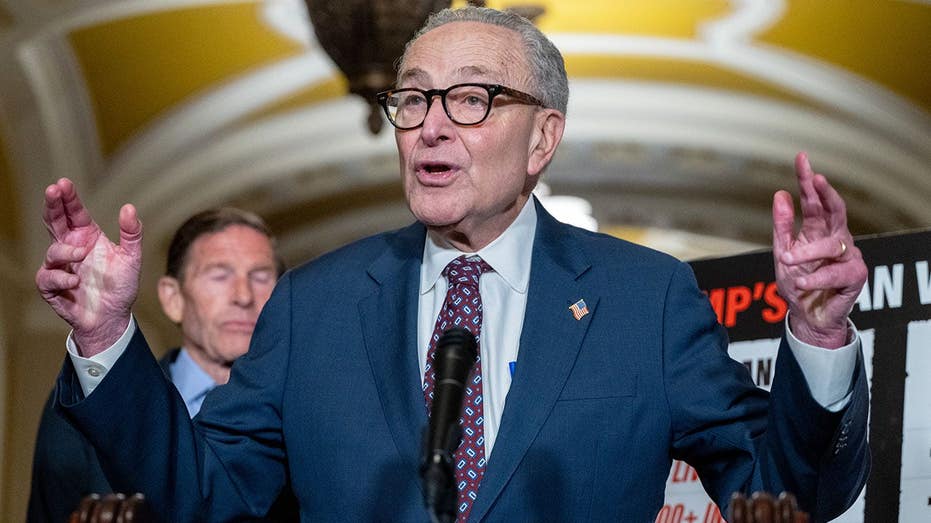
The Pentagon’s massive funding request to pay some of the costs of the Iran war is going to be a hard sell for Senate Democrats, and a key issue buried deep in the multibillion-dollar request could divide Republicans. Congress received the nearly $88 billion package Wednesday afternoon after months of speculation about whether it would ever come, and exactly how much it would cost. The current price tag is drastically lower than earlier estimates, which project the package could reach as high as $200 billion. But after roughly four months and a tenuous peace deal in place, Democrats appear unwilling to support the funding that would replenish munitions, despite sweeteners that appear geared toward attracting their support. CLOSED-DOOR OUTBURST TURNS INTO VICTORY FOR TRUMP’S IRAN NEGOTIATIONS “It seems designed to repel Democratic votes,” Sen. Chris Murphy, D-Conn., said. “They’re clearly not trying to pass this.” Those sweeteners, which include $11 billion in aid for farmers and $1.4 billion to fight the Ebola outbreak in Africa, didn’t sway Murphy, who charged that the farm assistance in particular was a “war cost.” The package isn’t getting any love from Senate Minority Leader Chuck Schumer, D-N.Y., either, who accused President Donald Trump of “asking taxpayers to clean up his messes.” “After dragging America into a reckless war, he now wants Congress to hand him tens of billions more to paper over the damage — while families are still paying higher prices,” Schumer said on X. “We should be lowering costs for the American people, not writing another blank check for Trump.” Sen. Josh Hawley, R-Mo., wasn’t surprised that Senate Democrats appeared ready to bat down the package, which will need at least 60 votes to pass in the Senate, arguing that “they haven’t supported anything this year, or last year.” IRAN WAR’S PRICE TAG HITS $80B — MORE THAN DOUBLE WHAT CONGRESS WAS TOLD “It’s literally true. I mean, including stuff that they negotiated,” Hawley said. “FISA, they negotiated, which I didn’t like when they negotiated, but still, you know, they negotiated and said, ‘No,’ they negotiated all the appropriations bills then said, ‘No.’ I mean, so, you know, I’d be shocked if they did support it.” The bulk of the request is geared toward the Pentagon and includes $67 billion for the War Department, including $21 billion to replenish missile stockpiles depleted during the Iran offensive, known as Operation Epic Fury, $17 billion for military operations, $2.4 billion for drones and $5.1 billion for cybersecurity and autonomy. Another $12 billion of the War Department funding would go toward classified programs. The request also includes $2 billion for the Coast Guard and $800 million for the National Guard. The administration is also seeking $672 million for the removal of Iranian nuclear materials, inspections and verification efforts, and other counterproliferation activities. According to the proposal, the funding would support the removal of Iranian nuclear materials, including uranium hexafluoride (UF6), uranium in various forms and research reactor fuel, including highly enriched uranium. The proposal would also fund potential U.S. verification activities in Iran, subject to site access, support inspections by the International Atomic Energy Agency, strengthen nuclear-smuggling detection efforts and expand Nuclear Emergency Support Team operations across the Middle East. The funding comes as U.S. and Iranian negotiators work to translate the recent memorandum of understanding (MOU) into a more detailed agreement governing Iran’s nuclear program and stockpile of enriched uranium. While the memorandum established downblending as the minimum acceptable method for handling Iran’s enriched uranium, negotiators have not publicly disclosed whether the material would ultimately remain in Iran, be transferred to another country or be destroyed. TRUMP SEEKS $672M TO STOP IRANIAN NUKES AS NEGOTIATORS WEIGH FATE OF URANIUM STOCKPILE While Democrats shake their fists at the supplemental spending package, one provision tucked into the legislation could also give Republicans heartburn. Among the farm aid provisions is a policy to permanently extend the sale of gasoline with a blend of ethanol, a liquid biofuel made from corn, known as E15. The E15 issue showed a rare rift in Senate Republican leadership, one that ripples through the Senate GOP based on geography and differing state economies than on a personal leve. “Promising a year-round E15 mandate is a check the president can’t cash,” a Republican source said. Senate Majority Leader John Thune, R-S.D., backs it, particularly for the benefits it could give candidates running for election or re-election in states where corn crops are king. But his second-in-command, Senate Majority Whip John Barrasso, R-Wyo., bucked the House’s year-round E15 bill when it passed last month and has argued that allowing a mandate on the fuel blend would hurt small refiners and undo strides for energy production made in Trump’s flagship legislation, the “big, beautiful bill.” “America’s small refiners are unsung heroes of affordable American energy. Washington D.C., often overlooks them. Working families depend on them,” Barrasso said on the Senate floor earlier this week. “I represent several small refineries in Wyoming. The refineries employ thousands of people.” “They make gasoline prices more affordable,” he continued. “They strengthen our nation’s energy security. Proposed new mandates on small refineries would harm them and the people who work for them.” Since the House bill passed, Thune said he has continued to have conversations to find a “path forward” on the issue. “We’re working with the stakeholder community and our members on both sides to figure out if that’s something we can execute on and get done,” Thune said. Sen. Mike Rounds, R-S.D., a proponent of the provision, argued that he viewed it as an “incentive,” but acknowledged there was a chance it could be amended out of the broader supplemental package. “I mean it makes a better deal, and I don’t know why they would want to take it out,” Rounds said.
Trump scores SCOTUS asylum win — but liberal justice warns it could backfire at border
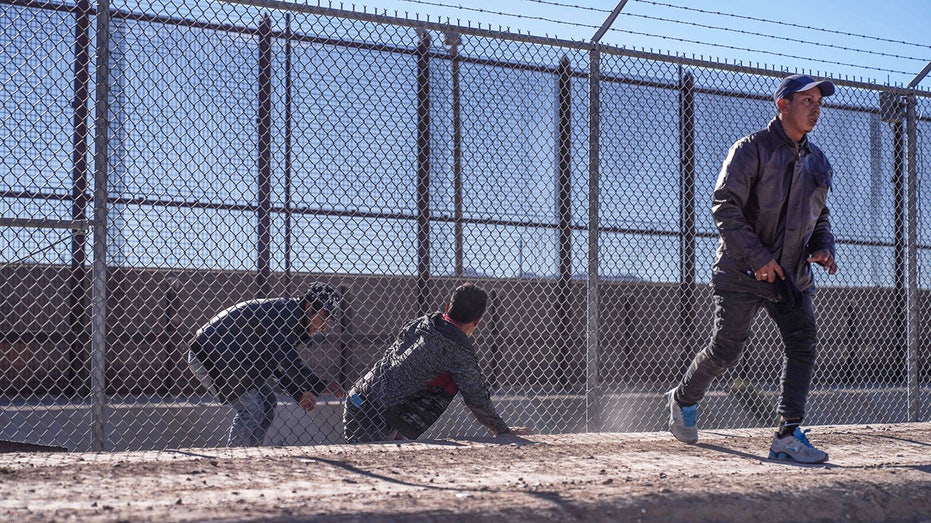
The Supreme Court’s Thursday decision to restrict asylum applications, hailed by immigration hawks, could actually end up increasing illegal crossings, according to the three dissenting justices and immigration nonprofit involved in the case. On Thursday, the Supreme Court held in Mullin v. Al Otro Lado that migrants must physically set foot in the United States in order to be eligible for asylum, reversing lower court rulings that had required the government to process certain asylum seekers turned away at ports of entry. While the decision is broadly viewed as making asylum claims more difficult to secure, an objective of the Trump administration, Justice Sonia Sotomayor and Al Otro Lado both argue that it may have unintended consequences. “This Court has previously recognized that immigration statutes and procedures should not be construed to ‘create a perverse incentive to enter at an unlawful rather than a lawful location. Yet, the majority’s construction does exactly that,” Sotomayor wrote in her dissent. “It tells asylum seekers that they may apply for asylum if they can make it across the border illegally but that they cannot apply if they patiently wait at the edge of a port of entry.” Al Otro Lado argued on similar lines, stating in a court filing that restricting asylum access to those who physically enter the United States would”create a perverse incentive to cross the border between ports of entry” as people who do so will receive greater rights than those stopped at ports. SUPREME COURT HANDS TRUMP TWO MAJOR IMMIGRATION VICTORIES It is unclear if the Department of Homeland Security, which celebrated the decision, has prepared for the potential uptick in asylum seekers illegally crossing the border. DHS did not respond to a request for comment when reached by Fox News Digital on Thursday. The conservative majority, led by Justice Samuel Alito, downplayed this possibility, calling the concern “overstated.” DOJ ACCUSES COURTS OF UNDERCUTTING EXECUTIVE POWER IN HIGH-STAKES SUPREME COURT BORDER CASE “Metering does not permanently bar any alien from arriving in the United States and then applying for asylum,” Alito wrote for the majority. “Illegal entry, on the other hand, may be expensive and dangerous, and it carries adverse legal effects. Entry at an improper location is a crime. An alien becomes ineligible for asylum if he unlawfully re-enters the country after having been removed.” “An alien whose admission and inspection are delayed due to metering would need a powerful reason to apply for asylum immediately for it to be preferable to run all the risks of illegal entry,” he added. TRUMP ADMIN EASES ASYLUM FREEZE FOR VETTED MIGRANTS, KEEPS BANS ON ‘HIGH-RISK’ NATIONS Metering refers to the practice of limiting how many asylum seekers can approach or enter a U.S. port of entry each day for processing. Under the policy, migrants were often told to wait in Mexico until U.S. officials determined the port had capacity. Alito’s rationale was not enough to convince Sotomayor and the other dissenting justices. “The point, however, is not that illegal entry always produces a net windfall for asylum seekers; it is that Congress was unlikely to devise a system in which asylum is available to those who unlawfully set foot over the border, but not to those who attempt to comply with the law and are physically blocked from entering at the threshold of a port of entry by an immigration officer,” she wrote. “It is also the unfortunate reality that, despite the adverse consequences the majority cites, many asylum seekers are desperate enough to flee the persecution they face in their home countries that they are willing to run significant risks to apply for asylum.” Sotomayor went on to cite a 2018 DHS Office of the Inspector General report that found metering had “unintended consequences” which “le[d] some aliens who would otherwise seek legal entry into the United States to cross the border illegally.” The report was published before lower courts held that migrants turned away at the border could apply for asylum, meaning that the conditions it covered are comparable to the new status quo set by the Supreme Court. “This administration has demonstrated that the border can be secured against illegal entries. As border wall construction continues, the ability to deter illegal crossings will only improve,” Matt Crapo, the director of litigation at the right-wing Federation for American Immigration Reform, told Fox News Digital. “So long as the federal government makes border security a priority, illegal crossings should not be a major concern,” he added.
Reporter’s Notebook: Lawmakers wrestle over whether AI can make the grade in America’s classrooms

Reading. Writing. And AI algorithms. The Senate is now wrestling with how students — and teachers — might use Artificial Intelligence in the classroom. It’s inevitable. “The question is not whether AI is going to impact education. The real question is whether we will shape its use thoughtfully. Responsibly,” said Delaware Secretary of Education Cindy Marten during a recent Senate hearing. Lawmakers are focusing not just on what AI teaches students. But how. “What do we know when it comes to long term cognitive impact of the use of this technology?” asked Sen. Tommy Tuberville, R-Ala., at the hearing. SCHOOLS TURN TO HANDWRITTEN EXAMS AS AI CHEATING SURGES “We have no causal studies on long term impact on social or cognitive development,” replied Erin Mote, who, as CEO of InnovateEDU and the EDSAFE AI Alliance, works on technological innovation in the classroom. Pushing students onto screens, iPads and Chromebooks in the classroom was all the rage about 12 years ago. But since that rush to technology, the percentage of high school seniors performing at grade level in math and reading is down four points from 2009, according to the National Assessment of Educational Progress (NEAP), sometimes known as the report card of the nation. “The students did not learn the content better and their social and emotional health has suffered greatly. We need to ensure as we move forward teaching about and with AI that we do not become overly tech reliant and that critical thinking skills remain imperative” said David Slykhuis of Valdosta State University at a House hearing earlier this year. That’s why lawmakers are skeptical that AI can boost classroom performance. “Kids have outsourced critical thinking. Have outsourced friendship. Have even outsourced moral advice to AI,” said Sen. Chris Murphy, D-Conn. 95% OF FACULTY SAY AI MAKING STUDENTS DANGEROUSLY DEPENDENT ON TECHNOLOGY FOR LEARNING: SURVEY There are also privacy concerns. AI can glean what each student learns and knows. AI could harvest what lessons they’ve covered. How fast students picked up different concepts. AI or data brokers could then track that for decades as students head to college or even enter the workforce. “These tools are getting more access to more information about our students that we may not even be aware of,” warned Marten. Teachers are already leaning on AI to develop lesson plans and grade papers. Elementary teachers can certainly deploy AI to grade simple multiplication tables and spelling. But it could spell trouble if teachers or professors use an AI rubric to grade subjective assignments such as creative writing or a term paper. “For those that start using AI, there’s a tendency to trust everything that it spits out that can create serious problems,” said Joshua Jones at the Senate hearing. He’s CEO of QuantHub, an education AI literacy firm. Some lawmakers doubt that AI can do everything. And some aspects of education are hard to copy. “The foundational relationship between a child and a teacher is not something that AI is going to recreate. It’s not something that I will substitute for,” said Sen. Tim Kaine, D-Va. WHY A CLASSICAL EDUCATION MAY BE THE KEY TO HUMANITY’S FUTURE IN THE AI ERA Educators want to know how AI may shift their roles. And if the concept of a “teacher” or a “professor,” tomorrow is the same as what we think of today. “The idea of pulling that away is probably really scary to teachers who think this is what teaching looks like. But we know that it’s not an effective way for teaching or for learning. And so it’s going to require some real ecosystem shifts,” said educator Emily Cherkin, who has written about AI. Graduating college seniors showered several tech CEOs with a chorus of boos at commencement exercises around the country this spring. The reason? These students may have earned a diploma. But they wonder if that’s sufficient for gainful employment in the age of AI. OpenAI CEO Sam Altman recently met with a host of bipartisan lawmakers at the Capitol about their hopes and fears about AI. “I understand that college students have a lot of anxiety about the future,” said Altman. “I think there will be a lot of jobs in the future. I think that the impact on jobs has been less than many people in our field expected. And it doesn’t mean that it will always stay that way in the future.” Moreover, students may question the value of an education if they can’t get work due to artificial intelligence. “(High school seniors) were saying that they can’t find jobs. Saying that 30 to 40 percent of them are unemployed and they blame AI for this,” said Sen. Josh Hawley, R-Mo. “We’ve got to make some choices about AI to make sure it actually is good for the American workforce. And I think a lot college grads don’t think it is.” AI RISKS TO KIDS, WORKERS RISING FASTER THAN REGULATION, NEW GROUP WARNS Hawley believes Congress should take action on AI. But not in the ways you might think. “We ought to pass legislation right now that would require these tech companies to turn over the data on how many jobs they’re creating or how many they’re destroying,” said Hawley. Rep. Jay Obernolte, R-Calif., is one of the leading voices in Congress on AI. He recently helped draft a bipartisan framework for legislation to regulate AI. Obernolte says he hears what college students are saying. “It’s an indication that we collectively have done a terrible job at articulating to the American public the optimistic case for AI deployment,” said Obernolte. “AI will probably be the most powerful tool for enhancing human productivity that we have ever invented. And that will not only have positive economic consequences for our country and our world, but could create this rising wave of prosperity that literally lifts all the boats.” House Speaker Mike Johnson, R-La., wants to pass an AI regulation bill by the end of the year. But the