

Israel kills three in Lebanon as Rubio praises progress in Washington talks

Lebanon’s state-run National News Agency reports three people have been killed in an Israeli attack on a car in Nabatieh. Published On 25 Jun 202625 Jun 2026 Israeli attacks on Lebanon have continued despite a ceasefire, with three people killed during a strike on a car in the south of the country, as senior Israeli and Lebanese officials meet for a final day of talks in Washington. According to Lebanon’s state-run National News Agency (NNA), three people were killed on Thursday, and one was wounded after the Israeli attack hit a car on the road between Zawtar and Mayfadoun in Nabatieh Governorate. Recommended Stories list of 3 itemsend of list NNA also reported that Israeli forces burned a number of houses in the town of Ain Arab, after issuing warnings forcing residents to evacuate the town before 5pm on Wednesday. According to Lebanon’s Ministry of Public Health, since the conflict began on March 2, 4,230 people have been killed and 12,179 others have been wounded. Reporting from Nabatieh, southern Lebanon, Al Jazeera’s Zeina Khodr said the ceasefire between Israel and Hezbollah remains “fragile” as the Israeli army continues to target “anyone or anything in front-line villages”. “[These are ] villages on the outskirts [of the] city of Nabatieh, which lie along the area which is under Israel’s occupation,” Khodr explained. “So the message is they don’t want people to approach that area, there’ve been drone strikes, they’ve dropped stun grenades … people killed. “Those villages, the Israeli army was not able to occupy them during weeks of fighting and it wants to still be able to control them by fire because the more territory you control, the more leverage you have in negotiations,” she said, adding that officials from Lebanon and Israel are discussing the possible and gradual handover of territory. Ceasefire talks Israel and Lebanon have been discussing a United States-backed proposal for the past three days, with the talks wrapping up in Washington, DC, on Thursday. The negotiations have been focused on Israeli forces handing over some of the territory they occupied during the fighting with Hezbollah to Lebanon’s military. Advertisement A US State Department official told the Reuters news agency that Israel had taken a “concrete step” towards the proposal, which had been part of the latest round of talks, by pulling back from a part of a buffer zone in southern Lebanon. However, a senior Israeli defence official denied that there had been any pullback, adding that Israel would not be withdrawing from its buffer zone. Moreover, a senior Lebanese military official also told Reuters that developments on the ground in recent days had shown the “opposite of a pullback”. Still, US Secretary of State Marco Rubio said on Thursday that Israel and Lebanon were making good progress towards a “commitment of intent”. “I think we are very close in our hopes of getting a commitment of intent between the two countries,” Rubio told reporters during a visit to Bahrain. “It’ll be a process, it’ll take some time, it’ll take a lot of work, but I can tell you that for the first time in 30 years, the sovereign government of Lebanon is speaking to the government of Israel directly.” Under US pressure, Lebanese officials began direct talks in April with Israel in Washington. Hezbollah, however, has condemned the Lebanon-Israel talks, demanding the full withdrawal of Israeli forces from Lebanon first. Adblock test (Why?)
They fled war as child refugees, now they’re playing at World Cup 2026
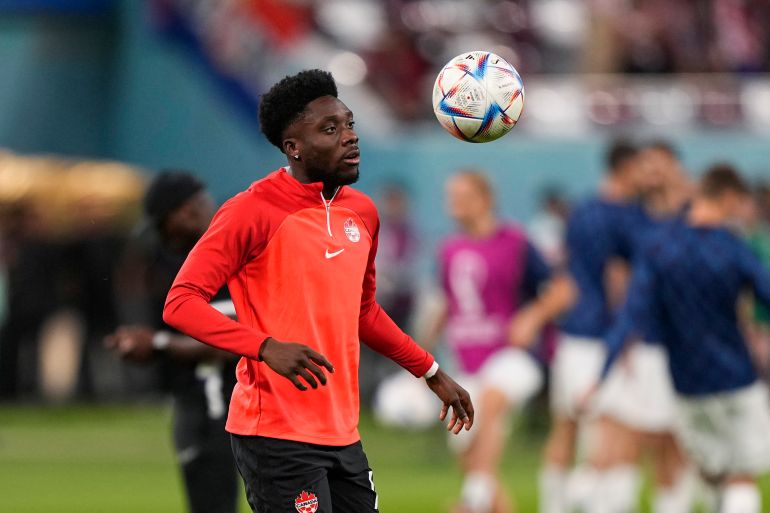
In Vancouver, during the opening week of the 2026 edition of FIFA’s global football showpiece, Nestory Irankunda became the youngest player to score for Australia at a World Cup. The 20-year-old celebrated the effort in the 2-0 victory against Turkiye by punching the corner flag, his tribute to Australian great Tim Cahill. Recommended Stories list of 4 itemsend of list The celebration did not show what came before it: a refugee camp in Kigoma, Tanzania, where Irankunda was born after his parents fled Burundi’s civil war. Two of his teammates carry a version of that same story onto the same pitch. Across the largest World Cup staged with 48 nations, hosted by Canada, Mexico and the United States, at least nine players carry a refugee or displacement story. Together with others, they were brought together last month by the UN refugee agency under a campaign called the Gamechanging Team. The UNHCR says 117 million people are displaced worldwide, including almost 49 million children. UN High Commissioner for Refugees, Barham Salih, called this World Cup “an ideal moment… to send a message of hope to fans all over the world,” in the same May statement that announced the Gamechanging Team. For the players who share painfully similar pasts, that message plays out across more than a hundred matches this summer, in front of the largest audience football has ever drawn. Here are those nine of the players who reached the finals – along with two more who missed out – and where their stories come from. Alphonso Davies — Canada Canada’s Alphonso Davies prior to the 2022 World Cup match with Croatia in Qatar, Nov. 27, 2022. (AP Photo/Martin Meissner) Davies was born in 2000 in Buduburam refugee camp, Ghana, after his parents fled Liberia’s civil war; the family resettled in Edmonton, Canada, when he was five. In March 2021 he became the first footballer named a UNHCR Global Goodwill Ambassador. “Whilst the refugee camp provided a safe place for my family when they fled war, I often wonder where I would have been if I had stayed there,” he said in the statement UNHCR released announcing his appointment. “I don’t think I would have made it to where I am today.” Davies now captains Canada, one of three co-host nations alongside Mexico and the US — who qualify automatically. Advertisement Mohamed Toure — Australia Australia’s Mohamed Toure celebrates after the group-stage match against Turkiye [Albert Gea/Reuters] Toure was born in a refugee camp in Conakry, Guinea, in 2004, after his family fled an attack on their hometown in Liberia and spent 14 years waiting to be resettled. “Our town was attacked by a group of men and we had to flee,” his father, Amara, told Football Australia’s YouTube channel, in comments reported by ITV News Anglia on June 12, 2026. The family settled in Adelaide, Australia. Now Australia’s starting striker, Toure told Football Australia around the same time: “If my dad can go to work and say: ‘Yeah, my son played at the World Cup’… that makes me happier than me playing in a World Cup”. Awer Mabil — Australia Australia’s Awer Mabil after the match against Tunisia [Annegret Hilse/Reuters] Mabil was born in Kakuma refugee camp, Kenya, after his South Sudanese parents fled civil war, and was resettled in Adelaide aged ten. He scored the penalty that sent Australia to the 2022 World Cup and co-founded Barefoot to Boots, a charity supplying football gear to children still living in Kakuma. “Everything is possible… so keep going,” he told the Philippine outlet Sunstar during Refugee Week in June 2026. Nestory Irankunda — Australia Nestory Irankunda celebrates scoring Australia’s first goal of World Cup 2026 [Lee Smith/Reuters] (Reuters) Irankunda was born in a refugee camp in Kigoma, Tanzania, after his parents fled Burundi’s civil war. “My older sister was sick and they were close to leaving her behind, but my dad couldn’t do it,” he said in an interview this month with beIN Sports describing his family’s escape. Of his World Cup goal against Türkiye: “It is unreal and a dream come true”. Ermedin Demirovic — Bosnia and Herzegovina Bosnia and Herzegovina’s Ermedin Demirovic celebrates after playing Qatar [Blake Dahlin/Reuters] Demirovic was born in Germany, where his father settled after fleeing Bosnia during the Balkan war. He chose to represent Bosnia and Herzegovina rather than Germany. “To now represent Bosnia and Herzegovina at only its second-ever World Cup makes me incredibly proud,” he said in the statement UNHCR released in May launching its Gamechanging Team campaign. Asmir Begovic — Bosnia and Herzegovina Asmir Begovic in action in the UEFA Champions League during his time with Chelsea [John Sibley/Reuters] Begovic fled Bosnia at four, first to Germany, then to Canada, where he learned the game. He played at Bosnia’s first World Cup in 2014 and remains part of the squad for its second. “I get flashbacks every once in a while travelling in the car,” he said in a 2022 interview with Goal.com. “Nobody felt sorry for us, and you couldn’t feel sorry for yourself.” Advertisement Antonio Rudiger — Germany Germany’s Antonio Rudiger plays for Real Madrid in Spain [Piroschka Van De Wouw/Reuters] Rudiger was born in Berlin – not in a camp, but to a mother who fled Sierra Leone’s civil war in 1991 and settled in Neukolln, a district he described in a 2020 interview on Chelsea FC’s official site as “a tough area where mostly refugees grew up.” “My parents came to Germany from Sierra Leone to seek safety and a better future,” he said in the same UNHCR statement that introduced the Gamechanging Team in May. “Representing Germany is a full circle moment for me.” Ali Al-Hamadi — Iraq Norway’s Erling Haaland is challenged by Iraq’s Ali Al Hamadi [Pilar Olivares/Reuters] Al-Hamadi was a baby when his family fled Iraq in 2003, spurred by the jailing of his father for joining a peaceful protest against Saddam Hussein. Upon the release of his father, who was studying to
Passport Row: What is proof of Indian citizenship? Opposition fires back, Govt clarifies
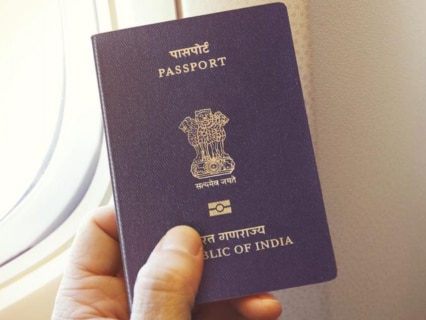
MEA stated that “A passport is a travel document, and not a document of citizenship.” Responding to this, the Opposition questioned which document then serves as proof of citizenship. The government cites the Passport Act 1967 and the Bombay HC 2013 ruling for clarification.
Ketan Agarwal Murder Case Update: How Lohagad Fort staffer caught Siya off guard on spot, brings new twist

Ketan’s father, Vishal Agarwal, alleged that Siya showed little outward sorrow after Ketan died and remained oddly composed when his body arrived at their home.
Ram Mandir Donation Row: VHP seeks FIR, quick probe, daily hearings by fast-track court
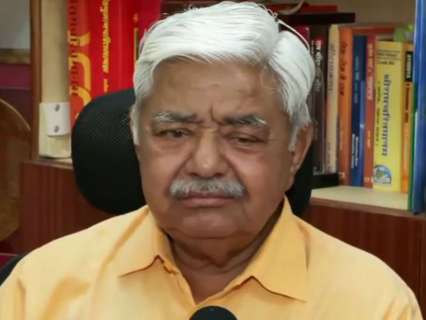
On Tuesday, the three-member Special Investigation Team (SIT), probing the alleged Ram Mandir donation embezzlement case, submitted its report to Uttar Pradesh Additional Chief Secretary (Home) Sanjay Prasad.
Rahul Gandhi slams Dharmendra Pradhan over ‘terrorist’ remark, seeks resignation
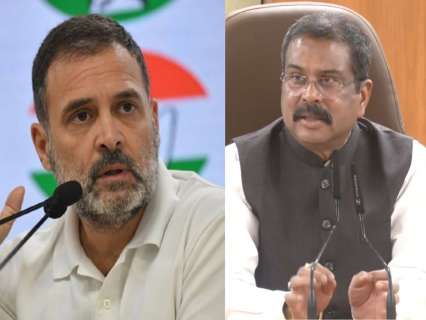
Congress leader Rahul Gandhi slammed the Centre and Union Education Minister Dharmendra Pradhan on Thursday over the latter’s controversial remarks against students protesting discrepancies in the education system.
Ketan Agarwal Murder Case: Siya Goyal, Chetan Chaudhary questioned face-to-face by police
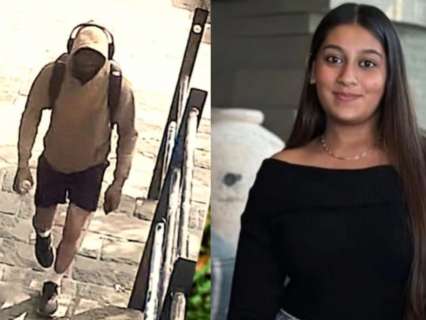
Siya Goyal and her alleged lover Chetan Chaudhary have been accused of murdering her fiancé, Ketan Agarwal, at Pune’s Lohagad Fort. Police claim the duo conspired to eliminate Ketan after a failed earlier attempt.
Ketan Agarwal murder case: Who’s the real killer? Siya, Chetan Choudhary trade blames as new evidence emerges

Pune realtor Ketan Agarwal’s case has taken different turn as the two accused have told different versions of the event that led to Ketan’s death. Police investigation has hinted of a shared conspiracy by Siya and Chetan Choudhary, even as both play the blame game.
Weather Update: Rainfall likely in UP, Uttarakhand in next 4 days with thunderstorm warning for Haryana, HP

The IMD has issues warning heavy to very heavy rainfall for Madhya Pradesh, Maharashtra among other states while rainfall is likely in Uttar Pradesh, Uttarakhand and some parts of Northeast and eastern regions. IMD has also predicted thunderstorms for Haryana and Himachal Pradesh.
Bhagwant Mann Video Controversy: Punjab CM claims viral clip was created using face mask, alleges political conspiracy
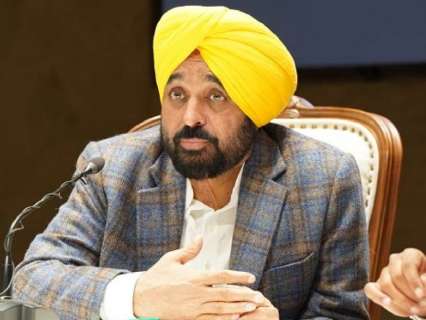
Punjab Chief Minister Bhagwant Mann has denied being the person in a controversial sacrilege video, alleging it was created using a realistic face mask as part of a political conspiracy.